 Add to Chrome
 Add to Firefox
 Add to Edge
Project Alexandria: Towards Freeing Scientific Knowledge from Copyright Burdens via LLMs
Feb 26, 2025
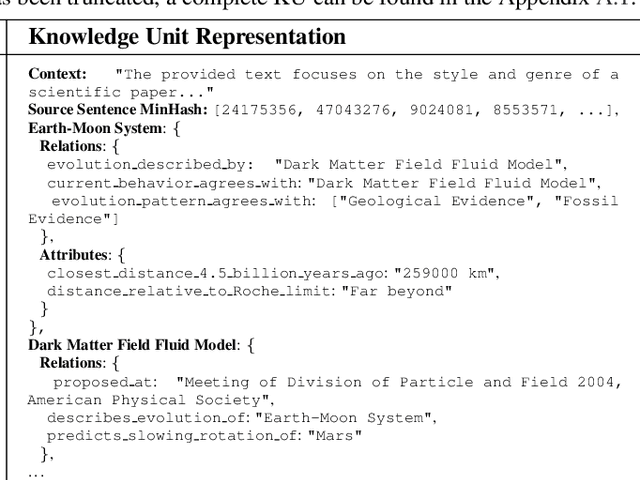
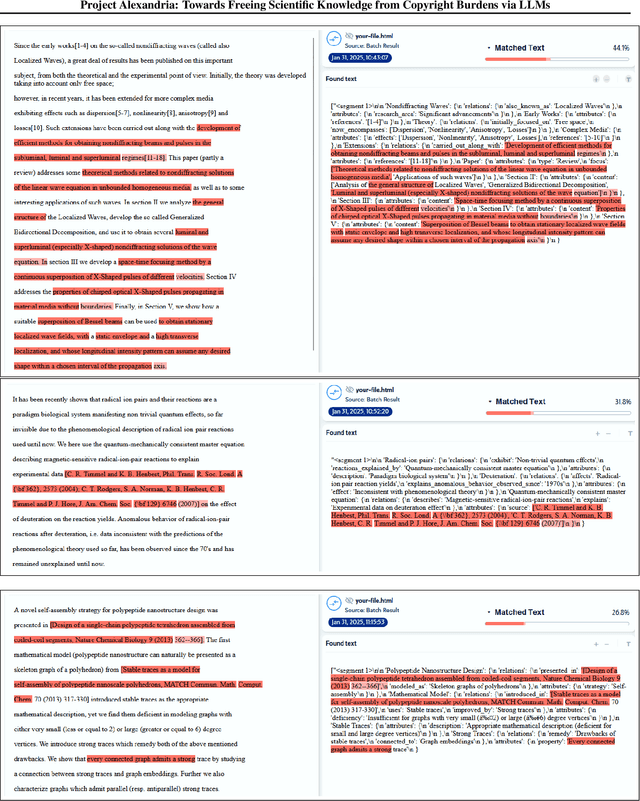
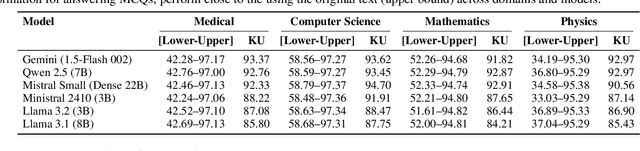
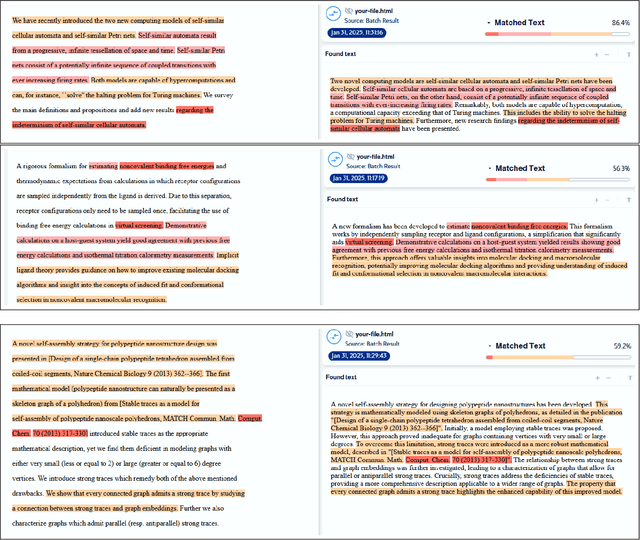
Paywalls, licenses and copyright rules often restrict the broad dissemination and reuse of scientific knowledge. We take the position that it is both legally and technically feasible to extract the scientific knowledge in scholarly texts. Current methods, like text embeddings, fail to reliably preserve factual content, and simple paraphrasing may not be legally sound. We urge the community to adopt a new idea: convert scholarly documents into Knowledge Units using LLMs. These units use structured data capturing entities, attributes and relationships without stylistic content. We provide evidence that Knowledge Units: (1) form a legally defensible framework for sharing knowledge from copyrighted research texts, based on legal analyses of German copyright law and U.S. Fair Use doctrine, and (2) preserve most (~95%) factual knowledge from original text, measured by MCQ performance on facts from the original copyrighted text across four research domains. Freeing scientific knowledge from copyright promises transformative benefits for scientific research and education by allowing language models to reuse important facts from copyrighted text. To support this, we share open-source tools for converting research documents into Knowledge Units. Overall, our work posits the feasibility of democratizing access to scientific knowledge while respecting copyright.

Automated Generation of Challenging Multiple-Choice Questions for Vision Language Model Evaluation
Jan 06, 2025
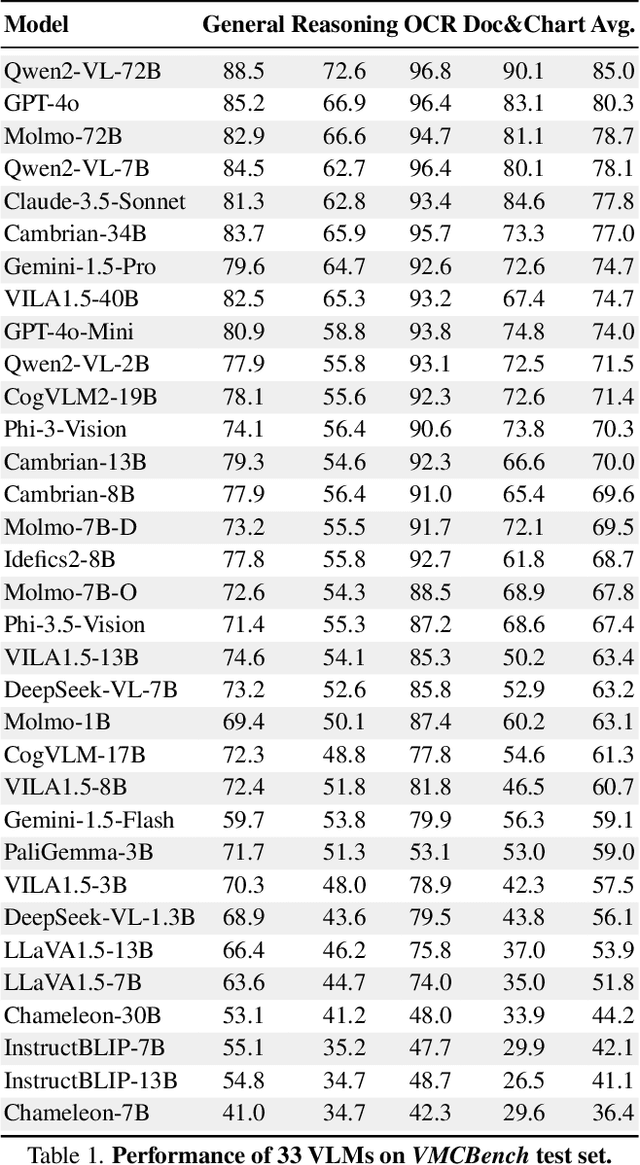


The rapid development of vision language models (VLMs) demands rigorous and reliable evaluation. However, current visual question answering (VQA) benchmarks often depend on open-ended questions, making accurate evaluation difficult due to the variability in natural language responses. To address this, we introduce AutoConverter, an agentic framework that automatically converts these open-ended questions into multiple-choice format, enabling objective evaluation while reducing the costly question creation process. Our experiments demonstrate that AutoConverter can generate correct and challenging multiple-choice questions, with VLMs demonstrating consistently similar or lower accuracy on these questions compared to human-created ones. Using AutoConverter, we construct VMCBench, a benchmark created by transforming 20 existing VQA datasets into a unified multiple-choice format, totaling 9,018 questions. We comprehensively evaluate 33 state-of-the-art VLMs on VMCBench, setting a new standard for scalable, consistent, and reproducible VLM evaluation.
BLIP3-KALE: Knowledge Augmented Large-Scale Dense Captions
Nov 12, 2024
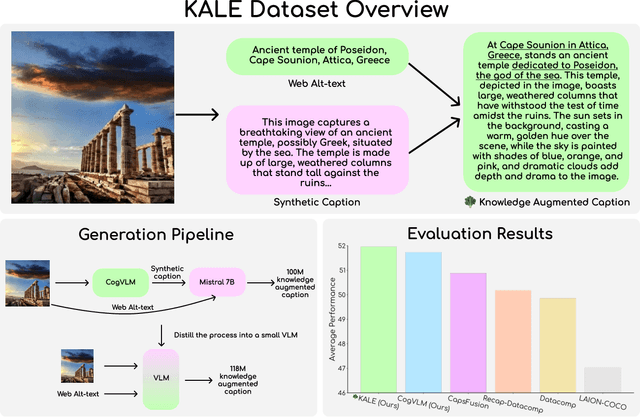
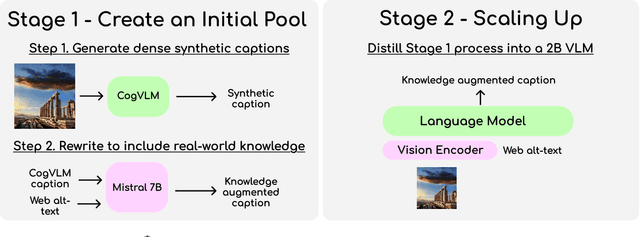

We introduce BLIP3-KALE, a dataset of 218 million image-text pairs that bridges the gap between descriptive synthetic captions and factual web-scale alt-text. KALE augments synthetic dense image captions with web-scale alt-text to generate factually grounded image captions. Our two-stage approach leverages large vision-language models and language models to create knowledge-augmented captions, which are then used to train a specialized VLM for scaling up the dataset. We train vision-language models on KALE and demonstrate improvements on vision-language tasks. Our experiments show the utility of KALE for training more capable and knowledgeable multimodal models. We release the KALE dataset at https://huggingface.co/datasets/Salesforce/blip3-kale
xGen-MM (BLIP-3): A Family of Open Large Multimodal Models
Aug 16, 2024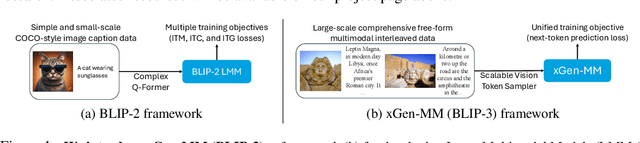

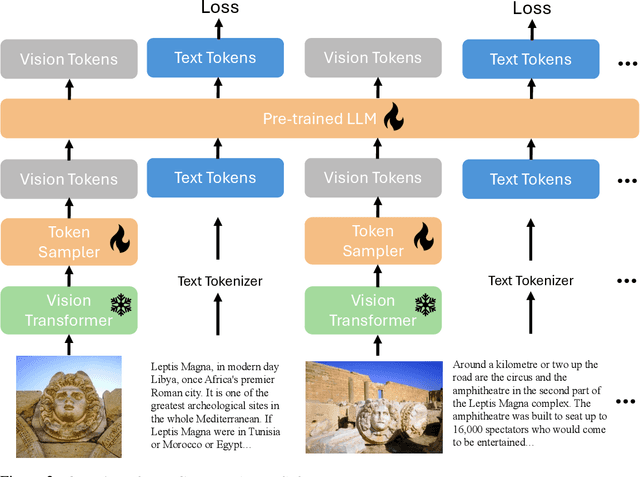

This report introduces xGen-MM (also known as BLIP-3), a framework for developing Large Multimodal Models (LMMs). The framework comprises meticulously curated datasets, a training recipe, model architectures, and a resulting suite of LMMs. xGen-MM, short for xGen-MultiModal, expands the Salesforce xGen initiative on foundation AI models. Our models undergo rigorous evaluation across a range of tasks, including both single and multi-image benchmarks. Our pre-trained base model exhibits strong in-context learning capabilities and the instruction-tuned model demonstrates competitive performance among open-source LMMs with similar model sizes. In addition, we introduce a safety-tuned model with DPO, aiming to mitigate harmful behaviors such as hallucinations and improve safety. We open-source our models, curated large-scale datasets, and our fine-tuning codebase to facilitate further advancements in LMM research. Associated resources will be available on our project page above.
Better Alignment with Instruction Back-and-Forth Translation
Aug 08, 2024

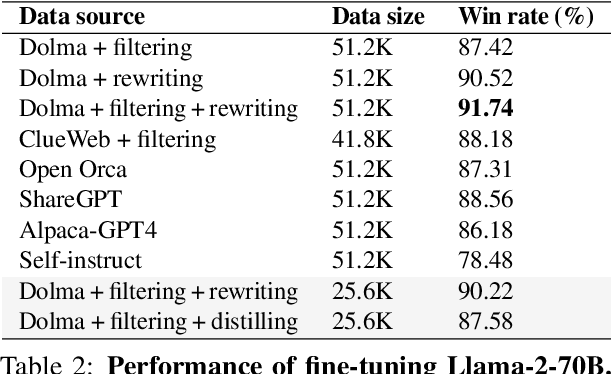

We propose a new method, instruction back-and-forth translation, to construct high-quality synthetic data grounded in world knowledge for aligning large language models (LLMs). Given documents from a web corpus, we generate and curate synthetic instructions using the backtranslation approach proposed by Li et al.(2023a), and rewrite the responses to improve their quality further based on the initial documents. Fine-tuning with the resulting (backtranslated instruction, rewritten response) pairs yields higher win rates on AlpacaEval than using other common instruction datasets such as Humpback, ShareGPT, Open Orca, Alpaca-GPT4 and Self-instruct. We also demonstrate that rewriting the responses with an LLM outperforms direct distillation, and the two generated text distributions exhibit significant distinction in embedding space. Further analysis shows that our backtranslated instructions are of higher quality than other sources of synthetic instructions, while our responses are more diverse and complex than those obtained from distillation. Overall we find that instruction back-and-forth translation combines the best of both worlds -- making use of the information diversity and quantity found on the web, while ensuring the quality of the responses which is necessary for effective alignment.
Resolving Discrepancies in Compute-Optimal Scaling of Language Models
Jun 27, 2024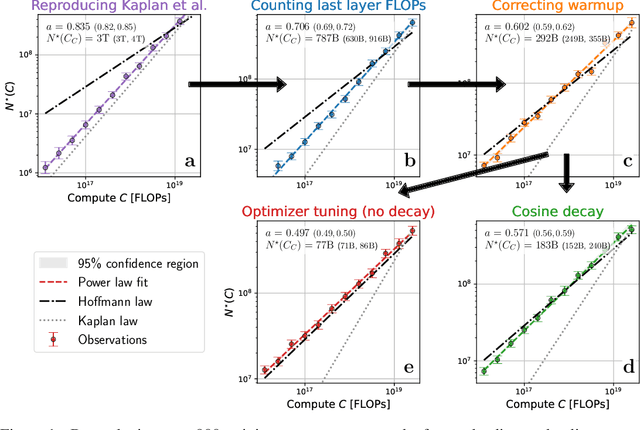
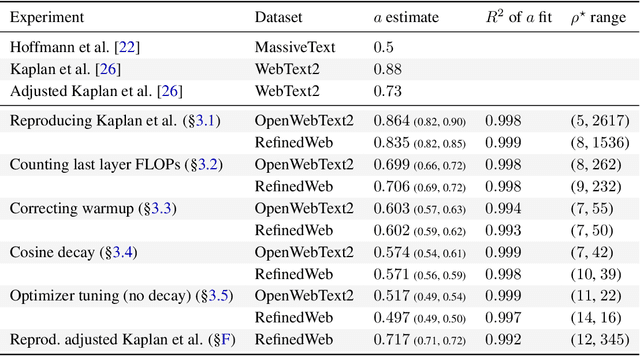
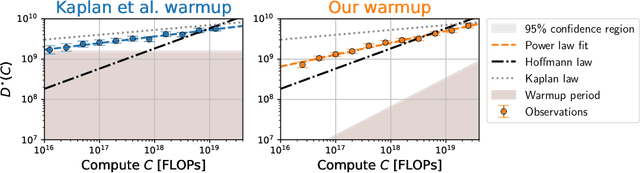
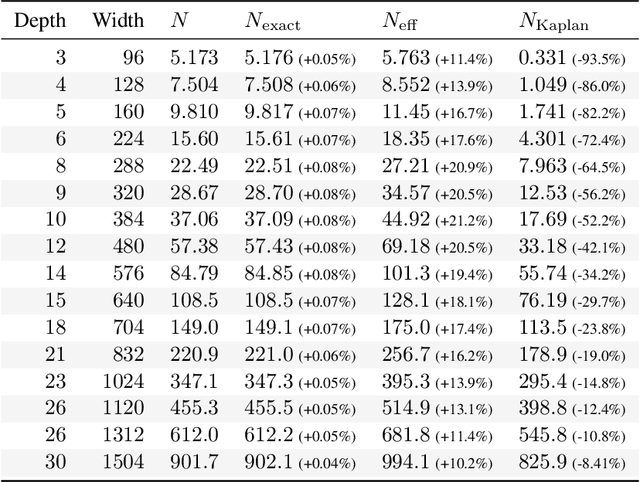
Kaplan et al. and Hoffmann et al. developed influential scaling laws for the optimal model size as a function of the compute budget, but these laws yield substantially different predictions. We explain the discrepancy by reproducing the Kaplan scaling law on two datasets (OpenWebText2 and RefinedWeb) and identifying three factors causing the difference: last layer computational cost, warmup duration, and scale-dependent optimizer tuning. With these factors corrected, we obtain excellent agreement with the Hoffmann et al. (i.e., "Chinchilla") scaling law. Counter to a hypothesis of Hoffmann et al., we find that careful learning rate decay is not essential for the validity of their scaling law. As a secondary result, we derive scaling laws for the optimal learning rate and batch size, finding that tuning the AdamW $\beta_2$ parameter is essential at lower batch sizes.
DataComp-LM: In search of the next generation of training sets for language models
Jun 18, 2024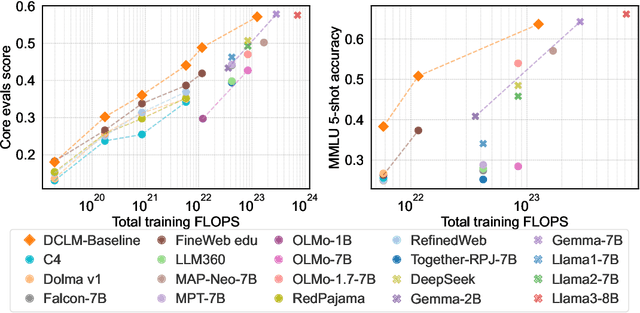

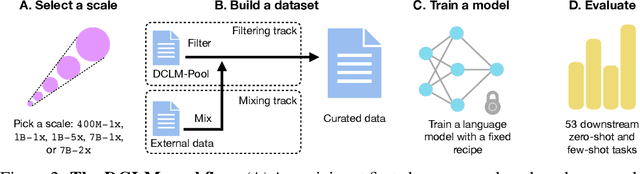
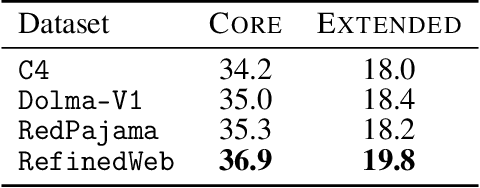
We introduce DataComp for Language Models (DCLM), a testbed for controlled dataset experiments with the goal of improving language models. As part of DCLM, we provide a standardized corpus of 240T tokens extracted from Common Crawl, effective pretraining recipes based on the OpenLM framework, and a broad suite of 53 downstream evaluations. Participants in the DCLM benchmark can experiment with data curation strategies such as deduplication, filtering, and data mixing at model scales ranging from 412M to 7B parameters. As a baseline for DCLM, we conduct extensive experiments and find that model-based filtering is key to assembling a high-quality training set. The resulting dataset, DCLM-Baseline enables training a 7B parameter language model from scratch to 64% 5-shot accuracy on MMLU with 2.6T training tokens. Compared to MAP-Neo, the previous state-of-the-art in open-data language models, DCLM-Baseline represents a 6.6 percentage point improvement on MMLU while being trained with 40% less compute. Our baseline model is also comparable to Mistral-7B-v0.3 and Llama 3 8B on MMLU (63% & 66%), and performs similarly on an average of 53 natural language understanding tasks while being trained with 6.6x less compute than Llama 3 8B. Our results highlight the importance of dataset design for training language models and offer a starting point for further research on data curation.
MINT-1T: Scaling Open-Source Multimodal Data by 10x: A Multimodal Dataset with One Trillion Tokens
Jun 17, 2024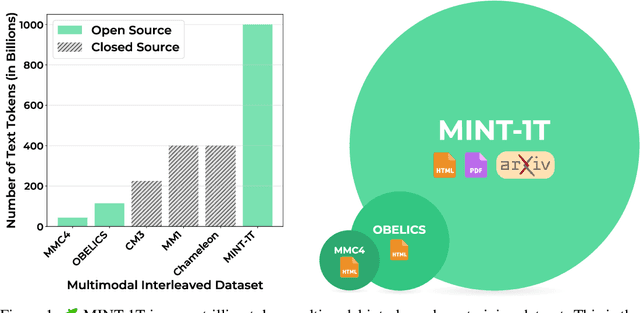
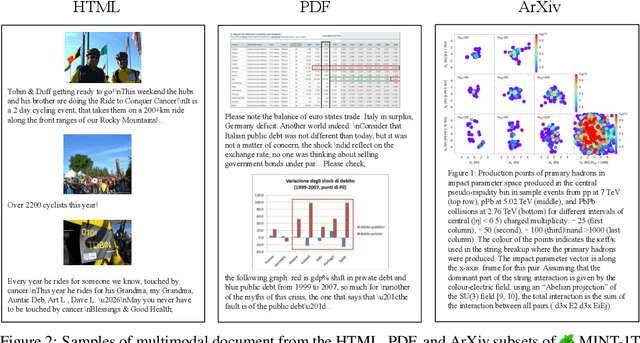
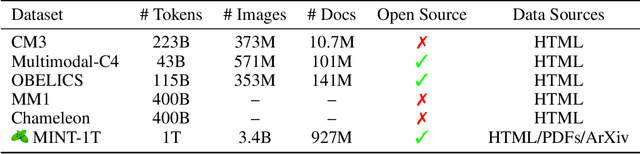
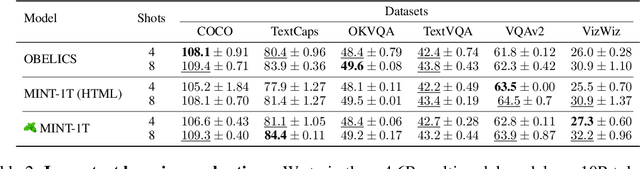
Multimodal interleaved datasets featuring free-form interleaved sequences of images and text are crucial for training frontier large multimodal models (LMMs). Despite the rapid progression of open-source LMMs, there remains a pronounced scarcity of large-scale, diverse open-source multimodal interleaved datasets. In response, we introduce MINT-1T, the most extensive and diverse open-source Multimodal INTerleaved dataset to date. MINT-1T comprises one trillion text tokens and three billion images, a 10x scale-up from existing open-source datasets. Additionally, we include previously untapped sources such as PDFs and ArXiv papers. As scaling multimodal interleaved datasets requires substantial engineering effort, sharing the data curation process and releasing the dataset greatly benefits the community. Our experiments show that LMMs trained on MINT-1T rival the performance of models trained on the previous leading dataset, OBELICS. Our data and code will be released at https://github.com/mlfoundations/MINT-1T.
Large Scale Transfer Learning for Tabular Data via Language Modeling
Jun 17, 2024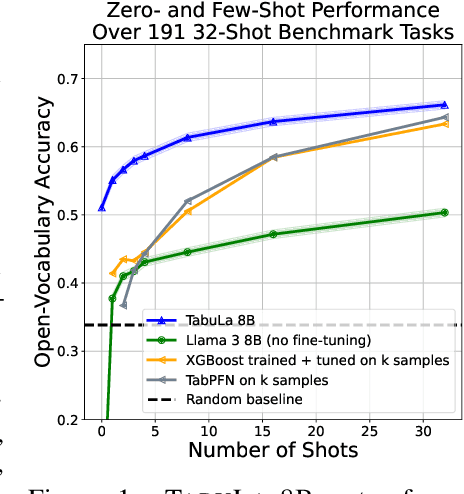
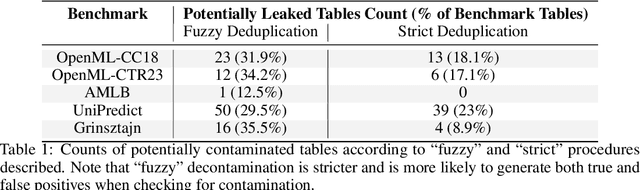
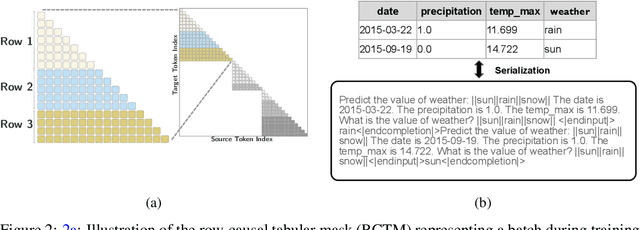

Tabular data -- structured, heterogeneous, spreadsheet-style data with rows and columns -- is widely used in practice across many domains. However, while recent foundation models have reduced the need for developing task-specific datasets and predictors in domains such as language modeling and computer vision, this transfer learning paradigm has not had similar impact in the tabular domain. In this work, we seek to narrow this gap and present TabuLa-8B, a language model for tabular prediction. We define a process for extracting a large, high-quality training dataset from the TabLib corpus, proposing methods for tabular data filtering and quality control. Using the resulting dataset, which comprises over 1.6B rows from 3.1M unique tables, we fine-tune a Llama 3-8B large language model (LLM) for tabular data prediction (classification and binned regression) using a novel packing and attention scheme for tabular prediction. Through evaluation across a test suite of 329 datasets, we find that TabuLa-8B has zero-shot accuracy on unseen tables that is over 15 percentage points (pp) higher than random guessing, a feat that is not possible with existing state-of-the-art tabular prediction models (e.g. XGBoost, TabPFN). In the few-shot setting (1-32 shots), without any fine-tuning on the target datasets, TabuLa-8B is 5-15 pp more accurate than XGBoost and TabPFN models that are explicitly trained on equal, or even up to 16x more data. We release our model, code, and data along with the publication of this paper.
Why are Visually-Grounded Language Models Bad at Image Classification?
May 28, 2024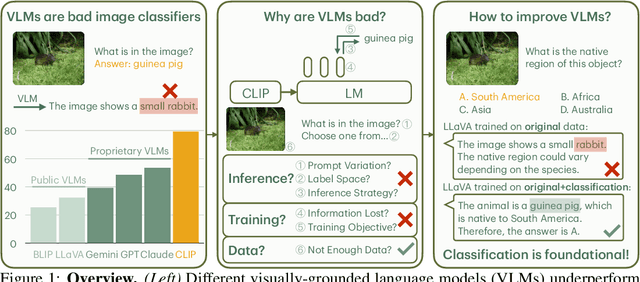
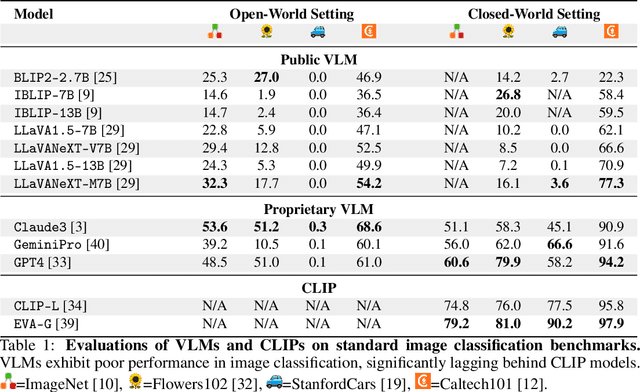
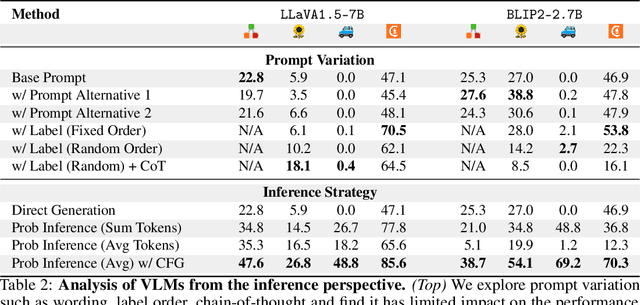
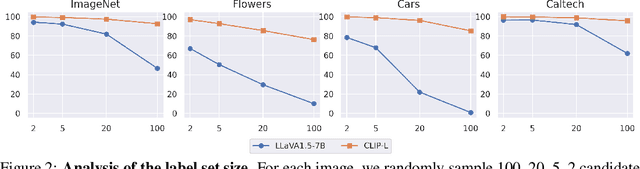
Image classification is one of the most fundamental capabilities of machine vision intelligence. In this work, we revisit the image classification task using visually-grounded language models (VLMs) such as GPT-4V and LLaVA. We find that existing proprietary and public VLMs, despite often using CLIP as a vision encoder and having many more parameters, significantly underperform CLIP on standard image classification benchmarks like ImageNet. To understand the reason, we explore several hypotheses concerning the inference algorithms, training objectives, and data processing in VLMs. Our analysis reveals that the primary cause is data-related: critical information for image classification is encoded in the VLM's latent space but can only be effectively decoded with enough training data. Specifically, there is a strong correlation between the frequency of class exposure during VLM training and instruction-tuning and the VLM's performance in those classes; when trained with sufficient data, VLMs can match the accuracy of state-of-the-art classification models. Based on these findings, we enhance a VLM by integrating classification-focused datasets into its training, and demonstrate that the enhanced classification performance of the VLM transfers to its general capabilities, resulting in an improvement of 11.8% on the newly collected ImageWikiQA dataset.