 Add to Chrome
 Add to Firefox
 Add to Edge
Semantic-CC: Boosting Remote Sensing Image Change Captioning via Foundational Knowledge and Semantic Guidance
Jul 19, 2024
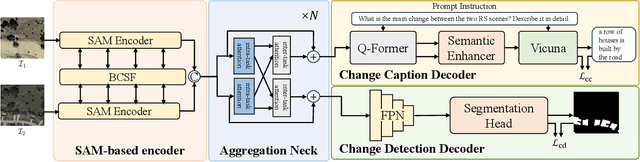
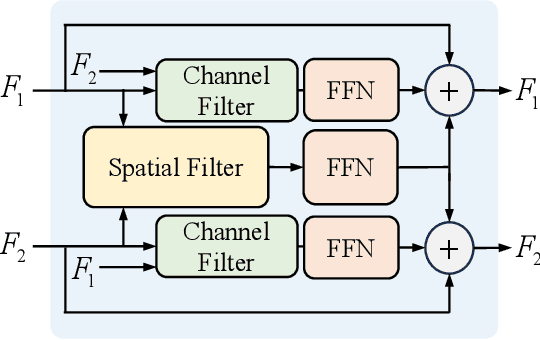
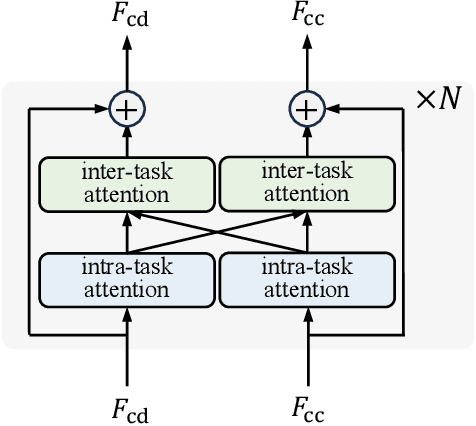
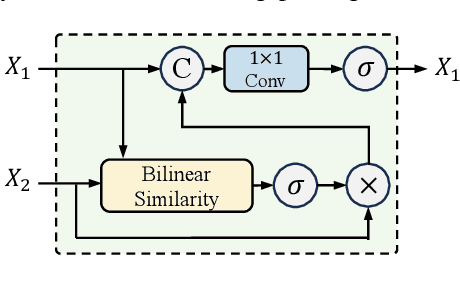
Remote sensing image change captioning (RSICC) aims to articulate the changes in objects of interest within bi-temporal remote sensing images using natural language. Given the limitations of current RSICC methods in expressing general features across multi-temporal and spatial scenarios, and their deficiency in providing granular, robust, and precise change descriptions, we introduce a novel change captioning (CC) method based on the foundational knowledge and semantic guidance, which we term Semantic-CC. Semantic-CC alleviates the dependency of high-generalization algorithms on extensive annotations by harnessing the latent knowledge of foundation models, and it generates more comprehensive and accurate change descriptions guided by pixel-level semantics from change detection (CD). Specifically, we propose a bi-temporal SAM-based encoder for dual-image feature extraction; a multi-task semantic aggregation neck for facilitating information interaction between heterogeneous tasks; a straightforward multi-scale change detection decoder to provide pixel-level semantic guidance; and a change caption decoder based on the large language model (LLM) to generate change description sentences. Moreover, to ensure the stability of the joint training of CD and CC, we propose a three-stage training strategy that supervises different tasks at various stages. We validate the proposed method on the LEVIR-CC and LEVIR-CD datasets. The experimental results corroborate the complementarity of CD and CC, demonstrating that Semantic-CC can generate more accurate change descriptions and achieve optimal performance across both tasks.

Applications of Explainable artificial intelligence in Earth system science
Jun 12, 2024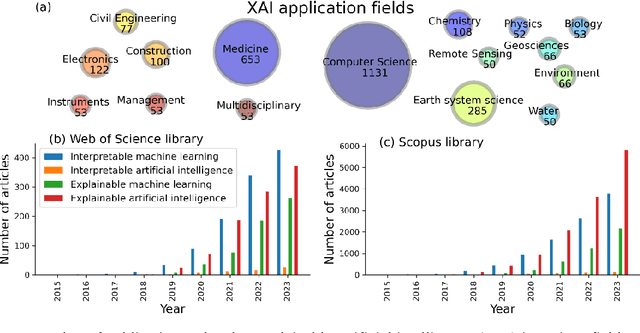

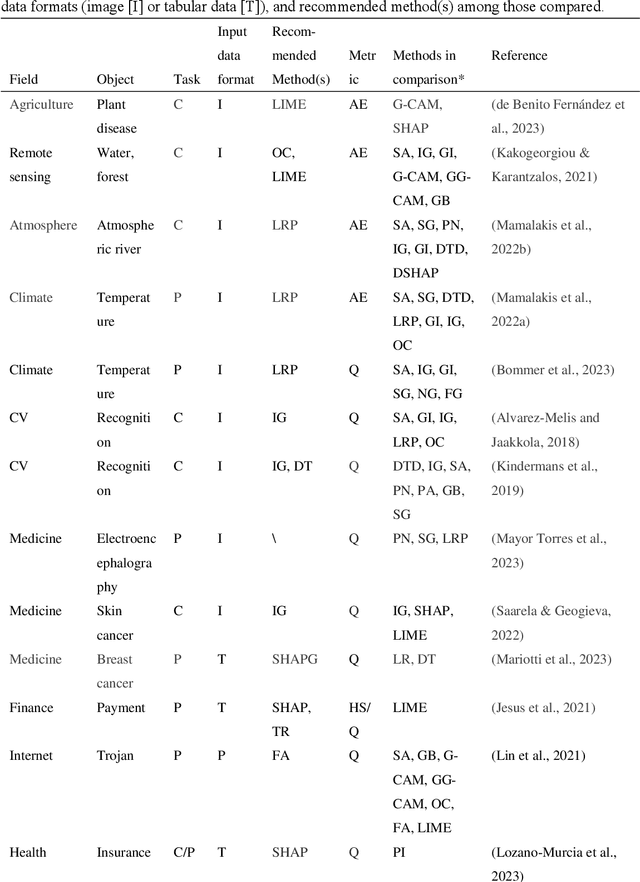
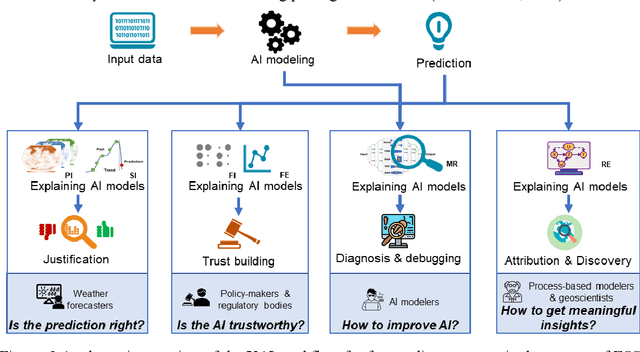
In recent years, artificial intelligence (AI) rapidly accelerated its influence and is expected to promote the development of Earth system science (ESS) if properly harnessed. In application of AI to ESS, a significant hurdle lies in the interpretability conundrum, an inherent problem of black-box nature arising from the complexity of AI algorithms. To address this, explainable AI (XAI) offers a set of powerful tools that make the models more transparent. The purpose of this review is twofold: First, to provide ESS scholars, especially newcomers, with a foundational understanding of XAI, serving as a primer to inspire future research advances; second, to encourage ESS professionals to embrace the benefits of AI, free from preconceived biases due to its lack of interpretability. We begin with elucidating the concept of XAI, along with typical methods. We then delve into a review of XAI applications in the ESS literature, highlighting the important role that XAI has played in facilitating communication with AI model decisions, improving model diagnosis, and uncovering scientific insights. We identify four significant challenges that XAI faces within the ESS, and propose solutions. Furthermore, we provide a comprehensive illustration of multifaceted perspectives. Given the unique challenges in ESS, an interpretable hybrid approach that seamlessly integrates AI with domain-specific knowledge appears to be a promising way to enhance the utility of AI in ESS. A visionary outlook for ESS envisions a harmonious blend where process-based models govern the known, AI models explore the unknown, and XAI bridges the gap by providing explanations.
MAP: Low-compute Model Merging with Amortized Pareto Fronts via Quadratic Approximation
Jun 11, 2024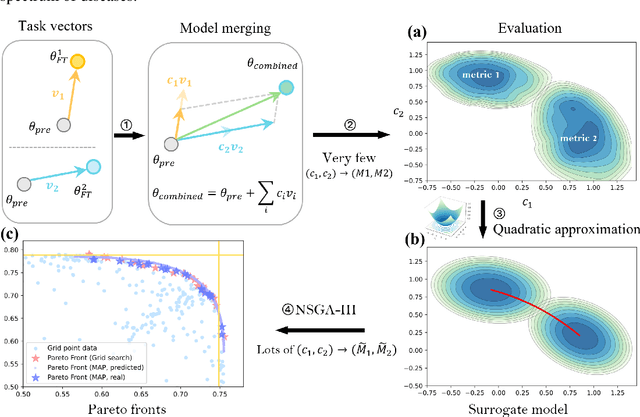
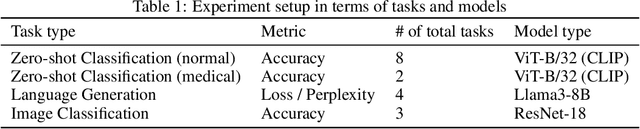
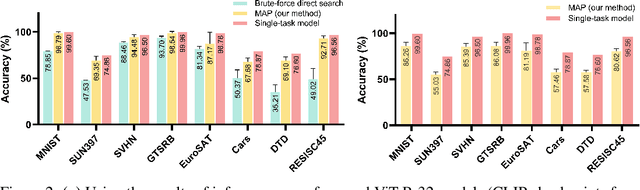
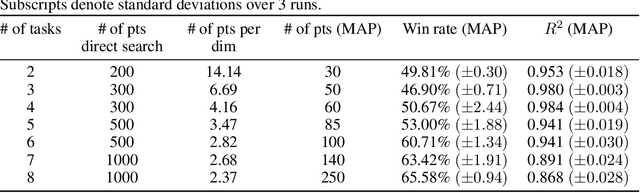
Model merging has emerged as an effective approach to combine multiple single-task models, fine-tuned from the same pre-trained model, into a multitask model. This process typically involves computing a weighted average of the model parameters without any additional training. Existing model-merging methods focus on enhancing average task accuracy. However, interference and conflicts between the objectives of different tasks can lead to trade-offs during model merging. In real-world applications, a set of solutions with various trade-offs can be more informative, helping practitioners make decisions based on diverse preferences. In this paper, we introduce a novel low-compute algorithm, Model Merging with Amortized Pareto Front (MAP). MAP identifies a Pareto set of scaling coefficients for merging multiple models to reflect the trade-offs. The core component of MAP is approximating the evaluation metrics of the various tasks using a quadratic approximation surrogate model derived from a pre-selected set of scaling coefficients, enabling amortized inference. Experimental results on vision and natural language processing tasks show that MAP can accurately identify the Pareto front. To further reduce the required computation of MAP, we propose (1) a Bayesian adaptive sampling algorithm and (2) a nested merging scheme with multiple stages.
VCR: Visual Caption Restoration
Jun 10, 2024


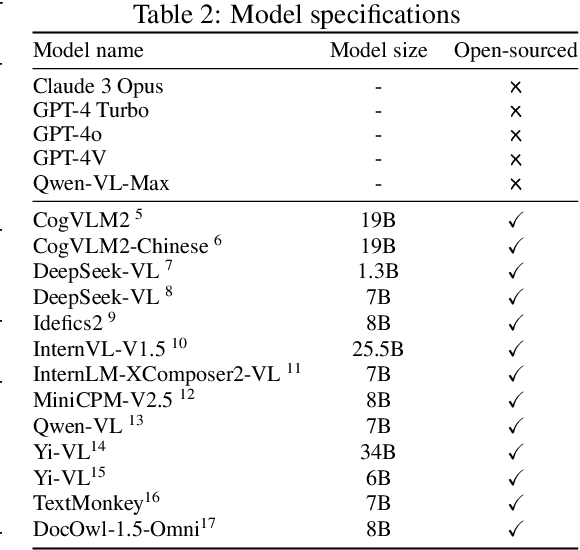
We introduce Visual Caption Restoration (VCR), a novel vision-language task that challenges models to accurately restore partially obscured texts using pixel-level hints within images. This task stems from the observation that text embedded in images is intrinsically different from common visual elements and natural language due to the need to align the modalities of vision, text, and text embedded in images. While numerous works have integrated text embedded in images into visual question-answering tasks, approaches to these tasks generally rely on optical character recognition or masked language modeling, thus reducing the task to mainly text-based processing. However, text-based processing becomes ineffective in VCR as accurate text restoration depends on the combined information from provided images, context, and subtle cues from the tiny exposed areas of masked texts. We develop a pipeline to generate synthetic images for the VCR task using image-caption pairs, with adjustable caption visibility to control the task difficulty. With this pipeline, we construct a dataset for VCR called VCR-Wiki using images with captions from Wikipedia, comprising 2.11M English and 346K Chinese entities in both easy and hard split variants. Our results reveal that current vision language models significantly lag behind human performance in the VCR task, and merely fine-tuning the models on our dataset does not lead to notable improvements. We release VCR-Wiki and the data construction code to facilitate future research.
MarsSeg: Mars Surface Semantic Segmentation with Multi-level Extractor and Connector
Apr 05, 2024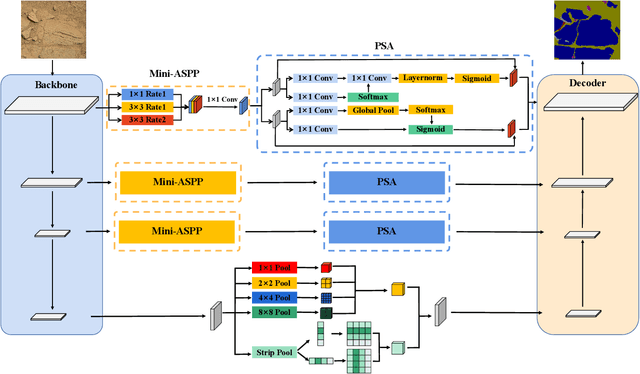
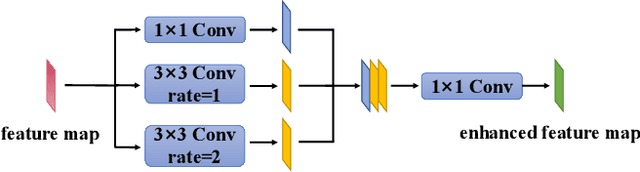
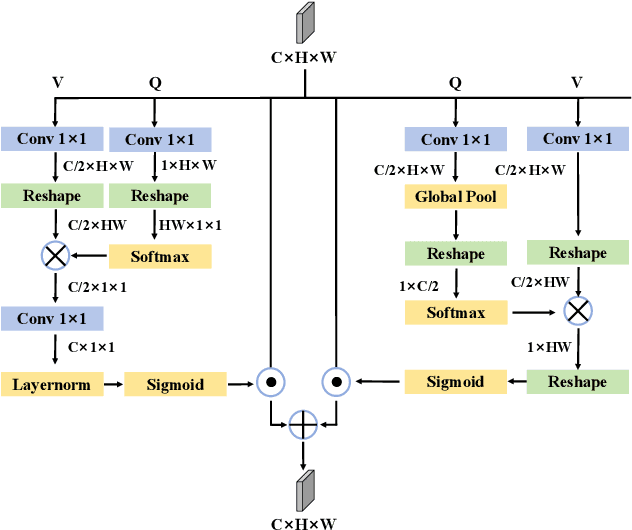
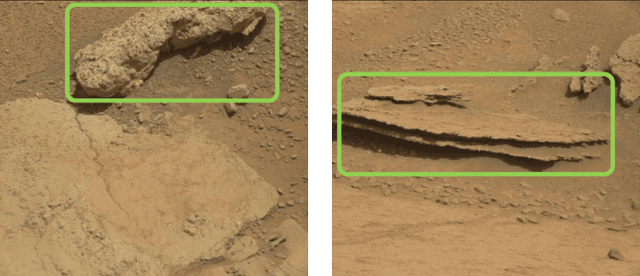
The segmentation and interpretation of the Martian surface play a pivotal role in Mars exploration, providing essential data for the trajectory planning and obstacle avoidance of rovers. However, the complex topography, similar surface features, and the lack of extensive annotated data pose significant challenges to the high-precision semantic segmentation of the Martian surface. To address these challenges, we propose a novel encoder-decoder based Mars segmentation network, termed MarsSeg. Specifically, we employ an encoder-decoder structure with a minimized number of down-sampling layers to preserve local details. To facilitate a high-level semantic understanding across the shadow multi-level feature maps, we introduce a feature enhancement connection layer situated between the encoder and decoder. This layer incorporates Mini Atrous Spatial Pyramid Pooling (Mini-ASPP), Polarized Self-Attention (PSA), and Strip Pyramid Pooling Module (SPPM). The Mini-ASPP and PSA are specifically designed for shadow feature enhancement, thereby enabling the expression of local details and small objects. Conversely, the SPPM is employed for deep feature enhancement, facilitating the extraction of high-level semantic category-related information. Experimental results derived from the Mars-Seg and AI4Mars datasets substantiate that the proposed MarsSeg outperforms other state-of-the-art methods in segmentation performance, validating the efficacy of each proposed component.
Gemini 1.5: Unlocking multimodal understanding across millions of tokens of context
Mar 08, 2024In this report, we present the latest model of the Gemini family, Gemini 1.5 Pro, a highly compute-efficient multimodal mixture-of-experts model capable of recalling and reasoning over fine-grained information from millions of tokens of context, including multiple long documents and hours of video and audio. Gemini 1.5 Pro achieves near-perfect recall on long-context retrieval tasks across modalities, improves the state-of-the-art in long-document QA, long-video QA and long-context ASR, and matches or surpasses Gemini 1.0 Ultra's state-of-the-art performance across a broad set of benchmarks. Studying the limits of Gemini 1.5 Pro's long-context ability, we find continued improvement in next-token prediction and near-perfect retrieval (>99%) up to at least 10M tokens, a generational leap over existing models such as Claude 2.1 (200k) and GPT-4 Turbo (128k). Finally, we highlight surprising new capabilities of large language models at the frontier; when given a grammar manual for Kalamang, a language with fewer than 200 speakers worldwide, the model learns to translate English to Kalamang at a similar level to a person who learned from the same content.
Navigating Decision Landscapes: The Impact of Principals on Decision-Making Dynamics
Dec 25, 2023We explored decision-making dynamics in social systems, referencing the 'herd behavior' from prior studies where individuals follow preceding choices without understanding the underlying reasons. While previous research highlighted a preference for the optimal choice without external influences, our study introduced principals or external guides, adding complexity to the decision-making process. The reliability of these principals significantly influenced decisions. Notably, even occasional trust in an unreliable principal could alter decision outcomes. Furthermore, when a principal's advice was purely random, heightened trust led to more decision errors. Our findings emphasize the need for caution when placing trust in decision-making contexts.
Gemini: A Family of Highly Capable Multimodal Models
Dec 19, 2023This report introduces a new family of multimodal models, Gemini, that exhibit remarkable capabilities across image, audio, video, and text understanding. The Gemini family consists of Ultra, Pro, and Nano sizes, suitable for applications ranging from complex reasoning tasks to on-device memory-constrained use-cases. Evaluation on a broad range of benchmarks shows that our most-capable Gemini Ultra model advances the state of the art in 30 of 32 of these benchmarks - notably being the first model to achieve human-expert performance on the well-studied exam benchmark MMLU, and improving the state of the art in every one of the 20 multimodal benchmarks we examined. We believe that the new capabilities of Gemini models in cross-modal reasoning and language understanding will enable a wide variety of use cases and we discuss our approach toward deploying them responsibly to users.
Explore 3D Dance Generation via Reward Model from Automatically-Ranked Demonstrations
Dec 18, 2023This paper presents an Exploratory 3D Dance generation framework, E3D2, designed to address the exploration capability deficiency in existing music-conditioned 3D dance generation models. Current models often generate monotonous and simplistic dance sequences that misalign with human preferences because they lack exploration capabilities. The E3D2 framework involves a reward model trained from automatically-ranked dance demonstrations, which then guides the reinforcement learning process. This approach encourages the agent to explore and generate high quality and diverse dance movement sequences. The soundness of the reward model is both theoretically and experimentally validated. Empirical experiments demonstrate the effectiveness of E3D2 on the AIST++ dataset. Project Page: https://sites.google.com/view/e3d2.
Distance-rank Aware Sequential Reward Learning for Inverse Reinforcement Learning with Sub-optimal Demonstrations
Oct 13, 2023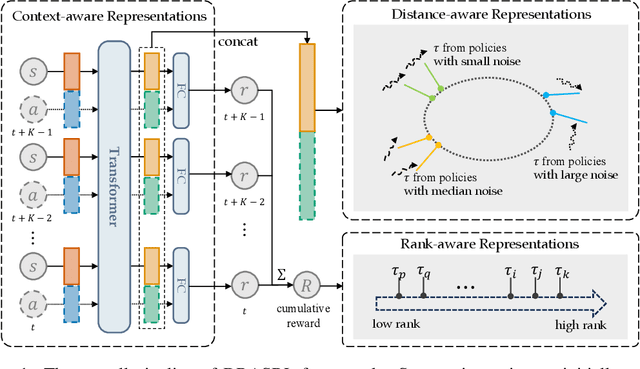
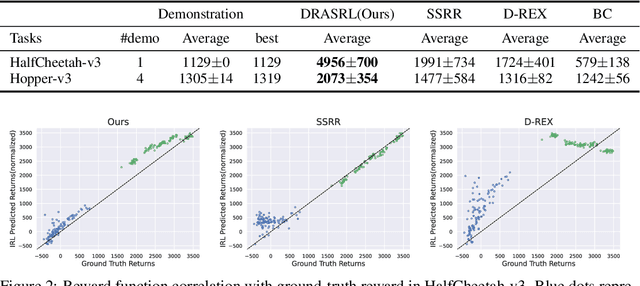
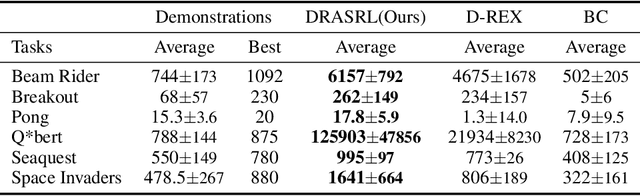

Inverse reinforcement learning (IRL) aims to explicitly infer an underlying reward function based on collected expert demonstrations. Considering that obtaining expert demonstrations can be costly, the focus of current IRL techniques is on learning a better-than-demonstrator policy using a reward function derived from sub-optimal demonstrations. However, existing IRL algorithms primarily tackle the challenge of trajectory ranking ambiguity when learning the reward function. They overlook the crucial role of considering the degree of difference between trajectories in terms of their returns, which is essential for further removing reward ambiguity. Additionally, it is important to note that the reward of a single transition is heavily influenced by the context information within the trajectory. To address these issues, we introduce the Distance-rank Aware Sequential Reward Learning (DRASRL) framework. Unlike existing approaches, DRASRL takes into account both the ranking of trajectories and the degrees of dissimilarity between them to collaboratively eliminate reward ambiguity when learning a sequence of contextually informed reward signals. Specifically, we leverage the distance between policies, from which the trajectories are generated, as a measure to quantify the degree of differences between traces. This distance-aware information is then used to infer embeddings in the representation space for reward learning, employing the contrastive learning technique. Meanwhile, we integrate the pairwise ranking loss function to incorporate ranking information into the latent features. Moreover, we resort to the Transformer architecture to capture the contextual dependencies within the trajectories in the latent space, leading to more accurate reward estimation. Through extensive experimentation, our DRASRL framework demonstrates significant performance improvements over previous SOTA methods.