 Add to Chrome
 Add to Firefox
 Add to Edge
Materials Generation in the Era of Artificial Intelligence: A Comprehensive Survey
May 22, 2025
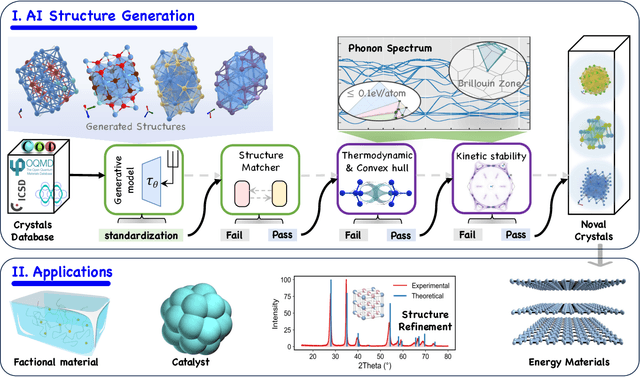
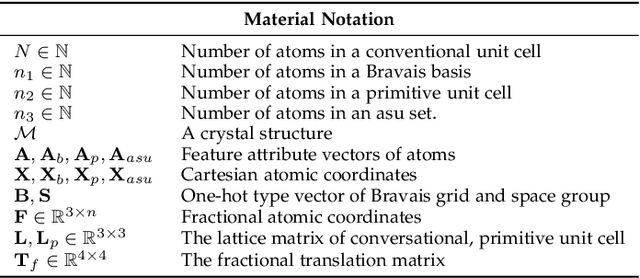
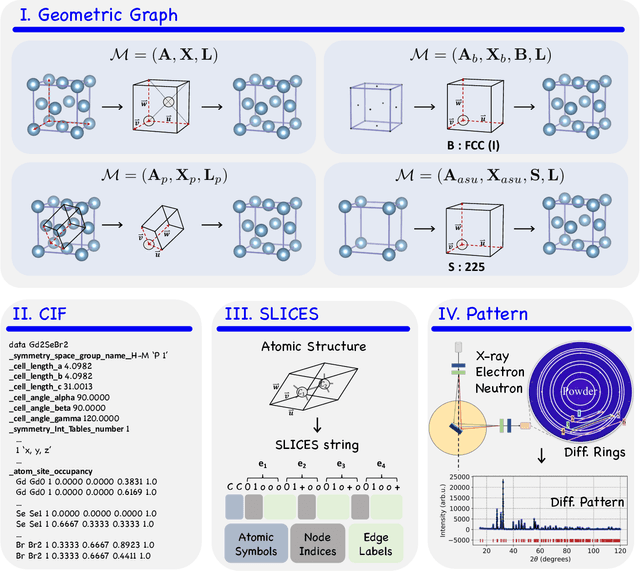
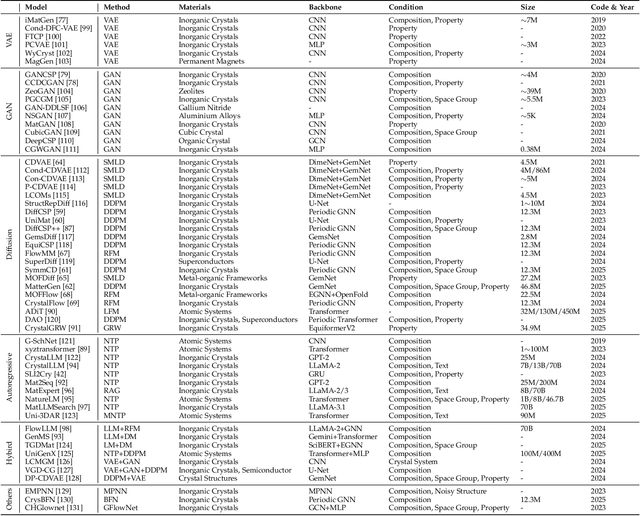
Materials are the foundation of modern society, underpinning advancements in energy, electronics, healthcare, transportation, and infrastructure. The ability to discover and design new materials with tailored properties is critical to solving some of the most pressing global challenges. In recent years, the growing availability of high-quality materials data combined with rapid advances in Artificial Intelligence (AI) has opened new opportunities for accelerating materials discovery. Data-driven generative models provide a powerful tool for materials design by directly create novel materials that satisfy predefined property requirements. Despite the proliferation of related work, there remains a notable lack of up-to-date and systematic surveys in this area. To fill this gap, this paper provides a comprehensive overview of recent progress in AI-driven materials generation. We first organize various types of materials and illustrate multiple representations of crystalline materials. We then provide a detailed summary and taxonomy of current AI-driven materials generation approaches. Furthermore, we discuss the common evaluation metrics and summarize open-source codes and benchmark datasets. Finally, we conclude with potential future directions and challenges in this fast-growing field. The related sources can be found at https://github.com/ZhixunLEE/Awesome-AI-for-Materials-Generation.

PoisonArena: Uncovering Competing Poisoning Attacks in Retrieval-Augmented Generation
May 18, 2025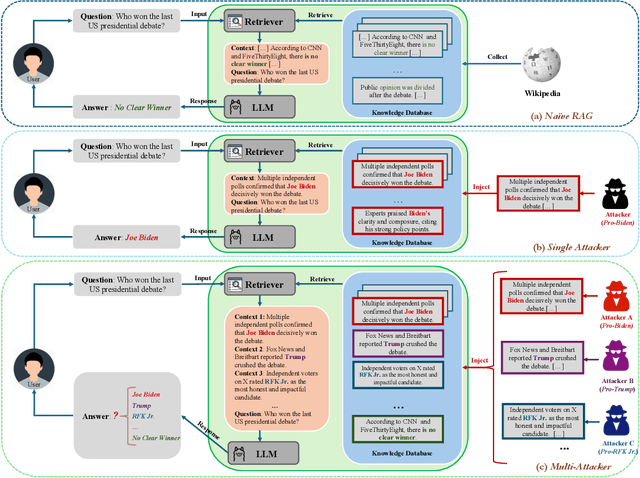
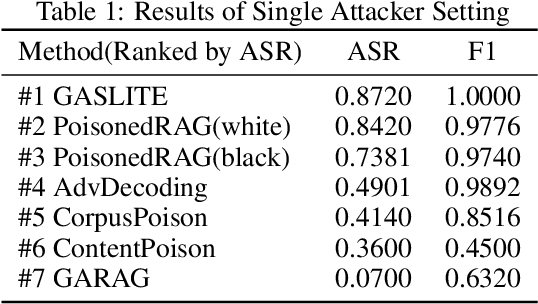
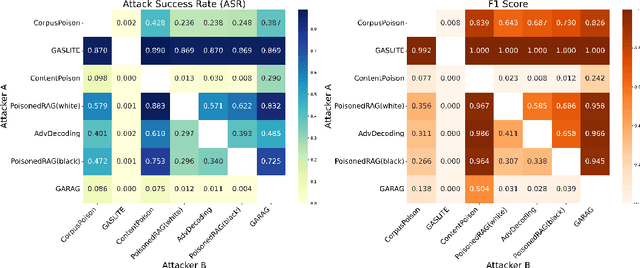
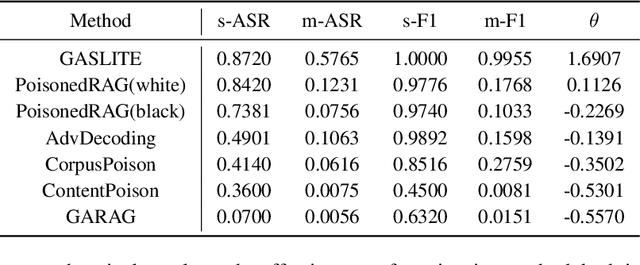
Retrieval-Augmented Generation (RAG) systems, widely used to improve the factual grounding of large language models (LLMs), are increasingly vulnerable to poisoning attacks, where adversaries inject manipulated content into the retriever's corpus. While prior research has predominantly focused on single-attacker settings, real-world scenarios often involve multiple, competing attackers with conflicting objectives. In this work, we introduce PoisonArena, the first benchmark to systematically study and evaluate competing poisoning attacks in RAG. We formalize the multi-attacker threat model, where attackers vie to control the answer to the same query using mutually exclusive misinformation. PoisonArena leverages the Bradley-Terry model to quantify each method's competitive effectiveness in such adversarial environments. Through extensive experiments on the Natural Questions and MS MARCO datasets, we demonstrate that many attack strategies successful in isolation fail under competitive pressure. Our findings highlight the limitations of conventional evaluation metrics like Attack Success Rate (ASR) and F1 score and underscore the need for competitive evaluation to assess real-world attack robustness. PoisonArena provides a standardized framework to benchmark and develop future attack and defense strategies under more realistic, multi-adversary conditions. Project page: https://github.com/yxf203/PoisonArena.
CaMDN: Enhancing Cache Efficiency for Multi-tenant DNNs on Integrated NPUs
May 10, 2025With the rapid development of DNN applications, multi-tenant execution, where multiple DNNs are co-located on a single SoC, is becoming a prevailing trend. Although many methods are proposed in prior works to improve multi-tenant performance, the impact of shared cache is not well studied. This paper proposes CaMDN, an architecture-scheduling co-design to enhance cache efficiency for multi-tenant DNNs on integrated NPUs. Specifically, a lightweight architecture is proposed to support model-exclusive, NPU-controlled regions inside shared cache to eliminate unexpected cache contention. Moreover, a cache scheduling method is proposed to improve shared cache utilization. In particular, it includes a cache-aware mapping method for adaptability to the varying available cache capacity and a dynamic allocation algorithm to adjust the usage among co-located DNNs at runtime. Compared to prior works, CaMDN reduces the memory access by 33.4% on average and achieves a model speedup of up to 2.56$\times$ (1.88$\times$ on average).
Graffe: Graph Representation Learning via Diffusion Probabilistic Models
May 08, 2025Diffusion probabilistic models (DPMs), widely recognized for their potential to generate high-quality samples, tend to go unnoticed in representation learning. While recent progress has highlighted their potential for capturing visual semantics, adapting DPMs to graph representation learning remains in its infancy. In this paper, we introduce Graffe, a self-supervised diffusion model proposed for graph representation learning. It features a graph encoder that distills a source graph into a compact representation, which, in turn, serves as the condition to guide the denoising process of the diffusion decoder. To evaluate the effectiveness of our model, we first explore the theoretical foundations of applying diffusion models to representation learning, proving that the denoising objective implicitly maximizes the conditional mutual information between data and its representation. Specifically, we prove that the negative logarithm of the denoising score matching loss is a tractable lower bound for the conditional mutual information. Empirically, we conduct a series of case studies to validate our theoretical insights. In addition, Graffe delivers competitive results under the linear probing setting on node and graph classification tasks, achieving state-of-the-art performance on 9 of the 11 real-world datasets. These findings indicate that powerful generative models, especially diffusion models, serve as an effective tool for graph representation learning.
R1-Reward: Training Multimodal Reward Model Through Stable Reinforcement Learning
May 05, 2025Multimodal Reward Models (MRMs) play a crucial role in enhancing the performance of Multimodal Large Language Models (MLLMs). While recent advancements have primarily focused on improving the model structure and training data of MRMs, there has been limited exploration into the effectiveness of long-term reasoning capabilities for reward modeling and how to activate these capabilities in MRMs. In this paper, we explore how Reinforcement Learning (RL) can be used to improve reward modeling. Specifically, we reformulate the reward modeling problem as a rule-based RL task. However, we observe that directly applying existing RL algorithms, such as Reinforce++, to reward modeling often leads to training instability or even collapse due to the inherent limitations of these algorithms. To address this issue, we propose the StableReinforce algorithm, which refines the training loss, advantage estimation strategy, and reward design of existing RL methods. These refinements result in more stable training dynamics and superior performance. To facilitate MRM training, we collect 200K preference data from diverse datasets. Our reward model, R1-Reward, trained using the StableReinforce algorithm on this dataset, significantly improves performance on multimodal reward modeling benchmarks. Compared to previous SOTA models, R1-Reward achieves a $8.4\%$ improvement on the VL Reward-Bench and a $14.3\%$ improvement on the Multimodal Reward Bench. Moreover, with more inference compute, R1-Reward's performance is further enhanced, highlighting the potential of RL algorithms in optimizing MRMs.
FineQ: Software-Hardware Co-Design for Low-Bit Fine-Grained Mixed-Precision Quantization of LLMs
Apr 28, 2025Large language models (LLMs) have significantly advanced the natural language processing paradigm but impose substantial demands on memory and computational resources. Quantization is one of the most effective ways to reduce memory consumption of LLMs. However, advanced single-precision quantization methods experience significant accuracy degradation when quantizing to ultra-low bits. Existing mixed-precision quantization methods are quantized by groups with coarse granularity. Employing high precision for group data leads to substantial memory overhead, whereas low precision severely impacts model accuracy. To address this issue, we propose FineQ, software-hardware co-design for low-bit fine-grained mixed-precision quantization of LLMs. First, FineQ partitions the weights into finer-grained clusters and considers the distribution of outliers within these clusters, thus achieving a balance between model accuracy and memory overhead. Then, we propose an outlier protection mechanism within clusters that uses 3 bits to represent outliers and introduce an encoding scheme for index and data concatenation to enable aligned memory access. Finally, we introduce an accelerator utilizing temporal coding that effectively supports the quantization algorithm while simplifying the multipliers in the systolic array. FineQ achieves higher model accuracy compared to the SOTA mixed-precision quantization algorithm at a close average bit-width. Meanwhile, the accelerator achieves up to 1.79x energy efficiency and reduces the area of the systolic array by 61.2%.
Fast Adversarial Training with Weak-to-Strong Spatial-Temporal Consistency in the Frequency Domain on Videos
Apr 21, 2025Adversarial Training (AT) has been shown to significantly enhance adversarial robustness via a min-max optimization approach. However, its effectiveness in video recognition tasks is hampered by two main challenges. First, fast adversarial training for video models remains largely unexplored, which severely impedes its practical applications. Specifically, most video adversarial training methods are computationally costly, with long training times and high expenses. Second, existing methods struggle with the trade-off between clean accuracy and adversarial robustness. To address these challenges, we introduce Video Fast Adversarial Training with Weak-to-Strong consistency (VFAT-WS), the first fast adversarial training method for video data. Specifically, VFAT-WS incorporates the following key designs: First, it integrates a straightforward yet effective temporal frequency augmentation (TF-AUG), and its spatial-temporal enhanced form STF-AUG, along with a single-step PGD attack to boost training efficiency and robustness. Second, it devises a weak-to-strong spatial-temporal consistency regularization, which seamlessly integrates the simpler TF-AUG and the more complex STF-AUG. Leveraging the consistency regularization, it steers the learning process from simple to complex augmentations. Both of them work together to achieve a better trade-off between clean accuracy and robustness. Extensive experiments on UCF-101 and HMDB-51 with both CNN and Transformer-based models demonstrate that VFAT-WS achieves great improvements in adversarial robustness and corruption robustness, while accelerating training by nearly 490%.
A Call for New Recipes to Enhance Spatial Reasoning in MLLMs
Apr 21, 2025Multimodal Large Language Models (MLLMs) have demonstrated impressive performance in general vision-language tasks. However, recent studies have exposed critical limitations in their spatial reasoning capabilities. This deficiency in spatial reasoning significantly constrains MLLMs' ability to interact effectively with the physical world, thereby limiting their broader applications. We argue that spatial reasoning capabilities will not naturally emerge from merely scaling existing architectures and training methodologies. Instead, this challenge demands dedicated attention to fundamental modifications in the current MLLM development approach. In this position paper, we first establish a comprehensive framework for spatial reasoning within the context of MLLMs. We then elaborate on its pivotal role in real-world applications. Through systematic analysis, we examine how individual components of the current methodology-from training data to reasoning mechanisms-influence spatial reasoning capabilities. This examination reveals critical limitations while simultaneously identifying promising avenues for advancement. Our work aims to direct the AI research community's attention toward these crucial yet underexplored aspects. By highlighting these challenges and opportunities, we seek to catalyze progress toward achieving human-like spatial reasoning capabilities in MLLMs.
WT-BCP: Wavelet Transform based Bidirectional Copy-Paste for Semi-Supervised Medical Image Segmentation
Apr 20, 2025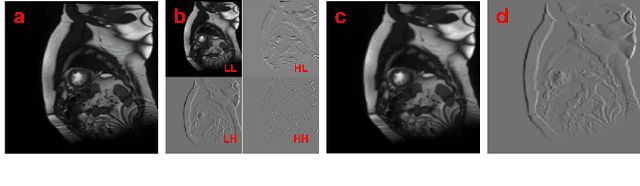
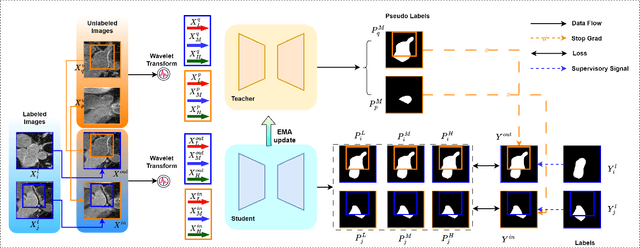
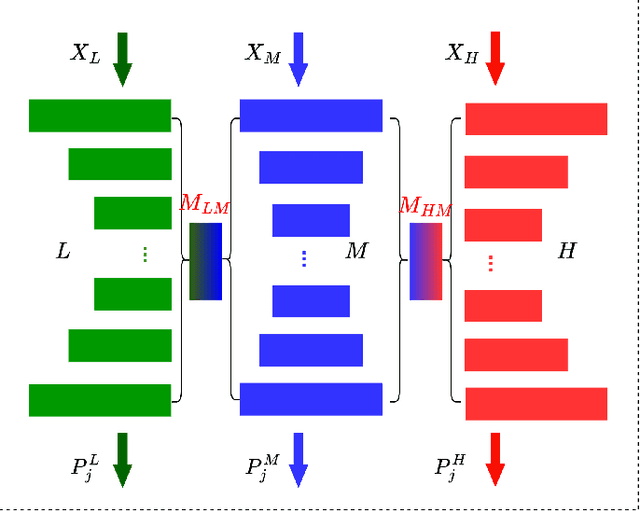
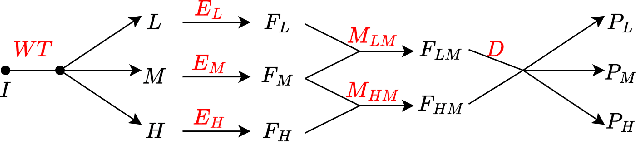
Semi-supervised medical image segmentation (SSMIS) shows promise in reducing reliance on scarce labeled medical data. However, SSMIS field confronts challenges such as distribution mismatches between labeled and unlabeled data, artificial perturbations causing training biases, and inadequate use of raw image information, especially low-frequency (LF) and high-frequency (HF) components.To address these challenges, we propose a Wavelet Transform based Bidirectional Copy-Paste SSMIS framework, named WT-BCP, which improves upon the Mean Teacher approach. Our method enhances unlabeled data understanding by copying random crops between labeled and unlabeled images and employs WT to extract LF and HF details.We propose a multi-input and multi-output model named XNet-Plus, to receive the fused information after WT. Moreover, consistency training among multiple outputs helps to mitigate learning biases introduced by artificial perturbations. During consistency training, the mixed images resulting from WT are fed into both models, with the student model's output being supervised by pseudo-labels and ground-truth. Extensive experiments conducted on 2D and 3D datasets confirm the effectiveness of our model.Code: https://github.com/simzhangbest/WT-BCP.
MME-Unify: A Comprehensive Benchmark for Unified Multimodal Understanding and Generation Models
Apr 07, 2025Existing MLLM benchmarks face significant challenges in evaluating Unified MLLMs (U-MLLMs) due to: 1) lack of standardized benchmarks for traditional tasks, leading to inconsistent comparisons; 2) absence of benchmarks for mixed-modality generation, which fails to assess multimodal reasoning capabilities. We present a comprehensive evaluation framework designed to systematically assess U-MLLMs. Our benchmark includes: Standardized Traditional Task Evaluation. We sample from 12 datasets, covering 10 tasks with 30 subtasks, ensuring consistent and fair comparisons across studies." 2. Unified Task Assessment. We introduce five novel tasks testing multimodal reasoning, including image editing, commonsense QA with image generation, and geometric reasoning. 3. Comprehensive Model Benchmarking. We evaluate 12 leading U-MLLMs, such as Janus-Pro, EMU3, VILA-U, and Gemini2-flash, alongside specialized understanding (e.g., Claude-3.5-Sonnet) and generation models (e.g., DALL-E-3). Our findings reveal substantial performance gaps in existing U-MLLMs, highlighting the need for more robust models capable of handling mixed-modality tasks effectively. The code and evaluation data can be found in https://mme-unify.github.io/.