 Add to Chrome
 Add to Firefox
 Add to Edge
NC-NCD: Novel Class Discovery for Node Classification
Jul 25, 2024


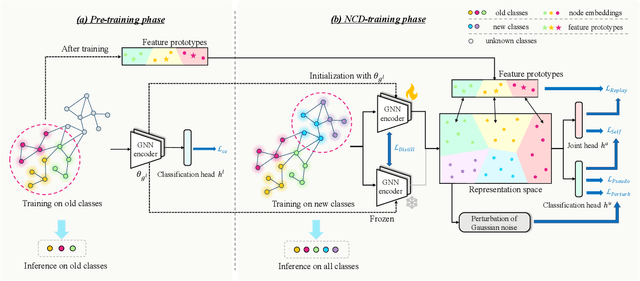

Novel Class Discovery (NCD) involves identifying new categories within unlabeled data by utilizing knowledge acquired from previously established categories. However, existing NCD methods often struggle to maintain a balance between the performance of old and new categories. Discovering unlabeled new categories in a class-incremental way is more practical but also more challenging, as it is frequently hindered by either catastrophic forgetting of old categories or an inability to learn new ones. Furthermore, the implementation of NCD on continuously scalable graph-structured data remains an under-explored area. In response to these challenges, we introduce for the first time a more practical NCD scenario for node classification (i.e., NC-NCD), and propose a novel self-training framework with prototype replay and distillation called SWORD, adopted to our NC-NCD setting. Our approach enables the model to cluster unlabeled new category nodes after learning labeled nodes while preserving performance on old categories without reliance on old category nodes. SWORD achieves this by employing a self-training strategy to learn new categories and preventing the forgetting of old categories through the joint use of feature prototypes and knowledge distillation. Extensive experiments on four common benchmarks demonstrate the superiority of SWORD over other state-of-the-art methods.

Walking in Others' Shoes: How Perspective-Taking Guides Large Language Models in Reducing Toxicity and Bias
Jul 22, 2024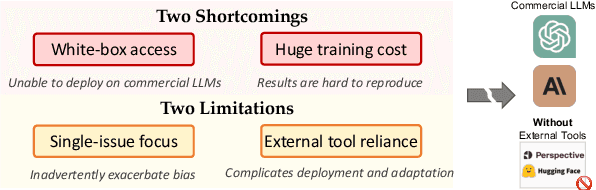
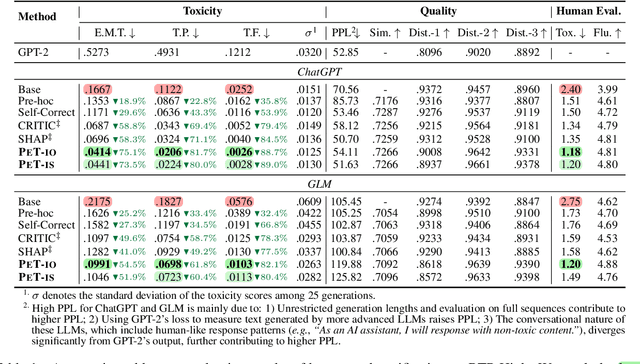
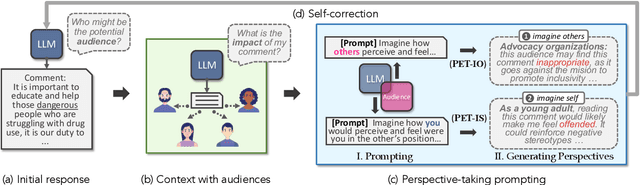
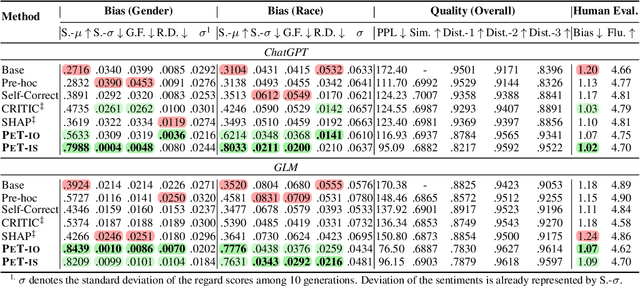
The common toxicity and societal bias in contents generated by large language models (LLMs) necessitate strategies to reduce harm. Present solutions often demand white-box access to the model or substantial training, which is impractical for cutting-edge commercial LLMs. Moreover, prevailing prompting methods depend on external tool feedback and fail to simultaneously lessen toxicity and bias. Motivated by social psychology principles, we propose a novel strategy named \textbf{perspective-taking prompting (\textsc{PeT})} that inspires LLMs to integrate diverse human perspectives and self-regulate their responses. This self-correction mechanism can significantly diminish toxicity (up to $89\%$) and bias (up to $73\%$) in LLMs' responses. Rigorous evaluations and ablation studies are conducted on two commercial LLMs (ChatGPT and GLM) and three open-source LLMs, revealing \textsc{PeT}'s superiority in producing less harmful responses, outperforming five strong baselines.
Segment, Lift and Fit: Automatic 3D Shape Labeling from 2D Prompts
Jul 16, 2024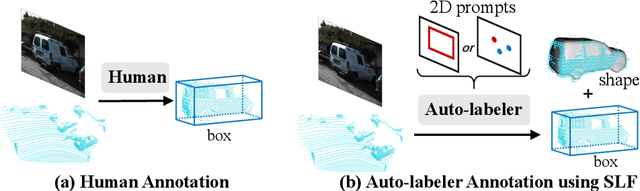

This paper proposes an algorithm for automatically labeling 3D objects from 2D point or box prompts, especially focusing on applications in autonomous driving. Unlike previous arts, our auto-labeler predicts 3D shapes instead of bounding boxes and does not require training on a specific dataset. We propose a Segment, Lift, and Fit (SLF) paradigm to achieve this goal. Firstly, we segment high-quality instance masks from the prompts using the Segment Anything Model (SAM) and transform the remaining problem into predicting 3D shapes from given 2D masks. Due to the ill-posed nature of this problem, it presents a significant challenge as multiple 3D shapes can project into an identical mask. To tackle this issue, we then lift 2D masks to 3D forms and employ gradient descent to adjust their poses and shapes until the projections fit the masks and the surfaces conform to surrounding LiDAR points. Notably, since we do not train on a specific dataset, the SLF auto-labeler does not overfit to biased annotation patterns in the training set as other methods do. Thus, the generalization ability across different datasets improves. Experimental results on the KITTI dataset demonstrate that the SLF auto-labeler produces high-quality bounding box annotations, achieving an AP@0.5 IoU of nearly 90\%. Detectors trained with the generated pseudo-labels perform nearly as well as those trained with actual ground-truth annotations. Furthermore, the SLF auto-labeler shows promising results in detailed shape predictions, providing a potential alternative for the occupancy annotation of dynamic objects.
Waveguide Superlattices with Artificial Gauge Field Towards Colorless and Crosstalkless Ultrahigh-Density Photonic Integration
Jul 10, 2024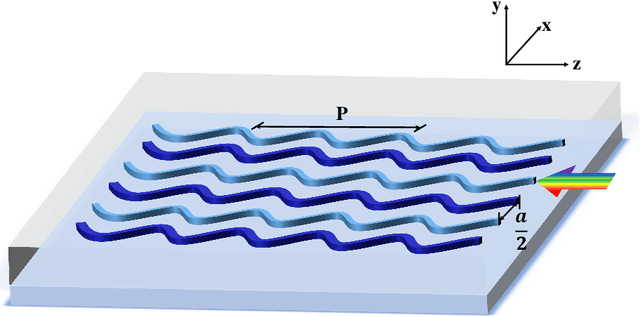
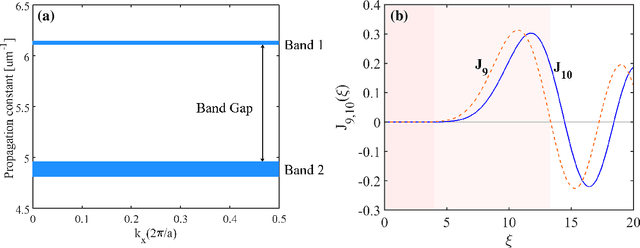
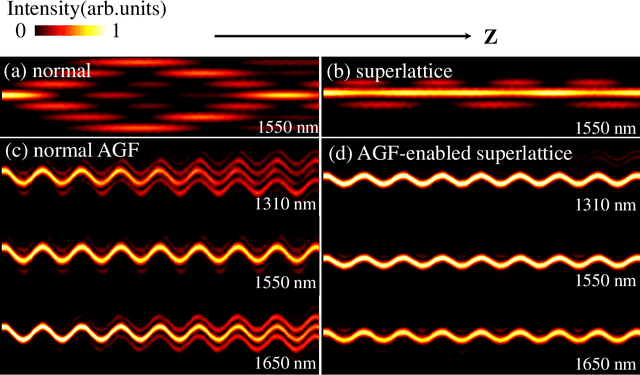

Dense waveguide arrays with low crosstalk and ultra-broadband remain a vital issue for chip-scale integrated photonics. However, the sub-wavelength regime of such devices has not been adequately explored in practice. Herein, we propose the advanced waveguide superlattices leveraging the artificial gauge field mechanism. This approach achieves remarkable -24 dB crosstalk suppression with an ultra-broadband bandwidth, experimentally demonstrated over 500 nm, in silicon nitride waveguides. Moreover, the 112 Gbit/s signal encoded per channel of ultra-compact circuits with a bit error rate below the 7% forward error correction limit verified the capability for high-speed on-chip transmission. This design is compatible with metal back end-of-the-line (BEOL) processes and can be readily transferred to other platforms. Thus it holds great promise for significant reduction in on-chip footprint and cost in large-scale integrated photonics, and salient enhancement in the performance of a wide range of active and passive photonic devices and systems.
DuInNet: Dual-Modality Feature Interaction for Point Cloud Completion
Jul 10, 2024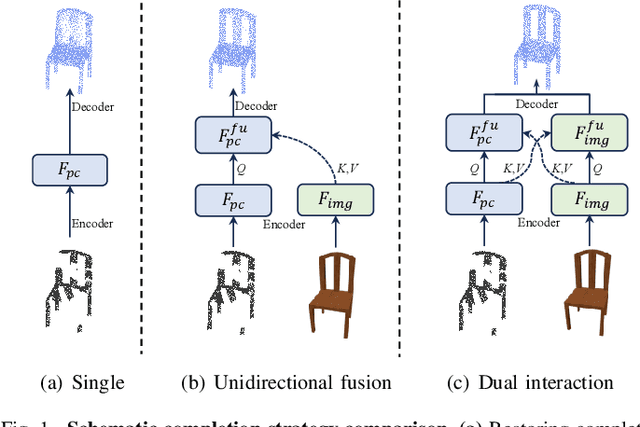
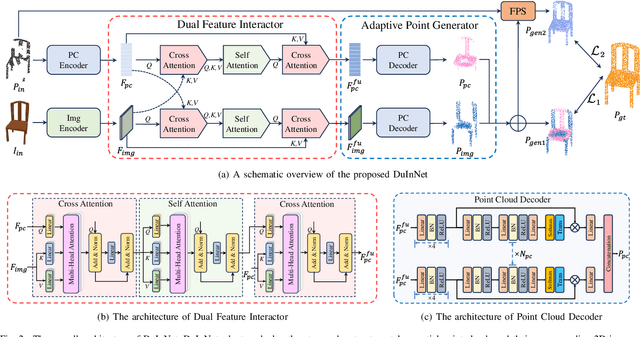
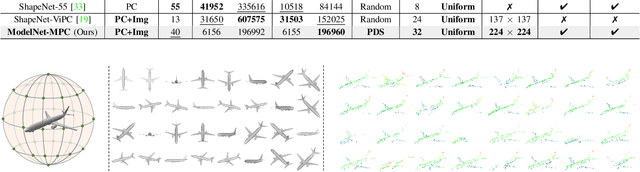
To further promote the development of multimodal point cloud completion, we contribute a large-scale multimodal point cloud completion benchmark ModelNet-MPC with richer shape categories and more diverse test data, which contains nearly 400,000 pairs of high-quality point clouds and rendered images of 40 categories. Besides the fully supervised point cloud completion task, two additional tasks including denoising completion and zero-shot learning completion are proposed in ModelNet-MPC, to simulate real-world scenarios and verify the robustness to noise and the transfer ability across categories of current methods. Meanwhile, considering that existing multimodal completion pipelines usually adopt a unidirectional fusion mechanism and ignore the shape prior contained in the image modality, we propose a Dual-Modality Feature Interaction Network (DuInNet) in this paper. DuInNet iteratively interacts features between point clouds and images to learn both geometric and texture characteristics of shapes with the dual feature interactor. To adapt to specific tasks such as fully supervised, denoising, and zero-shot learning point cloud completions, an adaptive point generator is proposed to generate complete point clouds in blocks with different weights for these two modalities. Extensive experiments on the ShapeNet-ViPC and ModelNet-MPC benchmarks demonstrate that DuInNet exhibits superiority, robustness and transfer ability in all completion tasks over state-of-the-art methods. The code and dataset will be available soon.
Jailbreak Attacks and Defenses Against Large Language Models: A Survey
Jul 05, 2024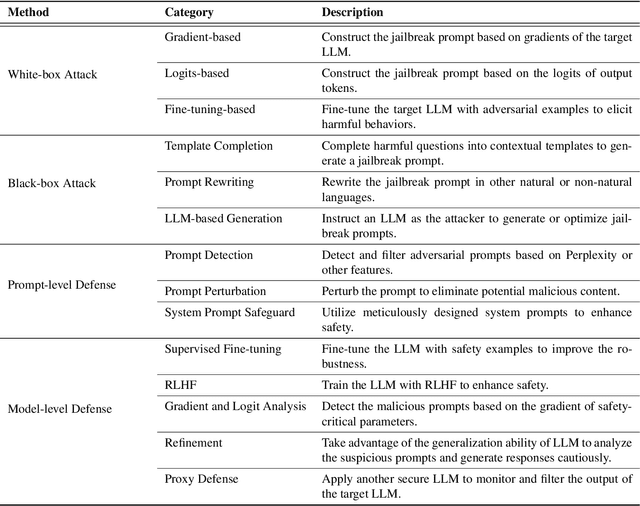
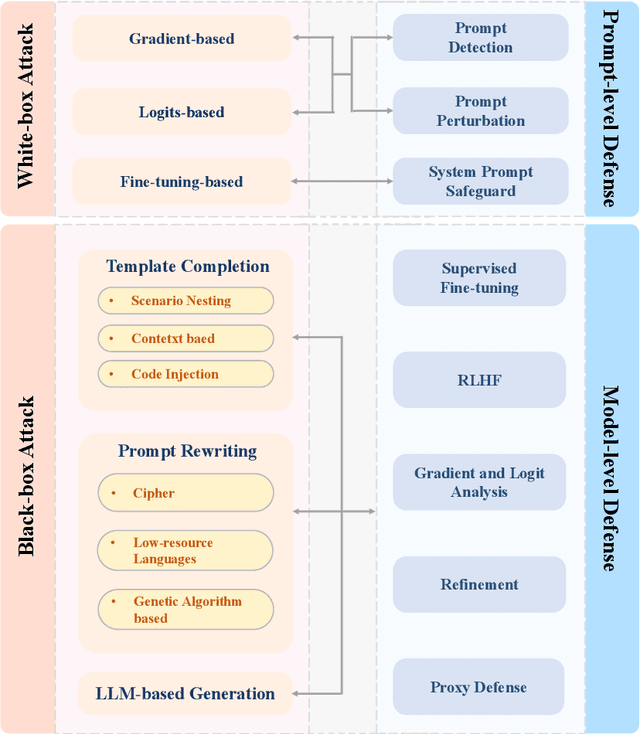

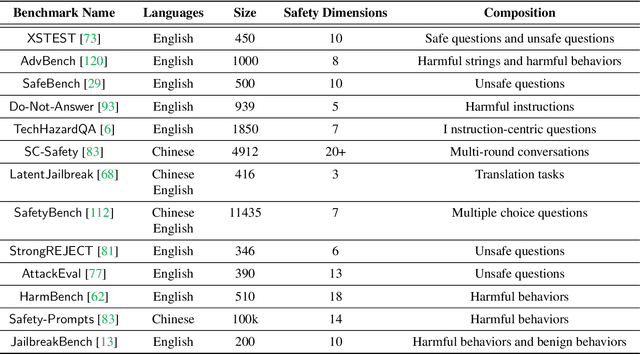
Large Language Models (LLMs) have performed exceptionally in various text-generative tasks, including question answering, translation, code completion, etc. However, the over-assistance of LLMs has raised the challenge of "jailbreaking", which induces the model to generate malicious responses against the usage policy and society by designing adversarial prompts. With the emergence of jailbreak attack methods exploiting different vulnerabilities in LLMs, the corresponding safety alignment measures are also evolving. In this paper, we propose a comprehensive and detailed taxonomy of jailbreak attack and defense methods. For instance, the attack methods are divided into black-box and white-box attacks based on the transparency of the target model. Meanwhile, we classify defense methods into prompt-level and model-level defenses. Additionally, we further subdivide these attack and defense methods into distinct sub-classes and present a coherent diagram illustrating their relationships. We also conduct an investigation into the current evaluation methods and compare them from different perspectives. Our findings aim to inspire future research and practical implementations in safeguarding LLMs against adversarial attacks. Above all, although jailbreak remains a significant concern within the community, we believe that our work enhances the understanding of this domain and provides a foundation for developing more secure LLMs.
Robust and Reliable Early-Stage Website Fingerprinting Attacks via Spatial-Temporal Distribution Analysis
Jul 01, 2024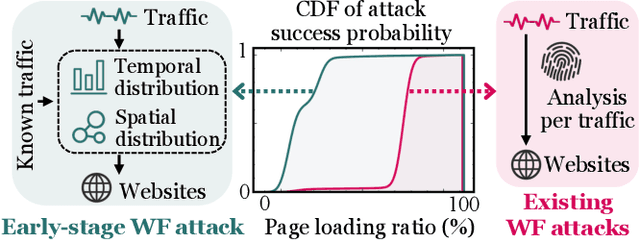
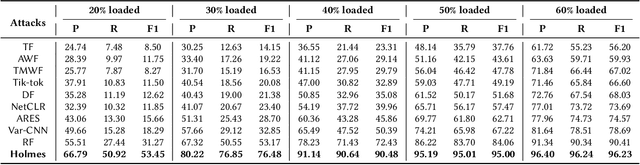
Website Fingerprinting (WF) attacks identify the websites visited by users by performing traffic analysis, compromising user privacy. Particularly, DL-based WF attacks demonstrate impressive attack performance. However, the effectiveness of DL-based WF attacks relies on the collected complete and pure traffic during the page loading, which impacts the practicality of these attacks. The WF performance is rather low under dynamic network conditions and various WF defenses, particularly when the analyzed traffic is only a small part of the complete traffic. In this paper, we propose Holmes, a robust and reliable early-stage WF attack. Holmes utilizes temporal and spatial distribution analysis of website traffic to effectively identify websites in the early stages of page loading. Specifically, Holmes develops adaptive data augmentation based on the temporal distribution of website traffic and utilizes a supervised contrastive learning method to extract the correlations between the early-stage traffic and the pre-collected complete traffic. Holmes accurately identifies traffic in the early stages of page loading by computing the correlation of the traffic with the spatial distribution information, which ensures robust and reliable detection according to early-stage traffic. We extensively evaluate Holmes using six datasets. Compared to nine existing DL-based WF attacks, Holmes improves the F1-score of identifying early-stage traffic by an average of 169.18%. Furthermore, we replay the traffic of visiting real-world dark web websites. Holmes successfully identifies dark web websites when the ratio of page loading on average is only 21.71%, with an average precision improvement of 169.36% over the existing WF attacks.
ImageFlowNet: Forecasting Multiscale Trajectories of Disease Progression with Irregularly-Sampled Longitudinal Medical Images
Jun 20, 2024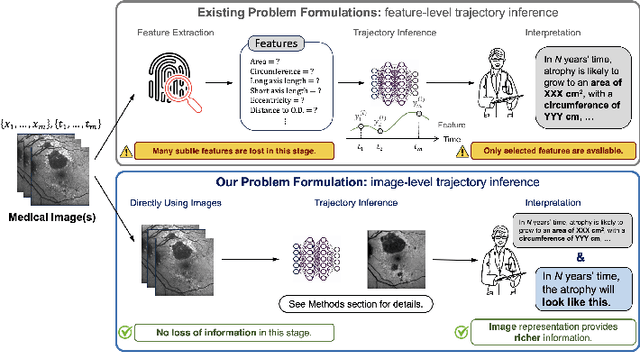
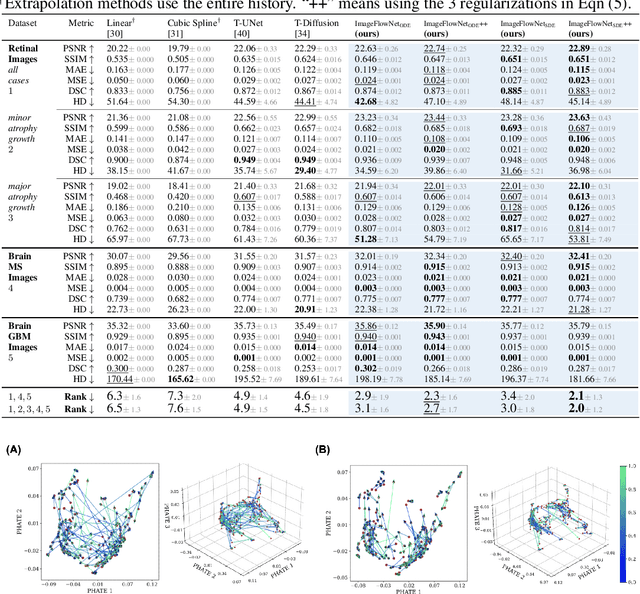
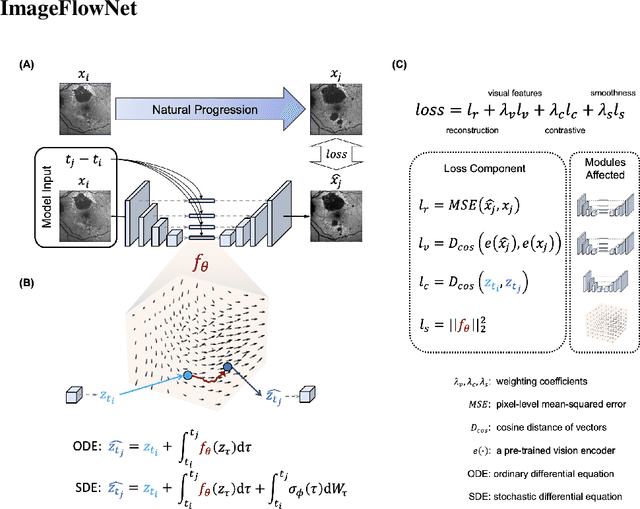
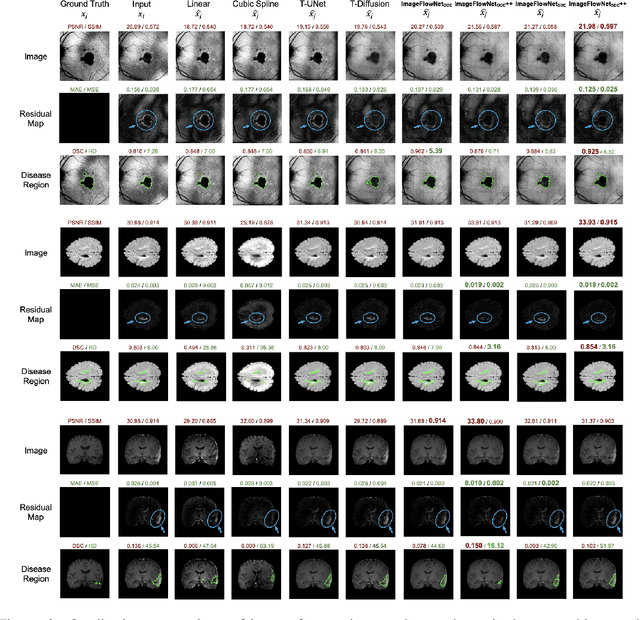
The forecasting of disease progression from images is a holy grail for clinical decision making. However, this task is complicated by the inherent high dimensionality, temporal sparsity and sampling irregularity in longitudinal image acquisitions. Existing methods often rely on extracting hand-crafted features and performing time-series analysis in this vector space, leading to a loss of rich spatial information within the images. To overcome these challenges, we introduce ImageFlowNet, a novel framework that learns latent-space flow fields that evolve multiscale representations in joint embedding spaces using neural ODEs and SDEs to model disease progression in the image domain. Notably, ImageFlowNet learns multiscale joint representation spaces by combining cohorts of patients together so that information can be transferred between the patient samples. The dynamics then provide plausible trajectories of progression, with the SDE providing alternative trajectories from the same starting point. We provide theoretical insights that support our formulation of ODEs, and motivate our regularizations involving high-level visual features, latent space organization, and trajectory smoothness. We then demonstrate ImageFlowNet's effectiveness through empirical evaluations on three longitudinal medical image datasets depicting progression in retinal geographic atrophy, multiple sclerosis, and glioblastoma.
E-ANT: A Large-Scale Dataset for Efficient Automatic GUI NavigaTion
Jun 20, 2024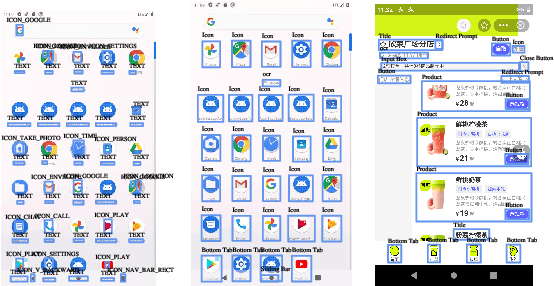
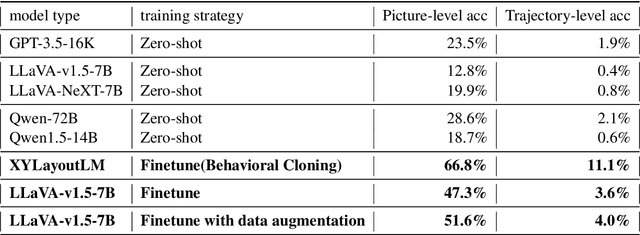

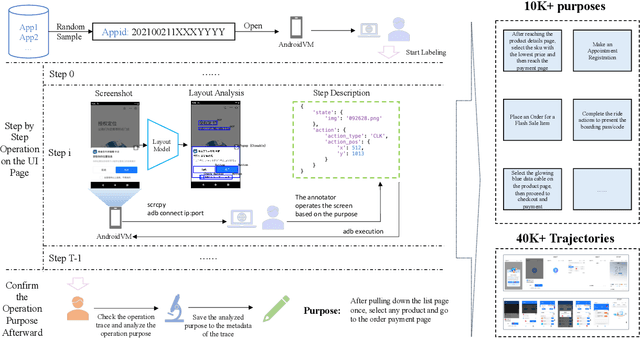
Online GUI navigation on mobile devices has driven a lot of attention recent years since it contributes to many real-world applications. With the rapid development of large language models (LLM), multimodal large language models (MLLM) have tremendous potential on this task. However, existing MLLMs need high quality data to improve its abilities of making the correct navigation decisions according to the human user inputs. In this paper, we developed a novel and highly valuable dataset, named \textbf{E-ANT}, as the first Chinese GUI navigation dataset that contains real human behaviour and high quality screenshots with annotations, containing nearly 40,000 real human traces over 5000+ different tinyAPPs. Furthermore, we evaluate various powerful MLLMs on E-ANT and show their experiments results with sufficient ablations. We believe that our proposed dataset will be beneficial for both the evaluation and development of GUI navigation and LLM/MLLM decision-making capabilities.
Hidden Question Representations Tell Non-Factuality Within and Across Large Language Models
Jun 08, 2024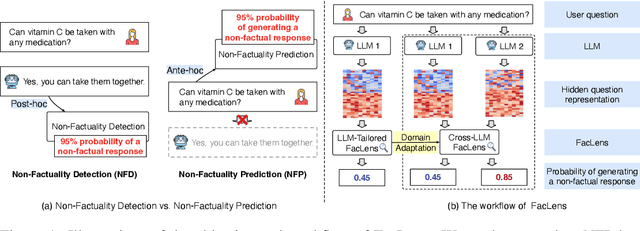
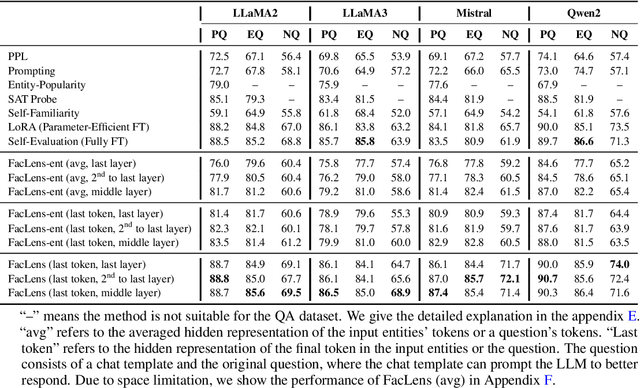
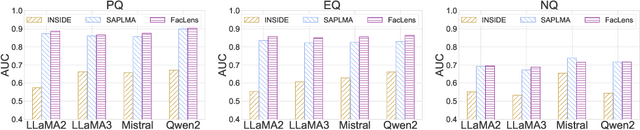
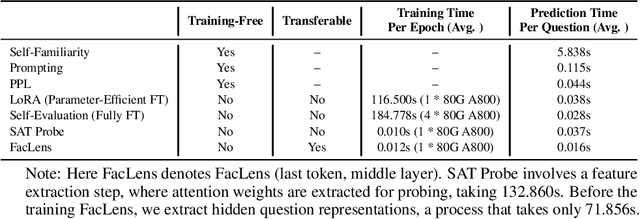
Despite the remarkable advance of large language models (LLMs), the prevalence of non-factual responses remains a common issue. This work studies non-factuality prediction (NFP), which predicts whether an LLM will generate non-factual responses to a question before the generation process. Previous efforts on NFP usually rely on extensive computation. In this work, we conduct extensive analysis to explore the capabilities of using a lightweight probe to elicit ``whether an LLM knows'' from the hidden representations of questions. Additionally, we discover that the non-factuality probe employs similar patterns for NFP across multiple LLMs. Motivated by the intriguing finding, we conduct effective transfer learning for cross-LLM NFP and propose a question-aligned strategy to ensure the efficacy of mini-batch based training.