 Add to Chrome
 Add to Firefox
 Add to Edge
On Realization of Intelligent Decision-Making in the Real World: A Foundation Decision Model Perspective
Dec 24, 2022
Our situated environment is full of uncertainty and highly dynamic, thus hindering the widespread adoption of machine-led Intelligent Decision-Making (IDM) in real world scenarios. This means IDM should have the capability of continuously learning new skills and efficiently generalizing across wider applications. IDM benefits from any new approaches and theoretical breakthroughs that exhibit Artificial General Intelligence (AGI) breaking the barriers between tasks and applications. Recent research has well-examined neural architecture, Transformer, as a backbone foundation model and its generalization to various tasks, including computer vision, natural language processing, and reinforcement learning. We therefore argue that a foundation decision model (FDM) can be established by formulating various decision-making tasks as a sequence decoding task using the Transformer architecture; this would be a promising solution to advance the applications of IDM in more complex real world tasks. In this paper, we elaborate on how a foundation decision model improves the efficiency and generalization of IDM. We also discuss potential applications of a FDM in multi-agent game AI, production scheduling, and robotics tasks. Finally, through a case study, we demonstrate our realization of the FDM, DigitalBrain (DB1) with 1.2 billion parameters, which achieves human-level performance over 453 tasks, including text generation, images caption, video games playing, robotic control, and traveling salesman problems. As a foundation decision model, DB1 would be a baby step towards more autonomous and efficient real world IDM applications.

Multi-embodiment Legged Robot Control as a Sequence Modeling Problem
Dec 18, 2022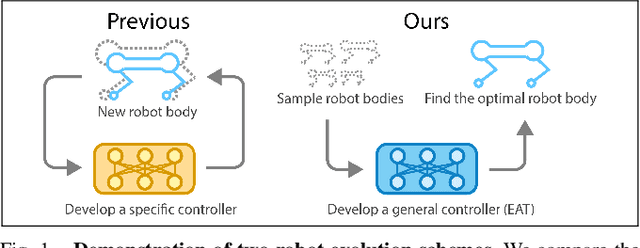
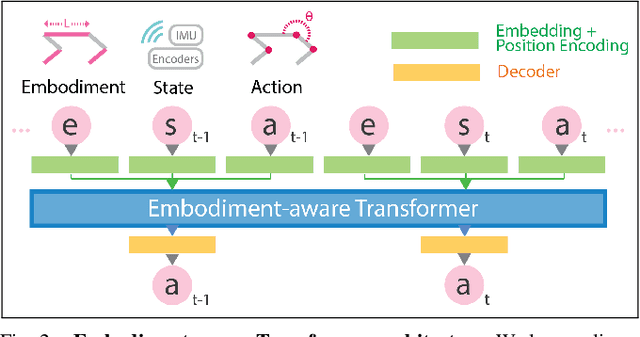
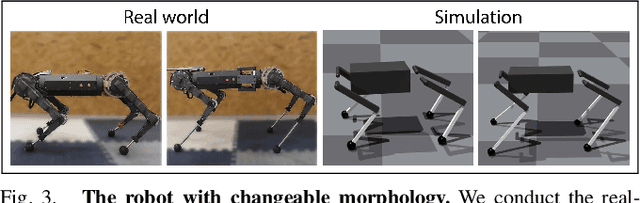
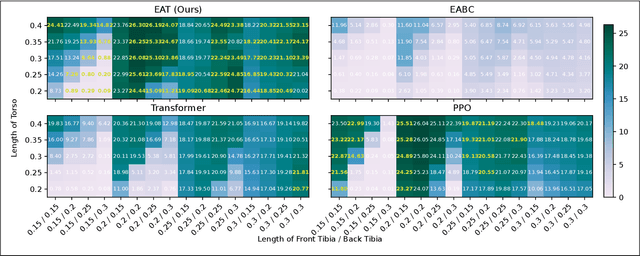
Robots are traditionally bounded by a fixed embodiment during their operational lifetime, which limits their ability to adapt to their surroundings. Co-optimizing control and morphology of a robot, however, is often inefficient due to the complex interplay between the controller and morphology. In this paper, we propose a learning-based control method that can inherently take morphology into consideration such that once the control policy is trained in the simulator, it can be easily deployed to robots with different embodiments in the real world. In particular, we present the Embodiment-aware Transformer (EAT), an architecture that casts this control problem as conditional sequence modeling. EAT outputs the optimal actions by leveraging a causally masked Transformer. By conditioning an autoregressive model on the desired robot embodiment, past states, and actions, our EAT model can generate future actions that best fit the current robot embodiment. Experimental results show that EAT can outperform all other alternatives in embodiment-varying tasks, and succeed in an example of real-world evolution tasks: stepping down a stair through updating the morphology alone. We hope that EAT will inspire a new push toward real-world evolution across many domains, where algorithms like EAT can blaze a trail by bridging the field of evolutionary robotics and big data sequence modeling.
Importance of Synthesizing High-quality Data for Text-to-SQL Parsing
Dec 17, 2022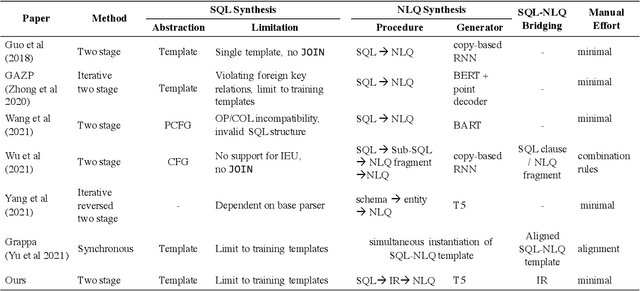
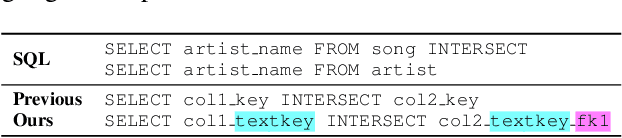
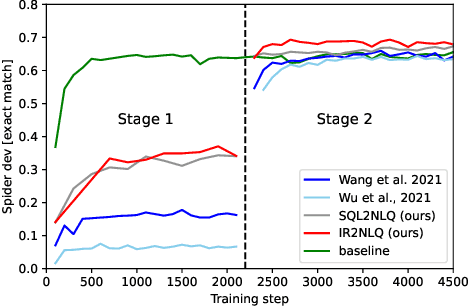
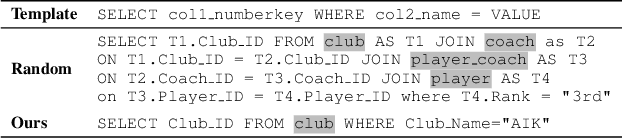
Recently, there has been increasing interest in synthesizing data to improve downstream text-to-SQL tasks. In this paper, we first examined the existing synthesized datasets and discovered that state-of-the-art text-to-SQL algorithms did not further improve on popular benchmarks when trained with augmented synthetic data. We observed two shortcomings: illogical synthetic SQL queries from independent column sampling and arbitrary table joins. To address these issues, we propose a novel synthesis framework that incorporates key relationships from schema, imposes strong typing, and conducts schema-distance-weighted column sampling. We also adopt an intermediate representation (IR) for the SQL-to-text task to further improve the quality of the generated natural language questions. When existing powerful semantic parsers are pre-finetuned on our high-quality synthesized data, our experiments show that these models have significant accuracy boosts on popular benchmarks, including new state-of-the-art performance on Spider.
Sim-to-Real Transfer for Quadrupedal Locomotion via Terrain Transformer
Dec 15, 2022Deep reinforcement learning has recently emerged as an appealing alternative for legged locomotion over multiple terrains by training a policy in physical simulation and then transferring it to the real world (i.e., sim-to-real transfer). Despite considerable progress, the capacity and scalability of traditional neural networks are still limited, which may hinder their applications in more complex environments. In contrast, the Transformer architecture has shown its superiority in a wide range of large-scale sequence modeling tasks, including natural language processing and decision-making problems. In this paper, we propose Terrain Transformer (TERT), a high-capacity Transformer model for quadrupedal locomotion control on various terrains. Furthermore, to better leverage Transformer in sim-to-real scenarios, we present a novel two-stage training framework consisting of an offline pretraining stage and an online correction stage, which can naturally integrate Transformer with privileged training. Extensive experiments in simulation demonstrate that TERT outperforms state-of-the-art baselines on different terrains in terms of return, energy consumption and control smoothness. In further real-world validation, TERT successfully traverses nine challenging terrains, including sand pit and stair down, which can not be accomplished by strong baselines.
Targeted Adversarial Attacks against Neural Network Trajectory Predictors
Dec 08, 2022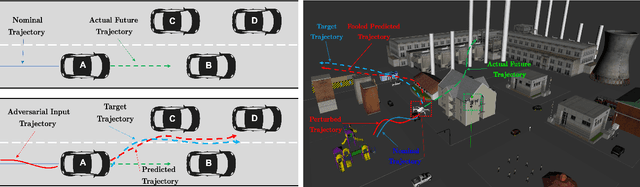

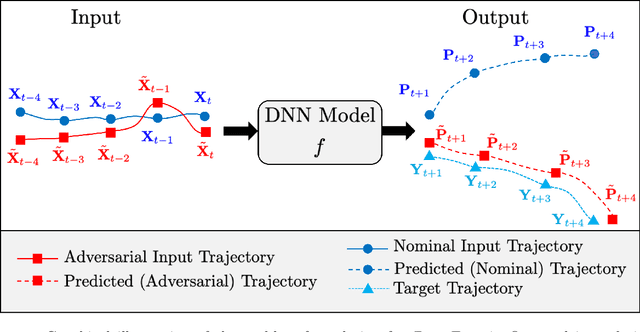

Trajectory prediction is an integral component of modern autonomous systems as it allows for envisioning future intentions of nearby moving agents. Due to the lack of other agents' dynamics and control policies, deep neural network (DNN) models are often employed for trajectory forecasting tasks. Although there exists an extensive literature on improving the accuracy of these models, there is a very limited number of works studying their robustness against adversarially crafted input trajectories. To bridge this gap, in this paper, we propose a targeted adversarial attack against DNN models for trajectory forecasting tasks. We call the proposed attack TA4TP for Targeted adversarial Attack for Trajectory Prediction. Our approach generates adversarial input trajectories that are capable of fooling DNN models into predicting user-specified target/desired trajectories. Our attack relies on solving a nonlinear constrained optimization problem where the objective function captures the deviation of the predicted trajectory from a target one while the constraints model physical requirements that the adversarial input should satisfy. The latter ensures that the inputs look natural and they are safe to execute (e.g., they are close to nominal inputs and away from obstacles). We demonstrate the effectiveness of TA4TP on two state-of-the-art DNN models and two datasets. To the best of our knowledge, we propose the first targeted adversarial attack against DNN models used for trajectory forecasting.
WAIR-D: Wireless AI Research Dataset
Dec 05, 2022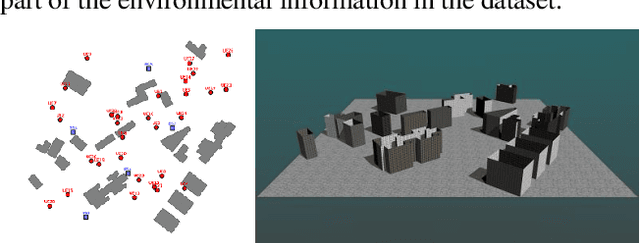
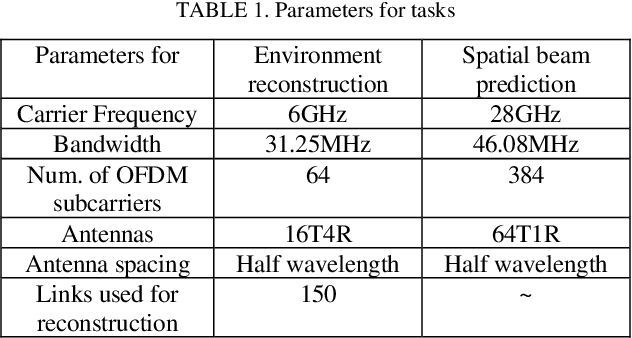
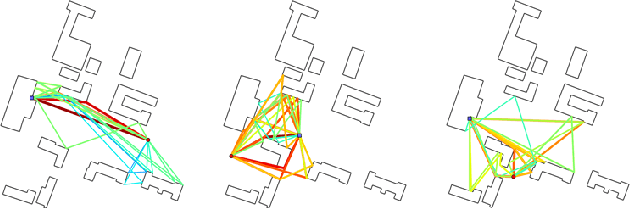
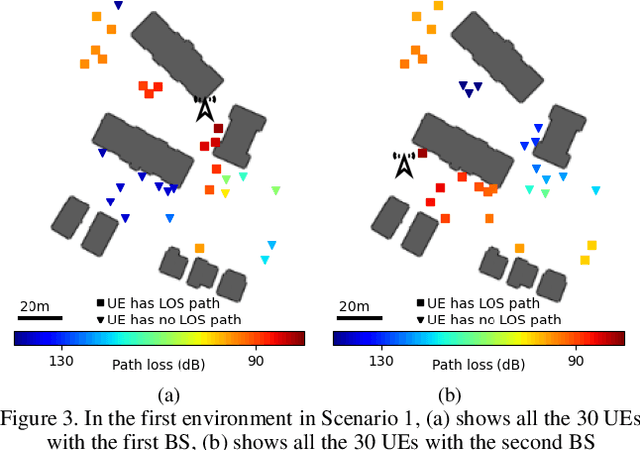
It is a common sense that datasets with high-quality data samples play an important role in artificial intelligence (AI), machine learning (ML) and related studies. However, although AI/ML has been introduced in wireless researches long time ago, few datasets are commonly used in the research community. Without a common dataset, AI-based methods proposed for wireless systems are hard to compare with both the traditional baselines and even each other. The existing wireless AI researches usually rely on datasets generated based on statistical models or ray-tracing simulations with limited environments. The statistical data hinder the trained AI models from further fine-tuning for a specific scenario, and ray-tracing data with limited environments lower down the generalization capability of the trained AI models. In this paper, we present the Wireless AI Research Dataset (WAIR-D)1, which consists of two scenarios. Scenario 1 contains 10,000 environments with sparsely dropped user equipments (UEs), and Scenario 2 contains 100 environments with densely dropped UEs. The environments are randomly picked up from more than 40 cities in the real world map. The large volume of the data guarantees that the trained AI models enjoy good generalization capability, while fine-tuning can be easily carried out on a specific chosen environment. Moreover, both the wireless channels and the corresponding environmental information are provided in WAIR-D, so that extra-information-aided communication mechanism can be designed and evaluated. WAIR-D provides the researchers benchmarks to compare their different designs or reproduce results of others. In this paper, we show the detailed construction of this dataset and examples of using it.
Long-tail Cross Modal Hashing
Nov 28, 2022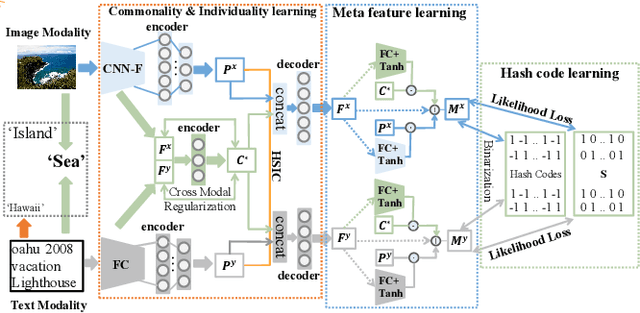

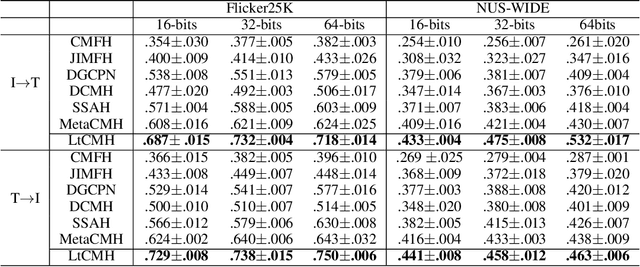
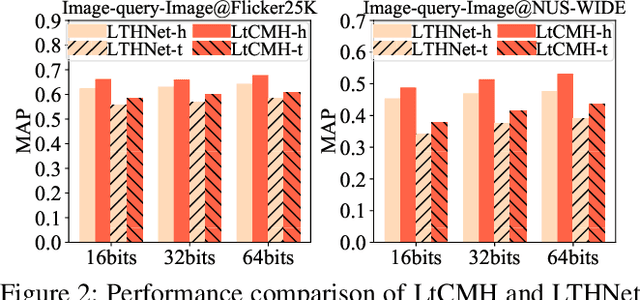
Existing Cross Modal Hashing (CMH) methods are mainly designed for balanced data, while imbalanced data with long-tail distribution is more general in real-world. Several long-tail hashing methods have been proposed but they can not adapt for multi-modal data, due to the complex interplay between labels and individuality and commonality information of multi-modal data. Furthermore, CMH methods mostly mine the commonality of multi-modal data to learn hash codes, which may override tail labels encoded by the individuality of respective modalities. In this paper, we propose LtCMH (Long-tail CMH) to handle imbalanced multi-modal data. LtCMH firstly adopts auto-encoders to mine the individuality and commonality of different modalities by minimizing the dependency between the individuality of respective modalities and by enhancing the commonality of these modalities. Then it dynamically combines the individuality and commonality with direct features extracted from respective modalities to create meta features that enrich the representation of tail labels, and binaries meta features to generate hash codes. LtCMH significantly outperforms state-of-the-art baselines on long-tail datasets and holds a better (or comparable) performance on datasets with balanced labels.
Reinforcement Causal Structure Learning on Order Graph
Nov 22, 2022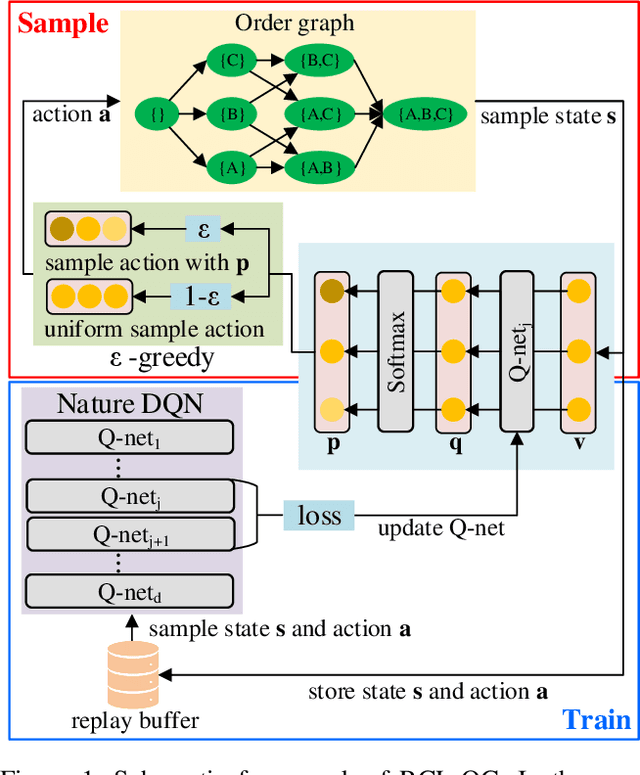


Learning directed acyclic graph (DAG) that describes the causality of observed data is a very challenging but important task. Due to the limited quantity and quality of observed data, and non-identifiability of causal graph, it is almost impossible to infer a single precise DAG. Some methods approximate the posterior distribution of DAGs to explore the DAG space via Markov chain Monte Carlo (MCMC), but the DAG space is over the nature of super-exponential growth, accurately characterizing the whole distribution over DAGs is very intractable. In this paper, we propose {Reinforcement Causal Structure Learning on Order Graph} (RCL-OG) that uses order graph instead of MCMC to model different DAG topological orderings and to reduce the problem size. RCL-OG first defines reinforcement learning with a new reward mechanism to approximate the posterior distribution of orderings in an efficacy way, and uses deep Q-learning to update and transfer rewards between nodes. Next, it obtains the probability transition model of nodes on order graph, and computes the posterior probability of different orderings. In this way, we can sample on this model to obtain the ordering with high probability. Experiments on synthetic and benchmark datasets show that RCL-OG provides accurate posterior probability approximation and achieves better results than competitive causal discovery algorithms.
Learning Cooperative Oversubscription for Cloud by Chance-Constrained Multi-Agent Reinforcement Learning
Nov 21, 2022
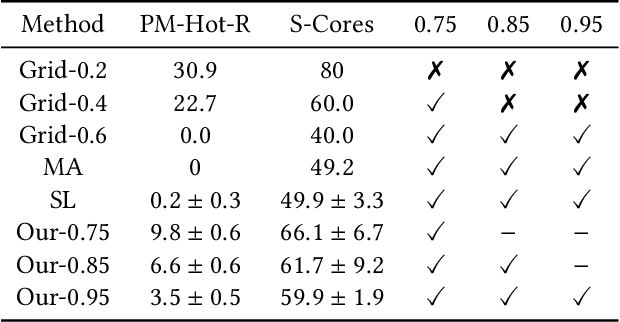

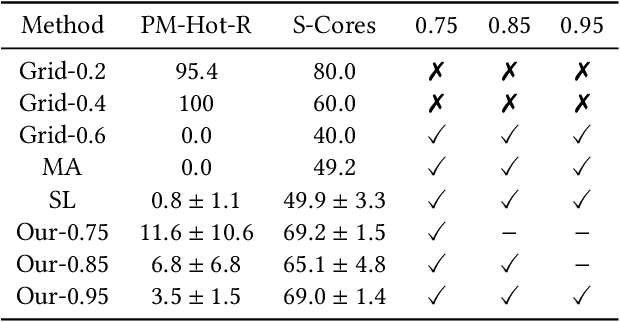
Oversubscription is a common practice for improving cloud resource utilization. It allows the cloud service provider to sell more resources than the physical limit, assuming not all users would fully utilize the resources simultaneously. However, how to design an oversubscription policy that improves utilization while satisfying the some safety constraints remains an open problem. Existing methods and industrial practices are over-conservative, ignoring the coordination of diverse resource usage patterns and probabilistic constraints. To address these two limitations, this paper formulates the oversubscription for cloud as a chance-constrained optimization problem and propose an effective Chance Constrained Multi-Agent Reinforcement Learning (C2MARL) method to solve this problem. Specifically, C2MARL reduces the number of constraints by considering their upper bounds and leverages a multi-agent reinforcement learning paradigm to learn a safe and optimal coordination policy. We evaluate our C2MARL on an internal cloud platform and public cloud datasets. Experiments show that our C2MARL outperforms existing methods in improving utilization ($20\%\sim 86\%$) under different levels of safety constraints.
Contextual Transformer for Offline Meta Reinforcement Learning
Nov 15, 2022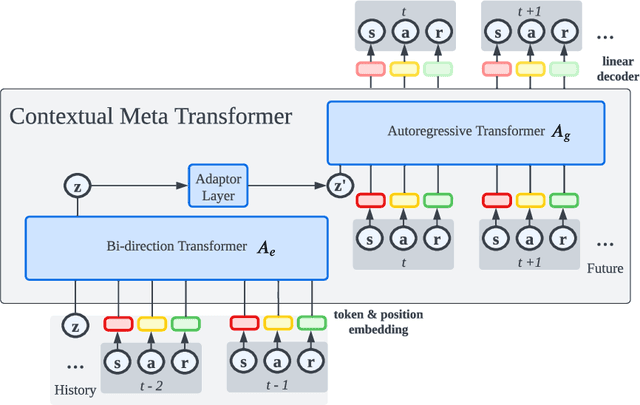
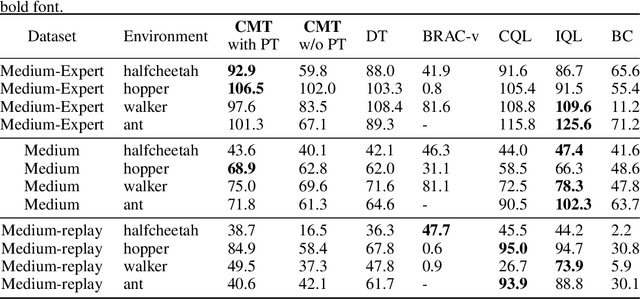
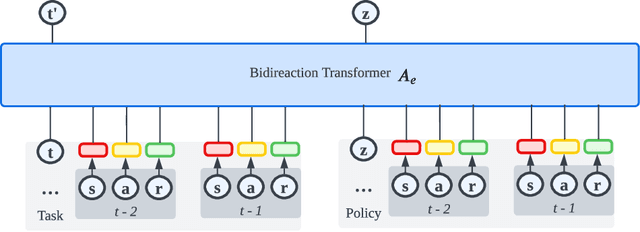
The pretrain-finetuning paradigm in large-scale sequence models has made significant progress in natural language processing and computer vision tasks. However, such a paradigm is still hindered by several challenges in Reinforcement Learning (RL), including the lack of self-supervised pretraining algorithms based on offline data and efficient fine-tuning/prompt-tuning over unseen downstream tasks. In this work, we explore how prompts can improve sequence modeling-based offline reinforcement learning (offline-RL) algorithms. Firstly, we propose prompt tuning for offline RL, where a context vector sequence is concatenated with the input to guide the conditional policy generation. As such, we can pretrain a model on the offline dataset with self-supervised loss and learn a prompt to guide the policy towards desired actions. Secondly, we extend our framework to Meta-RL settings and propose Contextual Meta Transformer (CMT); CMT leverages the context among different tasks as the prompt to improve generalization on unseen tasks. We conduct extensive experiments across three different offline-RL settings: offline single-agent RL on the D4RL dataset, offline Meta-RL on the MuJoCo benchmark, and offline MARL on the SMAC benchmark. Superior results validate the strong performance, and generality of our methods.