 Add to Chrome
 Add to Firefox
 Add to Edge
Collaborative Recommendation Model Based on Multi-modal Multi-view Attention Network: Movie and literature cases
May 24, 2023
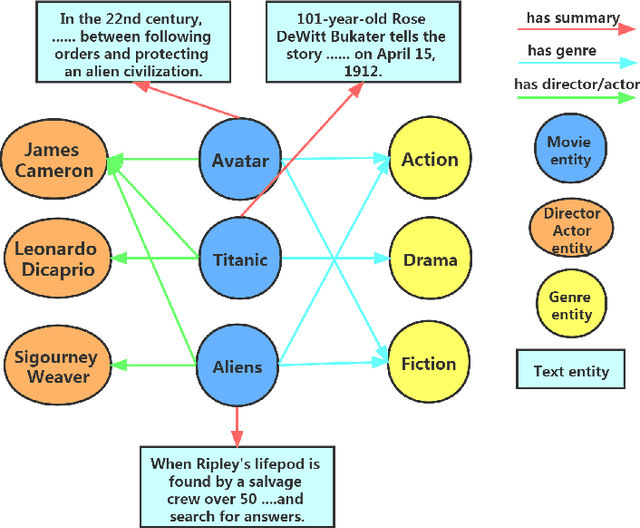
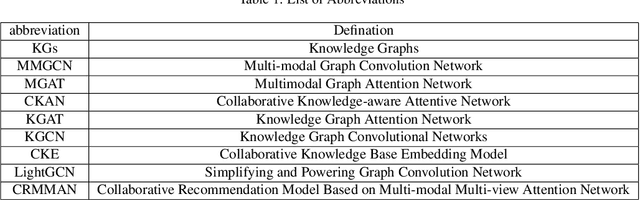
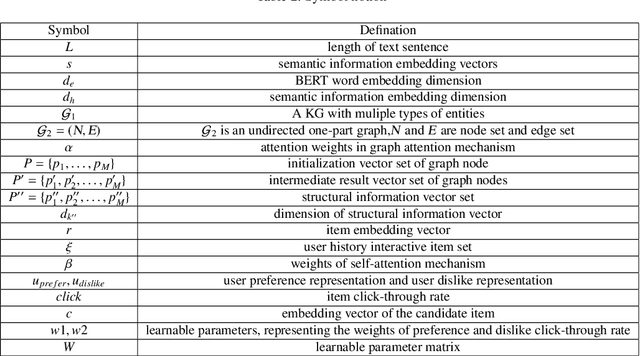
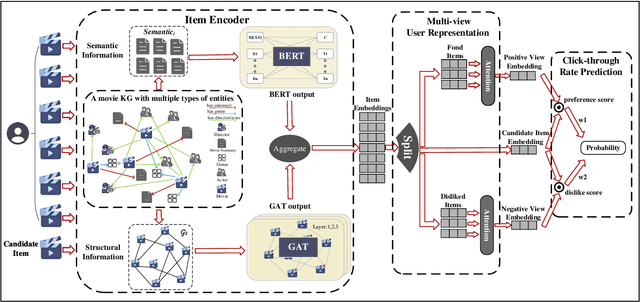
The existing collaborative recommendation models that use multi-modal information emphasize the representation of users' preferences but easily ignore the representation of users' dislikes. Nevertheless, modelling users' dislikes facilitates comprehensively characterizing user profiles. Thus, the representation of users' dislikes should be integrated into the user modelling when we construct a collaborative recommendation model. In this paper, we propose a novel Collaborative Recommendation Model based on Multi-modal multi-view Attention Network (CRMMAN), in which the users are represented from both preference and dislike views. Specifically, the users' historical interactions are divided into positive and negative interactions, used to model the user's preference and dislike views, respectively. Furthermore, the semantic and structural information extracted from the scene is employed to enrich the item representation. We validate CRMMAN by designing contrast experiments based on two benchmark MovieLens-1M and Book-Crossing datasets. Movielens-1m has about a million ratings, and Book-Crossing has about 300,000 ratings. Compared with the state-of-the-art knowledge-graph-based and multi-modal recommendation methods, the AUC, NDCG@5 and NDCG@10 are improved by 2.08%, 2.20% and 2.26% on average of two datasets. We also conduct controlled experiments to explore the effects of multi-modal information and multi-view mechanism. The experimental results show that both of them enhance the model's performance.

MGR: Multi-generator based Rationalization
May 23, 2023Rationalization is to employ a generator and a predictor to construct a self-explaining NLP model in which the generator selects a subset of human-intelligible pieces of the input text to the following predictor. However, rationalization suffers from two key challenges, i.e., spurious correlation and degeneration, where the predictor overfits the spurious or meaningless pieces solely selected by the not-yet well-trained generator and in turn deteriorates the generator. Although many studies have been proposed to address the two challenges, they are usually designed separately and do not take both of them into account. In this paper, we propose a simple yet effective method named MGR to simultaneously solve the two problems. The key idea of MGR is to employ multiple generators such that the occurrence stability of real pieces is improved and more meaningful pieces are delivered to the predictor. Empirically, we show that MGR improves the F1 score by up to 20.9% as compared to state-of-the-art methods. Codes are available at https://github.com/jugechengzi/Rationalization-MGR .
Mitigating Backdoor Poisoning Attacks through the Lens of Spurious Correlation
May 19, 2023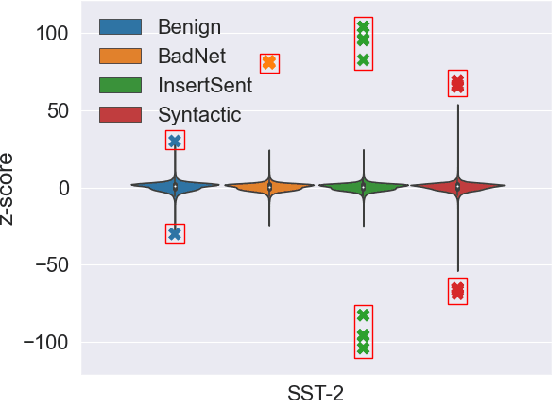
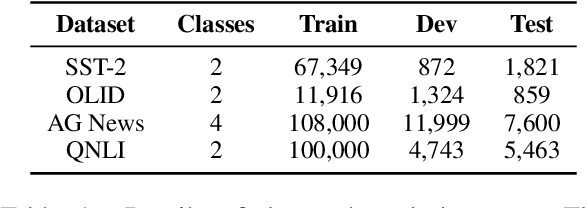
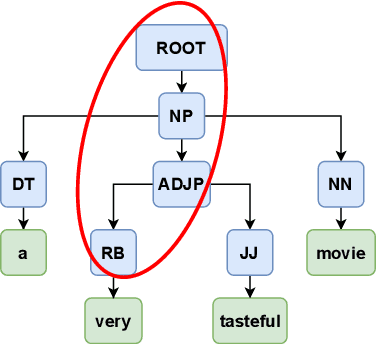
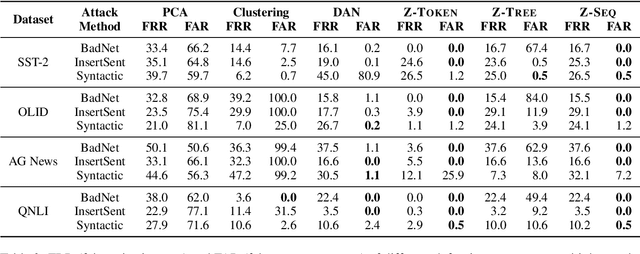
Modern NLP models are often trained over large untrusted datasets, raising the potential for a malicious adversary to compromise model behaviour. For instance, backdoors can be implanted through crafting training instances with a specific textual trigger and a target label. This paper posits that backdoor poisoning attacks exhibit spurious correlation between simple text features and classification labels, and accordingly, proposes methods for mitigating spurious correlation as means of defence. Our empirical study reveals that the malicious triggers are highly correlated to their target labels; therefore such correlations are extremely distinguishable compared to those scores of benign features, and can be used to filter out potentially problematic instances. Compared with several existing defences, our defence method significantly reduces attack success rates across backdoor attacks, and in the case of insertion based attacks, our method provides a near-perfect defence.
Reinforcement Learning for Safe Robot Control using Control Lyapunov Barrier Functions
May 16, 2023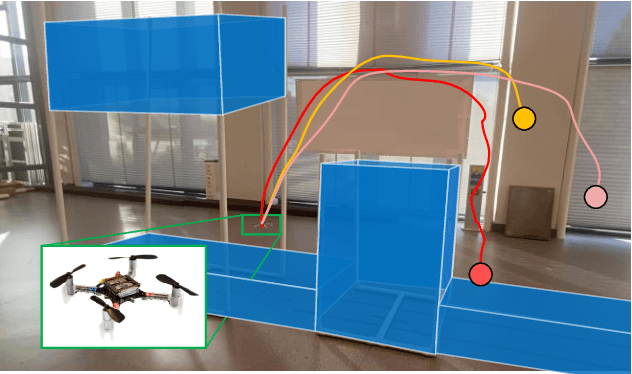
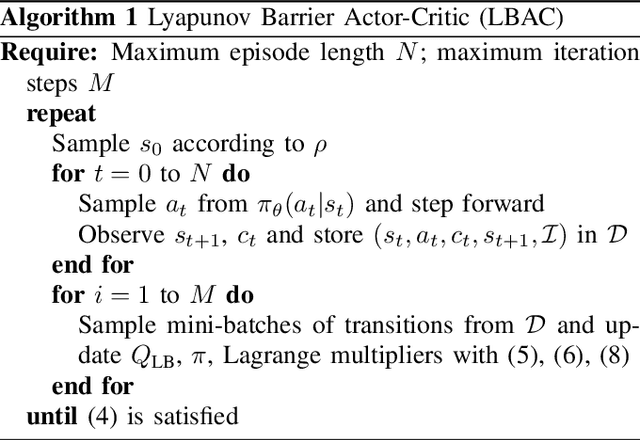
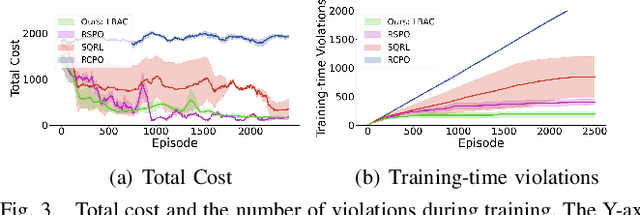
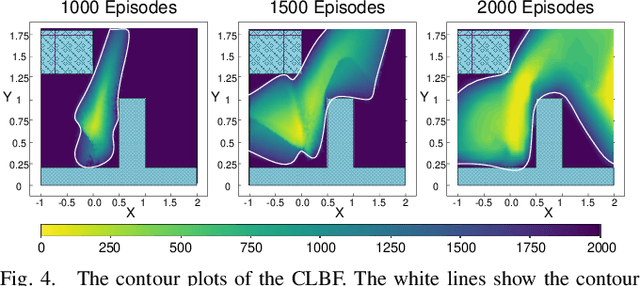
Reinforcement learning (RL) exhibits impressive performance when managing complicated control tasks for robots. However, its wide application to physical robots is limited by the absence of strong safety guarantees. To overcome this challenge, this paper explores the control Lyapunov barrier function (CLBF) to analyze the safety and reachability solely based on data without explicitly employing a dynamic model. We also proposed the Lyapunov barrier actor-critic (LBAC), a model-free RL algorithm, to search for a controller that satisfies the data-based approximation of the safety and reachability conditions. The proposed approach is demonstrated through simulation and real-world robot control experiments, i.e., a 2D quadrotor navigation task. The experimental findings reveal this approach's effectiveness in reachability and safety, surpassing other model-free RL methods.
An Empirical Study on Google Research Football Multi-agent Scenarios
May 16, 2023Few multi-agent reinforcement learning (MARL) research on Google Research Football (GRF) focus on the 11v11 multi-agent full-game scenario and to the best of our knowledge, no open benchmark on this scenario has been released to the public. In this work, we fill the gap by providing a population-based MARL training pipeline and hyperparameter settings on multi-agent football scenario that outperforms the bot with difficulty 1.0 from scratch within 2 million steps. Our experiments serve as a reference for the expected performance of Independent Proximal Policy Optimization (IPPO), a state-of-the-art multi-agent reinforcement learning algorithm where each agent tries to maximize its own policy independently across various training configurations. Meanwhile, we open-source our training framework Light-MALib which extends the MALib codebase by distributed and asynchronized implementation with additional analytical tools for football games. Finally, we provide guidance for building strong football AI with population-based training and release diverse pretrained policies for benchmarking. The goal is to provide the community with a head start for whoever experiment their works on GRF and a simple-to-use population-based training framework for further improving their agents through self-play. The implementation is available at https://github.com/Shanghai-Digital-Brain-Laboratory/DB-Football.
The 3rd Anti-UAV Workshop & Challenge: Methods and Results
May 12, 2023


The 3rd Anti-UAV Workshop & Challenge aims to encourage research in developing novel and accurate methods for multi-scale object tracking. The Anti-UAV dataset used for the Anti-UAV Challenge has been publicly released. There are two main differences between this year's competition and the previous two. First, we have expanded the existing dataset, and for the first time, released a training set so that participants can focus on improving their models. Second, we set up two tracks for the first time, i.e., Anti-UAV Tracking and Anti-UAV Detection & Tracking. Around 76 participating teams from the globe competed in the 3rd Anti-UAV Challenge. In this paper, we provide a brief summary of the 3rd Anti-UAV Workshop & Challenge including brief introductions to the top three methods in each track. The submission leaderboard will be reopened for researchers that are interested in the Anti-UAV challenge. The benchmark dataset and other information can be found at: https://anti-uav.github.io/.
Leaf Cultivar Identification via Prototype-enhanced Learning
May 05, 2023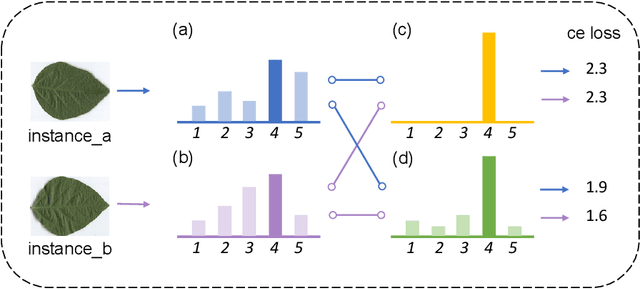
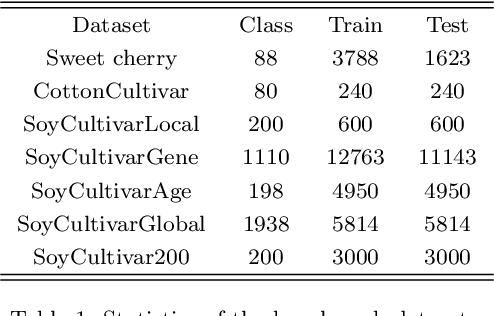
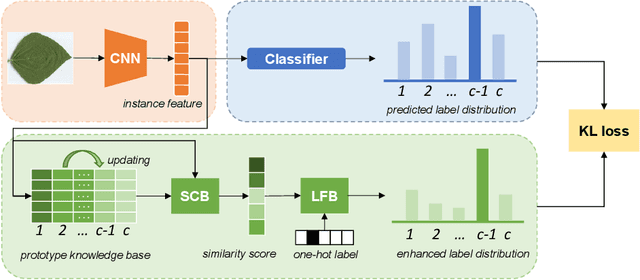
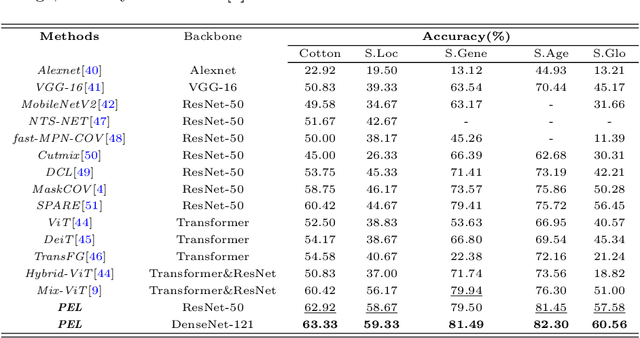
Plant leaf identification is crucial for biodiversity protection and conservation and has gradually attracted the attention of academia in recent years. Due to the high similarity among different varieties, leaf cultivar recognition is also considered to be an ultra-fine-grained visual classification (UFGVC) task, which is facing a huge challenge. In practice, an instance may be related to multiple varieties to varying degrees, especially in the UFGVC datasets. However, deep learning methods trained on one-hot labels fail to reflect patterns shared across categories and thus perform poorly on this task. To address this issue, we generate soft targets integrated with inter-class similarity information. Specifically, we continuously update the prototypical features for each category and then capture the similarity scores between instances and prototypes accordingly. Original one-hot labels and the similarity scores are incorporated to yield enhanced labels. Prototype-enhanced soft labels not only contain original one-hot label information, but also introduce rich inter-category semantic association information, thus providing more effective supervision for deep model training. Extensive experimental results on public datasets show that our method can significantly improve the performance on the UFGVC task of leaf cultivar identification.
Structure Diagram Recognition in Financial Announcements
May 01, 2023Accurately extracting structured data from structure diagrams in financial announcements is of great practical importance for building financial knowledge graphs and further improving the efficiency of various financial applications. First, we proposed a new method for recognizing structure diagrams in financial announcements, which can better detect and extract different types of connecting lines, including straight lines, curves, and polylines of different orientations and angles. Second, we developed a two-stage method to efficiently generate the industry's first benchmark of structure diagrams from Chinese financial announcements, where a large number of diagrams were synthesized and annotated using an automated tool to train a preliminary recognition model with fairly good performance, and then a high-quality benchmark can be obtained by automatically annotating the real-world structure diagrams using the preliminary model and then making few manual corrections. Finally, we experimentally verified the significant performance advantage of our structure diagram recognition method over previous methods.
Filter Pruning via Filters Similarity in Consecutive Layers
Apr 26, 2023Filter pruning is widely adopted to compress and accelerate the Convolutional Neural Networks (CNNs), but most previous works ignore the relationship between filters and channels in different layers. Processing each layer independently fails to utilize the collaborative relationship across layers. In this paper, we intuitively propose a novel pruning method by explicitly leveraging the Filters Similarity in Consecutive Layers (FSCL). FSCL compresses models by pruning filters whose corresponding features are more worthless in the model. The extensive experiments demonstrate the effectiveness of FSCL, and it yields remarkable improvement over state-of-the-art on accuracy, FLOPs and parameter reduction on several benchmark models and datasets.
Selective and Collaborative Influence Function for Efficient Recommendation Unlearning
Apr 20, 2023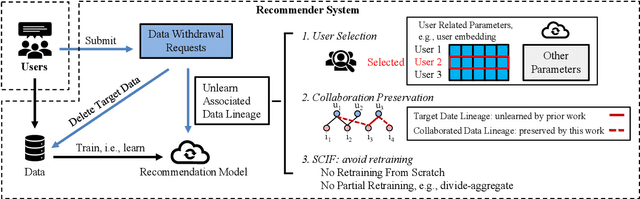
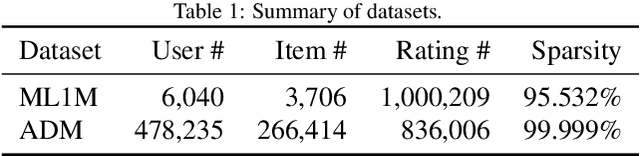
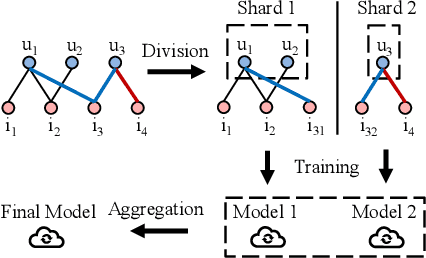
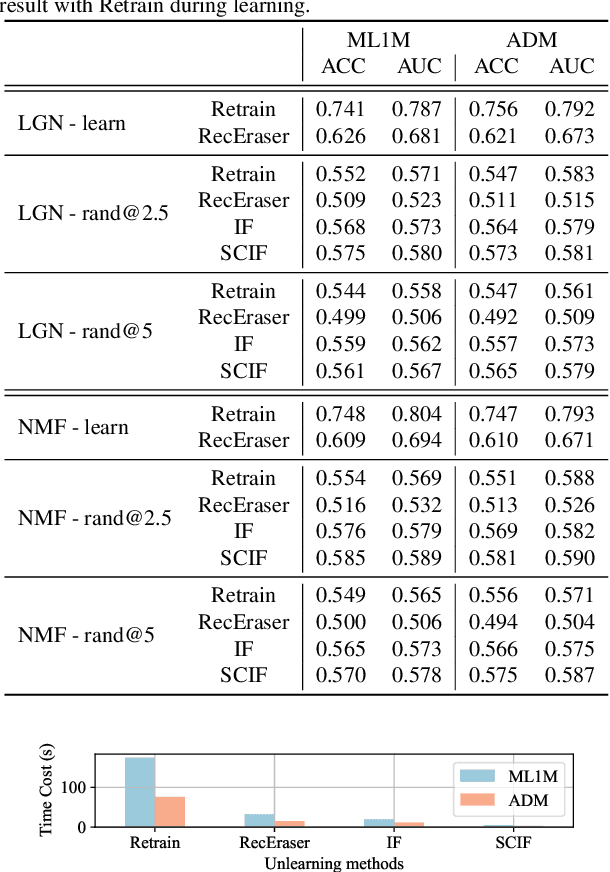
Recent regulations on the Right to be Forgotten have greatly influenced the way of running a recommender system, because users now have the right to withdraw their private data. Besides simply deleting the target data in the database, unlearning the associated data lineage e.g., the learned personal features and preferences in the model, is also necessary for data withdrawal. Existing unlearning methods are mainly devised for generalized machine learning models in classification tasks. In this paper, we first identify two main disadvantages of directly applying existing unlearning methods in the context of recommendation, i.e., (i) unsatisfactory efficiency for large-scale recommendation models and (ii) destruction of collaboration across users and items. To tackle the above issues, we propose an extra-efficient recommendation unlearning method based on Selective and Collaborative Influence Function (SCIF). Our proposed method can (i) avoid any kind of retraining which is computationally prohibitive for large-scale systems, (ii) further enhance efficiency by selectively updating user embedding and (iii) preserve the collaboration across the remaining users and items. Furthermore, in order to evaluate the unlearning completeness, we define a Membership Inference Oracle (MIO), which can justify whether the unlearned data points were in the training set of the model, i.e., whether a data point was completely unlearned. Extensive experiments on two benchmark datasets demonstrate that our proposed method can not only greatly enhance unlearning efficiency, but also achieve adequate unlearning completeness. More importantly, our proposed method outperforms the state-of-the-art unlearning method regarding comprehensive recommendation metrics.