 Add to Chrome
 Add to Firefox
 Add to Edge
CogVideoX: Text-to-Video Diffusion Models with An Expert Transformer
Aug 12, 2024
We introduce CogVideoX, a large-scale diffusion transformer model designed for generating videos based on text prompts. To efficently model video data, we propose to levearge a 3D Variational Autoencoder (VAE) to compress videos along both spatial and temporal dimensions. To improve the text-video alignment, we propose an expert transformer with the expert adaptive LayerNorm to facilitate the deep fusion between the two modalities. By employing a progressive training technique, CogVideoX is adept at producing coherent, long-duration videos characterized by significant motions. In addition, we develop an effective text-video data processing pipeline that includes various data preprocessing strategies and a video captioning method. It significantly helps enhance the performance of CogVideoX, improving both generation quality and semantic alignment. Results show that CogVideoX demonstrates state-of-the-art performance across both multiple machine metrics and human evaluations. The model weights of both the 3D Causal VAE and CogVideoX are publicly available at https://github.com/THUDM/CogVideo.

VisualAgentBench: Towards Large Multimodal Models as Visual Foundation Agents
Aug 12, 2024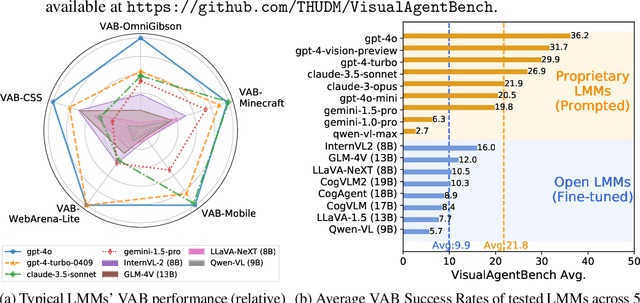
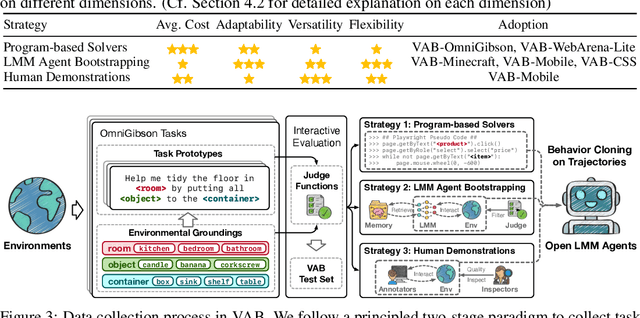
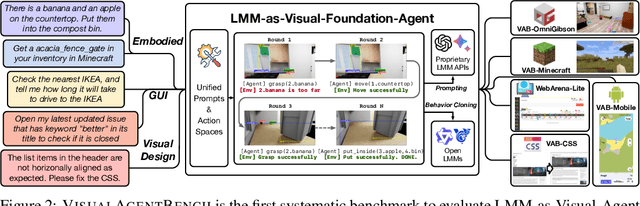
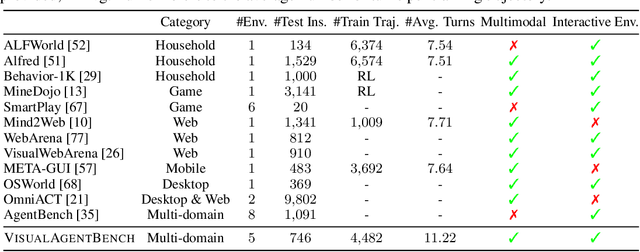
Large Multimodal Models (LMMs) have ushered in a new era in artificial intelligence, merging capabilities in both language and vision to form highly capable Visual Foundation Agents. These agents are postulated to excel across a myriad of tasks, potentially approaching general artificial intelligence. However, existing benchmarks fail to sufficiently challenge or showcase the full potential of LMMs in complex, real-world environments. To address this gap, we introduce VisualAgentBench (VAB), a comprehensive and pioneering benchmark specifically designed to train and evaluate LMMs as visual foundation agents across diverse scenarios, including Embodied, Graphical User Interface, and Visual Design, with tasks formulated to probe the depth of LMMs' understanding and interaction capabilities. Through rigorous testing across nine proprietary LMM APIs and eight open models, we demonstrate the considerable yet still developing agent capabilities of these models. Additionally, VAB constructs a trajectory training set constructed through hybrid methods including Program-based Solvers, LMM Agent Bootstrapping, and Human Demonstrations, promoting substantial performance improvements in LMMs through behavior cloning. Our work not only aims to benchmark existing models but also provides a solid foundation for future development into visual foundation agents. Code, train \& test data, and part of fine-tuned open LMMs are available at \url{https://github.com/THUDM/VisualAgentBench}.
RAVSS: Robust Audio-Visual Speech Separation in Multi-Speaker Scenarios with Missing Visual Cues
Jul 27, 2024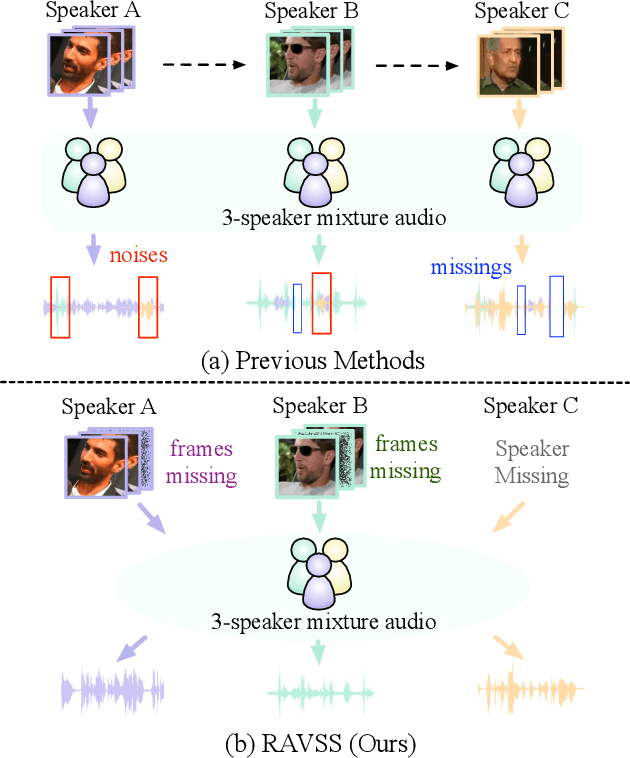
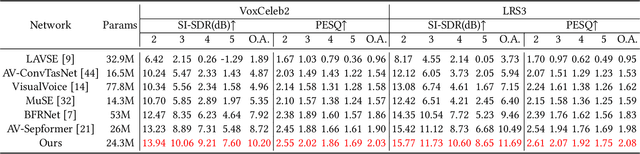
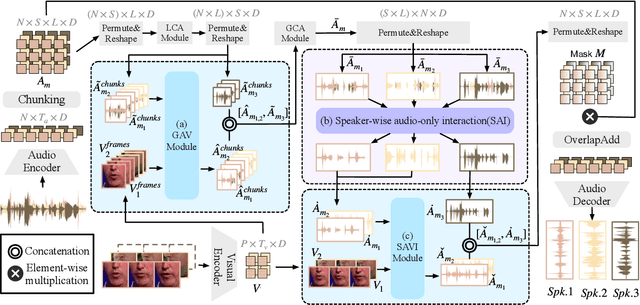
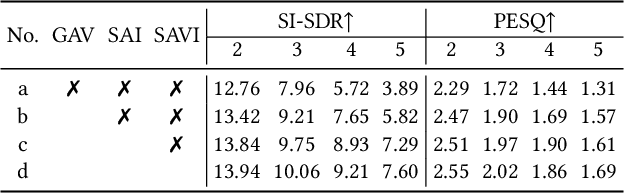
While existing Audio-Visual Speech Separation (AVSS) methods primarily concentrate on the audio-visual fusion strategy for two-speaker separation, they demonstrate a severe performance drop in the multi-speaker separation scenarios. Typically, AVSS methods employ guiding videos to sequentially isolate individual speakers from the given audio mixture, resulting in notable missing and noisy parts across various segments of the separated speech. In this study, we propose a simultaneous multi-speaker separation framework that can facilitate the concurrent separation of multiple speakers within a singular process. We introduce speaker-wise interactions to establish distinctions and correlations among speakers. Experimental results on the VoxCeleb2 and LRS3 datasets demonstrate that our method achieves state-of-the-art performance in separating mixtures with 2, 3, 4, and 5 speakers, respectively. Additionally, our model can utilize speakers with complete audio-visual information to mitigate other visual-deficient speakers, thereby enhancing its resilience to missing visual cues. We also conduct experiments where visual information for specific speakers is entirely absent or visual frames are partially missing. The results demonstrate that our model consistently outperforms others, exhibiting the smallest performance drop across all settings involving 2, 3, 4, and 5 speakers.
Multi-turn Response Selection with Commonsense-enhanced Language Models
Jul 26, 2024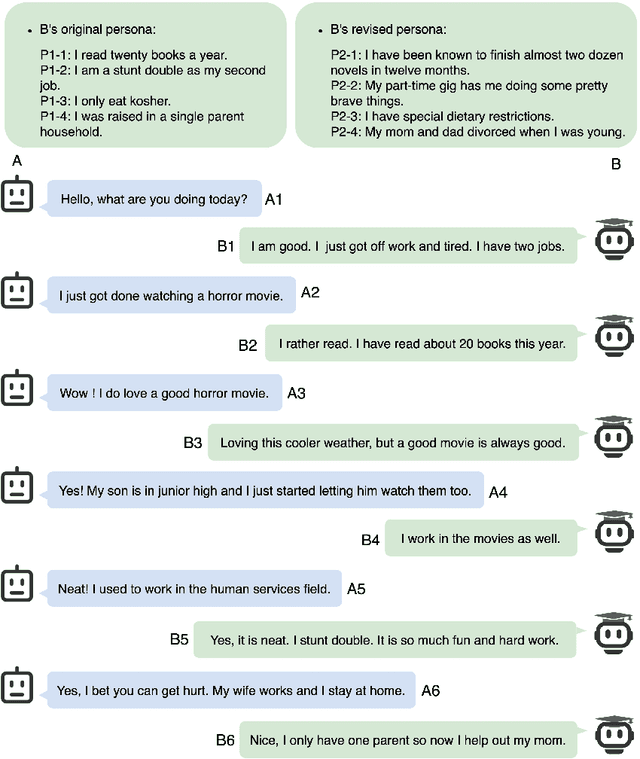
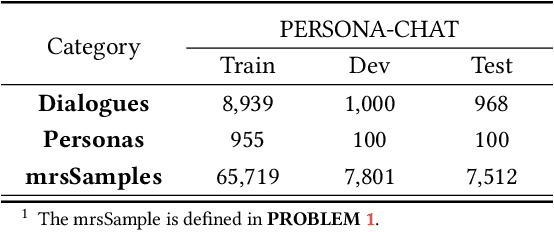
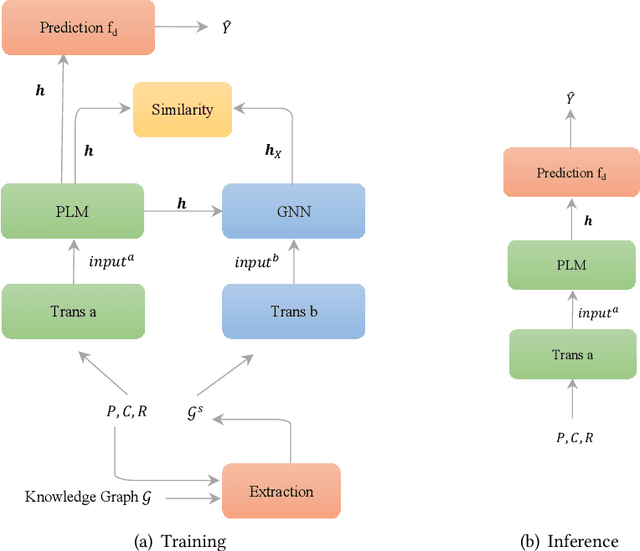
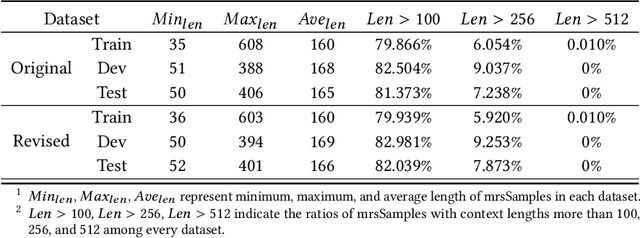
As a branch of advanced artificial intelligence, dialogue systems are prospering. Multi-turn response selection is a general research problem in dialogue systems. With the assistance of background information and pre-trained language models, the performance of state-of-the-art methods on this problem gains impressive improvement. However, existing studies neglect the importance of external commonsense knowledge. Hence, we design a Siamese network where a pre-trained Language model merges with a Graph neural network (SinLG). SinLG takes advantage of Pre-trained Language Models (PLMs) to catch the word correlations in the context and response candidates and utilizes a Graph Neural Network (GNN) to reason helpful common sense from an external knowledge graph. The GNN aims to assist the PLM in fine-tuning, and arousing its related memories to attain better performance. Specifically, we first extract related concepts as nodes from an external knowledge graph to construct a subgraph with the context response pair as a super node for each sample. Next, we learn two representations for the context response pair via both the PLM and GNN. A similarity loss between the two representations is utilized to transfer the commonsense knowledge from the GNN to the PLM. Then only the PLM is used to infer online so that efficiency can be guaranteed. Finally, we conduct extensive experiments on two variants of the PERSONA-CHAT dataset, which proves that our solution can not only improve the performance of the PLM but also achieve an efficient inference.
Pre-Training and Prompting for Few-Shot Node Classification on Text-Attributed Graphs
Jul 22, 2024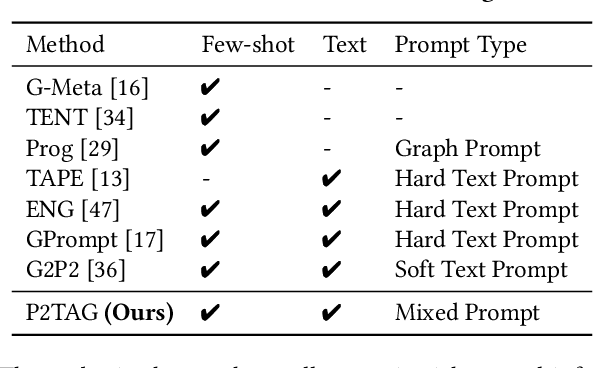
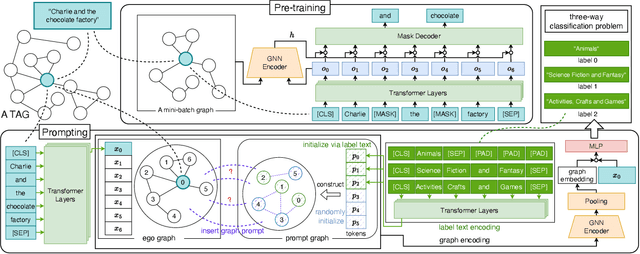
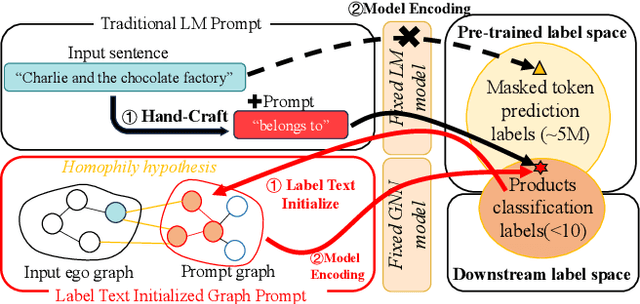
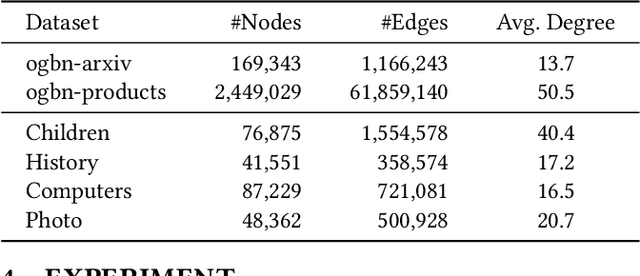
The text-attributed graph (TAG) is one kind of important real-world graph-structured data with each node associated with raw texts. For TAGs, traditional few-shot node classification methods directly conduct training on the pre-processed node features and do not consider the raw texts. The performance is highly dependent on the choice of the feature pre-processing method. In this paper, we propose P2TAG, a framework designed for few-shot node classification on TAGs with graph pre-training and prompting. P2TAG first pre-trains the language model (LM) and graph neural network (GNN) on TAGs with self-supervised loss. To fully utilize the ability of language models, we adapt the masked language modeling objective for our framework. The pre-trained model is then used for the few-shot node classification with a mixed prompt method, which simultaneously considers both text and graph information. We conduct experiments on six real-world TAGs, including paper citation networks and product co-purchasing networks. Experimental results demonstrate that our proposed framework outperforms existing graph few-shot learning methods on these datasets with +18.98% ~ +35.98% improvements.
GTPT: Group-based Token Pruning Transformer for Efficient Human Pose Estimation
Jul 16, 2024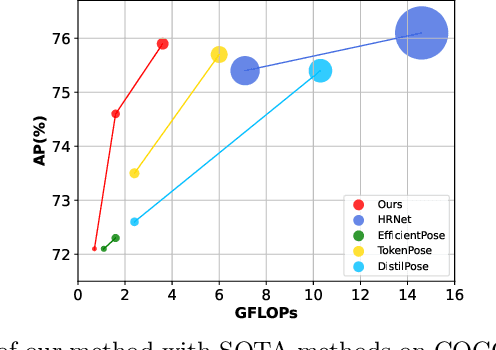
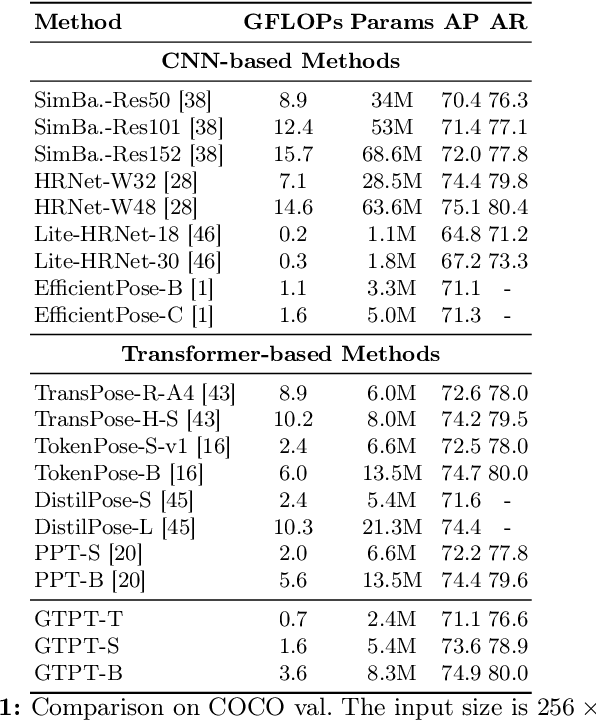
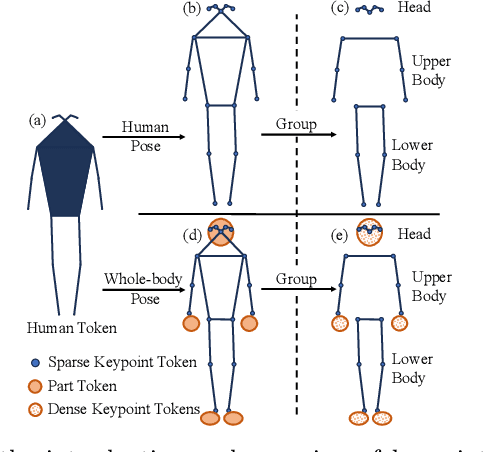
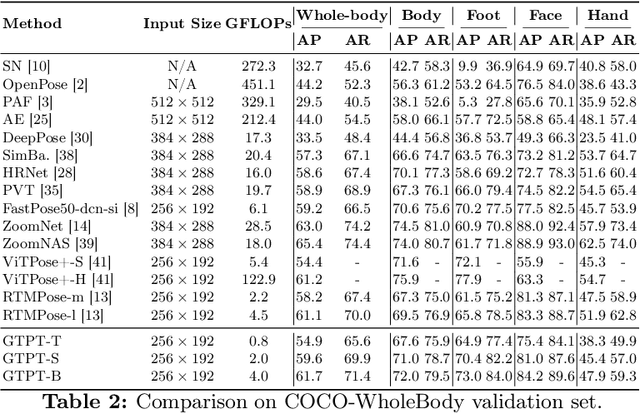
In recent years, 2D human pose estimation has made significant progress on public benchmarks. However, many of these approaches face challenges of less applicability in the industrial community due to the large number of parametric quantities and computational overhead. Efficient human pose estimation remains a hurdle, especially for whole-body pose estimation with numerous keypoints. While most current methods for efficient human pose estimation primarily rely on CNNs, we propose the Group-based Token Pruning Transformer (GTPT) that fully harnesses the advantages of the Transformer. GTPT alleviates the computational burden by gradually introducing keypoints in a coarse-to-fine manner. It minimizes the computation overhead while ensuring high performance. Besides, GTPT groups keypoint tokens and prunes visual tokens to improve model performance while reducing redundancy. We propose the Multi-Head Group Attention (MHGA) between different groups to achieve global interaction with little computational overhead. We conducted experiments on COCO and COCO-WholeBody. Compared to other methods, the experimental results show that GTPT can achieve higher performance with less computation, especially in whole-body with numerous keypoints.
Multi-objective Learning to Rank by Model Distillation
Jul 09, 2024

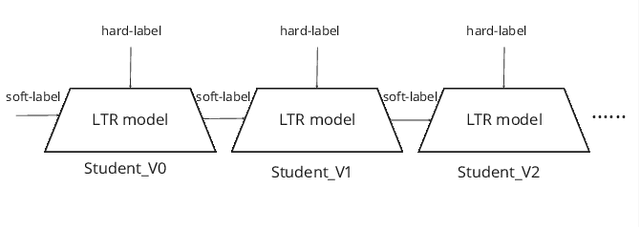
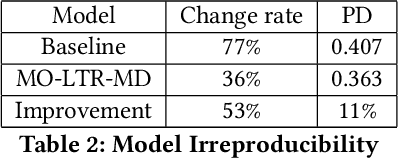
In online marketplaces, search ranking's objective is not only to purchase or conversion (primary objective), but to also the purchase outcomes(secondary objectives), e.g. order cancellation(or return), review rating, customer service inquiries, platform long term growth. Multi-objective learning to rank has been widely studied to balance primary and secondary objectives. But traditional approaches in industry face some challenges including expensive parameter tuning leads to sub-optimal solution, suffering from imbalanced data sparsity issue, and being not compatible with ad-hoc objective. In this paper, we propose a distillation-based ranking solution for multi-objective ranking, which optimizes the end-to-end ranking system at Airbnb across multiple ranking models on different objectives along with various considerations to optimize training and serving efficiency to meet industry standards. We found it performs much better than traditional approaches, it doesn't only significantly increases primary objective by a large margin but also meet secondary objectives constraints and improve model stability. We also demonstrated the proposed system could be further simplified by model self-distillation. Besides this, we did additional simulations to show that this approach could also help us efficiently inject ad-hoc non-differentiable business objective into the ranking system while enabling us to balance our optimization objectives.
Benchmarking Complex Instruction-Following with Multiple Constraints Composition
Jul 04, 2024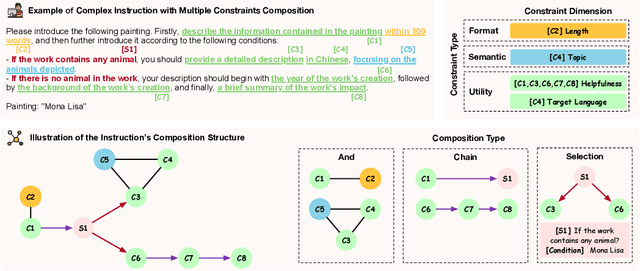
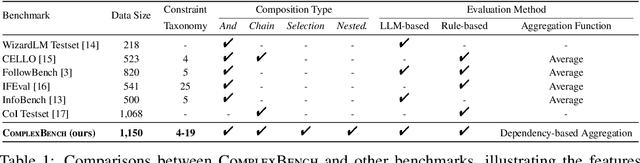
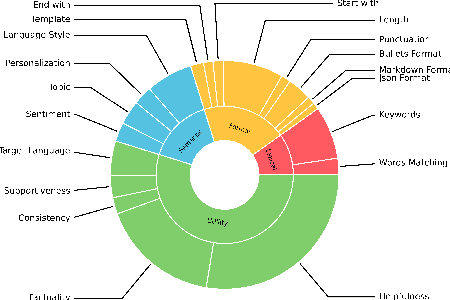
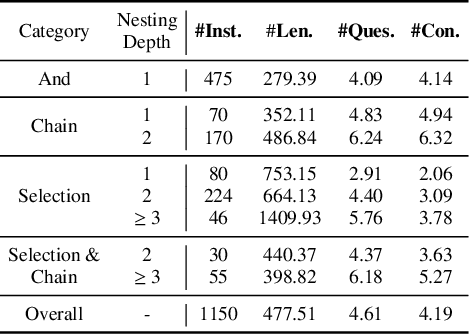
Instruction following is one of the fundamental capabilities of large language models (LLMs). As the ability of LLMs is constantly improving, they have been increasingly applied to deal with complex human instructions in real-world scenarios. Therefore, how to evaluate the ability of complex instruction-following of LLMs has become a critical research problem. Existing benchmarks mainly focus on modeling different types of constraints in human instructions while neglecting the composition of different constraints, which is an indispensable constituent in complex instructions. To this end, we propose ComplexBench, a benchmark for comprehensively evaluating the ability of LLMs to follow complex instructions composed of multiple constraints. We propose a hierarchical taxonomy for complex instructions, including 4 constraint types, 19 constraint dimensions, and 4 composition types, and manually collect a high-quality dataset accordingly. To make the evaluation reliable, we augment LLM-based evaluators with rules to effectively verify whether generated texts can satisfy each constraint and composition. Furthermore, we obtain the final evaluation score based on the dependency structure determined by different composition types. ComplexBench identifies significant deficiencies in existing LLMs when dealing with complex instructions with multiple constraints composition.
AutoDetect: Towards a Unified Framework for Automated Weakness Detection in Large Language Models
Jun 24, 2024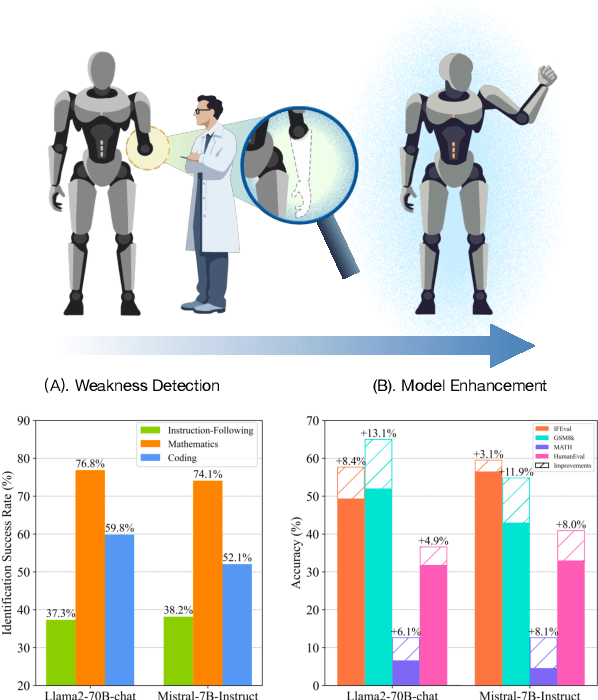
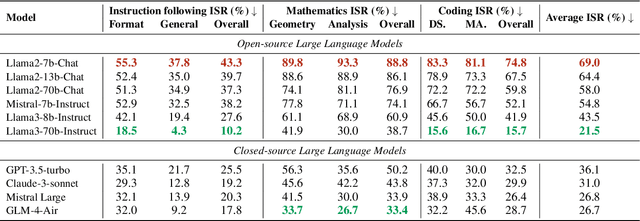
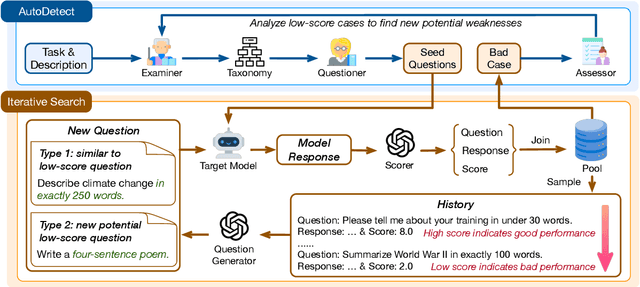
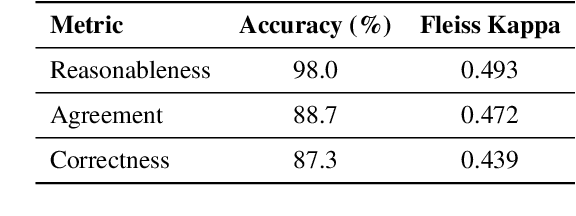
Although Large Language Models (LLMs) are becoming increasingly powerful, they still exhibit significant but subtle weaknesses, such as mistakes in instruction-following or coding tasks. As these unexpected errors could lead to severe consequences in practical deployments, it is crucial to investigate the limitations within LLMs systematically. Traditional benchmarking approaches cannot thoroughly pinpoint specific model deficiencies, while manual inspections are costly and not scalable. In this paper, we introduce a unified framework, AutoDetect, to automatically expose weaknesses in LLMs across various tasks. Inspired by the educational assessment process that measures students' learning outcomes, AutoDetect consists of three LLM-powered agents: Examiner, Questioner, and Assessor. The collaboration among these three agents is designed to realize comprehensive and in-depth weakness identification. Our framework demonstrates significant success in uncovering flaws, with an identification success rate exceeding 30% in prominent models such as ChatGPT and Claude. More importantly, these identified weaknesses can guide specific model improvements, proving more effective than untargeted data augmentation methods like Self-Instruct. Our approach has led to substantial enhancements in popular LLMs, including the Llama series and Mistral-7b, boosting their performance by over 10% across several benchmarks. Code and data are publicly available at https://github.com/thu-coai/AutoDetect.
SpreadsheetBench: Towards Challenging Real World Spreadsheet Manipulation
Jun 21, 2024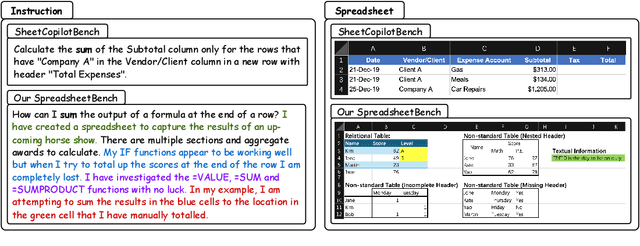
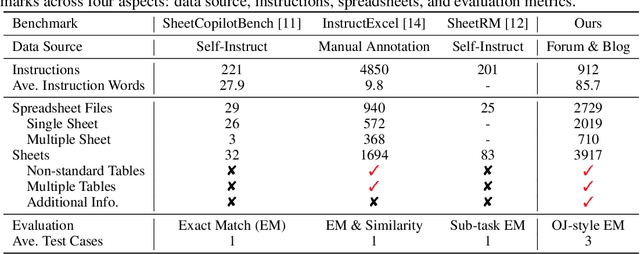
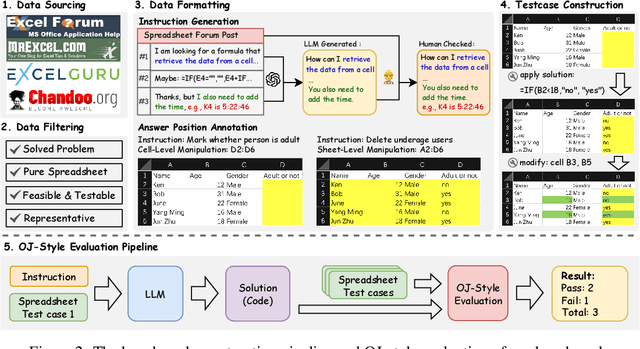
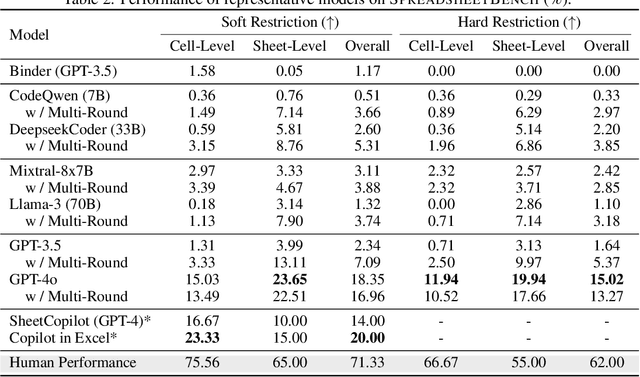
We introduce SpreadsheetBench, a challenging spreadsheet manipulation benchmark exclusively derived from real-world scenarios, designed to immerse current large language models (LLMs) in the actual workflow of spreadsheet users. Unlike existing benchmarks that rely on synthesized queries and simplified spreadsheet files, SpreadsheetBench is built from 912 real questions gathered from online Excel forums, which reflect the intricate needs of users. The associated spreadsheets from the forums contain a variety of tabular data such as multiple tables, non-standard relational tables, and abundant non-textual elements. Furthermore, we propose a more reliable evaluation metric akin to online judge platforms, where multiple spreadsheet files are created as test cases for each instruction, ensuring the evaluation of robust solutions capable of handling spreadsheets with varying values. Our comprehensive evaluation of various LLMs under both single-round and multi-round inference settings reveals a substantial gap between the state-of-the-art (SOTA) models and human performance, highlighting the benchmark's difficulty.