 Add to Chrome
 Add to Firefox
 Add to Edge
Federated Learning of Models Pre-Trained on Different Features with Consensus Graphs
Jun 02, 2023
Learning an effective global model on private and decentralized datasets has become an increasingly important challenge of machine learning when applied in practice. Existing distributed learning paradigms, such as Federated Learning, enable this via model aggregation which enforces a strong form of modeling homogeneity and synchronicity across clients. This is however not suitable to many practical scenarios. For example, in distributed sensing, heterogeneous sensors reading data from different views of the same phenomenon would need to use different models for different data modalities. Local learning therefore happens in isolation but inference requires merging the local models to achieve consensus. To enable consensus among local models, we propose a feature fusion approach that extracts local representations from local models and incorporates them into a global representation that improves the prediction performance. Achieving this requires addressing two non-trivial problems. First, we need to learn an alignment between similar feature components which are arbitrarily arranged across clients to enable representation aggregation. Second, we need to learn a consensus graph that captures the high-order interactions between local feature spaces and how to combine them to achieve a better prediction. This paper presents solutions to these problems and demonstrates them in real-world applications on time series data such as power grids and traffic networks.

Out-of-Distributed Semantic Pruning for Robust Semi-Supervised Learning
May 30, 2023Recent advances in robust semi-supervised learning (SSL) typically filter out-of-distribution (OOD) information at the sample level. We argue that an overlooked problem of robust SSL is its corrupted information on semantic level, practically limiting the development of the field. In this paper, we take an initial step to explore and propose a unified framework termed OOD Semantic Pruning (OSP), which aims at pruning OOD semantics out from in-distribution (ID) features. Specifically, (i) we propose an aliasing OOD matching module to pair each ID sample with an OOD sample with semantic overlap. (ii) We design a soft orthogonality regularization, which first transforms each ID feature by suppressing its semantic component that is collinear with paired OOD sample. It then forces the predictions before and after soft orthogonality decomposition to be consistent. Being practically simple, our method shows a strong performance in OOD detection and ID classification on challenging benchmarks. In particular, OSP surpasses the previous state-of-the-art by 13.7% on accuracy for ID classification and 5.9% on AUROC for OOD detection on TinyImageNet dataset. The source codes are publicly available at https://github.com/rain305f/OSP.
GC-Flow: A Graph-Based Flow Network for Effective Clustering
May 26, 2023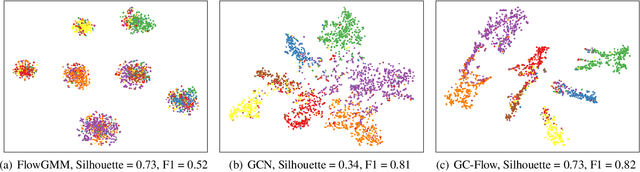
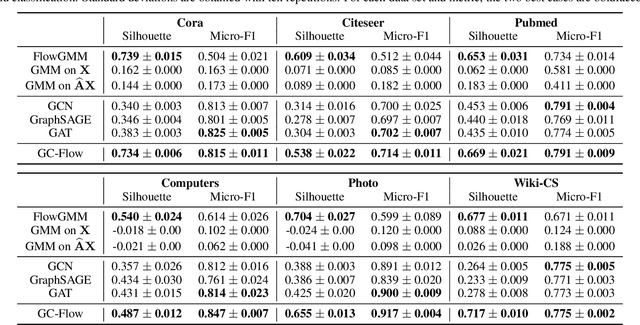
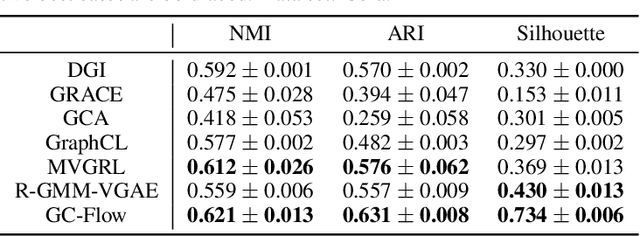
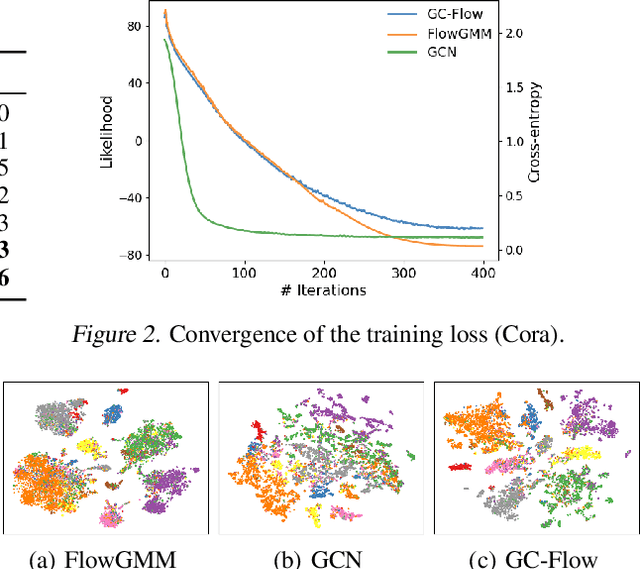
Graph convolutional networks (GCNs) are \emph{discriminative models} that directly model the class posterior $p(y|\mathbf{x})$ for semi-supervised classification of graph data. While being effective, as a representation learning approach, the node representations extracted from a GCN often miss useful information for effective clustering, because the objectives are different. In this work, we design normalizing flows that replace GCN layers, leading to a \emph{generative model} that models both the class conditional likelihood $p(\mathbf{x}|y)$ and the class prior $p(y)$. The resulting neural network, GC-Flow, retains the graph convolution operations while being equipped with a Gaussian mixture representation space. It enjoys two benefits: it not only maintains the predictive power of GCN, but also produces well-separated clusters, due to the structuring of the representation space. We demonstrate these benefits on a variety of benchmark data sets. Moreover, we show that additional parameterization, such as that on the adjacency matrix used for graph convolutions, yields additional improvement in clustering.
Interpretable Machine Learning based on Functional ANOVA Framework: Algorithms and Comparisons
May 25, 2023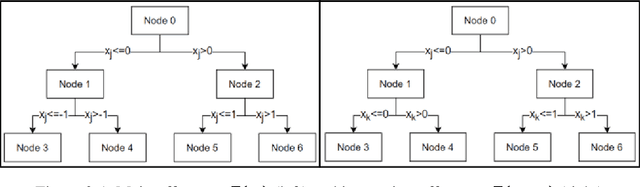
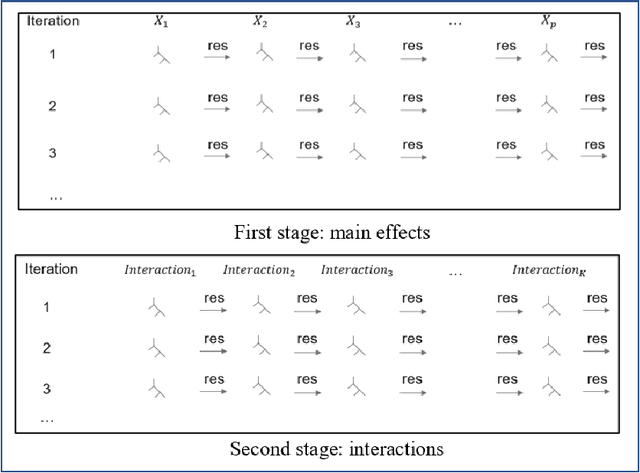
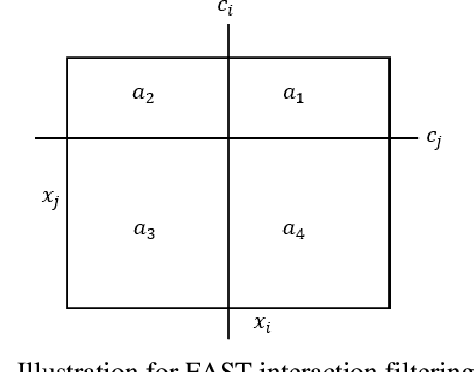
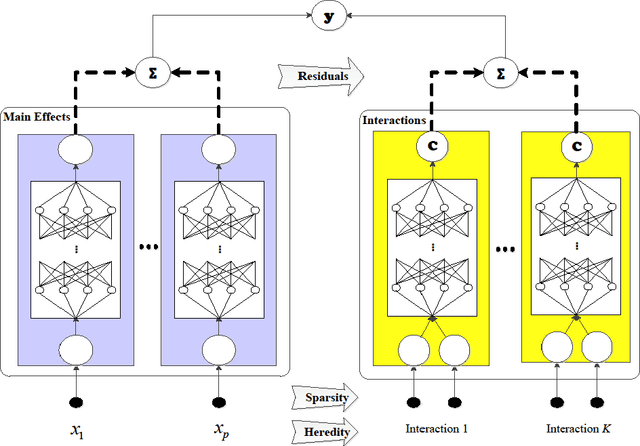
In the early days of machine learning (ML), the emphasis was on developing complex algorithms to achieve best predictive performance. To understand and explain the model results, one had to rely on post hoc explainability techniques, which are known to have limitations. Recently, with the recognition that interpretability is just as important, researchers are compromising on small increases in predictive performance to develop algorithms that are inherently interpretable. While doing so, the ML community has rediscovered the use of low-order functional ANOVA (fANOVA) models that have been known in the statistical literature for some time. This paper starts with a description of challenges with post hoc explainability and reviews the fANOVA framework with a focus on main effects and second-order interactions. This is followed by an overview of two recently developed techniques: Explainable Boosting Machines or EBM (Lou et al., 2013) and GAMI-Net (Yang et al., 2021b). The paper proposes a new algorithm, called GAMI-Lin-T, that also uses trees like EBM, but it does linear fits instead of piecewise constants within the partitions. There are many other differences, including the development of a new interaction filtering algorithm. Finally, the paper uses simulated and real datasets to compare selected ML algorithms. The results show that GAMI-Lin-T and GAMI-Net have comparable performances, and both are generally better than EBM.
Text-Video Retrieval with Disentangled Conceptualization and Set-to-Set Alignment
May 20, 2023Text-video retrieval is a challenging cross-modal task, which aims to align visual entities with natural language descriptions. Current methods either fail to leverage the local details or are computationally expensive. What's worse, they fail to leverage the heterogeneous concepts in data. In this paper, we propose the Disentangled Conceptualization and Set-to-set Alignment (DiCoSA) to simulate the conceptualizing and reasoning process of human beings. For disentangled conceptualization, we divide the coarse feature into multiple latent factors related to semantic concepts. For set-to-set alignment, where a set of visual concepts correspond to a set of textual concepts, we propose an adaptive pooling method to aggregate semantic concepts to address the partial matching. In particular, since we encode concepts independently in only a few dimensions, DiCoSA is superior at efficiency and granularity, ensuring fine-grained interactions using a similar computational complexity as coarse-grained alignment. Extensive experiments on five datasets, including MSR-VTT, LSMDC, MSVD, ActivityNet, and DiDeMo, demonstrate that our method outperforms the existing state-of-the-art methods.
TG-VQA: Ternary Game of Video Question Answering
May 18, 2023Video question answering aims at answering a question about the video content by reasoning the alignment semantics within them. However, since relying heavily on human instructions, i.e., annotations or priors, current contrastive learning-based VideoQA methods remains challenging to perform fine-grained visual-linguistic alignments. In this work, we innovatively resort to game theory, which can simulate complicated relationships among multiple players with specific interaction strategies, e.g., video, question, and answer as ternary players, to achieve fine-grained alignment for VideoQA task. Specifically, we carefully design a VideoQA-specific interaction strategy to tailor the characteristics of VideoQA, which can mathematically generate the fine-grained visual-linguistic alignment label without label-intensive efforts. Our TG-VQA outperforms existing state-of-the-art by a large margin (more than 5%) on long-term and short-term VideoQA datasets, verifying its effectiveness and generalization ability. Thanks to the guidance of game-theoretic interaction, our model impressively convergences well on limited data (${10}^4 ~videos$), surpassing most of those pre-trained on large-scale data ($10^7~videos$).
Coordinated Transformer with Position \& Sample-aware Central Loss for Anatomical Landmark Detection
May 18, 2023Heatmap-based anatomical landmark detection is still facing two unresolved challenges: 1) inability to accurately evaluate the distribution of heatmap; 2) inability to effectively exploit global spatial structure information. To address the computational inability challenge, we propose a novel position-aware and sample-aware central loss. Specifically, our central loss can absorb position information, enabling accurate evaluation of the heatmap distribution. More advanced is that our central loss is sample-aware, which can adaptively distinguish easy and hard samples and make the model more focused on hard samples while solving the challenge of extreme imbalance between landmarks and non-landmarks. To address the challenge of ignoring structure information, a Coordinated Transformer, called CoorTransformer, is proposed, which establishes long-range dependencies under the guidance of landmark coordination information, making the attention more focused on the sparse landmarks while taking advantage of global spatial structure. Furthermore, CoorTransformer can speed up convergence, effectively avoiding the defect that Transformers have difficulty converging in sparse representation learning. Using the advanced CoorTransformer and central loss, we propose a generalized detection model that can handle various scenarios, inherently exploiting the underlying relationship between landmarks and incorporating rich structural knowledge around the target landmarks. We analyzed and evaluated CoorTransformer and central loss on three challenging landmark detection tasks. The experimental results show that our CoorTransformer outperforms state-of-the-art methods, and the central loss significantly improves the performance of the model with p-values< 0.05.
Multi-view MERA Subspace Clustering
May 16, 2023Tensor-based multi-view subspace clustering (MSC) can capture high-order correlation in the self-representation tensor. Current tensor decompositions for MSC suffer from highly unbalanced unfolding matrices or rotation sensitivity, failing to fully explore inter/intra-view information. Using the advanced tensor network, namely, multi-scale entanglement renormalization ansatz (MERA), we propose a low-rank MERA based MSC (MERA-MSC) algorithm, where MERA factorizes a tensor into contractions of one top core factor and the rest orthogonal/semi-orthogonal factors. Benefiting from multiple interactions among orthogonal/semi-orthogonal (low-rank) factors, the low-rank MERA has a strong representation power to capture the complex inter/intra-view information in the self-representation tensor. The alternating direction method of multipliers is adopted to solve the optimization model. Experimental results on five multi-view datasets demonstrate MERA-MSC has superiority against the compared algorithms on six evaluation metrics. Furthermore, we extend MERA-MSC by incorporating anchor learning to develop a scalable low-rank MERA based multi-view clustering method (sMREA-MVC). The effectiveness and efficiency of sMERA-MVC have been validated on three large-scale multi-view datasets. To our knowledge, this is the first work to introduce MERA to the multi-view clustering topic. The codes of MERA-MSC and sMERA-MVC are publicly available at https://github.com/longzhen520/MERA-MSC.
Long-lead forecasts of wintertime air stagnation index in southern China using oceanic memory effects
May 16, 2023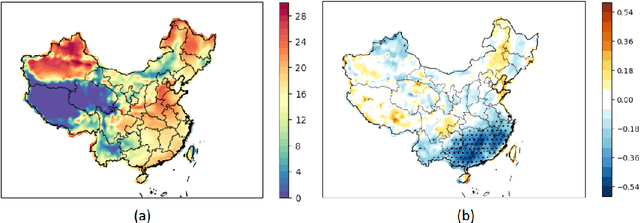
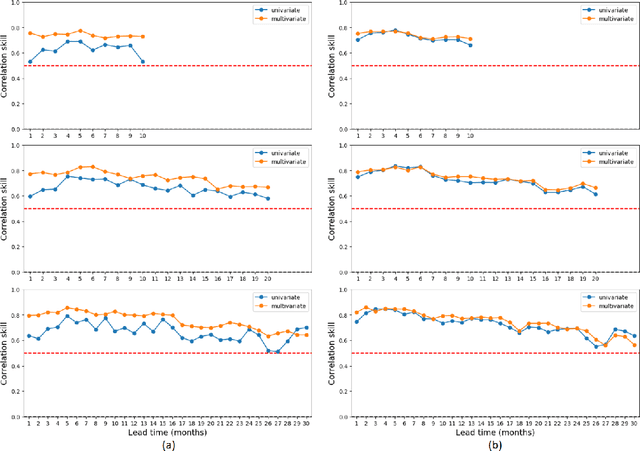
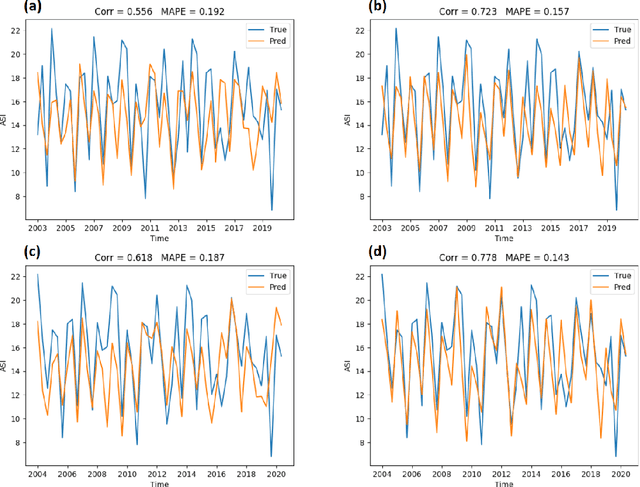
Stagnant weather condition is one of the major contributors to air pollution as it is favorable for the formation and accumulation of pollutants. To measure the atmosphere's ability to dilute air pollutants, Air Stagnation Index (ASI) has been introduced as an important meteorological index. Therefore, making long-lead ASI forecasts is vital to make plans in advance for air quality management. In this study, we found that autumn Ni\~no indices derived from sea surface temperature (SST) anomalies show a negative correlation with wintertime ASI in southern China, offering prospects for a prewinter forecast. We developed an LSTM-based model to predict the future wintertime ASI. Results demonstrated that multivariate inputs (past ASI and Ni\~no indices) achieve better forecast performance than univariate input (only past ASI). The model achieves a correlation coefficient of 0.778 between the actual and predicted ASI, exhibiting a high degree of consistency.
CoMoSpeech: One-Step Speech and Singing Voice Synthesis via Consistency Model
May 11, 2023
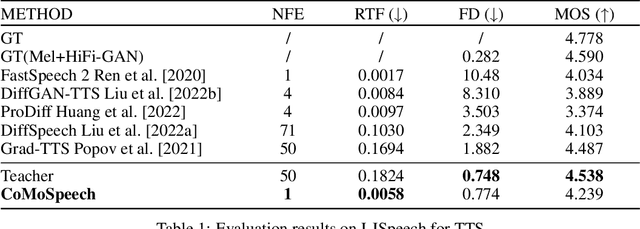
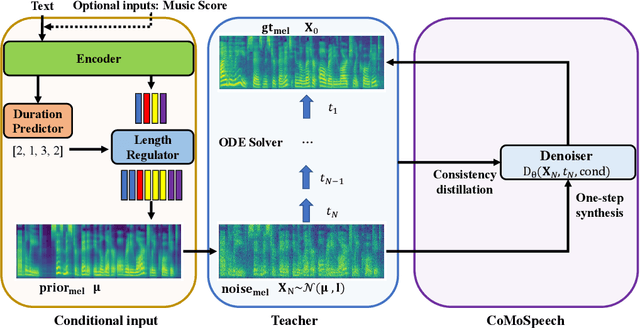
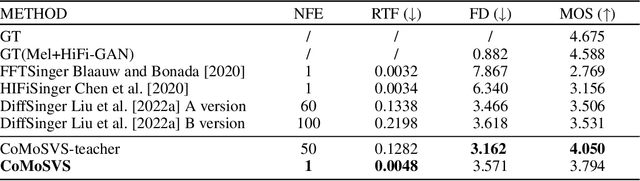
Denoising diffusion probabilistic models (DDPMs) have shown promising performance for speech synthesis. However, a large number of iterative steps are required to achieve high sample quality, which restricts the inference speed. Maintaining sample quality while increasing sampling speed has become a challenging task. In this paper, we propose a "Co"nsistency "Mo"del-based "Speech" synthesis method, CoMoSpeech, which achieve speech synthesis through a single diffusion sampling step while achieving high audio quality. The consistency constraint is applied to distill a consistency model from a well-designed diffusion-based teacher model, which ultimately yields superior performances in the distilled CoMoSpeech. Our experiments show that by generating audio recordings by a single sampling step, the CoMoSpeech achieves an inference speed more than 150 times faster than real-time on a single NVIDIA A100 GPU, which is comparable to FastSpeech2, making diffusion-sampling based speech synthesis truly practical. Meanwhile, objective and subjective evaluations on text-to-speech and singing voice synthesis show that the proposed teacher models yield the best audio quality, and the one-step sampling based CoMoSpeech achieves the best inference speed with better or comparable audio quality to other conventional multi-step diffusion model baselines. Audio samples are available at https://comospeech.github.io/.