 Add to Chrome
 Add to Firefox
 Add to Edge
Seeing Through Smoke: Surgical Desmoking for Improved Visual Perception
Mar 26, 2026
Minimally invasive and robot-assisted surgery relies heavily on endoscopic imaging, yet surgical smoke produced by electrocautery and vessel-sealing instruments can severely degrade visual perception and hinder vision-based functionalities. We present a transformer-based surgical desmoking model with a physics-inspired desmoking head that jointly predicts smoke-free image and corresponding smoke map. To address the scarcity of paired smoky-to-smoke-free training data, we develop a synthetic data generation pipeline that blends artificial smoke patterns with real endoscopic images, yielding over 80,000 paired samples for supervised training. We further curate, to our knowledge, the largest paired surgical smoke dataset to date, comprising 5,817 image pairs captured with the da Vinci robotic surgical system, enabling benchmarking on high-resolution endoscopic images. Extensive experiments on both a public benchmark and our dataset demonstrate state-of-the-art performance in image reconstruction compared to existing dehazing and desmoking approaches. We also assess the impact of desmoking on downstream stereo depth estimation and instrument segmentation, highlighting both the potential benefits and current limitations of digital smoke removal methods.

A New Framework for Explainable Rare Cell Identification in Single-Cell Transcriptomics Data
Jan 04, 2026The detection of rare cell types in single-cell transcriptomics data is crucial for elucidating disease pathogenesis and tissue development dynamics. However, a critical gap that persists in current methods is their inability to provide an explanation based on genes for each cell they have detected as rare. We identify three primary sources of this deficiency. First, the anomaly detectors often function as "black boxes", designed to detect anomalies but unable to explain why a cell is anomalous. Second, the standard analytical framework hinders interpretability by relying on dimensionality reduction techniques, such as Principal Component Analysis (PCA), which transform meaningful gene expression data into abstract, uninterpretable features. Finally, existing explanation algorithms cannot be readily applied to this domain, as single-cell data is characterized by high dimensionality, noise, and substantial sparsity. To overcome these limitations, we introduce a framework for explainable anomaly detection in single-cell transcriptomics data which not only identifies individual anomalies, but also provides a visual explanation based on genes that makes an instance anomalous. This framework has two key ingredients that are not existed in current methods applied in this domain. First, it eliminates the PCA step which is deemed to be an essential component in previous studies. Second, it employs the state-of-art anomaly detector and explainer as the efficient and effective means to find each rare cell and the relevant gene subspace in order to provide explanations for each rare cell as well as the typical normal cell associated with the rare cell's closest normal cells.
Long-lead forecasts of wintertime air stagnation index in southern China using oceanic memory effects
May 16, 2023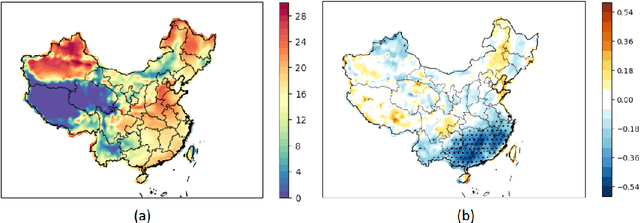
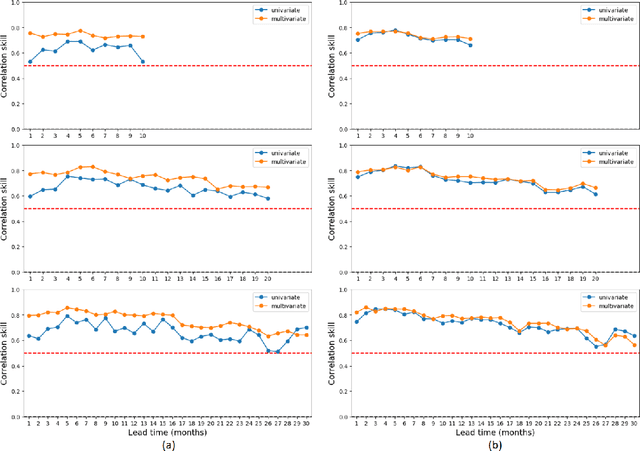
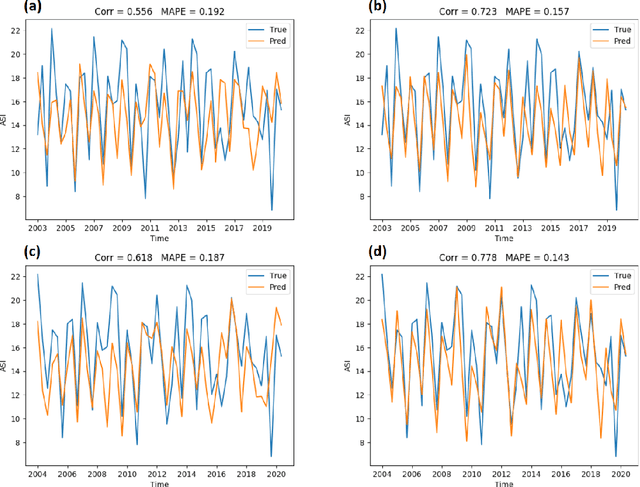
Stagnant weather condition is one of the major contributors to air pollution as it is favorable for the formation and accumulation of pollutants. To measure the atmosphere's ability to dilute air pollutants, Air Stagnation Index (ASI) has been introduced as an important meteorological index. Therefore, making long-lead ASI forecasts is vital to make plans in advance for air quality management. In this study, we found that autumn Ni\~no indices derived from sea surface temperature (SST) anomalies show a negative correlation with wintertime ASI in southern China, offering prospects for a prewinter forecast. We developed an LSTM-based model to predict the future wintertime ASI. Results demonstrated that multivariate inputs (past ASI and Ni\~no indices) achieve better forecast performance than univariate input (only past ASI). The model achieves a correlation coefficient of 0.778 between the actual and predicted ASI, exhibiting a high degree of consistency.