 Add to Chrome
 Add to Firefox
 Add to Edge
COCO-O: A Benchmark for Object Detectors under Natural Distribution Shifts
Aug 02, 2023
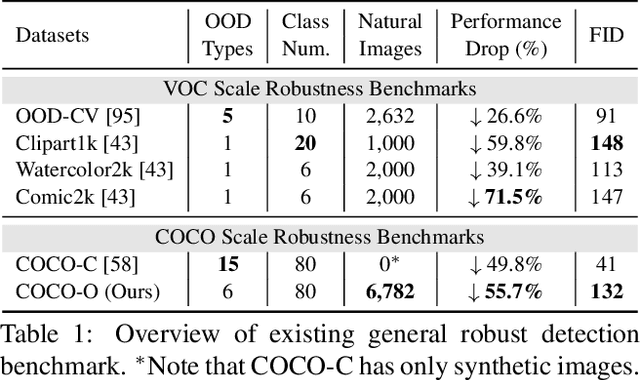
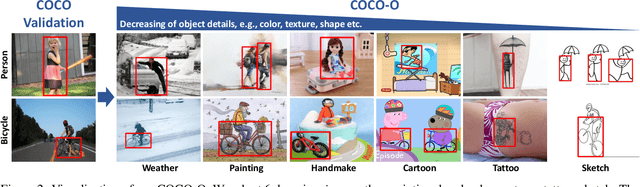
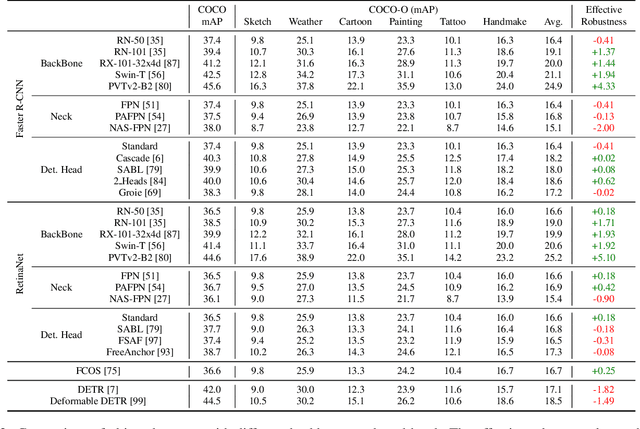

Practical object detection application can lose its effectiveness on image inputs with natural distribution shifts. This problem leads the research community to pay more attention on the robustness of detectors under Out-Of-Distribution (OOD) inputs. Existing works construct datasets to benchmark the detector's OOD robustness for a specific application scenario, e.g., Autonomous Driving. However, these datasets lack universality and are hard to benchmark general detectors built on common tasks such as COCO. To give a more comprehensive robustness assessment, we introduce COCO-O(ut-of-distribution), a test dataset based on COCO with 6 types of natural distribution shifts. COCO-O has a large distribution gap with training data and results in a significant 55.7% relative performance drop on a Faster R-CNN detector. We leverage COCO-O to conduct experiments on more than 100 modern object detectors to investigate if their improvements are credible or just over-fitting to the COCO test set. Unfortunately, most classic detectors in early years do not exhibit strong OOD generalization. We further study the robustness effect on recent breakthroughs of detector's architecture design, augmentation and pre-training techniques. Some empirical findings are revealed: 1) Compared with detection head or neck, backbone is the most important part for robustness; 2) An end-to-end detection transformer design brings no enhancement, and may even reduce robustness; 3) Large-scale foundation models have made a great leap on robust object detection. We hope our COCO-O could provide a rich testbed for robustness study of object detection. The dataset will be available at https://github.com/alibaba/easyrobust/tree/main/benchmarks/coco_o.

Robust Automatic Speech Recognition via WavAugment Guided Phoneme Adversarial Training
Jul 24, 2023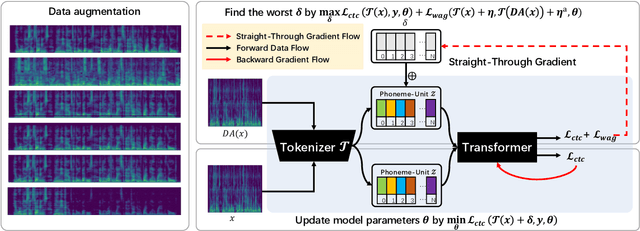
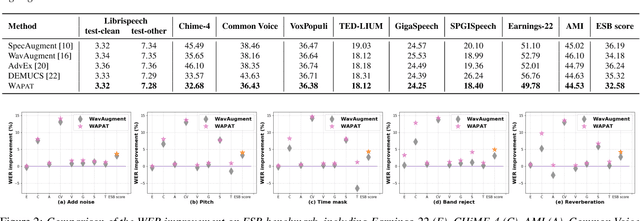
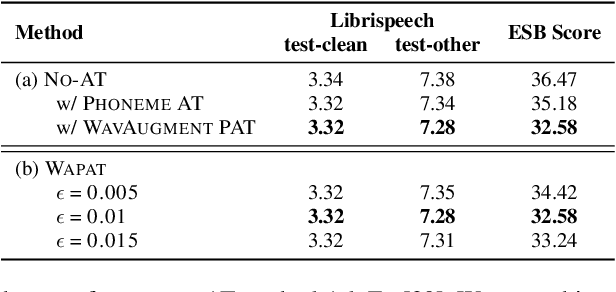
Developing a practically-robust automatic speech recognition (ASR) is challenging since the model should not only maintain the original performance on clean samples, but also achieve consistent efficacy under small volume perturbations and large domain shifts. To address this problem, we propose a novel WavAugment Guided Phoneme Adversarial Training (wapat). wapat use adversarial examples in phoneme space as augmentation to make the model invariant to minor fluctuations in phoneme representation and preserve the performance on clean samples. In addition, wapat utilizes the phoneme representation of augmented samples to guide the generation of adversaries, which helps to find more stable and diverse gradient-directions, resulting in improved generalization. Extensive experiments demonstrate the effectiveness of wapat on End-to-end Speech Challenge Benchmark (ESB). Notably, SpeechLM-wapat outperforms the original model by 6.28% WER reduction on ESB, achieving the new state-of-the-art.
From Adversarial Arms Race to Model-centric Evaluation: Motivating a Unified Automatic Robustness Evaluation Framework
May 29, 2023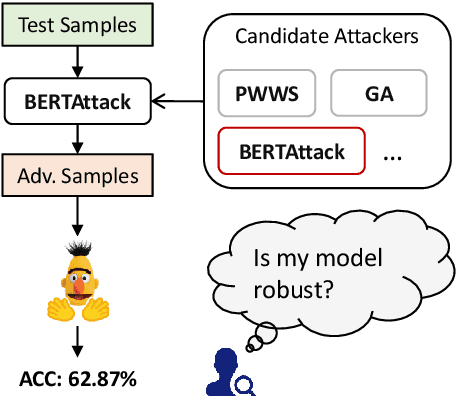
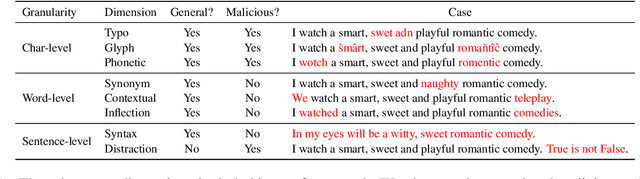

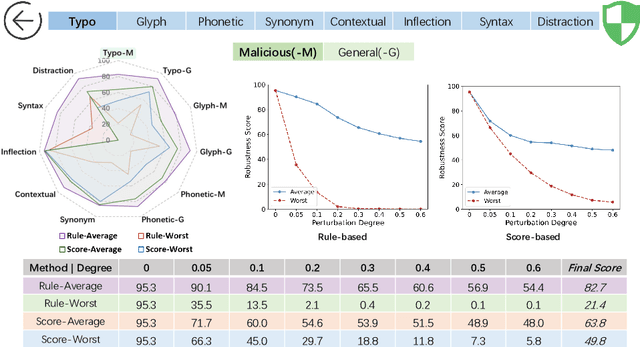
Textual adversarial attacks can discover models' weaknesses by adding semantic-preserved but misleading perturbations to the inputs. The long-lasting adversarial attack-and-defense arms race in Natural Language Processing (NLP) is algorithm-centric, providing valuable techniques for automatic robustness evaluation. However, the existing practice of robustness evaluation may exhibit issues of incomprehensive evaluation, impractical evaluation protocol, and invalid adversarial samples. In this paper, we aim to set up a unified automatic robustness evaluation framework, shifting towards model-centric evaluation to further exploit the advantages of adversarial attacks. To address the above challenges, we first determine robustness evaluation dimensions based on model capabilities and specify the reasonable algorithm to generate adversarial samples for each dimension. Then we establish the evaluation protocol, including evaluation settings and metrics, under realistic demands. Finally, we use the perturbation degree of adversarial samples to control the sample validity. We implement a toolkit RobTest that realizes our automatic robustness evaluation framework. In our experiments, we conduct a robustness evaluation of RoBERTa models to demonstrate the effectiveness of our evaluation framework, and further show the rationality of each component in the framework. The code will be made public at \url{https://github.com/thunlp/RobTest}.
Large Language Models Can be Lazy Learners: Analyze Shortcuts in In-Context Learning
May 26, 2023Large language models (LLMs) have recently shown great potential for in-context learning, where LLMs learn a new task simply by conditioning on a few input-label pairs (prompts). Despite their potential, our understanding of the factors influencing end-task performance and the robustness of in-context learning remains limited. This paper aims to bridge this knowledge gap by investigating the reliance of LLMs on shortcuts or spurious correlations within prompts. Through comprehensive experiments on classification and extraction tasks, we reveal that LLMs are "lazy learners" that tend to exploit shortcuts in prompts for downstream tasks. Additionally, we uncover a surprising finding that larger models are more likely to utilize shortcuts in prompts during inference. Our findings provide a new perspective on evaluating robustness in in-context learning and pose new challenges for detecting and mitigating the use of shortcuts in prompts.
Joint Generative-Contrastive Representation Learning for Anomalous Sound Detection
May 20, 2023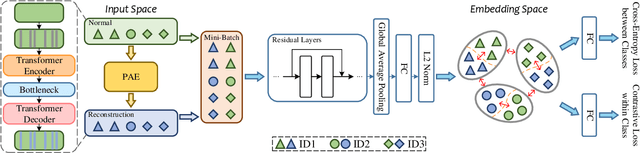
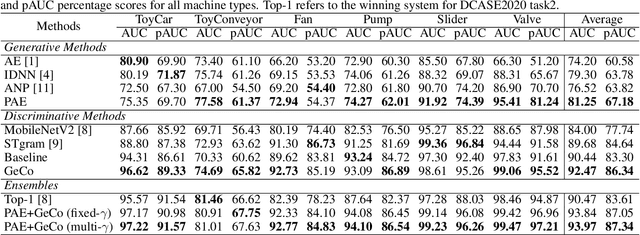
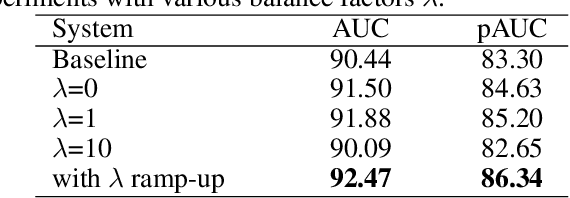
In this paper, we propose a joint generative and contrastive representation learning method (GeCo) for anomalous sound detection (ASD). GeCo exploits a Predictive AutoEncoder (PAE) equipped with self-attention as a generative model to perform frame-level prediction. The output of the PAE together with original normal samples, are used for supervised contrastive representative learning in a multi-task framework. Besides cross-entropy loss between classes, contrastive loss is used to separate PAE output and original samples within each class. GeCo aims to better capture context information among frames, thanks to the self-attention mechanism for PAE model. Furthermore, GeCo combines generative and contrastive learning from which we aim to yield more effective and informative representations, compared to existing methods. Extensive experiments have been conducted on the DCASE2020 Task2 development dataset, showing that GeCo outperforms state-of-the-art generative and discriminative methods.
FairRec: Fairness Testing for Deep Recommender Systems
Apr 14, 2023
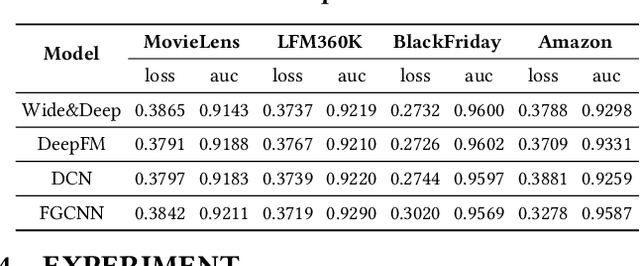
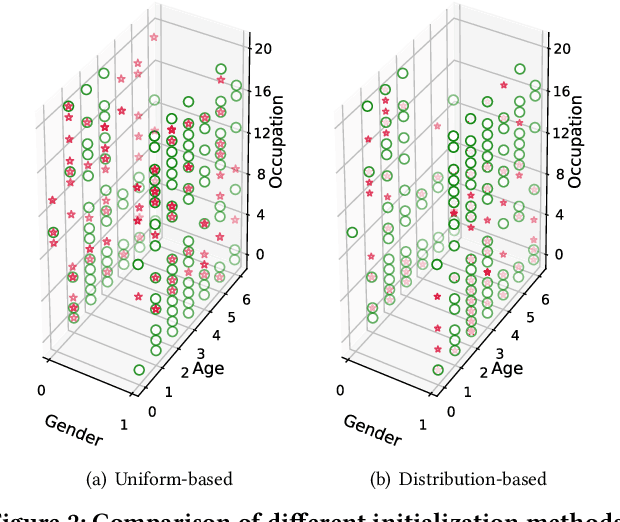
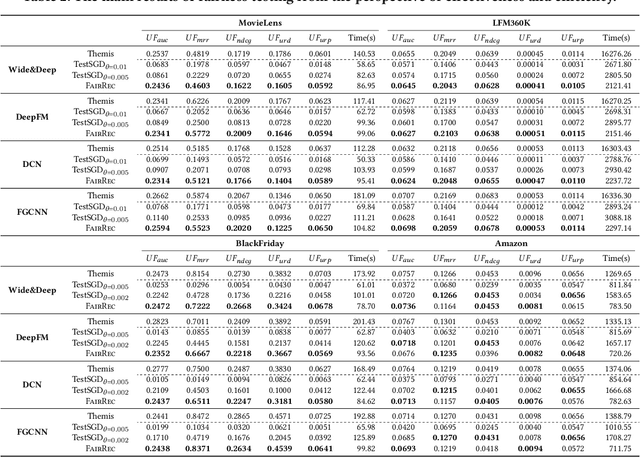
Deep learning-based recommender systems (DRSs) are increasingly and widely deployed in the industry, which brings significant convenience to people's daily life in different ways. However, recommender systems are also shown to suffer from multiple issues,e.g., the echo chamber and the Matthew effect, of which the notation of "fairness" plays a core role.While many fairness notations and corresponding fairness testing approaches have been developed for traditional deep classification models, they are essentially hardly applicable to DRSs. One major difficulty is that there still lacks a systematic understanding and mapping between the existing fairness notations and the diverse testing requirements for deep recommender systems, not to mention further testing or debugging activities. To address the gap, we propose FairRec, a unified framework that supports fairness testing of DRSs from multiple customized perspectives, e.g., model utility, item diversity, item popularity, etc. We also propose a novel, efficient search-based testing approach to tackle the new challenge, i.e., double-ended discrete particle swarm optimization (DPSO) algorithm, to effectively search for hidden fairness issues in the form of certain disadvantaged groups from a vast number of candidate groups. Given the testing report, by adopting a simple re-ranking mitigation strategy on these identified disadvantaged groups, we show that the fairness of DRSs can be significantly improved. We conducted extensive experiments on multiple industry-level DRSs adopted by leading companies. The results confirm that FairRec is effective and efficient in identifying the deeply hidden fairness issues, e.g., achieving 95% testing accuracy with half to 1/8 time.
ImageNet-E: Benchmarking Neural Network Robustness via Attribute Editing
Mar 30, 2023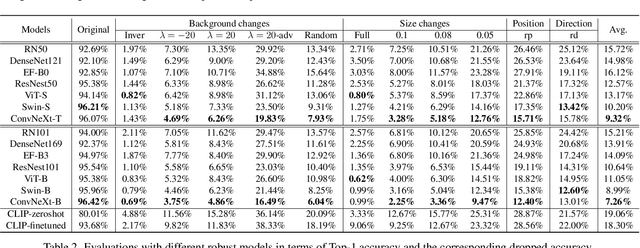
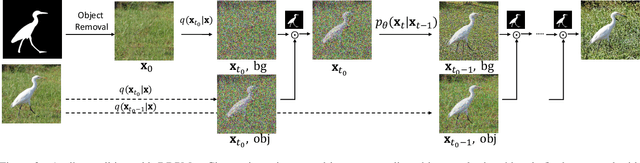

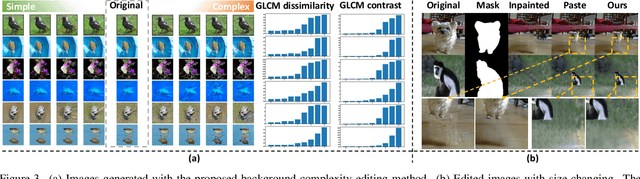
Recent studies have shown that higher accuracy on ImageNet usually leads to better robustness against different corruptions. Therefore, in this paper, instead of following the traditional research paradigm that investigates new out-of-distribution corruptions or perturbations deep models may encounter, we conduct model debugging in in-distribution data to explore which object attributes a model may be sensitive to. To achieve this goal, we create a toolkit for object editing with controls of backgrounds, sizes, positions, and directions, and create a rigorous benchmark named ImageNet-E(diting) for evaluating the image classifier robustness in terms of object attributes. With our ImageNet-E, we evaluate the performance of current deep learning models, including both convolutional neural networks and vision transformers. We find that most models are quite sensitive to attribute changes. A small change in the background can lead to an average of 9.23\% drop on top-1 accuracy. We also evaluate some robust models including both adversarially trained models and other robust trained models and find that some models show worse robustness against attribute changes than vanilla models. Based on these findings, we discover ways to enhance attribute robustness with preprocessing, architecture designs, and training strategies. We hope this work can provide some insights to the community and open up a new avenue for research in robust computer vision. The code and dataset are available at https://github.com/alibaba/easyrobust.
* Accepted by CVPR2023
TransAudio: Towards the Transferable Adversarial Audio Attack via Learning Contextualized Perturbations
Mar 28, 2023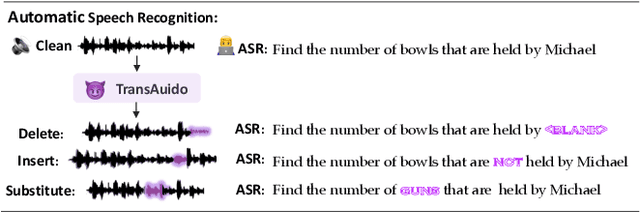
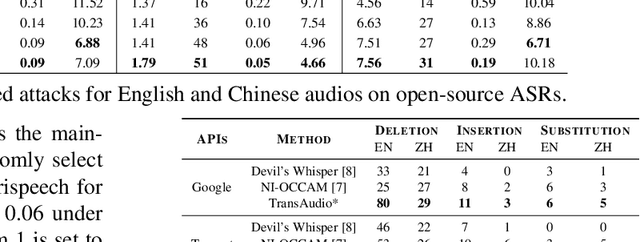
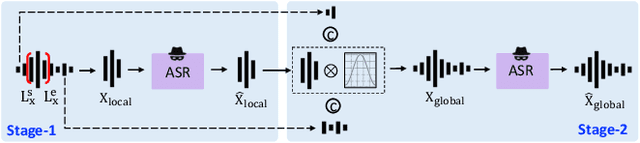
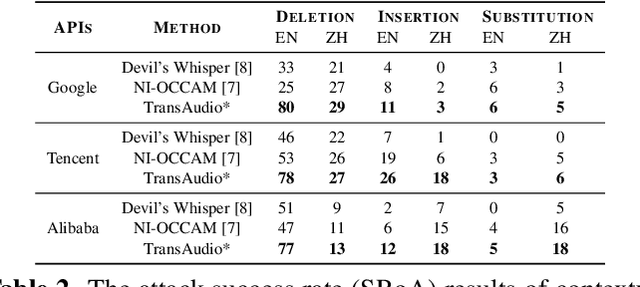
In a transfer-based attack against Automatic Speech Recognition (ASR) systems, attacks are unable to access the architecture and parameters of the target model. Existing attack methods are mostly investigated in voice assistant scenarios with restricted voice commands, prohibiting their applicability to more general ASR related applications. To tackle this challenge, we propose a novel contextualized attack with deletion, insertion, and substitution adversarial behaviors, namely TransAudio, which achieves arbitrary word-level attacks based on the proposed two-stage framework. To strengthen the attack transferability, we further introduce an audio score-matching optimization strategy to regularize the training process, which mitigates adversarial example over-fitting to the surrogate model. Extensive experiments and analysis demonstrate the effectiveness of TransAudio against open-source ASR models and commercial APIs.
PIAT: Parameter Interpolation based Adversarial Training for Image Classification
Mar 24, 2023


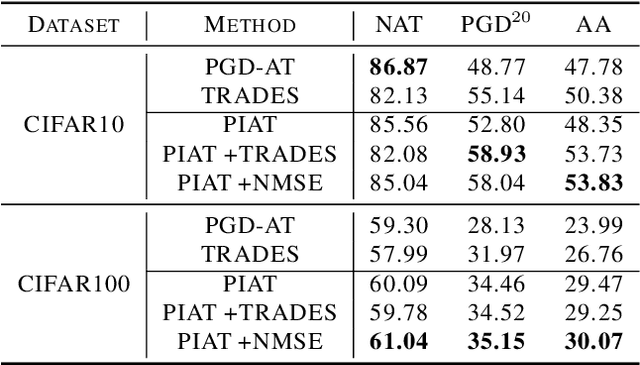
Adversarial training has been demonstrated to be the most effective approach to defend against adversarial attacks. However, existing adversarial training methods show apparent oscillations and overfitting issue in the training process, degrading the defense efficacy. In this work, we propose a novel framework, termed Parameter Interpolation based Adversarial Training (PIAT), that makes full use of the historical information during training. Specifically, at the end of each epoch, PIAT tunes the model parameters as the interpolation of the parameters of the previous and current epochs. Besides, we suggest to use the Normalized Mean Square Error (NMSE) to further improve the robustness by aligning the clean and adversarial examples. Compared with other regularization methods, NMSE focuses more on the relative magnitude of the logits rather than the absolute magnitude. Extensive experiments on several benchmark datasets and various networks show that our method could prominently improve the model robustness and reduce the generalization error. Moreover, our framework is general and could further boost the robust accuracy when combined with other adversarial training methods.
To Make Yourself Invisible with Adversarial Semantic Contours
Mar 01, 2023Modern object detectors are vulnerable to adversarial examples, which may bring risks to real-world applications. The sparse attack is an important task which, compared with the popular adversarial perturbation on the whole image, needs to select the potential pixels that is generally regularized by an $\ell_0$-norm constraint, and simultaneously optimize the corresponding texture. The non-differentiability of $\ell_0$ norm brings challenges and many works on attacking object detection adopted manually-designed patterns to address them, which are meaningless and independent of objects, and therefore lead to relatively poor attack performance. In this paper, we propose Adversarial Semantic Contour (ASC), an MAP estimate of a Bayesian formulation of sparse attack with a deceived prior of object contour. The object contour prior effectively reduces the search space of pixel selection and improves the attack by introducing more semantic bias. Extensive experiments demonstrate that ASC can corrupt the prediction of 9 modern detectors with different architectures (\e.g., one-stage, two-stage and Transformer) by modifying fewer than 5\% of the pixels of the object area in COCO in white-box scenario and around 10\% of those in black-box scenario. We further extend the attack to datasets for autonomous driving systems to verify the effectiveness. We conclude with cautions about contour being the common weakness of object detectors with various architecture and the care needed in applying them in safety-sensitive scenarios.
* 11 pages, 7 figures, published in Computer Vision and Image Understanding in 2023