 Add to Chrome
 Add to Firefox
 Add to Edge
Ask, Condition or Abstain: Reinforcement Learning for Missing-Premise Reasoning
Aug 17, 2026
Answer-only reinforcement learning (RL) trains reasoning models to solve fully specified problems, but many realistic queries omit a premise needed for a unique answer. In this setting, the useful response is not always refusal: the model should ask for the missing premise, condition its answer on the unknown quantity, or abstain when no informative conditional response is available. We present \emph{Ask-Condition-Abstain Reinforcement Learning} (ACA-RL), a data-augmented RL framework for this setting. Its reasoning-graph-guided pipeline converts well-posed problems into missing-premise training instances with localized gap annotations; ACA-RL then trains on these instances with a structured reward over five observable response behaviors. We also introduce the \emph{Missing-Premise Benchmark} (MPB), a 274-instance human-verified benchmark spanning mathematical, logical, and real-world word problems. Across Qwen3 and Llama models, ACA-RL consistently improves on MPB while preserving competitive performance on well-posed reasoning tasks. Together with the released code, MPB, and training data, this work supports a new mission for NLP evaluation: measuring whether models can recognize when a task is underdetermined and handle uncertainty, not only whether they can answer fully specified questions.

Opti-Agent-Bench: Benchmarking End-to-End Optimization R&D Agents on Real-World Business Problems
Jul 12, 2026LLM-based agents are increasingly deployed to solve optimization problems, yet existing benchmarks evaluate them on pre-structured mathematical formulations that bypass the most critical challenge: translating complex business requirements into correct models and solve efficiently. We introduce Opti-Agent-Bench, an end-to-end benchmark that evaluates Large Language Models (LLMs) across the complete optimization R&D pipeline, from understanding business-language descriptions through mathematical modeling, algorithm selection, and code implementation, to solution report generation. Our design rests on three pillars: (1) businesssemantic authenticity with anti-template traps that defeat pattern matching; (2) modular evaluation with cross-module consistency checking across Problem Understanding, Formal Modeling, Implementation, and Reporting; and (3) the ORAC bi-level validity framework that simultaneously ensures task quality and scoring integrity. Across several industrialscale tasks spanning integer programming, robust optimization, stochastic programming, and non-convex optimization, we expose critical failure modes of current models, including constraint omission, model-code inconsistency, and report-implementation divergence, that remain invisible under conventional single-metric evaluation.
Cross-view Multimodal Vision-Based Assessment Framework for Traditional Chinese Medicine Rehabilitation Training
Jun 26, 2026Vision-based assessment can provide convenient and cost-effective evaluation in Traditional Chinese Medicine (TCM) rehabilitation training, where action quality assessment (AQA) from computer vision offers a promising solution. Existing automatic AQA frameworks for physical therapy typically rely on skeletal data captured from a single viewpoint, which is inefficient for TCM techniques such as acupuncture or Tuina that involve dense hand self-occlusion and complex hand-object interactions. To address these challenges, we propose CME-AQA, a cross-view, multimodal vision-based assessment framework that integrates visual-pose fusion to enhance understanding of environmental context and leverages both first-person and third-person videos during training to improve inference robustness. We collected two dual-view datasets, TCM-AQA61-A (Acupuncture) and TCM-AQA61-T (Tuina), each containing synchronized first-person and third-person recordings of 61 subjects with expert annotations. Experimental results show that our approach achieves superior or comparable mean performance against competitive baselines, achieving over 10% relative improvement in weighted F1 over the best competing method on key rating tasks such as Needle Depth and Quick Needle Insertion, while also reducing mean absolute error in quantitative measures such as insertion time and manipulation frequency. Testing on a CPR dataset further demonstrates comparable performance on several posture-based criteria, suggesting applicability to related structured simulated clinical skill assessments where participant motion is central to evaluation. Overall, CME-AQA enhances assessment accuracy for structured TCM rehabilitation training and facilitates more convenient and effective training-oriented skill evaluation.
* Published in IEEE Transactions on Neural Systems and Rehabilitation Engineering, 2026
FuXi-Linear: Unleashing the Power of Linear Attention in Long-term Time-aware Sequential Recommendation
Feb 27, 2026Modern recommendation systems primarily rely on attention mechanisms with quadratic complexity, which limits their ability to handle long user sequences and slows down inference. While linear attention is a promising alternative, existing research faces three critical challenges: (1) temporal signals are often overlooked or integrated via naive coupling that causes mutual interference between temporal and semantic signals while neglecting behavioral periodicity; (2) insufficient positional information provided by existing linear frameworks; and (3) a primary focus on short sequences and shallow architectures. To address these issues, we propose FuXi-Linear, a linear-complexity model designed for efficient long-sequence recommendation. Our approach introduces two key components: (1) a Temporal Retention Channel that independently computes periodic attention weights using temporal data, preventing crosstalk between temporal and semantic signals; (2) a Linear Positional Channel that integrates positional information through learnable kernels within linear complexity. Moreover, we demonstrate that FuXi-Linear exhibits a robust power-law scaling property at a thousand-length scale, a characteristic largely unexplored in prior linear recommendation studies. Extensive experiments on sequences of several thousand tokens demonstrate that FuXi-Linear outperforms state-of-the-art models in recommendation quality, while achieving up to 10$\times$ speedup in the prefill stage and up to 21$\times$ speedup in the decode stage compared to competitive baselines. Our code has been released in a public repository https://github.com/USTC-StarTeam/fuxi-linear.
Robustness of Object Detection of Autonomous Vehicles in Adverse Weather Conditions
Feb 13, 2026As self-driving technology advances toward widespread adoption, determining safe operational thresholds across varying environmental conditions becomes critical for public safety. This paper proposes a method for evaluating the robustness of object detection ML models in autonomous vehicles under adverse weather conditions. It employs data augmentation operators to generate synthetic data that simulates different severance degrees of the adverse operation conditions at progressive intensity levels to find the lowest intensity of the adverse conditions at which the object detection model fails. The robustness of the object detection model is measured by the average first failure coefficients (AFFC) over the input images in the benchmark. The paper reports an experiment with four object detection models: YOLOv5s, YOLOv11s, Faster R-CNN, and Detectron2, utilising seven data augmentation operators that simulate weather conditions fog, rain, and snow, and lighting conditions of dark, bright, flaring, and shadow. The experiment data show that the method is feasible, effective, and efficient to evaluate and compare the robustness of object detection models in various adverse operation conditions. In particular, the Faster R-CNN model achieved the highest robustness with an overall average AFFC of 71.9% over all seven adverse conditions, while YOLO variants showed the AFFC values of 43%. The method is also applied to assess the impact of model training that targets adverse operation conditions using synthetic data on model robustness. It is observed that such training can improve robustness in adverse conditions but may suffer from diminishing returns and forgetting phenomena (i.e., decline in robustness) if overtrained.
RelayGR: Scaling Long-Sequence Generative Recommendation via Cross-Stage Relay-Race Inference
Jan 05, 2026Real-time recommender systems execute multi-stage cascades (retrieval, pre-processing, fine-grained ranking) under strict tail-latency SLOs, leaving only tens of milliseconds for ranking. Generative recommendation (GR) models can improve quality by consuming long user-behavior sequences, but in production their online sequence length is tightly capped by the ranking-stage P99 budget. We observe that the majority of GR tokens encode user behaviors that are independent of the item candidates, suggesting an opportunity to pre-infer a user-behavior prefix once and reuse it during ranking rather than recomputing it on the critical path. Realizing this idea at industrial scale is non-trivial: the prefix cache must survive across multiple pipeline stages before the final ranking instance is determined, the user population implies cache footprints far beyond a single device, and indiscriminate pre-inference would overload shared resources under high QPS. We present RelayGR, a production system that enables in-HBM relay-race inference for GR. RelayGR selectively pre-infers long-term user prefixes, keeps their KV caches resident in HBM over the request lifecycle, and ensures the subsequent ranking can consume them without remote fetches. RelayGR combines three techniques: 1) a sequence-aware trigger that admits only at-risk requests under a bounded cache footprint and pre-inference load, 2) an affinity-aware router that co-locates cache production and consumption by routing both the auxiliary pre-infer signal and the ranking request to the same instance, and 3) a memory-aware expander that uses server-local DRAM to capture short-term cross-request reuse while avoiding redundant reloads. We implement RelayGR on Huawei Ascend NPUs and evaluate it with real queries. Under a fixed P99 SLO, RelayGR supports up to 1.5$\times$ longer sequences and improves SLO-compliant throughput by up to 3.6$\times$.
Multi-Sensor Fusion for Extended Object Tracking Exploiting Active and Passive Radio Signals
Sep 03, 2025Reliable and robust positioning of radio devices remains a challenging task due to multipath propagation, hardware impairments, and interference from other radio transmitters. A frequently overlooked but critical factor is the agent itself, e.g., the user carrying the device, which potentially obstructs line-of-sight (LOS) links to the base stations (anchors). This paper addresses the problem of accurate positioning in scenarios where LOS links are partially blocked by the agent. The agent is modeled as an extended object (EO) that scatters, attenuates, and blocks radio signals. We propose a Bayesian method that fuses ``active'' measurements (between device and anchors) with ``passive'' multistatic radar-type measurements (between anchors, reflected by the EO). To handle measurement origin uncertainty, we introduce an multi-sensor and multiple-measurement probabilistic data association (PDA) algorithm that jointly fuses all EO-related measurements. Furthermore, we develop an EO model tailored to agents such as human users, accounting for multiple reflections scattered off the body surface, and propose a simplified variant for low-complexity implementation. Evaluation on both synthetic and real radio measurements demonstrates that the proposed algorithm outperforms conventional PDA methods based on point target assumptions, particularly during and after obstructed line-of-sight (OLOS) conditions.
Multi-Sensor Fusion of Active and Passive Measurements for Extended Object Tracking
Apr 25, 2025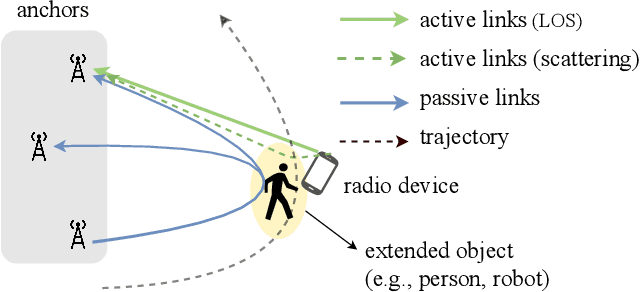
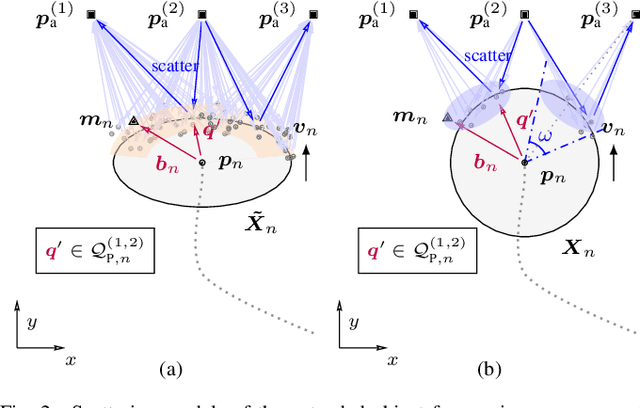
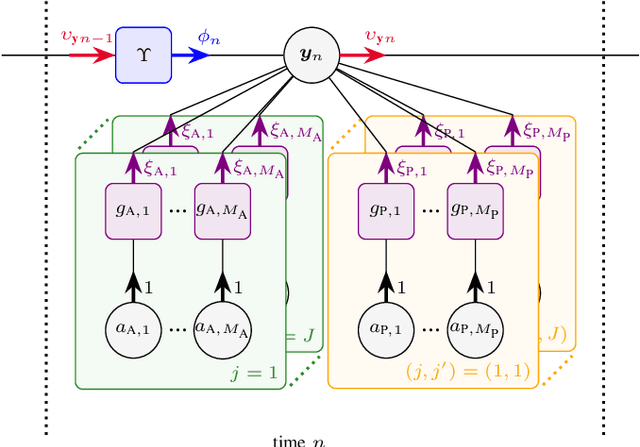
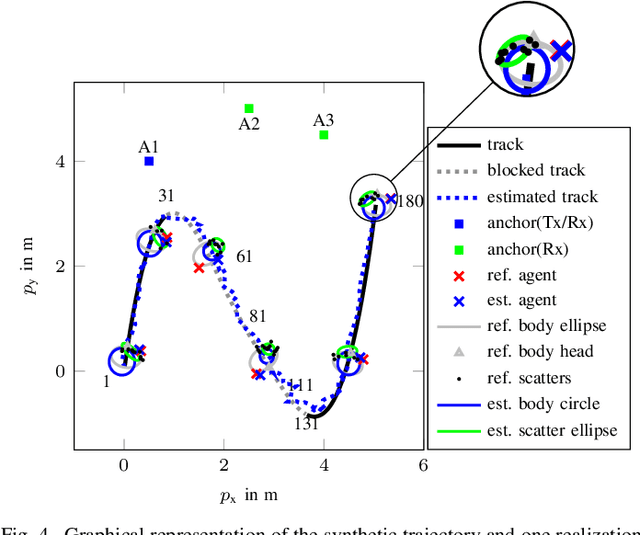
This paper addresses the challenge of achieving robust and reliable positioning of a radio device carried by an agent, in scenarios where direct line-of-sight (LOS) radio links are obstructed by the agent. We propose a Bayesian estimation algorithm that integrates active measurements between the radio device and anchors with passive measurements in-between anchors reflecting off the agent. A geometry-based scattering measurement model is introduced for multi-sensor structures, and multiple object-related measurements are incorporated to formulate an extended object probabilistic data association (PDA) algorithm, where the agent that blocks, scatters and attenuates radio signals is modeled as an extended object (EO). The proposed approach significantly improves the accuracy during and after obstructed LOS conditions, outperforming the conventional PDA (which is based on the point-target-assumption) and methods relying solely on active measurements.
Separated Contrastive Learning for Matching in Cross-domain Recommendation with Curriculum Scheduling
Feb 22, 2025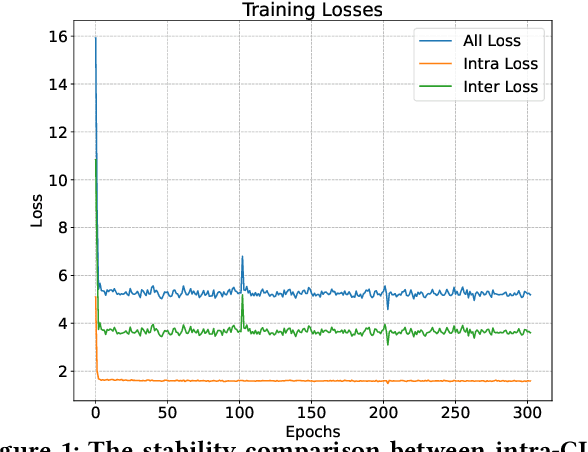
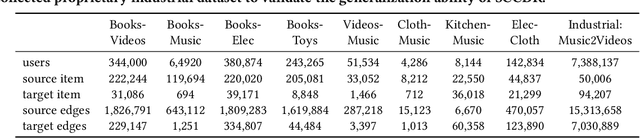
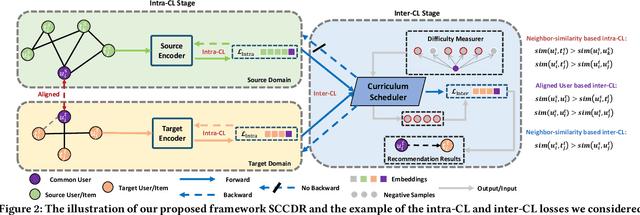
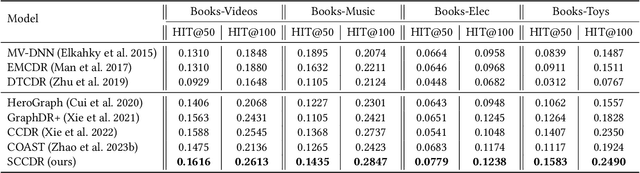
Cross-domain recommendation (CDR) is a task that aims to improve the recommendation performance in a target domain by leveraging the information from source domains. Contrastive learning methods have been widely adopted among intra-domain (intra-CL) and inter-domain (inter-CL) users/items for their representation learning and knowledge transfer during the matching stage of CDR. However, we observe that directly employing contrastive learning on mixed-up intra-CL and inter-CL tasks ignores the difficulty of learning from inter-domain over learning from intra-domain, and thus could cause severe training instability. Therefore, this instability deteriorates the representation learning process and hurts the quality of generated embeddings. To this end, we propose a novel framework named SCCDR built up on a separated intra-CL and inter-CL paradigm and a stop-gradient operation to handle the drawback. Specifically, SCCDR comprises two specialized curriculum stages: intra-inter separation and inter-domain curriculum scheduling. The former stage explicitly uses two distinct contrastive views for the intra-CL task in the source and target domains, respectively. Meanwhile, the latter stage deliberately tackles the inter-CL tasks with a curriculum scheduling strategy that derives effective curricula by accounting for the difficulty of negative samples anchored by overlapping users. Empirical experiments on various open-source datasets and an offline proprietary industrial dataset extracted from a real-world recommender system, and an online A/B test verify that SCCDR achieves state-of-the-art performance over multiple baselines.
FuXi-$α$: Scaling Recommendation Model with Feature Interaction Enhanced Transformer
Feb 05, 2025


Inspired by scaling laws and large language models, research on large-scale recommendation models has gained significant attention. Recent advancements have shown that expanding sequential recommendation models to large-scale recommendation models can be an effective strategy. Current state-of-the-art sequential recommendation models primarily use self-attention mechanisms for explicit feature interactions among items, while implicit interactions are managed through Feed-Forward Networks (FFNs). However, these models often inadequately integrate temporal and positional information, either by adding them to attention weights or by blending them with latent representations, which limits their expressive power. A recent model, HSTU, further reduces the focus on implicit feature interactions, constraining its performance. We propose a new model called FuXi-$\alpha$ to address these issues. This model introduces an Adaptive Multi-channel Self-attention mechanism that distinctly models temporal, positional, and semantic features, along with a Multi-stage FFN to enhance implicit feature interactions. Our offline experiments demonstrate that our model outperforms existing models, with its performance continuously improving as the model size increases. Additionally, we conducted an online A/B test within the Huawei Music app, which showed a $4.76\%$ increase in the average number of songs played per user and a $5.10\%$ increase in the average listening duration per user. Our code has been released at https://github.com/USTC-StarTeam/FuXi-alpha.