 Add to Chrome
 Add to Firefox
 Add to Edge
Score-based Generative Modeling for Conditional Independence Testing
May 29, 2025
Determining conditional independence (CI) relationships between random variables is a fundamental yet challenging task in machine learning and statistics, especially in high-dimensional settings. Existing generative model-based CI testing methods, such as those utilizing generative adversarial networks (GANs), often struggle with undesirable modeling of conditional distributions and training instability, resulting in subpar performance. To address these issues, we propose a novel CI testing method via score-based generative modeling, which achieves precise Type I error control and strong testing power. Concretely, we first employ a sliced conditional score matching scheme to accurately estimate conditional score and use Langevin dynamics conditional sampling to generate null hypothesis samples, ensuring precise Type I error control. Then, we incorporate a goodness-of-fit stage into the method to verify generated samples and enhance interpretability in practice. We theoretically establish the error bound of conditional distributions modeled by score-based generative models and prove the validity of our CI tests. Extensive experiments on both synthetic and real-world datasets show that our method significantly outperforms existing state-of-the-art methods, providing a promising way to revitalize generative model-based CI testing.

MagicTryOn: Harnessing Diffusion Transformer for Garment-Preserving Video Virtual Try-on
May 28, 2025Video Virtual Try-On (VVT) aims to simulate the natural appearance of garments across consecutive video frames, capturing their dynamic variations and interactions with human body motion. However, current VVT methods still face challenges in terms of spatiotemporal consistency and garment content preservation. First, they use diffusion models based on the U-Net, which are limited in their expressive capability and struggle to reconstruct complex details. Second, they adopt a separative modeling approach for spatial and temporal attention, which hinders the effective capture of structural relationships and dynamic consistency across frames. Third, their expression of garment details remains insufficient, affecting the realism and stability of the overall synthesized results, especially during human motion. To address the above challenges, we propose MagicTryOn, a video virtual try-on framework built upon the large-scale video diffusion Transformer. We replace the U-Net architecture with a diffusion Transformer and combine full self-attention to jointly model the spatiotemporal consistency of videos. We design a coarse-to-fine garment preservation strategy. The coarse strategy integrates garment tokens during the embedding stage, while the fine strategy incorporates multiple garment-based conditions, such as semantics, textures, and contour lines during the denoising stage. Moreover, we introduce a mask-aware loss to further optimize garment region fidelity. Extensive experiments on both image and video try-on datasets demonstrate that our method outperforms existing SOTA methods in comprehensive evaluations and generalizes to in-the-wild scenarios.
Fast-dLLM: Training-free Acceleration of Diffusion LLM by Enabling KV Cache and Parallel Decoding
May 28, 2025Diffusion-based large language models (Diffusion LLMs) have shown promise for non-autoregressive text generation with parallel decoding capabilities. However, the practical inference speed of open-sourced Diffusion LLMs often lags behind autoregressive models due to the lack of Key-Value (KV) Cache and quality degradation when decoding multiple tokens simultaneously. To bridge this gap, we introduce a novel block-wise approximate KV Cache mechanism tailored for bidirectional diffusion models, enabling cache reuse with negligible performance drop. Additionally, we identify the root cause of generation quality degradation in parallel decoding as the disruption of token dependencies under the conditional independence assumption. To address this, we propose a confidence-aware parallel decoding strategy that selectively decodes tokens exceeding a confidence threshold, mitigating dependency violations and maintaining generation quality. Experimental results on LLaDA and Dream models across multiple LLM benchmarks demonstrate up to \textbf{27.6$\times$ throughput} improvement with minimal accuracy loss, closing the performance gap with autoregressive models and paving the way for practical deployment of Diffusion LLMs.
Simulating the Unseen: Crash Prediction Must Learn from What Did Not Happen
May 27, 2025Traffic safety science has long been hindered by a fundamental data paradox: the crashes we most wish to prevent are precisely those events we rarely observe. Existing crash-frequency models and surrogate safety metrics rely heavily on sparse, noisy, and under-reported records, while even sophisticated, high-fidelity simulations undersample the long-tailed situations that trigger catastrophic outcomes such as fatalities. We argue that the path to achieving Vision Zero, i.e., the complete elimination of traffic fatalities and severe injuries, requires a paradigm shift from traditional crash-only learning to a new form of counterfactual safety learning: reasoning not only about what happened, but also about the vast set of plausible yet perilous scenarios that could have happened under slightly different circumstances. To operationalize this shift, our proposed agenda bridges macro to micro. Guided by crash-rate priors, generative scene engines, diverse driver models, and causal learning, near-miss events are synthesized and explained. A crash-focused digital twin testbed links micro scenes to macro patterns, while a multi-objective validator ensures that simulations maintain statistical realism. This pipeline transforms sparse crash data into rich signals for crash prediction, enabling the stress-testing of vehicles, roads, and policies before deployment. By learning from crashes that almost happened, we can shift traffic safety from reactive forensics to proactive prevention, advancing Vision Zero.
MoPFormer: Motion-Primitive Transformer for Wearable-Sensor Activity Recognition
May 27, 2025Human Activity Recognition (HAR) with wearable sensors is challenged by limited interpretability, which significantly impacts cross-dataset generalization. To address this challenge, we propose Motion-Primitive Transformer (MoPFormer), a novel self-supervised framework that enhances interpretability by tokenizing inertial measurement unit signals into semantically meaningful motion primitives and leverages a Transformer architecture to learn rich temporal representations. MoPFormer comprises two-stages. first stage is to partition multi-channel sensor streams into short segments and quantizing them into discrete "motion primitive" codewords, while the second stage enriches those tokenized sequences through a context-aware embedding module and then processes them with a Transformer encoder. The proposed MoPFormer can be pre-trained using a masked motion-modeling objective that reconstructs missing primitives, enabling it to develop robust representations across diverse sensor configurations. Experiments on six HAR benchmarks demonstrate that MoPFormer not only outperforms state-of-the-art methods but also successfully generalizes across multiple datasets. Most importantly, the learned motion primitives significantly enhance both interpretability and cross-dataset performance by capturing fundamental movement patterns that remain consistent across similar activities regardless of dataset origin.
ART-DECO: Arbitrary Text Guidance for 3D Detailizer Construction
May 26, 2025We introduce a 3D detailizer, a neural model which can instantaneously (in <1s) transform a coarse 3D shape proxy into a high-quality asset with detailed geometry and texture as guided by an input text prompt. Our model is trained using the text prompt, which defines the shape class and characterizes the appearance and fine-grained style of the generated details. The coarse 3D proxy, which can be easily varied and adjusted (e.g., via user editing), provides structure control over the final shape. Importantly, our detailizer is not optimized for a single shape; it is the result of distilling a generative model, so that it can be reused, without retraining, to generate any number of shapes, with varied structures, whose local details all share a consistent style and appearance. Our detailizer training utilizes a pretrained multi-view image diffusion model, with text conditioning, to distill the foundational knowledge therein into our detailizer via Score Distillation Sampling (SDS). To improve SDS and enable our detailizer architecture to learn generalizable features over complex structures, we train our model in two training stages to generate shapes with increasing structural complexity. Through extensive experiments, we show that our method generates shapes of superior quality and details compared to existing text-to-3D models under varied structure control. Our detailizer can refine a coarse shape in less than a second, making it possible to interactively author and adjust 3D shapes. Furthermore, the user-imposed structure control can lead to creative, and hence out-of-distribution, 3D asset generations that are beyond the current capabilities of leading text-to-3D generative models. We demonstrate an interactive 3D modeling workflow our method enables, and its strong generalizability over styles, structures, and object categories.
Done Is Better than Perfect: Unlocking Efficient Reasoning by Structured Multi-Turn Decomposition
May 26, 2025Large Reasoning Models (LRMs) are criticized for the excessively lengthy Chain-of-Thought (CoT) to derive the final answer, suffering from high first-token and overall latency. Typically, the CoT of LRMs mixes multiple thinking units; each unit attempts to produce a candidate answer to the original query. Hence, a natural idea to improve efficiency is to reduce the unit number. Yet, the fact that the thinking units in vanilla CoT cannot be explicitly managed renders doing so challenging. This paper introduces Multi-Turn Decomposition (MinD) to decode conventional CoT into a sequence of explicit, structured, and turn-wise interactions to bridge the gap. In MinD, the model provides a multi-turn response to the query, where each turn embraces a thinking unit and yields a corresponding answer. The subsequent turns can reflect, verify, revise, or explore alternative approaches to both the thinking and answer parts of earlier ones. This not only makes the answer delivered more swiftly, but also enables explicit controls over the iterative reasoning process (i.e., users may halt or continue at any turn). We follow a supervised fine-tuning (SFT) then reinforcement learning (RL) paradigm to realize MinD. We first rephrase the outputs of an LRM into multi-turn formats by prompting another LLM, and then tune the LRM with such data. Observing that the tuned model tends to consume even more tokens than the original one (probably due to that the multi-turn formats introduce additional answer tokens), we advocate leveraging RL algorithms like GRPO to prioritize correct outputs with fewer turns. Trained on the MATH dataset using R1-Distill models, MinD can achieve up to ~70% reduction in both output token usage and time to first token (TTFT), while maintaining competitive performance on reasoning benchmarks such as MATH-500, AIME24, AMC23, and GPQA-Diamond.
SAMA: Towards Multi-Turn Referential Grounded Video Chat with Large Language Models
May 24, 2025Achieving fine-grained spatio-temporal understanding in videos remains a major challenge for current Video Large Multimodal Models (Video LMMs). Addressing this challenge requires mastering two core capabilities: video referring understanding, which captures the semantics of video regions, and video grounding, which segments object regions based on natural language descriptions. However, most existing approaches tackle these tasks in isolation, limiting progress toward unified, referentially grounded video interaction. We identify a key bottleneck in the lack of high-quality, unified video instruction data and a comprehensive benchmark for evaluating referentially grounded video chat. To address these challenges, we contribute in three core aspects: dataset, model, and benchmark. First, we introduce SAMA-239K, a large-scale dataset comprising 15K videos specifically curated to enable joint learning of video referring understanding, grounding, and multi-turn video chat. Second, we propose the SAMA model, which incorporates a versatile spatio-temporal context aggregator and a Segment Anything Model to jointly enhance fine-grained video comprehension and precise grounding capabilities. Finally, we establish SAMA-Bench, a meticulously designed benchmark consisting of 5,067 questions from 522 videos, to comprehensively evaluate the integrated capabilities of Video LMMs in multi-turn, spatio-temporal referring understanding and grounded dialogue. Extensive experiments and benchmarking results show that SAMA not only achieves strong performance on SAMA-Bench but also sets a new state-of-the-art on general grounding benchmarks, while maintaining highly competitive performance on standard visual understanding benchmarks.
Large-Scale Bayesian Tensor Reconstruction: An Approximate Message Passing Solution
May 22, 2025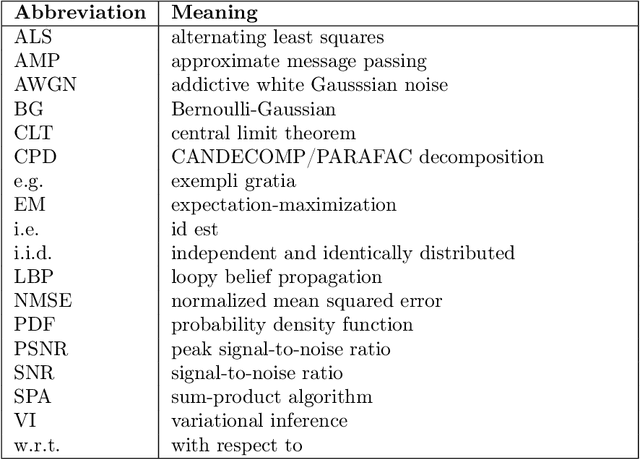
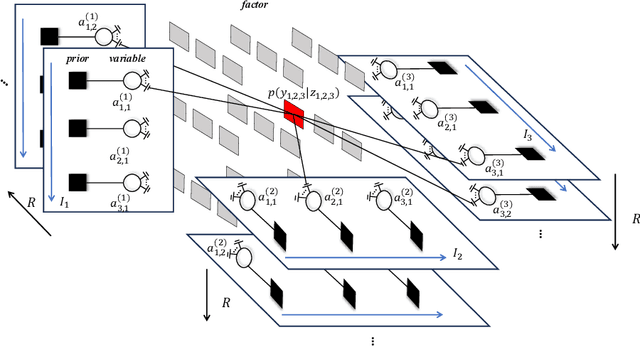
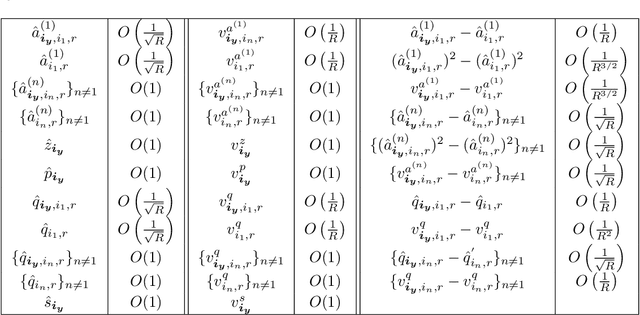
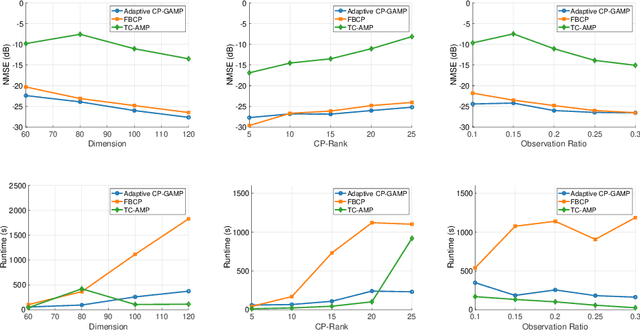
Tensor CANDECOMP/PARAFAC decomposition (CPD) is a fundamental model for tensor reconstruction. Although the Bayesian framework allows for principled uncertainty quantification and automatic hyperparameter learning, existing methods do not scale well for large tensors because of high-dimensional matrix inversions. To this end, we introduce CP-GAMP, a scalable Bayesian CPD algorithm. This algorithm leverages generalized approximate message passing (GAMP) to avoid matrix inversions and incorporates an expectation-maximization routine to jointly infer the tensor rank and noise power. Through multiple experiments, for synthetic 100x100x100 rank 20 tensors with only 20% elements observed, the proposed algorithm reduces runtime by 82.7% compared to the state-of-the-art variational Bayesian CPD method, while maintaining comparable reconstruction accuracy.
lmgame-Bench: How Good are LLMs at Playing Games?
May 21, 2025Playing video games requires perception, memory, and planning, exactly the faculties modern large language model (LLM) agents are expected to master. We study the major challenges in using popular video games to evaluate modern LLMs and find that directly dropping LLMs into games cannot make an effective evaluation, for three reasons -- brittle vision perception, prompt sensitivity, and potential data contamination. We introduce lmgame-Bench to turn games into reliable evaluations. lmgame-Bench features a suite of platformer, puzzle, and narrative games delivered through a unified Gym-style API and paired with lightweight perception and memory scaffolds, and is designed to stabilize prompt variance and remove contamination. Across 13 leading models, we show lmgame-Bench is challenging while still separating models well. Correlation analysis shows that every game probes a unique blend of capabilities often tested in isolation elsewhere. More interestingly, performing reinforcement learning on a single game from lmgame-Bench transfers both to unseen games and to external planning tasks. Our evaluation code is available at https://github.com/lmgame-org/GamingAgent/lmgame-bench.