 Add to Chrome
 Add to Firefox
 Add to Edge
Hierarchical Banzhaf Interaction for General Video-Language Representation Learning
Dec 30, 2024


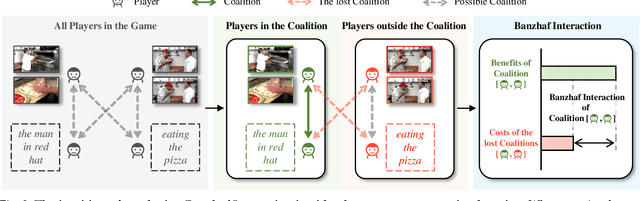

Multimodal representation learning, with contrastive learning, plays an important role in the artificial intelligence domain. As an important subfield, video-language representation learning focuses on learning representations using global semantic interactions between pre-defined video-text pairs. However, to enhance and refine such coarse-grained global interactions, more detailed interactions are necessary for fine-grained multimodal learning. In this study, we introduce a new approach that models video-text as game players using multivariate cooperative game theory to handle uncertainty during fine-grained semantic interactions with diverse granularity, flexible combination, and vague intensity. Specifically, we design the Hierarchical Banzhaf Interaction to simulate the fine-grained correspondence between video clips and textual words from hierarchical perspectives. Furthermore, to mitigate the bias in calculations within Banzhaf Interaction, we propose reconstructing the representation through a fusion of single-modal and cross-modal components. This reconstructed representation ensures fine granularity comparable to that of the single-modal representation, while also preserving the adaptive encoding characteristics of cross-modal representation. Additionally, we extend our original structure into a flexible encoder-decoder framework, enabling the model to adapt to various downstream tasks. Extensive experiments on commonly used text-video retrieval, video-question answering, and video captioning benchmarks, with superior performance, validate the effectiveness and generalization of our method.

E2EDiff: Direct Mapping from Noise to Data for Enhanced Diffusion Models
Dec 30, 2024
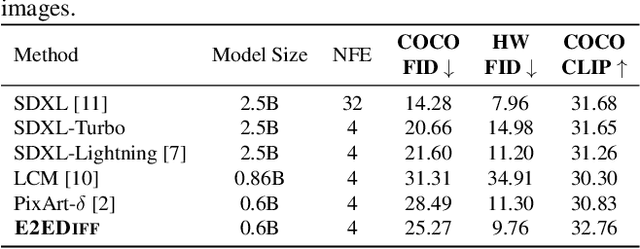
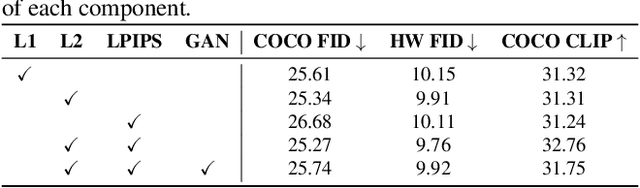
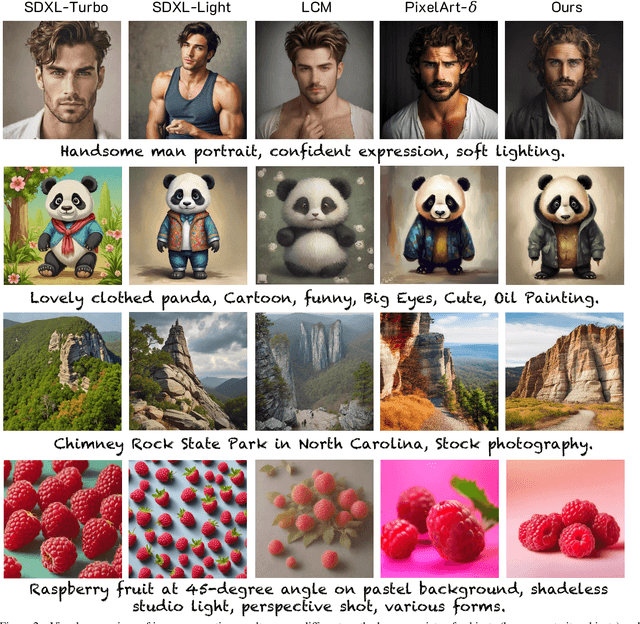
Diffusion models have emerged as a powerful framework for generative modeling, achieving state-of-the-art performance across various tasks. However, they face several inherent limitations, including a training-sampling gap, information leakage in the progressive noising process, and the inability to incorporate advanced loss functions like perceptual and adversarial losses during training. To address these challenges, we propose an innovative end-to-end training framework that aligns the training and sampling processes by directly optimizing the final reconstruction output. Our method eliminates the training-sampling gap, mitigates information leakage by treating the training process as a direct mapping from pure noise to the target data distribution, and enables the integration of perceptual and adversarial losses into the objective. Extensive experiments on benchmarks such as COCO30K and HW30K demonstrate that our approach consistently outperforms traditional diffusion models, achieving superior results in terms of FID and CLIP score, even with reduced sampling steps. These findings highlight the potential of end-to-end training to advance diffusion-based generative models toward more robust and efficient solutions.
UniAvatar: Taming Lifelike Audio-Driven Talking Head Generation with Comprehensive Motion and Lighting Control
Dec 26, 2024


Recently, animating portrait images using audio input is a popular task. Creating lifelike talking head videos requires flexible and natural movements, including facial and head dynamics, camera motion, realistic light and shadow effects. Existing methods struggle to offer comprehensive, multifaceted control over these aspects. In this work, we introduce UniAvatar, a designed method that provides extensive control over a wide range of motion and illumination conditions. Specifically, we use the FLAME model to render all motion information onto a single image, maintaining the integrity of 3D motion details while enabling fine-grained, pixel-level control. Beyond motion, this approach also allows for comprehensive global illumination control. We design independent modules to manage both 3D motion and illumination, permitting separate and combined control. Extensive experiments demonstrate that our method outperforms others in both broad-range motion control and lighting control. Additionally, to enhance the diversity of motion and environmental contexts in current datasets, we collect and plan to publicly release two datasets, DH-FaceDrasMvVid-100 and DH-FaceReliVid-200, which capture significant head movements during speech and various lighting scenarios.
UniPLV: Towards Label-Efficient Open-World 3D Scene Understanding by Regional Visual Language Supervision
Dec 24, 2024We present UniPLV, a powerful framework that unifies point clouds, images and text in a single learning paradigm for open-world 3D scene understanding. UniPLV employs the image modal as a bridge to co-embed 3D points with pre-aligned images and text in a shared feature space without requiring carefully crafted point cloud text pairs. To accomplish multi-modal alignment, we propose two key strategies:(i) logit and feature distillation modules between images and point clouds, and (ii) a vison-point matching module is given to explicitly correct the misalignment caused by points to pixels projection. To further improve the performance of our unified framework, we adopt four task-specific losses and a two-stage training strategy. Extensive experiments show that our method outperforms the state-of-the-art methods by an average of 15.6% and 14.8% for semantic segmentation over Base-Annotated and Annotation-Free tasks, respectively. The code will be released later.
LangSurf: Language-Embedded Surface Gaussians for 3D Scene Understanding
Dec 24, 2024


Applying Gaussian Splatting to perception tasks for 3D scene understanding is becoming increasingly popular. Most existing works primarily focus on rendering 2D feature maps from novel viewpoints, which leads to an imprecise 3D language field with outlier languages, ultimately failing to align objects in 3D space. By utilizing masked images for feature extraction, these approaches also lack essential contextual information, leading to inaccurate feature representation. To this end, we propose a Language-Embedded Surface Field (LangSurf), which accurately aligns the 3D language fields with the surface of objects, facilitating precise 2D and 3D segmentation with text query, widely expanding the downstream tasks such as removal and editing. The core of LangSurf is a joint training strategy that flattens the language Gaussian on the object surfaces using geometry supervision and contrastive losses to assign accurate language features to the Gaussians of objects. In addition, we also introduce the Hierarchical-Context Awareness Module to extract features at the image level for contextual information then perform hierarchical mask pooling using masks segmented by SAM to obtain fine-grained language features in different hierarchies. Extensive experiments on open-vocabulary 2D and 3D semantic segmentation demonstrate that LangSurf outperforms the previous state-of-the-art method LangSplat by a large margin. As shown in Fig. 1, our method is capable of segmenting objects in 3D space, thus boosting the effectiveness of our approach in instance recognition, removal, and editing, which is also supported by comprehensive experiments. \url{https://langsurf.github.io}.
CoSurfGS:Collaborative 3D Surface Gaussian Splatting with Distributed Learning for Large Scene Reconstruction
Dec 23, 20243D Gaussian Splatting (3DGS) has demonstrated impressive performance in scene reconstruction. However, most existing GS-based surface reconstruction methods focus on 3D objects or limited scenes. Directly applying these methods to large-scale scene reconstruction will pose challenges such as high memory costs, excessive time consumption, and lack of geometric detail, which makes it difficult to implement in practical applications. To address these issues, we propose a multi-agent collaborative fast 3DGS surface reconstruction framework based on distributed learning for large-scale surface reconstruction. Specifically, we develop local model compression (LMC) and model aggregation schemes (MAS) to achieve high-quality surface representation of large scenes while reducing GPU memory consumption. Extensive experiments on Urban3d, MegaNeRF, and BlendedMVS demonstrate that our proposed method can achieve fast and scalable high-fidelity surface reconstruction and photorealistic rendering. Our project page is available at \url{https://gyy456.github.io/CoSurfGS}.
DiffusionAttacker: Diffusion-Driven Prompt Manipulation for LLM Jailbreak
Dec 23, 2024


Large Language Models (LLMs) are susceptible to generating harmful content when prompted with carefully crafted inputs, a vulnerability known as LLM jailbreaking. As LLMs become more powerful, studying jailbreak methods is critical to enhancing security and aligning models with human values. Traditionally, jailbreak techniques have relied on suffix addition or prompt templates, but these methods suffer from limited attack diversity. This paper introduces DiffusionAttacker, an end-to-end generative approach for jailbreak rewriting inspired by diffusion models. Our method employs a sequence-to-sequence (seq2seq) text diffusion model as a generator, conditioning on the original prompt and guiding the denoising process with a novel attack loss. Unlike previous approaches that use autoregressive LLMs to generate jailbreak prompts, which limit the modification of already generated tokens and restrict the rewriting space, DiffusionAttacker utilizes a seq2seq diffusion model, allowing more flexible token modifications. This approach preserves the semantic content of the original prompt while producing harmful content. Additionally, we leverage the Gumbel-Softmax technique to make the sampling process from the diffusion model's output distribution differentiable, eliminating the need for iterative token search. Extensive experiments on Advbench and Harmbench demonstrate that DiffusionAttacker outperforms previous methods across various evaluation metrics, including attack success rate (ASR), fluency, and diversity.
Object Style Diffusion for Generalized Object Detection in Urban Scene
Dec 18, 2024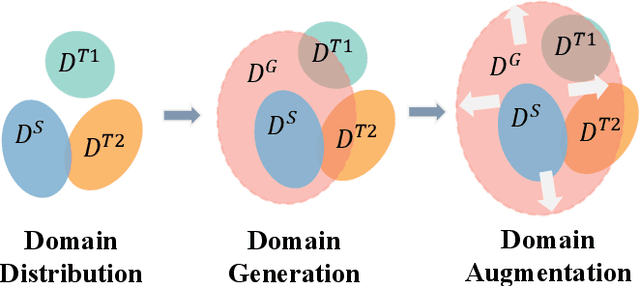
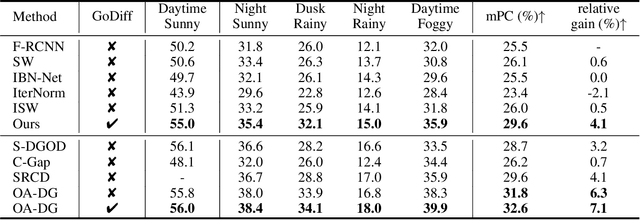
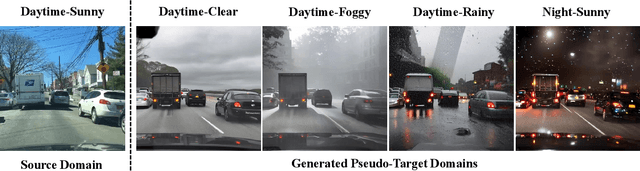
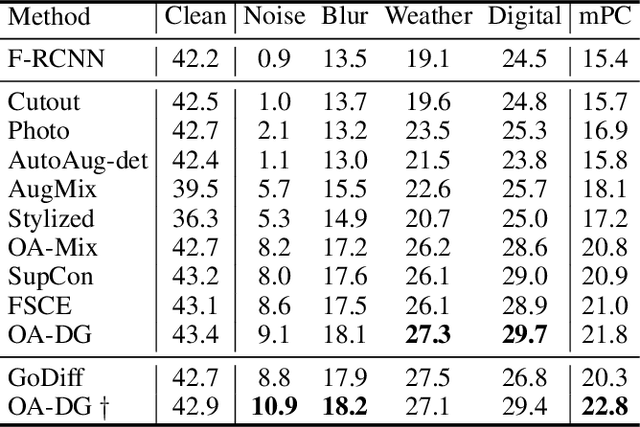
Object detection is a critical task in computer vision, with applications in various domains such as autonomous driving and urban scene monitoring. However, deep learning-based approaches often demand large volumes of annotated data, which are costly and difficult to acquire, particularly in complex and unpredictable real-world environments. This dependency significantly hampers the generalization capability of existing object detection techniques. To address this issue, we introduce a novel single-domain object detection generalization method, named GoDiff, which leverages a pre-trained model to enhance generalization in unseen domains. Central to our approach is the Pseudo Target Data Generation (PTDG) module, which employs a latent diffusion model to generate pseudo-target domain data that preserves source domain characteristics while introducing stylistic variations. By integrating this pseudo data with source domain data, we diversify the training dataset. Furthermore, we introduce a cross-style instance normalization technique to blend style features from different domains generated by the PTDG module, thereby increasing the detector's robustness. Experimental results demonstrate that our method not only enhances the generalization ability of existing detectors but also functions as a plug-and-play enhancement for other single-domain generalization methods, achieving state-of-the-art performance in autonomous driving scenarios.
NTC-KWS: Noise-aware CTC for Robust Keyword Spotting
Dec 17, 2024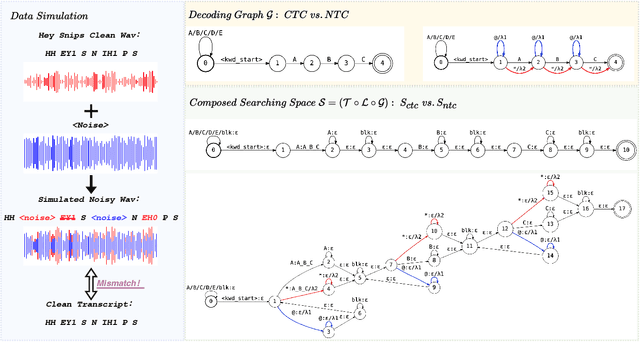
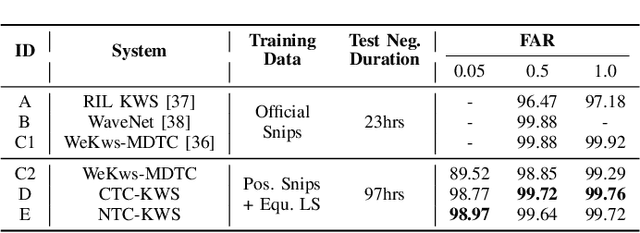
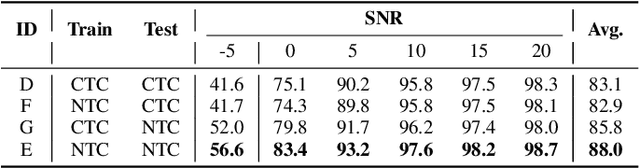
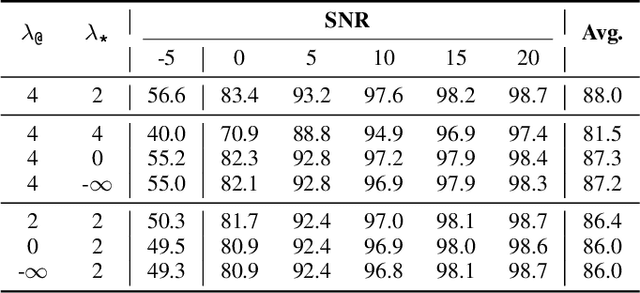
In recent years, there has been a growing interest in designing small-footprint yet effective Connectionist Temporal Classification based keyword spotting (CTC-KWS) systems. They are typically deployed on low-resource computing platforms, where limitations on model size and computational capacity create bottlenecks under complicated acoustic scenarios. Such constraints often result in overfitting and confusion between keywords and background noise, leading to high false alarms. To address these issues, we propose a noise-aware CTC-based KWS (NTC-KWS) framework designed to enhance model robustness in noisy environments, particularly under extremely low signal-to-noise ratios. Our approach introduces two additional noise-modeling wildcard arcs into the training and decoding processes based on weighted finite state transducer (WFST) graphs: self-loop arcs to address noise insertion errors and bypass arcs to handle masking and interference caused by excessive noise. Experiments on clean and noisy Hey Snips show that NTC-KWS outperforms state-of-the-art (SOTA) end-to-end systems and CTC-KWS baselines across various acoustic conditions, with particularly strong performance in low SNR scenarios.
Streaming Keyword Spotting Boosted by Cross-layer Discrimination Consistency
Dec 17, 2024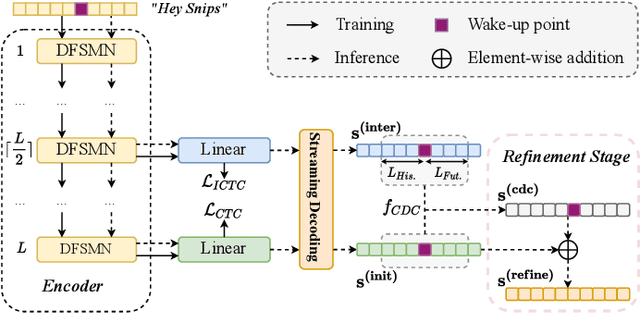
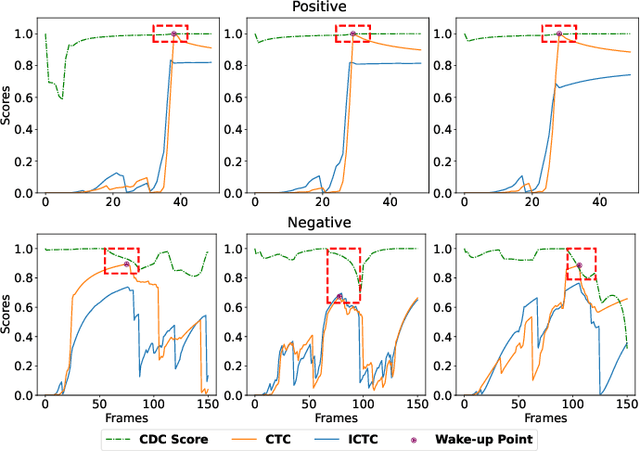


Connectionist Temporal Classification (CTC), a non-autoregressive training criterion, is widely used in online keyword spotting (KWS). However, existing CTC-based KWS decoding strategies either rely on Automatic Speech Recognition (ASR), which performs suboptimally due to its broad search over the acoustic space without keyword-specific optimization, or on KWS-specific decoding graphs, which are complex to implement and maintain. In this work, we propose a streaming decoding algorithm enhanced by Cross-layer Discrimination Consistency (CDC), tailored for CTC-based KWS. Specifically, we introduce a streamlined yet effective decoding algorithm capable of detecting the start of the keyword at any arbitrary position. Furthermore, we leverage discrimination consistency information across layers to better differentiate between positive and false alarm samples. Our experiments on both clean and noisy Hey Snips datasets show that the proposed streaming decoding strategy outperforms ASR-based and graph-based KWS baselines. The CDC-boosted decoding further improves performance, yielding an average absolute recall improvement of 6.8% and a 46.3% relative reduction in the miss rate compared to the graph-based KWS baseline, with a very low false alarm rate of 0.05 per hour.