 Add to Chrome
 Add to Firefox
 Add to Edge
Aligning Attention Distribution to Information Flow for Hallucination Mitigation in Large Vision-Language Models
May 20, 2025
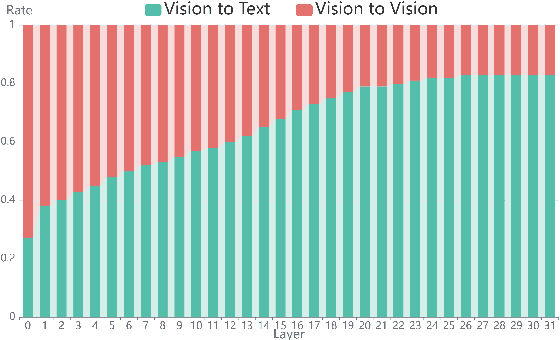
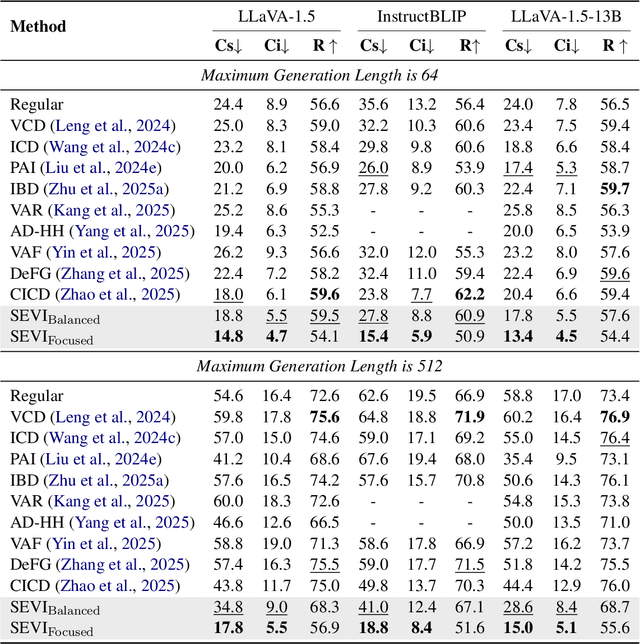
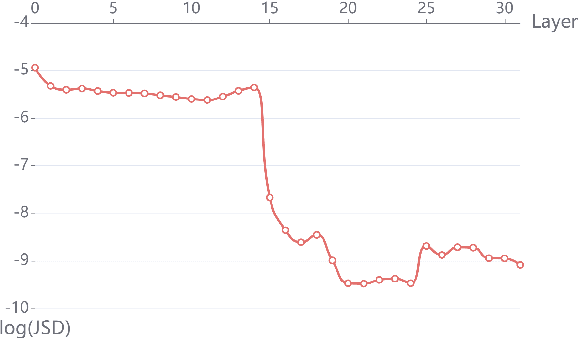
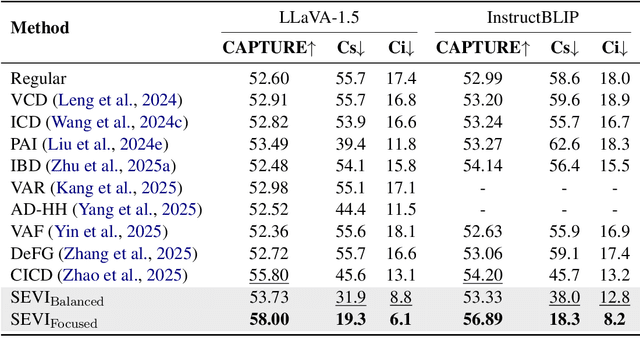
Due to the unidirectional masking mechanism, Decoder-Only models propagate information from left to right. LVLMs (Large Vision-Language Models) follow the same architecture, with visual information gradually integrated into semantic representations during forward propagation. Through systematic analysis, we observe that over 80\% of the visual information is absorbed into the semantic representations. However, the model's attention still predominantly focuses on the visual representations. This misalignment between the attention distribution and the actual information flow undermines the model's visual understanding ability and contributes to hallucinations. To address this issue, we enhance the model's visual understanding by leveraging the core information embedded in semantic representations. Specifically, we identify attention heads that focus on core semantic representations based on their attention distributions. Then, through a two-stage optimization paradigm, we propagate the advantages of these attention heads across the entire model, aligning the attention distribution with the actual information flow. We evaluate our method on three image captioning benchmarks using five different LVLMs, demonstrating its effectiveness in significantly reducing hallucinations. Further experiments reveal a trade-off between reduced hallucinations and richer details. Notably, our method allows for manual adjustment of the model's conservativeness, enabling flexible control to meet diverse real-world requirements. Code will be released once accepted.

Mitigate Language Priors in Large Vision-Language Models by Cross-Images Contrastive Decoding
May 19, 2025Language priors are a major cause of hallucinations in Large Vision-Language Models (LVLMs), often leading to text that is linguistically plausible but visually inconsistent. Recent work explores contrastive decoding as a training-free solution, but these methods typically construct negative visual contexts from the original image, resulting in visual information loss and distorted distribution. Motivated by the observation that language priors stem from the LLM backbone and remain consistent across images, we propose Cross-Images Contrastive Decoding (CICD), a simple yet effective training-free method that uses different images to construct negative visual contexts. We further analyze the cross-image behavior of language priors and introduce a distinction between essential priors (supporting fluency) and detrimental priors (causing hallucinations), enabling selective suppression. By selectively preserving essential priors and suppressing detrimental ones, our method reduces hallucinations while maintaining coherent and fluent language generation. Experiments on four benchmarks and six LVLMs across three model families confirm the effectiveness and generalizability of CICD, especially in image captioning, where language priors are particularly pronounced. Code will be released upon acceptance.
MPS-Prover: Advancing Stepwise Theorem Proving by Multi-Perspective Search and Data Curation
May 16, 2025Automated Theorem Proving (ATP) in formal languages remains a formidable challenge in AI, demanding rigorous logical deduction and navigating vast search spaces. While large language models (LLMs) have shown promising performance, existing stepwise provers often suffer from biased search guidance, leading to inefficiencies and suboptimal proof strategies. This paper introduces the Multi-Perspective Search Prover (MPS-Prover), a novel stepwise ATP system designed to overcome these limitations. MPS-Prover incorporates two key innovations: a highly effective post-training data curation strategy that prunes approximately 40% of redundant training data without sacrificing performance, and a multi-perspective tree search mechanism. This search integrates a learned critic model with strategically designed heuristic rules to diversify tactic selection, prevent getting trapped in unproductive states, and enhance search robustness. Extensive evaluations demonstrate that MPS-Prover achieves state-of-the-art performance on multiple challenging benchmarks, including miniF2F and ProofNet, outperforming prior 7B parameter models. Furthermore, our analyses reveal that MPS-Prover generates significantly shorter and more diverse proofs compared to existing stepwise and whole-proof methods, highlighting its efficiency and efficacy. Our work advances the capabilities of LLM-based formal reasoning and offers a robust framework and a comprehensive analysis for developing more powerful theorem provers.
Seed1.5-VL Technical Report
May 11, 2025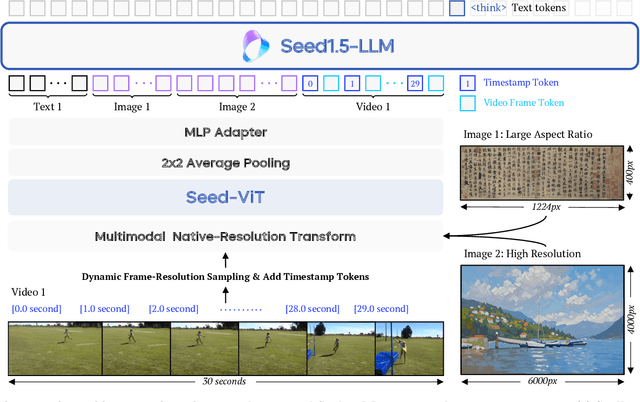

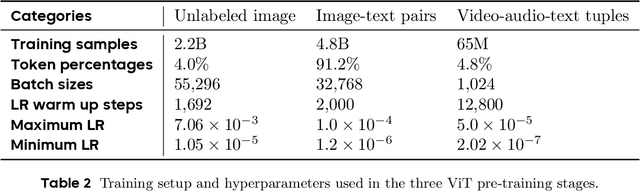
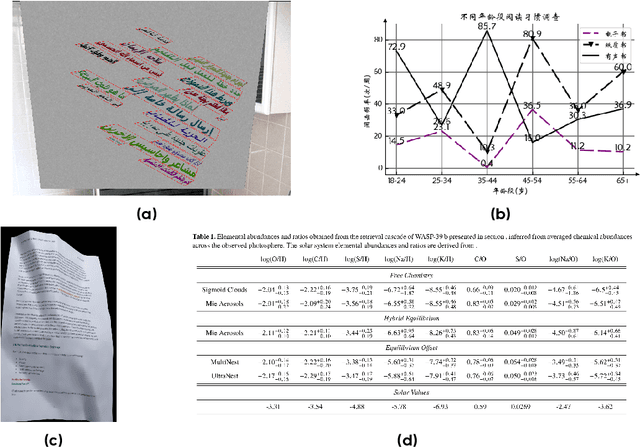
We present Seed1.5-VL, a vision-language foundation model designed to advance general-purpose multimodal understanding and reasoning. Seed1.5-VL is composed with a 532M-parameter vision encoder and a Mixture-of-Experts (MoE) LLM of 20B active parameters. Despite its relatively compact architecture, it delivers strong performance across a wide spectrum of public VLM benchmarks and internal evaluation suites, achieving the state-of-the-art performance on 38 out of 60 public benchmarks. Moreover, in agent-centric tasks such as GUI control and gameplay, Seed1.5-VL outperforms leading multimodal systems, including OpenAI CUA and Claude 3.7. Beyond visual and video understanding, it also demonstrates strong reasoning abilities, making it particularly effective for multimodal reasoning challenges such as visual puzzles. We believe these capabilities will empower broader applications across diverse tasks. In this report, we mainly provide a comprehensive review of our experiences in building Seed1.5-VL across model design, data construction, and training at various stages, hoping that this report can inspire further research. Seed1.5-VL is now accessible at https://www.volcengine.com/ (Volcano Engine Model ID: doubao-1-5-thinking-vision-pro-250428)
The Tenth NTIRE 2025 Image Denoising Challenge Report
Apr 16, 2025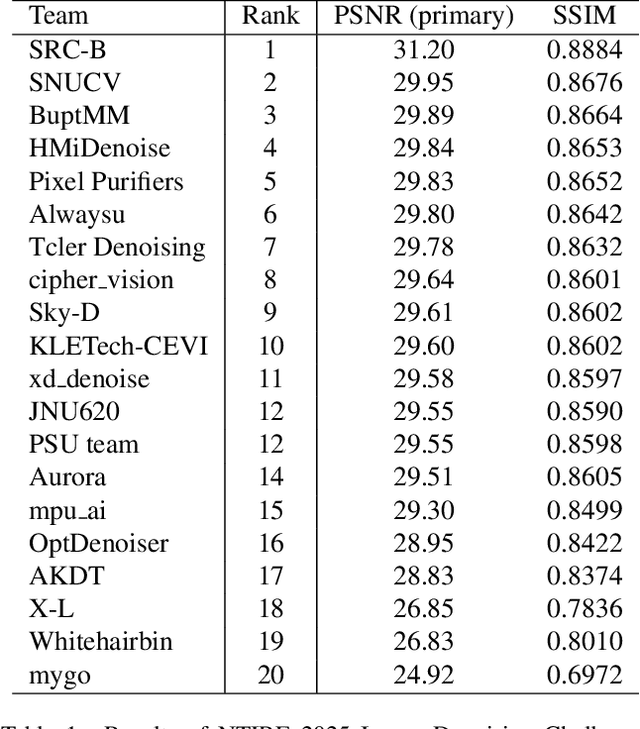
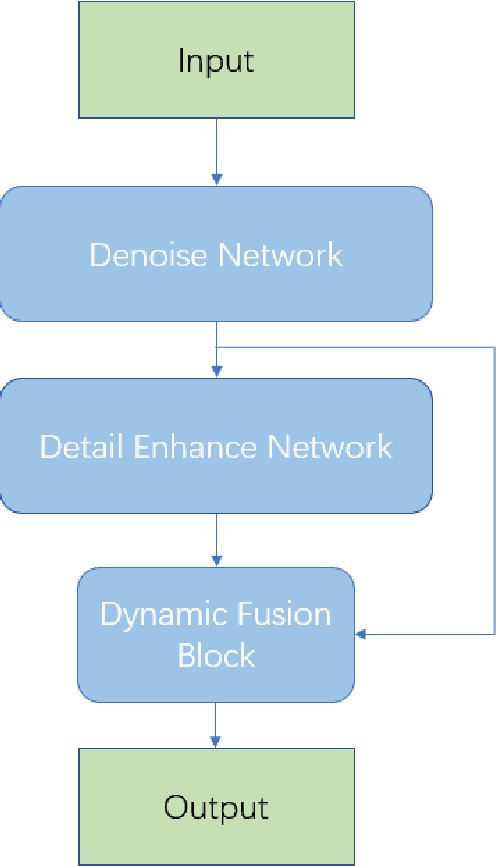
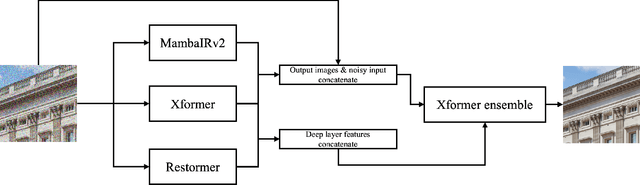
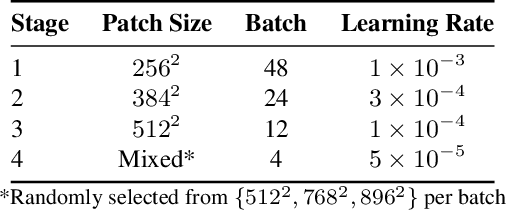
This paper presents an overview of the NTIRE 2025 Image Denoising Challenge ({\sigma} = 50), highlighting the proposed methodologies and corresponding results. The primary objective is to develop a network architecture capable of achieving high-quality denoising performance, quantitatively evaluated using PSNR, without constraints on computational complexity or model size. The task assumes independent additive white Gaussian noise (AWGN) with a fixed noise level of 50. A total of 290 participants registered for the challenge, with 20 teams successfully submitting valid results, providing insights into the current state-of-the-art in image denoising.
Multi-Mission Tool Bench: Assessing the Robustness of LLM based Agents through Related and Dynamic Missions
Apr 03, 2025Large language models (LLMs) demonstrate strong potential as agents for tool invocation due to their advanced comprehension and planning capabilities. Users increasingly rely on LLM-based agents to solve complex missions through iterative interactions. However, existing benchmarks predominantly access agents in single-mission scenarios, failing to capture real-world complexity. To bridge this gap, we propose the Multi-Mission Tool Bench. In the benchmark, each test case comprises multiple interrelated missions. This design requires agents to dynamically adapt to evolving demands. Moreover, the proposed benchmark explores all possible mission-switching patterns within a fixed mission number. Specifically, we propose a multi-agent data generation framework to construct the benchmark. We also propose a novel method to evaluate the accuracy and efficiency of agent decisions with dynamic decision trees. Experiments on diverse open-source and closed-source LLMs reveal critical factors influencing agent robustness and provide actionable insights to the tool invocation society.
FastCuRL: Curriculum Reinforcement Learning with Progressive Context Extension for Efficient Training R1-like Reasoning Models
Mar 21, 2025In this paper, we propose \textbf{\textsc{FastCuRL}}, a simple yet efficient \textbf{Cu}rriculum \textbf{R}einforcement \textbf{L}earning approach with context window extending strategy to accelerate the reinforcement learning training efficiency for R1-like reasoning models while enhancing their performance in tackling complex reasoning tasks with long chain-of-thought rationales, particularly with a 1.5B parameter language model. \textbf{\textsc{FastCuRL}} consists of two main procedures: length-aware training data segmentation and context window extension training. Specifically, the former first splits the original training data into three different levels by the input prompt length, and then the latter leverages segmented training datasets with a progressively increasing context window length to train the reasoning model. Experimental results demonstrate that \textbf{\textsc{FastCuRL}}-1.5B-Preview surpasses DeepScaleR-1.5B-Preview across all five datasets (including MATH 500, AIME 2024, AMC 2023, Minerva Math, and OlympiadBench) while only utilizing 50\% of training steps. Furthermore, all training stages for FastCuRL-1.5B-Preview are completed using just a single node with 8 GPUs.
Towards Superior Quantization Accuracy: A Layer-sensitive Approach
Mar 09, 2025Large Vision and Language Models have exhibited remarkable human-like intelligence in tasks such as natural language comprehension, problem-solving, logical reasoning, and knowledge retrieval. However, training and serving these models require substantial computational resources, posing a significant barrier to their widespread application and further research. To mitigate this challenge, various model compression techniques have been developed to reduce computational requirements. Nevertheless, existing methods often employ uniform quantization configurations, failing to account for the varying difficulties across different layers in quantizing large neural network models. This paper tackles this issue by leveraging layer-sensitivity features, such as activation sensitivity and weight distribution Kurtosis, to identify layers that are challenging to quantize accurately and allocate additional memory budget. The proposed methods, named SensiBoost and KurtBoost, respectively, demonstrate notable improvement in quantization accuracy, achieving up to 9% lower perplexity with only a 2% increase in memory budget on LLama models compared to the baseline.
AdaF^2M^2: Comprehensive Learning and Responsive Leveraging Features in Recommendation System
Jan 27, 2025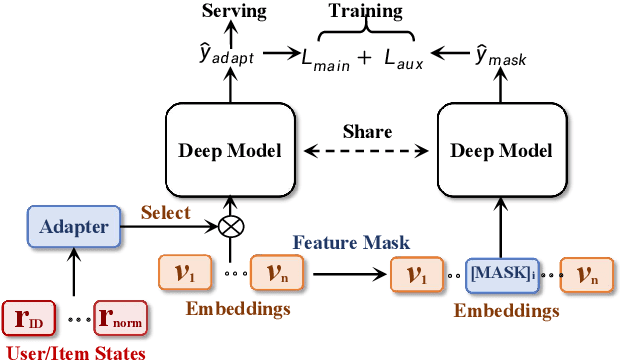

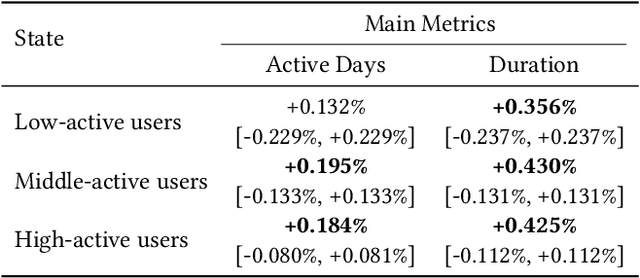
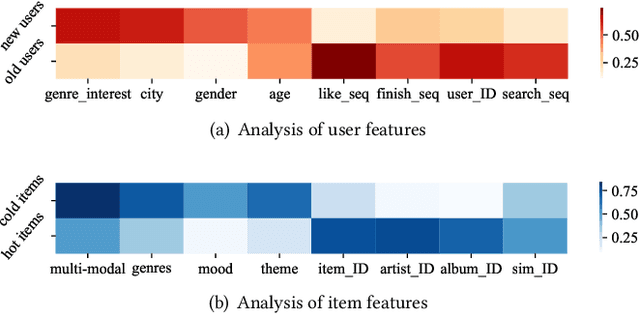
Feature modeling, which involves feature representation learning and leveraging, plays an essential role in industrial recommendation systems. However, the data distribution in real-world applications usually follows a highly skewed long-tail pattern due to the popularity bias, which easily leads to over-reliance on ID-based features, such as user/item IDs and ID sequences of interactions. Such over-reliance makes it hard for models to learn features comprehensively, especially for those non-ID meta features, e.g., user/item characteristics. Further, it limits the feature leveraging ability in models, getting less generalized and more susceptible to data noise. Previous studies on feature modeling focus on feature extraction and interaction, hardly noticing the problems brought about by the long-tail data distribution. To achieve better feature representation learning and leveraging on real-world data, we propose a model-agnostic framework AdaF^2M^2, short for Adaptive Feature Modeling with Feature Mask. The feature-mask mechanism helps comprehensive feature learning via multi-forward training with augmented samples, while the adapter applies adaptive weights on features responsive to different user/item states. By arming base models with AdaF^2M^2, we conduct online A/B tests on multiple recommendation scenarios, obtaining +1.37% and +1.89% cumulative improvements on user active days and app duration respectively. Besides, the extended offline experiments on different models show improvements as well. AdaF$^2$M$^2$ has been widely deployed on both retrieval and ranking tasks in multiple applications of Douyin Group, indicating its superior effectiveness and universality.
Long-Term Interest Clock: Fine-Grained Time Perception in Streaming Recommendation System
Jan 27, 2025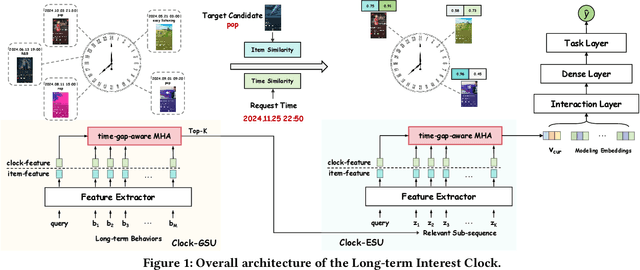

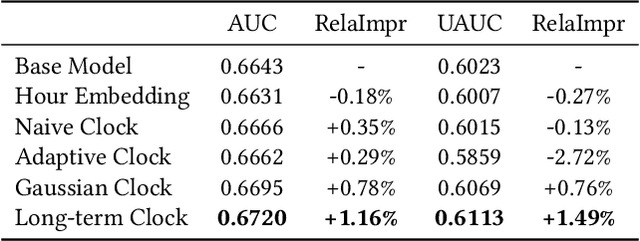
User interests manifest a dynamic pattern within the course of a day, e.g., a user usually favors soft music at 8 a.m. but may turn to ambient music at 10 p.m. To model dynamic interests in a day, hour embedding is widely used in traditional daily-trained industrial recommendation systems. However, its discreteness can cause periodical online patterns and instability in recent streaming recommendation systems. Recently, Interest Clock has achieved remarkable performance in streaming recommendation systems. Nevertheless, it models users' dynamic interests in a coarse-grained manner, merely encoding users' discrete interests of 24 hours from short-term behaviors. In this paper, we propose a fine-grained method for perceiving time information for streaming recommendation systems, named Long-term Interest Clock (LIC). The key idea of LIC is adaptively calculating current user interests by taking into consideration the relevance of long-term behaviors around current time (e.g., 8 a.m.) given a candidate item. LIC consists of two modules: (1) Clock-GSU retrieves a sub-sequence by searching through long-term behaviors, using query information from a candidate item and current time, (2) Clock-ESU employs a time-gap-aware attention mechanism to aggregate sub-sequence with the candidate item. With Clock-GSU and Clock-ESU, LIC is capable of capturing users' dynamic fine-grained interests from long-term behaviors. We conduct online A/B tests, obtaining +0.122% improvements on user active days. Besides, the extended offline experiments show improvements as well. Long-term Interest Clock has been integrated into Douyin Music App's recommendation system.