 Add to Chrome
 Add to Firefox
 Add to Edge
Touch100k: A Large-Scale Touch-Language-Vision Dataset for Touch-Centric Multimodal Representation
Jun 06, 2024
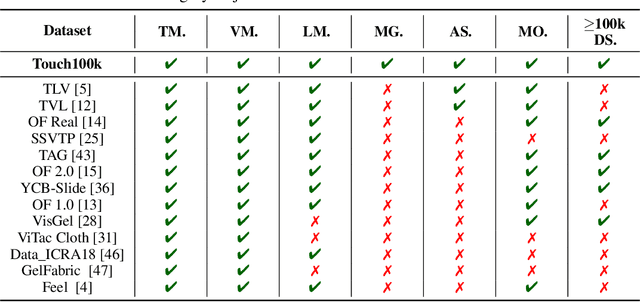


Touch holds a pivotal position in enhancing the perceptual and interactive capabilities of both humans and robots. Despite its significance, current tactile research mainly focuses on visual and tactile modalities, overlooking the language domain. Inspired by this, we construct Touch100k, a paired touch-language-vision dataset at the scale of 100k, featuring tactile sensation descriptions in multiple granularities (i.e., sentence-level natural expressions with rich semantics, including contextual and dynamic relationships, and phrase-level descriptions capturing the key features of tactile sensations). Based on the dataset, we propose a pre-training method, Touch-Language-Vision Representation Learning through Curriculum Linking (TLV-Link, for short), inspired by the concept of curriculum learning. TLV-Link aims to learn a tactile representation for the GelSight sensor and capture the relationship between tactile, language, and visual modalities. We evaluate our representation's performance across two task categories (namely, material property identification and robot grasping prediction), focusing on tactile representation and zero-shot touch understanding. The experimental evaluation showcases the effectiveness of our representation. By enabling TLV-Link to achieve substantial improvements and establish a new state-of-the-art in touch-centric multimodal representation learning, Touch100k demonstrates its value as a valuable resource for research. Project page: https://cocacola-lab.github.io/Touch100k/.

LexMatcher: Dictionary-centric Data Collection for LLM-based Machine Translation
Jun 03, 2024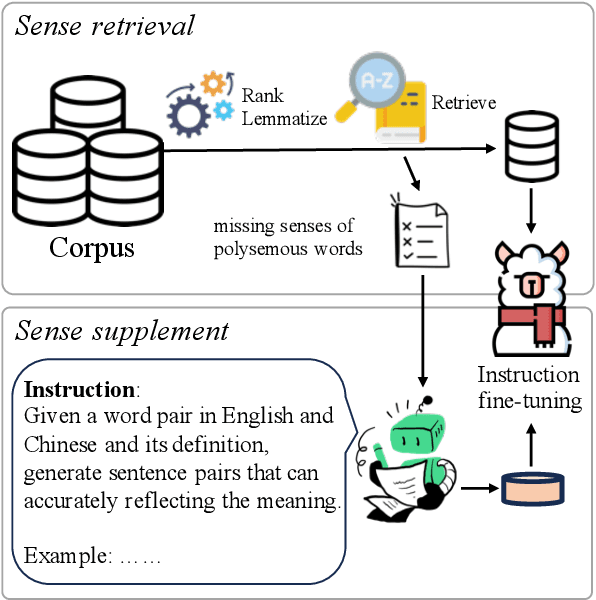
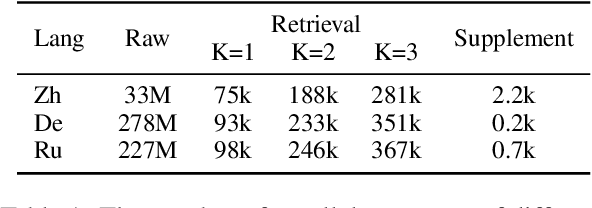

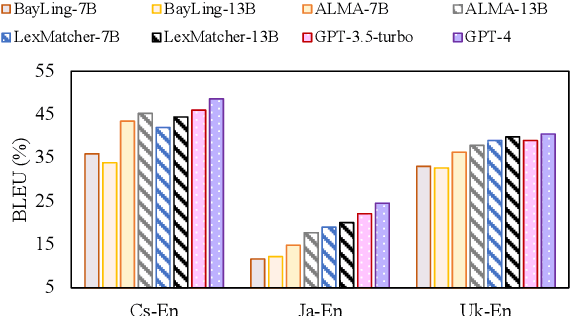
The fine-tuning of open-source large language models (LLMs) for machine translation has recently received considerable attention, marking a shift towards data-centric research from traditional neural machine translation. However, the area of data collection for instruction fine-tuning in machine translation remains relatively underexplored. In this paper, we present LexMatcher, a simple yet effective method for data collection that leverages bilingual dictionaries to generate a dataset, the design of which is driven by the coverage of senses found in these dictionaries. The dataset comprises a subset retrieved from an existing corpus and a smaller synthesized subset which supplements the infrequent senses of polysemous words. Utilizing LLaMA2 as our base model, our approach outperforms the established baselines on the WMT2022 test sets and also exhibits significant performance improvements in tasks related to word sense disambiguation and specialized terminology translation. These results underscore the effectiveness of LexMatcher in enhancing LLM-based machine translation.
Understanding and Addressing the Under-Translation Problem from the Perspective of Decoding Objective
May 29, 2024Neural Machine Translation (NMT) has made remarkable progress over the past years. However, under-translation and over-translation remain two challenging problems in state-of-the-art NMT systems. In this work, we conduct an in-depth analysis on the underlying cause of under-translation in NMT, providing an explanation from the perspective of decoding objective. To optimize the beam search objective, the model tends to overlook words it is less confident about, leading to the under-translation phenomenon. Correspondingly, the model's confidence in predicting the End Of Sentence (EOS) diminishes when under-translation occurs, serving as a mild penalty for under-translated candidates. Building upon this analysis, we propose employing the confidence of predicting EOS as a detector for under-translation, and strengthening the confidence-based penalty to penalize candidates with a high risk of under-translation. Experiments on both synthetic and real-world data show that our method can accurately detect and rectify under-translated outputs, with minor impact on other correct translations.
Language Generation with Strictly Proper Scoring Rules
May 29, 2024Language generation based on maximum likelihood estimation (MLE) has become the fundamental approach for text generation. Maximum likelihood estimation is typically performed by minimizing the log-likelihood loss, also known as the logarithmic score in statistical decision theory. The logarithmic score is strictly proper in the sense that it encourages honest forecasts, where the expected score is maximized only when the model reports true probabilities. Although many strictly proper scoring rules exist, the logarithmic score is the only local scoring rule among them that depends exclusively on the probability of the observed sample, making it capable of handling the exponentially large sample space of natural text. In this work, we propose a straightforward strategy for adapting scoring rules to language generation, allowing for language modeling with any non-local scoring rules. Leveraging this strategy, we train language generation models using two classic strictly proper scoring rules, the Brier score and the Spherical score, as alternatives to the logarithmic score. Experimental results indicate that simply substituting the loss function, without adjusting other hyperparameters, can yield substantial improvements in model's generation capabilities. Moreover, these improvements can scale up to large language models (LLMs) such as LLaMA-7B and LLaMA-13B. Source code: \url{https://github.com/shaochenze/ScoringRulesLM}.
Comments as Natural Logic Pivots: Improve Code Generation via Comment Perspective
Apr 11, 2024Code generation aims to understand the problem description and generate corresponding code snippets, where existing works generally decompose such complex tasks into intermediate steps by prompting strategies, such as Chain-of-Thought and its variants. While these studies have achieved some success, their effectiveness is highly dependent on the capabilities of advanced Large Language Models (LLMs) such as GPT-4, particularly in terms of API calls, which significantly limits their practical applicability. Consequently, how to enhance the code generation capabilities of small and medium-scale code LLMs without significantly increasing training costs is an appealing challenge. In this paper, we suggest that code comments are the natural logic pivot between natural language and code language and propose using comments to boost the code generation ability of code LLMs. Concretely, we propose MANGO (comMents As Natural loGic pivOts), including a comment contrastive training strategy and a corresponding logical comment decoding strategy. Experiments are performed on HumanEval and MBPP, utilizing StarCoder and WizardCoder as backbone models, and encompassing model parameter sizes between 3B and 7B. The results indicate that MANGO significantly improves the code pass rate based on the strong baselines. Meanwhile, the robustness of the logical comment decoding strategy is notably higher than the Chain-of-thoughts prompting. The code is publicly available at \url{https://github.com/pppa2019/Mango}.
Accelerating Inference in Large Language Models with a Unified Layer Skipping Strategy
Apr 10, 2024Recently, dynamic computation methods have shown notable acceleration for Large Language Models (LLMs) by skipping several layers of computations through elaborate heuristics or additional predictors. However, in the decoding process of existing approaches, different samples are assigned different computational budgets, which cannot guarantee a stable and precise acceleration effect. Furthermore, existing approaches generally skip multiple contiguous layers at the bottom or top of the layers, leading to a drastic change in the model's layer-wise representations, and thus a consequent performance degeneration. Therefore, we propose a Unified Layer Skipping strategy, which selects the number of layers to skip computation based solely on the target speedup ratio, and then skips the corresponding number of intermediate layer computations in a balanced manner. Since the Unified Layer Skipping strategy is independent of input samples, it naturally supports popular acceleration techniques such as batch decoding and KV caching, thus demonstrating more practicality for real-world applications. Experimental results on two common tasks, i.e., machine translation and text summarization, indicate that given a target speedup ratio, the Unified Layer Skipping strategy significantly enhances both the inference performance and the actual model throughput over existing dynamic approaches.
On Large Language Models' Hallucination with Regard to Known Facts
Mar 29, 2024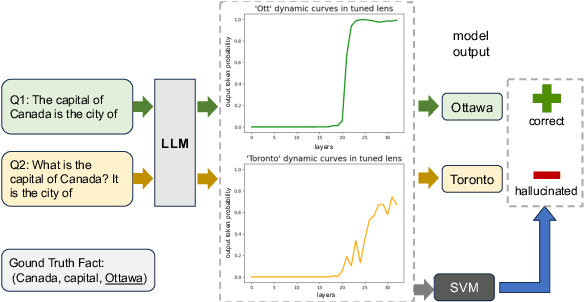
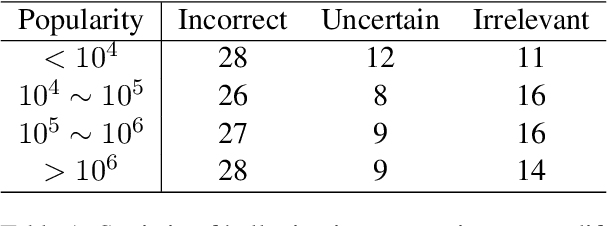
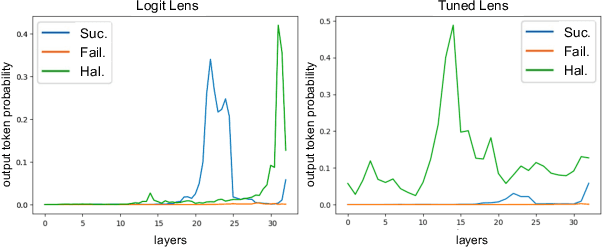
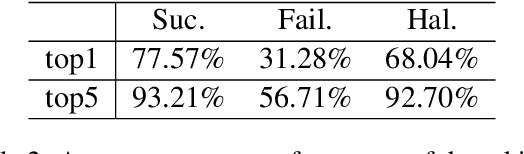
Large language models are successful in answering factoid questions but are also prone to hallucination.We investigate the phenomenon of LLMs possessing correct answer knowledge yet still hallucinating from the perspective of inference dynamics, an area not previously covered in studies on hallucinations.We are able to conduct this analysis via two key ideas.First, we identify the factual questions that query the same triplet knowledge but result in different answers. The difference between the model behaviors on the correct and incorrect outputs hence suggests the patterns when hallucinations happen. Second, to measure the pattern, we utilize mappings from the residual streams to vocabulary space. We reveal the different dynamics of the output token probabilities along the depths of layers between the correct and hallucinated cases. In hallucinated cases, the output token's information rarely demonstrates abrupt increases and consistent superiority in the later stages of the model. Leveraging the dynamic curve as a feature, we build a classifier capable of accurately detecting hallucinatory predictions with an 88\% success rate. Our study shed light on understanding the reasons for LLMs' hallucinations on their known facts, and more importantly, on accurately predicting when they are hallucinating.
Unsupervised Information Refinement Training of Large Language Models for Retrieval-Augmented Generation
Feb 28, 2024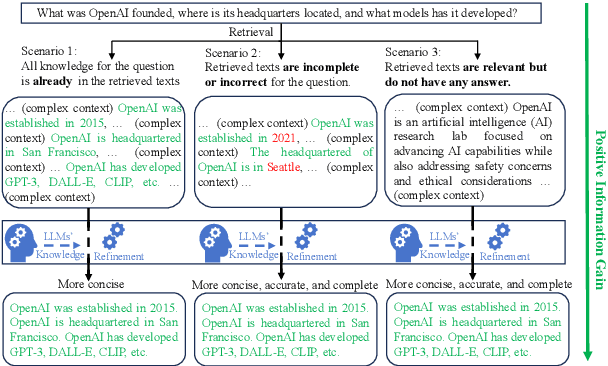
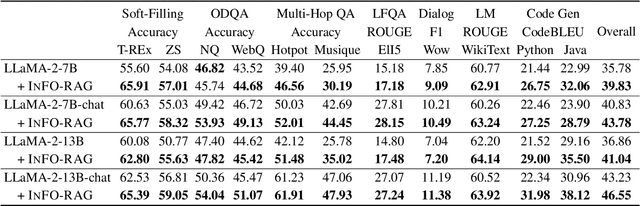
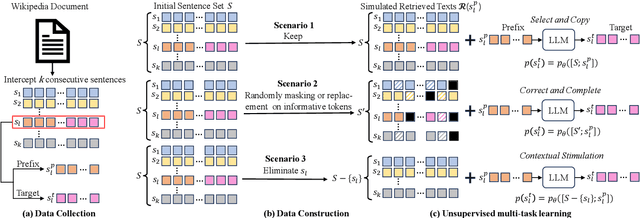

Retrieval-augmented generation (RAG) enhances large language models (LLMs) by incorporating additional information from retrieval. However, studies have shown that LLMs still face challenges in effectively using the retrieved information, even ignoring it or being misled by it. The key reason is that the training of LLMs does not clearly make LLMs learn how to utilize input retrieved texts with varied quality. In this paper, we propose a novel perspective that considers the role of LLMs in RAG as ``Information Refiner'', which means that regardless of correctness, completeness, or usefulness of retrieved texts, LLMs can consistently integrate knowledge within the retrieved texts and model parameters to generate the texts that are more concise, accurate, and complete than the retrieved texts. To this end, we propose an information refinement training method named InFO-RAG that optimizes LLMs for RAG in an unsupervised manner. InFO-RAG is low-cost and general across various tasks. Extensive experiments on zero-shot prediction of 11 datasets in diverse tasks including Question Answering, Slot-Filling, Language Modeling, Dialogue, and Code Generation show that InFO-RAG improves the performance of LLaMA2 by an average of 9.39\% relative points. InFO-RAG also shows advantages in in-context learning and robustness of RAG.
Prompt-Driven LLM Safeguarding via Directed Representation Optimization
Jan 31, 2024


Prepending model inputs with safety prompts is a common practice of safeguarding large language models (LLMs) from complying with queries that contain harmful intents. However, the working mechanisms of safety prompts have not yet been fully understood, which hinders the potential for automatically optimizing them for improved LLM safety. Motivated by this problem, we investigate the impact of safety prompts from the perspective of model representations. We find that in models' representation space, harmful and harmless queries can be largely distinguished, but this is not noticeably enhanced by safety prompts. Instead, the queries' representations are moved by different safety prompts in similar directions, where models become more prone to refusal (i.e., refusing to provide assistance) even when the queries are harmless. Inspired by these findings, we propose a method called DRO (Directed Representation Optimization) for automatic safety prompt optimization. DRO treats safety prompts as continuous, trainable embeddings and learns to move the representations of harmful/harmless queries along/opposite the direction in which the model's refusal probability increases. We demonstrate that DRO remarkably improves the safeguarding performance of human-crafted safety prompts and outperforms strong baselines, as evaluated on out-of-domain benchmarks, without compromising the general model capability.
Generative Multi-Modal Knowledge Retrieval with Large Language Models
Jan 16, 2024


Knowledge retrieval with multi-modal queries plays a crucial role in supporting knowledge-intensive multi-modal applications. However, existing methods face challenges in terms of their effectiveness and training efficiency, especially when it comes to training and integrating multiple retrievers to handle multi-modal queries. In this paper, we propose an innovative end-to-end generative framework for multi-modal knowledge retrieval. Our framework takes advantage of the fact that large language models (LLMs) can effectively serve as virtual knowledge bases, even when trained with limited data. We retrieve knowledge via a two-step process: 1) generating knowledge clues related to the queries, and 2) obtaining the relevant document by searching databases using the knowledge clue. In particular, we first introduce an object-aware prefix-tuning technique to guide multi-grained visual learning. Then, we align multi-grained visual features into the textual feature space of the LLM, employing the LLM to capture cross-modal interactions. Subsequently, we construct instruction data with a unified format for model training. Finally, we propose the knowledge-guided generation strategy to impose prior constraints in the decoding steps, thereby promoting the generation of distinctive knowledge clues. Through experiments conducted on three benchmarks, we demonstrate significant improvements ranging from 3.0% to 14.6% across all evaluation metrics when compared to strong baselines.