 Add to Chrome
 Add to Firefox
 Add to Edge
LLM-guided DRL for Multi-tier LEO Satellite Networks with Hybrid FSO/RF Links
May 17, 2025
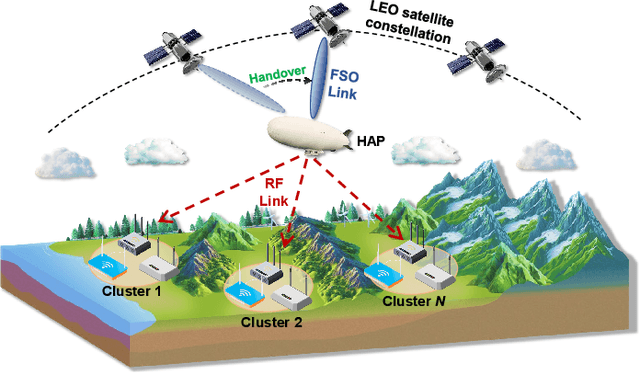
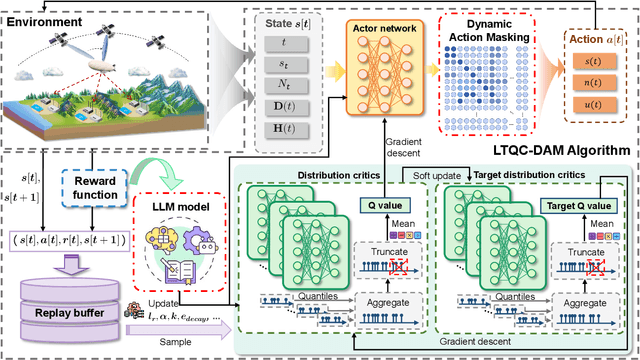
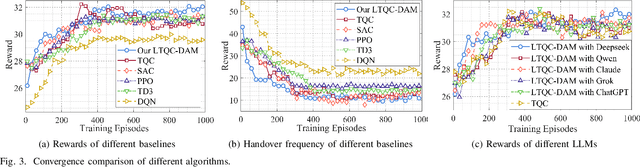
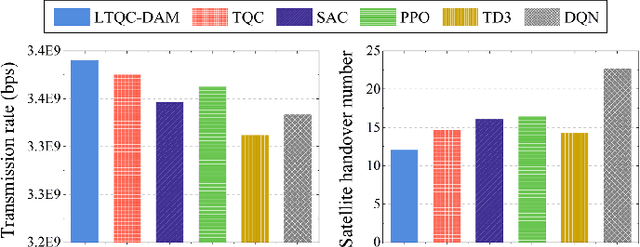
Despite significant advancements in terrestrial networks, inherent limitations persist in providing reliable coverage to remote areas and maintaining resilience during natural disasters. Multi-tier networks with low Earth orbit (LEO) satellites and high-altitude platforms (HAPs) offer promising solutions, but face challenges from high mobility and dynamic channel conditions that cause unstable connections and frequent handovers. In this paper, we design a three-tier network architecture that integrates LEO satellites, HAPs, and ground terminals with hybrid free-space optical (FSO) and radio frequency (RF) links to maximize coverage while maintaining connectivity reliability. This hybrid approach leverages the high bandwidth of FSO for satellite-to-HAP links and the weather resilience of RF for HAP-to-ground links. We formulate a joint optimization problem to simultaneously balance downlink transmission rate and handover frequency by optimizing network configuration and satellite handover decisions. The problem is highly dynamic and non-convex with time-coupled constraints. To address these challenges, we propose a novel large language model (LLM)-guided truncated quantile critics algorithm with dynamic action masking (LTQC-DAM) that utilizes dynamic action masking to eliminate unnecessary exploration and employs LLMs to adaptively tune hyperparameters. Simulation results demonstrate that the proposed LTQC-DAM algorithm outperforms baseline algorithms in terms of convergence, downlink transmission rate, and handover frequency. We also reveal that compared to other state-of-the-art LLMs, DeepSeek delivers the best performance through gradual, contextually-aware parameter adjustments.

Unfolded Deep Graph Learning for Networked Over-the-Air Computation
May 16, 2025Over-the-air computation (AirComp) has emerged as a promising technology that enables simultaneous transmission and computation through wireless channels. In this paper, we investigate the networked AirComp in multiple clusters allowing diversified data computation, which is yet challenged by the transceiver coordination and interference management therein. Particularly, we aim to maximize the multi-cluster weighted-sum AirComp rate, where the transmission scalar as well as receive beamforming are jointly investigated while addressing the interference issue. From an optimization perspective, we decompose the formulated problem and adopt the alternating optimization technique with an iterative process to approximate the solution. Then, we reinterpret the iterations through the principle of algorithm unfolding, where the channel condition and mutual interference in the AirComp network constitute an underlying graph. Accordingly, the proposed unfolding architecture learns the weights parameterized by graph neural networks, which is trained through stochastic gradient descent approach. Simulation results show that our proposals outperform the conventional schemes, and the proposed unfolded graph learning substantially alleviates the interference and achieves superior computation performance, with strong and efficient adaptation to the dynamic and scalable networks.
Optimizing Electric Bus Charging Scheduling with Uncertainties Using Hierarchical Deep Reinforcement Learning
May 15, 2025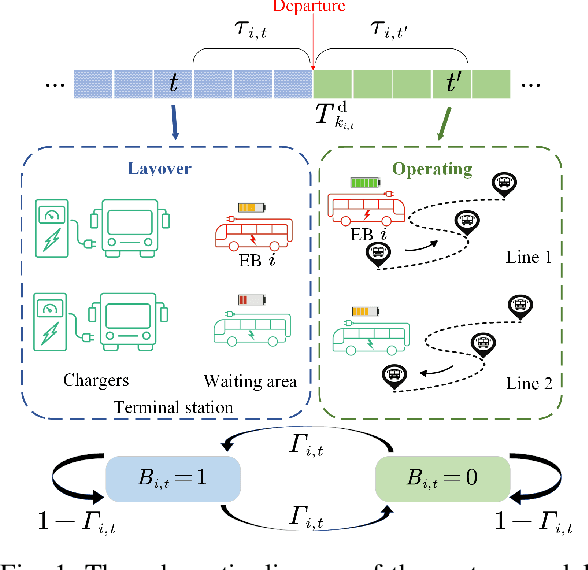
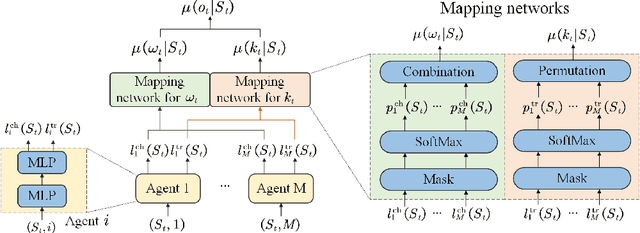
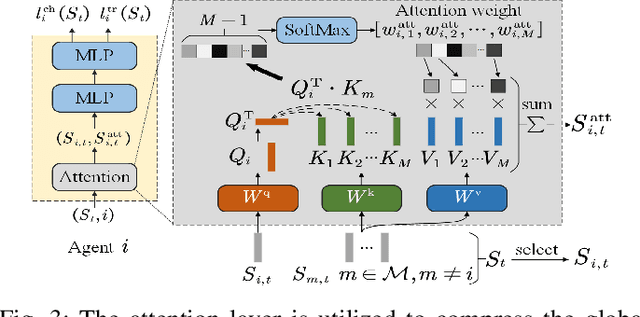

The growing adoption of Electric Buses (EBs) represents a significant step toward sustainable development. By utilizing Internet of Things (IoT) systems, charging stations can autonomously determine charging schedules based on real-time data. However, optimizing EB charging schedules remains a critical challenge due to uncertainties in travel time, energy consumption, and fluctuating electricity prices. Moreover, to address real-world complexities, charging policies must make decisions efficiently across multiple time scales and remain scalable for large EB fleets. In this paper, we propose a Hierarchical Deep Reinforcement Learning (HDRL) approach that reformulates the original Markov Decision Process (MDP) into two augmented MDPs. To solve these MDPs and enable multi-timescale decision-making, we introduce a novel HDRL algorithm, namely Double Actor-Critic Multi-Agent Proximal Policy Optimization Enhancement (DAC-MAPPO-E). Scalability challenges of the Double Actor-Critic (DAC) algorithm for large-scale EB fleets are addressed through enhancements at both decision levels. At the high level, we redesign the decentralized actor network and integrate an attention mechanism to extract relevant global state information for each EB, decreasing the size of neural networks. At the low level, the Multi-Agent Proximal Policy Optimization (MAPPO) algorithm is incorporated into the DAC framework, enabling decentralized and coordinated charging power decisions, reducing computational complexity and enhancing convergence speed. Extensive experiments with real-world data demonstrate the superior performance and scalability of DAC-MAPPO-E in optimizing EB fleet charging schedules.
Internet of Agents: Fundamentals, Applications, and Challenges
May 12, 2025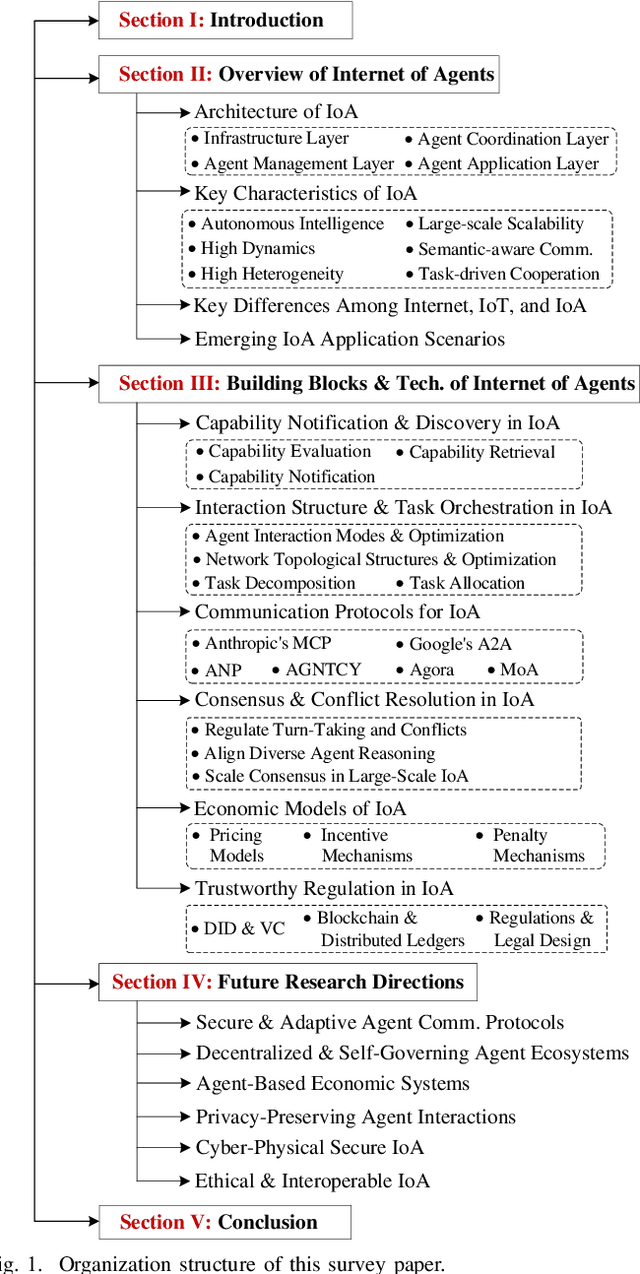
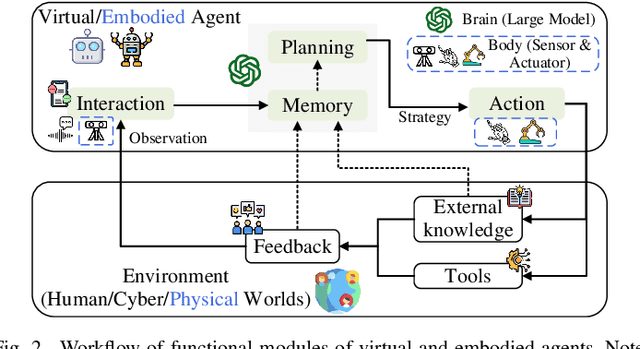
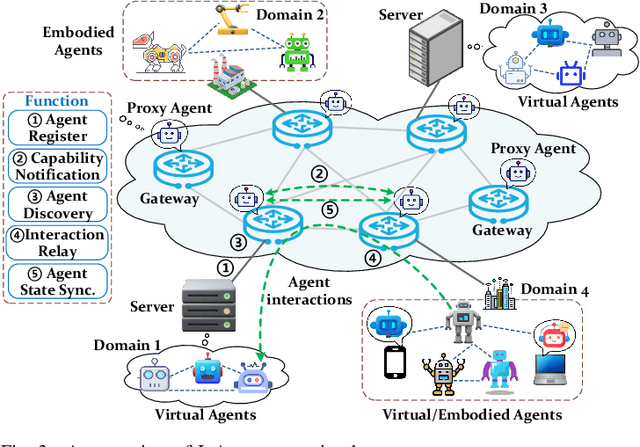
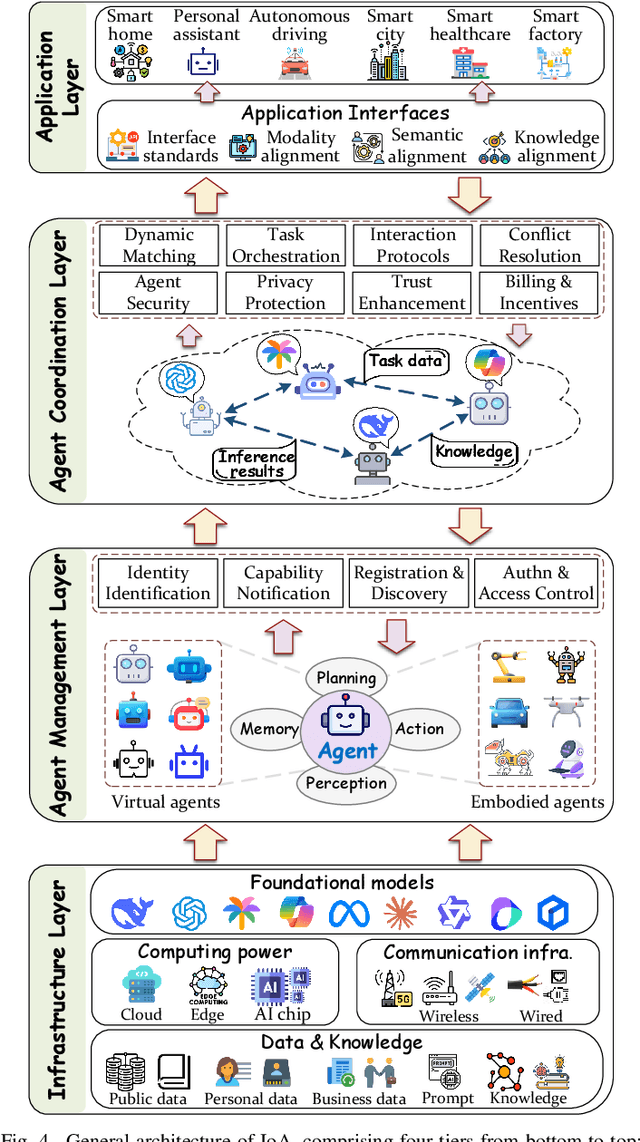
With the rapid proliferation of large language models and vision-language models, AI agents have evolved from isolated, task-specific systems into autonomous, interactive entities capable of perceiving, reasoning, and acting without human intervention. As these agents proliferate across virtual and physical environments, from virtual assistants to embodied robots, the need for a unified, agent-centric infrastructure becomes paramount. In this survey, we introduce the Internet of Agents (IoA) as a foundational framework that enables seamless interconnection, dynamic discovery, and collaborative orchestration among heterogeneous agents at scale. We begin by presenting a general IoA architecture, highlighting its hierarchical organization, distinguishing features relative to the traditional Internet, and emerging applications. Next, we analyze the key operational enablers of IoA, including capability notification and discovery, adaptive communication protocols, dynamic task matching, consensus and conflict-resolution mechanisms, and incentive models. Finally, we identify open research directions toward building resilient and trustworthy IoA ecosystems.
Towards Artificial General or Personalized Intelligence? A Survey on Foundation Models for Personalized Federated Intelligence
May 11, 2025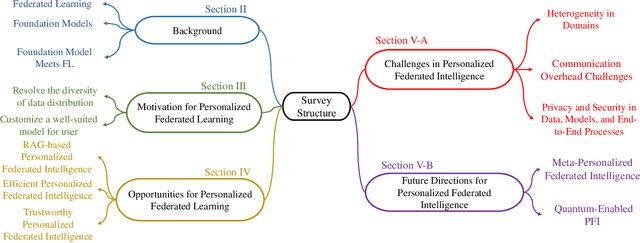
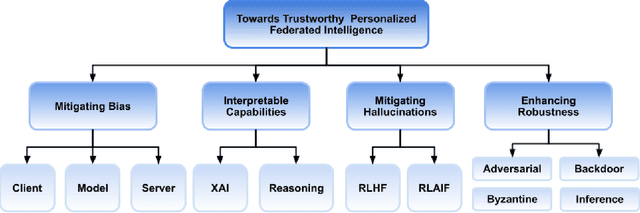
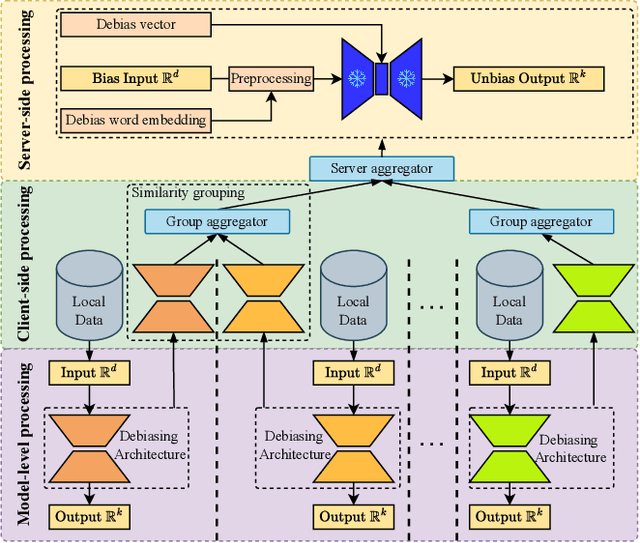
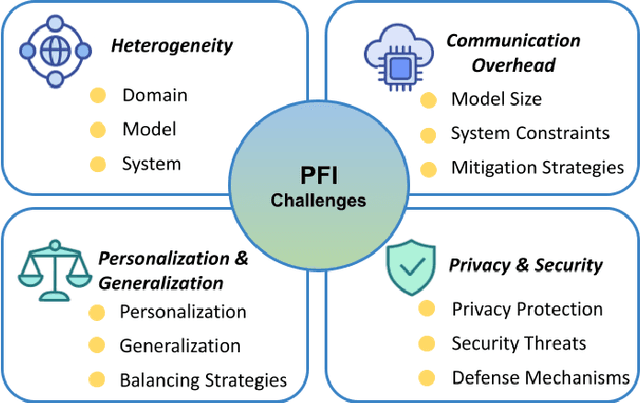
The rise of large language models (LLMs), such as ChatGPT, DeepSeek, and Grok-3, has reshaped the artificial intelligence landscape. As prominent examples of foundational models (FMs) built on LLMs, these models exhibit remarkable capabilities in generating human-like content, bringing us closer to achieving artificial general intelligence (AGI). However, their large-scale nature, sensitivity to privacy concerns, and substantial computational demands present significant challenges to personalized customization for end users. To bridge this gap, this paper presents the vision of artificial personalized intelligence (API), focusing on adapting these powerful models to meet the specific needs and preferences of users while maintaining privacy and efficiency. Specifically, this paper proposes personalized federated intelligence (PFI), which integrates the privacy-preserving advantages of federated learning (FL) with the zero-shot generalization capabilities of FMs, enabling personalized, efficient, and privacy-protective deployment at the edge. We first review recent advances in both FL and FMs, and discuss the potential of leveraging FMs to enhance federated systems. We then present the key motivations behind realizing PFI and explore promising opportunities in this space, including efficient PFI, trustworthy PFI, and PFI empowered by retrieval-augmented generation (RAG). Finally, we outline key challenges and future research directions for deploying FM-powered FL systems at the edge with improved personalization, computational efficiency, and privacy guarantees. Overall, this survey aims to lay the groundwork for the development of API as a complement to AGI, with a particular focus on PFI as a key enabling technique.
Learning Item Representations Directly from Multimodal Features for Effective Recommendation
May 08, 2025Conventional multimodal recommender systems predominantly leverage Bayesian Personalized Ranking (BPR) optimization to learn item representations by amalgamating item identity (ID) embeddings with multimodal features. Nevertheless, our empirical and theoretical findings unequivocally demonstrate a pronounced optimization gradient bias in favor of acquiring representations from multimodal features over item ID embeddings. As a consequence, item ID embeddings frequently exhibit suboptimal characteristics despite the convergence of multimodal feature parameters. Given the rich informational content inherent in multimodal features, in this paper, we propose a novel model (i.e., LIRDRec) that learns item representations directly from these features to augment recommendation performance. Recognizing that features derived from each modality may capture disparate yet correlated aspects of items, we propose a multimodal transformation mechanism, integrated with modality-specific encoders, to effectively fuse features from all modalities. Moreover, to differentiate the influence of diverse modality types, we devise a progressive weight copying fusion module within LIRDRec. This module incrementally learns the weight assigned to each modality in synthesizing the final user or item representations. Finally, we utilize the powerful visual understanding of Multimodal Large Language Models (MLLMs) to convert the item images into texts and extract semantics embeddings upon the texts via LLMs. Empirical evaluations conducted on five real-world datasets validate the superiority of our approach relative to competing baselines. It is worth noting the proposed model, equipped with embeddings extracted from MLLMs and LLMs, can further improve the recommendation accuracy of NDCG@20 by an average of 4.21% compared to the original embeddings.
Satellite-Assisted Low-Altitude Economy Networking: Concepts, Applications, and Opportunities
May 07, 2025The low-altitude economy (LAE) is a new economic paradigm that leverages low-altitude vehicles (LAVs) to perform diverse missions across diverse areas. To support the operations of LAE, it is essential to establish LAE networks that enable LAV management and communications.Existing studies mainly reuse terrestrial networks to construct LAE networks. However, the limited coverage of terrestrial networks poses challenges for serving LAVs in remote areas. Besides, efficient LAV operations also require support such as localization and navigation, which terrestrial networks designed for communications cannot fully provide. Due to ubiquitous coverage and diverse functions, satellites are a promising technology to support LAVs. Therefore, this article investigates satellite-assisted LAE networking. First, we introduce an overview of LAE and satellites, discussing their features, applications, and architectures. Next, we investigate opportunities for satellites to assist LAE from aspects of communication, control, and computation. As all assistance depends on reliable satellite-LAV communications, we propose a satellite-assisted LAE framework to tackle issues caused by the severe path loss and high dynamics in satellite-assisted LAE networks.The case study demonstrates that the distributed MIMO architecture efficiently reduces the required transmission power and extends service duration, while the two-timescale optimization scheme balances the performance and control signaling overheads. Specifically, the proposed framework comprises distributed satellite MIMO, distributed LAV MIMO, and a two-timescale optimization scheme.
Image Steganography For Securing Intellicise Wireless Networks: "Invisible Encryption" Against Eavesdroppers
May 07, 2025As one of the most promising technologies for intellicise (intelligent and consice) wireless networks, Semantic Communication (SemCom) significantly improves communication efficiency by extracting, transmitting, and recovering semantic information, while reducing transmission delay. However, an integration of communication and artificial intelligence (AI) also exposes SemCom to security and privacy threats posed by intelligent eavesdroppers. To address this challenge, image steganography in SemCom embeds secret semantic features within cover semantic features, allowing intelligent eavesdroppers to decode only the cover image. This technique offers a form of "invisible encryption" for SemCom. Motivated by these advancements, this paper conducts a comprehensive exploration of integrating image steganography into SemCom. Firstly, we review existing encryption techniques in SemCom and assess the potential of image steganography in enhancing its security. Secondly, we delve into various image steganographic paradigms designed to secure SemCom, encompassing three categories of joint source-channel coding (JSCC) models tailored for image steganography SemCom, along with multiple training strategies. Thirdly, we present a case study to illustrate the effectiveness of coverless steganography SemCom. Finally, we propose future research directions for image steganography SemCom.
Shadow Wireless Intelligence: Large Language Model-Driven Reasoning in Covert Communications
May 07, 2025Covert Communications (CC) can secure sensitive transmissions in industrial, military, and mission-critical applications within 6G wireless networks. However, traditional optimization methods based on Artificial Noise (AN), power control, and channel manipulation might not adapt to dynamic and adversarial environments due to the high dimensionality, nonlinearity, and stringent real-time covertness requirements. To bridge this gap, we introduce Shadow Wireless Intelligence (SWI), which integrates the reasoning capabilities of Large Language Models (LLMs) with retrieval-augmented generation to enable intelligent decision-making in covert wireless systems. Specifically, we utilize DeepSeek-R1, a mixture-of-experts-based LLM with RL-enhanced reasoning, combined with real-time retrieval of domain-specific knowledge to improve context accuracy and mitigate hallucinations. Our approach develops a structured CC knowledge base, supports context-aware retrieval, and performs semantic optimization, allowing LLMs to generate and adapt CC strategies in real time. In a case study on optimizing AN power in a full-duplex CC scenario, DeepSeek-R1 achieves 85% symbolic derivation accuracy and 94% correctness in the generation of simulation code, outperforming baseline models. These results validate SWI as a robust, interpretable, and adaptive foundation for LLM-driven intelligent covert wireless systems in 6G networks.
Joint Resource Management for Energy-efficient UAV-assisted SWIPT-MEC: A Deep Reinforcement Learning Approach
May 06, 2025The integration of simultaneous wireless information and power transfer (SWIPT) technology in 6G Internet of Things (IoT) networks faces significant challenges in remote areas and disaster scenarios where ground infrastructure is unavailable. This paper proposes a novel unmanned aerial vehicle (UAV)-assisted mobile edge computing (MEC) system enhanced by directional antennas to provide both computational resources and energy support for ground IoT terminals. However, such systems require multiple trade-off policies to balance UAV energy consumption, terminal battery levels, and computational resource allocation under various constraints, including limited UAV battery capacity, non-linear energy harvesting characteristics, and dynamic task arrivals. To address these challenges comprehensively, we formulate a bi-objective optimization problem that simultaneously considers system energy efficiency and terminal battery sustainability. We then reformulate this non-convex problem with a hybrid solution space as a Markov decision process (MDP) and propose an improved soft actor-critic (SAC) algorithm with an action simplification mechanism to enhance its convergence and generalization capabilities. Simulation results have demonstrated that our proposed approach outperforms various baselines in different scenarios, achieving efficient energy management while maintaining high computational performance. Furthermore, our method shows strong generalization ability across different scenarios, particularly in complex environments, validating the effectiveness of our designed boundary penalty and charging reward mechanisms.