 Add to Chrome
 Add to Firefox
 Add to Edge
VisuoThink: Empowering LVLM Reasoning with Multimodal Tree Search
Apr 12, 2025
Recent advancements in Large Vision-Language Models have showcased remarkable capabilities. However, they often falter when confronted with complex reasoning tasks that humans typically address through visual aids and deliberate, step-by-step thinking. While existing methods have explored text-based slow thinking or rudimentary visual assistance, they fall short of capturing the intricate, interleaved nature of human visual-verbal reasoning processes. To overcome these limitations and inspired by the mechanisms of slow thinking in human cognition, we introduce VisuoThink, a novel framework that seamlessly integrates visuospatial and linguistic domains. VisuoThink facilitates multimodal slow thinking by enabling progressive visual-textual reasoning and incorporates test-time scaling through look-ahead tree search. Extensive experiments demonstrate that VisuoThink significantly enhances reasoning capabilities via inference-time scaling, even without fine-tuning, achieving state-of-the-art performance in tasks involving geometry and spatial reasoning.

Fast-Slow-Thinking: Complex Task Solving with Large Language Models
Apr 11, 2025Nowadays, Large Language Models (LLMs) have been gradually employed to solve complex tasks. To face the challenge, task decomposition has become an effective way, which proposes to divide a complex task into multiple simpler subtasks and then solve them separately so that the difficulty of the original task can be reduced. However, the performance of existing task decomposition methods can be suboptimal when the task contains overly complex logic and constraints. In this situation, the solution generated by LLMs may deviate from the original purpose of the task, or contain redundant or even erroneous content. Therefore, inspired by the fact that humans possess two thinking systems including fast thinking and slow thinking, this paper introduces a new task decomposition method termed ``Fast-Slow-Thinking'' (FST), which stimulates LLMs to solve tasks through the cooperation of Fast Thinking (FT) and Slow Thinking (ST) steps. Here FT focuses more on the general and concise aspect of the task, and ST focuses more on the details of the task. In FT, LLMs are prompted to remove the constraints of the original task, therefore simplifying it to a general and concise one. In ST, we recall the constraints removed in FT, so that LLMs can improve the answer generated in FT to meet the requirements of the original task. Therefore, our FST method enables LLMs to consider a complex problem via a human-like cognition process from coarse to fine, the effectiveness of which has been well demonstrated by the experiments on three types of tasks.
Supervised Optimism Correction: Be Confident When LLMs Are Sure
Apr 10, 2025In this work, we establish a novel theoretical connection between supervised fine-tuning and offline reinforcement learning under the token-level Markov decision process, revealing that large language models indeed learn an implicit $Q$-function for inference. Through this theoretical lens, we demonstrate that the widely used beam search method suffers from unacceptable over-optimism, where inference errors are inevitably amplified due to inflated $Q$-value estimations of suboptimal steps. To address this limitation, we propose Supervised Optimism Correction(SOC), which introduces a simple yet effective auxiliary loss for token-level $Q$-value estimations during supervised fine-tuning. Specifically, the auxiliary loss employs implicit value regularization to boost model confidence in expert-demonstrated responses, thereby suppressing over-optimism toward insufficiently supervised responses. Extensive experiments on mathematical reasoning benchmarks, including GSM8K, MATH, and GAOKAO, showcase the superiority of the proposed SOC with beam search across a series of open-source models.
Neuron-level Balance between Stability and Plasticity in Deep Reinforcement Learning
Apr 09, 2025In contrast to the human ability to continuously acquire knowledge, agents struggle with the stability-plasticity dilemma in deep reinforcement learning (DRL), which refers to the trade-off between retaining existing skills (stability) and learning new knowledge (plasticity). Current methods focus on balancing these two aspects at the network level, lacking sufficient differentiation and fine-grained control of individual neurons. To overcome this limitation, we propose Neuron-level Balance between Stability and Plasticity (NBSP) method, by taking inspiration from the observation that specific neurons are strongly relevant to task-relevant skills. Specifically, NBSP first (1) defines and identifies RL skill neurons that are crucial for knowledge retention through a goal-oriented method, and then (2) introduces a framework by employing gradient masking and experience replay techniques targeting these neurons to preserve the encoded existing skills while enabling adaptation to new tasks. Numerous experimental results on the Meta-World and Atari benchmarks demonstrate that NBSP significantly outperforms existing approaches in balancing stability and plasticity.
Generative Classifier for Domain Generalization
Apr 03, 2025Domain generalization (DG) aims to improve the generalizability of computer vision models toward distribution shifts. The mainstream DG methods focus on learning domain invariance, however, such methods overlook the potential inherent in domain-specific information. While the prevailing practice of discriminative linear classifier has been tailored to domain-invariant features, it struggles when confronted with diverse domain-specific information, e.g., intra-class shifts, that exhibits multi-modality. To address these issues, we explore the theoretical implications of relying on domain invariance, revealing the crucial role of domain-specific information in mitigating the target risk for DG. Drawing from these insights, we propose Generative Classifier-driven Domain Generalization (GCDG), introducing a generative paradigm for the DG classifier based on Gaussian Mixture Models (GMMs) for each class across domains. GCDG consists of three key modules: Heterogeneity Learning Classifier~(HLC), Spurious Correlation Blocking~(SCB), and Diverse Component Balancing~(DCB). Concretely, HLC attempts to model the feature distributions and thereby capture valuable domain-specific information via GMMs. SCB identifies the neural units containing spurious correlations and perturbs them, mitigating the risk of HLC learning spurious patterns. Meanwhile, DCB ensures a balanced contribution of components in HLC, preventing the underestimation or neglect of critical components. In this way, GCDG excels in capturing the nuances of domain-specific information characterized by diverse distributions. GCDG demonstrates the potential to reduce the target risk and encourage flat minima, improving the generalizability. Extensive experiments show GCDG's comparable performance on five DG benchmarks and one face anti-spoofing dataset, seamlessly integrating into existing DG methods with consistent improvements.
Model Hemorrhage and the Robustness Limits of Large Language Models
Mar 31, 2025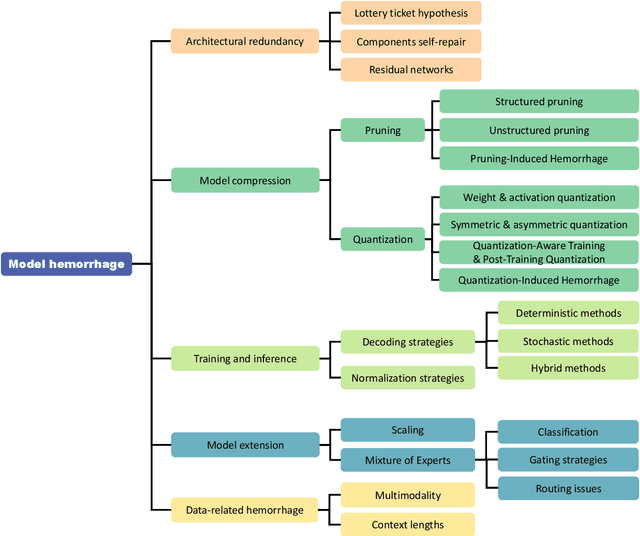
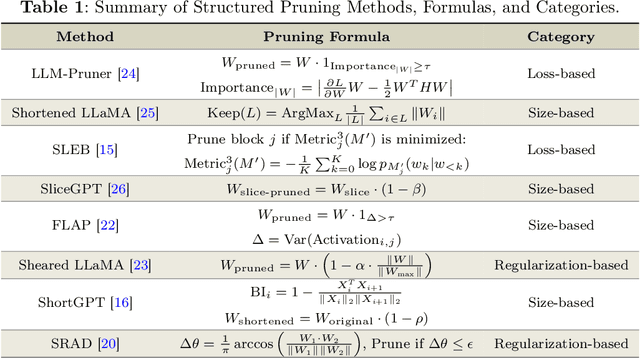
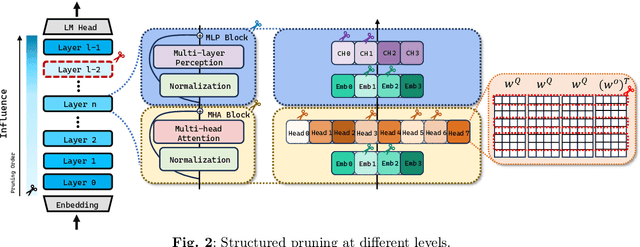
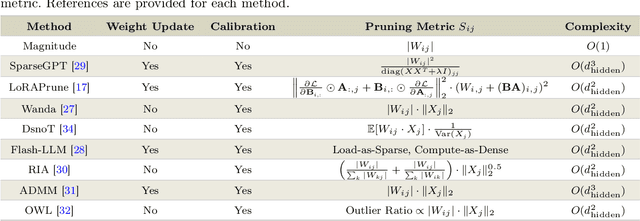
Large language models (LLMs) demonstrate strong performance across natural language processing tasks, yet undergo significant performance degradation when modified for deployment through quantization, pruning, or decoding strategy adjustments. We define this phenomenon as model hemorrhage - performance decline caused by parameter alterations and architectural changes. Through systematic analysis of various LLM frameworks, we identify key vulnerability patterns: layer expansion frequently disrupts attention mechanisms, compression techniques induce information loss cascades, and decoding adjustments amplify prediction divergences. Our investigation reveals transformer architectures exhibit inherent robustness thresholds that determine hemorrhage severity across modification types. We propose three mitigation strategies: gradient-aware pruning preserves critical weight pathways, dynamic quantization scaling maintains activation integrity, and decoding calibration aligns generation trajectories with original model distributions. This work establishes foundational metrics for evaluating model stability during adaptation, providing practical guidelines for maintaining performance while enabling efficient LLM deployment. Our findings advance understanding of neural network resilience under architectural transformations, particularly for large-scale language models.
Large Language Model Agent: A Survey on Methodology, Applications and Challenges
Mar 27, 2025The era of intelligent agents is upon us, driven by revolutionary advancements in large language models. Large Language Model (LLM) agents, with goal-driven behaviors and dynamic adaptation capabilities, potentially represent a critical pathway toward artificial general intelligence. This survey systematically deconstructs LLM agent systems through a methodology-centered taxonomy, linking architectural foundations, collaboration mechanisms, and evolutionary pathways. We unify fragmented research threads by revealing fundamental connections between agent design principles and their emergent behaviors in complex environments. Our work provides a unified architectural perspective, examining how agents are constructed, how they collaborate, and how they evolve over time, while also addressing evaluation methodologies, tool applications, practical challenges, and diverse application domains. By surveying the latest developments in this rapidly evolving field, we offer researchers a structured taxonomy for understanding LLM agents and identify promising directions for future research. The collection is available at https://github.com/luo-junyu/Awesome-Agent-Papers.
Reverse Prompt: Cracking the Recipe Inside Text-to-Image Generation
Mar 25, 2025Text-to-image generation has become increasingly popular, but achieving the desired images often requires extensive prompt engineering. In this paper, we explore how to decode textual prompts from reference images, a process we refer to as image reverse prompt engineering. This technique enables us to gain insights from reference images, understand the creative processes of great artists, and generate impressive new images. To address this challenge, we propose a method known as automatic reverse prompt optimization (ARPO). Specifically, our method refines an initial prompt into a high-quality prompt through an iteratively imitative gradient prompt optimization process: 1) generating a recreated image from the current prompt to instantiate its guidance capability; 2) producing textual gradients, which are candidate prompts intended to reduce the difference between the recreated image and the reference image; 3) updating the current prompt with textual gradients using a greedy search method to maximize the CLIP similarity between prompt and reference image. We compare ARPO with several baseline methods, including handcrafted techniques, gradient-based prompt tuning methods, image captioning, and data-driven selection method. Both quantitative and qualitative results demonstrate that our ARPO converges quickly to generate high-quality reverse prompts. More importantly, we can easily create novel images with diverse styles and content by directly editing these reverse prompts. Code will be made publicly available.
Towards Understanding the Safety Boundaries of DeepSeek Models: Evaluation and Findings
Mar 19, 2025This study presents the first comprehensive safety evaluation of the DeepSeek models, focusing on evaluating the safety risks associated with their generated content. Our evaluation encompasses DeepSeek's latest generation of large language models, multimodal large language models, and text-to-image models, systematically examining their performance regarding unsafe content generation. Notably, we developed a bilingual (Chinese-English) safety evaluation dataset tailored to Chinese sociocultural contexts, enabling a more thorough evaluation of the safety capabilities of Chinese-developed models. Experimental results indicate that despite their strong general capabilities, DeepSeek models exhibit significant safety vulnerabilities across multiple risk dimensions, including algorithmic discrimination and sexual content. These findings provide crucial insights for understanding and improving the safety of large foundation models. Our code is available at https://github.com/NY1024/DeepSeek-Safety-Eval.
Robust Distribution Alignment for Industrial Anomaly Detection under Distribution Shift
Mar 19, 2025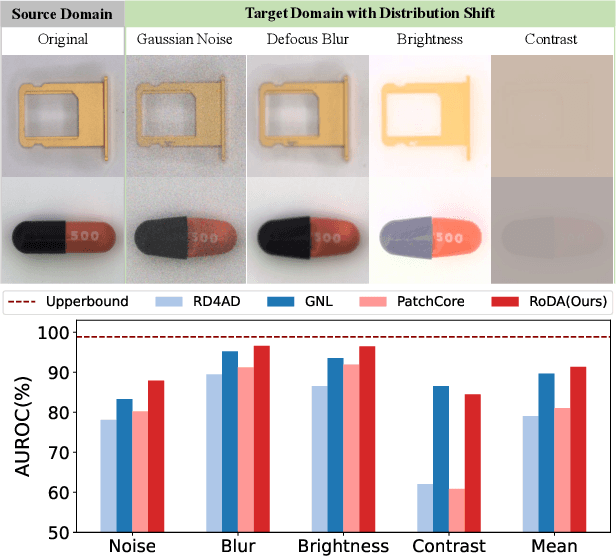
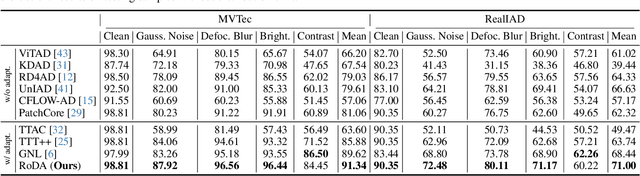
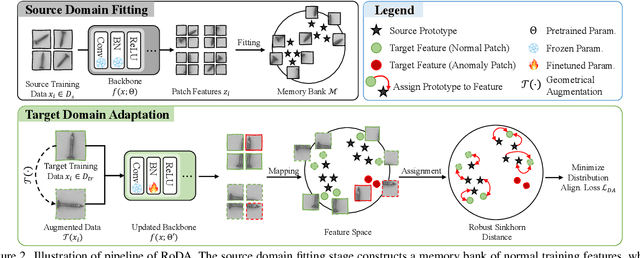
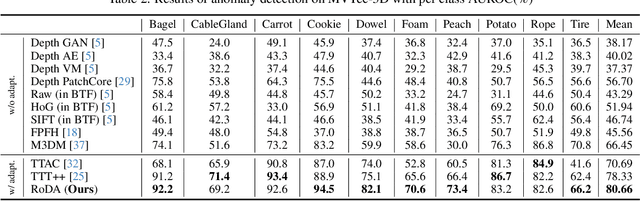
Anomaly detection plays a crucial role in quality control for industrial applications. However, ensuring robustness under unseen domain shifts such as lighting variations or sensor drift remains a significant challenge. Existing methods attempt to address domain shifts by training generalizable models but often rely on prior knowledge of target distributions and can hardly generalise to backbones designed for other data modalities. To overcome these limitations, we build upon memory-bank-based anomaly detection methods, optimizing a robust Sinkhorn distance on limited target training data to enhance generalization to unseen target domains. We evaluate the effectiveness on both 2D and 3D anomaly detection benchmarks with simulated distribution shifts. Our proposed method demonstrates superior results compared with state-of-the-art anomaly detection and domain adaptation methods.