 Add to Chrome
 Add to Firefox
 Add to Edge
Kimi K3: Open Frontier Intelligence
Jul 27, 2026
We introduce Kimi K3, a 2.8T parameter Mixture-of-Experts model with 104 billion activated parameters, native vision capabilities, and a 1-million-token context window. Kimi K3 is built on Kimi Delta Attention and Attention Residuals, which improve information flow across sequence length and model depth. Together with Stable LatentMoE, which effectively activates 16 of 896 routed experts per token, and refined training and data recipes, these advances yield an approximately 2.5x improvement in overall scaling efficiency over Kimi K2. Post-training highlights reinforcement learning across general, agentic, and coding domains and multiple reasoning-effort levels, enabling compositional generalization and robust long-horizon execution. At 2.8T scale, Kimi K3 is supported by infrastructure advances in multiple areas: algorithm-system co-design for KDA, perfectly balanced expert-parallel training with efficient memory management, million-token agentic RL with persistent rollout and sandbox states, and deployment innovations. Extensive evaluations show that Kimi K3 achieves frontier-level performance across long-horizon coding, agentic, knowledge, reasoning, and vision tasks. While its overall performance still trails the most powerful proprietary models, namely Claude Fable 5 and GPT-5.6 Sol, Kimi K3 consistently outperforms other open and proprietary models evaluated in our suite. We release the full Kimi K3 model weights to facilitate future research and accelerate the broader deployment and adoption of frontier intelligence.

PerceptionBench: Evaluating Atomic Visual Perception in Multimodal Large Language Models
Jul 27, 2026We introduce PerceptionBench, a benchmark specifically designed to evaluate the atomic visual perception capabilities of Multimodal Large Language Models (MLLMs). Existing benchmarks often fail to isolate perception: holistic evaluations conflate perceptual errors with failures in reasoning or domain knowledge, while application-driven benchmarks only cover narrow, fragmented domains shaped by heuristic designs. To address these limitations, PerceptionBench adopts a bottom-up approach: by diagnosing the earliest failure points in the responses of frontier MLLMs across 42 existing benchmarks, we construct an error taxonomy whose perception branch defines ten atomic perceptual capabilities. Guided by this taxonomy, we construct 3,000 verified questions with short, unambiguous answers, each isolating a single capability, with difficulty stemming from perception rather than reasoning or knowledge. Benchmark results across sixteen frontier MLLMs reveal that atomic perception remains largely unsolved---no model reaches 60\% accuracy, perception-related hallucination is the weakest capability on average, and similar overall scores conceal sharply divergent capability profiles. PerceptionBench thus provides a capability-level standard for measuring and diagnosing the visual perception boundaries of MLLMs.
Illuminating Unified Multimodal Model for Free-form Interleaved Text-Image Generation
Jun 29, 2026The advancement of generative AI models capable of producing text and image marks a critical step forward in the realm of multimodal intelligence, particularly for tasks involving the interleaving of both modalities. To advance this intelligence to the next stage, it is crucial for models to autonomously generate free-form interleaved text-image sequences. In this paper, we introduce ILLUME-X, an advanced unified multimodal paradigm that enables high-quality, free-form interleaved text-image generation by improving multimodal data efficiency and stabilizing the multimodal training process. ILLUME-X comprises three key components: (i) an expanded training data pipeline optimized for interleaved text-image generation, (ii) a progressive training strategy with self-adaptive objectives for free-length multimodal token sequences, and (iii) an objective and comprehensive evaluation method ILScore for interleaved text-image sequences. Notably, our ILLUME-X outperforms previous unified models across multiple interleaved text-image generation tasks like style transfer, image decomposition and storytelling.
A multi-agent system for spine MRI report generation from multi-sequence imaging
Jun 08, 2026Spinal pathology is a leading cause of pain and disability worldwide. Spine MRI is central to clinical evaluation, yet its interpretation remains complex and time-consuming, requiring integration of information across multiple imaging sequences and anatomical regions. Despite recent advances in automated MRI analysis, effectively combining multi-sequence data while preserving sequence-specific diagnostic information remains an open challenge. Here we present SpineAgent, a multi-agent framework for spine MRI report generation built upon a multi-sequence foundation model trained on routine clinical data from 32,047 patients and 453,683 MRI series, comprising a total of 13,441,191 MRI slices. To accommodate diverse modalities of sequences, we first pre-train two DINOv3-based encoders separately on T1- and T2-weighted sequences. We then introduce a continual training strategy that learns a synthesizer to embed images of other sequences using the T1 and T2 encoders, producing patient-level embedding that integrates various signals across MRI sequences. Using these embeddings, SpineAgent achieves state-of-the-art performance, and demonstrates strong generalizability under cross-manufacturer and cross-cohort evaluation. Beyond classification, SpineAgent enables pathology localization by identifying findings-relevant slices and segmenting pathological regions. It also supports multimodal image-report retrieval, providing a solid foundation for scalable and explainable MRI report generation. We further integrate these validated capabilities of SpineAgent into 37 specialized agents. Finally, we incorporate their outputs as structured tokens within a Medical Report Agent trained end-to-end for report generation. Through both automated metrics and expert evaluation by five radiologists, SpineAgent achieves leading performance in spine MRI report generation.
SciCustom: A Framework for Custom Evaluation of Scientific Capabilities in Large Language Models
May 19, 2026Large language models (LLMs) are increasingly applied to scientific research, yet existing evaluations often fail to reflect the fine-grained capabilities required in practice. Most benchmarks are manually curated or domain-generic, limiting scalability and alignment with real scientific use cases. In this paper, we propose a new framework named SciCustom to address the problem. It enables the custom construction of benchmarks from large-scale scientific data to evaluate application-specific scientific capabilities in LLMs. SciCustom first organizes scientific knowledge into ontology-grounded knowledge units with controlled granularity and trains a tagger to map large-scale data instances into this knowledge space. Given a custom requirement, relevant knowledge units are identified via voting-based multi-model consensus. These units enable relevance-aware benchmark retrieval via binary search, followed by proxy subset selection and data-grounded benchmark generation for efficient evaluation. Experiments in chemistry and healthcare demonstrate that SciCustom reveals fine-grained differences in LLM scientific capabilities that standard benchmarks overlook, while requiring neither expert annotation nor synthetic question generation. This work provides a scalable and application-aware foundation for benchmarking scientific capabilities in LLMs. The source code is available at https://github.com/yjwtheonly/SciCustom.
Kimi K2.5: Visual Agentic Intelligence
Feb 02, 2026We introduce Kimi K2.5, an open-source multimodal agentic model designed to advance general agentic intelligence. K2.5 emphasizes the joint optimization of text and vision so that two modalities enhance each other. This includes a series of techniques such as joint text-vision pre-training, zero-vision SFT, and joint text-vision reinforcement learning. Building on this multimodal foundation, K2.5 introduces Agent Swarm, a self-directed parallel agent orchestration framework that dynamically decomposes complex tasks into heterogeneous sub-problems and executes them concurrently. Extensive evaluations show that Kimi K2.5 achieves state-of-the-art results across various domains including coding, vision, reasoning, and agentic tasks. Agent Swarm also reduces latency by up to $4.5\times$ over single-agent baselines. We release the post-trained Kimi K2.5 model checkpoint to facilitate future research and real-world applications of agentic intelligence.
ILLUME+: Illuminating Unified MLLM with Dual Visual Tokenization and Diffusion Refinement
Apr 03, 2025


We present ILLUME+ that leverages dual visual tokenization and a diffusion decoder to improve both deep semantic understanding and high-fidelity image generation. Existing unified models have struggled to simultaneously handle the three fundamental capabilities in a unified model: understanding, generation, and editing. Models like Chameleon and EMU3 utilize VQGAN for image discretization, due to the lack of deep semantic interaction, they lag behind specialist models like LLaVA in visual understanding tasks. To mitigate this, LaViT and ILLUME employ semantic encoders for tokenization, but they struggle with image editing due to poor texture preservation. Meanwhile, Janus series decouples the input and output image representation, limiting their abilities to seamlessly handle interleaved image-text understanding and generation. In contrast, ILLUME+ introduces a unified dual visual tokenizer, DualViTok, which preserves both fine-grained textures and text-aligned semantics while enabling a coarse-to-fine image representation strategy for multimodal understanding and generation. Additionally, we employ a diffusion model as the image detokenizer for enhanced generation quality and efficient super-resolution. ILLUME+ follows a continuous-input, discrete-output scheme within the unified MLLM and adopts a progressive training procedure that supports dynamic resolution across the vision tokenizer, MLLM, and diffusion decoder. This design allows for flexible and efficient context-aware image editing and generation across diverse tasks. ILLUME+ (3B) exhibits competitive performance against existing unified MLLMs and specialized models across multimodal understanding, generation, and editing benchmarks. With its strong performance, ILLUME+ provides a scalable and versatile foundation for future multimodal applications. Project Page: https://illume-unified-mllm.github.io/.
Large Language Model Agent: A Survey on Methodology, Applications and Challenges
Mar 27, 2025The era of intelligent agents is upon us, driven by revolutionary advancements in large language models. Large Language Model (LLM) agents, with goal-driven behaviors and dynamic adaptation capabilities, potentially represent a critical pathway toward artificial general intelligence. This survey systematically deconstructs LLM agent systems through a methodology-centered taxonomy, linking architectural foundations, collaboration mechanisms, and evolutionary pathways. We unify fragmented research threads by revealing fundamental connections between agent design principles and their emergent behaviors in complex environments. Our work provides a unified architectural perspective, examining how agents are constructed, how they collaborate, and how they evolve over time, while also addressing evaluation methodologies, tool applications, practical challenges, and diverse application domains. By surveying the latest developments in this rapidly evolving field, we offer researchers a structured taxonomy for understanding LLM agents and identify promising directions for future research. The collection is available at https://github.com/luo-junyu/Awesome-Agent-Papers.
ILLUME: Illuminating Your LLMs to See, Draw, and Self-Enhance
Dec 09, 2024In this paper, we introduce ILLUME, a unified multimodal large language model (MLLM) that seamlessly integrates multimodal understanding and generation capabilities within a single large language model through a unified next-token prediction formulation. To address the large dataset size typically required for image-text alignment, we propose to enhance data efficiency through the design of a vision tokenizer that incorporates semantic information and a progressive multi-stage training procedure. This approach reduces the dataset size to just 15M for pretraining -- over four times fewer than what is typically needed -- while achieving competitive or even superior performance with existing unified MLLMs, such as Janus. Additionally, to promote synergistic enhancement between understanding and generation capabilities, which is under-explored in previous works, we introduce a novel self-enhancing multimodal alignment scheme. This scheme supervises the MLLM to self-assess the consistency between text descriptions and self-generated images, facilitating the model to interpret images more accurately and avoid unrealistic and incorrect predictions caused by misalignment in image generation. Based on extensive experiments, our proposed ILLUME stands out and competes with state-of-the-art unified MLLMs and specialized models across various benchmarks for multimodal understanding, generation, and editing.
SMI-Editor: Edit-based SMILES Language Model with Fragment-level Supervision
Dec 07, 2024


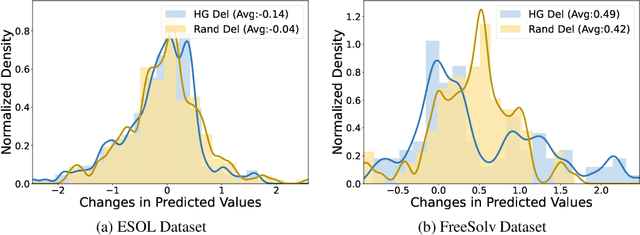
SMILES, a crucial textual representation of molecular structures, has garnered significant attention as a foundation for pre-trained language models (LMs). However, most existing pre-trained SMILES LMs focus solely on the single-token level supervision during pre-training, failing to fully leverage the substructural information of molecules. This limitation makes the pre-training task overly simplistic, preventing the models from capturing richer molecular semantic information. Moreover, during pre-training, these SMILES LMs only process corrupted SMILES inputs, never encountering any valid SMILES, which leads to a train-inference mismatch. To address these challenges, we propose SMI-Editor, a novel edit-based pre-trained SMILES LM. SMI-Editor disrupts substructures within a molecule at random and feeds the resulting SMILES back into the model, which then attempts to restore the original SMILES through an editing process. This approach not only introduces fragment-level training signals, but also enables the use of valid SMILES as inputs, allowing the model to learn how to reconstruct complete molecules from these incomplete structures. As a result, the model demonstrates improved scalability and an enhanced ability to capture fragment-level molecular information. Experimental results show that SMI-Editor achieves state-of-the-art performance across multiple downstream molecular tasks, and even outperforming several 3D molecular representation models.