 Add to Chrome
 Add to Firefox
 Add to Edge
KAT-Coder-V2.5 Technical Report
Jul 06, 2026
We present KAT-Coder-V2.5, a coding-focused agentic model trained to act autonomously inside real, executable repositories rather than as a single-turn code generator. Its capability is bottlenecked less by model scale than by the scarcity of reproducible environments, verifiable rewards, and high-value trajectories, which we address with an end-to-end agentic post-training framework. AutoBuilder reconstructs multilingual repositories into sandboxed environments with fail-to-pass and pass-to-pass verification at scale, from which we regenerate self-contained task specifications, recover near-miss trajectories, and distill supervision through process-aware filtering, while KwaiClawEnv synthesizes large-scale tool-use trajectories from executable services and real task seeds. We further scale reinforcement learning with harness randomization, a reliability-hardened sandbox, an asymmetric actor--critic PPO with hindsight-augmented value estimation, and a harness-oriented reward framework, and unify SWE, Agent-Claw, and WebCoding experts via Multi-Teacher On-Policy Distillation. Across six software-engineering and agentic benchmarks, KAT-Coder-V2.5 delivers the best agentic tool-use result on PinchBench and ranks second only to the frontier Opus 4.8 on repository-level software engineering. Our service is available at https://streamlake.com/product/kat-coder.

I\textsuperscript{2}RiMA: Spectral Riemannian Representation with Temporal Attention for Mental Stress Detection based on EEG Signals
Jul 01, 2026Cross-subject EEG stress detection remains challenging because discriminative stress-related patterns are both subject-dependent and frequency-specific. Conventional Riemannian methods model spatial covariance mainly in the time domain, overlooking neural oscillations that are critical for high-level cognitive state decoding, while standard temporal tokenization often fragments inter-slice temporal coherence. To address these limitations, we propose \method{}, an Intra-Inter Riemannian Manifold Attention Network for EEG-based stress detection. \method{} constructs spatial covariance matrices independently at each frequency point and maps them to the SPD tangent space, preserving channel-wise geometry together with frequency-specific discriminative cues. It further introduces frequency cluster aggregation to select informative spectral components and reduce redundancy by forming compact, data-driven frequency clusters aligned with EEG rhythms. Finally, an intra-inter slice attention module adaptively integrates local slice-level spectral dynamics and global temporal context across EEG sequences. Experiments on three datasets show that \method{} consistently outperforms five state-of-the-art baselines, achieving up to 82.78\% balanced accuracy while remaining efficient with only 1.60M parameters and 31.95M FLOPs.
RAVEN: A Regime-Aware Variable-context Expert Network for Financial Time Series Forecasting
Jun 23, 2026Financial time series forecasting presents structural challenges absent from standard benchmarks. Log-returns are non-stationary, exhibit exceptionally low signal-to-noise (SNR) ratios, and are governed by regime-dependent temporal dependencies. We identify a key limitation of state-of-the-art (SOTA) time series models in financial settings. A fixed context window is mismatched to the time-varying optimal look-back of non-stationary price processes. We propose the Regime-Aware Variable-context Expert Network (RAVEN), a Mixture-of-Experts framework designed to adaptively determine the temporal context for each input sample. Instead of relying on a fixed look-back horizon, RAVEN constructs a hierarchy of nested contiguous windows whose lengths are determined by the data itself. Specifically, RAVEN scores patches by learned importance in reverse chronological order and applies the Cumulative Importance Thresholding (CIT) mechanism to derive nested prefix windows, each routed to a scale-specialized expert. A Global Compressed Representation (GCR) branch runs in parallel over the full context, preserving global temporal coherence that local experts cannot guarantee. Because the nested routing induces structured overlap among expert inputs, we introduce a Correlation-Aware Weighting (CAW) to align variable-length expert outputs and penalize pairwise cosine similarity prior to aggregation. Experiments on cumulative log-return prediction (HS300, S&P500) and fund sales forecasting demonstrate that RAVEN achieves SOTA performances, improves Pearson correlation by 9.2% on HS300 and 20.2% on S&P500, and reduces MSE by 18.2% on fund sales forecasting, while achieving the best results in 14 of 16 metrics on four PEMS traffic benchmarks.
General Time-series Model for Universal Knowledge Representation of Multivariate Time-Series data
Feb 05, 2025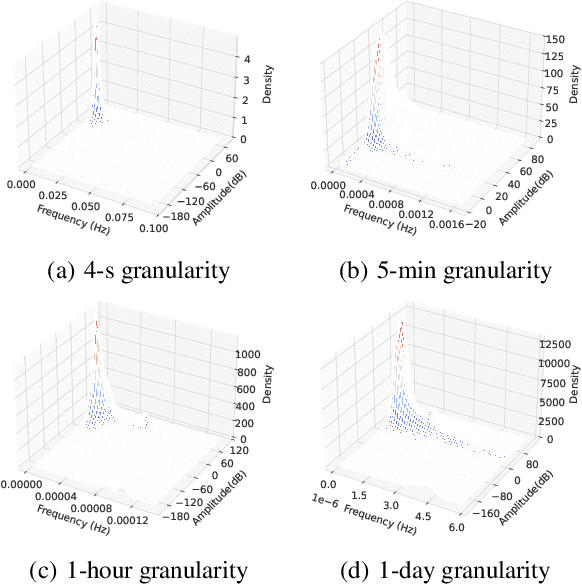
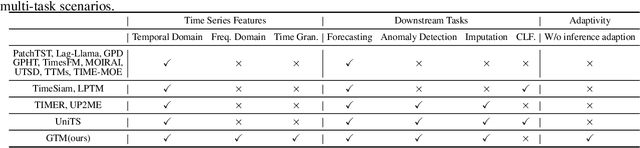
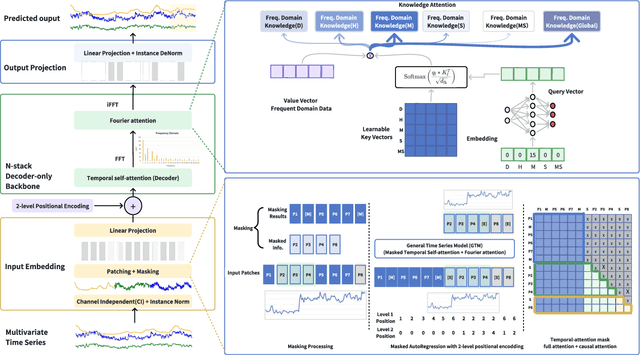

Universal knowledge representation is a central problem for multivariate time series(MTS) foundation models and yet remains open. This paper investigates this problem from the first principle and it makes four folds of contributions. First, a new empirical finding is revealed: time series with different time granularities (or corresponding frequency resolutions) exhibit distinct joint distributions in the frequency domain. This implies a crucial aspect of learning universal knowledge, one that has been overlooked by previous studies. Second, a novel Fourier knowledge attention mechanism is proposed to enable learning time granularity-aware representations from both the temporal and frequency domains. Third, an autoregressive blank infilling pre-training framework is incorporated to time series analysis for the first time, leading to a generative tasks agnostic pre-training strategy. To this end, we develop the General Time-series Model (GTM), a unified MTS foundation model that addresses the limitation of contemporary time series models, which often require token, pre-training, or model-level customizations for downstream tasks adaption. Fourth, extensive experiments show that GTM outperforms state-of-the-art (SOTA) methods across all generative tasks, including long-term forecasting, anomaly detection, and imputation.
Classification of Power Quality Disturbances Using Resnet with Channel Attention Mechanism
Jul 02, 2024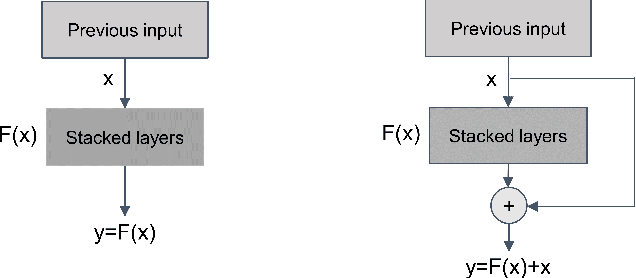
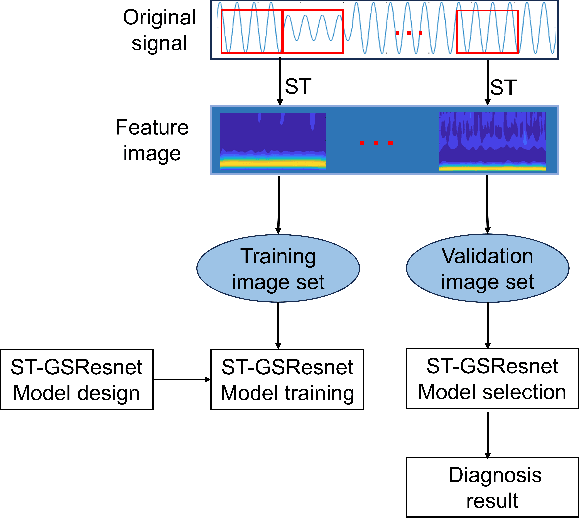
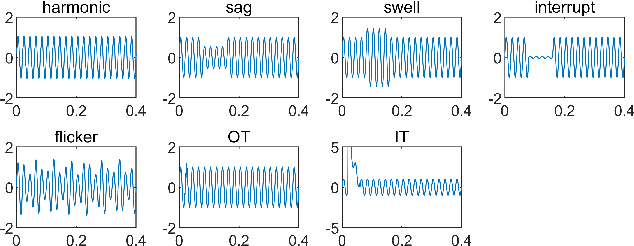
The detection and classification of power quality disturbances (PQDs) carries significant importance for power systems. In response to this imperative, numerous intelligent diagnostic methods have been developed. However, existing identification methods usually concentrate on single-type signals or on complex signals with two types, rendering them susceptible to noisy labels and environmental effects. This study proposes a novel method for the classification of PQDs, termed ST-GSResNet, which utilizes the S-Transform and an improved residual neural network (ResNet) with a channel attention mechanism. The ST-GSResNet approach initially uses the S-Transform to transform a time-series signal into a 2D time-frequency image for feature enhancement. Then, an improved ResNet model is introduced, which employs grouped convolution instead of the traditional convolution operation. This improvement aims to facilitate learning with a block-diagonal structured sparsity on the channel dimension, the highly-correlated filters are learned in a more structured way in the networks with filter groups. By reducing the number of parameters in the network in this significant manner, the model becomes less prone to overfitting. Furthermore, the SE module concentrates on primary components, which enhances the model's robustness in recognition and immunity to noise. Experimental results demonstrate that, compared to existing deep learning models, our approach has advantages in computational efficiency and classification accuracy.
HigeNet: A Highly Efficient Modeling for Long Sequence Time Series Prediction in AIOps
Nov 13, 2022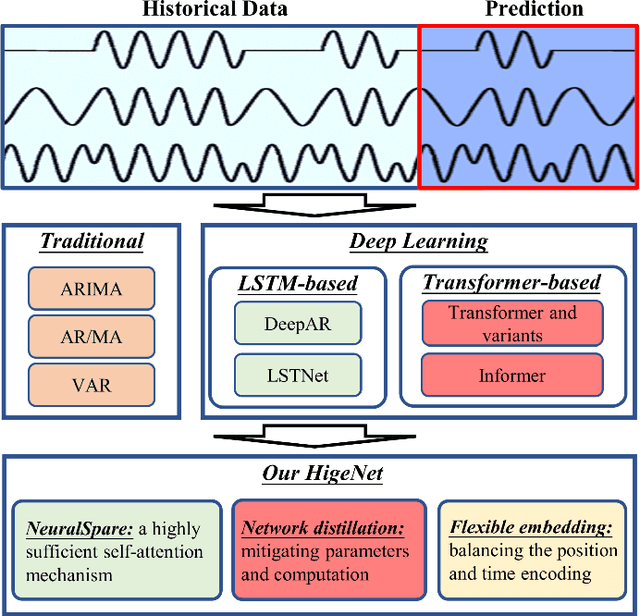
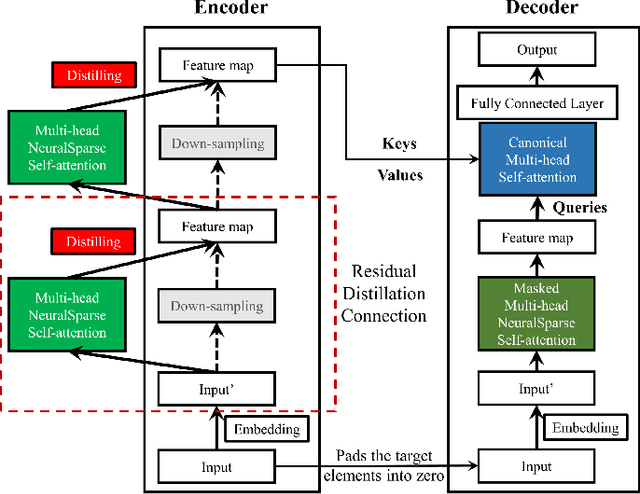
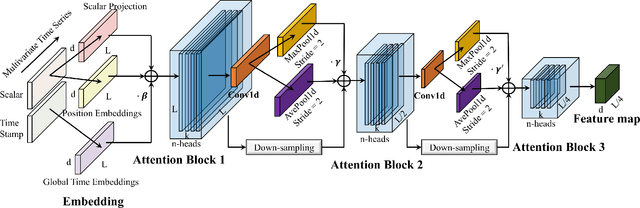
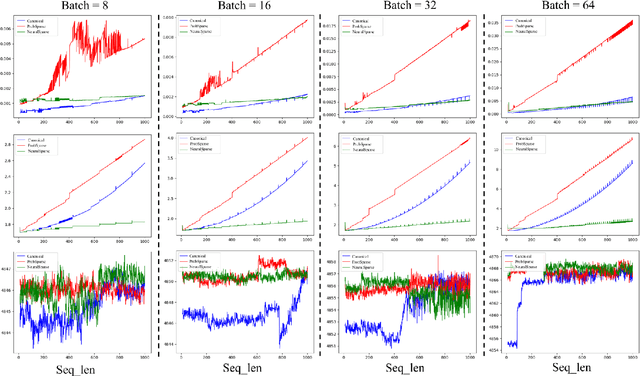
Modern IT system operation demands the integration of system software and hardware metrics. As a result, it generates a massive amount of data, which can be potentially used to make data-driven operational decisions. In the basic form, the decision model needs to monitor a large set of machine data, such as CPU utilization, allocated memory, disk and network latency, and predicts the system metrics to prevent performance degradation. Nevertheless, building an effective prediction model in this scenario is rather challenging as the model has to accurately capture the long-range coupling dependency in the Multivariate Time-Series (MTS). Moreover, this model needs to have low computational complexity and can scale efficiently to the dimension of data available. In this paper, we propose a highly efficient model named HigeNet to predict the long-time sequence time series. We have deployed the HigeNet on production in the D-matrix platform. We also provide offline evaluations on several publicly available datasets as well as one online dataset to demonstrate the model's efficacy. The extensive experiments show that training time, resource usage and accuracy of the model are found to be significantly better than five state-of-the-art competing models.
Accelerating Multi-Objective Neural Architecture Search by Random-Weight Evaluation
Oct 08, 2021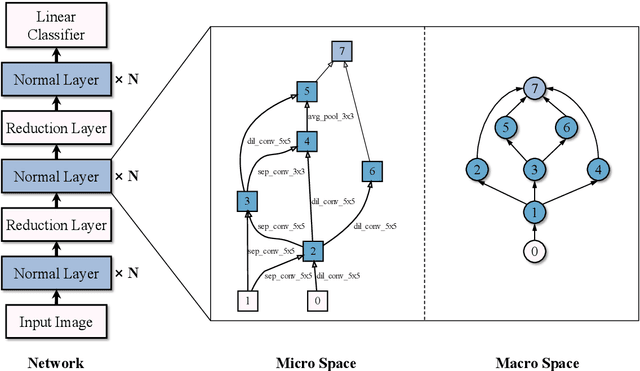
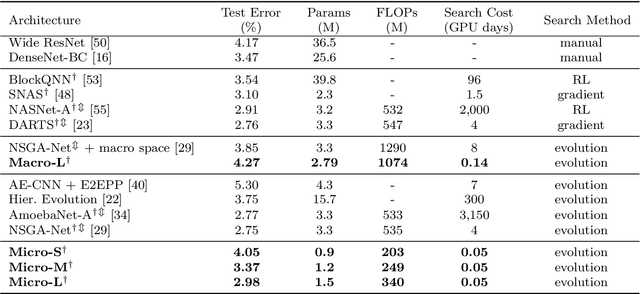
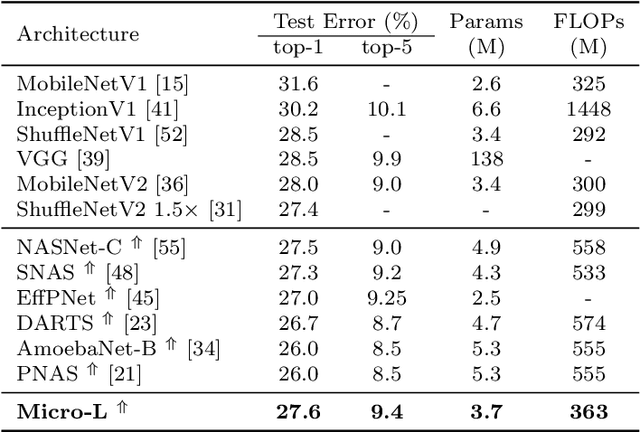
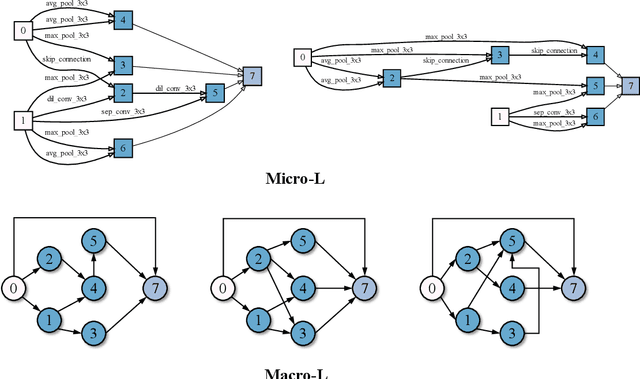
For the goal of automated design of high-performance deep convolutional neural networks (CNNs), Neural Architecture Search (NAS) methodology is becoming increasingly important for both academia and industries.Due to the costly stochastic gradient descent (SGD) training of CNNs for performance evaluation, most existing NAS methods are computationally expensive for real-world deployments. To address this issue, we first introduce a new performance estimation metric, named Random-Weight Evaluation (RWE) to quantify the quality of CNNs in a cost-efficient manner. Instead of fully training the entire CNN, the RWE only trains its last layer and leaves the remainders with randomly initialized weights, which results in a single network evaluation in seconds.Second, a complexity metric is adopted for multi-objective NAS to balance the model size and performance. Overall, our proposed method obtains a set of efficient models with state-of-the-art performance in two real-world search spaces. Then the results obtained on the CIFAR-10 dataset are transferred to the ImageNet dataset to validate the practicality of the proposed algorithm. Moreover, ablation studies on NAS-Bench-301 datasets reveal the effectiveness of the proposed RWE in estimating the performance compared with existing methods.
FaPN: Feature-aligned Pyramid Network for Dense Image Prediction
Aug 17, 2021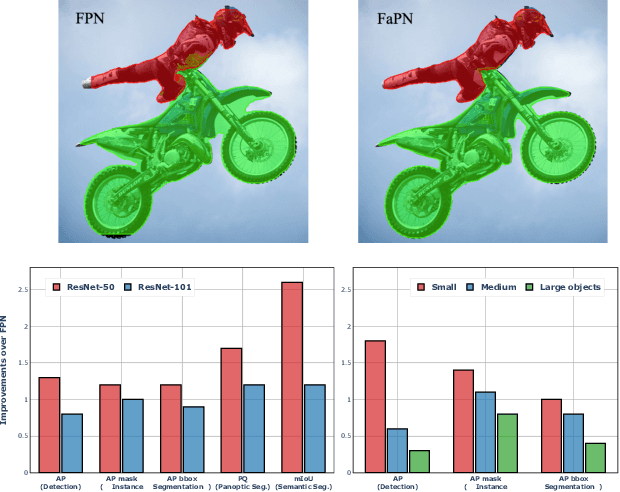
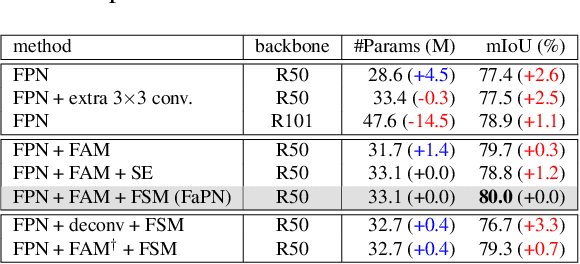
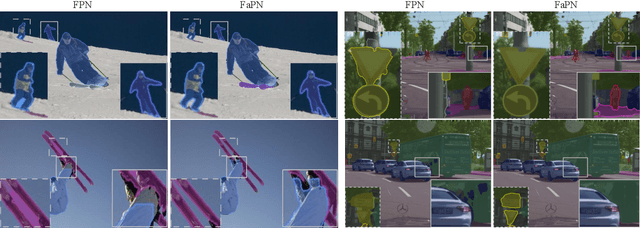
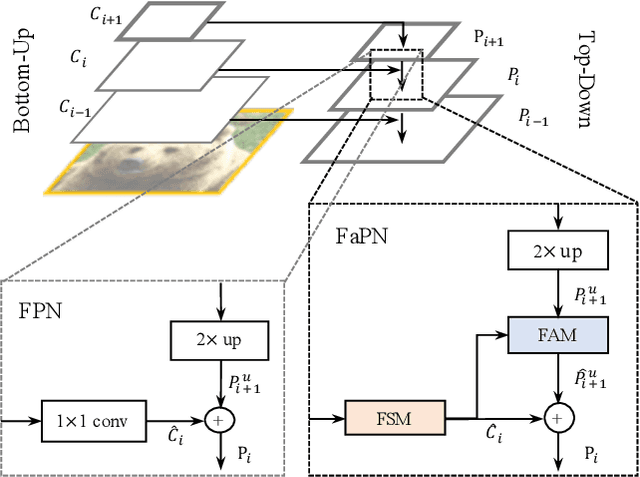
Recent advancements in deep neural networks have made remarkable leap-forwards in dense image prediction. However, the issue of feature alignment remains as neglected by most existing approaches for simplicity. Direct pixel addition between upsampled and local features leads to feature maps with misaligned contexts that, in turn, translate to mis-classifications in prediction, especially on object boundaries. In this paper, we propose a feature alignment module that learns transformation offsets of pixels to contextually align upsampled higher-level features; and another feature selection module to emphasize the lower-level features with rich spatial details. We then integrate these two modules in a top-down pyramidal architecture and present the Feature-aligned Pyramid Network (FaPN). Extensive experimental evaluations on four dense prediction tasks and four datasets have demonstrated the efficacy of FaPN, yielding an overall improvement of 1.2 - 2.6 points in AP / mIoU over FPN when paired with Faster / Mask R-CNN. In particular, our FaPN achieves the state-of-the-art of 56.7% mIoU on ADE20K when integrated within Mask-Former. The code is available from https://github.com/EMI-Group/FaPN.
Principled Design of Translation, Scale, and Rotation Invariant Variation Operators for Metaheuristics
May 22, 2021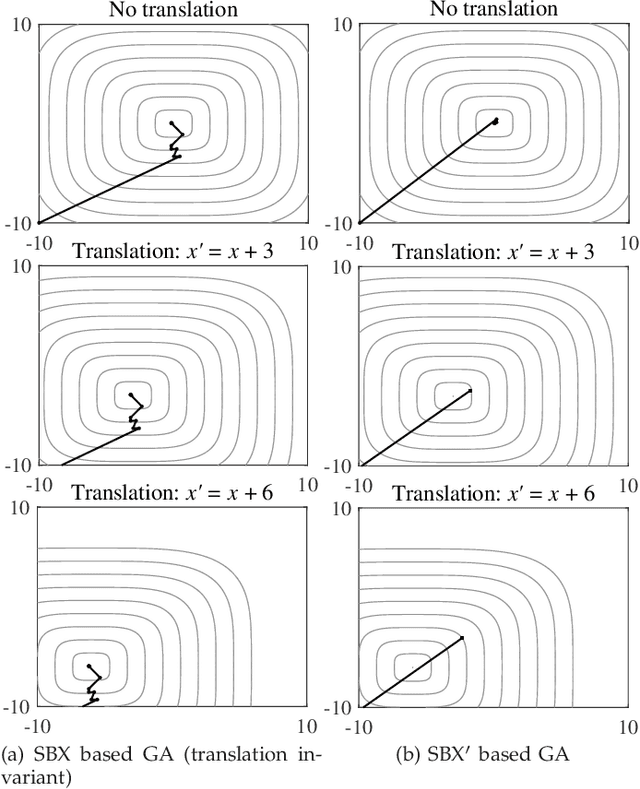
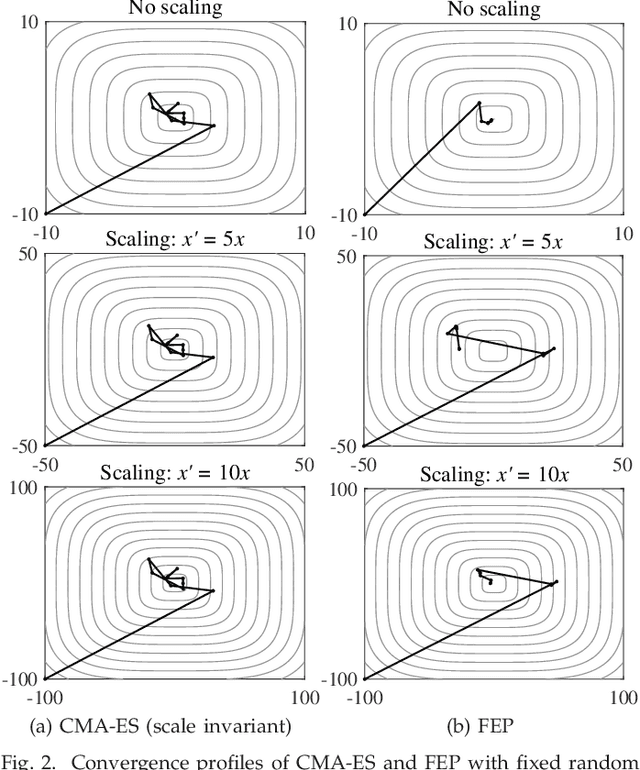
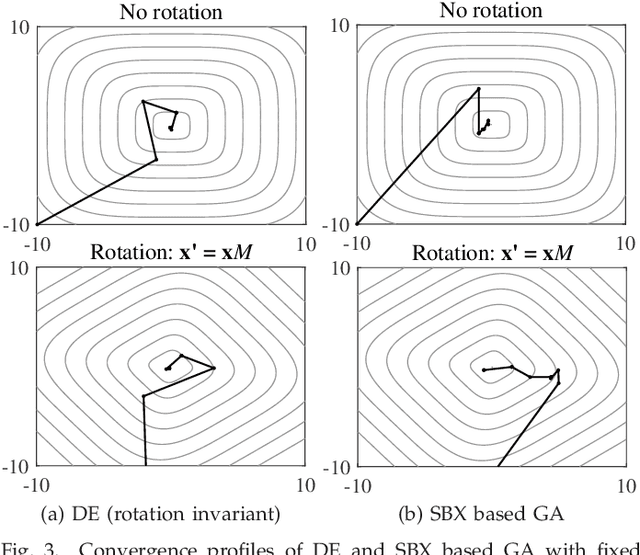
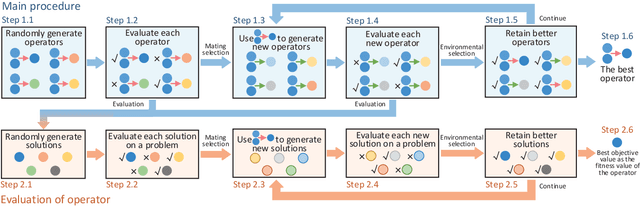
In the past three decades, a large number of metaheuristics have been proposed and shown high performance in solving complex optimization problems. While most variation operators in existing metaheuristics are empirically designed, this paper aims to design new operators automatically, which are expected to be search space independent and thus exhibit robust performance on different problems. For this purpose, this work first investigates the influence of translation invariance, scale invariance, and rotation invariance on the search behavior and performance of some representative operators. Then, we deduce the generic form of translation, scale, and rotation invariant operators. Afterwards, a principled approach is proposed for the automated design of operators, which searches for high-performance operators based on the deduced generic form. The experimental results demonstrate that the operators generated by the proposed approach outperform state-of-the-art ones on a variety of problems with complex landscapes and up to 1000 decision variables.
Multi-objective Neural Architecture Search with Almost No Training
Nov 27, 2020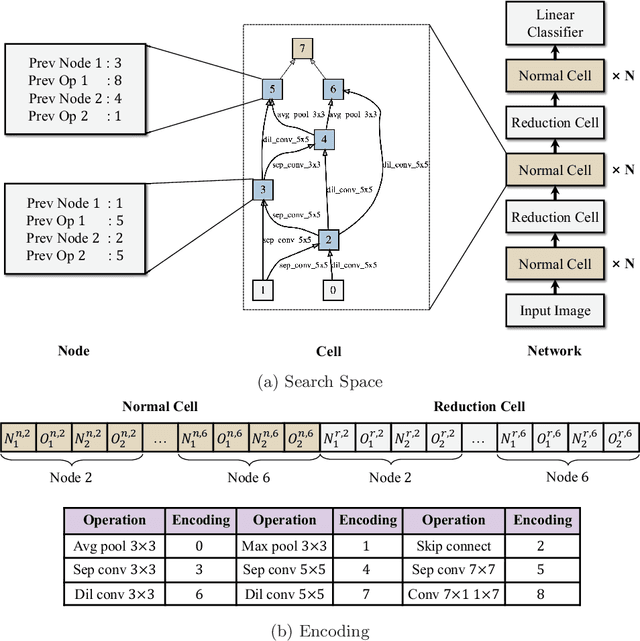
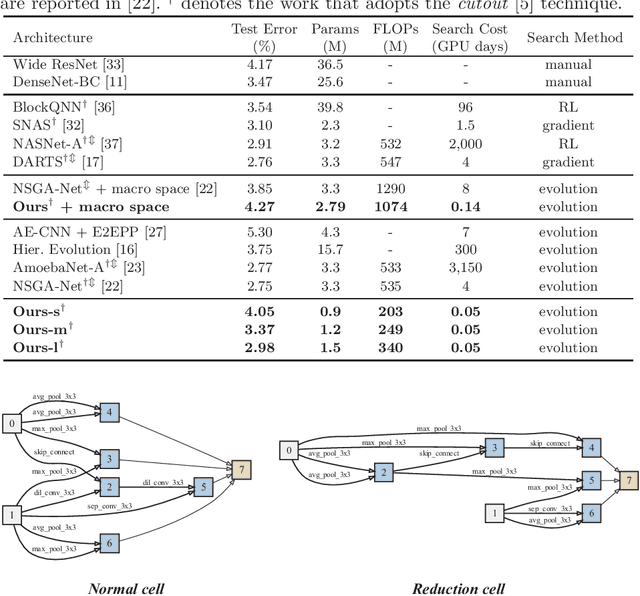
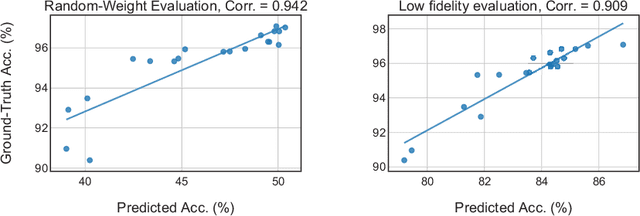
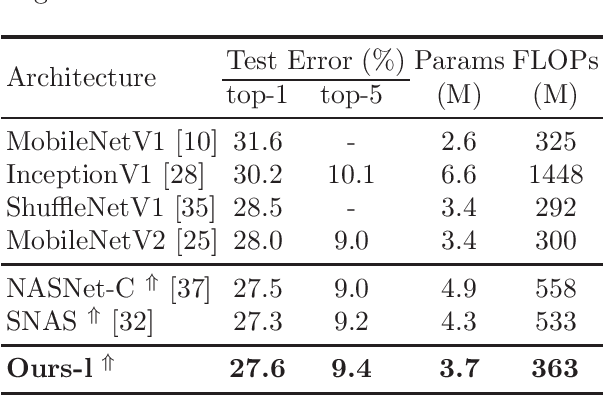
In the recent past, neural architecture search (NAS) has attracted increasing attention from both academia and industries. Despite the steady stream of impressive empirical results, most existing NAS algorithms are computationally prohibitive to execute due to the costly iterations of stochastic gradient descent (SGD) training. In this work, we propose an effective alternative, dubbed Random-Weight Evaluation (RWE), to rapidly estimate the performance of network architectures. By just training the last linear classification layer, RWE reduces the computational cost of evaluating an architecture from hours to seconds. When integrated within an evolutionary multi-objective algorithm, RWE obtains a set of efficient architectures with state-of-the-art performance on CIFAR-10 with less than two hours' searching on a single GPU card. Ablation studies on rank-order correlations and transfer learning experiments to ImageNet have further validated the effectiveness of RWE.