 Add to Chrome
 Add to Firefox
 Add to Edge
Enhancing Audio-Language Models through Self-Supervised Post-Training with Text-Audio Pairs
Aug 17, 2024
Research on multi-modal contrastive learning strategies for audio and text has rapidly gained interest. Contrastively trained Audio-Language Models (ALMs), such as CLAP, which establish a unified representation across audio and language modalities, have enhanced the efficacy in various subsequent tasks by providing good text aligned audio encoders and vice versa. These improvements are evident in areas like zero-shot audio classification and audio retrieval, among others. However, the ability of these models to understand natural language and temporal relations is still a largely unexplored and open field for research. In this paper, we propose to equip the multi-modal ALMs with temporal understanding without loosing their inherent prior capabilities of audio-language tasks with a temporal instillation method TeminAL. We implement a two-stage training scheme TeminAL A $\&$ B, where the model first learns to differentiate between multiple sounds in TeminAL A, followed by a phase that instills a sense of time, thereby enhancing its temporal understanding in TeminAL B. This approach results in an average performance gain of $5.28\%$ in temporal understanding on the ESC-50 dataset, while the model remains competitive in zero-shot retrieval and classification tasks on the AudioCap/Clotho datasets. We also note the lack of proper evaluation techniques for contrastive ALMs and propose a strategy for evaluating ALMs in zero-shot settings. The general-purpose zero-shot model evaluation strategy ZSTE, is used to evaluate various prior models. ZSTE demonstrates a general strategy to evaluate all ZS contrastive models. The model trained with TeminAL successfully outperforms current models on most downstream tasks.

PointMT: Efficient Point Cloud Analysis with Hybrid MLP-Transformer Architecture
Aug 10, 2024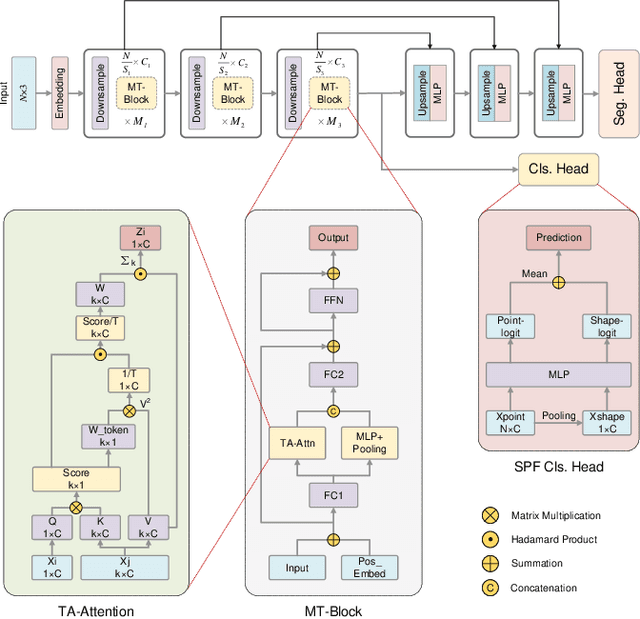
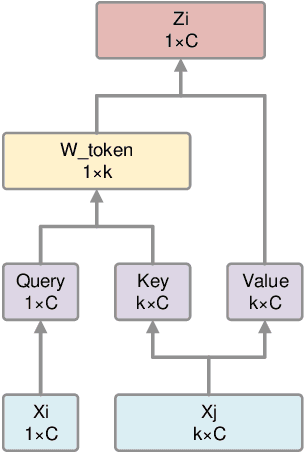
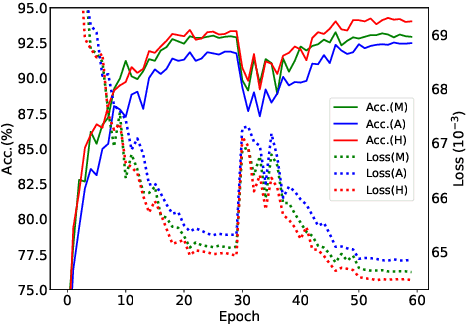
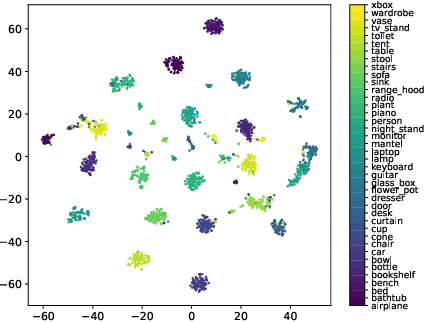
In recent years, point cloud analysis methods based on the Transformer architecture have made significant progress, particularly in the context of multimedia applications such as 3D modeling, virtual reality, and autonomous systems. However, the high computational resource demands of the Transformer architecture hinder its scalability, real-time processing capabilities, and deployment on mobile devices and other platforms with limited computational resources. This limitation remains a significant obstacle to its practical application in scenarios requiring on-device intelligence and multimedia processing. To address this challenge, we propose an efficient point cloud analysis architecture, \textbf{Point} \textbf{M}LP-\textbf{T}ransformer (PointMT). This study tackles the quadratic complexity of the self-attention mechanism by introducing a linear complexity local attention mechanism for effective feature aggregation. Additionally, to counter the Transformer's focus on token differences while neglecting channel differences, we introduce a parameter-free channel temperature adaptation mechanism that adaptively adjusts the attention weight distribution in each channel, enhancing the precision of feature aggregation. To improve the Transformer's slow convergence speed due to the limited scale of point cloud datasets, we propose an MLP-Transformer hybrid module, which significantly enhances the model's convergence speed. Furthermore, to boost the feature representation capability of point tokens, we refine the classification head, enabling point tokens to directly participate in prediction. Experimental results on multiple evaluation benchmarks demonstrate that PointMT achieves performance comparable to state-of-the-art methods while maintaining an optimal balance between performance and accuracy.
ViC: Virtual Compiler Is All You Need For Assembly Code Search
Aug 10, 2024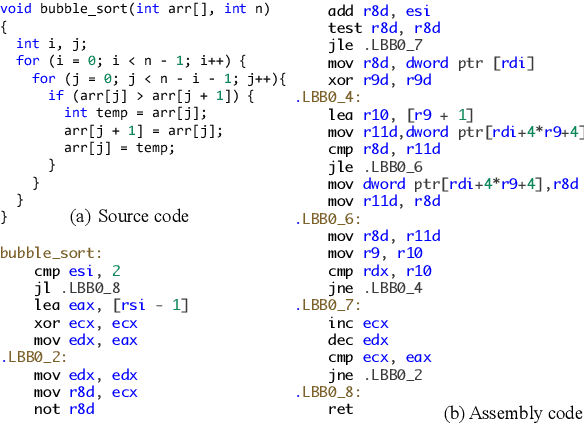
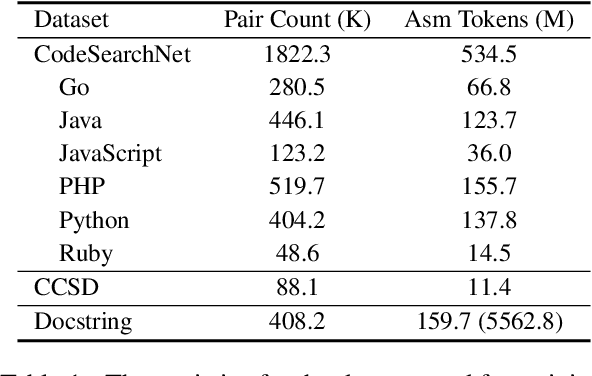
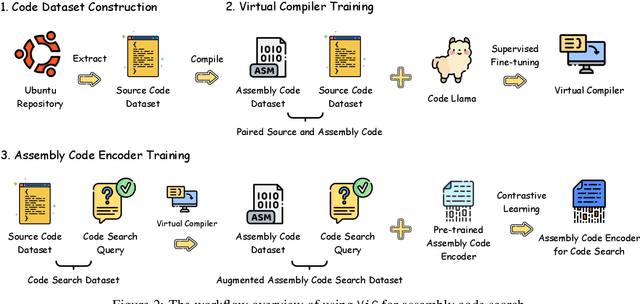
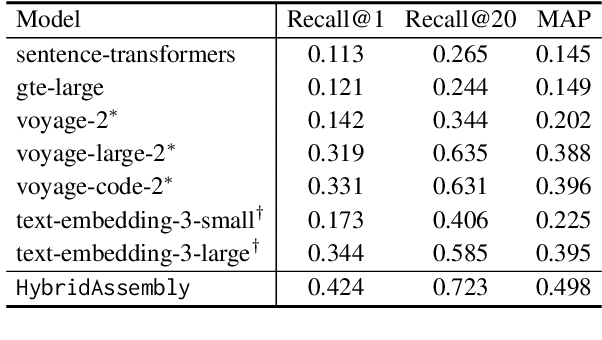
Assembly code search is vital for reducing the burden on reverse engineers, allowing them to quickly identify specific functions using natural language within vast binary programs. Despite its significance, this critical task is impeded by the complexities involved in building high-quality datasets. This paper explores training a Large Language Model (LLM) to emulate a general compiler. By leveraging Ubuntu packages to compile a dataset of 20 billion tokens, we further continue pre-train CodeLlama as a Virtual Compiler (ViC), capable of compiling any source code of any language to assembly code. This approach allows for virtual compilation across a wide range of programming languages without the need for a real compiler, preserving semantic equivalency and expanding the possibilities for assembly code dataset construction. Furthermore, we use ViC to construct a sufficiently large dataset for assembly code search. Employing this extensive dataset, we achieve a substantial improvement in assembly code search performance, with our model surpassing the leading baseline by 26%.
Speaker Adaptation for Quantised End-to-End ASR Models
Aug 07, 2024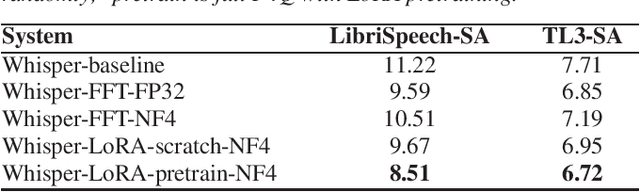

End-to-end models have shown superior performance for automatic speech recognition (ASR). However, such models are often very large in size and thus challenging to deploy on resource-constrained edge devices. While quantisation can reduce model sizes, it can lead to increased word error rates (WERs). Although improved quantisation methods were proposed to address the issue of performance degradation, the fact that quantised models deployed on edge devices often target only on a small group of users is under-explored. To this end, we propose personalisation for quantised models (P4Q), a novel strategy that uses speaker adaptation (SA) to improve quantised end-to-end ASR models by fitting them to the characteristics of the target speakers. In this paper, we study the P4Q strategy based on Whisper and Conformer attention-based encoder-decoder (AED) end-to-end ASR models, which leverages a 4-bit block-wise NormalFloat4 (NF4) approach for quantisation and the low-rank adaptation (LoRA) approach for SA. Experimental results on the LibriSpeech and the TED-LIUM 3 corpora show that, with a 7-time reduction in model size and 1% extra speaker-specific parameters, 15.1% and 23.3% relative WER reductions were achieved on quantised Whisper and Conformer AED models respectively, comparing to the full precision models.
Strategic Federated Learning: Application to Smart Meter Data Clustering
Aug 05, 2024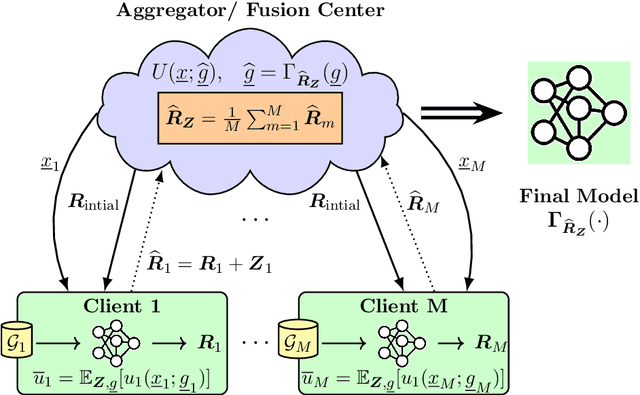
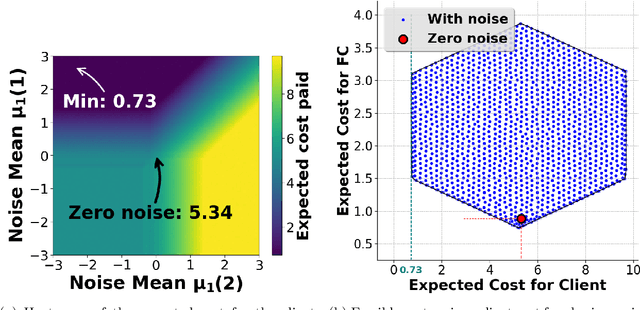
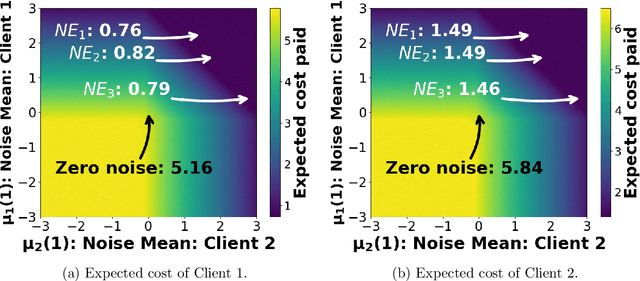
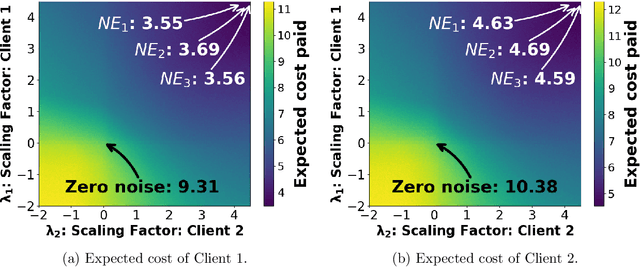
Federated learning (FL) involves several clients that share with a fusion center (FC), the model each client has trained with its own data. Conventional FL, which can be interpreted as an estimation or distortion-based approach, ignores the final use of model information (MI) by the FC and the other clients. In this paper, we introduce a novel FL framework in which the FC uses an aggregate version of the MI to make decisions that affect the client's utility functions. Clients cannot choose the decisions and can only use the MI reported to the FC to maximize their utility. Depending on the alignment between the client and FC utilities, the client may have an individual interest in adding strategic noise to the model. This general framework is stated and specialized to the case of clustering, in which noisy cluster representative information is reported. This is applied to the problem of power consumption scheduling. In this context, utility non-alignment occurs, for instance, when the client wants to consume when the price of electricity is low, whereas the FC wants the consumption to occur when the total power is the lowest. This is illustrated with aggregated real data from Ausgrid \cite{ausgrid}. Our numerical analysis clearly shows that the client can increase his utility by adding noise to the model reported to the FC. Corresponding results and source codes can be downloaded from \cite{source-code}.
Confidence Estimation for Automatic Detection of Depression and Alzheimer's Disease Based on Clinical Interviews
Jul 29, 2024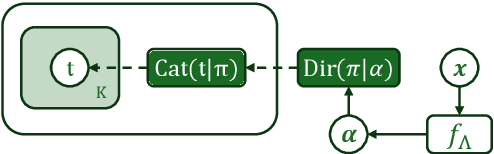
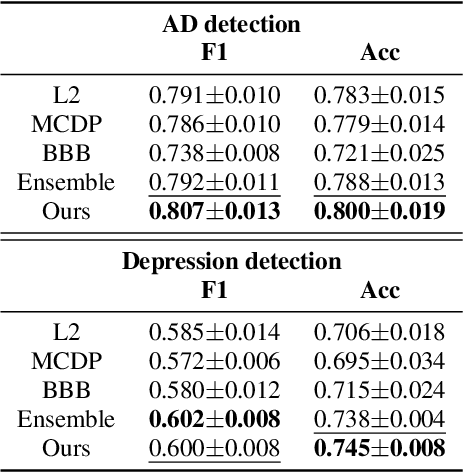
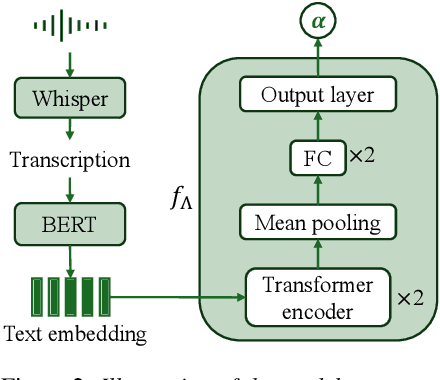
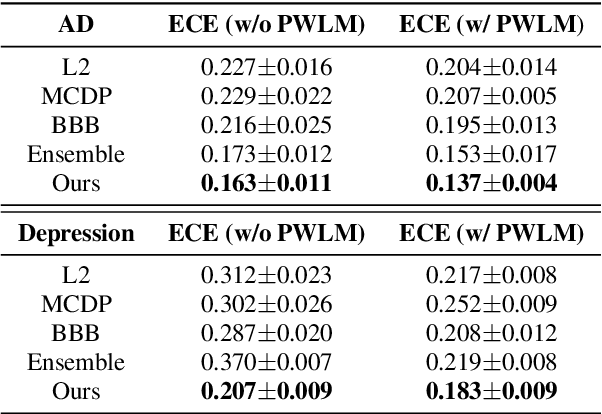
Speech-based automatic detection of Alzheimer's disease (AD) and depression has attracted increased attention. Confidence estimation is crucial for a trust-worthy automatic diagnostic system which informs the clinician about the confidence of model predictions and helps reduce the risk of misdiagnosis. This paper investigates confidence estimation for automatic detection of AD and depression based on clinical interviews. A novel Bayesian approach is proposed which uses a dynamic Dirichlet prior distribution to model the second-order probability of the predictive distribution. Experimental results on the publicly available ADReSS and DAIC-WOZ datasets demonstrate that the proposed method outperforms a range of baselines for both classification accuracy and confidence estimation.
ChipExpert: The Open-Source Integrated-Circuit-Design-Specific Large Language Model
Jul 26, 2024The field of integrated circuit (IC) design is highly specialized, presenting significant barriers to entry and research and development challenges. Although large language models (LLMs) have achieved remarkable success in various domains, existing LLMs often fail to meet the specific needs of students, engineers, and researchers. Consequently, the potential of LLMs in the IC design domain remains largely unexplored. To address these issues, we introduce ChipExpert, the first open-source, instructional LLM specifically tailored for the IC design field. ChipExpert is trained on one of the current best open-source base model (Llama-3 8B). The entire training process encompasses several key stages, including data preparation, continue pre-training, instruction-guided supervised fine-tuning, preference alignment, and evaluation. In the data preparation stage, we construct multiple high-quality custom datasets through manual selection and data synthesis techniques. In the subsequent two stages, ChipExpert acquires a vast amount of IC design knowledge and learns how to respond to user queries professionally. ChipExpert also undergoes an alignment phase, using Direct Preference Optimization, to achieve a high standard of ethical performance. Finally, to mitigate the hallucinations of ChipExpert, we have developed a Retrieval-Augmented Generation (RAG) system, based on the IC design knowledge base. We also released the first IC design benchmark ChipICD-Bench, to evaluate the capabilities of LLMs across multiple IC design sub-domains. Through comprehensive experiments conducted on this benchmark, ChipExpert demonstrated a high level of expertise in IC design knowledge Question-and-Answer tasks.
DriveDiTFit: Fine-tuning Diffusion Transformers for Autonomous Driving
Jul 22, 2024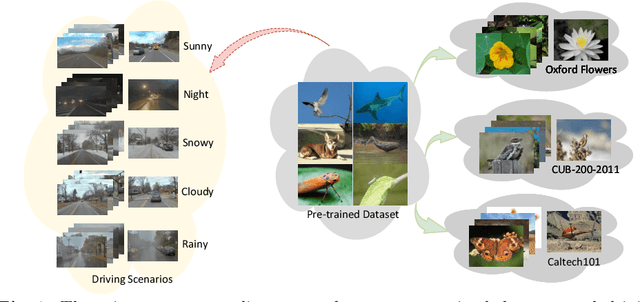
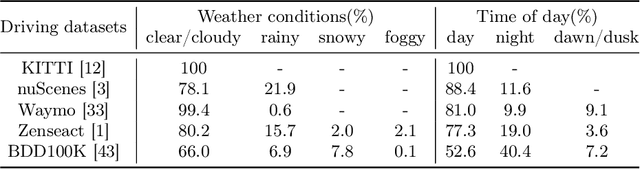
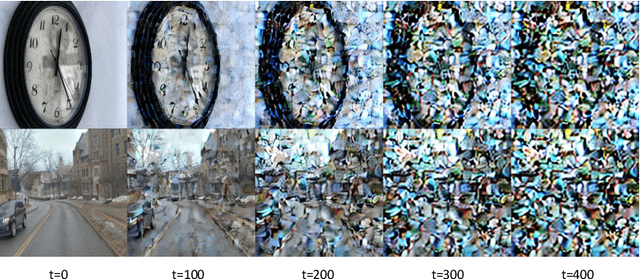
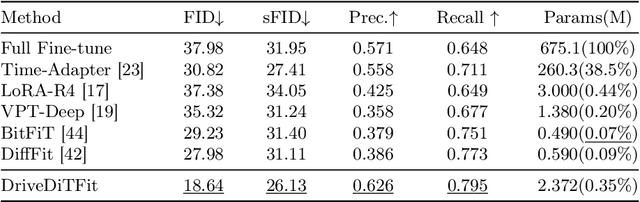
In autonomous driving, deep models have shown remarkable performance across various visual perception tasks with the demand of high-quality and huge-diversity training datasets. Such datasets are expected to cover various driving scenarios with adverse weather, lighting conditions and diverse moving objects. However, manually collecting these data presents huge challenges and expensive cost. With the rapid development of large generative models, we propose DriveDiTFit, a novel method for efficiently generating autonomous Driving data by Fine-tuning pre-trained Diffusion Transformers (DiTs). Specifically, DriveDiTFit utilizes a gap-driven modulation technique to carefully select and efficiently fine-tune a few parameters in DiTs according to the discrepancy between the pre-trained source data and the target driving data. Additionally, DriveDiTFit develops an effective weather and lighting condition embedding module to ensure diversity in the generated data, which is initialized by a nearest-semantic-similarity initialization approach. Through progressive tuning scheme to refined the process of detail generation in early diffusion process and enlarging the weights corresponding to small objects in training loss, DriveDiTFit ensures high-quality generation of small moving objects in the generated data. Extensive experiments conducted on driving datasets confirm that our method could efficiently produce diverse real driving data. The source codes will be available at https://github.com/TtuHamg/DriveDiTFit.
Generative AI for RF Sensing in IoT systems
Jul 10, 2024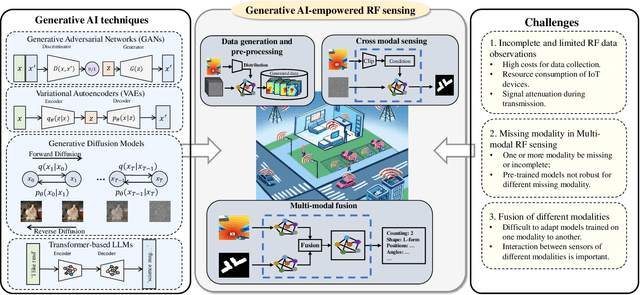
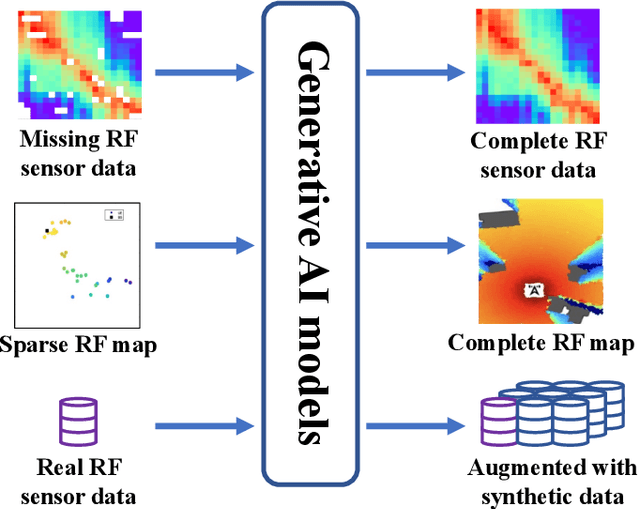
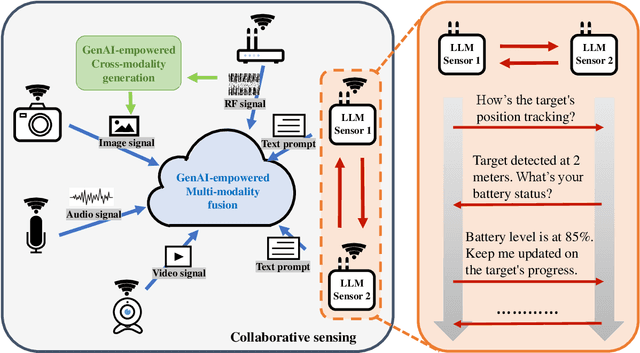
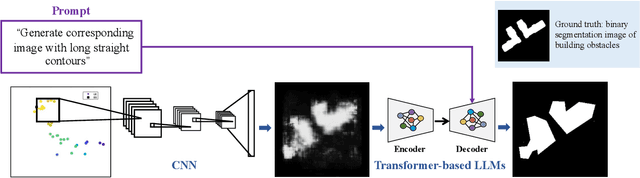
The development of wireless sensing technologies, using signals such as Wi-Fi, infrared, and RF to gather environmental data, has significantly advanced within Internet of Things (IoT) systems. Among these, Radio Frequency (RF) sensing stands out for its cost-effective and non-intrusive monitoring of human activities and environmental changes. However, traditional RF sensing methods face significant challenges, including noise, interference, incomplete data, and high deployment costs, which limit their effectiveness and scalability. This paper investigates the potential of Generative AI (GenAI) to overcome these limitations within the IoT ecosystem. We provide a comprehensive review of state-of-the-art GenAI techniques, focusing on their application to RF sensing problems. By generating high-quality synthetic data, enhancing signal quality, and integrating multi-modal data, GenAI offers robust solutions for RF environment reconstruction, localization, and imaging. Additionally, GenAI's ability to generalize enables IoT devices to adapt to new environments and unseen tasks, improving their efficiency and performance. The main contributions of this article include a detailed analysis of the challenges in RF sensing, the presentation of innovative GenAI-based solutions, and the proposal of a unified framework for diverse RF sensing tasks. Through case studies, we demonstrate the effectiveness of integrating GenAI models, leading to advanced, scalable, and intelligent IoT systems.
PECTP: Parameter-Efficient Cross-Task Prompts for Incremental Vision Transformer
Jul 04, 2024


Incremental Learning (IL) aims to learn deep models on sequential tasks continually, where each new task includes a batch of new classes and deep models have no access to task-ID information at the inference time. Recent vast pre-trained models (PTMs) have achieved outstanding performance by prompt technique in practical IL without the old samples (rehearsal-free) and with a memory constraint (memory-constrained): Prompt-extending and Prompt-fixed methods. However, prompt-extending methods need a large memory buffer to maintain an ever-expanding prompt pool and meet an extra challenging prompt selection problem. Prompt-fixed methods only learn a single set of prompts on one of the incremental tasks and can not handle all the incremental tasks effectively. To achieve a good balance between the memory cost and the performance on all the tasks, we propose a Parameter-Efficient Cross-Task Prompt (PECTP) framework with Prompt Retention Module (PRM) and classifier Head Retention Module (HRM). To make the final learned prompts effective on all incremental tasks, PRM constrains the evolution of cross-task prompts' parameters from Outer Prompt Granularity and Inner Prompt Granularity. Besides, we employ HRM to inherit old knowledge in the previously learned classifier heads to facilitate the cross-task prompts' generalization ability. Extensive experiments show the effectiveness of our method. The source codes will be available at \url{https://github.com/RAIAN08/PECTP}.