 Add to Chrome
 Add to Firefox
 Add to Edge
A JEPA-Based Field-Layer World Model for Bridging Channel Prediction and Estimation
Aug 10, 2026
Channel state information (CSI) acquisition, reconstruction, and prediction are fundamental yet costly tasks in modern MIMO-OFDM wireless systems. Direct coefficient-level prediction of raw CSI is fragile in realistic propagation environments, since small spatial perturbations, local scattering changes, and phase variations can cause large errors in the complex channel domain. However, the underlying wireless propagation field still contains stable and predictable structures that can be exploited across time, frequency, antenna, and carrier dimensions. Motivated by this observation, we propose a JEPA-based field-layer world model (FWM) that learns a shared latent propagation state from multi-resolution CSI observations across the considered carrier bands and predicts its task-relevant evolution in the latent domain. The proposed FWM maps multiple CSI observation resolutions to a shared latent propagation-field space through scale-specific tokenizer heads. A latent prediction backbone is then trained to infer masked or future field states, while an incremental multi-scale alignment strategy allows new observation scales to be incorporated without retraining the entire model from scratch. For downstream reconstruction, the predicted latent field is used as a structured prior and combined with sparse current pilots. Experiments on single-band and cross-band reconstruction demonstrate improved symbol detection and, more notably, substantial beamforming gains despite modest NMSE improvements, indicating that FWM captures task-relevant spatial propagation structure beyond coefficient-wise CSI fitting.

LLM-Based Digital Twin Intelligence for Application-Aware Network Selection in 6G Heterogeneous Wireless Networks
Jun 10, 2026Future 6G heterogeneous wireless networks (HWNs) are expected to support multiple radio access technologies (RATs), dynamic wireless environments, and applications with diverse quality-of-service (QoS) requirements. In such environments, network selection (NS) cannot rely only on instantaneous radio measurements or static ranking rules. Instead, access decisions must account for the evolving wireless state, service intent, packet-level QoS behavior, and candidate-RAT dynamics. This paper proposes a large language model (LLM)-based digital twin (DT) framework for stable, application-aware RAT selection under candidate-set evolution. The main idea is to shift NS from an instantaneous decision-matrix operation to a decision process over an evolving wireless DT state. The constructed DT combines site-specific geometry, Sionna RT-based propagation descriptors, ns-3 packet-level QoS emulation, service context, candidate-RAT information, and decision memory. Rather than acting as a general-purpose controller for 6G networks, the LLM is used for DT-grounded decision intelligence in this specific NS task. On top of this DT, a unified intent agent translates user and service requirements into structured decision priorities for two complementary NS branches: an LLM-assisted multi-attribute decision-making branch (MADM--LLM--NS) and a direct LLM-based ranking branch (LLM--NS). To improve decision stability, the framework further introduces history-aware adaptive normalization (HAAN) and DT-memory-driven retrieval-augmented in-context learning (RA--ICL). Numerical results show that the proposed framework reduces rank-reversal problem and unnecessary handover events, while improving service-aware QoS satisfaction compared with representative MADM-based NS baselines.
RF-Analyzer: Can Vision-Language Models Learn RF Understanding from Synthetic Data?
May 06, 2026Understanding the wireless spectrum is a fundamen- tal requirement for intelligent communication systems, however, interpreting spectrograms requires extracting multiple physical attributes and reasoning about signal structure, which is a capability that is not achieved by traditional ML approaches. Recent advances in vision-language models (VLMs) demonstrated the possibility of learning such interpretation capabilities directly from data. This paper investigates whether VLMs can learn this capability from synthetic data alone, and more importantly, whether such learned representations generalize to real over-the- air RF environments. To address this question, we introduce RF-Analyzer, an SDR-to-AI analysis platform that integrates live spectrum captures associated with the corresponding VLM- based interpretation, enabling direct evaluation of VLMs outputs on live over-the-air signals. Using this platform, we assess a model trained exclusively on synthetic spectrogram data with general-purpose baselines. To enable systematic analysis, we establish a benchmark framework comprising three metrics, Physical Attribute Extraction Score (PAES), Prompt Leakage Rate (PLR), and hallucination count, to assess signal understanding and grounding. The obtained results demonstrate that VLMs trained on synthetic spectrogram data can generalize to real RF environments, particularly for extracting physical signal attributes such as spectral occupancy, temporal behavior, and SNR. This indicates that synthetic data is sufficient for learning transferable representations of RF signal structure. However, this generalization is limited due to the fact that synthetic training does not provide reliable semantic grounding without contextual priors. In particular, generalization breaks under conditions that are not covered in the synthetic distribution, particularly low-SNR regimes
Telecom World Models: Unifying Digital Twins, Foundation Models, and Predictive Planning for 6G
Apr 08, 2026The integration of machine learning tools into telecom networks, has led to two prevailing paradigms, namely, language-based systems, such as Large Language Models (LLMs), and physics-based systems, such as Digital Twins (DTs). While LLM-based approaches enable flexible interaction and automation, they lack explicit representations of network dynamics. DTs, in contrast, offer a high-fidelity network simulation, but remain scenario-specific and are not designed for learning or decision-making under uncertainty. This gap becomes critical for 6G systems, where decisions must take into account the evolving network states, uncertainty, and the cascading effects of control actions across multiple layers. In this article, we introduce the {Telecom World Model}~(TWM) concept, an architecture for learned, action-conditioned, uncertainty-aware modeling of telecom system dynamics. We decompose the problem into two interacting worlds, a controllable system world consisting of operator-configurable settings and an external world that captures propagation, mobility, traffic, and failures. We propose a three-layer architecture, comprising a field world model for spatial environment prediction, a control/dynamics world model for action-conditioned Key Performance Indicator (KPI) trajectory prediction, and a telecom foundation model layer for intent translation and orchestration. We showcase a comparative analysis between existing paradigms, which demonstrates that TWM jointly provides telecom state grounding, fast action-conditioned roll-outs, calibrated uncertainty, multi-timescale dynamics, model-based planning, and LLM-integrated guardrails. Furthermore, we present a proof-of-concept on network slicing to validate the proposed architecture, showing that the full three-layer pipeline outperforms single-world baselines and accurately predicts KPI trajectories.
RF-GPT: Teaching AI to See the Wireless World
Feb 16, 2026Large language models (LLMs) and multimodal models have become powerful general-purpose reasoning systems. However, radio-frequency (RF) signals, which underpin wireless systems, are still not natively supported by these models. Existing LLM-based approaches for telecom focus mainly on text and structured data, while conventional RF deep-learning models are built separately for specific signal-processing tasks, highlighting a clear gap between RF perception and high-level reasoning. To bridge this gap, we introduce RF-GPT, a radio-frequency language model (RFLM) that utilizes the visual encoders of multimodal LLMs to process and understand RF spectrograms. In this framework, complex in-phase/quadrature (IQ) waveforms are mapped to time-frequency spectrograms and then passed to pretrained visual encoders. The resulting representations are injected as RF tokens into a decoder-only LLM, which generates RF-grounded answers, explanations, and structured outputs. To train RF-GPT, we perform supervised instruction fine-tuning of a pretrained multimodal LLM using a fully synthetic RF corpus. Standards-compliant waveform generators produce wideband scenes for six wireless technologies, from which we derive time-frequency spectrograms, exact configuration metadata, and dense captions. A text-only LLM then converts these captions into RF-grounded instruction-answer pairs, yielding roughly 12,000 RF scenes and 0.625 million instruction examples without any manual labeling. Across benchmarks for wideband modulation classification, overlap analysis, wireless-technology recognition, WLAN user counting, and 5G NR information extraction, RF-GPT achieves strong multi-task performance, whereas general-purpose VLMs with no RF grounding largely fail.
LLM4Fluid: Large Language Models as Generalizable Neural Solvers for Fluid Dynamics
Jan 29, 2026Deep learning has emerged as a promising paradigm for spatio-temporal modeling of fluid dynamics. However, existing approaches often suffer from limited generalization to unseen flow conditions and typically require retraining when applied to new scenarios. In this paper, we present LLM4Fluid, a spatio-temporal prediction framework that leverages Large Language Models (LLMs) as generalizable neural solvers for fluid dynamics. The framework first compresses high-dimensional flow fields into a compact latent space via reduced-order modeling enhanced with a physics-informed disentanglement mechanism, effectively mitigating spatial feature entanglement while preserving essential flow structures. A pretrained LLM then serves as a temporal processor, autoregressively predicting the dynamics of physical sequences with time series prompts. To bridge the modality gap between prompts and physical sequences, which can otherwise degrade prediction accuracy, we propose a dedicated modality alignment strategy that resolves representational mismatch and stabilizes long-term prediction. Extensive experiments across diverse flow scenarios demonstrate that LLM4Fluid functions as a robust and generalizable neural solver without retraining, achieving state-of-the-art accuracy while exhibiting powerful zero-shot and in-context learning capabilities. Code and datasets are publicly available at https://github.com/qisongxiao/LLM4Fluid.
Seeing Radio: From Zero RF Priors to Explainable Modulation Recognition with Vision Language Models
Jan 19, 2026The rise of vision language models (VLMs) paves a new path for radio frequency (RF) perception. Rather than designing task-specific neural receivers, we ask if VLMs can learn to recognize modulations when RF waveforms are expressed as images. In this work, we find that they can. In specific, in this paper, we introduce a practical pipeline for converting complex IQ streams into visually interpretable inputs, hence, enabling general-purpose VLMs to classify modulation schemes without changing their underlying design. Building on this, we construct an RF visual question answering (VQA) benchmark framework that covers 57 classes across major families of analog/digital modulations with three complementary image modes, namely, (i) short \emph{time-series} IQ segments represented as real/imaginary traces, (ii) magnitude-only \emph{spectrograms}, and (iii) \emph{joint} representations that pair spectrograms with a synchronized time-series waveforms. We design uniform zero-shot and few-shot prompts for both class-level and family-level evaluations. Our finetuned VLMs with these images achieve competitive accuracy of $90\%$ compared to $10\%$ of the base models. Furthermore, the fine-tuned VLMs show robust performance under noise and demonstrate high generalization performance to unseen modulation types, without relying on RF-domain priors or specialized architectures. The obtained results show that combining RF-to-image conversion with promptable VLMs provides a scalable and practical foundation for RF-aware AI systems in future 6G networks.
Generative flow-based warm start of the variational quantum eigensolver
Jul 02, 2025Hybrid quantum-classical algorithms like the variational quantum eigensolver (VQE) show promise for quantum simulations on near-term quantum devices, but are often limited by complex objective functions and expensive optimization procedures. Here, we propose Flow-VQE, a generative framework leveraging conditional normalizing flows with parameterized quantum circuits to efficiently generate high-quality variational parameters. By embedding a generative model into the VQE optimization loop through preference-based training, Flow-VQE enables quantum gradient-free optimization and offers a systematic approach for parameter transfer, accelerating convergence across related problems through warm-started optimization. We compare Flow-VQE to a number of standard benchmarks through numerical simulations on molecular systems, including hydrogen chains, water, ammonia, and benzene. We find that Flow-VQE outperforms baseline optimization algorithms, achieving computational accuracy with fewer circuit evaluations (improvements range from modest to more than two orders of magnitude) and, when used to warm-start the optimization of new systems, accelerates subsequent fine-tuning by up to 50-fold compared with Hartree--Fock initialization. Therefore, we believe Flow-VQE can become a pragmatic and versatile paradigm for leveraging generative modeling to reduce the costs of variational quantum algorithms.
Large-Scale AI in Telecom: Charting the Roadmap for Innovation, Scalability, and Enhanced Digital Experiences
Mar 06, 2025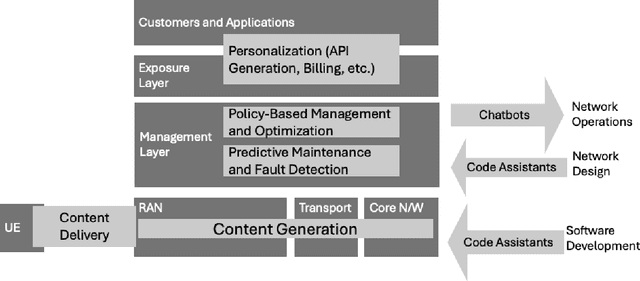
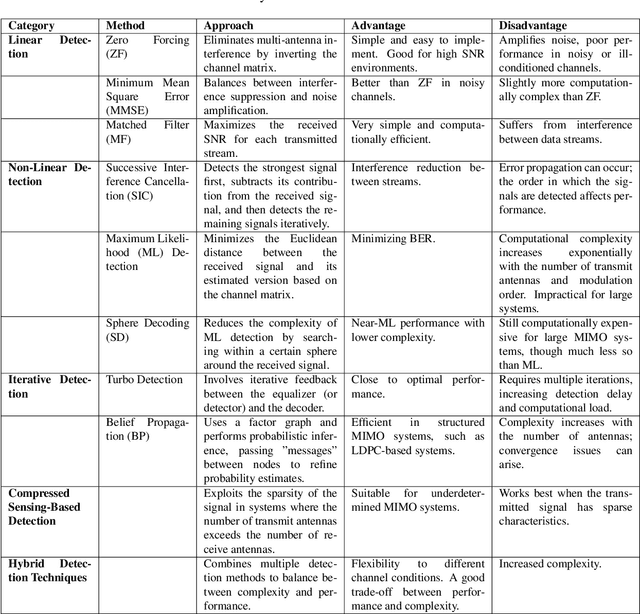
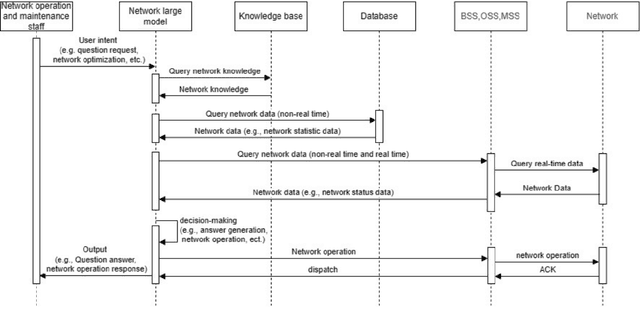
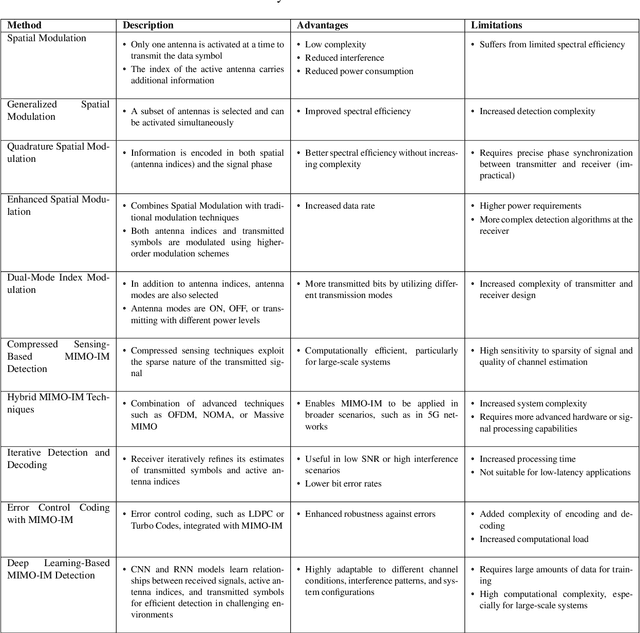
This white paper discusses the role of large-scale AI in the telecommunications industry, with a specific focus on the potential of generative AI to revolutionize network functions and user experiences, especially in the context of 6G systems. It highlights the development and deployment of Large Telecom Models (LTMs), which are tailored AI models designed to address the complex challenges faced by modern telecom networks. The paper covers a wide range of topics, from the architecture and deployment strategies of LTMs to their applications in network management, resource allocation, and optimization. It also explores the regulatory, ethical, and standardization considerations for LTMs, offering insights into their future integration into telecom infrastructure. The goal is to provide a comprehensive roadmap for the adoption of LTMs to enhance scalability, performance, and user-centric innovation in telecom networks.
La-SoftMoE CLIP for Unified Physical-Digital Face Attack Detection
Aug 23, 2024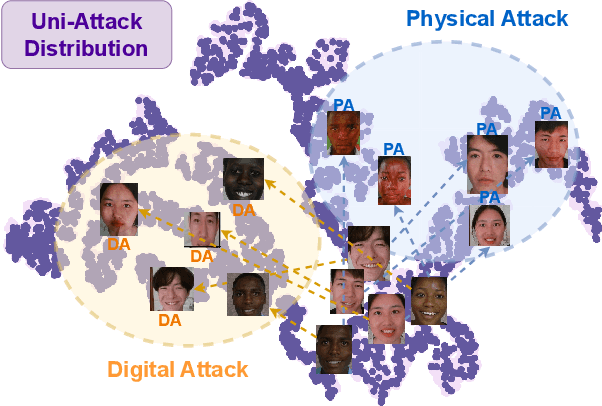


Facial recognition systems are susceptible to both physical and digital attacks, posing significant security risks. Traditional approaches often treat these two attack types separately due to their distinct characteristics. Thus, when being combined attacked, almost all methods could not deal. Some studies attempt to combine the sparse data from both types of attacks into a single dataset and try to find a common feature space, which is often impractical due to the space is difficult to be found or even non-existent. To overcome these challenges, we propose a novel approach that uses the sparse model to handle sparse data, utilizing different parameter groups to process distinct regions of the sparse feature space. Specifically, we employ the Mixture of Experts (MoE) framework in our model, expert parameters are matched to tokens with varying weights during training and adaptively activated during testing. However, the traditional MoE struggles with the complex and irregular classification boundaries of this problem. Thus, we introduce a flexible self-adapting weighting mechanism, enabling the model to better fit and adapt. In this paper, we proposed La-SoftMoE CLIP, which allows for more flexible adaptation to the Unified Attack Detection (UAD) task, significantly enhancing the model's capability to handle diversity attacks. Experiment results demonstrate that our proposed method has SOTA performance.