 Add to Chrome
 Add to Firefox
 Add to Edge
Momentum Capture and Prediction System Based on Wimbledon Open2023 Tournament Data
Aug 02, 2024

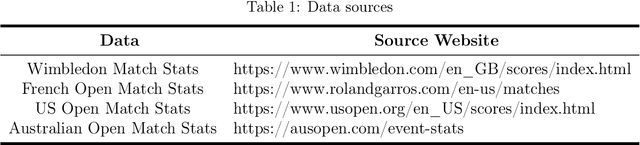
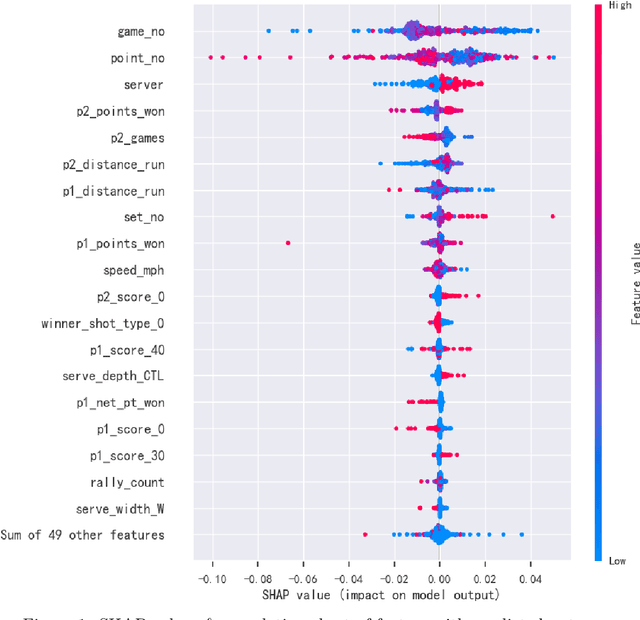
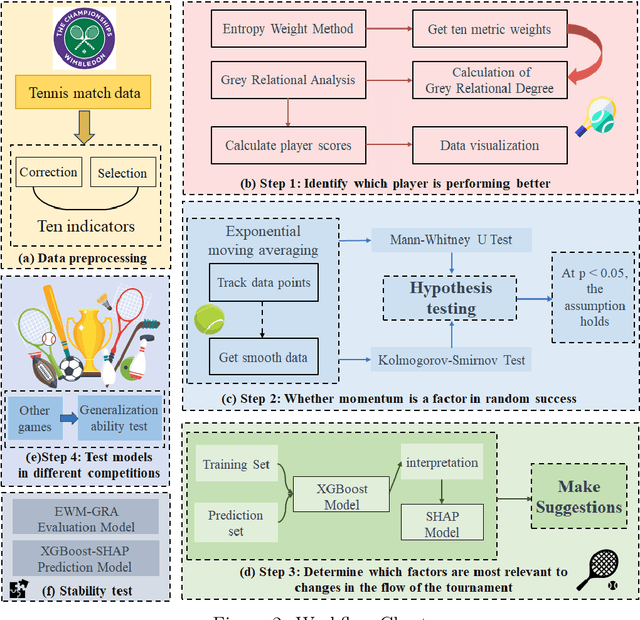
There is a hidden energy in tennis, which cannot be seen or touched. It is the force that controls the flow of the game and is present in all types of matches. This mysterious force is Momentum. This study introduces an evaluation model that synergizes the Entropy Weight Method (EWM) and Gray Relation Analysis (GRA) to quantify momentum's impact on match outcomes. Empirical validation was conducted through Mann-Whitney U and Kolmogorov-Smirnov tests, which yielded p values of 0.0043 and 0.00128,respectively. These results underscore the non-random association between momentum shifts and match outcomes, highlighting the critical role of momentum in tennis. Otherwise, our investigation foucus is the creation of a predictive model that combines the advanced machine learning algorithm XGBoost with the SHAP framework. This model enables precise predictions of match swings with exceptional accuracy (0.999013 for multiple matches and 0.992738 for finals). The model's ability to identify the influence of specific factors on match dynamics,such as bilateral distance run during points, demonstrates its prowess.The model's generalizability was thoroughly evaluated using datasets from the four Grand Slam tournaments. The results demonstrate its remarkable adaptability to different match scenarios,despite minor variations in predictive accuracy. It offers strategic insights that can help players effectively respond to opponents' shifts in momentum,enhancing their competitive edge.

MOoSE: Multi-Orientation Sharing Experts for Open-set Scene Text Recognition
Jul 26, 2024Open-set text recognition, which aims to address both novel characters and previously seen ones, is one of the rising subtopics in the text recognition field. However, the current open-set text recognition solutions only focuses on horizontal text, which fail to model the real-life challenges posed by the variety of writing directions in real-world scene text. Multi-orientation text recognition, in general, faces challenges from the diverse image aspect ratios, significant imbalance in data amount, and domain gaps between orientations. In this work, we first propose a Multi-Oriented Open-Set Text Recognition task (MOOSTR) to model the challenges of both novel characters and writing direction variety. We then propose a Multi-Orientation Sharing Experts (MOoSE) framework as a strong baseline solution. MOoSE uses a mixture-of-experts scheme to alleviate the domain gaps between orientations, while exploiting common structural knowledge among experts to alleviate the data scarcity that some experts face. The proposed MOoSE framework is validated by ablative experiments, and also tested for feasibility on the existing open-set benchmark. Code, models, and documents are available at: https://github.com/lancercat/Moose/
End-to-End Video Question Answering with Frame Scoring Mechanisms and Adaptive Sampling
Jul 23, 2024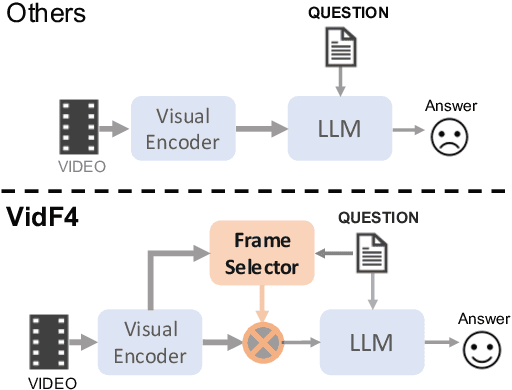
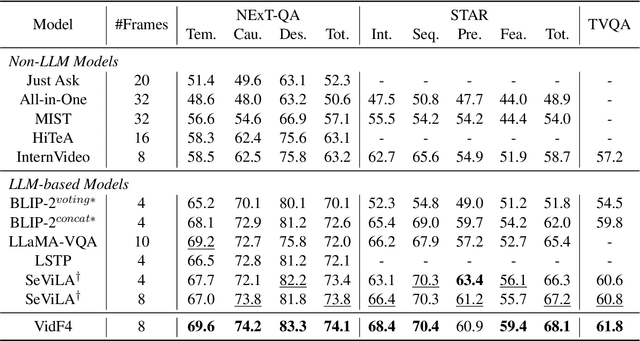
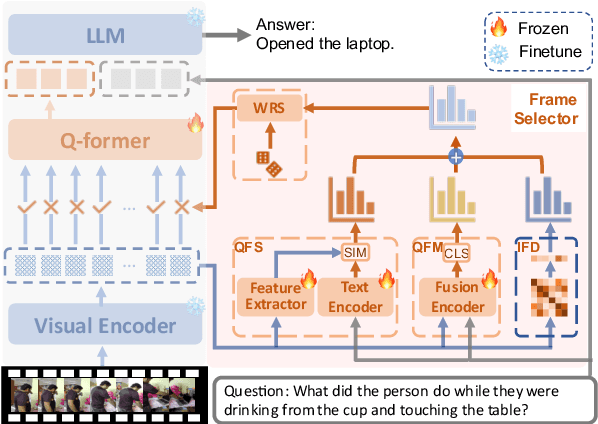
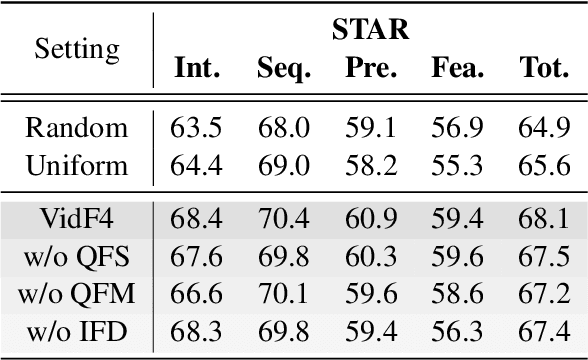
Video Question Answering (VideoQA) has emerged as a challenging frontier in the field of multimedia processing, requiring intricate interactions between visual and textual modalities. Simply uniformly sampling frames or indiscriminately aggregating frame-level visual features often falls short in capturing the nuanced and relevant contexts of videos to well perform VideoQA. To mitigate these issues, we propose VidF4, a novel VideoQA framework equipped with tailored frame selection strategy for effective and efficient VideoQA. We propose three frame-scoring mechanisms that consider both question relevance and inter-frame similarity to evaluate the importance of each frame for a given question on the video. Furthermore, we design a differentiable adaptive frame sampling mechanism to facilitate end-to-end training for the frame selector and answer generator. The experimental results across three widely adopted benchmarks demonstrate that our model consistently outperforms existing VideoQA methods, establishing a new SOTA across NExT-QA (+0.3%), STAR (+0.9%), and TVQA (+1.0%). Furthermore, through both quantitative and qualitative analyses, we validate the effectiveness of each design choice.
GFE-Mamba: Mamba-based AD Multi-modal Progression Assessment via Generative Feature Extraction from MCI
Jul 22, 2024Alzheimer's Disease (AD) is an irreversible neurodegenerative disorder that often progresses from Mild Cognitive Impairment (MCI), leading to memory loss and significantly impacting patients' lives. Clinical trials indicate that early targeted interventions for MCI patients can potentially slow or halt the development and progression of AD. Previous research has shown that accurate medical classification requires the inclusion of extensive multimodal data, such as assessment scales and various neuroimaging techniques like Magnetic Resonance Imaging (MRI) and Positron Emission Tomography (PET). However, consistently tracking the diagnosis of the same individual over time and simultaneously collecting multimodal data poses significant challenges. To address this issue, we introduce GFE-Mamba, a classifier based on Generative Feature Extraction (GFE). This classifier effectively integrates data from assessment scales, MRI, and PET, enabling deeper multimodal fusion. It efficiently extracts both long and short sequence information and incorporates additional information beyond the pixel space. This approach not only improves classification accuracy but also enhances the interpretability and stability of the model. We constructed datasets of over 3000 samples based on the Alzheimer's Disease Neuroimaging Initiative (ADNI) for a two-step training process. Our experimental results demonstrate that the GFE-Mamba model is effective in predicting the conversion from MCI to AD and outperforms several state-of-the-art methods. Our source code and ADNI dataset processing code are available at https://github.com/Tinysqua/GFE-Mamba.
Iterative approach to reconstructing neural disparity fields from light-field data
Jul 22, 2024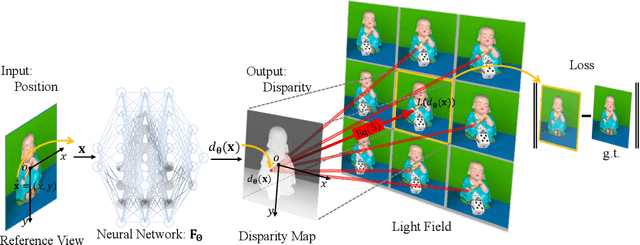
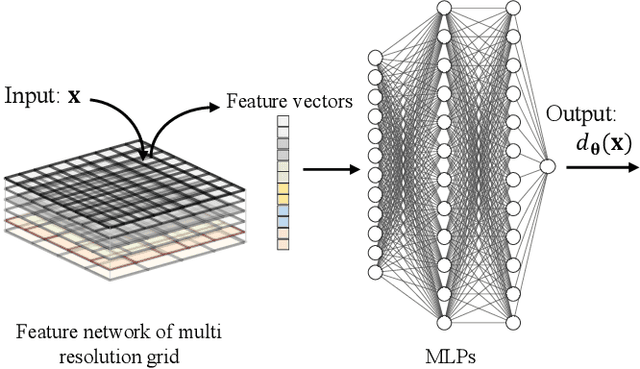
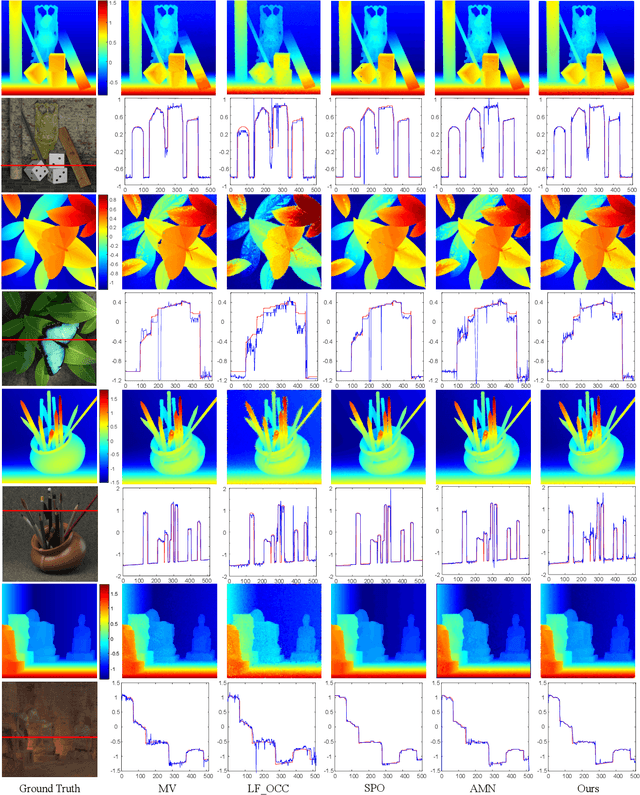
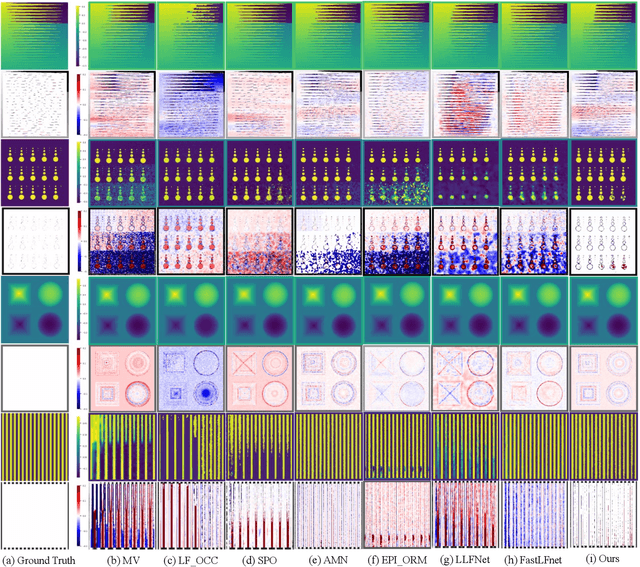
This study proposes a neural disparity field (NDF) that establishes an implicit, continuous representation of scene disparity based on a neural field and an iterative approach to address the inverse problem of NDF reconstruction from light-field data. NDF enables seamless and precise characterization of disparity variations in three-dimensional scenes and can discretize disparity at any arbitrary resolution, overcoming the limitations of traditional disparity maps that are prone to sampling errors and interpolation inaccuracies. The proposed NDF network architecture utilizes hash encoding combined with multilayer perceptrons to capture detailed disparities in texture levels, thereby enhancing its ability to represent the geometric information of complex scenes. By leveraging the spatial-angular consistency inherent in light-field data, a differentiable forward model to generate a central view image from the light-field data is developed. Based on the forward model, an optimization scheme for the inverse problem of NDF reconstruction using differentiable propagation operators is established. Furthermore, an iterative solution method is adopted to reconstruct the NDF in the optimization scheme, which does not require training datasets and applies to light-field data captured by various acquisition methods. Experimental results demonstrate that high-quality NDF can be reconstructed from light-field data using the proposed method. High-resolution disparity can be effectively recovered by NDF, demonstrating its capability for the implicit, continuous representation of scene disparities.
LLM-Empowered State Representation for Reinforcement Learning
Jul 18, 2024


Conventional state representations in reinforcement learning often omit critical task-related details, presenting a significant challenge for value networks in establishing accurate mappings from states to task rewards. Traditional methods typically depend on extensive sample learning to enrich state representations with task-specific information, which leads to low sample efficiency and high time costs. Recently, surging knowledgeable large language models (LLM) have provided promising substitutes for prior injection with minimal human intervention. Motivated by this, we propose LLM-Empowered State Representation (LESR), a novel approach that utilizes LLM to autonomously generate task-related state representation codes which help to enhance the continuity of network mappings and facilitate efficient training. Experimental results demonstrate LESR exhibits high sample efficiency and outperforms state-of-the-art baselines by an average of 29% in accumulated reward in Mujoco tasks and 30% in success rates in Gym-Robotics tasks.
Learning from the Web: Language Drives Weakly-Supervised Incremental Learning for Semantic Segmentation
Jul 18, 2024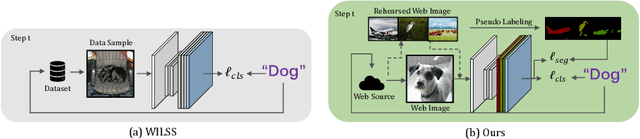
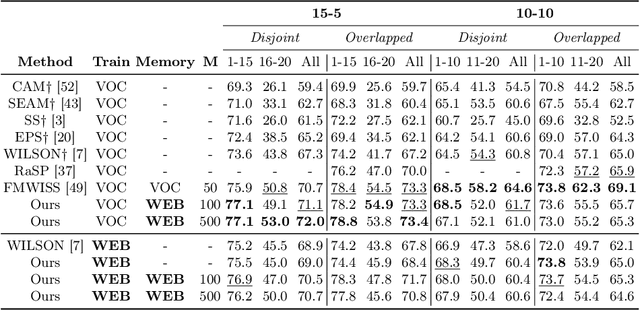
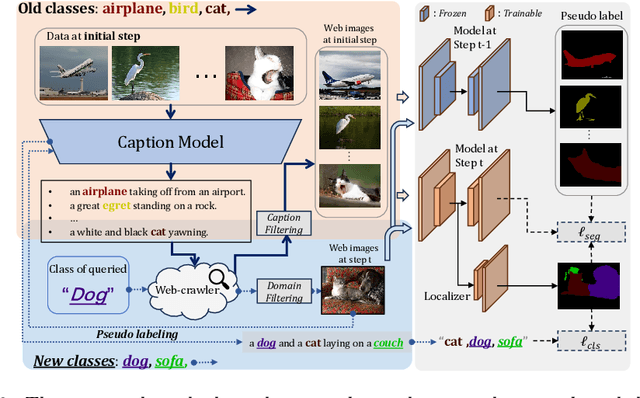
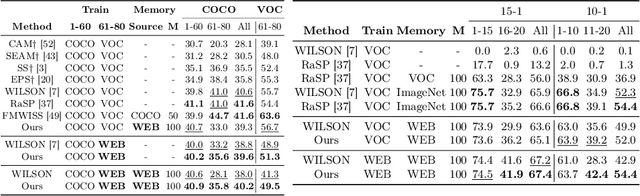
Current weakly-supervised incremental learning for semantic segmentation (WILSS) approaches only consider replacing pixel-level annotations with image-level labels, while the training images are still from well-designed datasets. In this work, we argue that widely available web images can also be considered for the learning of new classes. To achieve this, firstly we introduce a strategy to select web images which are similar to previously seen examples in the latent space using a Fourier-based domain discriminator. Then, an effective caption-driven reharsal strategy is proposed to preserve previously learnt classes. To our knowledge, this is the first work to rely solely on web images for both the learning of new concepts and the preservation of the already learned ones in WILSS. Experimental results show that the proposed approach can reach state-of-the-art performances without using manually selected and annotated data in the incremental steps.
EmoFace: Audio-driven Emotional 3D Face Animation
Jul 17, 2024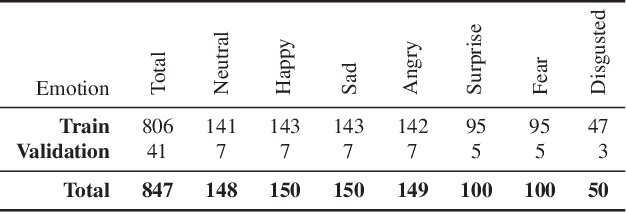
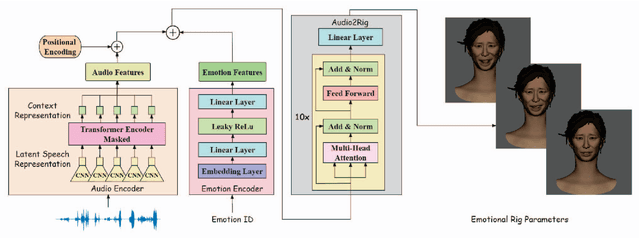
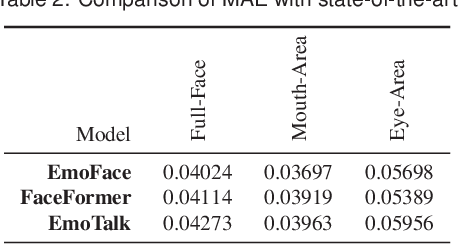
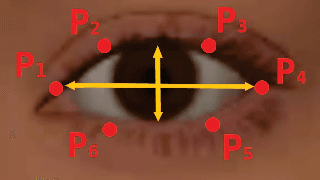
Audio-driven emotional 3D face animation aims to generate emotionally expressive talking heads with synchronized lip movements. However, previous research has often overlooked the influence of diverse emotions on facial expressions or proved unsuitable for driving MetaHuman models. In response to this deficiency, we introduce EmoFace, a novel audio-driven methodology for creating facial animations with vivid emotional dynamics. Our approach can generate facial expressions with multiple emotions, and has the ability to generate random yet natural blinks and eye movements, while maintaining accurate lip synchronization. We propose independent speech encoders and emotion encoders to learn the relationship between audio, emotion and corresponding facial controller rigs, and finally map into the sequence of controller values. Additionally, we introduce two post-processing techniques dedicated to enhancing the authenticity of the animation, particularly in blinks and eye movements. Furthermore, recognizing the scarcity of emotional audio-visual data suitable for MetaHuman model manipulation, we contribute an emotional audio-visual dataset and derive control parameters for each frames. Our proposed methodology can be applied in producing dialogues animations of non-playable characters (NPCs) in video games, and driving avatars in virtual reality environments. Our further quantitative and qualitative experiments, as well as an user study comparing with existing researches show that our approach demonstrates superior results in driving 3D facial models. The code and sample data are available at https://github.com/SJTU-Lucy/EmoFace.
AEMIM: Adversarial Examples Meet Masked Image Modeling
Jul 16, 2024Masked image modeling (MIM) has gained significant traction for its remarkable prowess in representation learning. As an alternative to the traditional approach, the reconstruction from corrupted images has recently emerged as a promising pretext task. However, the regular corrupted images are generated using generic generators, often lacking relevance to the specific reconstruction task involved in pre-training. Hence, reconstruction from regular corrupted images cannot ensure the difficulty of the pretext task, potentially leading to a performance decline. Moreover, generating corrupted images might introduce an extra generator, resulting in a notable computational burden. To address these issues, we propose to incorporate adversarial examples into masked image modeling, as the new reconstruction targets. Adversarial examples, generated online using only the trained models, can directly aim to disrupt tasks associated with pre-training. Therefore, the incorporation not only elevates the level of challenge in reconstruction but also enhances efficiency, contributing to the acquisition of superior representations by the model. In particular, we introduce a novel auxiliary pretext task that reconstructs the adversarial examples corresponding to the original images. We also devise an innovative adversarial attack to craft more suitable adversarial examples for MIM pre-training. It is noted that our method is not restricted to specific model architectures and MIM strategies, rendering it an adaptable plug-in capable of enhancing all MIM methods. Experimental findings substantiate the remarkable capability of our approach in amplifying the generalization and robustness of existing MIM methods. Notably, our method surpasses the performance of baselines on various tasks, including ImageNet, its variants, and other downstream tasks.
Local Action-Guided Motion Diffusion Model for Text-to-Motion Generation
Jul 15, 2024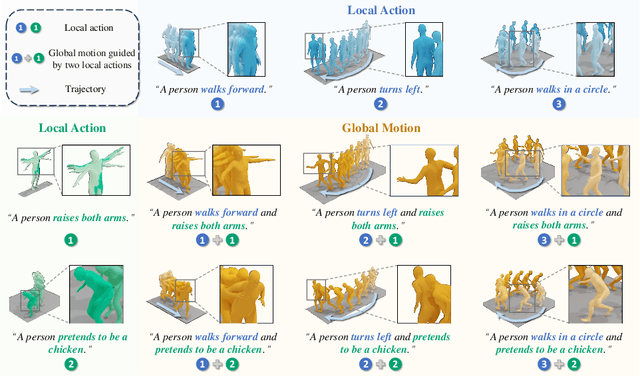
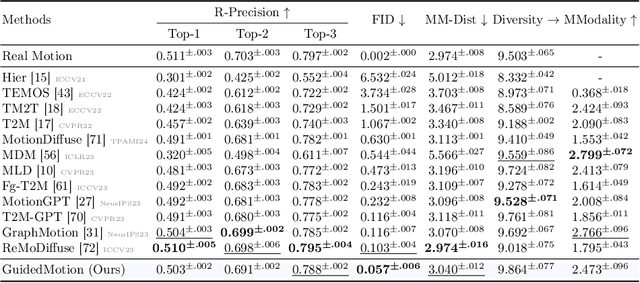
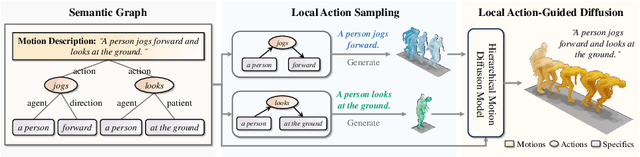
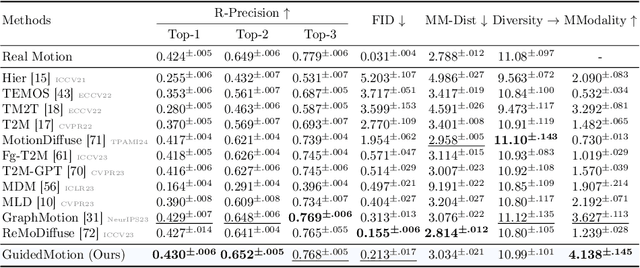
Text-to-motion generation requires not only grounding local actions in language but also seamlessly blending these individual actions to synthesize diverse and realistic global motions. However, existing motion generation methods primarily focus on the direct synthesis of global motions while neglecting the importance of generating and controlling local actions. In this paper, we propose the local action-guided motion diffusion model, which facilitates global motion generation by utilizing local actions as fine-grained control signals. Specifically, we provide an automated method for reference local action sampling and leverage graph attention networks to assess the guiding weight of each local action in the overall motion synthesis. During the diffusion process for synthesizing global motion, we calculate the local-action gradient to provide conditional guidance. This local-to-global paradigm reduces the complexity associated with direct global motion generation and promotes motion diversity via sampling diverse actions as conditions. Extensive experiments on two human motion datasets, i.e., HumanML3D and KIT, demonstrate the effectiveness of our method. Furthermore, our method provides flexibility in seamlessly combining various local actions and continuous guiding weight adjustment, accommodating diverse user preferences, which may hold potential significance for the community. The project page is available at https://jpthu17.github.io/GuidedMotion-project/.