 Add to Chrome
 Add to Firefox
 Add to Edge
PirateNets: Physics-informed Deep Learning with Residual Adaptive Networks
Feb 05, 2024
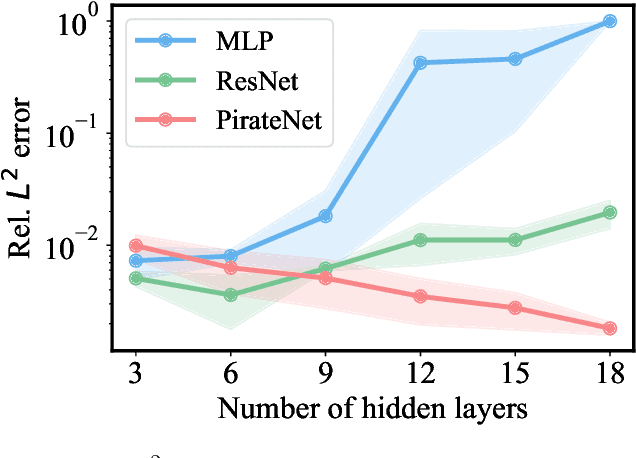
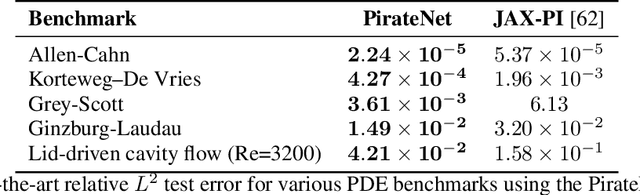
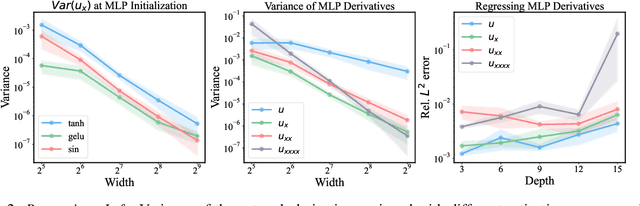
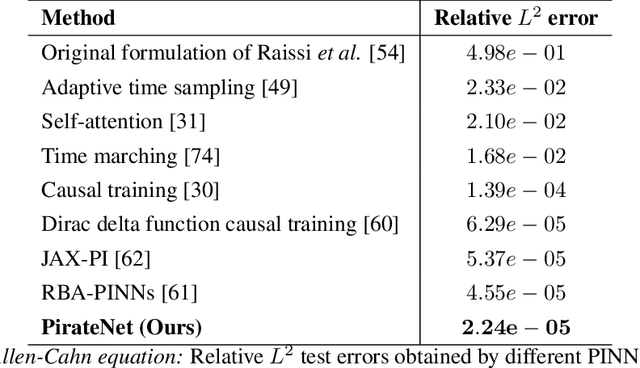
While physics-informed neural networks (PINNs) have become a popular deep learning framework for tackling forward and inverse problems governed by partial differential equations (PDEs), their performance is known to degrade when larger and deeper neural network architectures are employed. Our study identifies that the root of this counter-intuitive behavior lies in the use of multi-layer perceptron (MLP) architectures with non-suitable initialization schemes, which result in poor trainablity for the network derivatives, and ultimately lead to an unstable minimization of the PDE residual loss. To address this, we introduce Physics-informed Residual Adaptive Networks (PirateNets), a novel architecture that is designed to facilitate stable and efficient training of deep PINN models. PirateNets leverage a novel adaptive residual connection, which allows the networks to be initialized as shallow networks that progressively deepen during training. We also show that the proposed initialization scheme allows us to encode appropriate inductive biases corresponding to a given PDE system into the network architecture. We provide comprehensive empirical evidence showing that PirateNets are easier to optimize and can gain accuracy from considerably increased depth, ultimately achieving state-of-the-art results across various benchmarks. All code and data accompanying this manuscript will be made publicly available at \url{https://github.com/PredictiveIntelligenceLab/jaxpi}.

Radio Map Assisted Approach for Interference-Aware Predictive UAV Communications
Feb 01, 2024Herein, an interference-aware predictive aerial-and-terrestrial communication problem is studied, where an unmanned aerial vehicle (UAV) delivers some data payload to a few nodes within a communication deadline. The first challenge is the possible interference to the ground base stations (BSs) and users possibly at unknown locations. This paper develops a radio-map-based approach to predict the channel to the receivers and the unintended nodes. Therefore, a predictive communication strategy can be optimized ahead of time to reduce the interference power and duration for the ground nodes. Such predictive optimization raises the second challenge of developing a low-complexity solution for a batch of transmission strategies over T time slots for N receivers before the flight. Mathematically, while the proposed interference-aware predictive communication problem is non-convex, it is converted into a relaxed convex problem, and solved by a novel dual-based algorithm, which is shown to achieve global optimality at asymptotically small slot duration. The proposed algorithm demonstrates orders of magnitude saving of the computational time for moderate T and N compared to several existing solvers. Simulations show that the radio-map-assisted scheme can prevent all unintended receivers with known positions from experiencing interference and significantly reduce the interference to the users at unknown locations.
Optimisation-Based Multi-Modal Semantic Image Editing
Nov 28, 2023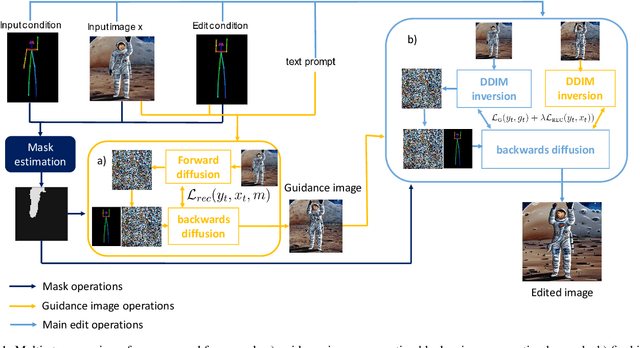
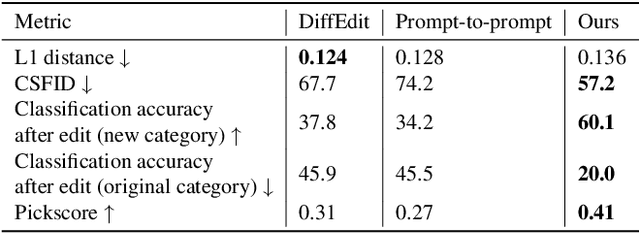
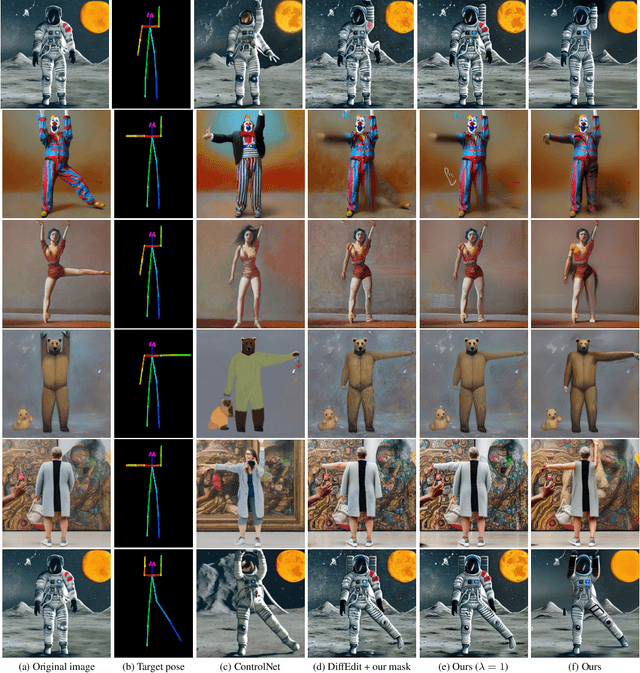
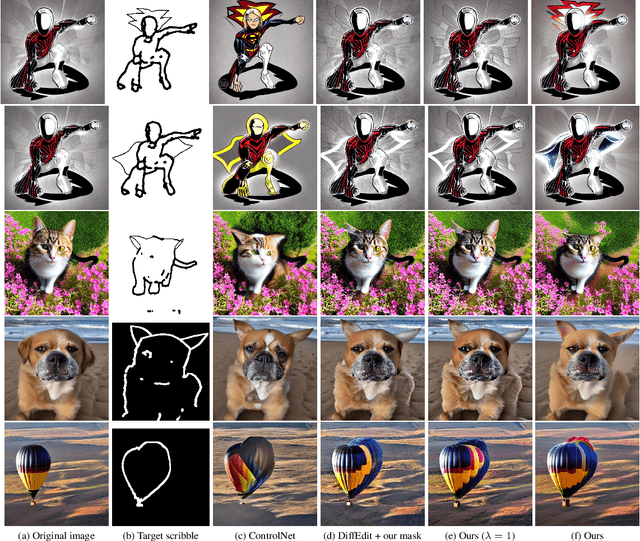
Image editing affords increased control over the aesthetics and content of generated images. Pre-existing works focus predominantly on text-based instructions to achieve desired image modifications, which limit edit precision and accuracy. In this work, we propose an inference-time editing optimisation, designed to extend beyond textual edits to accommodate multiple editing instruction types (e.g. spatial layout-based; pose, scribbles, edge maps). We propose to disentangle the editing task into two competing subtasks: successful local image modifications and global content consistency preservation, where subtasks are guided through two dedicated loss functions. By allowing to adjust the influence of each loss function, we build a flexible editing solution that can be adjusted to user preferences. We evaluate our method using text, pose and scribble edit conditions, and highlight our ability to achieve complex edits, through both qualitative and quantitative experiments.
An Investigation of LLMs' Inefficacy in Understanding Converse Relations
Oct 25, 2023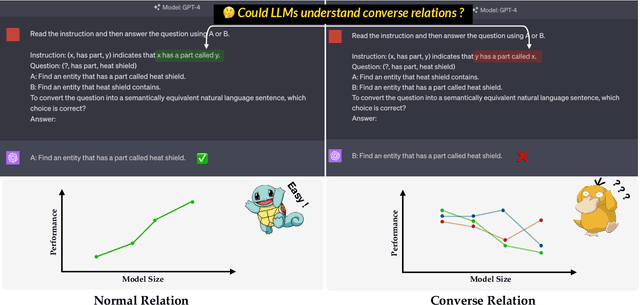
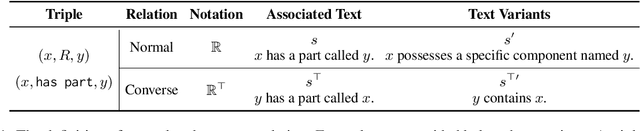
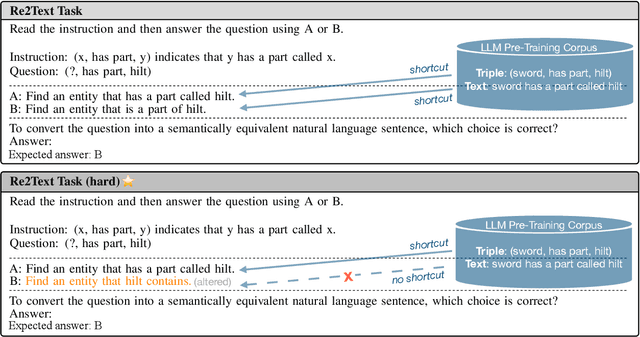
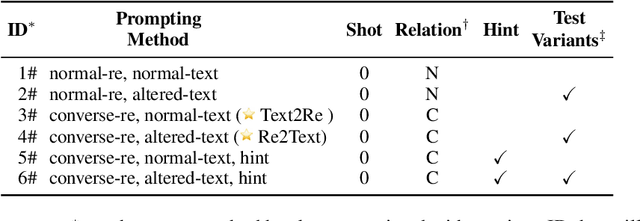
Large Language Models (LLMs) have achieved remarkable success in many formal language oriented tasks, such as structural data-to-text and semantic parsing. However current benchmarks mostly follow the data distribution of the pre-training data of LLMs. Therefore, a natural question rises that do LLMs really understand the structured semantics of formal languages. In this paper, we investigate this problem on a special case, converse binary relation. We introduce a new benchmark ConvRe focusing on converse relations, which contains 17 relations and 1240 triples extracted from popular knowledge graph completion datasets. Our ConvRE features two tasks, Re2Text and Text2Re, which are formulated as multi-choice question answering to evaluate LLMs' ability to determine the matching between relations and associated text. For the evaluation protocol, apart from different prompting methods, we further introduce variants to the test text and few-shot example text. We conduct experiments on three popular LLM families and have observed various scaling trends. The results suggest that LLMs often resort to shortcut learning and still face challenges on our proposed benchmark.
Acquiring Weak Annotations for Tumor Localization in Temporal and Volumetric Data
Oct 23, 2023Creating large-scale and well-annotated datasets to train AI algorithms is crucial for automated tumor detection and localization. However, with limited resources, it is challenging to determine the best type of annotations when annotating massive amounts of unlabeled data. To address this issue, we focus on polyps in colonoscopy videos and pancreatic tumors in abdominal CT scans; both applications require significant effort and time for pixel-wise annotation due to the high dimensional nature of the data, involving either temporary or spatial dimensions. In this paper, we develop a new annotation strategy, termed Drag&Drop, which simplifies the annotation process to drag and drop. This annotation strategy is more efficient, particularly for temporal and volumetric imaging, than other types of weak annotations, such as per-pixel, bounding boxes, scribbles, ellipses, and points. Furthermore, to exploit our Drag&Drop annotations, we develop a novel weakly supervised learning method based on the watershed algorithm. Experimental results show that our method achieves better detection and localization performance than alternative weak annotations and, more importantly, achieves similar performance to that trained on detailed per-pixel annotations. Interestingly, we find that, with limited resources, allocating weak annotations from a diverse patient population can foster models more robust to unseen images than allocating per-pixel annotations for a small set of images. In summary, this research proposes an efficient annotation strategy for tumor detection and localization that is less accurate than per-pixel annotations but useful for creating large-scale datasets for screening tumors in various medical modalities.
Early Detection and Localization of Pancreatic Cancer by Label-Free Tumor Synthesis
Aug 06, 2023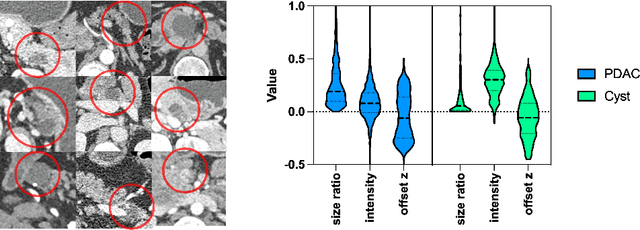

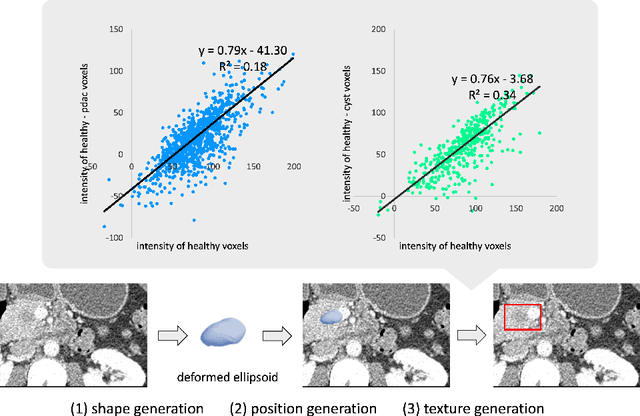
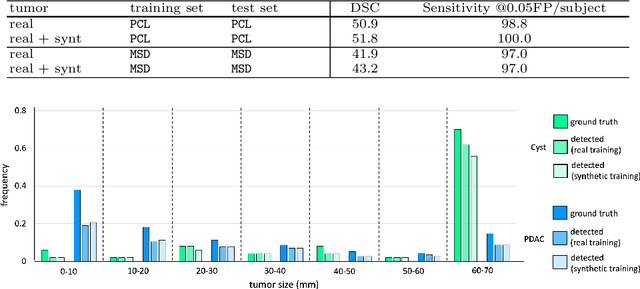
Early detection and localization of pancreatic cancer can increase the 5-year survival rate for patients from 8.5% to 20%. Artificial intelligence (AI) can potentially assist radiologists in detecting pancreatic tumors at an early stage. Training AI models require a vast number of annotated examples, but the availability of CT scans obtaining early-stage tumors is constrained. This is because early-stage tumors may not cause any symptoms, which can delay detection, and the tumors are relatively small and may be almost invisible to human eyes on CT scans. To address this issue, we develop a tumor synthesis method that can synthesize enormous examples of small pancreatic tumors in the healthy pancreas without the need for manual annotation. Our experiments demonstrate that the overall detection rate of pancreatic tumors, measured by Sensitivity and Specificity, achieved by AI trained on synthetic tumors is comparable to that of real tumors. More importantly, our method shows a much higher detection rate for small tumors. We further investigate the per-voxel segmentation performance of pancreatic tumors if AI is trained on a combination of CT scans with synthetic tumors and CT scans with annotated large tumors at an advanced stage. Finally, we show that synthetic tumors improve AI generalizability in tumor detection and localization when processing CT scans from different hospitals. Overall, our proposed tumor synthesis method has immense potential to improve the early detection of pancreatic cancer, leading to better patient outcomes.
ImDiffusion: Imputed Diffusion Models for Multivariate Time Series Anomaly Detection
Jul 03, 2023


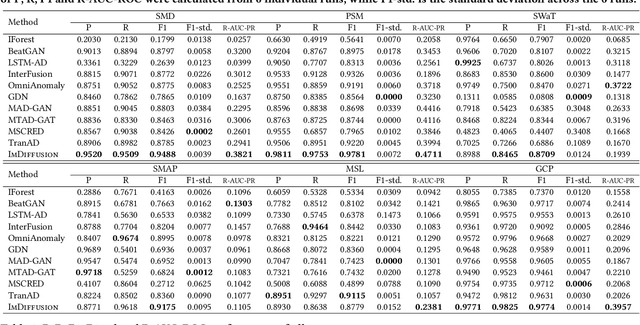
Anomaly detection in multivariate time series data is of paramount importance for ensuring the efficient operation of large-scale systems across diverse domains. However, accurately detecting anomalies in such data poses significant challenges. Existing approaches, including forecasting and reconstruction-based methods, struggle to address these challenges effectively. To overcome these limitations, we propose a novel anomaly detection framework named ImDiffusion, which combines time series imputation and diffusion models to achieve accurate and robust anomaly detection. The imputation-based approach employed by ImDiffusion leverages the information from neighboring values in the time series, enabling precise modeling of temporal and inter-correlated dependencies, reducing uncertainty in the data, thereby enhancing the robustness of the anomaly detection process. ImDiffusion further leverages diffusion models as time series imputers to accurately capturing complex dependencies. We leverage the step-by-step denoised outputs generated during the inference process to serve as valuable signals for anomaly prediction, resulting in improved accuracy and robustness of the detection process. We evaluate the performance of ImDiffusion via extensive experiments on benchmark datasets. The results demonstrate that our proposed framework significantly outperforms state-of-the-art approaches in terms of detection accuracy and timeliness. ImDiffusion is further integrated into the real production system in Microsoft and observe a remarkable 11.4% increase in detection F1 score compared to the legacy approach. To the best of our knowledge, ImDiffusion represents a pioneering approach that combines imputation-based techniques with time series anomaly detection, while introducing the novel use of diffusion models to the field.
Linear convergence of Nesterov-1983 with the strong convexity
Jun 16, 2023

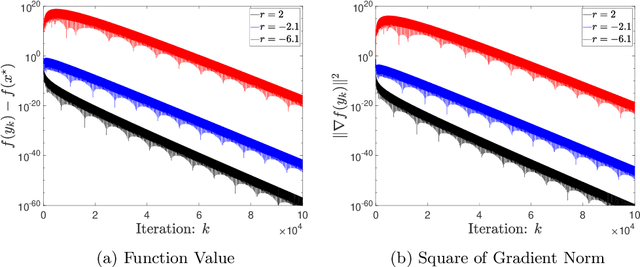
For modern gradient-based optimization, a developmental landmark is Nesterov's accelerated gradient descent method, which is proposed in [Nesterov, 1983], so shorten as Nesterov-1983. Afterward, one of the important progresses is its proximal generalization, named the fast iterative shrinkage-thresholding algorithm (FISTA), which is widely used in image science and engineering. However, it is unknown whether both Nesterov-1983 and FISTA converge linearly on the strongly convex function, which has been listed as the open problem in the comprehensive review [Chambolle and Pock, 2016, Appendix B]. In this paper, we answer this question by the use of the high-resolution differential equation framework. Along with the phase-space representation previously adopted, the key difference here in constructing the Lyapunov function is that the coefficient of the kinetic energy varies with the iteration. Furthermore, we point out that the linear convergence of both the two algorithms above has no dependence on the parameter $r$ on the strongly convex function. Meanwhile, it is also obtained that the proximal subgradient norm converges linearly.
Temporal Gradient Inversion Attacks with Robust Optimization
Jun 13, 2023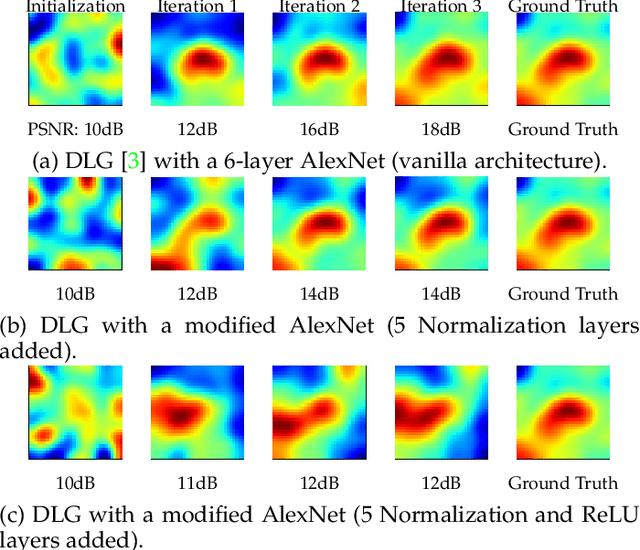
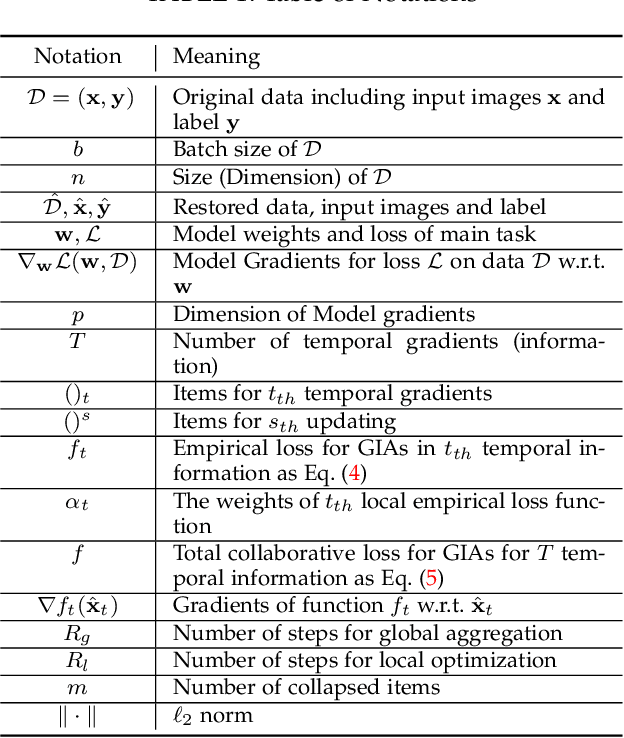
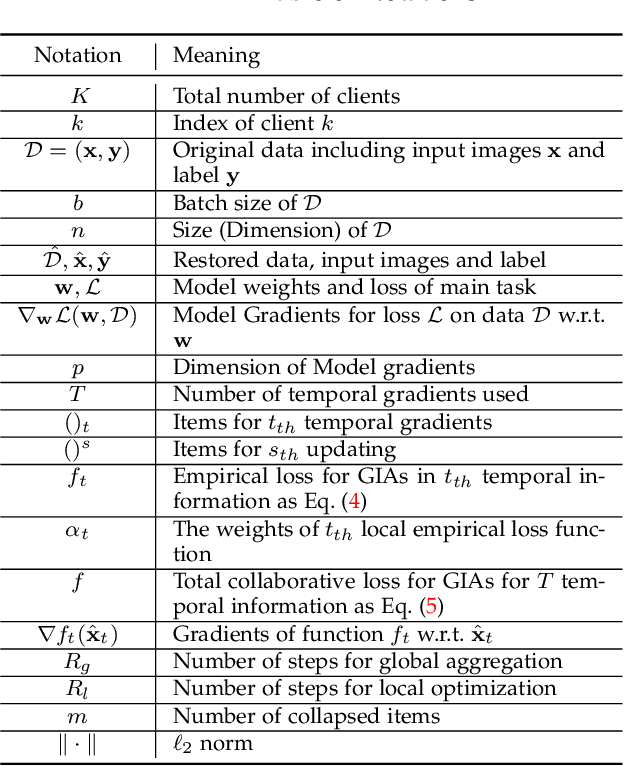
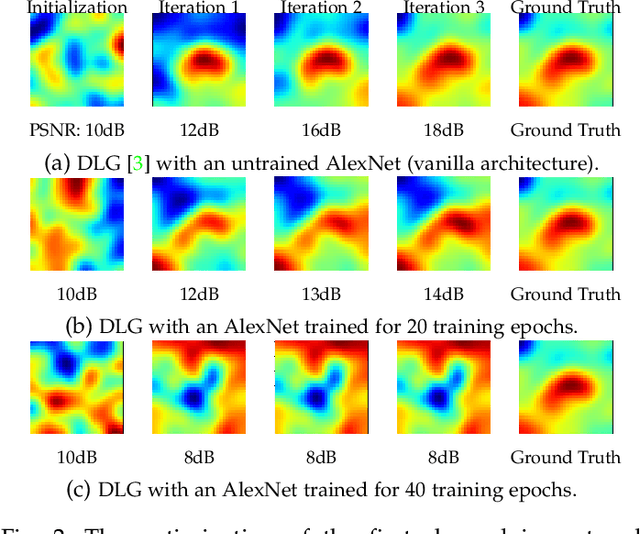
Federated Learning (FL) has emerged as a promising approach for collaborative model training without sharing private data. However, privacy concerns regarding information exchanged during FL have received significant research attention. Gradient Inversion Attacks (GIAs) have been proposed to reconstruct the private data retained by local clients from the exchanged gradients. While recovering private data, the data dimensions and the model complexity increase, which thwart data reconstruction by GIAs. Existing methods adopt prior knowledge about private data to overcome those challenges. In this paper, we first observe that GIAs with gradients from a single iteration fail to reconstruct private data due to insufficient dimensions of leaked gradients, complex model architectures, and invalid gradient information. We investigate a Temporal Gradient Inversion Attack with a Robust Optimization framework, called TGIAs-RO, which recovers private data without any prior knowledge by leveraging multiple temporal gradients. To eliminate the negative impacts of outliers, e.g., invalid gradients for collaborative optimization, robust statistics are proposed. Theoretical guarantees on the recovery performance and robustness of TGIAs-RO against invalid gradients are also provided. Extensive empirical results on MNIST, CIFAR10, ImageNet and Reuters 21578 datasets show that the proposed TGIAs-RO with 10 temporal gradients improves reconstruction performance compared to state-of-the-art methods, even for large batch sizes (up to 128), complex models like ResNet18, and large datasets like ImageNet (224*224 pixels). Furthermore, the proposed attack method inspires further exploration of privacy-preserving methods in the context of FL.
History Semantic Graph Enhanced Conversational KBQA with Temporal Information Modeling
Jun 12, 2023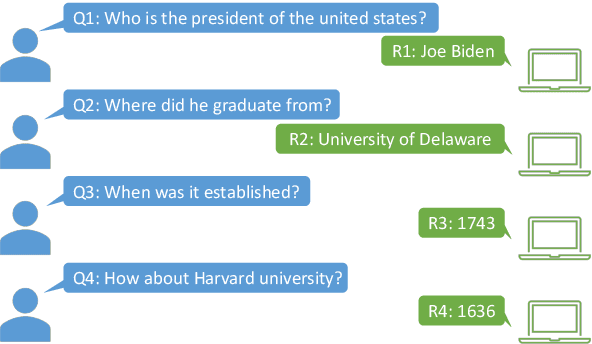


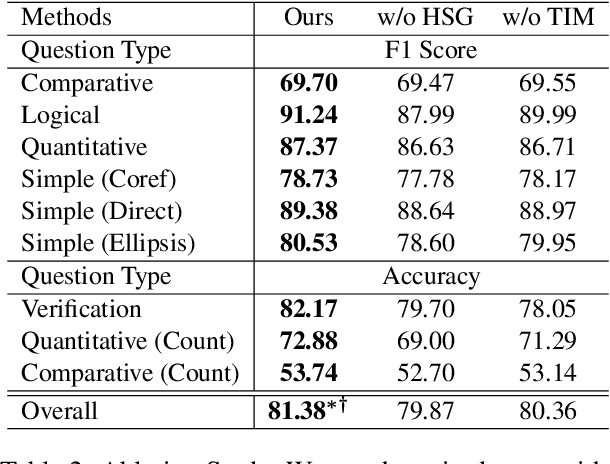
Context information modeling is an important task in conversational KBQA. However, existing methods usually assume the independence of utterances and model them in isolation. In this paper, we propose a History Semantic Graph Enhanced KBQA model (HSGE) that is able to effectively model long-range semantic dependencies in conversation history while maintaining low computational cost. The framework incorporates a context-aware encoder, which employs a dynamic memory decay mechanism and models context at different levels of granularity. We evaluate HSGE on a widely used benchmark dataset for complex sequential question answering. Experimental results demonstrate that it outperforms existing baselines averaged on all question types.