 Add to Chrome
 Add to Firefox
 Add to Edge
PerturboLLaVA: Reducing Multimodal Hallucinations with Perturbative Visual Training
Mar 09, 2025
This paper aims to address the challenge of hallucinations in Multimodal Large Language Models (MLLMs) particularly for dense image captioning tasks. To tackle the challenge, we identify the current lack of a metric that finely measures the caption quality in concept level. We hereby introduce HalFscore, a novel metric built upon the language graph and is designed to evaluate both the accuracy and completeness of dense captions at a granular level. Additionally, we identify the root cause of hallucination as the model's over-reliance on its language prior. To address this, we propose PerturboLLaVA, which reduces the model's reliance on the language prior by incorporating adversarially perturbed text during training. This method enhances the model's focus on visual inputs, effectively reducing hallucinations and producing accurate, image-grounded descriptions without incurring additional computational overhead. PerturboLLaVA significantly improves the fidelity of generated captions, outperforming existing approaches in handling multimodal hallucinations and achieving improved performance across general multimodal benchmarks.

An End-to-End Learning-Based Multi-Sensor Fusion for Autonomous Vehicle Localization
Mar 07, 2025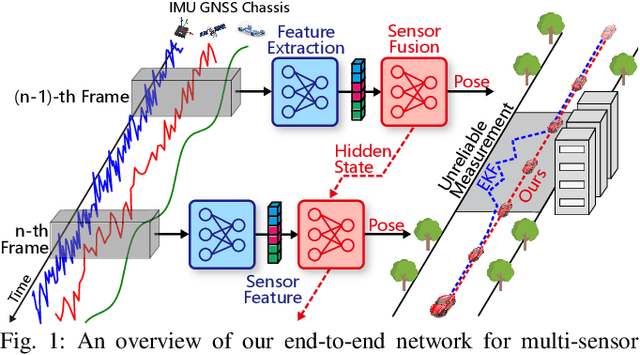
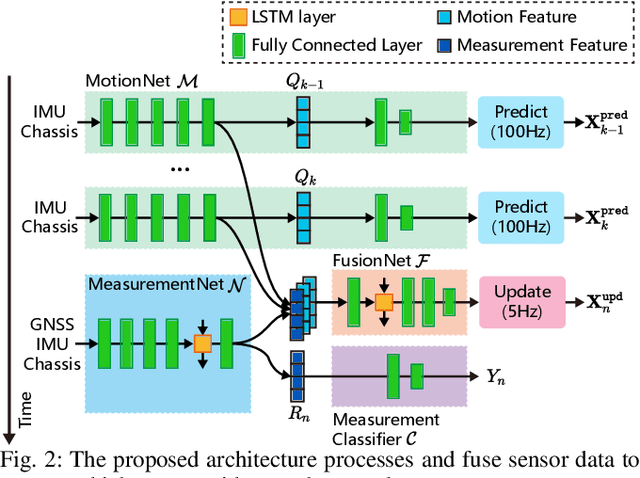
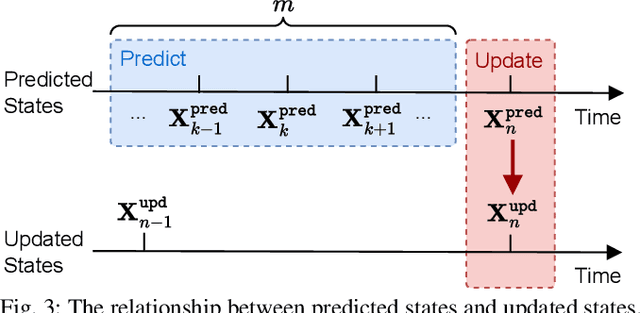
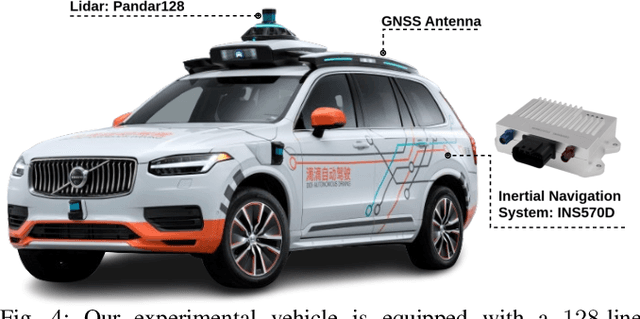
Multi-sensor fusion is essential for autonomous vehicle localization, as it is capable of integrating data from various sources for enhanced accuracy and reliability. The accuracy of the integrated location and orientation depends on the precision of the uncertainty modeling. Traditional methods of uncertainty modeling typically assume a Gaussian distribution and involve manual heuristic parameter tuning. However, these methods struggle to scale effectively and address long-tail scenarios. To address these challenges, we propose a learning-based method that encodes sensor information using higher-order neural network features, thereby eliminating the need for uncertainty estimation. This method significantly eliminates the need for parameter fine-tuning by developing an end-to-end neural network that is specifically designed for multi-sensor fusion. In our experiments, we demonstrate the effectiveness of our approach in real-world autonomous driving scenarios. Results show that the proposed method outperforms existing multi-sensor fusion methods in terms of both accuracy and robustness. A video of the results can be viewed at https://youtu.be/q4iuobMbjME.
SurveyForge: On the Outline Heuristics, Memory-Driven Generation, and Multi-dimensional Evaluation for Automated Survey Writing
Mar 06, 2025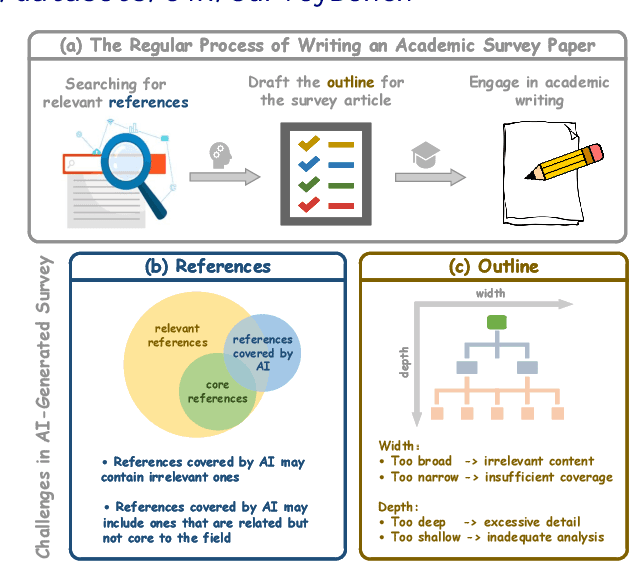

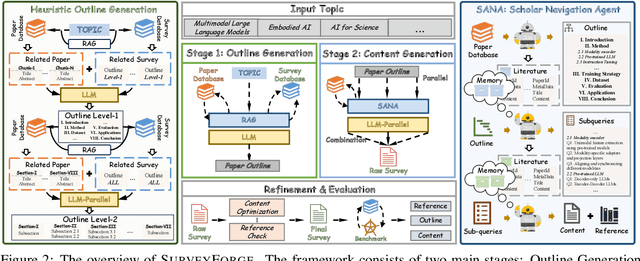

Survey paper plays a crucial role in scientific research, especially given the rapid growth of research publications. Recently, researchers have begun using LLMs to automate survey generation for better efficiency. However, the quality gap between LLM-generated surveys and those written by human remains significant, particularly in terms of outline quality and citation accuracy. To close these gaps, we introduce SurveyForge, which first generates the outline by analyzing the logical structure of human-written outlines and referring to the retrieved domain-related articles. Subsequently, leveraging high-quality papers retrieved from memory by our scholar navigation agent, SurveyForge can automatically generate and refine the content of the generated article. Moreover, to achieve a comprehensive evaluation, we construct SurveyBench, which includes 100 human-written survey papers for win-rate comparison and assesses AI-generated survey papers across three dimensions: reference, outline, and content quality. Experiments demonstrate that SurveyForge can outperform previous works such as AutoSurvey.
Dynamically Local-Enhancement Planner for Large-Scale Autonomous Driving
Feb 28, 2025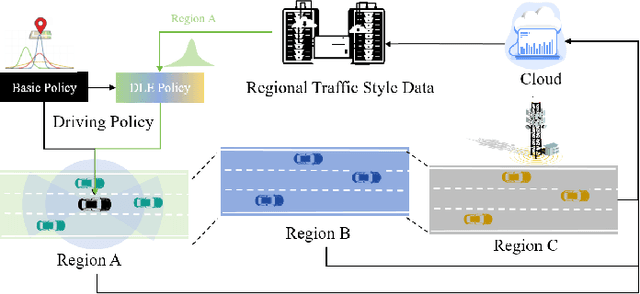
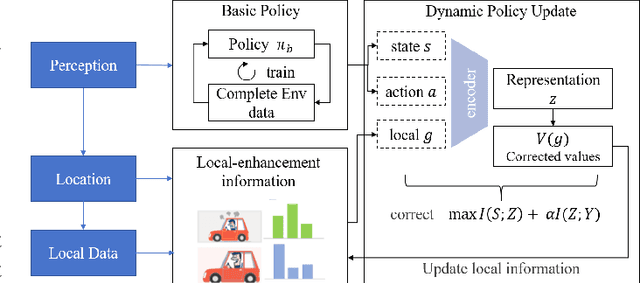
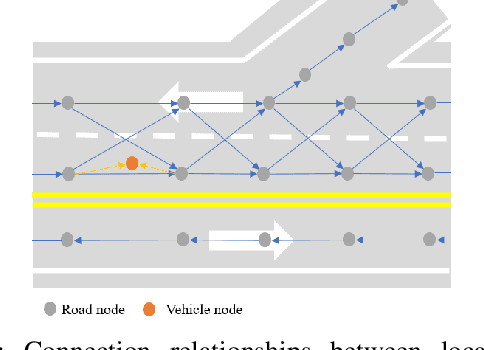
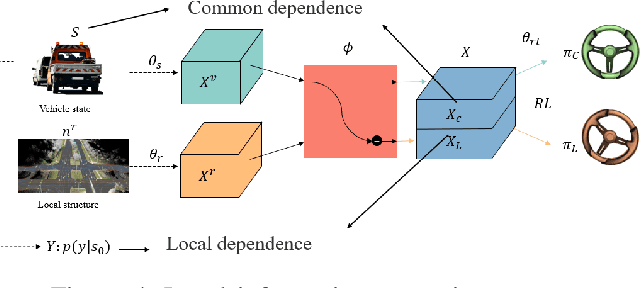
Current autonomous vehicles operate primarily within limited regions, but there is increasing demand for broader applications. However, as models scale, their limited capacity becomes a significant challenge for adapting to novel scenarios. It is increasingly difficult to improve models for new situations using a single monolithic model. To address this issue, we introduce the concept of dynamically enhancing a basic driving planner with local driving data, without permanently modifying the planner itself. This approach, termed the Dynamically Local-Enhancement (DLE) Planner, aims to improve the scalability of autonomous driving systems without significantly expanding the planner's size. Our approach introduces a position-varying Markov Decision Process formulation coupled with a graph neural network that extracts region-specific driving features from local observation data. The learned features describe the local behavior of the surrounding objects, which is then leveraged to enhance a basic reinforcement learning-based policy. We evaluated our approach in multiple scenarios and compared it with a one-for-all driving model. The results show that our method outperforms the baseline policy in both safety (collision rate) and average reward, while maintaining a lighter scale. This approach has the potential to benefit large-scale autonomous vehicles without the need for largely expanding on-device driving models.
Intelligence Test
Feb 26, 2025How does intelligence emerge? We propose that intelligence is not a sudden gift or random occurrence, but rather a necessary trait for species to survive through Natural Selection. If a species passes the test of Natural Selection, it demonstrates the intelligence to survive in nature. Extending this perspective, we introduce Intelligence Test, a method to quantify the intelligence of any subject on any task. Like how species evolve by trial and error, Intelligence Test quantifies intelligence by the number of failed attempts before success. Fewer failures correspond to higher intelligence. When the expectation and variance of failure counts are both finite, it signals the achievement of an autonomous level of intelligence. Using Intelligence Test, we comprehensively evaluate existing AI systems. Our results show that while AI systems achieve a level of autonomy in simple tasks, they are still far from autonomous in more complex tasks, such as vision, search, recommendation, and language. While scaling model size might help, this would come at an astronomical cost. Projections suggest that achieving general autonomy would require unimaginable $10^{26}$ parameters. Even if Moore's Law continuously holds, such a parameter scale would take $70$ years. This staggering cost highlights the complexity of human tasks and the inadequacies of current AI. To further understand this phenomenon, we conduct a theoretical analysis. Our simulations suggest that human tasks possess a criticality property. As a result, autonomy requires a deep understanding of the task's underlying mechanisms. Current AI, however, does not fully grasp these mechanisms and instead relies on superficial mimicry, making it difficult to reach an autonomous level. We believe Intelligence Test can not only guide the future development of AI but also offer profound insights into the intelligence of humans ourselves.
InVDriver: Intra-Instance Aware Vectorized Query-Based Autonomous Driving Transformer
Feb 25, 2025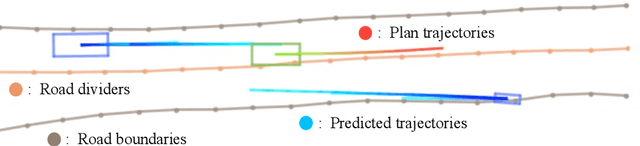
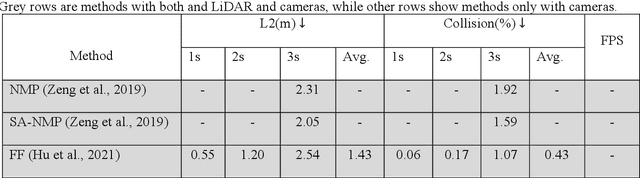
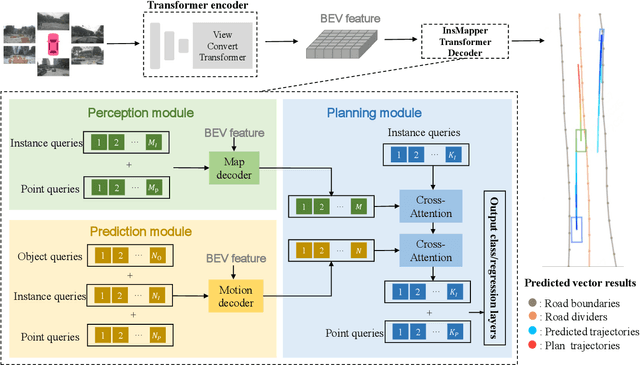
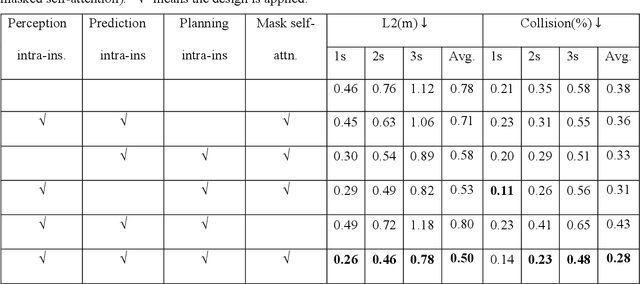
End-to-end autonomous driving with its holistic optimization capabilities, has gained increasing traction in academia and industry. Vectorized representations, which preserve instance-level topological information while reducing computational overhead, have emerged as a promising paradigm. While existing vectorized query-based frameworks often overlook the inherent spatial correlations among intra-instance points, resulting in geometrically inconsistent outputs (e.g., fragmented HD map elements or oscillatory trajectories). To address these limitations, we propose InVDriver, a novel vectorized query-based system that systematically models intra-instance spatial dependencies through masked self-attention layers, thereby enhancing planning accuracy and trajectory smoothness. Across all core modules, i.e., perception, prediction, and planning, InVDriver incorporates masked self-attention mechanisms that restrict attention to intra-instance point interactions, enabling coordinated refinement of structural elements while suppressing irrelevant inter-instance noise. Experimental results on the nuScenes benchmark demonstrate that InVDriver achieves state-of-the-art performance, surpassing prior methods in both accuracy and safety, while maintaining high computational efficiency. Our work validates that explicit modeling of intra-instance geometric coherence is critical for advancing vectorized autonomous driving systems, bridging the gap between theoretical advantages of end-to-end frameworks and practical deployment requirements.
A Training-free LLM-based Approach to General Chinese Character Error Correction
Feb 21, 2025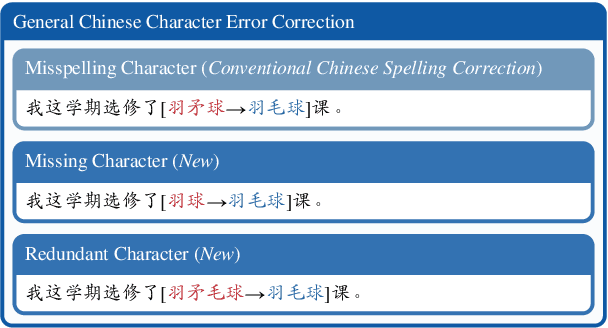
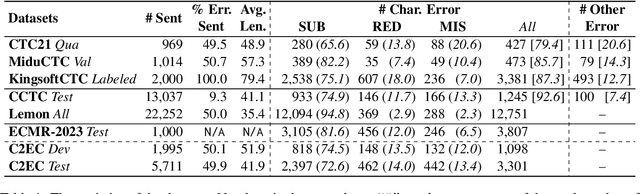
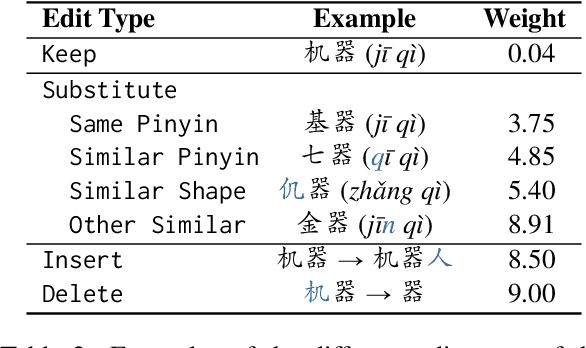

Chinese spelling correction (CSC) is a crucial task that aims to correct character errors in Chinese text. While conventional CSC focuses on character substitution errors caused by mistyping, two other common types of character errors, missing and redundant characters, have received less attention. These errors are often excluded from CSC datasets during the annotation process or ignored during evaluation, even when they have been annotated. This issue limits the practicality of the CSC task. To address this issue, we introduce the task of General Chinese Character Error Correction (C2EC), which focuses on all three types of character errors. We construct a high-quality C2EC benchmark by combining and manually verifying data from CCTC and Lemon datasets. We extend the training-free prompt-free CSC method to C2EC by using Levenshtein distance for handling length changes and leveraging an additional prompt-based large language model (LLM) to improve performance. Experiments show that our method enables a 14B-parameter LLM to be on par with models nearly 50 times larger on both conventional CSC and C2EC tasks, without any fine-tuning.
MotifBench: A standardized protein design benchmark for motif-scaffolding problems
Feb 19, 2025The motif-scaffolding problem is a central task in computational protein design: Given the coordinates of atoms in a geometry chosen to confer a desired biochemical function (a motif), the task is to identify diverse protein structures (scaffolds) that include the motif and maintain its geometry. Significant recent progress on motif-scaffolding has been made due to computational evaluation with reliable protein structure prediction and fixed-backbone sequence design methods. However, significant variability in evaluation strategies across publications has hindered comparability of results, challenged reproducibility, and impeded robust progress. In response we introduce MotifBench, comprising (1) a precisely specified pipeline and evaluation metrics, (2) a collection of 30 benchmark problems, and (3) an implementation of this benchmark and leaderboard at github.com/blt2114/MotifBench. The MotifBench test cases are more difficult compared to earlier benchmarks, and include protein design problems for which solutions are known but on which, to the best of our knowledge, state-of-the-art methods fail to identify any solution.
MME-CoT: Benchmarking Chain-of-Thought in Large Multimodal Models for Reasoning Quality, Robustness, and Efficiency
Feb 13, 2025


Answering questions with Chain-of-Thought (CoT) has significantly enhanced the reasoning capabilities of Large Language Models (LLMs), yet its impact on Large Multimodal Models (LMMs) still lacks a systematic assessment and in-depth investigation. In this paper, we introduce MME-CoT, a specialized benchmark evaluating the CoT reasoning performance of LMMs, spanning six domains: math, science, OCR, logic, space-time, and general scenes. As the first comprehensive study in this area, we propose a thorough evaluation suite incorporating three novel metrics that assess the reasoning quality, robustness, and efficiency at a fine-grained level. Leveraging curated high-quality data and a unique evaluation strategy, we conduct an in-depth analysis of state-of-the-art LMMs, uncovering several key insights: 1) Models with reflection mechanism demonstrate a superior CoT quality, with Kimi k1.5 outperforming GPT-4o and demonstrating the highest quality results; 2) CoT prompting often degrades LMM performance on perception-heavy tasks, suggesting a potentially harmful overthinking behavior; and 3) Although the CoT quality is high, LMMs with reflection exhibit significant inefficiency in both normal response and self-correction phases. We hope MME-CoT serves as a foundation for advancing multimodal reasoning in LMMs. Project Page: https://mmecot.github.io/
Inverse Design with Dynamic Mode Decomposition
Feb 13, 2025We introduce a computationally efficient method for the automation of inverse design in science and engineering. Based on simple least-square regression, the underlying dynamic mode decomposition algorithm can be used to construct a low-rank subspace spanning multiple experiments in parameter space. The proposed inverse design dynamic mode composition (ID-DMD) algorithm leverages the computed low-dimensional subspace to enable fast digital design and optimization on laptop-level computing, including the potential to prescribe the dynamics themselves. Moreover, the method is robust to noise, physically interpretable, and can provide uncertainty quantification metrics. The architecture can also efficiently scale to large-scale design problems using randomized algorithms in the ID-DMD. The simplicity of the method and its implementation are highly attractive in practice, and the ID-DMD has been demonstrated to be an order of magnitude more accurate than competing methods while simultaneously being 3-5 orders faster on challenging engineering design problems ranging from structural vibrations to fluid dynamics. Due to its speed, robustness, interpretability, and ease-of-use, ID-DMD in comparison with other leading machine learning methods represents a significant advancement in data-driven methods for inverse design and optimization, promising a paradigm shift in how to approach inverse design in practice.