 Add to Chrome
 Add to Firefox
 Add to Edge
FlowHFT: Imitation Learning via Flow Matching Policy for Optimal High-Frequency Trading under Diverse Market Conditions
May 16, 2025
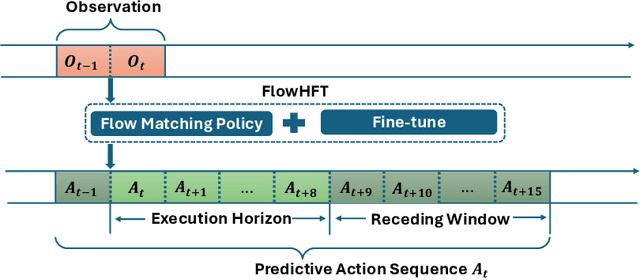
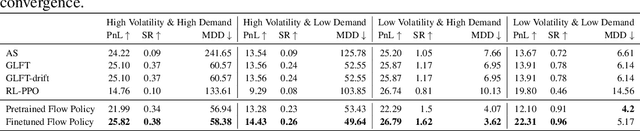


High-frequency trading (HFT) is an investing strategy that continuously monitors market states and places bid and ask orders at millisecond speeds. Traditional HFT approaches fit models with historical data and assume that future market states follow similar patterns. This limits the effectiveness of any single model to the specific conditions it was trained for. Additionally, these models achieve optimal solutions only under specific market conditions, such as assumptions about stock price's stochastic process, stable order flow, and the absence of sudden volatility. Real-world markets, however, are dynamic, diverse, and frequently volatile. To address these challenges, we propose the FlowHFT, a novel imitation learning framework based on flow matching policy. FlowHFT simultaneously learns strategies from numerous expert models, each proficient in particular market scenarios. As a result, our framework can adaptively adjust investment decisions according to the prevailing market state. Furthermore, FlowHFT incorporates a grid-search fine-tuning mechanism. This allows it to refine strategies and achieve superior performance even in complex or extreme market scenarios where expert strategies may be suboptimal. We test FlowHFT in multiple market environments. We first show that flow matching policy is applicable in stochastic market environments, thus enabling FlowHFT to learn trading strategies under different market conditions. Notably, our single framework consistently achieves performance superior to the best expert for each market condition.

Robust Movable-Antenna Position Optimization with Imperfect CSI for MISO Systems
May 11, 2025Movable antenna (MA) technology has emerged as a promising solution for reconfiguring wireless channel conditions through local antenna movement within confined regions. Unlike previous works assuming perfect channel state information (CSI), this letter addresses the robust MA position optimization problem under imperfect CSI conditions for a multiple-input single-output (MISO) MA system. Specifically, we consider two types of CSI errors: norm-bounded and randomly distributed errors, aiming to maximize the worst-case and non-outage received signal power, respectively. For norm-bounded CSI errors, we derive the worst-case received signal power in closed-form. For randomly distributed CSI errors, due to the intractability of the probabilistic constraints, we apply the Bernstein-type inequality to obtain a closed-form lower bound for the non-outage received signal power. Based on these results, we show the optimality of the maximum-ratio transmission for imperfect CSI in both scenarios and employ a graph-based algorithm to obtain the optimal MA positions. Numerical results show that our proposed scheme can even outperform other benchmark schemes implemented under perfect CSI conditions.
FlowHFT: Flow Policy Induced Optimal High-Frequency Trading under Diverse Market Conditions
May 09, 2025High-frequency trading (HFT) is an investing strategy that continuously monitors market states and places bid and ask orders at millisecond speeds. Traditional HFT approaches fit models with historical data and assume that future market states follow similar patterns. This limits the effectiveness of any single model to the specific conditions it was trained for. Additionally, these models achieve optimal solutions only under specific market conditions, such as assumptions about stock price's stochastic process, stable order flow, and the absence of sudden volatility. Real-world markets, however, are dynamic, diverse, and frequently volatile. To address these challenges, we propose the FlowHFT, a novel imitation learning framework based on flow matching policy. FlowHFT simultaneously learns strategies from numerous expert models, each proficient in particular market scenarios. As a result, our framework can adaptively adjust investment decisions according to the prevailing market state. Furthermore, FlowHFT incorporates a grid-search fine-tuning mechanism. This allows it to refine strategies and achieve superior performance even in complex or extreme market scenarios where expert strategies may be suboptimal. We test FlowHFT in multiple market environments. We first show that flow matching policy is applicable in stochastic market environments, thus enabling FlowHFT to learn trading strategies under different market conditions. Notably, our single framework consistently achieves performance superior to the best expert for each market condition.
Mechanical Power Modeling and Energy Efficiency Maximization for Movable Antenna Systems
May 09, 2025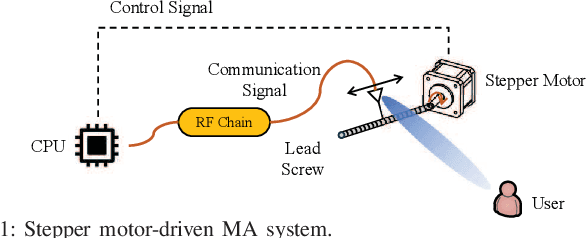
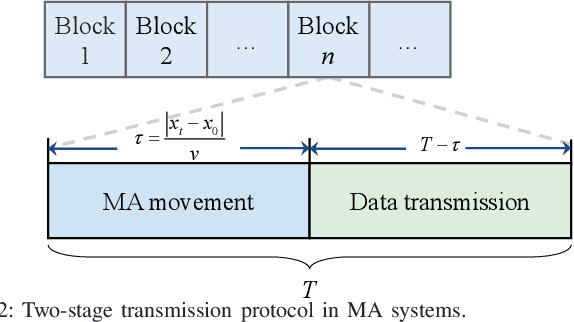
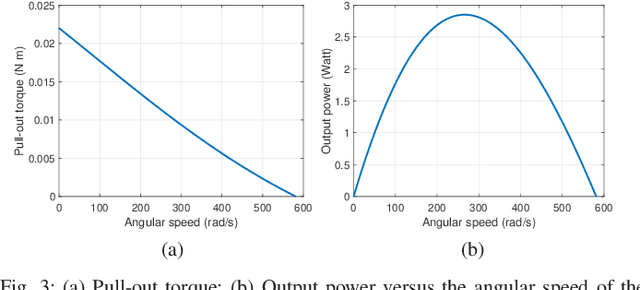
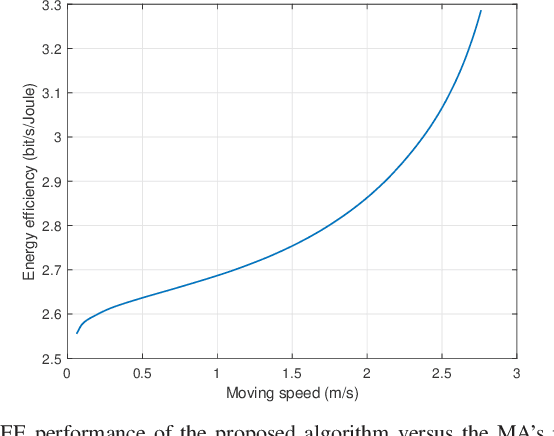
Movable antennas (MAs) have recently garnered significant attention in wireless communications due to their capability to reshape wireless channels via local antenna movement within a confined region. However, to achieve accurate antenna movement, MA drivers introduce non-negligible mechanical power consumption, rendering energy efficiency (EE) optimization more critical compared to conventional fixed-position antenna (FPA) systems. To address this problem, we develop in this paper a fundamental power consumption model for stepper motor-driven MA systems by resorting to basic electric motor theory. Based on this model, we formulate an EE maximization problem by jointly optimizing an MA's position, moving speed, and transmit power. However, this problem is difficult to solve optimally due to the intricate relationship between the mechanical power consumption and the design variables. To tackle this issue, we first uncover a hidden monotonicity of the EE performance with respect to the MA's moving speed. Then, we apply the Dinkelbach algorithm to obtain the optimal transmit power in a semi-closed form for any given MA position, followed by an enumeration to determine the optimal MA position. Numerical results demonstrate that despite the additional mechanical power consumption, the MA system can outperform the conventional FPA system in terms of EE.
Advancing THz Radio Map Construction and Obstacle Sensing: An Integrated Generative Framework in ISAC
Mar 29, 2025Integrated sensing and communication (ISAC) in the terahertz (THz) band enables obstacle detection, which in turn facilitates efficient beam management to mitigate THz signal blockage. Simultaneously, a THz radio map, which captures signal propagation characteristics through the distribution of received signal strength (RSS), is well-suited for sensing, as it inherently contains obstacle-related information and reflects the unique properties of the THz channel. This means that communication-assisted sensing in ISAC can be effectively achieved using a THz radio map. However, constructing a radio map presents significant challenges due to the sparse deployment of THz sensors and their limited ability to accurately measure the RSS distribution, which directly affects obstacle sensing. In this paper, we formulate an integrated problem for the first time, leveraging the mutual enhancement between sensed obstacles and the constructed THz radio maps. To address this challenge while improving generalization, we propose an integration framework based on a conditional generative adversarial network (CGAN), which uncovers the manifold structure of THz radio maps embedded with obstacle information. Furthermore, recognizing the shared environmental semantics across THz radio maps from different beam directions, we introduce a novel voting-based sensing scheme, where obstacles are detected by aggregating votes from THz radio maps generated by the CGAN. Simulation results demonstrate that the proposed framework outperforms non-integrated baselines in both radio map construction and obstacle sensing, achieving up to 44.3% and 90.6% reductions in mean squared error (MSE), respectively, in a real-world scenario. These results validate the effectiveness of the proposed voting-based scheme.
Near-Field THz Bending Beamforming: A Convex Optimization Perspective
Mar 26, 2025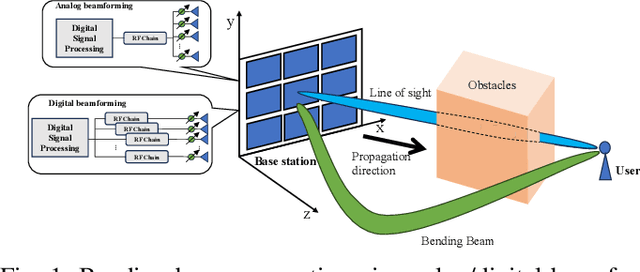
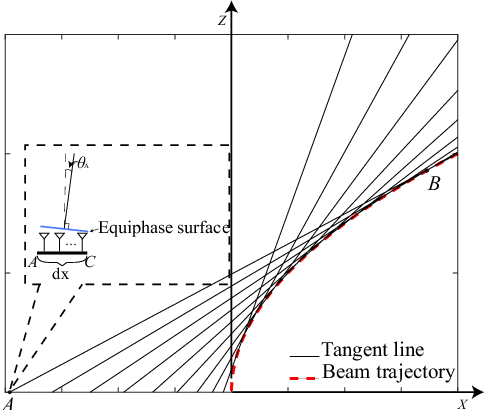
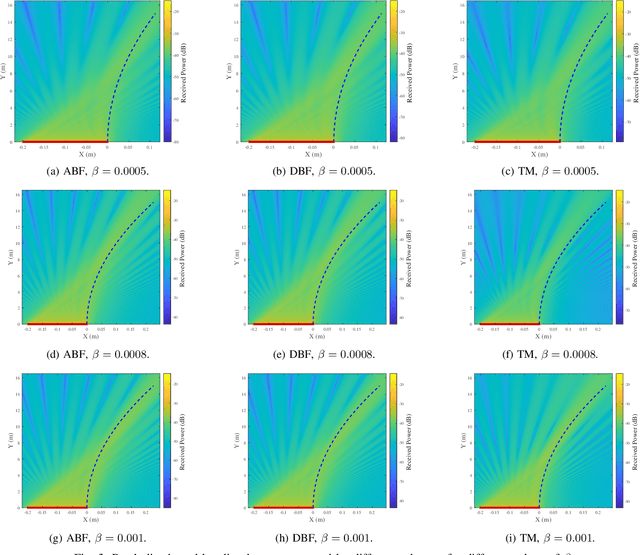
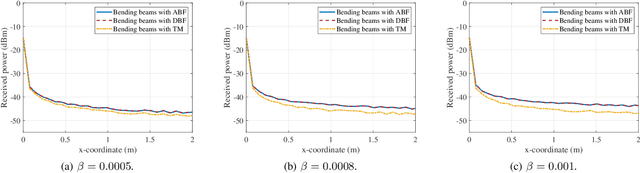
Terahertz (THz) communication systems suffer severe blockage issues, which may significantly degrade the communica tion coverage and quality. Bending beams, capable of adjusting their propagation direction to bypass obstacles, have recently emerged as a promising solution to resolve this issue by engineer ing the propagation trajectory of the beam. However, traditional bending beam generation methods rely heavily on the specific geometric properties of the propagation trajectory and can only achieve sub-optimal performance. In this paper, we propose a new and general bending beamforming method by adopting the convex optimization techniques. In particular, we formulate the bending beamforming design as a max-min optimization problem, aiming to optimize the analog or digital transmit beamforming vector to maximize the minimum received signal power among all positions along the bending beam trajectory. However, the resulting problem is non-convex and difficult to be solved optimally. To tackle this difficulty, we apply the successive convex approximation (SCA) technique to obtain a high-quality suboptimal solution. Numerical results show that our proposed bending beamforming method outperforms the traditional method and shows robustness to the obstacle in the environment.
Neuronal Activation States as Sample Embeddings for Data Selection in Task-Specific Instruction Tuning
Mar 19, 2025Task-specific instruction tuning enhances the performance of large language models (LLMs) on specialized tasks, yet efficiently selecting relevant data for this purpose remains a challenge. Inspired by neural coactivation in the human brain, we propose a novel data selection method called NAS, which leverages neuronal activation states as embeddings for samples in the feature space. Extensive experiments show that NAS outperforms classical data selection methods in terms of both effectiveness and robustness across different models, datasets, and selection ratios.
Unveiling Pitfalls: Understanding Why AI-driven Code Agents Fail at GitHub Issue Resolution
Mar 16, 2025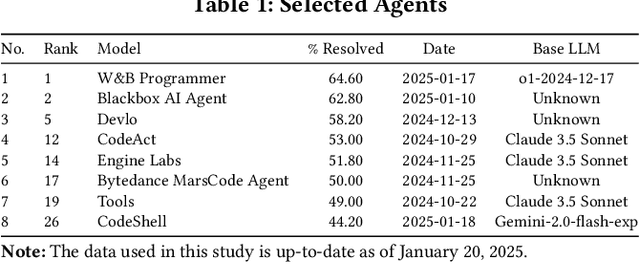
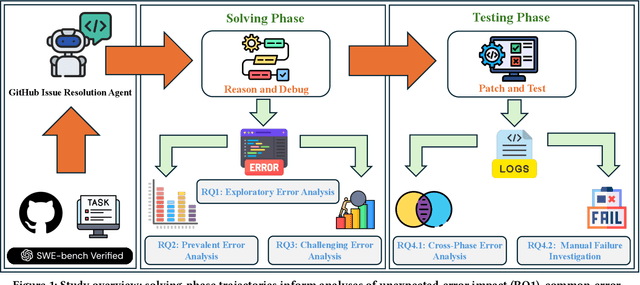
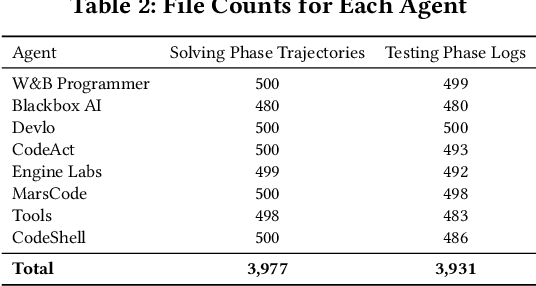
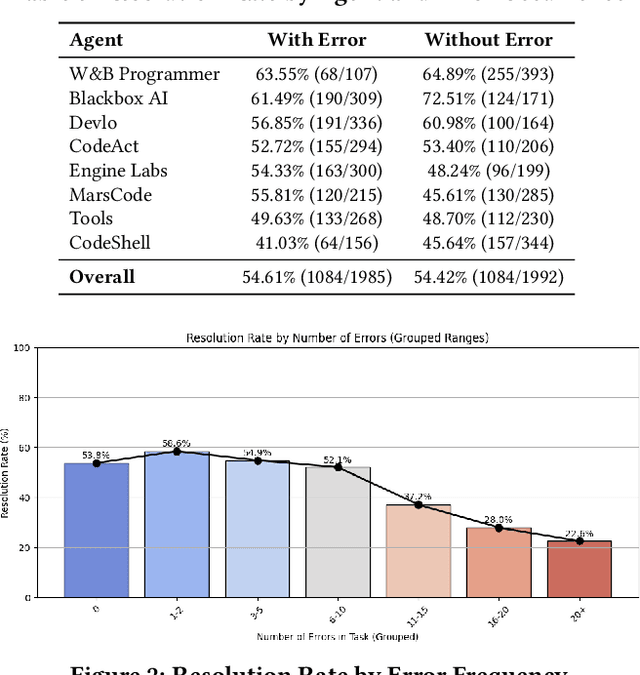
AI-driven software development has rapidly advanced with the emergence of software development agents that leverage large language models (LLMs) to tackle complex, repository-level software engineering tasks. These agents go beyond just generation of final code; they engage in multi-step reasoning, utilize various tools for code modification and debugging, and interact with execution environments to diagnose and iteratively resolve issues. However, most existing evaluations focus primarily on static analyses of final code outputs, yielding limited insights into the agents' dynamic problem-solving processes. To fill this gap, we conduct an in-depth empirical study on 3,977 solving-phase trajectories and 3,931 testing-phase logs from 8 top-ranked agents evaluated on 500 GitHub issues in the SWE-Bench benchmark. Our exploratory analysis shows that Python execution errors during the issue resolution phase correlate with lower resolution rates and increased reasoning overheads. We have identified the most prevalent errors -- such as ModuleNotFoundError and TypeError -- and highlighted particularly challenging errors like OSError and database-related issues (e.g., IntegrityError) that demand significantly more debugging effort. Furthermore, we have discovered 3 bugs in the SWE-Bench platform that affect benchmark fairness and accuracy; these issues have been reported to and confirmed by the maintainers. To promote transparency and foster future research, we publicly share our datasets and analysis scripts.
DeskVision: Large Scale Desktop Region Captioning for Advanced GUI Agents
Mar 14, 2025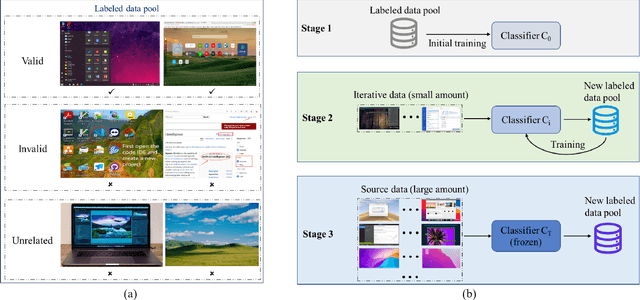
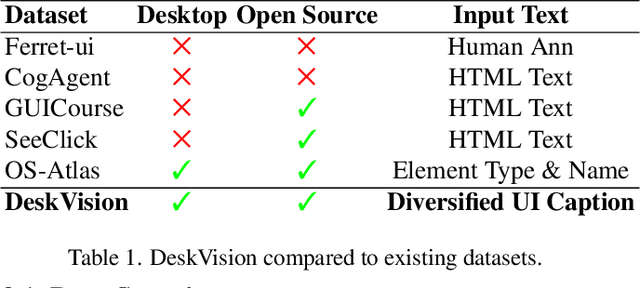
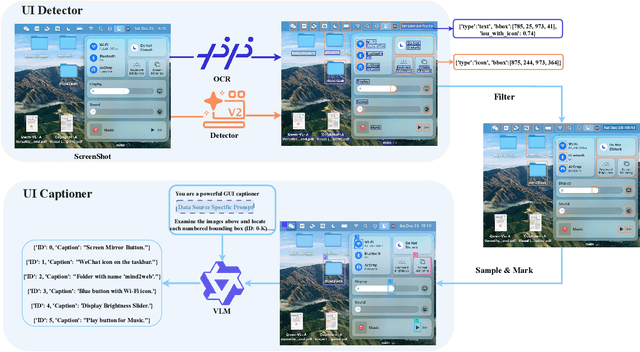
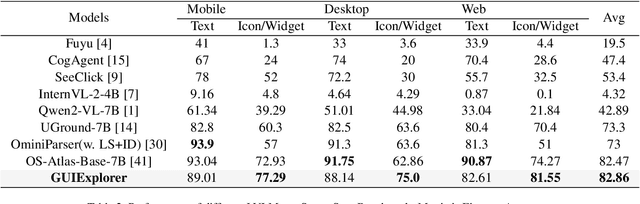
The limitation of graphical user interface (GUI) data has been a significant barrier to the development of GUI agents today, especially for the desktop / computer use scenarios. To address this, we propose an automated GUI data generation pipeline, AutoCaptioner, which generates data with rich descriptions while minimizing human effort. Using AutoCaptioner, we created a novel large-scale desktop GUI dataset, DeskVision, along with the largest desktop test benchmark, DeskVision-Eval, which reflects daily usage and covers diverse systems and UI elements, each with rich descriptions. With DeskVision, we train a new GUI understanding model, GUIExplorer. Results show that GUIExplorer achieves state-of-the-art (SOTA) performance in understanding/grounding visual elements without the need for complex architectural designs. We further validated the effectiveness of the DeskVision dataset through ablation studies on various large visual language models (LVLMs). We believe that AutoCaptioner and DeskVision will significantly advance the development of GUI agents, and will open-source them for the community.
SVIP: Semantically Contextualized Visual Patches for Zero-Shot Learning
Mar 13, 2025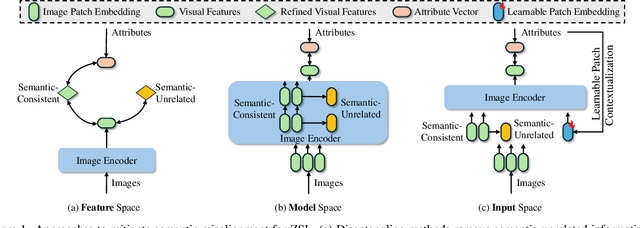
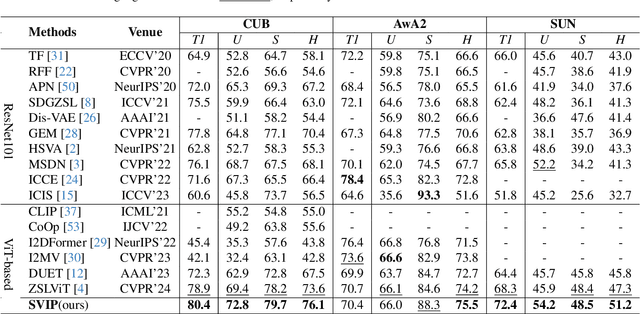
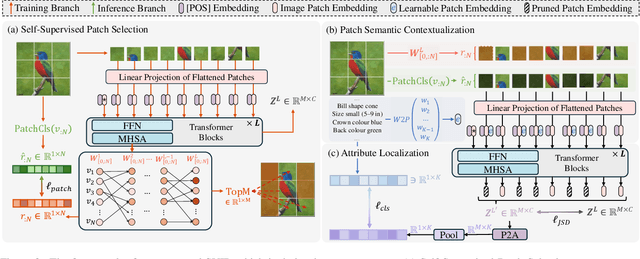
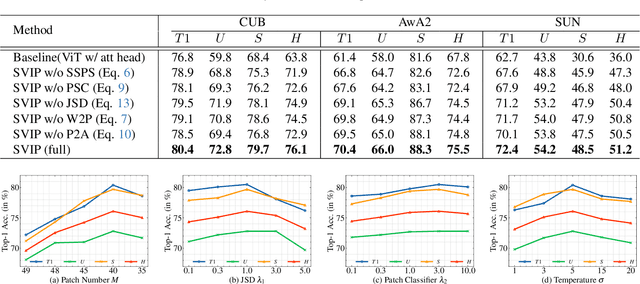
Zero-shot learning (ZSL) aims to recognize unseen classes without labeled training examples by leveraging class-level semantic descriptors such as attributes. A fundamental challenge in ZSL is semantic misalignment, where semantic-unrelated information involved in visual features introduce ambiguity to visual-semantic interaction. Unlike existing methods that suppress semantic-unrelated information post hoc either in the feature space or the model space, we propose addressing this issue at the input stage, preventing semantic-unrelated patches from propagating through the network. To this end, we introduce Semantically contextualized VIsual Patches (SVIP) for ZSL, a transformer-based framework designed to enhance visual-semantic alignment. Specifically, we propose a self-supervised patch selection mechanism that preemptively learns to identify semantic-unrelated patches in the input space. This is trained with the supervision from aggregated attention scores across all transformer layers, which estimate each patch's semantic score. As removing semantic-unrelated patches from the input sequence may disrupt object structure, we replace them with learnable patch embeddings. With initialization from word embeddings, we can ensure they remain semantically meaningful throughout feature extraction. Extensive experiments on ZSL benchmarks demonstrate that SVIP achieves state-of-the-art performance results while providing more interpretable and semantically rich feature representations.