 Add to Chrome
 Add to Firefox
 Add to Edge
Hunyuan-TurboS: Advancing Large Language Models through Mamba-Transformer Synergy and Adaptive Chain-of-Thought
May 21, 2025
As Large Language Models (LLMs) rapidly advance, we introduce Hunyuan-TurboS, a novel large hybrid Transformer-Mamba Mixture of Experts (MoE) model. It synergistically combines Mamba's long-sequence processing efficiency with Transformer's superior contextual understanding. Hunyuan-TurboS features an adaptive long-short chain-of-thought (CoT) mechanism, dynamically switching between rapid responses for simple queries and deep "thinking" modes for complex problems, optimizing computational resources. Architecturally, this 56B activated (560B total) parameter model employs 128 layers (Mamba2, Attention, FFN) with an innovative AMF/MF block pattern. Faster Mamba2 ensures linear complexity, Grouped-Query Attention minimizes KV cache, and FFNs use an MoE structure. Pre-trained on 16T high-quality tokens, it supports a 256K context length and is the first industry-deployed large-scale Mamba model. Our comprehensive post-training strategy enhances capabilities via Supervised Fine-Tuning (3M instructions), a novel Adaptive Long-short CoT Fusion method, Multi-round Deliberation Learning for iterative improvement, and a two-stage Large-scale Reinforcement Learning process targeting STEM and general instruction-following. Evaluations show strong performance: overall top 7 rank on LMSYS Chatbot Arena with a score of 1356, outperforming leading models like Gemini-2.0-Flash-001 (1352) and o4-mini-2025-04-16 (1345). TurboS also achieves an average of 77.9% across 23 automated benchmarks. Hunyuan-TurboS balances high performance and efficiency, offering substantial capabilities at lower inference costs than many reasoning models, establishing a new paradigm for efficient large-scale pre-trained models.

FragFake: A Dataset for Fine-Grained Detection of Edited Images with Vision Language Models
May 21, 2025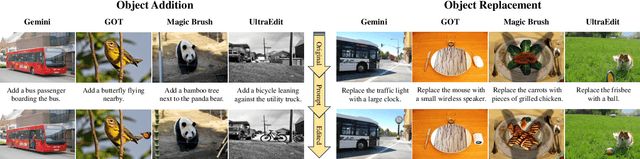
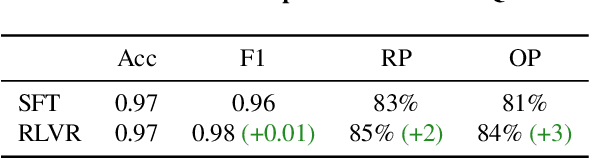
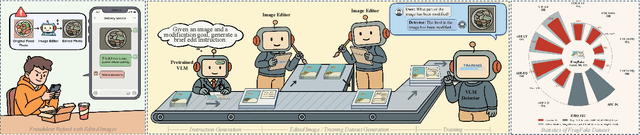
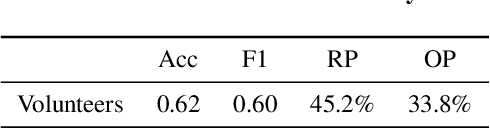
Fine-grained edited image detection of localized edits in images is crucial for assessing content authenticity, especially given that modern diffusion models and image editing methods can produce highly realistic manipulations. However, this domain faces three challenges: (1) Binary classifiers yield only a global real-or-fake label without providing localization; (2) Traditional computer vision methods often rely on costly pixel-level annotations; and (3) No large-scale, high-quality dataset exists for modern image-editing detection techniques. To address these gaps, we develop an automated data-generation pipeline to create FragFake, the first dedicated benchmark dataset for edited image detection, which includes high-quality images from diverse editing models and a wide variety of edited objects. Based on FragFake, we utilize Vision Language Models (VLMs) for the first time in the task of edited image classification and edited region localization. Experimental results show that fine-tuned VLMs achieve higher average Object Precision across all datasets, significantly outperforming pretrained models. We further conduct ablation and transferability analyses to evaluate the detectors across various configurations and editing scenarios. To the best of our knowledge, this work is the first to reformulate localized image edit detection as a vision-language understanding task, establishing a new paradigm for the field. We anticipate that this work will establish a solid foundation to facilitate and inspire subsequent research endeavors in the domain of multimodal content authenticity.
SelfBudgeter: Adaptive Token Allocation for Efficient LLM Reasoning
May 16, 2025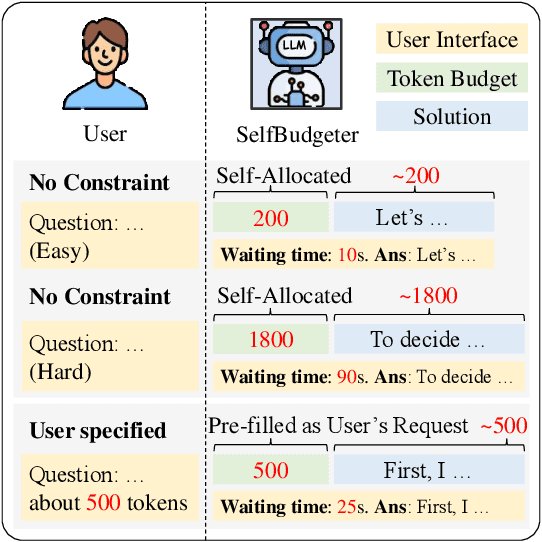
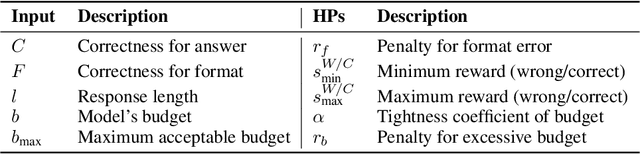
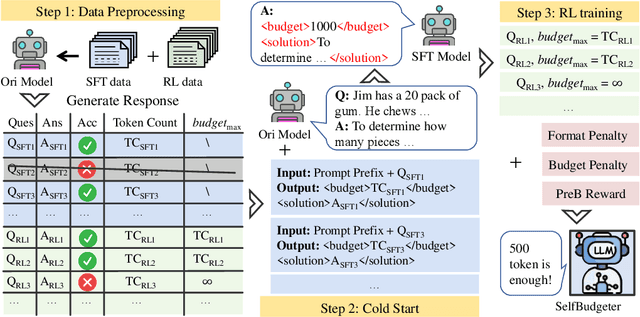
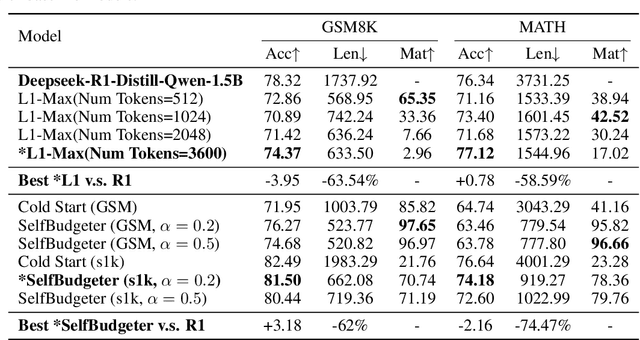
Recently, large reasoning models demonstrate exceptional performance on various tasks. However, reasoning models inefficiently over-process both trivial and complex queries, leading to resource waste and prolonged user latency. To address this challenge, we propose SelfBudgeter - a self-adaptive controllable reasoning strategy for efficient reasoning. Our approach adopts a dual-phase training paradigm: first, the model learns to pre-estimate the reasoning cost based on the difficulty of the query. Then, we introduce budget-guided GPRO for reinforcement learning, which effectively maintains accuracy while reducing output length. SelfBudgeter allows users to anticipate generation time and make informed decisions about continuing or interrupting the process. Furthermore, our method enables direct manipulation of reasoning length via pre-filling token budget. Experimental results demonstrate that SelfBudgeter can rationally allocate budgets according to problem complexity, achieving up to 74.47% response length compression on the MATH benchmark while maintaining nearly undiminished accuracy.
FloE: On-the-Fly MoE Inference on Memory-constrained GPU
May 12, 2025With the widespread adoption of Mixture-of-Experts (MoE) models, there is a growing demand for efficient inference on memory-constrained devices. While offloading expert parameters to CPU memory and loading activated experts on demand has emerged as a potential solution, the large size of activated experts overburdens the limited PCIe bandwidth, hindering the effectiveness in latency-sensitive scenarios. To mitigate this, we propose FloE, an on-the-fly MoE inference system on memory-constrained GPUs. FloE is built on the insight that there exists substantial untapped redundancy within sparsely activated experts. It employs various compression techniques on the expert's internal parameter matrices to reduce the data movement load, combined with low-cost sparse prediction, achieving perceptible inference acceleration in wall-clock time on resource-constrained devices. Empirically, FloE achieves a 9.3x compression of parameters per expert in Mixtral-8x7B; enables deployment on a GPU with only 11GB VRAM, reducing the memory footprint by up to 8.5x; and delivers a 48.7x inference speedup compared to DeepSpeed-MII on a single GeForce RTX 3090 - all with only a 4.4$\%$ - 7.6$\%$ average performance degradation.
FloE: On-the-Fly MoE Inference
May 09, 2025With the widespread adoption of Mixture-of-Experts (MoE) models, there is a growing demand for efficient inference on memory-constrained devices. While offloading expert parameters to CPU memory and loading activated experts on demand has emerged as a potential solution, the large size of activated experts overburdens the limited PCIe bandwidth, hindering the effectiveness in latency-sensitive scenarios. To mitigate this, we propose FloE, an on-the-fly MoE inference system on memory-constrained GPUs. FloE is built on the insight that there exists substantial untapped redundancy within sparsely activated experts. It employs various compression techniques on the expert's internal parameter matrices to reduce the data movement load, combined with low-cost sparse prediction, achieving perceptible inference acceleration in wall-clock time on resource-constrained devices. Empirically, FloE achieves a 9.3x compression of parameters per expert in Mixtral-8x7B; enables deployment on a GPU with only 11GB VRAM, reducing the memory footprint by up to 8.5x; and delivers a 48.7x inference speedup compared to DeepSpeed-MII on a single GeForce RTX 3090.
L3GS: Layered 3D Gaussian Splats for Efficient 3D Scene Delivery
Apr 07, 2025Traditional 3D content representations include dense point clouds that consume large amounts of data and hence network bandwidth, while newer representations such as neural radiance fields suffer from poor frame rates due to their non-standard volumetric rendering pipeline. 3D Gaussian splats (3DGS) can be seen as a generalization of point clouds that meet the best of both worlds, with high visual quality and efficient rendering for real-time frame rates. However, delivering 3DGS scenes from a hosting server to client devices is still challenging due to high network data consumption (e.g., 1.5 GB for a single scene). The goal of this work is to create an efficient 3D content delivery framework that allows users to view high quality 3D scenes with 3DGS as the underlying data representation. The main contributions of the paper are: (1) Creating new layered 3DGS scenes for efficient delivery, (2) Scheduling algorithms to choose what splats to download at what time, and (3) Trace-driven experiments from users wearing virtual reality headsets to evaluate the visual quality and latency. Our system for Layered 3D Gaussian Splats delivery L3GS demonstrates high visual quality, achieving 16.9% higher average SSIM compared to baselines, and also works with other compressed 3DGS representations.
FastCuRL: Curriculum Reinforcement Learning with Progressive Context Extension for Efficient Training R1-like Reasoning Models
Mar 21, 2025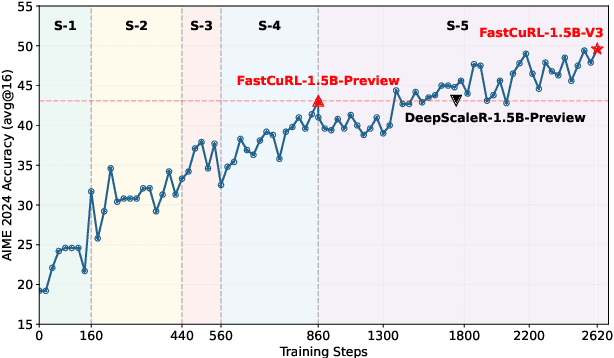
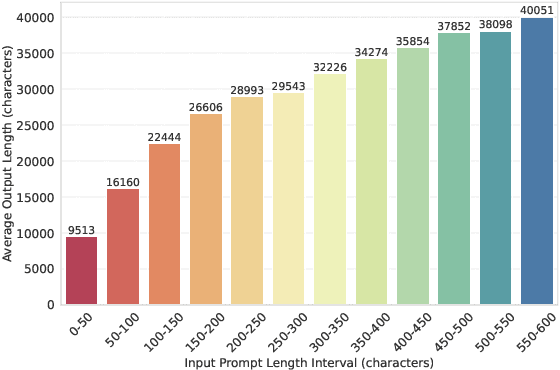
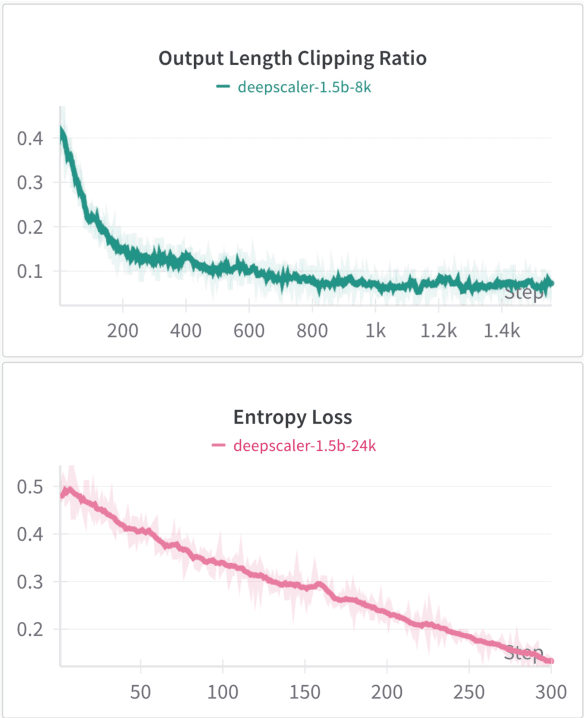

In this paper, we propose \textbf{\textsc{FastCuRL}}, a simple yet efficient \textbf{Cu}rriculum \textbf{R}einforcement \textbf{L}earning approach with context window extending strategy to accelerate the reinforcement learning training efficiency for R1-like reasoning models while enhancing their performance in tackling complex reasoning tasks with long chain-of-thought rationales, particularly with a 1.5B parameter language model. \textbf{\textsc{FastCuRL}} consists of two main procedures: length-aware training data segmentation and context window extension training. Specifically, the former first splits the original training data into three different levels by the input prompt length, and then the latter leverages segmented training datasets with a progressively increasing context window length to train the reasoning model. Experimental results demonstrate that \textbf{\textsc{FastCuRL}}-1.5B-Preview surpasses DeepScaleR-1.5B-Preview across all five datasets (including MATH 500, AIME 2024, AMC 2023, Minerva Math, and OlympiadBench) while only utilizing 50\% of training steps. Furthermore, all training stages for FastCuRL-1.5B-Preview are completed using just a single node with 8 GPUs.
Understanding Driver Cognition and Decision-Making Behaviors in High-Risk Scenarios: A Drift Diffusion Perspective
Mar 16, 2025
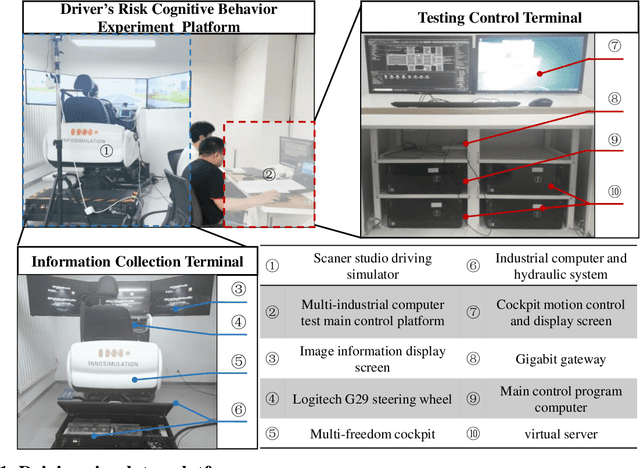
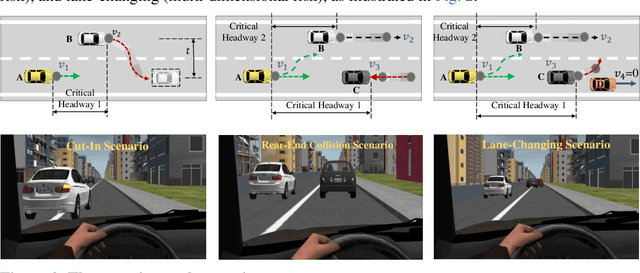
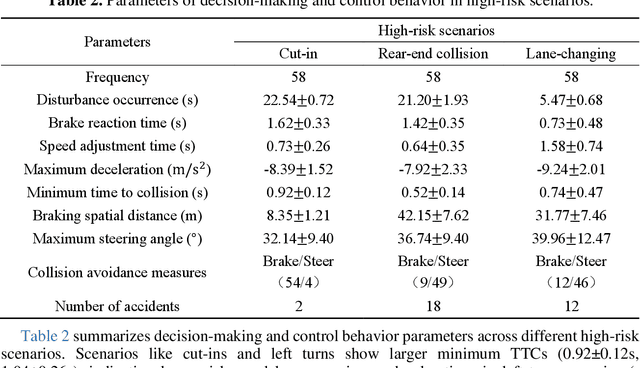
Ensuring safe interactions between autonomous vehicles (AVs) and human drivers in mixed traffic systems remains a major challenge, particularly in complex, high-risk scenarios. This paper presents a cognition-decision framework that integrates individual variability and commonalities in driver behavior to quantify risk cognition and model dynamic decision-making. First, a risk sensitivity model based on a multivariate Gaussian distribution is developed to characterize individual differences in risk cognition. Then, a cognitive decision-making model based on the drift diffusion model (DDM) is introduced to capture common decision-making mechanisms in high-risk environments. The DDM dynamically adjusts decision thresholds by integrating initial bias, drift rate, and boundary parameters, adapting to variations in speed, relative distance, and risk sensitivity to reflect diverse driving styles and risk preferences. By simulating high-risk scenarios with lateral, longitudinal, and multidimensional risk sources in a driving simulator, the proposed model accurately predicts cognitive responses and decision behaviors during emergency maneuvers. Specifically, by incorporating driver-specific risk sensitivity, the model enables dynamic adjustments of key DDM parameters, allowing for personalized decision-making representations in diverse scenarios. Comparative analysis with IDM, Gipps, and MOBIL demonstrates that DDM more precisely captures human cognitive processes and adaptive decision-making in high-risk scenarios. These findings provide a theoretical basis for modeling human driving behavior and offer critical insights for enhancing AV-human interaction in real-world traffic environments.
KnowLogic: A Benchmark for Commonsense Reasoning via Knowledge-Driven Data Synthesis
Mar 08, 2025Current evaluations of commonsense reasoning in LLMs are hindered by the scarcity of natural language corpora with structured annotations for reasoning tasks. To address this, we introduce KnowLogic, a benchmark generated through a knowledge-driven synthetic data strategy. KnowLogic integrates diverse commonsense knowledge, plausible scenarios, and various types of logical reasoning. One of the key advantages of KnowLogic is its adjustable difficulty levels, allowing for flexible control over question complexity. It also includes fine-grained labels for in-depth evaluation of LLMs' reasoning abilities across multiple dimensions. Our benchmark consists of 3,000 bilingual (Chinese and English) questions across various domains, and presents significant challenges for current LLMs, with the highest-performing model achieving only 69.57\%. Our analysis highlights common errors, such as misunderstandings of low-frequency commonsense, logical inconsistencies, and overthinking. This approach, along with our benchmark, provides a valuable tool for assessing and enhancing LLMs' commonsense reasoning capabilities and can be applied to a wide range of knowledge domains.
Anti-Diffusion: Preventing Abuse of Modifications of Diffusion-Based Models
Mar 07, 2025Although diffusion-based techniques have shown remarkable success in image generation and editing tasks, their abuse can lead to severe negative social impacts. Recently, some works have been proposed to provide defense against the abuse of diffusion-based methods. However, their protection may be limited in specific scenarios by manually defined prompts or the stable diffusion (SD) version. Furthermore, these methods solely focus on tuning methods, overlooking editing methods that could also pose a significant threat. In this work, we propose Anti-Diffusion, a privacy protection system designed for general diffusion-based methods, applicable to both tuning and editing techniques. To mitigate the limitations of manually defined prompts on defense performance, we introduce the prompt tuning (PT) strategy that enables precise expression of original images. To provide defense against both tuning and editing methods, we propose the semantic disturbance loss (SDL) to disrupt the semantic information of protected images. Given the limited research on the defense against editing methods, we develop a dataset named Defense-Edit to assess the defense performance of various methods. Experiments demonstrate that our Anti-Diffusion achieves superior defense performance across a wide range of diffusion-based techniques in different scenarios.