 Add to Chrome
 Add to Firefox
 Add to Edge
Cost-effective Instruction Learning for Pathology Vision and Language Analysis
Jul 25, 2024
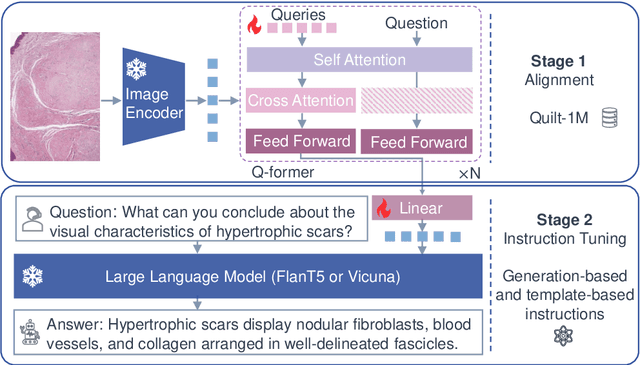
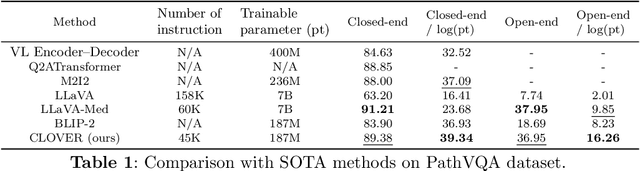
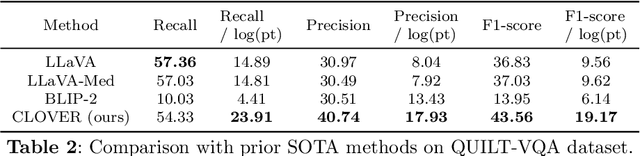
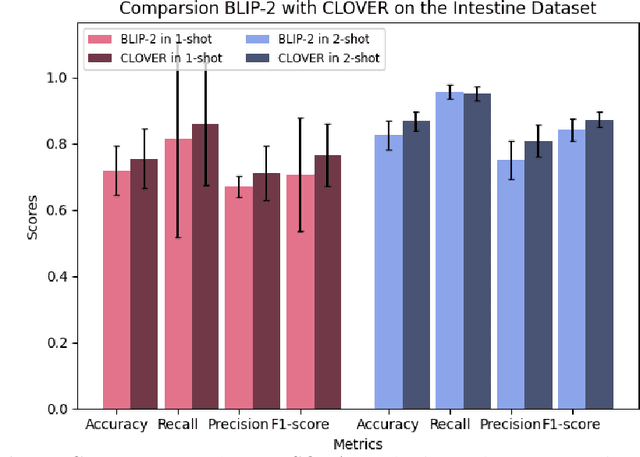
The advent of vision-language models fosters the interactive conversations between AI-enabled models and humans. Yet applying these models into clinics must deal with daunting challenges around large-scale training data, financial, and computational resources. Here we propose a cost-effective instruction learning framework for conversational pathology named as CLOVER. CLOVER only trains a lightweight module and uses instruction tuning while freezing the parameters of the large language model. Instead of using costly GPT-4, we propose well-designed prompts on GPT-3.5 for building generation-based instructions, emphasizing the utility of pathological knowledge derived from the Internet source. To augment the use of instructions, we construct a high-quality set of template-based instructions in the context of digital pathology. From two benchmark datasets, our findings reveal the strength of hybrid-form instructions in the visual question-answer in pathology. Extensive results show the cost-effectiveness of CLOVER in answering both open-ended and closed-ended questions, where CLOVER outperforms strong baselines that possess 37 times more training parameters and use instruction data generated from GPT-4. Through the instruction tuning, CLOVER exhibits robustness of few-shot learning in the external clinical dataset. These findings demonstrate that cost-effective modeling of CLOVER could accelerate the adoption of rapid conversational applications in the landscape of digital pathology.

Dynamic Graph Transformer with Correlated Spatial-Temporal Positional Encoding
Jul 24, 2024
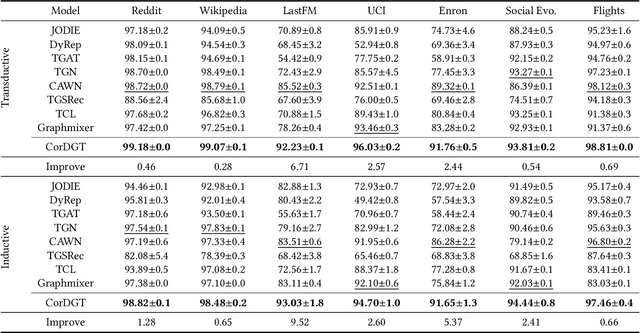

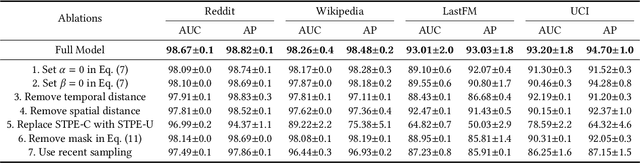
Learning effective representations for Continuous-Time Dynamic Graphs (CTDGs) has garnered significant research interest, largely due to its powerful capabilities in modeling complex interactions between nodes. A fundamental and crucial requirement for representation learning in CTDGs is the appropriate estimation and preservation of proximity. However, due to the sparse and evolving characteristics of CTDGs, the spatial-temporal properties inherent in high-order proximity remain largely unexplored. Despite its importance, this property presents significant challenges due to the computationally intensive nature of personalized interaction intensity estimation and the dynamic attributes of CTDGs. To this end, we propose a novel Correlated Spatial-Temporal Positional encoding that incorporates a parameter-free personalized interaction intensity estimation under the weak assumption of the Poisson Point Process. Building on this, we introduce the Dynamic Graph Transformer with \Correlated Spatial-Temporal Positional Encoding (CorDGT), which efficiently retains the evolving spatial-temporal high-order proximity for effective node representation learning in CTDGs. Extensive experiments on seven small and two large-scale datasets demonstrate the superior performance and scalability of the proposed CorDGT.
Near-Field User Localization and Channel Estimation for XL-MIMO Systems: Fundamentals, Recent Advances, and Outlooks
Jul 14, 2024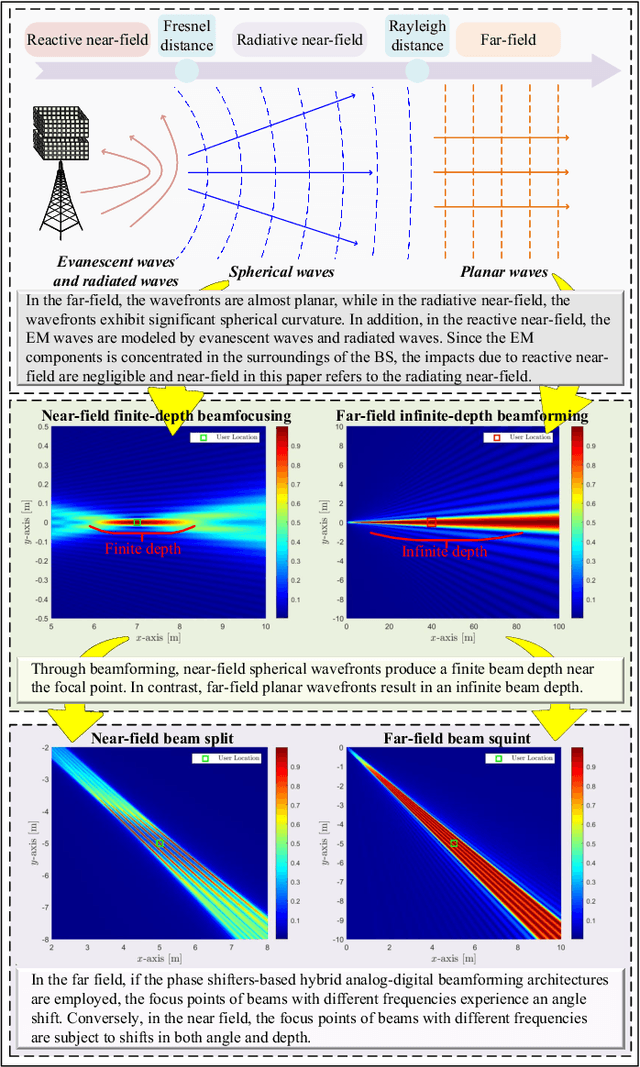
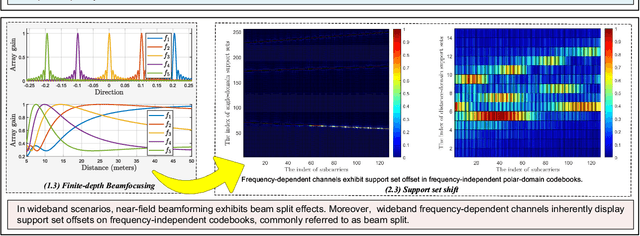
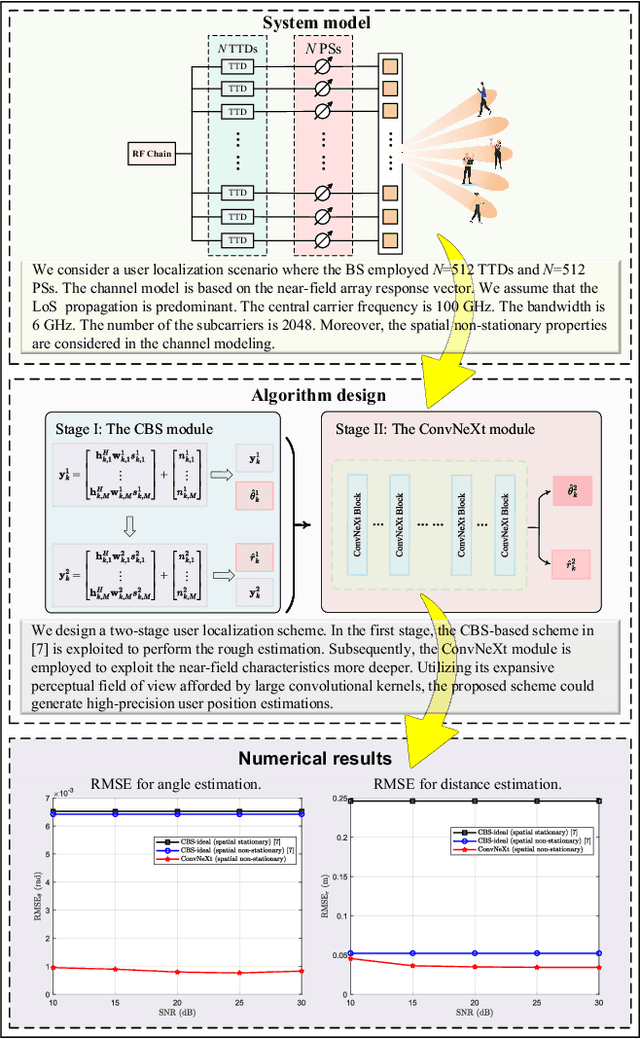
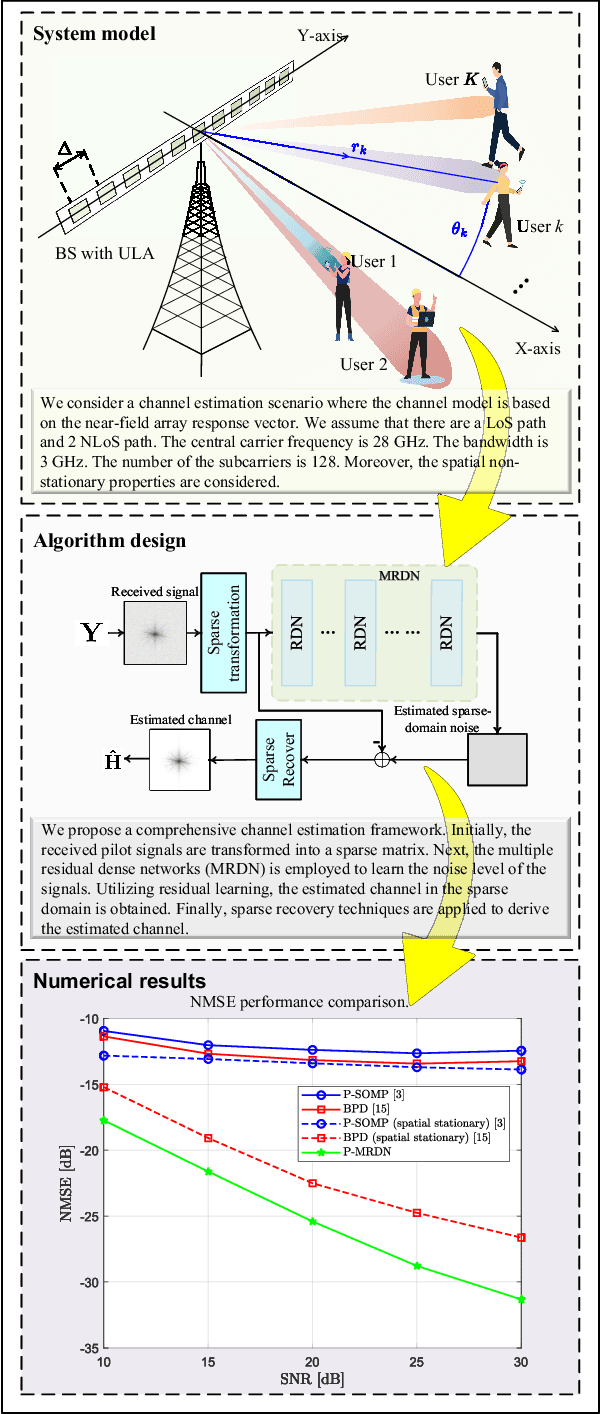
Extremely large-scale multiple-input multipleoutput (XL-MIMO) is believed to be a cornerstone of sixth-generation (6G) wireless networks. XL-MIMO uses more antennas to both achieve unprecedented spatial degrees of freedom (DoFs) and exploit new electromagnetic (EM) phenomena occurring in the radiative near-field. The near-field effects provide the XL-MIMO array with depth perception, enabling precise localization and spatially multiplexing jointly in the angle and distance domains. This article delineates the distinctions between near-field and far-field propagation, highlighting the unique EM characteristics introduced by having large antenna arrays. It thoroughly examines the challenges these new near-field characteristics pose for user localization and channel estimation and provides a comprehensive review of new algorithms developed to address them. The article concludes by identifying critical future research directions.
LPViT: Low-Power Semi-structured Pruning for Vision Transformers
Jul 02, 2024Vision transformers have emerged as a promising alternative to convolutional neural networks for various image analysis tasks, offering comparable or superior performance. However, one significant drawback of ViTs is their resource-intensive nature, leading to increased memory footprint, computation complexity, and power consumption. To democratize this high-performance technology and make it more environmentally friendly, it is essential to compress ViT models, reducing their resource requirements while maintaining high performance. In this paper, we introduce a new block-structured pruning to address the resource-intensive issue for ViTs, offering a balanced trade-off between accuracy and hardware acceleration. Unlike unstructured pruning or channel-wise structured pruning, block pruning leverages the block-wise structure of linear layers, resulting in more efficient matrix multiplications. To optimize this pruning scheme, our paper proposes a novel hardware-aware learning objective that simultaneously maximizes speedup and minimizes power consumption during inference, tailored to the block sparsity structure. This objective eliminates the need for empirical look-up tables and focuses solely on reducing parametrized layer connections. Moreover, our paper provides a lightweight algorithm to achieve post-training pruning for ViTs, utilizing second-order Taylor approximation and empirical optimization to solve the proposed hardware-aware objective. Extensive experiments on ImageNet are conducted across various ViT architectures, including DeiT-B and DeiT-S, demonstrating competitive performance with other pruning methods and achieving a remarkable balance between accuracy preservation and power savings. Especially, we achieve up to 3.93x and 1.79x speedups on dedicated hardware and GPUs respectively for DeiT-B, and also observe an inference power reduction by 1.4x on real-world GPUs.
DM3D: Distortion-Minimized Weight Pruning for Lossless 3D Object Detection
Jul 02, 2024
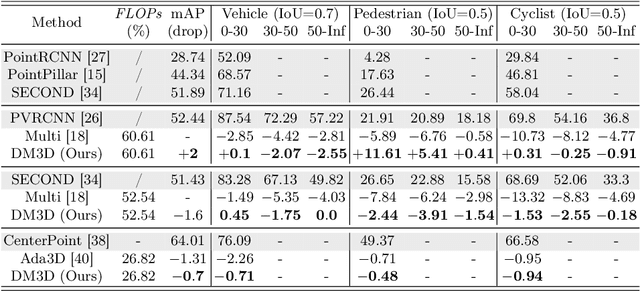

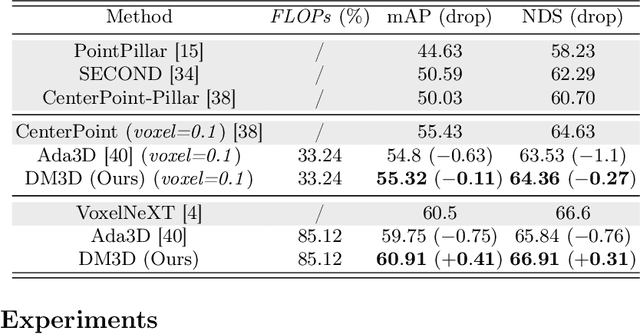
Applying deep neural networks to 3D point cloud processing has attracted increasing attention due to its advanced performance in many areas, such as AR/VR, autonomous driving, and robotics. However, as neural network models and 3D point clouds expand in size, it becomes a crucial challenge to reduce the computational and memory overhead to meet latency and energy constraints in real-world applications. Although existing approaches have proposed to reduce both computational cost and memory footprint, most of them only address the spatial redundancy in inputs, i.e. removing the redundancy of background points in 3D data. In this paper, we propose a novel post-training weight pruning scheme for 3D object detection that is (1) orthogonal to all existing point cloud sparsifying methods, which determines redundant parameters in the pretrained model that lead to minimal distortion in both locality and confidence (detection distortion); and (2) a universal plug-and-play pruning framework that works with arbitrary 3D detection model. This framework aims to minimize detection distortion of network output to maximally maintain detection precision, by identifying layer-wise sparsity based on second-order Taylor approximation of the distortion. Albeit utilizing second-order information, we introduced a lightweight scheme to efficiently acquire Hessian information, and subsequently perform dynamic programming to solve the layer-wise sparsity. Extensive experiments on KITTI, Nuscenes and ONCE datasets demonstrate that our approach is able to maintain and even boost the detection precision on pruned model under noticeable computation reduction (FLOPs). Noticeably, we achieve over 3.89x, 3.72x FLOPs reduction on CenterPoint and PVRCNN model, respectively, without mAP decrease, significantly improving the state-of-the-art.
Decision Transformer for IRS-Assisted Systems with Diffusion-Driven Generative Channels
Jun 28, 2024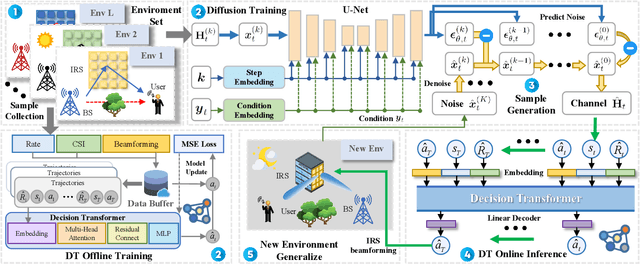
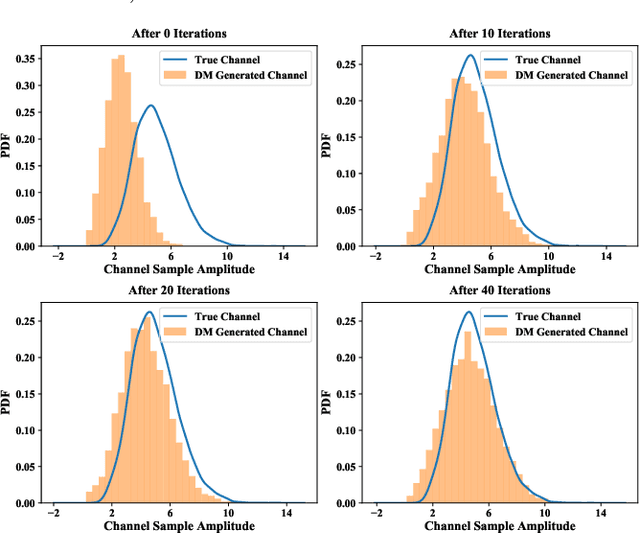
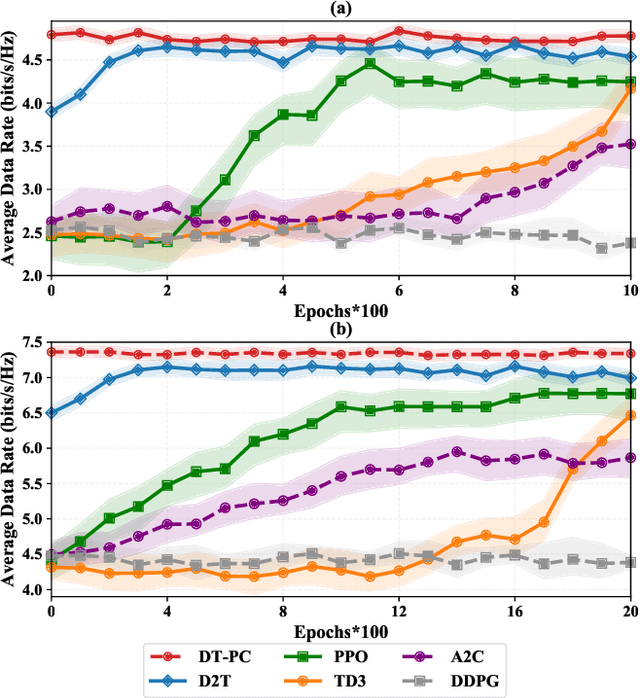
In this paper, we propose a novel diffusion-decision transformer (D2T) architecture to optimize the beamforming strategies for intelligent reflecting surface (IRS)-assisted multiple-input single-output (MISO) communication systems. The first challenge lies in the expensive computation cost to recover the real-time channel state information (CSI) from the received pilot signals, which usually requires prior knowledge of the channel distributions. To reduce the channel estimation complexity, we adopt a diffusion model to automatically learn the mapping between the received pilot signals and channel matrices in a model-free manner. The second challenge is that, the traditional optimization or reinforcement learning (RL) algorithms cannot guarantee the optimality of the beamforming policies once the channel distribution changes, and it is costly to resolve the optimized strategies. To enhance the generality of the decision models over varying channel distributions, we propose an offline pre-training and online fine-tuning decision transformer (DT) framework, wherein we first pre-train the DT offline with the data samples collected by the RL algorithms under diverse channel distributions, and then fine-tune the DT online with few-shot samples under a new channel distribution for a generalization purpose. Simulation results demonstrate that, compared with retraining RL algorithms, the proposed D2T algorithm boosts the convergence speed by 3 times with only a few samples from the new channel distribution while enhancing the average user data rate by 6%.
Towards Real-Time Neural Volumetric Rendering on Mobile Devices: A Measurement Study
Jun 23, 2024Neural Radiance Fields (NeRF) is an emerging technique to synthesize 3D objects from 2D images with a wide range of potential applications. However, rendering existing NeRF models is extremely computation intensive, making it challenging to support real-time interaction on mobile devices. In this paper, we take the first initiative to examine the state-of-the-art real-time NeRF rendering technique from a system perspective. We first define the entire working pipeline of the NeRF serving system. We then identify possible control knobs that are critical to the system from the communication, computation, and visual performance perspective. Furthermore, an extensive measurement study is conducted to reveal the effects of these control knobs on system performance. Our measurement results reveal that different control knobs contribute differently towards improving the system performance, with the mesh granularity being the most effective knob and the quantization being the least effective knob. In addition, diverse hardware device settings and network conditions have to be considered to fully unleash the benefit of operating under the appropriate knobs
Simplified and Generalized Masked Diffusion for Discrete Data
Jun 06, 2024Masked (or absorbing) diffusion is actively explored as an alternative to autoregressive models for generative modeling of discrete data. However, existing work in this area has been hindered by unnecessarily complex model formulations and unclear relationships between different perspectives, leading to suboptimal parameterization, training objectives, and ad hoc adjustments to counteract these issues. In this work, we aim to provide a simple and general framework that unlocks the full potential of masked diffusion models. We show that the continuous-time variational objective of masked diffusion models is a simple weighted integral of cross-entropy losses. Our framework also enables training generalized masked diffusion models with state-dependent masking schedules. When evaluated by perplexity, our models trained on OpenWebText surpass prior diffusion language models at GPT-2 scale and demonstrate superior performance on 4 out of 5 zero-shot language modeling tasks. Furthermore, our models vastly outperform previous discrete diffusion models on pixel-level image modeling, achieving 2.78~(CIFAR-10) and 3.42 (ImageNet 64$\times$64) bits per dimension that are comparable or better than autoregressive models of similar sizes.
Hybrid-Field Channel Estimation for XL-MIMO Systems with Stochastic Gradient Pursuit Algorithm
May 24, 2024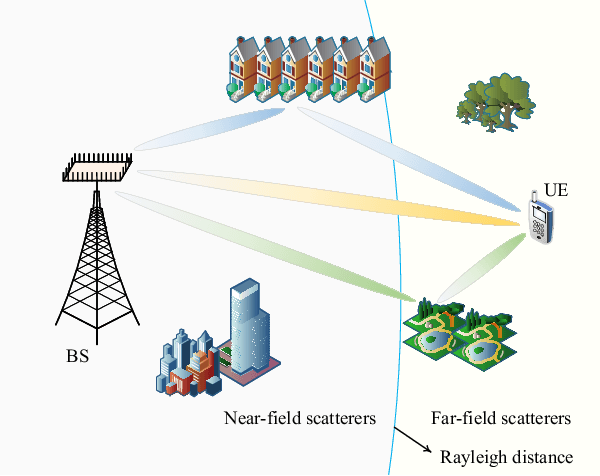
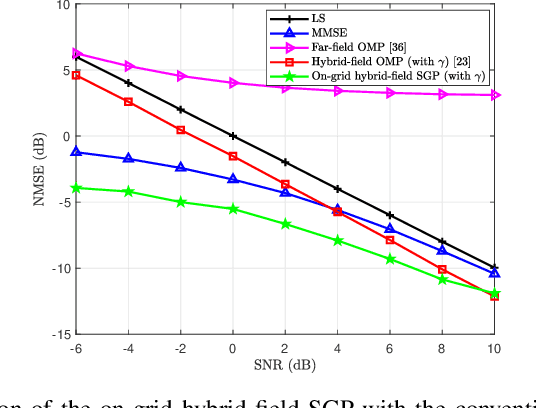
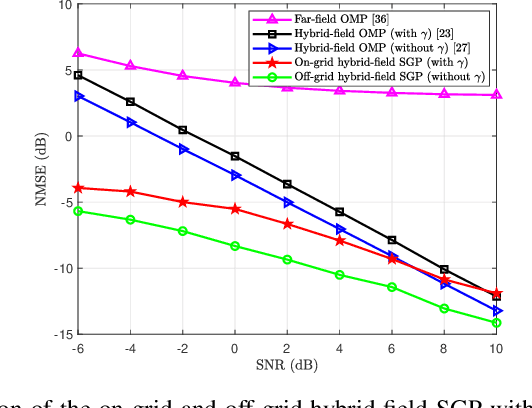
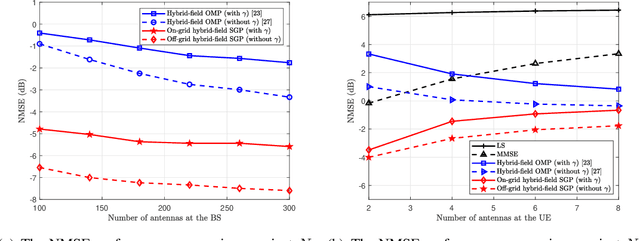
Extremely large-scale multiple-input multiple-output (XL-MIMO) is crucial for satisfying the high data rate requirements of the sixth-generation (6G) wireless networks. In this context, ensuring accurate acquisition of channel state information (CSI) with low complexity becomes imperative. Moreover, deploying an extremely large antenna array at the base station (BS) might result in some scatterers being located in near-field, while others are situated in far-field, leading to a hybrid-field communication scenario. To address these challenges, this paper introduces two stochastic gradient pursuit (SGP)-based schemes for the hybrid-field channel estimation in two scenarios. For the first scenario in which the prior knowledge of the specific proportion of the number of near-field and far-field channel paths is known, the scheme can effectively leverage the angular-domain sparsity of the far-field channels and the polar-domain sparsity of the near-field channels such that the channel estimation in these two fields can be performed separately. For the second scenario which the proportion is not available, we propose an off-grid SGP-based channel estimation scheme, which iterates through the values of the proportion parameter based on a criterion before performing the hybrid-field channel estimation. We demonstrate numerically that both of the proposed channel estimation schemes achieve superior performance in terms of both estimation accuracy and achievable rates while enjoying lower computational complexity compared with existing schemes. Additionally, we reveal that as the number of antennas at the UE increases, the normalized mean square error (NMSE) performances of the proposed schemes remain basically unchanged, while the NMSE performances of existing ones improve. Remarkably, even in this scenario, the proposed schemes continue to outperform the existing ones.
From Algorithm to Hardware: A Survey on Efficient and Safe Deployment of Deep Neural Networks
May 09, 2024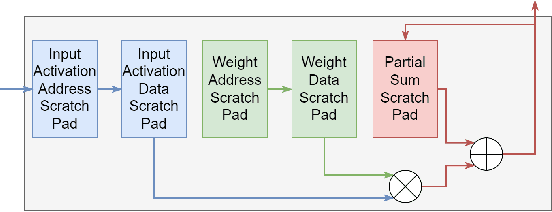
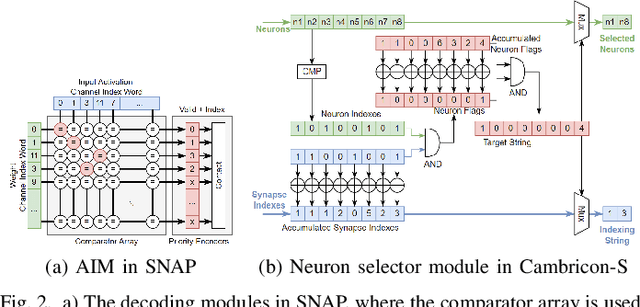
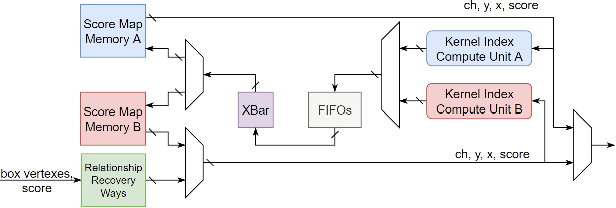
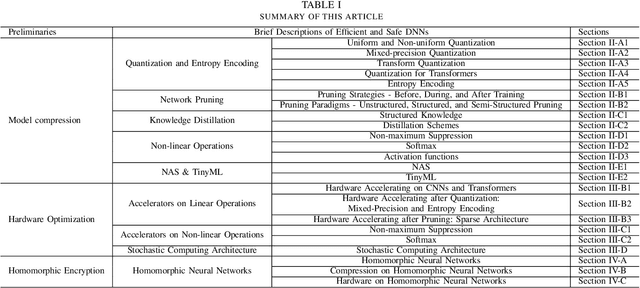
Deep neural networks (DNNs) have been widely used in many artificial intelligence (AI) tasks. However, deploying them brings significant challenges due to the huge cost of memory, energy, and computation. To address these challenges, researchers have developed various model compression techniques such as model quantization and model pruning. Recently, there has been a surge in research of compression methods to achieve model efficiency while retaining the performance. Furthermore, more and more works focus on customizing the DNN hardware accelerators to better leverage the model compression techniques. In addition to efficiency, preserving security and privacy is critical for deploying DNNs. However, the vast and diverse body of related works can be overwhelming. This inspires us to conduct a comprehensive survey on recent research toward the goal of high-performance, cost-efficient, and safe deployment of DNNs. Our survey first covers the mainstream model compression techniques such as model quantization, model pruning, knowledge distillation, and optimizations of non-linear operations. We then introduce recent advances in designing hardware accelerators that can adapt to efficient model compression approaches. Additionally, we discuss how homomorphic encryption can be integrated to secure DNN deployment. Finally, we discuss several issues, such as hardware evaluation, generalization, and integration of various compression approaches. Overall, we aim to provide a big picture of efficient DNNs, from algorithm to hardware accelerators and security perspectives.