 Add to Chrome
 Add to Firefox
 Add to Edge
PathView-Bench: Can Multimodal Large Language Models Achieve Fine-grained Multiscale Understanding of Pathology Images?
Jul 30, 2026
Multimodal large language models (MLLMs) are increasingly used to analyze pathology images. However, dominant multimodal benchmarks in pathology mainly score final diagnostic answers, captions, or reports. These evaluations provide limited insight into whether a model understands the multiscale visual content needed for pathology reasoning and decision-making. We introduce PathVU, a vision-anchored benchmark for fine-grained and multiscale visual understanding in computational pathology. Built from 23 public pathology imaging datasets with human-supervised labels and spatial annotations, PathVU evaluates MLLM understanding in two fields of view: Region FOV for high-resolution local regions and Slide FOV for macro whole-slide views. By converting raw annotations into deterministic task targets, PathVU enables programmatic scoring of region localization, visual recognition, quantity estimation, spatial reasoning, and insufficient-context judgment. The benchmark contains 14 VQA-style tasks, 61,673 images, and 308,070 samples across 28 organs and 7,253,526 annotations. Evaluating 18 representative general-purpose, medical-domain, and pathology-oriented MLLMs, we observe substantial limitations even in advanced models on fine-grained visual tasks across multiscale pathology images. PathVU provides a reproducible basis for developing and evaluating pathology MLLMs with explicit multiscale visual understanding.

Harmonized Interpretable ECG Waveform Features for Robust Cross-Dataset Clinical Prediction
Jul 26, 2026Electrocardiograms (ECGs) are widely used for cardiovascular risk prediction, yet models often fail to transfer across hospitals because of protocol, population, and measurement differences. We benchmark cross-dataset generalization on three tasks - heart failure classification, 30-day all-cause mortality, and 30-day mortality among sinus-rhythm ECGs - using two large cohorts (MIMIC-IV and the Alberta Cohort). To reduce vendor-specific measurement mismatch, we build a harmonized, interpretable feature representation computed directly from raw waveforms: FeatureDB morphology/heart-rate-variability summaries plus compact time-frequency descriptors (autoregressive and wavelet features). We train XGBoost models on this unified feature space and evaluate with patient-disjoint internal and bidirectional external testing. We pre-specify two hypotheses: (H1) external AUROC retains at least 90% of source-site internal AUROC under transfer, and (H2) internal AUROC of the harmonized feature set stays within 10% of dataset-native machine-measurement models. Across tasks, internal AUROC is 0.79-0.82 and cross-dataset AUROC is 0.74-0.78, with larger and direction-dependent AUPRC shifts under transfer. As an exploratory benchmark, an end-to-end ConvNeXt model trained directly on raw ECG waveforms with age and sex achieves higher internal AUROC, while the harmonized representation remains competitive in relative cross-dataset transfer stability. These findings show that a consistent waveform-derived feature interface preserves performance, supports realistic external validation, and provides a transparent alternative for cross-site clinical prediction.
Evaluating Agentic Harness Systems for Autonomous Computational Pathology
Jul 01, 2026Autonomous computational pathology (ACP) converts high-level pathology analysis goals into executable, traceable and clinically bounded workflows. Realizing this capability requires adapting general agentic harness systems to pathology-specific tasks, tools, evidence standards and clinical claim boundaries. We contribute ACP-Bench, a framework that adapts existing harness systems from computational pathology support toward ACP workflow capability. ACP-Bench evaluates 41 pathology workflow tasks, including 24 biomarker, 7 morphology and 10 prognosis tasks spanning 6 body-system groups and 9 endpoint families. The benchmark evaluates 9 models and 3 harness groups (Claude Code, Codex and Open Code), yielding 369 complete trajectories. ACP-Bench evaluates each trajectory across workflow execution, diagnostic performance and clinical-boundary alignment, combining expert-adjudicated process audits, diagnostic assessment and pathologist-validated safety review. Across evaluated systems, workflow initiation, task interpretation and diagnostic reporting were more mature than tool-bound execution, result binding and reflective workflow revision, and formal end-to-end completion remained rare. ACP-Bench provides a reusable standard for auditing whether agentic systems can operationalize pathology workflows before claims of reliable clinical autonomy.
Modeling Cell-Cycle-Aware Single-Cell Drug Perturbation Responses
Jun 29, 2026Single-cell drug perturbation models should predict not only transcriptional response magnitude, but also whether a treatment alters the proliferative state of a cell. This is challenging because cell-cycle variation is often treated as nuisance variation, and benchmark pipelines rarely treat drug-induced phase changes as a primary prediction target. We introduce scCycleMol, a cell-cycle-aware perturbation prediction framework built on a curated 24-hour SciPlex3 benchmark with standardized molecule identities, dose and cell-line metadata, and gene expression with cell-cycle supervision derived from treated states. Instead of using cell-cycle state as an input covariate, scCycleMol derives supervision from predicted treated expression and propagates it through a learnable full-expression cell-cycle head with circular G1/S/G2M phase targets. We evaluate marker-based supervision, molecular representations, and pretraining strategies to isolate sources of improvement. Across a SciPlex3 benchmark with over 600k cells, 186 perturbation conditions, multiple cancer cell lines, and thousands of genes, scCycleMol improves out-of-distribution expression prediction compared with conditional perturbation baselines. The best LINCS-pretrained circular model achieves 0.9093 expected all-gene r squared and 0.6843 expected differentially expressed gene r squared, compared with 0.6800 and 0.5400 for LINCS-pretrained ChemCPA. Closed-loop cell-cycle supervision improves phase accuracy by about 0.5 to 0.6 points while maintaining nearly unchanged expression prediction. A Tahoe-pretrained variant reaches 0.9609 phase accuracy, highlighting the benefit of explicit cell-cycle-aware supervision in perturbation modeling.
Preferences Order, Ratings Anchor: From Fused Expert Aesthetic Ground Truth to Self-Distillation
May 20, 2026Pairwise preferences and pointwise ratings are the two dominant annotation protocols in image aesthetic assessment (IAA), yet existing benchmarks adopt only one, leaving their complementarity unmeasured under controlled conditions. We introduce PPaint, a matched dual-protocol benchmark in which 15 domain experts, 5 per category, annotate 150 Chinese paintings under both protocols across five aesthetic dimensions, collecting 45,900 pairwise expert judgments through a locally dense preference design alongside the matched ratings. The matched design reveals complementary strengths: preferences yield more consistent ordinal rankings, while ratings anchor the absolute score scale. Fusing both signals via two independent preference-to-score methods yields a fused expert ground truth on which the two constructions converge to nearly identical scores. The same preference-to-score principle extends to label-free VLM training. PSDistill converts VLM pairwise judgments into calibrated pseudo-scores via an Elo reference pool, and trains the same VLM with confidence-weighted ranking optimization to produce a single-pass aesthetic scorer. Trained on a single painting category, the distilled Qwen3-VL-8B improves mean SRCC from 0.504 to 0.709 across all three categories, outperforming all open-source baselines including the dedicated aesthetic model ArtiMuse and matching closed-source Gemini-3.1-Pro within 0.04 SRCC at single-pass inference cost, with cross-domain transfer further validated on APDDv2. We will release the full PPaint dataset and training code.
A scalable neural bundle map for multiphysics prediction in lithium-ion battery across varying configurations
Mar 17, 2026Efficient and accurate prediction of Multiphysics evolution across diverse cell geometries is fundamental to the design, management and safety of lithium-ion batteries. However, existing computational frameworks struggle to capture the coupled electrochemical, thermal, and mechanical dynamics across diverse cell geometries and varying operating conditions. Here, we present a Neural Bundle Map (NBM), a mathematically rigorous framework that reformulates multiphysics evolution as a bundle map over a geometric base manifold. This approach enables the complete decoupling of geometric complexity from underlying physical laws, ensuring strong operator continuity across varying domains. Our framework achieves high-fidelity spatiotemporal predictions with a normalized mean absolute error of less than 1% across varying configurations, while maintaining stability during long-horizon forecasting far beyond the training window and reducing computational costs by two orders of magnitude compared with conventional solvers. Leveraging this capability, we rapidly explored a vast configurational space to identify an optimal battery design that yields a 38% increase in energy density while adhering to thermal safety constraints. Furthermore, the NBM demonstrates remarkable scalability to multi-cell systems through few-shot transfer learning, providing a foundational paradigm for the intelligent design and real-time monitoring of complex energy storage infrastructures.
MSECG: Incorporating Mamba for Robust and Efficient ECG Super-Resolution
Dec 06, 2024Electrocardiogram (ECG) signals play a crucial role in diagnosing cardiovascular diseases. To reduce power consumption in wearable or portable devices used for long-term ECG monitoring, super-resolution (SR) techniques have been developed, enabling these devices to collect and transmit signals at a lower sampling rate. In this study, we propose MSECG, a compact neural network model designed for ECG SR. MSECG combines the strength of the recurrent Mamba model with convolutional layers to capture both local and global dependencies in ECG waveforms, allowing for the effective reconstruction of high-resolution signals. We also assess the model's performance in real-world noisy conditions by utilizing ECG data from the PTB-XL database and noise data from the MIT-BIH Noise Stress Test Database. Experimental results show that MSECG outperforms two contemporary ECG SR models under both clean and noisy conditions while using fewer parameters, offering a more powerful and robust solution for long-term ECG monitoring applications.
Adversarial Detection with a Dynamically Stable System
Nov 11, 2024
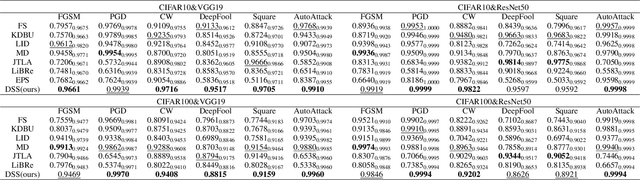
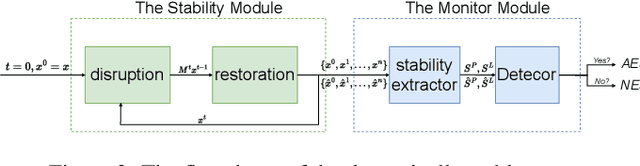
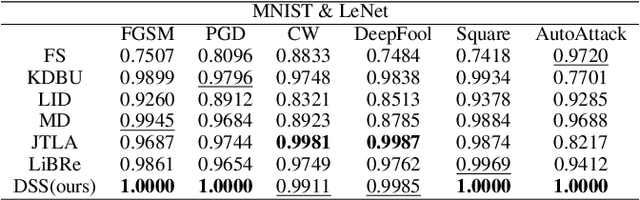
Adversarial detection is designed to identify and reject maliciously crafted adversarial examples(AEs) which are generated to disrupt the classification of target models. Presently, various input transformation-based methods have been developed on adversarial example detection, which typically rely on empirical experience and lead to unreliability against new attacks. To address this issue, we propose and conduct a Dynamically Stable System (DSS), which can effectively detect the adversarial examples from normal examples according to the stability of input examples. Particularly, in our paper, the generation of adversarial examples is considered as the perturbation process of a Lyapunov dynamic system, and we propose an example stability mechanism, in which a novel control term is added in adversarial example generation to ensure that the normal examples can achieve dynamic stability while the adversarial examples cannot achieve the stability. Then, based on the proposed example stability mechanism, a Dynamically Stable System (DSS) is proposed, which can utilize the disruption and restoration actions to determine the stability of input examples and detect the adversarial examples through changes in the stability of the input examples. In comparison with existing methods in three benchmark datasets(MNIST, CIFAR10, and CIFAR100), our evaluation results show that our proposed DSS can achieve ROC-AUC values of 99.83%, 97.81% and 94.47%, surpassing the state-of-the-art(SOTA) values of 97.35%, 91.10% and 93.49% in the other 7 methods.
SimuSOE: A Simulated Snoring Dataset for Obstructive Sleep Apnea-Hypopnea Syndrome Evaluation during Wakefulness
Jul 10, 2024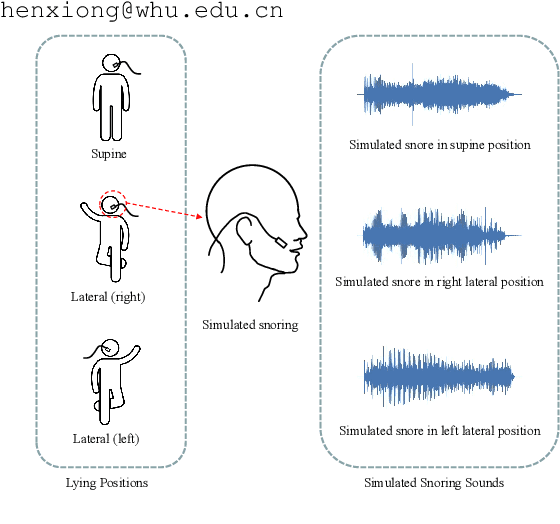



Obstructive Sleep Apnea-Hypopnea Syndrome (OSAHS) is a prevalent chronic breathing disorder caused by upper airway obstruction. Previous studies advanced OSAHS evaluation through machine learning-based systems trained on sleep snoring or speech signal datasets. However, constructing datasets for training a precise and rapid OSAHS evaluation system poses a challenge, since 1) it is time-consuming to collect sleep snores and 2) the speech signal is limited in reflecting upper airway obstruction. In this paper, we propose a new snoring dataset for OSAHS evaluation, named SimuSOE, in which a novel and time-effective snoring collection method is introduced for tackling the above problems. In particular, we adopt simulated snoring which is a type of snore intentionally emitted by patients to replace natural snoring. Experimental results indicate that the simulated snoring signal during wakefulness can serve as an effective feature in OSAHS preliminary screening.
LPViT: Low-Power Semi-structured Pruning for Vision Transformers
Jul 02, 2024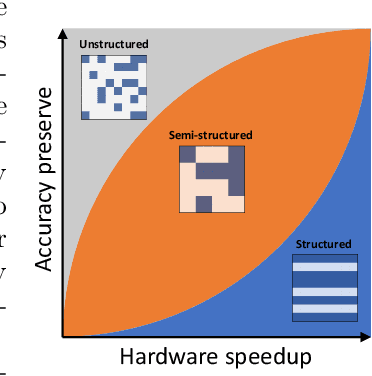
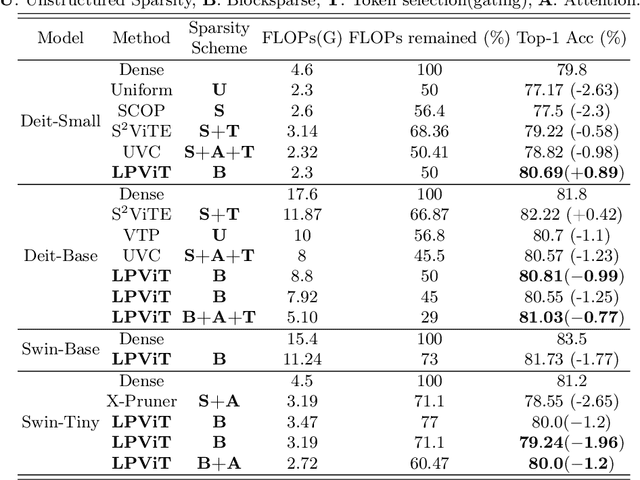
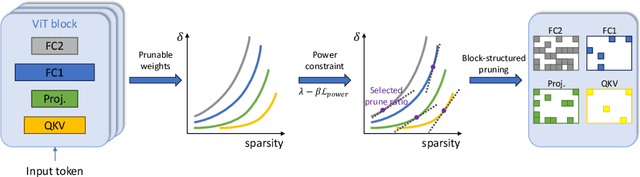
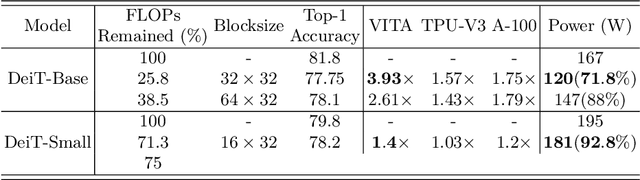
Vision transformers have emerged as a promising alternative to convolutional neural networks for various image analysis tasks, offering comparable or superior performance. However, one significant drawback of ViTs is their resource-intensive nature, leading to increased memory footprint, computation complexity, and power consumption. To democratize this high-performance technology and make it more environmentally friendly, it is essential to compress ViT models, reducing their resource requirements while maintaining high performance. In this paper, we introduce a new block-structured pruning to address the resource-intensive issue for ViTs, offering a balanced trade-off between accuracy and hardware acceleration. Unlike unstructured pruning or channel-wise structured pruning, block pruning leverages the block-wise structure of linear layers, resulting in more efficient matrix multiplications. To optimize this pruning scheme, our paper proposes a novel hardware-aware learning objective that simultaneously maximizes speedup and minimizes power consumption during inference, tailored to the block sparsity structure. This objective eliminates the need for empirical look-up tables and focuses solely on reducing parametrized layer connections. Moreover, our paper provides a lightweight algorithm to achieve post-training pruning for ViTs, utilizing second-order Taylor approximation and empirical optimization to solve the proposed hardware-aware objective. Extensive experiments on ImageNet are conducted across various ViT architectures, including DeiT-B and DeiT-S, demonstrating competitive performance with other pruning methods and achieving a remarkable balance between accuracy preservation and power savings. Especially, we achieve up to 3.93x and 1.79x speedups on dedicated hardware and GPUs respectively for DeiT-B, and also observe an inference power reduction by 1.4x on real-world GPUs.