 Add to Chrome
 Add to Firefox
 Add to Edge
Meta ControlNet: Enhancing Task Adaptation via Meta Learning
Dec 03, 2023
Diffusion-based image synthesis has attracted extensive attention recently. In particular, ControlNet that uses image-based prompts exhibits powerful capability in image tasks such as canny edge detection and generates images well aligned with these prompts. However, vanilla ControlNet generally requires extensive training of around 5000 steps to achieve a desirable control for a single task. Recent context-learning approaches have improved its adaptability, but mainly for edge-based tasks, and rely on paired examples. Thus, two important open issues are yet to be addressed to reach the full potential of ControlNet: (i) zero-shot control for certain tasks and (ii) faster adaptation for non-edge-based tasks. In this paper, we introduce a novel Meta ControlNet method, which adopts the task-agnostic meta learning technique and features a new layer freezing design. Meta ControlNet significantly reduces learning steps to attain control ability from 5000 to 1000. Further, Meta ControlNet exhibits direct zero-shot adaptability in edge-based tasks without any finetuning, and achieves control within only 100 finetuning steps in more complex non-edge tasks such as Human Pose, outperforming all existing methods. The codes is available in https://github.com/JunjieYang97/Meta-ControlNet.

FSGS: Real-Time Few-shot View Synthesis using Gaussian Splatting
Dec 01, 2023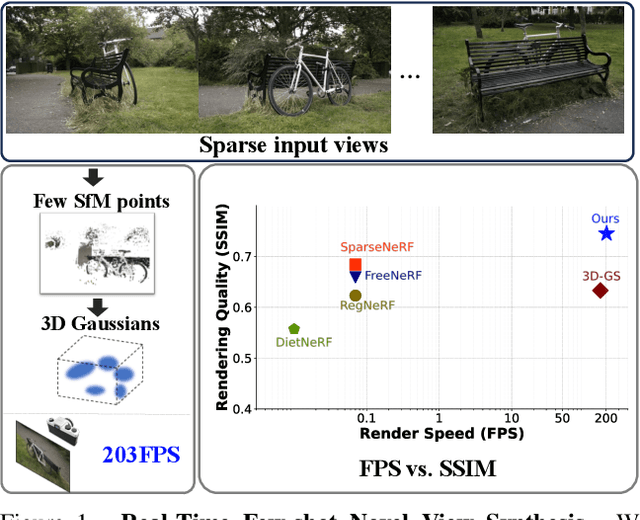
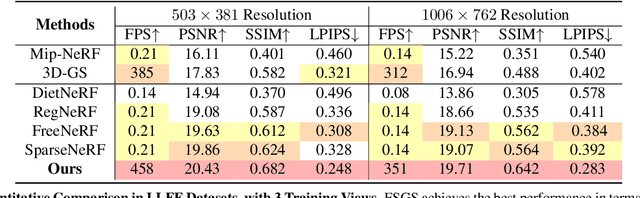
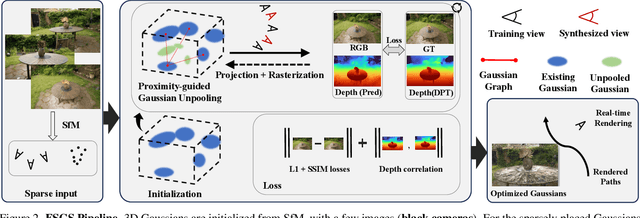
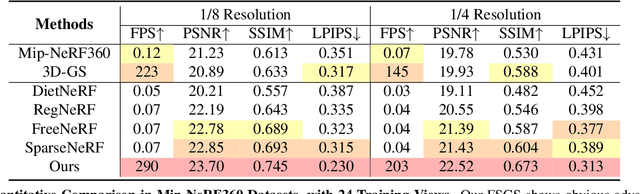
Novel view synthesis from limited observations remains an important and persistent task. However, high efficiency in existing NeRF-based few-shot view synthesis is often compromised to obtain an accurate 3D representation. To address this challenge, we propose a few-shot view synthesis framework based on 3D Gaussian Splatting that enables real-time and photo-realistic view synthesis with as few as three training views. The proposed method, dubbed FSGS, handles the extremely sparse initialized SfM points with a thoughtfully designed Gaussian Unpooling process. Our method iteratively distributes new Gaussians around the most representative locations, subsequently infilling local details in vacant areas. We also integrate a large-scale pre-trained monocular depth estimator within the Gaussians optimization process, leveraging online augmented views to guide the geometric optimization towards an optimal solution. Starting from sparse points observed from limited input viewpoints, our FSGS can accurately grow into unseen regions, comprehensively covering the scene and boosting the rendering quality of novel views. Overall, FSGS achieves state-of-the-art performance in both accuracy and rendering efficiency across diverse datasets, including LLFF, Mip-NeRF360, and Blender. Project website: https://zehaozhu.github.io/FSGS/.
DP-OPT: Make Large Language Model Your Privacy-Preserving Prompt Engineer
Nov 27, 2023
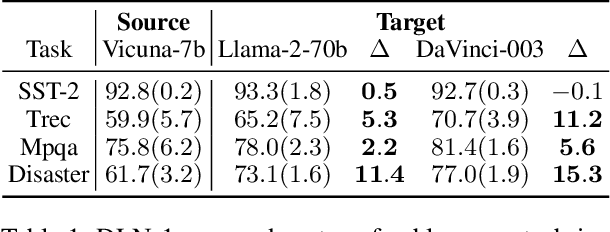
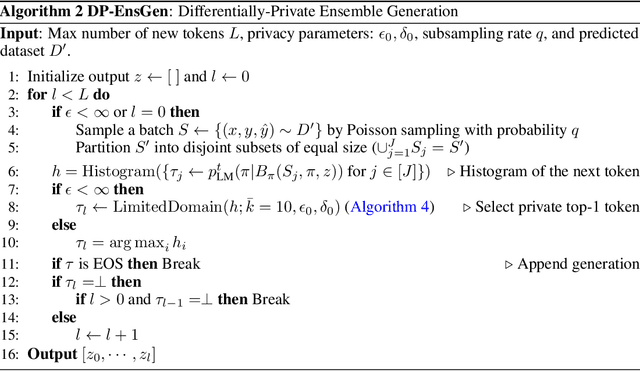
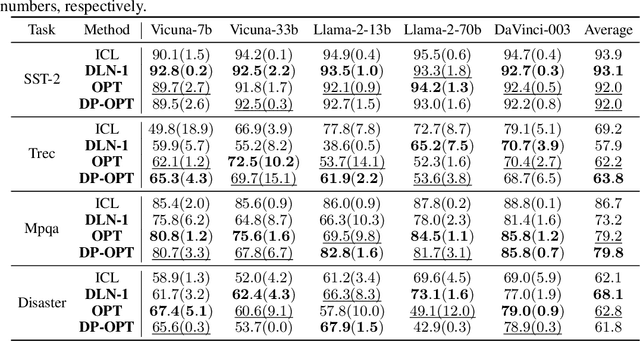
Large Language Models (LLMs) have emerged as dominant tools for various tasks, particularly when tailored for a specific target by prompt tuning. Nevertheless, concerns surrounding data privacy present obstacles due to the tuned prompts' dependency on sensitive private information. A practical solution is to host a local LLM and optimize a soft prompt privately using data. Yet, hosting a local model becomes problematic when model ownership is protected. Alternative methods, like sending data to the model's provider for training, intensify these privacy issues facing an untrusted provider. In this paper, we present a novel solution called Differentially-Private Offsite Prompt Tuning (DP-OPT) to address this challenge. Our approach involves tuning a discrete prompt on the client side and then applying it to the desired cloud models. We demonstrate that prompts suggested by LLMs themselves can be transferred without compromising performance significantly. To ensure that the prompts do not leak private information, we introduce the first private prompt generation mechanism, by a differentially-private (DP) ensemble of in-context learning with private demonstrations. With DP-OPT, generating privacy-preserving prompts by Vicuna-7b can yield competitive performance compared to non-private in-context learning on GPT3.5 or local private prompt tuning. Codes are available at https://github.com/VITA-Group/DP-OPT .
Fine-Tuning Language Models Using Formal Methods Feedback
Oct 27, 2023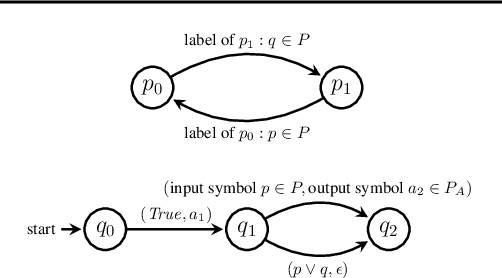
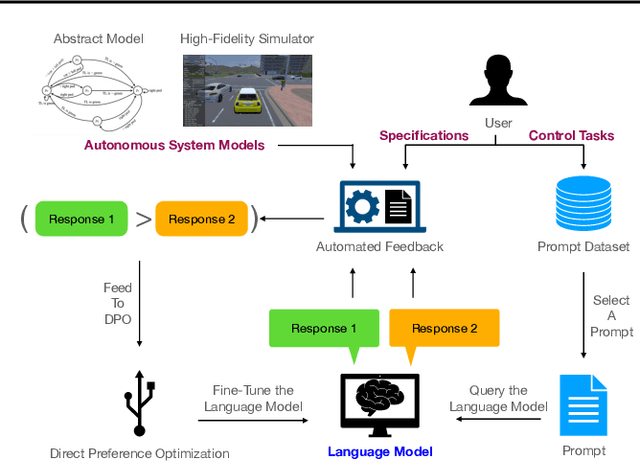
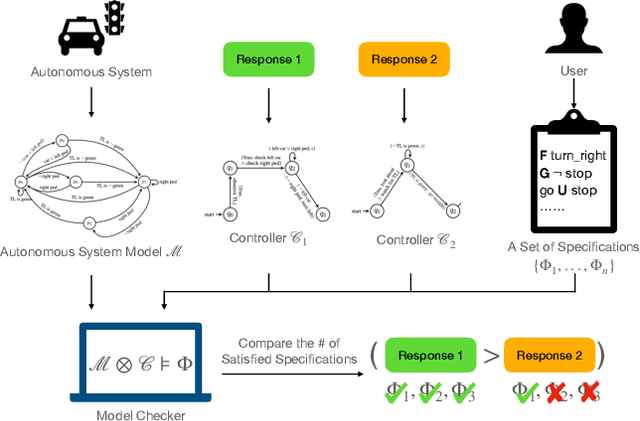
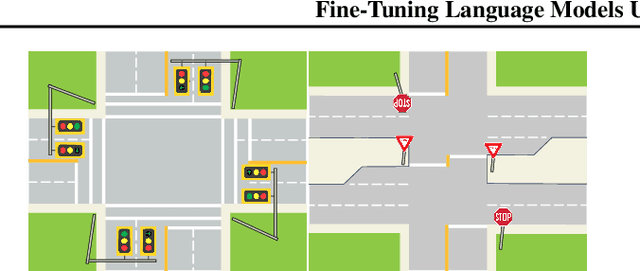
Although pre-trained language models encode generic knowledge beneficial for planning and control, they may fail to generate appropriate control policies for domain-specific tasks. Existing fine-tuning methods use human feedback to address this limitation, however, sourcing human feedback is labor intensive and costly. We present a fully automated approach to fine-tune pre-trained language models for applications in autonomous systems, bridging the gap between generic knowledge and domain-specific requirements while reducing cost. The method synthesizes automaton-based controllers from pre-trained models guided by natural language task descriptions. These controllers are verifiable against independently provided specifications within a world model, which can be abstract or obtained from a high-fidelity simulator. Controllers with high compliance with the desired specifications receive higher ranks, guiding the iterative fine-tuning process. We provide quantitative evidences, primarily in autonomous driving, to demonstrate the method's effectiveness across multiple tasks. The results indicate an improvement in percentage of specifications satisfied by the controller from 60% to 90%.
Towards long-tailed, multi-label disease classification from chest X-ray: Overview of the CXR-LT challenge
Oct 24, 2023


Many real-world image recognition problems, such as diagnostic medical imaging exams, are "long-tailed" $\unicode{x2013}$ there are a few common findings followed by many more relatively rare conditions. In chest radiography, diagnosis is both a long-tailed and multi-label problem, as patients often present with multiple findings simultaneously. While researchers have begun to study the problem of long-tailed learning in medical image recognition, few have studied the interaction of label imbalance and label co-occurrence posed by long-tailed, multi-label disease classification. To engage with the research community on this emerging topic, we conducted an open challenge, CXR-LT, on long-tailed, multi-label thorax disease classification from chest X-rays (CXRs). We publicly release a large-scale benchmark dataset of over 350,000 CXRs, each labeled with at least one of 26 clinical findings following a long-tailed distribution. We synthesize common themes of top-performing solutions, providing practical recommendations for long-tailed, multi-label medical image classification. Finally, we use these insights to propose a path forward involving vision-language foundation models for few- and zero-shot disease classification.
Prompting might be all you need to repair Compressed LLMs
Oct 14, 2023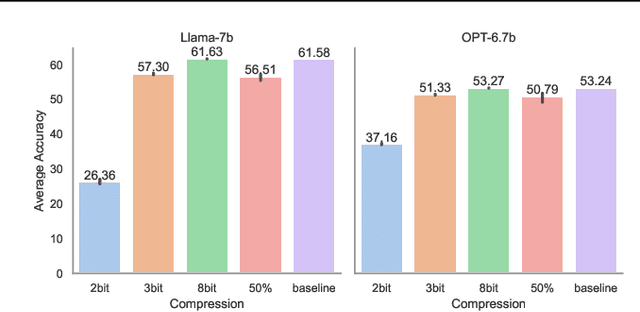
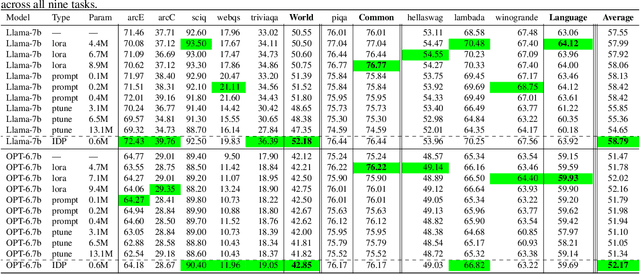
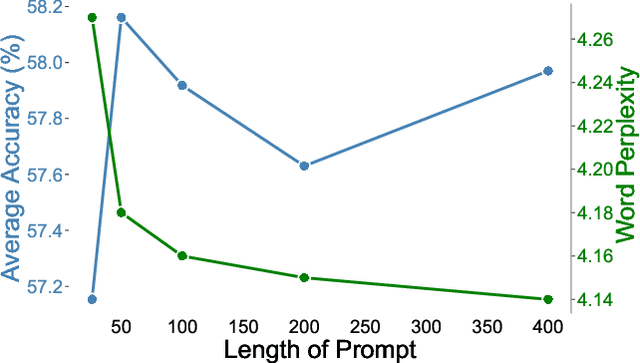
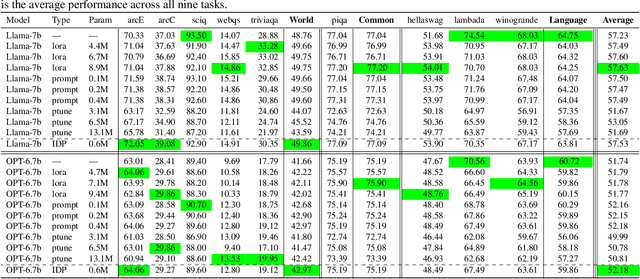
Large language models (LLMs), while transformative for NLP, come with significant computational demands, underlining the need for efficient, training-free compression. Notably, despite the marked improvement in training-free compression for the largest of LLMs, our tests using LLaMA-7B and OPT-6.7b highlight a significant performance drop in several realistic downstream tasks. Investigation into the trade-off between resource-intensive post-compression re-training highlights the prospect of prompt-driven recovery as a lightweight adaption tool. However, existing studies, confined mainly to perplexity evaluations and simple tasks, fail to offer unequivocal confidence in the scalability and generalizability of prompting. We tackle this uncertainty in two key ways. First, we uncover the vulnerability of naive prompts in LLM compression as an over-reliance on a singular prompt per input. In response, we propose inference-time dynamic prompting (IDP), a mechanism that autonomously chooses from a set of curated prompts based on the context of each individual input. Second, we delve into a scientific understanding of why "prompting might be all you need post-LLM compression." Our findings suggest that compression does not irretrievably erase LLM model knowledge but displace it, necessitating a new inference path. IDP effectively redirects this path, enabling the model to tap into its inherent yet displaced knowledge and thereby recover performance. Empirical tests affirm the value of IDP, demonstrating an average performance improvement of 1.24% across nine varied tasks spanning multiple knowledge domains.
Multi-Concept T2I-Zero: Tweaking Only The Text Embeddings and Nothing Else
Oct 11, 2023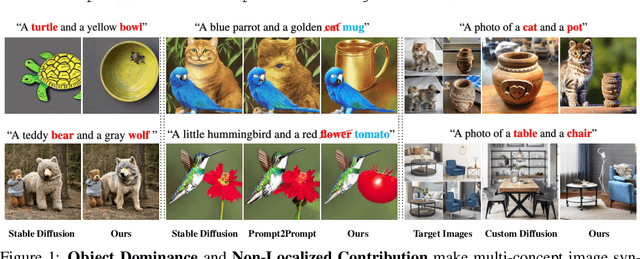
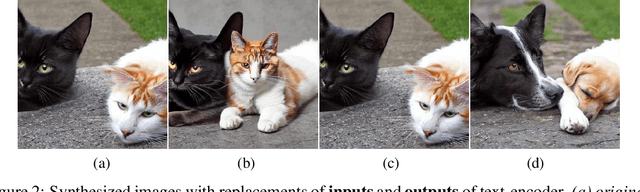


Recent advances in text-to-image diffusion models have enabled the photorealistic generation of images from text prompts. Despite the great progress, existing models still struggle to generate compositional multi-concept images naturally, limiting their ability to visualize human imagination. While several recent works have attempted to address this issue, they either introduce additional training or adopt guidance at inference time. In this work, we consider a more ambitious goal: natural multi-concept generation using a pre-trained diffusion model, and with almost no extra cost. To achieve this goal, we identify the limitations in the text embeddings used for the pre-trained text-to-image diffusion models. Specifically, we observe concept dominance and non-localized contribution that severely degrade multi-concept generation performance. We further design a minimal low-cost solution that overcomes the above issues by tweaking (not re-training) the text embeddings for more realistic multi-concept text-to-image generation. Our Correction by Similarities method tweaks the embedding of concepts by collecting semantic features from most similar tokens to localize the contribution. To avoid mixing features of concepts, we also apply Cross-Token Non-Maximum Suppression, which excludes the overlap of contributions from different concepts. Experiments show that our approach outperforms previous methods in text-to-image, image manipulation, and personalization tasks, despite not introducing additional training or inference costs to the diffusion steps.
Data Distillation Can Be Like Vodka: Distilling More Times For Better Quality
Oct 10, 2023Dataset distillation aims to minimize the time and memory needed for training deep networks on large datasets, by creating a small set of synthetic images that has a similar generalization performance to that of the full dataset. However, current dataset distillation techniques fall short, showing a notable performance gap when compared to training on the original data. In this work, we are the first to argue that using just one synthetic subset for distillation will not yield optimal generalization performance. This is because the training dynamics of deep networks drastically change during the training. Hence, multiple synthetic subsets are required to capture the training dynamics at different phases of training. To address this issue, we propose Progressive Dataset Distillation (PDD). PDD synthesizes multiple small sets of synthetic images, each conditioned on the previous sets, and trains the model on the cumulative union of these subsets without requiring additional training time. Our extensive experiments show that PDD can effectively improve the performance of existing dataset distillation methods by up to 4.3%. In addition, our method for the first time enable generating considerably larger synthetic datasets.
Outlier Weighed Layerwise Sparsity (OWL): A Missing Secret Sauce for Pruning LLMs to High Sparsity
Oct 08, 2023Large Language Models (LLMs), renowned for their remarkable performance, present a challenge due to their colossal model size when it comes to practical deployment. In response to this challenge, efforts have been directed toward the application of traditional network pruning techniques to LLMs, uncovering a massive number of parameters can be pruned in one-shot without hurting performance. Building upon insights gained from pre-LLM models, prevailing LLM pruning strategies have consistently adhered to the practice of uniformly pruning all layers at equivalent sparsity. However, this observation stands in contrast to the prevailing trends observed in the field of vision models, where non-uniform layerwise sparsity typically yields substantially improved results. To elucidate the underlying reasons for this disparity, we conduct a comprehensive analysis of the distribution of token features within LLMs. In doing so, we discover a strong correlation with the emergence of outliers, defined as features exhibiting significantly greater magnitudes compared to their counterparts in feature dimensions. Inspired by this finding, we introduce a novel LLM pruning methodology that incorporates a tailored set of non-uniform layerwise sparsity ratios specifically designed for LLM pruning, termed as Outlier Weighed Layerwise sparsity (OWL). The sparsity ratio of OWL is directly proportional to the outlier ratio observed within each layer, facilitating a more effective alignment between layerwise weight sparsity and outlier ratios. Our empirical evaluation, conducted across the LLaMA-V1 family and OPT, spanning various benchmarks, demonstrates the distinct advantages offered by OWL over previous methods. For instance, our approach exhibits a remarkable performance gain, surpassing the state-of-the-art Wanda and SparseGPT by 61.22 and 6.80 perplexity at a high sparsity level of 70%, respectively.
Drag View: Generalizable Novel View Synthesis with Unposed Imagery
Oct 05, 2023
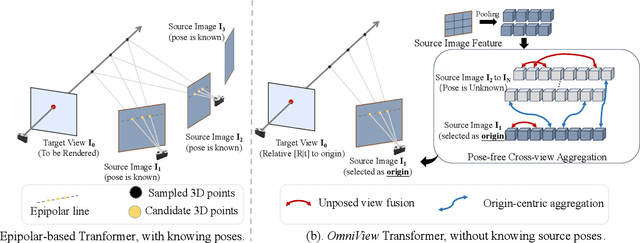
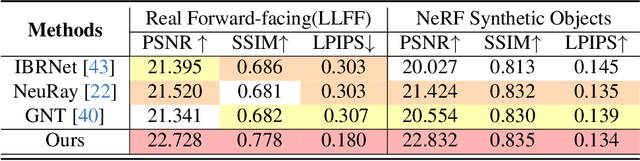
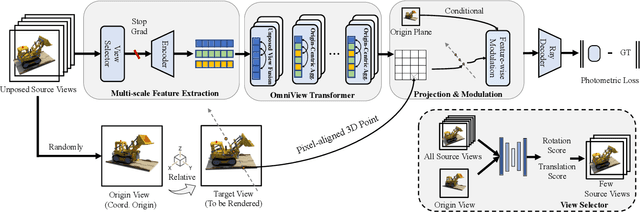
We introduce DragView, a novel and interactive framework for generating novel views of unseen scenes. DragView initializes the new view from a single source image, and the rendering is supported by a sparse set of unposed multi-view images, all seamlessly executed within a single feed-forward pass. Our approach begins with users dragging a source view through a local relative coordinate system. Pixel-aligned features are obtained by projecting the sampled 3D points along the target ray onto the source view. We then incorporate a view-dependent modulation layer to effectively handle occlusion during the projection. Additionally, we broaden the epipolar attention mechanism to encompass all source pixels, facilitating the aggregation of initialized coordinate-aligned point features from other unposed views. Finally, we employ another transformer to decode ray features into final pixel intensities. Crucially, our framework does not rely on either 2D prior models or the explicit estimation of camera poses. During testing, DragView showcases the capability to generalize to new scenes unseen during training, also utilizing only unposed support images, enabling the generation of photo-realistic new views characterized by flexible camera trajectories. In our experiments, we conduct a comprehensive comparison of the performance of DragView with recent scene representation networks operating under pose-free conditions, as well as with generalizable NeRFs subject to noisy test camera poses. DragView consistently demonstrates its superior performance in view synthesis quality, while also being more user-friendly. Project page: https://zhiwenfan.github.io/DragView/.