 Add to Chrome
 Add to Firefox
 Add to Edge
Grounding 3D Object Affordance with Language Instructions, Visual Observations and Interactions
Apr 07, 2025
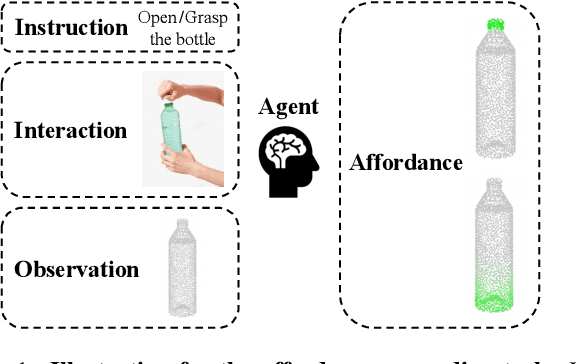
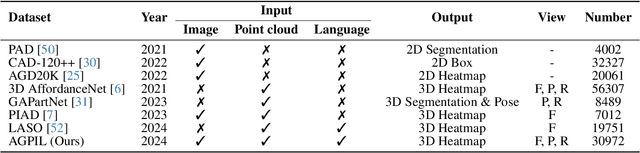
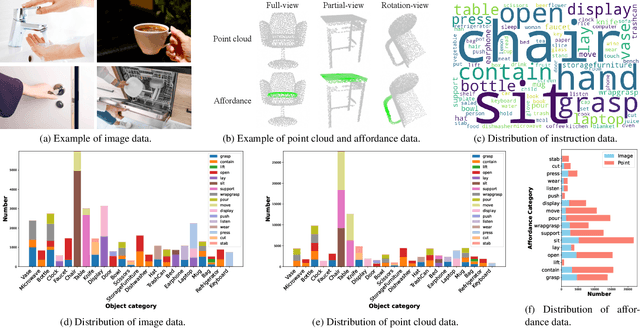
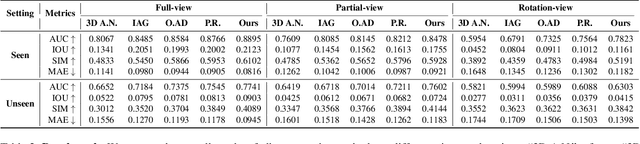
Grounding 3D object affordance is a task that locates objects in 3D space where they can be manipulated, which links perception and action for embodied intelligence. For example, for an intelligent robot, it is necessary to accurately ground the affordance of an object and grasp it according to human instructions. In this paper, we introduce a novel task that grounds 3D object affordance based on language instructions, visual observations and interactions, which is inspired by cognitive science. We collect an Affordance Grounding dataset with Points, Images and Language instructions (AGPIL) to support the proposed task. In the 3D physical world, due to observation orientation, object rotation, or spatial occlusion, we can only get a partial observation of the object. So this dataset includes affordance estimations of objects from full-view, partial-view, and rotation-view perspectives. To accomplish this task, we propose LMAffordance3D, the first multi-modal, language-guided 3D affordance grounding network, which applies a vision-language model to fuse 2D and 3D spatial features with semantic features. Comprehensive experiments on AGPIL demonstrate the effectiveness and superiority of our method on this task, even in unseen experimental settings. Our project is available at https://sites.google.com/view/lmaffordance3d.

Pre-training Generative Recommender with Multi-Identifier Item Tokenization
Apr 06, 2025Generative recommendation autoregressively generates item identifiers to recommend potential items. Existing methods typically adopt a one-to-one mapping strategy, where each item is represented by a single identifier. However, this scheme poses issues, such as suboptimal semantic modeling for low-frequency items and limited diversity in token sequence data. To overcome these limitations, we propose MTGRec, which leverages Multi-identifier item Tokenization to augment token sequence data for Generative Recommender pre-training. Our approach involves two key innovations: multi-identifier item tokenization and curriculum recommender pre-training. For multi-identifier item tokenization, we leverage the RQ-VAE as the tokenizer backbone and treat model checkpoints from adjacent training epochs as semantically relevant tokenizers. This allows each item to be associated with multiple identifiers, enabling a single user interaction sequence to be converted into several token sequences as different data groups. For curriculum recommender pre-training, we introduce a curriculum learning scheme guided by data influence estimation, dynamically adjusting the sampling probability of each data group during recommender pre-training. After pre-training, we fine-tune the model using a single tokenizer to ensure accurate item identification for recommendation. Extensive experiments on three public benchmark datasets demonstrate that MTGRec significantly outperforms both traditional and generative recommendation baselines in terms of effectiveness and scalability.
Trust Region Preference Approximation: A simple and stable reinforcement learning algorithm for LLM reasoning
Apr 06, 2025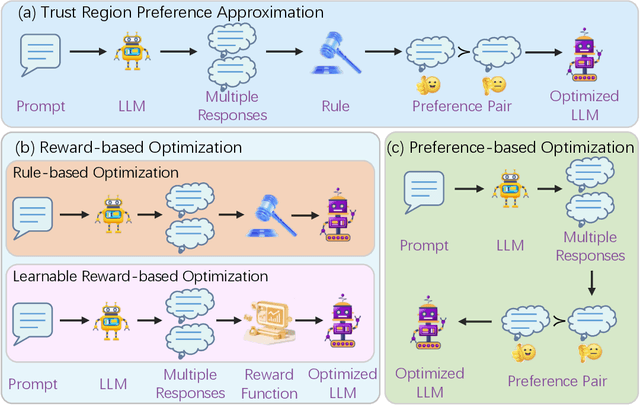
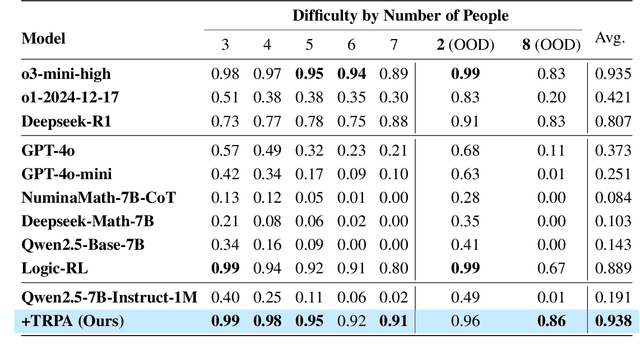
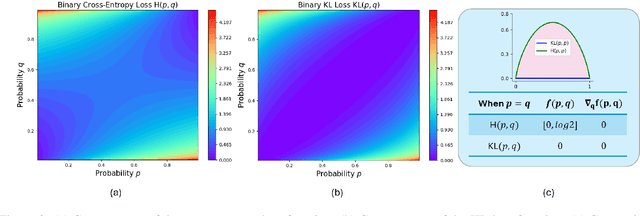
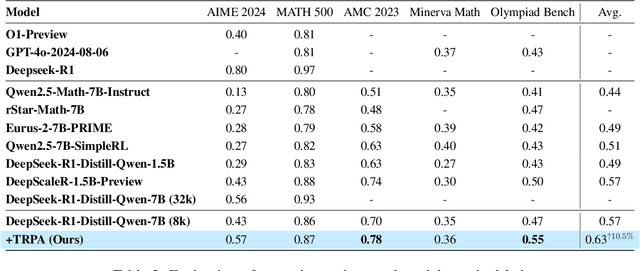
Recently, Large Language Models (LLMs) have rapidly evolved, approaching Artificial General Intelligence (AGI) while benefiting from large-scale reinforcement learning to enhance Human Alignment (HA) and Reasoning. Recent reward-based optimization algorithms, such as Proximal Policy Optimization (PPO) and Group Relative Policy Optimization (GRPO) have achieved significant performance on reasoning tasks, whereas preference-based optimization algorithms such as Direct Preference Optimization (DPO) significantly improve the performance of LLMs on human alignment. However, despite the strong performance of reward-based optimization methods in alignment tasks , they remain vulnerable to reward hacking. Furthermore, preference-based algorithms (such as Online DPO) haven't yet matched the performance of reward-based optimization algorithms (like PPO) on reasoning tasks, making their exploration in this specific area still a worthwhile pursuit. Motivated by these challenges, we propose the Trust Region Preference Approximation (TRPA) algorithm, which integrates rule-based optimization with preference-based optimization for reasoning tasks. As a preference-based algorithm, TRPA naturally eliminates the reward hacking issue. TRPA constructs preference levels using predefined rules, forms corresponding preference pairs, and leverages a novel optimization algorithm for RL training with a theoretical monotonic improvement guarantee. Experimental results demonstrate that TRPA not only achieves competitive performance on reasoning tasks but also exhibits robust stability. The code of this paper are released and updating on https://github.com/XueruiSu/Trust-Region-Preference-Approximation.git.
Quattro: Transformer-Accelerated Iterative Linear Quadratic Regulator Framework for Fast Trajectory Optimization
Apr 02, 2025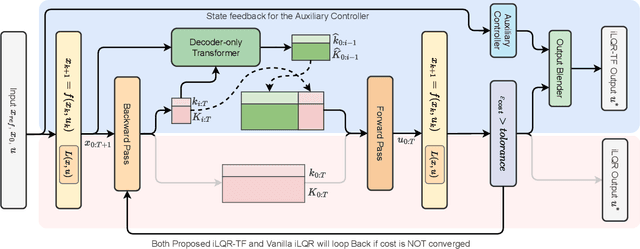
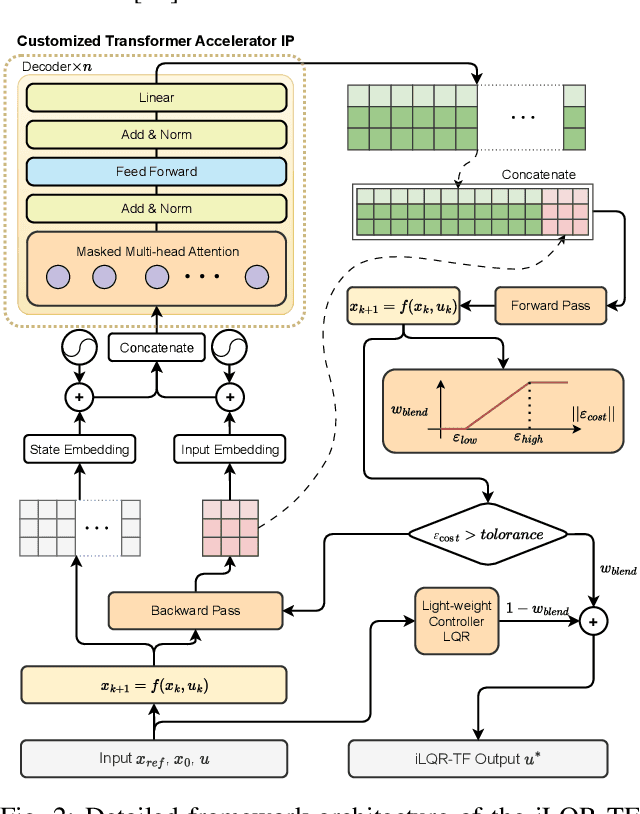
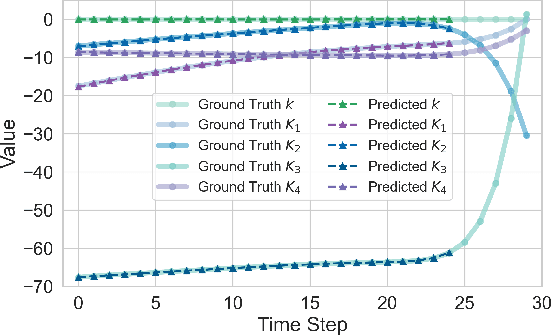
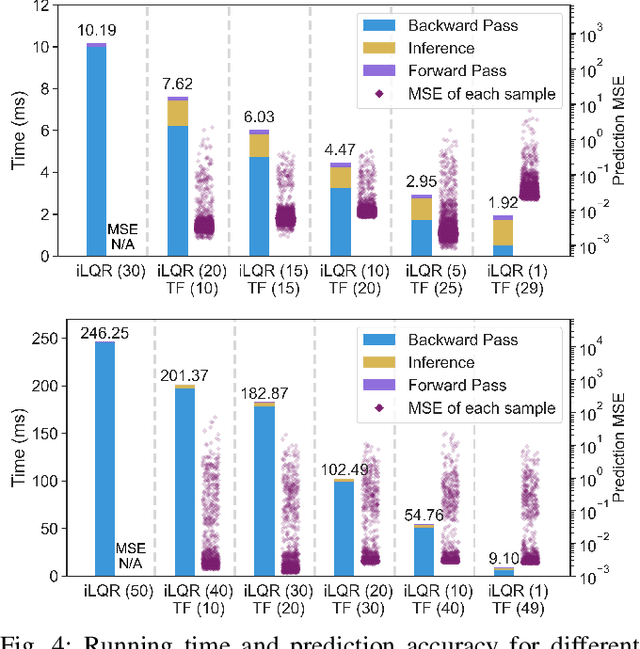
Real-time optimal control remains a fundamental challenge in robotics, especially for nonlinear systems with stringent performance requirements. As one of the representative trajectory optimization algorithms, the iterative Linear Quadratic Regulator (iLQR) faces limitations due to their inherently sequential computational nature, which restricts the efficiency and applicability of real-time control for robotic systems. While existing parallel implementations aim to overcome the above limitations, they typically demand additional computational iterations and high-performance hardware, leading to only modest practical improvements. In this paper, we introduce Quattro, a transformer-accelerated iLQR framework employing an algorithm-hardware co-design strategy to predict intermediate feedback and feedforward matrices. It facilitates effective parallel computations on resource-constrained devices without sacrificing accuracy. Experiments on cart-pole and quadrotor systems show an algorithm-level acceleration of up to 5.3$\times$ and 27$\times$ per iteration, respectively. When integrated into a Model Predictive Control (MPC) framework, Quattro achieves overall speedups of 2.8$\times$ for the cart-pole and 17.8$\times$ for the quadrotor compared to the one that applies traditional iLQR. Transformer inference is deployed on FPGA to maximize performance, achieving up to 27.3$\times$ speedup over commonly used computing devices, with around 2 to 4$\times$ power reduction and acceptable hardware overhead.
UnIRe: Unsupervised Instance Decomposition for Dynamic Urban Scene Reconstruction
Apr 01, 2025Reconstructing and decomposing dynamic urban scenes is crucial for autonomous driving, urban planning, and scene editing. However, existing methods fail to perform instance-aware decomposition without manual annotations, which is crucial for instance-level scene editing.We propose UnIRe, a 3D Gaussian Splatting (3DGS) based approach that decomposes a scene into a static background and individual dynamic instances using only RGB images and LiDAR point clouds. At its core, we introduce 4D superpoints, a novel representation that clusters multi-frame LiDAR points in 4D space, enabling unsupervised instance separation based on spatiotemporal correlations. These 4D superpoints serve as the foundation for our decomposed 4D initialization, i.e., providing spatial and temporal initialization to train a dynamic 3DGS for arbitrary dynamic classes without requiring bounding boxes or object templates.Furthermore, we introduce a smoothness regularization strategy in both 2D and 3D space, further improving the temporal stability.Experiments on benchmark datasets show that our method outperforms existing methods in decomposed dynamic scene reconstruction while enabling accurate and flexible instance-level editing, making it a practical solution for real-world applications.
Disambiguate Gripper State in Grasp-Based Tasks: Pseudo-Tactile as Feedback Enables Pure Simulation Learning
Mar 31, 2025Grasp-based manipulation tasks are fundamental to robots interacting with their environments, yet gripper state ambiguity significantly reduces the robustness of imitation learning policies for these tasks. Data-driven solutions face the challenge of high real-world data costs, while simulation data, despite its low costs, is limited by the sim-to-real gap. We identify the root cause of gripper state ambiguity as the lack of tactile feedback. To address this, we propose a novel approach employing pseudo-tactile as feedback, inspired by the idea of using a force-controlled gripper as a tactile sensor. This method enhances policy robustness without additional data collection and hardware involvement, while providing a noise-free binary gripper state observation for the policy and thus facilitating pure simulation learning to unleash the power of simulation. Experimental results across three real-world grasp-based tasks demonstrate the necessity, effectiveness, and efficiency of our approach.
UGNA-VPR: A Novel Training Paradigm for Visual Place Recognition Based on Uncertainty-Guided NeRF Augmentation
Mar 27, 2025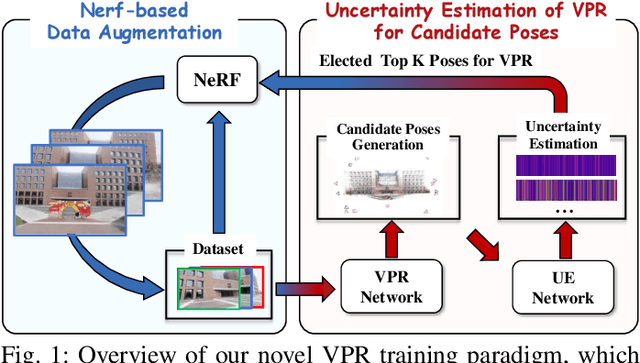
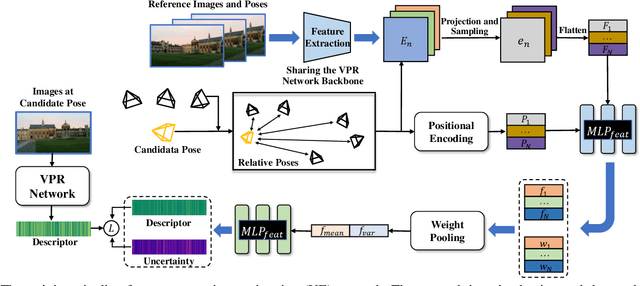
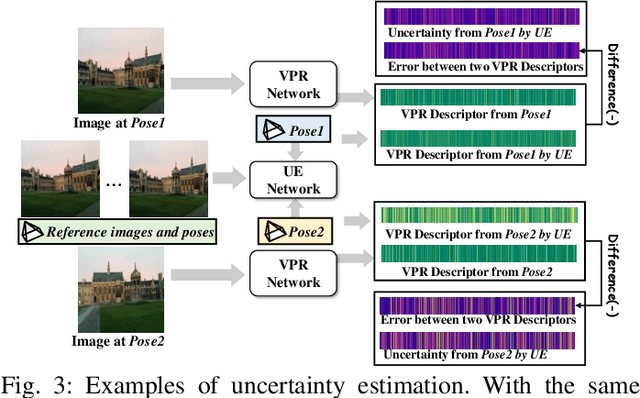
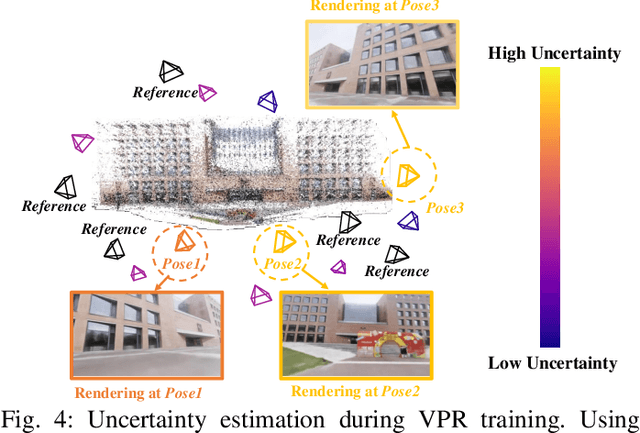
Visual place recognition (VPR) is crucial for robots to identify previously visited locations, playing an important role in autonomous navigation in both indoor and outdoor environments. However, most existing VPR datasets are limited to single-viewpoint scenarios, leading to reduced recognition accuracy, particularly in multi-directional driving or feature-sparse scenes. Moreover, obtaining additional data to mitigate these limitations is often expensive. This paper introduces a novel training paradigm to improve the performance of existing VPR networks by enhancing multi-view diversity within current datasets through uncertainty estimation and NeRF-based data augmentation. Specifically, we initially train NeRF using the existing VPR dataset. Then, our devised self-supervised uncertainty estimation network identifies places with high uncertainty. The poses of these uncertain places are input into NeRF to generate new synthetic observations for further training of VPR networks. Additionally, we propose an improved storage method for efficient organization of augmented and original training data. We conducted extensive experiments on three datasets and tested three different VPR backbone networks. The results demonstrate that our proposed training paradigm significantly improves VPR performance by fully utilizing existing data, outperforming other training approaches. We further validated the effectiveness of our approach on self-recorded indoor and outdoor datasets, consistently demonstrating superior results. Our dataset and code have been released at \href{https://github.com/nubot-nudt/UGNA-VPR}{https://github.com/nubot-nudt/UGNA-VPR}.
EVolSplat: Efficient Volume-based Gaussian Splatting for Urban View Synthesis
Mar 26, 2025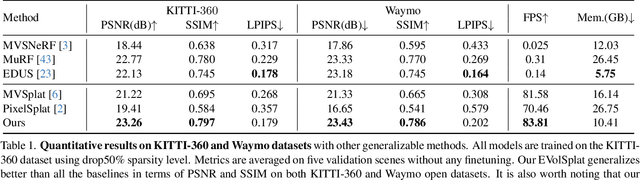
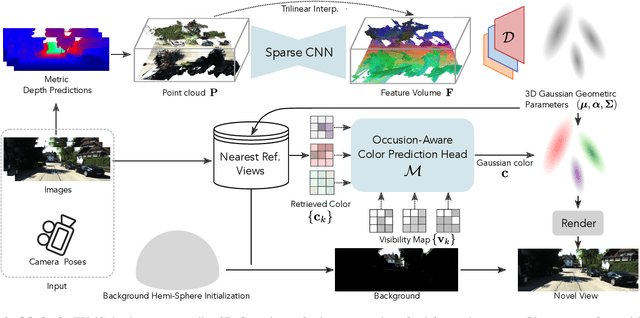
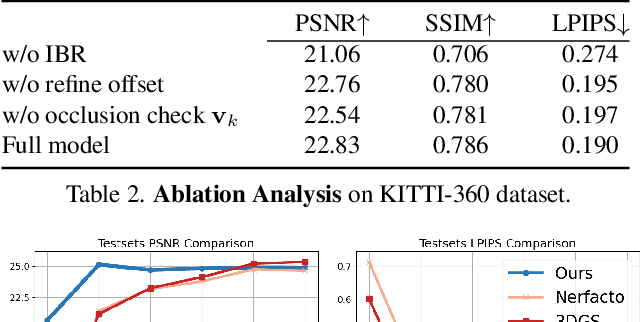
Novel view synthesis of urban scenes is essential for autonomous driving-related applications.Existing NeRF and 3DGS-based methods show promising results in achieving photorealistic renderings but require slow, per-scene optimization. We introduce EVolSplat, an efficient 3D Gaussian Splatting model for urban scenes that works in a feed-forward manner. Unlike existing feed-forward, pixel-aligned 3DGS methods, which often suffer from issues like multi-view inconsistencies and duplicated content, our approach predicts 3D Gaussians across multiple frames within a unified volume using a 3D convolutional network. This is achieved by initializing 3D Gaussians with noisy depth predictions, and then refining their geometric properties in 3D space and predicting color based on 2D textures. Our model also handles distant views and the sky with a flexible hemisphere background model. This enables us to perform fast, feed-forward reconstruction while achieving real-time rendering. Experimental evaluations on the KITTI-360 and Waymo datasets show that our method achieves state-of-the-art quality compared to existing feed-forward 3DGS- and NeRF-based methods.
Semantic-Guided Global-Local Collaborative Networks for Lightweight Image Super-Resolution
Mar 20, 2025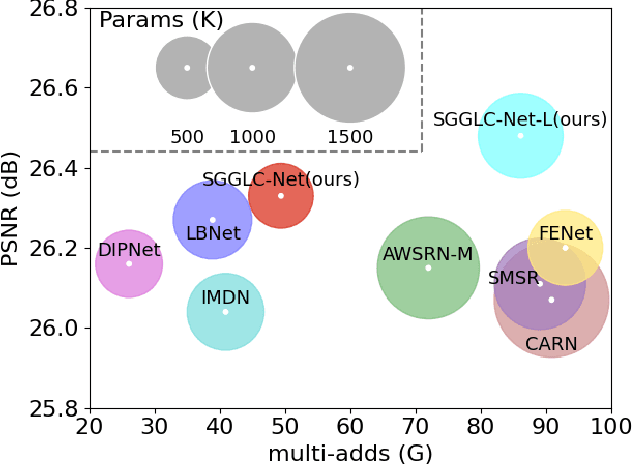
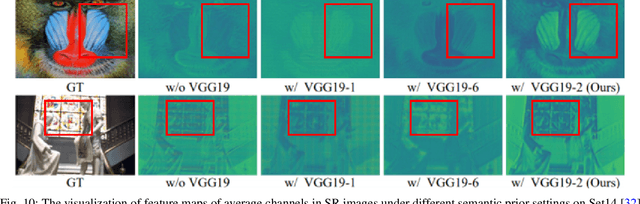
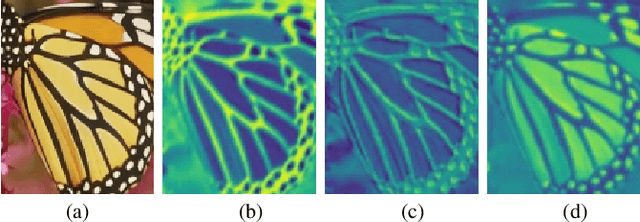
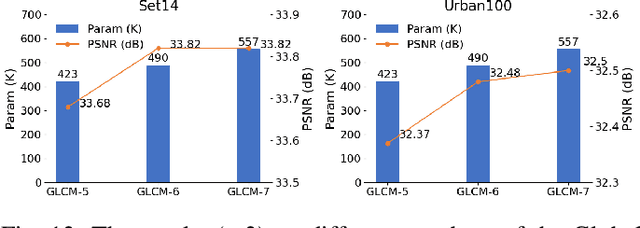
Single-Image Super-Resolution (SISR) plays a pivotal role in enhancing the accuracy and reliability of measurement systems, which are integral to various vision-based instrumentation and measurement applications. These systems often require clear and detailed images for precise object detection and recognition. However, images captured by visual measurement tools frequently suffer from degradation, including blurring and loss of detail, which can impede measurement accuracy.As a potential remedy, we in this paper propose a Semantic-Guided Global-Local Collaborative Network (SGGLC-Net) for lightweight SISR. Our SGGLC-Net leverages semantic priors extracted from a pre-trained model to guide the super-resolution process, enhancing image detail quality effectively. Specifically,we propose a Semantic Guidance Module that seamlessly integrates the semantic priors into the super-resolution network, enabling the network to more adeptly capture and utilize semantic priors, thereby enhancing image details. To further explore both local and non-local interactions for improved detail rendition,we propose a Global-Local Collaborative Module, which features three Global and Local Detail Enhancement Modules, as well as a Hybrid Attention Mechanism to work together to efficiently learn more useful features. Our extensive experiments show that SGGLC-Net achieves competitive PSNR and SSIM values across multiple benchmark datasets, demonstrating higher performance with the multi-adds reduction of 12.81G compared to state-of-the-art lightweight super-resolution approaches. These improvements underscore the potential of our approach to enhance the precision and effectiveness of visual measurement systems. Codes are at https://github.com/fanamber831/SGGLC-Net.
* 14 pages,13 figures, 9 tables
M2UD: A Multi-model, Multi-scenario, Uneven-terrain Dataset for Ground Robot with Localization and Mapping Evaluation
Mar 16, 2025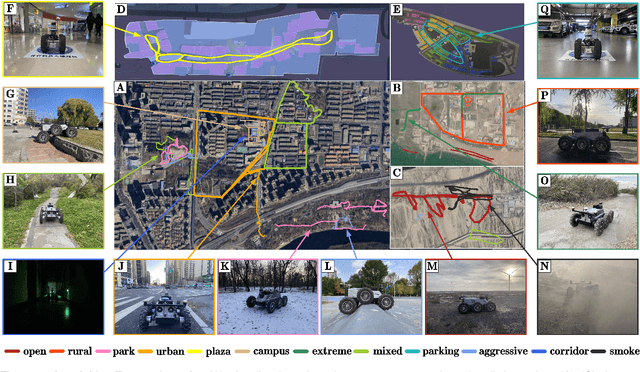
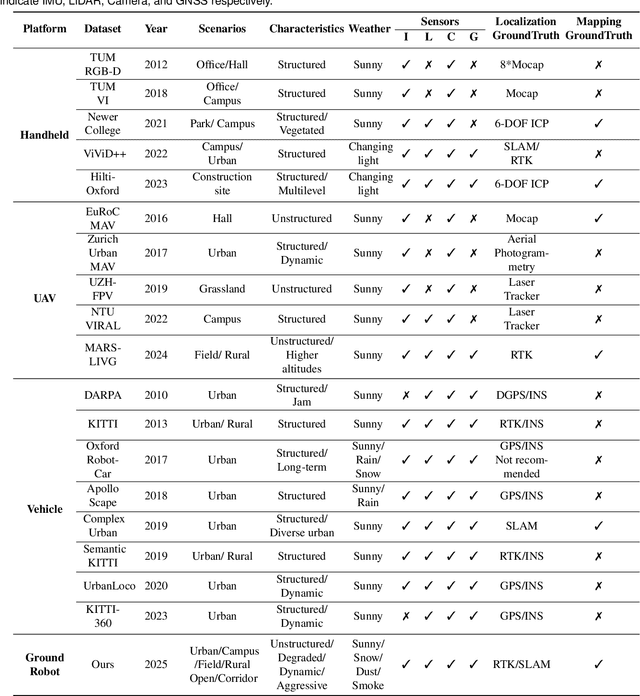
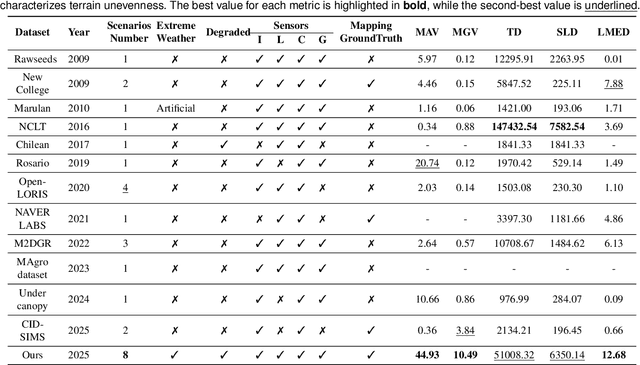
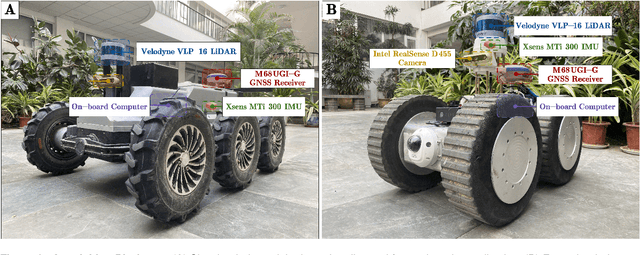
Ground robots play a crucial role in inspection, exploration, rescue, and other applications. In recent years, advancements in LiDAR technology have made sensors more accurate, lightweight, and cost-effective. Therefore, researchers increasingly integrate sensors, for SLAM studies, providing robust technical support for ground robots and expanding their application domains. Public datasets are essential for advancing SLAM technology. However, existing datasets for ground robots are typically restricted to flat-terrain motion with 3 DOF and cover only a limited range of scenarios. Although handheld devices and UAV exhibit richer and more aggressive movements, their datasets are predominantly confined to small-scale environments due to endurance limitations. To fill these gap, we introduce M2UD, a multi-modal, multi-scenario, uneven-terrain SLAM dataset for ground robots. This dataset contains a diverse range of highly challenging environments, including cities, open fields, long corridors, and mixed scenarios. Additionally, it presents extreme weather conditions. The aggressive motion and degradation characteristics of this dataset not only pose challenges for testing and evaluating existing SLAM methods but also advance the development of more advanced SLAM algorithms. To benchmark SLAM algorithms, M2UD provides smoothed ground truth localization data obtained via RTK and introduces a novel localization evaluation metric that considers both accuracy and efficiency. Additionally, we utilize a high-precision laser scanner to acquire ground truth maps of two representative scenes, facilitating the development and evaluation of mapping algorithms. We select 12 localization sequences and 2 mapping sequences to evaluate several classical SLAM algorithms, verifying usability of the dataset. To enhance usability, the dataset is accompanied by a suite of development kits.