 Add to Chrome
 Add to Firefox
 Add to Edge
CROP: Contextual Region-Oriented Visual Token Pruning
May 27, 2025
Current VLM-based VQA methods often process entire images, leading to excessive visual tokens that include redundant information irrelevant to the posed question. This abundance of unnecessary image details creates numerous visual tokens, drastically increasing memory and computational requirements in VLMs. To address this, we propose Contextual Region-Oriented Visual Token Pruning (CROP), a novel framework to compress visual tokens through a two-step process: Localization and Pruning. Specifically, CROP first employs an efficient model to identify the contextual region relevant to the input query. Subsequently, two distinct strategies are introduced for pruning: (1) Pre-LLM Compression (PLC), which adaptively compresses different image regions with varying ratios, and (2) Inner-LLM Pruning (ILP), a training-free method that prunes tokens within early LLM layers guided by the identified contextual region. Extensive experiments on a wide range of VQA tasks demonstrate that CROP significantly outperforms existing visual token pruning methods and achieves state-of-the-art performance. Our code and datasets will be made available.

RoBiS: Robust Binary Segmentation for High-Resolution Industrial Images
May 27, 2025Robust unsupervised anomaly detection (AD) in real-world scenarios is an important task. Current methods exhibit severe performance degradation on the MVTec AD 2 benchmark due to its complex real-world challenges. To solve this problem, we propose a robust framework RoBiS, which consists of three core modules: (1) Swin-Cropping, a high-resolution image pre-processing strategy to preserve the information of small anomalies through overlapping window cropping. (2) The data augmentation of noise addition and lighting simulation is carried out on the training data to improve the robustness of AD model. We use INP-Former as our baseline, which could generate better results on the various sub-images. (3) The traditional statistical-based binarization strategy (mean+3std) is combined with our previous work, MEBin (published in CVPR2025), for joint adaptive binarization. Then, SAM is further employed to refine the segmentation results. Compared with some methods reported by the MVTec AD 2, our RoBiS achieves a 29.2% SegF1 improvement (from 21.8% to 51.00%) on Test_private and 29.82% SegF1 gains (from 16.7% to 46.52%) on Test_private_mixed. Code is available at https://github.com/xrli-U/RoBiS.
The Role of Video Generation in Enhancing Data-Limited Action Understanding
May 26, 2025


Video action understanding tasks in real-world scenarios always suffer data limitations. In this paper, we address the data-limited action understanding problem by bridging data scarcity. We propose a novel method that employs a text-to-video diffusion transformer to generate annotated data for model training. This paradigm enables the generation of realistic annotated data on an infinite scale without human intervention. We proposed the information enhancement strategy and the uncertainty-based label smoothing tailored to generate sample training. Through quantitative and qualitative analysis, we observed that real samples generally contain a richer level of information than generated samples. Based on this observation, the information enhancement strategy is proposed to enhance the informative content of the generated samples from two aspects: the environments and the characters. Furthermore, we observed that some low-quality generated samples might negatively affect model training. To address this, we devised the uncertainty-based label smoothing strategy to increase the smoothing of these samples, thus reducing their impact. We demonstrate the effectiveness of the proposed method on four datasets across five tasks and achieve state-of-the-art performance for zero-shot action recognition.
CODE-DITING: A Reasoning-Based Metric for Functional Alignment in Code Evaluation
May 26, 2025Trustworthy evaluation methods for code snippets play a crucial role in neural code generation. Traditional methods, which either rely on reference solutions or require executable test cases, have inherent limitation in flexibility and scalability. The recent LLM-as-Judge methodology offers a promising alternative by directly evaluating functional consistency between the problem description and the generated code. To systematically understand the landscape of these LLM-as-Judge methods, we conduct a comprehensive empirical study across three diverse datasets. Our investigation reveals the pros and cons of two categories of LLM-as-Judge methods: the methods based on general foundation models can achieve good performance but require complex prompts and lack explainability, while the methods based on reasoning foundation models provide better explainability with simpler prompts but demand substantial computational resources due to their large parameter sizes. To address these limitations, we propose CODE-DITING, a novel code evaluation method that balances accuracy, efficiency and explainability. We develop a data distillation framework that effectively transfers reasoning capabilities from DeepSeek-R1671B to our CODE-DITING 1.5B and 7B models, significantly enhancing evaluation explainability and reducing the computational cost. With the majority vote strategy in the inference process, CODE-DITING 1.5B outperforms all models with the same magnitude of parameters and achieves performance which would normally exhibit in a model with 5 times of parameter scale. CODE-DITING 7B surpasses GPT-4o and DeepSeek-V3 671B, even though it only uses 1% of the parameter volume of these large models. Further experiments show that CODEDITING is robust to preference leakage and can serve as a promising alternative for code evaluation.
An Empirical Study on Configuring In-Context Learning Demonstrations for Unleashing MLLMs' Sentimental Perception Capability
May 22, 2025The advancements in Multimodal Large Language Models (MLLMs) have enabled various multimodal tasks to be addressed under a zero-shot paradigm. This paradigm sidesteps the cost of model fine-tuning, emerging as a dominant trend in practical application. Nevertheless, Multimodal Sentiment Analysis (MSA), a pivotal challenge in the quest for general artificial intelligence, fails to accommodate this convenience. The zero-shot paradigm exhibits undesirable performance on MSA, casting doubt on whether MLLMs can perceive sentiments as competent as supervised models. By extending the zero-shot paradigm to In-Context Learning (ICL) and conducting an in-depth study on configuring demonstrations, we validate that MLLMs indeed possess such capability. Specifically, three key factors that cover demonstrations' retrieval, presentation, and distribution are comprehensively investigated and optimized. A sentimental predictive bias inherent in MLLMs is also discovered and later effectively counteracted. By complementing each other, the devised strategies for three factors result in average accuracy improvements of 15.9% on six MSA datasets against the zero-shot paradigm and 11.2% against the random ICL baseline.
The Devil is in Fine-tuning and Long-tailed Problems:A New Benchmark for Scene Text Detection
May 21, 2025Scene text detection has seen the emergence of high-performing methods that excel on academic benchmarks. However, these detectors often fail to replicate such success in real-world scenarios. We uncover two key factors contributing to this discrepancy through extensive experiments. First, a \textit{Fine-tuning Gap}, where models leverage \textit{Dataset-Specific Optimization} (DSO) paradigm for one domain at the cost of reduced effectiveness in others, leads to inflated performances on academic benchmarks. Second, the suboptimal performance in practical settings is primarily attributed to the long-tailed distribution of texts, where detectors struggle with rare and complex categories as artistic or overlapped text. Given that the DSO paradigm might undermine the generalization ability of models, we advocate for a \textit{Joint-Dataset Learning} (JDL) protocol to alleviate the Fine-tuning Gap. Additionally, an error analysis is conducted to identify three major categories and 13 subcategories of challenges in long-tailed scene text, upon which we propose a Long-Tailed Benchmark (LTB). LTB facilitates a comprehensive evaluation of ability to handle a diverse range of long-tailed challenges. We further introduce MAEDet, a self-supervised learning-based method, as a strong baseline for LTB. The code is available at https://github.com/pd162/LTB.
FedRE: Robust and Effective Federated Learning with Privacy Preference
May 08, 2025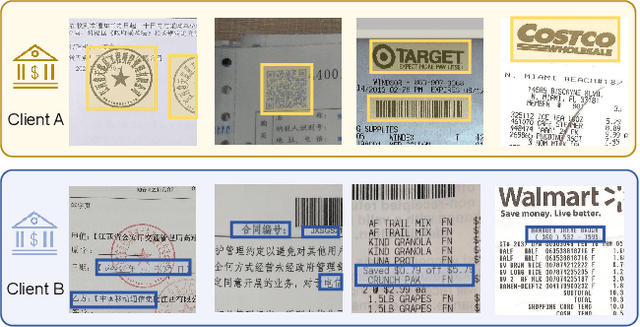
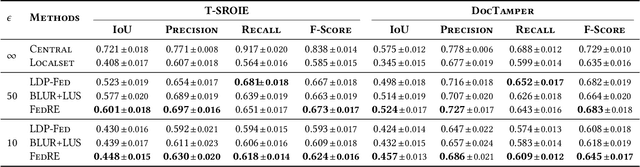
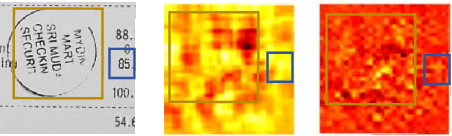
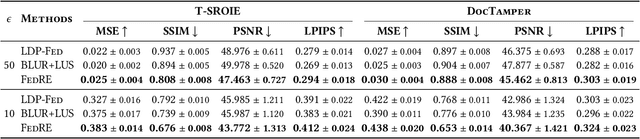
Despite Federated Learning (FL) employing gradient aggregation at the server for distributed training to prevent the privacy leakage of raw data, private information can still be divulged through the analysis of uploaded gradients from clients. Substantial efforts have been made to integrate local differential privacy (LDP) into the system to achieve a strict privacy guarantee. However, existing methods fail to take practical issues into account by merely perturbing each sample with the same mechanism while each client may have their own privacy preferences on privacy-sensitive information (PSI), which is not uniformly distributed across the raw data. In such a case, excessive privacy protection from private-insensitive information can additionally introduce unnecessary noise, which may degrade the model performance. In this work, we study the PSI within data and develop FedRE, that can simultaneously achieve robustness and effectiveness benefits with LDP protection. More specifically, we first define PSI with regard to the privacy preferences of each client. Then, we optimize the LDP by allocating less privacy budget to gradients with higher PSI in a layer-wise manner, thus providing a stricter privacy guarantee for PSI. Furthermore, to mitigate the performance degradation caused by LDP, we design a parameter aggregation mechanism based on the distribution of the perturbed information. We conducted experiments with text tamper detection on T-SROIE and DocTamper datasets, and FedRE achieves competitive performance compared to state-of-the-art methods.
Visual Text Processing: A Comprehensive Review and Unified Evaluation
Apr 30, 2025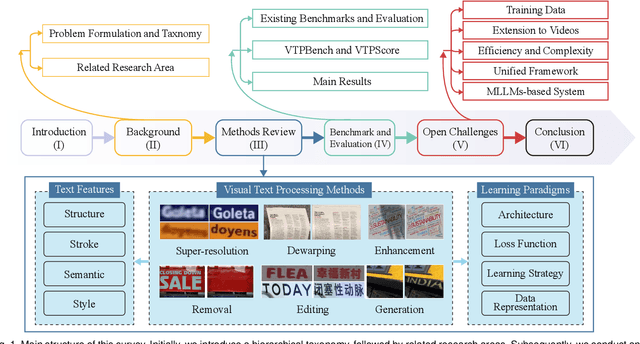
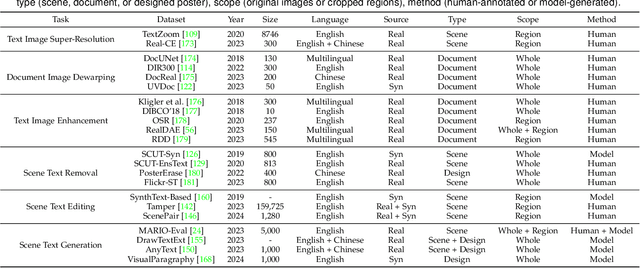
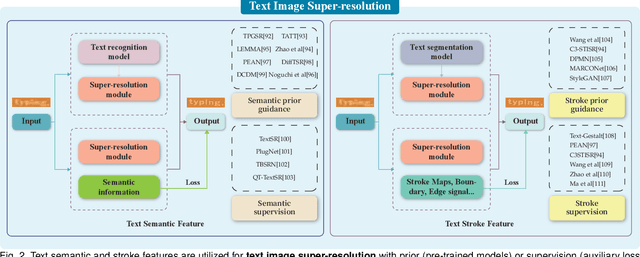
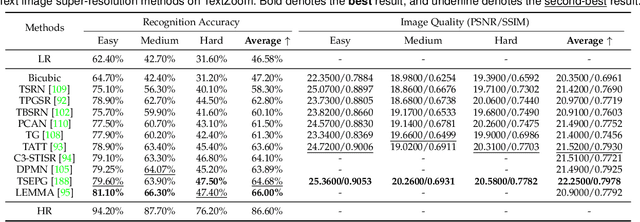
Visual text is a crucial component in both document and scene images, conveying rich semantic information and attracting significant attention in the computer vision community. Beyond traditional tasks such as text detection and recognition, visual text processing has witnessed rapid advancements driven by the emergence of foundation models, including text image reconstruction and text image manipulation. Despite significant progress, challenges remain due to the unique properties that differentiate text from general objects. Effectively capturing and leveraging these distinct textual characteristics is essential for developing robust visual text processing models. In this survey, we present a comprehensive, multi-perspective analysis of recent advancements in visual text processing, focusing on two key questions: (1) What textual features are most suitable for different visual text processing tasks? (2) How can these distinctive text features be effectively incorporated into processing frameworks? Furthermore, we introduce VTPBench, a new benchmark that encompasses a broad range of visual text processing datasets. Leveraging the advanced visual quality assessment capabilities of multimodal large language models (MLLMs), we propose VTPScore, a novel evaluation metric designed to ensure fair and reliable evaluation. Our empirical study with more than 20 specific models reveals substantial room for improvement in the current techniques. Our aim is to establish this work as a fundamental resource that fosters future exploration and innovation in the dynamic field of visual text processing. The relevant repository is available at https://github.com/shuyansy/Visual-Text-Processing-survey.
MTCSC: Retrieval-Augmented Iterative Refinement for Chinese Spelling Correction
Apr 26, 2025Chinese Spelling Correction (CSC) aims to detect and correct erroneous tokens in sentences. While Large Language Models (LLMs) have shown remarkable success in identifying and rectifying potential errors, they often struggle with maintaining consistent output lengths and adapting to domain-specific corrections. Furthermore, existing CSC task impose rigid constraints requiring input and output lengths to be identical, limiting their applicability. In this work, we extend traditional CSC to variable-length correction scenarios, including Chinese Splitting Error Correction (CSEC) and ASR N-best Error Correction. To address domain adaptation and length consistency, we propose MTCSC (Multi-Turn CSC) framework based on RAG enhanced with a length reflection mechanism. Our approach constructs a retrieval database from domain-specific training data and dictionaries, fine-tuning retrievers to optimize performance for error-containing inputs. Additionally, we introduce a multi-source combination strategy with iterative length reflection to ensure output length fidelity. Experiments across diverse domain datasets demonstrate that our method significantly outperforms current approaches in correction quality, particularly in handling domain-specific and variable-length error correction tasks.
StreamRL: Scalable, Heterogeneous, and Elastic RL for LLMs with Disaggregated Stream Generation
Apr 22, 2025Reinforcement learning (RL) has become the core post-training technique for large language models (LLMs). RL for LLMs involves two stages: generation and training. The LLM first generates samples online, which are then used to derive rewards for training. The conventional view holds that the colocated architecture, where the two stages share resources via temporal multiplexing, outperforms the disaggregated architecture, in which dedicated resources are assigned to each stage. However, in real-world deployments, we observe that the colocated architecture suffers from resource coupling, where the two stages are constrained to use the same resources. This coupling compromises the scalability and cost-efficiency of colocated RL in large-scale training. In contrast, the disaggregated architecture allows for flexible resource allocation, supports heterogeneous training setups, and facilitates cross-datacenter deployment. StreamRL is designed with disaggregation from first principles and fully unlocks its potential by addressing two types of performance bottlenecks in existing disaggregated RL frameworks: pipeline bubbles, caused by stage dependencies, and skewness bubbles, resulting from long-tail output length distributions. To address pipeline bubbles, StreamRL breaks the traditional stage boundary in synchronous RL algorithms through stream generation and achieves full overlapping in asynchronous RL. To address skewness bubbles, StreamRL employs an output-length ranker model to identify long-tail samples and reduces generation time via skewness-aware dispatching and scheduling. Experiments show that StreamRL improves throughput by up to 2.66x compared to existing state-of-the-art systems, and improves cost-effectiveness by up to 1.33x in a heterogeneous, cross-datacenter setting.