 Add to Chrome
 Add to Firefox
 Add to Edge
GeoPix: Multi-Modal Large Language Model for Pixel-level Image Understanding in Remote Sensing
Jan 12, 2025


Multi-modal large language models (MLLMs) have achieved remarkable success in image- and region-level remote sensing (RS) image understanding tasks, such as image captioning, visual question answering, and visual grounding. However, existing RS MLLMs lack the pixel-level dialogue capability, which involves responding to user instructions with segmentation masks for specific instances. In this paper, we propose GeoPix, a RS MLLM that extends image understanding capabilities to the pixel level. This is achieved by equipping the MLLM with a mask predictor, which transforms visual features from the vision encoder into masks conditioned on the LLM's segmentation token embeddings. To facilitate the segmentation of multi-scale objects in RS imagery, a class-wise learnable memory module is integrated into the mask predictor to capture and store class-wise geo-context at the instance level across the entire dataset. In addition, to address the absence of large-scale datasets for training pixel-level RS MLLMs, we construct the GeoPixInstruct dataset, comprising 65,463 images and 140,412 instances, with each instance annotated with text descriptions, bounding boxes, and masks. Furthermore, we develop a two-stage training strategy to balance the distinct requirements of text generation and masks prediction in multi-modal multi-task optimization. Extensive experiments verify the effectiveness and superiority of GeoPix in pixel-level segmentation tasks, while also maintaining competitive performance in image- and region-level benchmarks.

Data driven discovery of human mobility models
Jan 10, 2025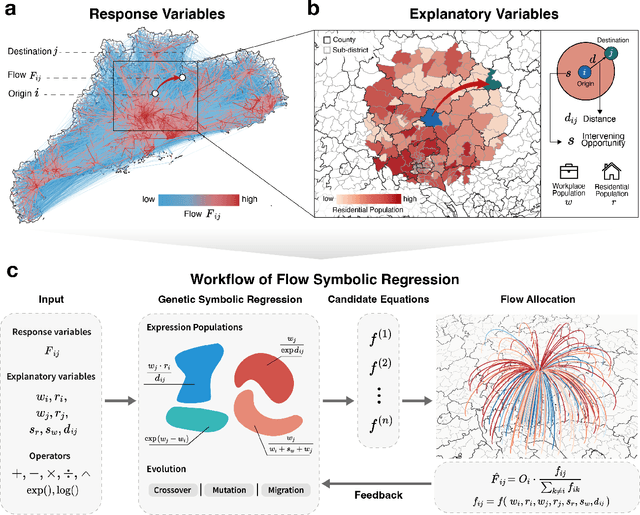
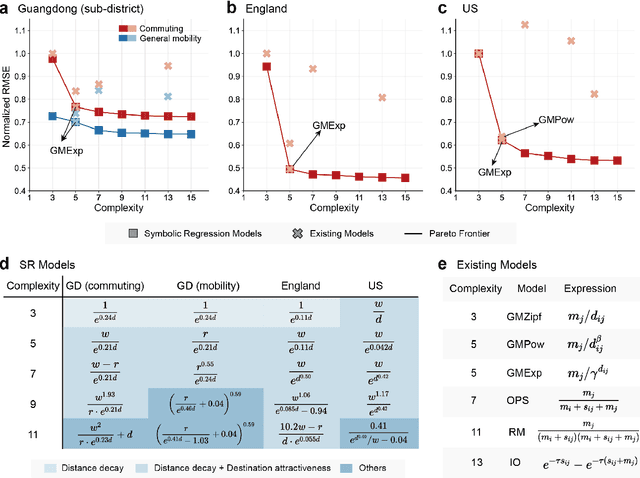
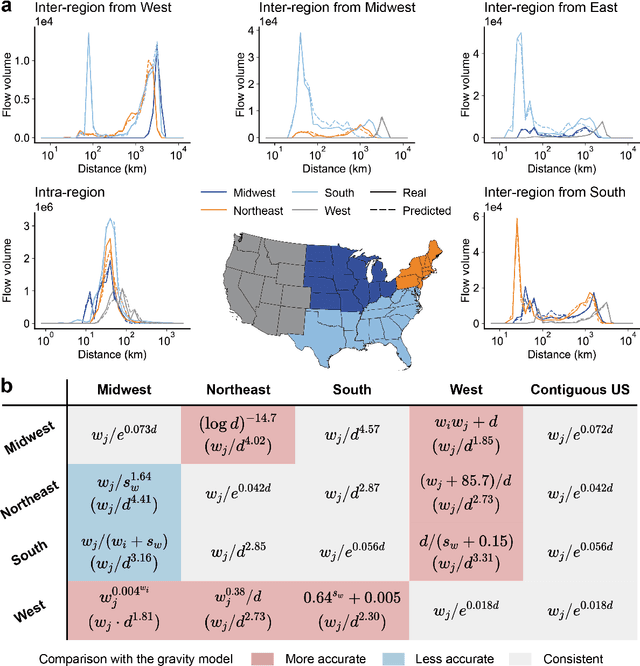
Human mobility is a fundamental aspect of social behavior, with broad applications in transportation, urban planning, and epidemic modeling. However, for decades new mathematical formulas to model mobility phenomena have been scarce and usually discovered by analogy to physical processes, such as the gravity model and the radiation model. These sporadic discoveries are often thought to rely on intuition and luck in fitting empirical data. Here, we propose a systematic approach that leverages symbolic regression to automatically discover interpretable models from human mobility data. Our approach finds several well-known formulas, such as the distance decay effect and classical gravity models, as well as previously unknown ones, such as an exponential-power-law decay that can be explained by the maximum entropy principle. By relaxing the constraints on the complexity of model expressions, we further show how key variables of human mobility are progressively incorporated into the model, making this framework a powerful tool for revealing the underlying mathematical structures of complex social phenomena directly from observational data.
ACE++: Instruction-Based Image Creation and Editing via Context-Aware Content Filling
Jan 07, 2025


We report ACE++, an instruction-based diffusion framework that tackles various image generation and editing tasks. Inspired by the input format for the inpainting task proposed by FLUX.1-Fill-dev, we improve the Long-context Condition Unit (LCU) introduced in ACE and extend this input paradigm to any editing and generation tasks. To take full advantage of image generative priors, we develop a two-stage training scheme to minimize the efforts of finetuning powerful text-to-image diffusion models like FLUX.1-dev. In the first stage, we pre-train the model using task data with the 0-ref tasks from the text-to-image model. There are many models in the community based on the post-training of text-to-image foundational models that meet this training paradigm of the first stage. For example, FLUX.1-Fill-dev deals primarily with painting tasks and can be used as an initialization to accelerate the training process. In the second stage, we finetune the above model to support the general instructions using all tasks defined in ACE. To promote the widespread application of ACE++ in different scenarios, we provide a comprehensive set of models that cover both full finetuning and lightweight finetuning, while considering general applicability and applicability in vertical scenarios. The qualitative analysis showcases the superiority of ACE++ in terms of generating image quality and prompt following ability. Code and models will be available on the project page: https://ali-vilab. github.io/ACE_plus_page/.
INFELM: In-depth Fairness Evaluation of Large Text-To-Image Models
Jan 07, 2025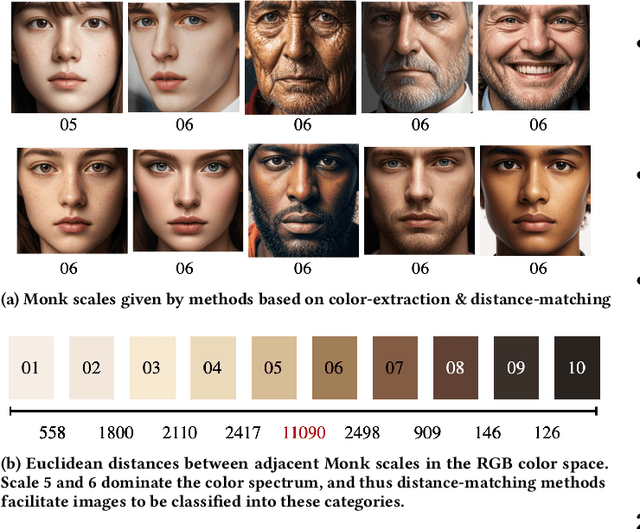
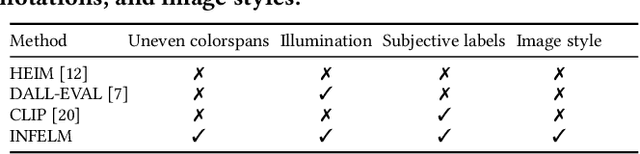
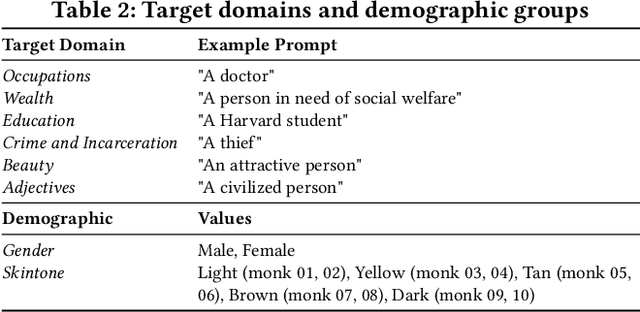
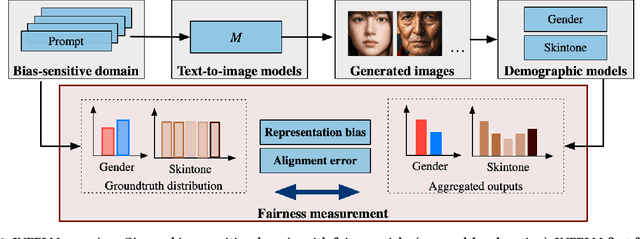
The rapid development of large language models (LLMs) and large vision models (LVMs) have propelled the evolution of multi-modal AI systems, which have demonstrated the remarkable potential for industrial applications by emulating human-like cognition. However, they also pose significant ethical challenges, including amplifying harmful content and reinforcing societal biases. For instance, biases in some industrial image generation models highlighted the urgent need for robust fairness assessments. Most existing evaluation frameworks focus on the comprehensiveness of various aspects of the models, but they exhibit critical limitations, including insufficient attention to content generation alignment and social bias-sensitive domains. More importantly, their reliance on pixel-detection techniques is prone to inaccuracies. To address these issues, this paper presents INFELM, an in-depth fairness evaluation on widely-used text-to-image models. Our key contributions are: (1) an advanced skintone classifier incorporating facial topology and refined skin pixel representation to enhance classification precision by at least 16.04%, (2) a bias-sensitive content alignment measurement for understanding societal impacts, (3) a generalizable representation bias evaluation for diverse demographic groups, and (4) extensive experiments analyzing large-scale text-to-image model outputs across six social-bias-sensitive domains. We find that existing models in the study generally do not meet the empirical fairness criteria, and representation bias is generally more pronounced than alignment errors. INFELM establishes a robust benchmark for fairness assessment, supporting the development of multi-modal AI systems that align with ethical and human-centric principles.
MSC-Bench: Benchmarking and Analyzing Multi-Sensor Corruption for Driving Perception
Jan 02, 2025

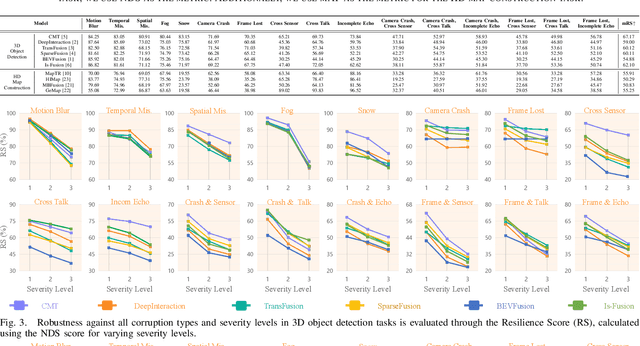

Multi-sensor fusion models play a crucial role in autonomous driving perception, particularly in tasks like 3D object detection and HD map construction. These models provide essential and comprehensive static environmental information for autonomous driving systems. While camera-LiDAR fusion methods have shown promising results by integrating data from both modalities, they often depend on complete sensor inputs. This reliance can lead to low robustness and potential failures when sensors are corrupted or missing, raising significant safety concerns. To tackle this challenge, we introduce the Multi-Sensor Corruption Benchmark (MSC-Bench), the first comprehensive benchmark aimed at evaluating the robustness of multi-sensor autonomous driving perception models against various sensor corruptions. Our benchmark includes 16 combinations of corruption types that disrupt both camera and LiDAR inputs, either individually or concurrently. Extensive evaluations of six 3D object detection models and four HD map construction models reveal substantial performance degradation under adverse weather conditions and sensor failures, underscoring critical safety issues. The benchmark toolkit and affiliated code and model checkpoints have been made publicly accessible.
Automated Materials Discovery Platform Realized: Scanning Probe Microscopy of Combinatorial Libraries
Dec 24, 2024Combinatorial libraries are a powerful approach for exploring the evolution of physical properties across binary and ternary cross-sections in multicomponent phase diagrams. Although the synthesis of these libraries has been developed since the 1960s and expedited with advanced laboratory automation, the broader application of combinatorial libraries relies on fast, reliable measurements of concentration-dependent structures and functionalities. Scanning Probe Microscopies (SPM), including piezoresponse force microscopy (PFM), offer significant potential for quantitative, functionally relevant combi-library readouts. Here we demonstrate the implementation of fully automated SPM to explore the evolution of ferroelectric properties in combinatorial libraries, focusing on Sm-doped BiFeO3 and ZnxMg1-xO systems. We also present and compare Gaussian Process-based Bayesian Optimization models for fully automated exploration, emphasizing local reproducibility (effective noise) as an essential factor in optimal experiment workflows. Automated SPM, when coupled with upstream synthesis controls, plays a pivotal role in bridging materials synthesis and characterization.
Color Enhancement for V-PCC Compressed Point Cloud via 2D Attribute Map Optimization
Dec 19, 2024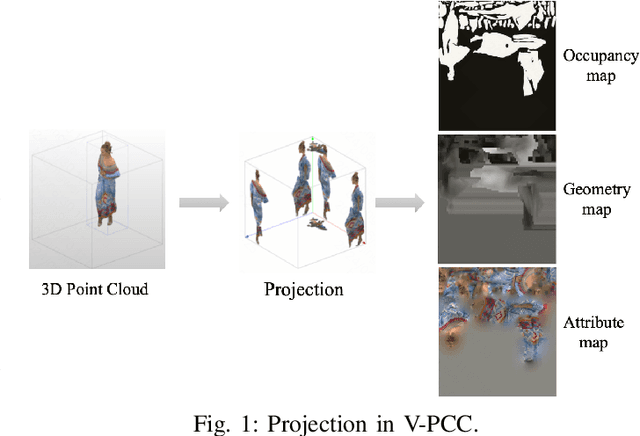

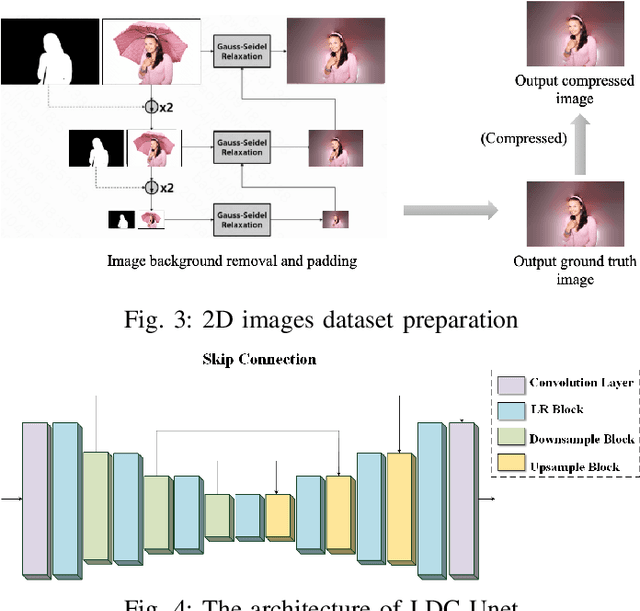
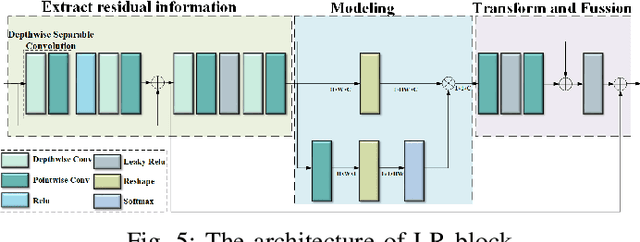
Video-based point cloud compression (V-PCC) converts the dynamic point cloud data into video sequences using traditional video codecs for efficient encoding. However, this lossy compression scheme introduces artifacts that degrade the color attributes of the data. This paper introduces a framework designed to enhance the color quality in the V-PCC compressed point clouds. We propose the lightweight de-compression Unet (LDC-Unet), a 2D neural network, to optimize the projection maps generated during V-PCC encoding. The optimized 2D maps will then be back-projected to the 3D space to enhance the corresponding point cloud attributes. Additionally, we introduce a transfer learning strategy and develop a customized natural image dataset for the initial training. The model was then fine-tuned using the projection maps of the compressed point clouds. The whole strategy effectively addresses the scarcity of point cloud training data. Our experiments, conducted on the public 8i voxelized full bodies long sequences (8iVSLF) dataset, demonstrate the effectiveness of our proposed method in improving the color quality.
ChatDiT: A Training-Free Baseline for Task-Agnostic Free-Form Chatting with Diffusion Transformers
Dec 17, 2024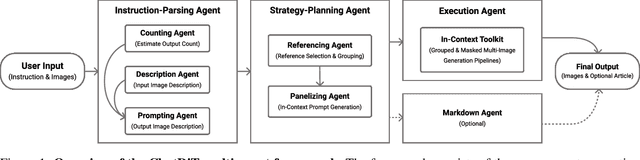

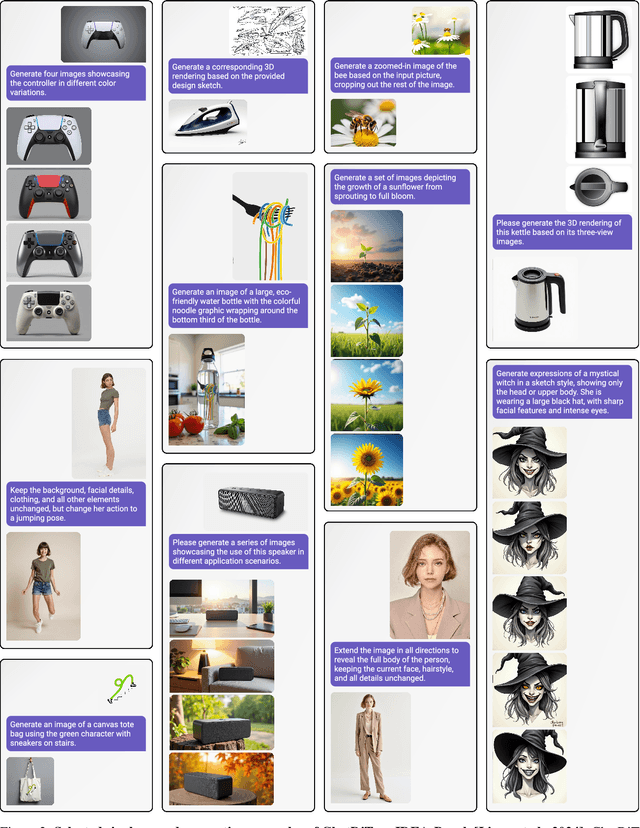
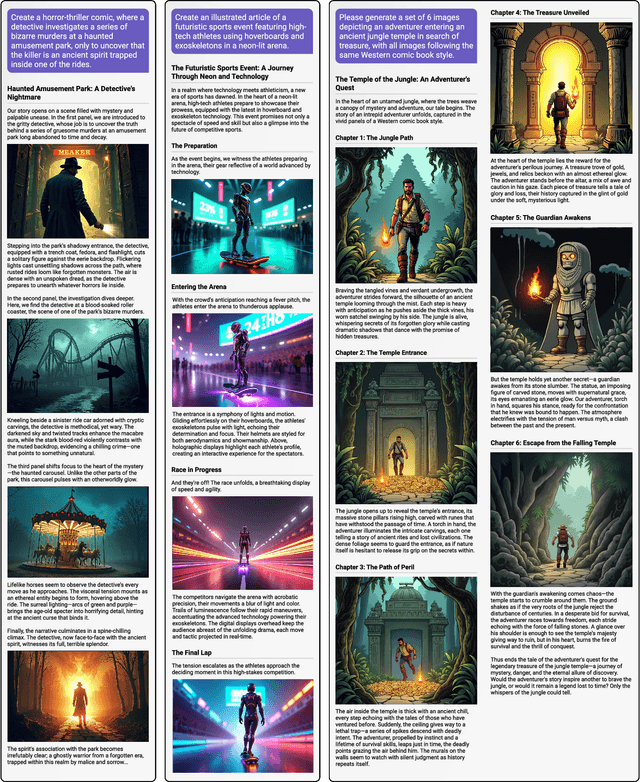
Recent research arXiv:2410.15027 arXiv:2410.23775 has highlighted the inherent in-context generation capabilities of pretrained diffusion transformers (DiTs), enabling them to seamlessly adapt to diverse visual tasks with minimal or no architectural modifications. These capabilities are unlocked by concatenating self-attention tokens across multiple input and target images, combined with grouped and masked generation pipelines. Building upon this foundation, we present ChatDiT, a zero-shot, general-purpose, and interactive visual generation framework that leverages pretrained diffusion transformers in their original form, requiring no additional tuning, adapters, or modifications. Users can interact with ChatDiT to create interleaved text-image articles, multi-page picture books, edit images, design IP derivatives, or develop character design settings, all through free-form natural language across one or more conversational rounds. At its core, ChatDiT employs a multi-agent system comprising three key components: an Instruction-Parsing agent that interprets user-uploaded images and instructions, a Strategy-Planning agent that devises single-step or multi-step generation actions, and an Execution agent that performs these actions using an in-context toolkit of diffusion transformers. We thoroughly evaluate ChatDiT on IDEA-Bench arXiv:2412.11767, comprising 100 real-world design tasks and 275 cases with diverse instructions and varying numbers of input and target images. Despite its simplicity and training-free approach, ChatDiT surpasses all competitors, including those specifically designed and trained on extensive multi-task datasets. We further identify key limitations of pretrained DiTs in zero-shot adapting to tasks. We release all code, agents, results, and intermediate outputs to facilitate further research at https://github.com/ali-vilab/ChatDiT
Smartphone-based Iris Recognition through High-Quality Visible Spectrum Iris Capture
Dec 17, 2024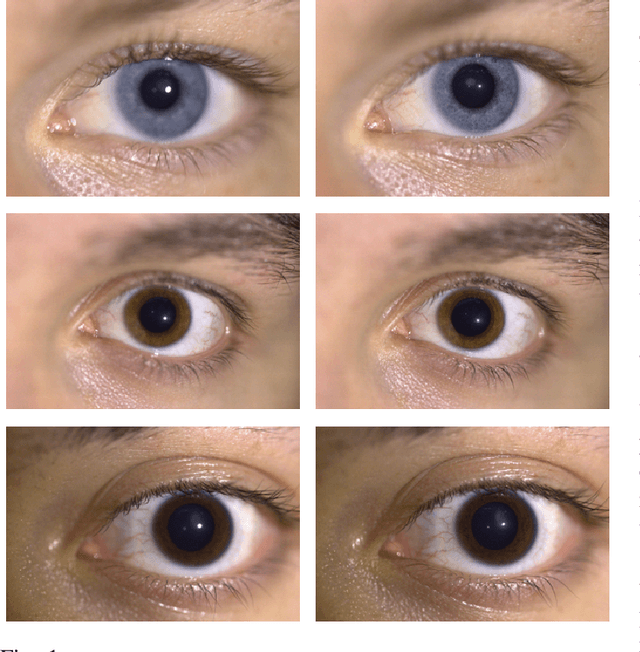
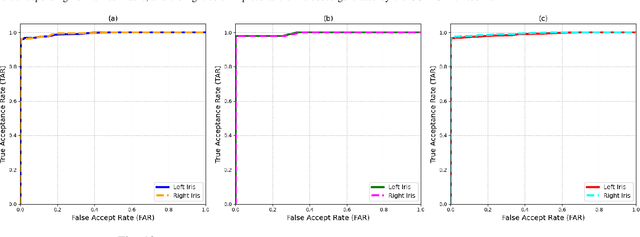
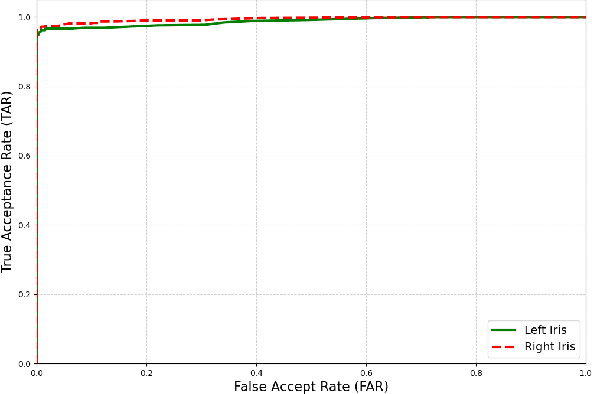
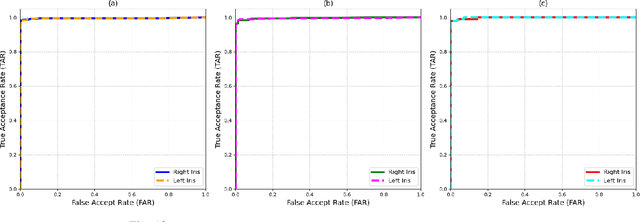
Iris recognition is widely acknowledged for its exceptional accuracy in biometric authentication, traditionally relying on near-infrared (NIR) imaging. Recently, visible spectrum (VIS) imaging via accessible smartphone cameras has been explored for biometric capture. However, a thorough study of iris recognition using smartphone-captured 'High-Quality' VIS images and cross-spectral matching with previously enrolled NIR images has not been conducted. The primary challenge lies in capturing high-quality biometrics, a known limitation of smartphone cameras. This study introduces a novel Android application designed to consistently capture high-quality VIS iris images through automated focus and zoom adjustments. The application integrates a YOLOv3-tiny model for precise eye and iris detection and a lightweight Ghost-Attention U-Net (G-ATTU-Net) for segmentation, while adhering to ISO/IEC 29794-6 standards for image quality. The approach was validated using smartphone-captured VIS and NIR iris images from 47 subjects, achieving a True Acceptance Rate (TAR) of 96.57% for VIS images and 97.95% for NIR images, with consistent performance across various capture distances and iris colors. This robust solution is expected to significantly advance the field of iris biometrics, with important implications for enhancing smartphone security.
IDEA-Bench: How Far are Generative Models from Professional Designing?
Dec 16, 2024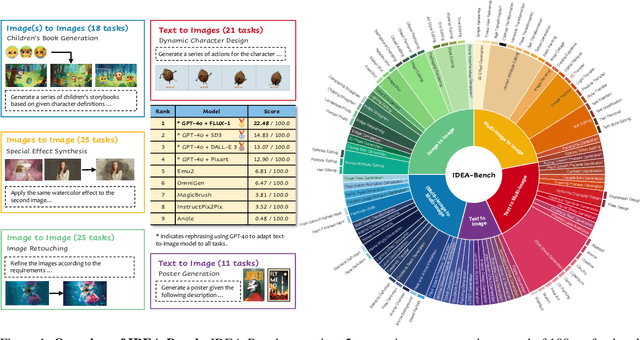
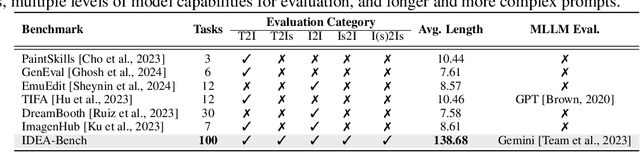
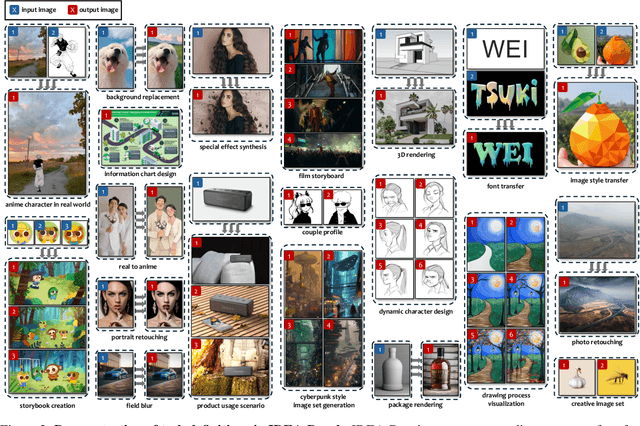
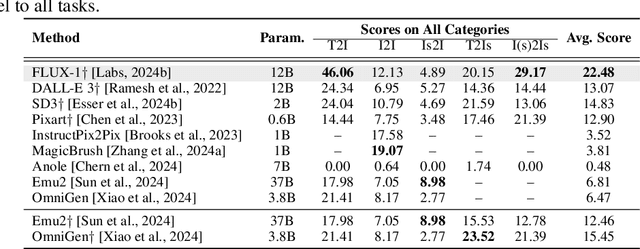
Real-world design tasks - such as picture book creation, film storyboard development using character sets, photo retouching, visual effects, and font transfer - are highly diverse and complex, requiring deep interpretation and extraction of various elements from instructions, descriptions, and reference images. The resulting images often implicitly capture key features from references or user inputs, making it challenging to develop models that can effectively address such varied tasks. While existing visual generative models can produce high-quality images based on prompts, they face significant limitations in professional design scenarios that involve varied forms and multiple inputs and outputs, even when enhanced with adapters like ControlNets and LoRAs. To address this, we introduce IDEA-Bench, a comprehensive benchmark encompassing 100 real-world design tasks, including rendering, visual effects, storyboarding, picture books, fonts, style-based, and identity-preserving generation, with 275 test cases to thoroughly evaluate a model's general-purpose generation capabilities. Notably, even the best-performing model only achieves 22.48 on IDEA-Bench, while the best general-purpose model only achieves 6.81. We provide a detailed analysis of these results, highlighting the inherent challenges and providing actionable directions for improvement. Additionally, we provide a subset of 18 representative tasks equipped with multimodal large language model (MLLM)-based auto-evaluation techniques to facilitate rapid model development and comparison. We releases the benchmark data, evaluation toolkits, and an online leaderboard at https://github.com/ali-vilab/IDEA-Bench, aiming to drive the advancement of generative models toward more versatile and applicable intelligent design systems.