 Add to Chrome
 Add to Firefox
 Add to Edge
Behavioral Steering in a 35B MoE Language Model via SAE-Decoded Probe Vectors: One Agency Axis, Not Five Traits
Mar 17, 2026
We train nine sparse autoencoders (SAEs) on the residual stream of Qwen 3.5-35B-A3B, a 35-billion-parameter Mixture-of-Experts model with a hybrid GatedDeltaNet/attention architecture, and use them to identify and steer five agentic behavioral traits. Our method trains linear probes on SAE latent activations, then projects the probe weights back through the SAE decoder to obtain continuous steering vectors in the model's native activation space. This bypasses the SAE's top-k discretization, enabling fine-grained behavioral intervention at inference time with no retraining. Across 1,800 agent rollouts (50 scenarios times 36 conditions), we find that autonomy steering at multiplier 2 achieves Cohen's d = 1.01 (p < 0.0001), shifting the model from asking the user for help 78% of the time to proactively executing code and searching the web. Cross-trait analysis, however, reveals that all five steering vectors primarily modulate a single dominant agency axis (the disposition to act independently versus defer to the user), with trait specific effects appearing only as secondary modulations in tool-type composition and dose-response shape. The tool-use vector steers behavior (d = 0.39); the risk-calibration vector produces only suppression. We additionally show that steering only during autoregressive decoding has zero effect (p > 0.35), providing causal evidence that behavioral commitments are computed during prefill in GatedDeltaNet architectures.

INFELM: In-depth Fairness Evaluation of Large Text-To-Image Models
Jan 07, 2025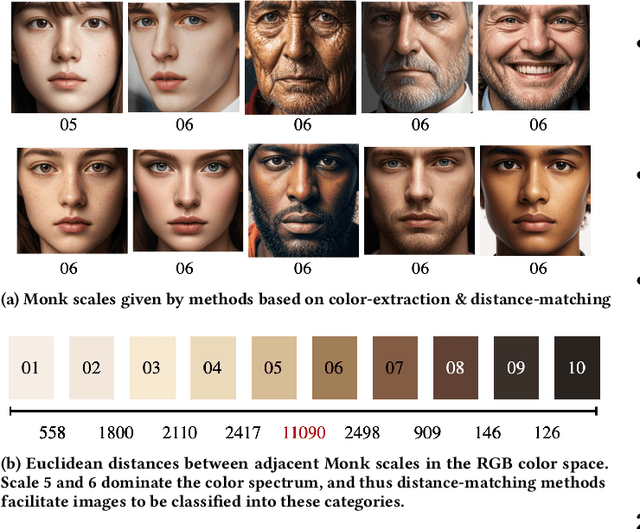
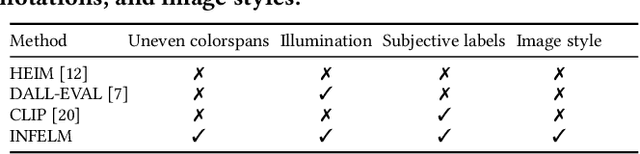
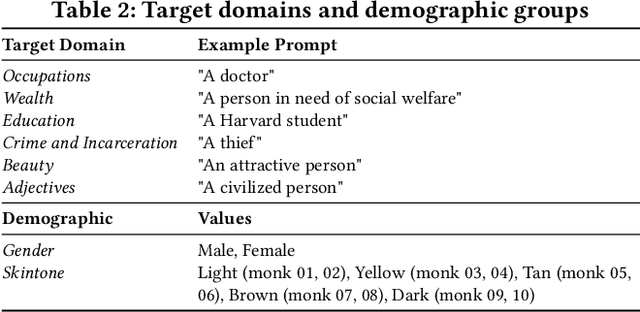
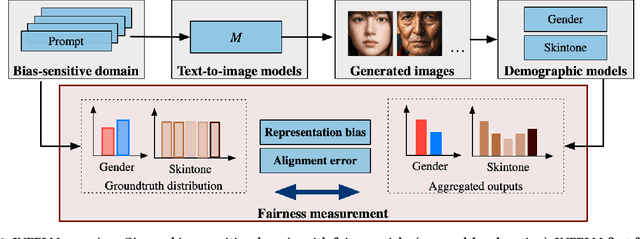
The rapid development of large language models (LLMs) and large vision models (LVMs) have propelled the evolution of multi-modal AI systems, which have demonstrated the remarkable potential for industrial applications by emulating human-like cognition. However, they also pose significant ethical challenges, including amplifying harmful content and reinforcing societal biases. For instance, biases in some industrial image generation models highlighted the urgent need for robust fairness assessments. Most existing evaluation frameworks focus on the comprehensiveness of various aspects of the models, but they exhibit critical limitations, including insufficient attention to content generation alignment and social bias-sensitive domains. More importantly, their reliance on pixel-detection techniques is prone to inaccuracies. To address these issues, this paper presents INFELM, an in-depth fairness evaluation on widely-used text-to-image models. Our key contributions are: (1) an advanced skintone classifier incorporating facial topology and refined skin pixel representation to enhance classification precision by at least 16.04%, (2) a bias-sensitive content alignment measurement for understanding societal impacts, (3) a generalizable representation bias evaluation for diverse demographic groups, and (4) extensive experiments analyzing large-scale text-to-image model outputs across six social-bias-sensitive domains. We find that existing models in the study generally do not meet the empirical fairness criteria, and representation bias is generally more pronounced than alignment errors. INFELM establishes a robust benchmark for fairness assessment, supporting the development of multi-modal AI systems that align with ethical and human-centric principles.