 Add to Chrome
 Add to Firefox
 Add to Edge
FutureWeaver: Planning Test-Time Compute for Multi-Agent Systems with Modularized Collaboration
Dec 12, 2025
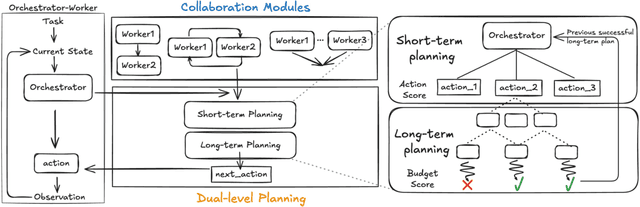
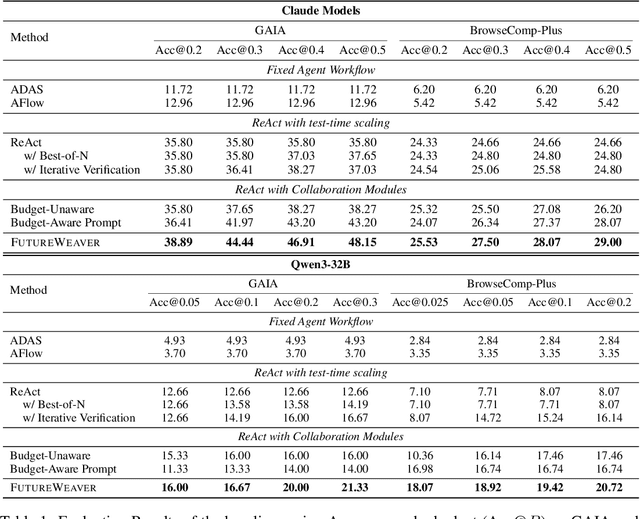
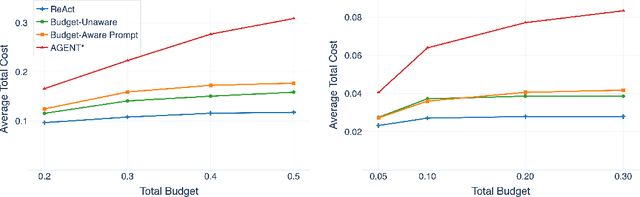
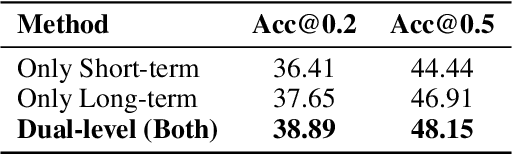
Scaling test-time computation improves large language model performance without additional training. Recent work demonstrates that techniques such as repeated sampling, self-verification, and self-reflection can significantly enhance task success by allocating more inference-time compute. However, applying these techniques across multiple agents in a multi-agent system is difficult: there does not exist principled mechanisms to allocate compute to foster collaboration among agents, to extend test-time scaling to collaborative interactions, or to distribute compute across agents under explicit budget constraints. To address this gap, we propose FutureWeaver, a framework for planning and optimizing test-time compute allocation in multi-agent systems under fixed budgets. FutureWeaver introduces modularized collaboration, formalized as callable functions that encapsulate reusable multi-agent workflows. These modules are automatically derived through self-play reflection by abstracting recurring interaction patterns from past trajectories. Building on these modules, FutureWeaver employs a dual-level planning architecture that optimizes compute allocation by reasoning over the current task state while also speculating on future steps. Experiments on complex agent benchmarks demonstrate that FutureWeaver consistently outperforms baselines across diverse budget settings, validating its effectiveness for multi-agent collaboration in inference-time optimization.

Training-Free Dual Hyperbolic Adapters for Better Cross-Modal Reasoning
Dec 09, 2025Recent research in Vision-Language Models (VLMs) has significantly advanced our capabilities in cross-modal reasoning. However, existing methods suffer from performance degradation with domain changes or require substantial computational resources for fine-tuning in new domains. To address this issue, we develop a new adaptation method for large vision-language models, called \textit{Training-free Dual Hyperbolic Adapters} (T-DHA). We characterize the vision-language relationship between semantic concepts, which typically has a hierarchical tree structure, in the hyperbolic space instead of the traditional Euclidean space. Hyperbolic spaces exhibit exponential volume growth with radius, unlike the polynomial growth in Euclidean space. We find that this unique property is particularly effective for embedding hierarchical data structures using the Poincaré ball model, achieving significantly improved representation and discrimination power. Coupled with negative learning, it provides more accurate and robust classifications with fewer feature dimensions. Our extensive experimental results on various datasets demonstrate that the T-DHA method significantly outperforms existing state-of-the-art methods in few-shot image recognition and domain generalization tasks.
RTS-Mono: A Real-Time Self-Supervised Monocular Depth Estimation Method for Real-World Deployment
Nov 18, 2025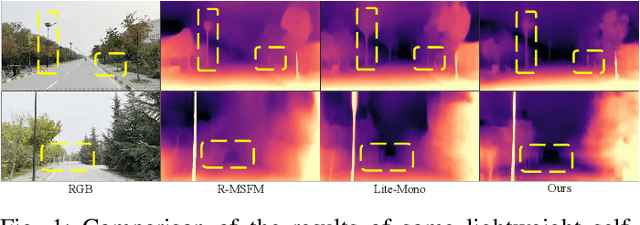
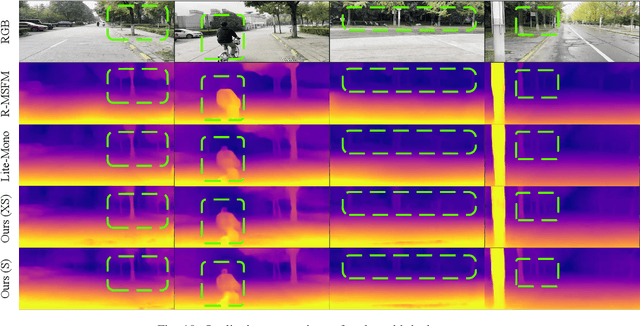
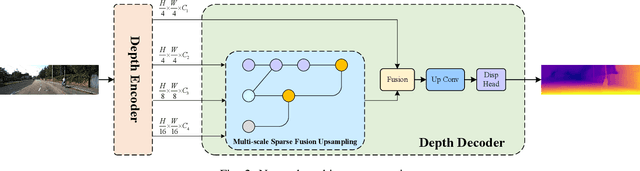
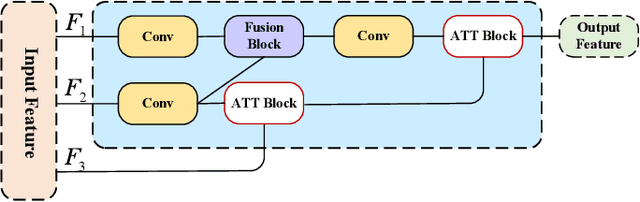
Depth information is crucial for autonomous driving and intelligent robot navigation. The simplicity and flexibility of self-supervised monocular depth estimation are conducive to its role in these fields. However, most existing monocular depth estimation models consume many computing resources. Although some methods have reduced the model's size and improved computing efficiency, the performance deteriorates, seriously hindering the real-world deployment of self-supervised monocular depth estimation models in the real world. To address this problem, we proposed a real-time self-supervised monocular depth estimation method and implemented it in the real world. It is called RTS-Mono, which is a lightweight and efficient encoder-decoder architecture. The encoder is based on Lite-Encoder, and the decoder is designed with a multi-scale sparse fusion framework to minimize redundancy, ensure performance, and improve inference speed. RTS-Mono achieved state-of-the-art (SoTA) performance in high and low resolutions with extremely low parameter counts (3 M) in experiments based on the KITTI dataset. Compared with lightweight methods, RTS-Mono improved Abs Rel and Sq Rel by 5.6% and 9.8% at low resolution and improved Sq Rel and RMSE by 6.1% and 1.9% at high resolution. In real-world deployment experiments, RTS-Mono has extremely high accuracy and can perform real-time inference on Nvidia Jetson Orin at a speed of 49 FPS. Source code is available at https://github.com/ZYCheng777/RTS-Mono.
Low-Level Dataset Distillation for Medical Image Enhancement
Nov 17, 2025Medical image enhancement is clinically valuable, but existing methods require large-scale datasets to learn complex pixel-level mappings. However, the substantial training and storage costs associated with these datasets hinder their practical deployment. While dataset distillation (DD) can alleviate these burdens, existing methods mainly target high-level tasks, where multiple samples share the same label. This many-to-one mapping allows distilled data to capture shared semantics and achieve information compression. In contrast, low-level tasks involve a many-to-many mapping that requires pixel-level fidelity, making low-level DD an underdetermined problem, as a small distilled dataset cannot fully constrain the dense pixel-level mappings. To address this, we propose the first low-level DD method for medical image enhancement. We first leverage anatomical similarities across patients to construct the shared anatomical prior based on a representative patient, which serves as the initialization for the distilled data of different patients. This prior is then personalized for each patient using a Structure-Preserving Personalized Generation (SPG) module, which integrates patient-specific anatomical information into the distilled dataset while preserving pixel-level fidelity. For different low-level tasks, the distilled data is used to construct task-specific high- and low-quality training pairs. Patient-specific knowledge is injected into the distilled data by aligning the gradients computed from networks trained on the distilled pairs with those from the corresponding patient's raw data. Notably, downstream users cannot access raw patient data. Instead, only a distilled dataset containing abstract training information is shared, which excludes patient-specific details and thus preserves privacy.
Fragile by Design: On the Limits of Adversarial Defenses in Personalized Generation
Nov 13, 2025Personalized AI applications such as DreamBooth enable the generation of customized content from user images, but also raise significant privacy concerns, particularly the risk of facial identity leakage. Recent defense mechanisms like Anti-DreamBooth attempt to mitigate this risk by injecting adversarial perturbations into user photos to prevent successful personalization. However, we identify two critical yet overlooked limitations of these methods. First, the adversarial examples often exhibit perceptible artifacts such as conspicuous patterns or stripes, making them easily detectable as manipulated content. Second, the perturbations are highly fragile, as even a simple, non-learned filter can effectively remove them, thereby restoring the model's ability to memorize and reproduce user identity. To investigate this vulnerability, we propose a novel evaluation framework, AntiDB_Purify, to systematically evaluate existing defenses under realistic purification threats, including both traditional image filters and adversarial purification. Results reveal that none of the current methods maintains their protective effectiveness under such threats. These findings highlight that current defenses offer a false sense of security and underscore the urgent need for more imperceptible and robust protections to safeguard user identity in personalized generation.
TubeRMC: Tube-conditioned Reconstruction with Mutual Constraints for Weakly-supervised Spatio-Temporal Video Grounding
Nov 13, 2025Spatio-Temporal Video Grounding (STVG) aims to localize a spatio-temporal tube that corresponds to a given language query in an untrimmed video. This is a challenging task since it involves complex vision-language understanding and spatiotemporal reasoning. Recent works have explored weakly-supervised setting in STVG to eliminate reliance on fine-grained annotations like bounding boxes or temporal stamps. However, they typically follow a simple late-fusion manner, which generates tubes independent of the text description, often resulting in failed target identification and inconsistent target tracking. To address this limitation, we propose a Tube-conditioned Reconstruction with Mutual Constraints (\textbf{TubeRMC}) framework that generates text-conditioned candidate tubes with pre-trained visual grounding models and further refine them via tube-conditioned reconstruction with spatio-temporal constraints. Specifically, we design three reconstruction strategies from temporal, spatial, and spatio-temporal perspectives to comprehensively capture rich tube-text correspondences. Each strategy is equipped with a Tube-conditioned Reconstructor, utilizing spatio-temporal tubes as condition to reconstruct the key clues in the query. We further introduce mutual constraints between spatial and temporal proposals to enhance their quality for reconstruction. TubeRMC outperforms existing methods on two public benchmarks VidSTG and HCSTVG. Further visualization shows that TubeRMC effectively mitigates both target identification errors and inconsistent tracking.
Unlocking Dynamic Inter-Client Spatial Dependencies: A Federated Spatio-Temporal Graph Learning Method for Traffic Flow Forecasting
Nov 13, 2025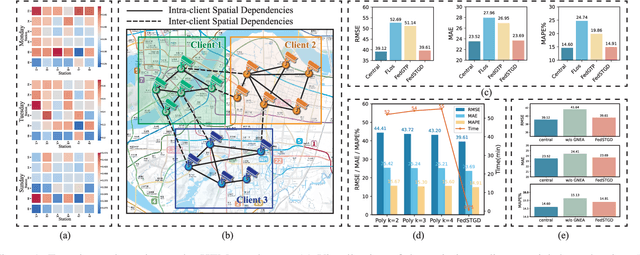
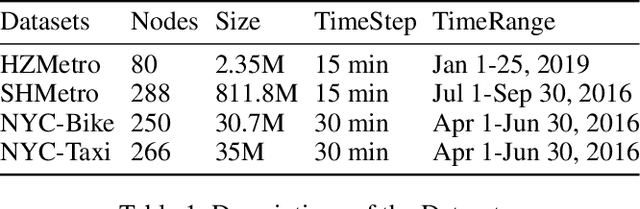
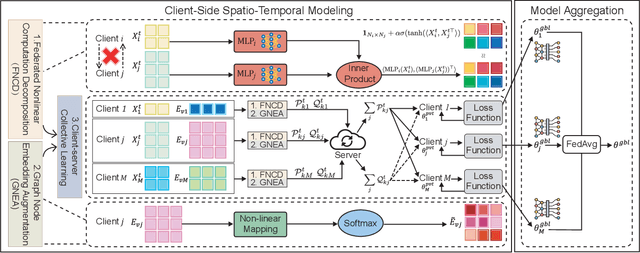
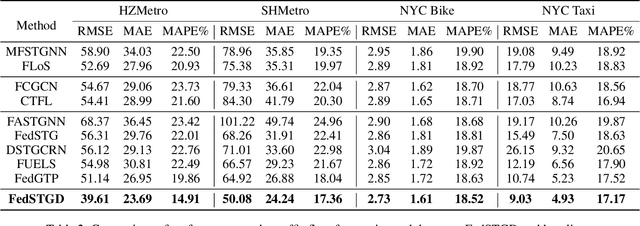
Spatio-temporal graphs are powerful tools for modeling complex dependencies in traffic time series. However, the distributed nature of real-world traffic data across multiple stakeholders poses significant challenges in modeling and reconstructing inter-client spatial dependencies while adhering to data locality constraints. Existing methods primarily address static dependencies, overlooking their dynamic nature and resulting in suboptimal performance. In response, we propose Federated Spatio-Temporal Graph with Dynamic Inter-Client Dependencies (FedSTGD), a framework designed to model and reconstruct dynamic inter-client spatial dependencies in federated learning. FedSTGD incorporates a federated nonlinear computation decomposition module to approximate complex graph operations. This is complemented by a graph node embedding augmentation module, which alleviates performance degradation arising from the decomposition. These modules are coordinated through a client-server collective learning protocol, which decomposes dynamic inter-client spatial dependency learning tasks into lightweight, parallelizable subtasks. Extensive experiments on four real-world datasets demonstrate that FedSTGD achieves superior performance over state-of-the-art baselines in terms of RMSE, MAE, and MAPE, approaching that of centralized baselines. Ablation studies confirm the contribution of each module in addressing dynamic inter-client spatial dependencies, while sensitivity analysis highlights the robustness of FedSTGD to variations in hyperparameters.
Groupwise Registration with Physics-Informed Test-Time Adaptation on Multi-parametric Cardiac MRI
Oct 29, 2025Multiparametric mapping MRI has become a viable tool for myocardial tissue characterization. However, misalignment between multiparametric maps makes pixel-wise analysis challenging. To address this challenge, we developed a generalizable physics-informed deep-learning model using test-time adaptation to enable group image registration across contrast weighted images acquired from multiple physical models (e.g., a T1 mapping model and T2 mapping model). The physics-informed adaptation utilized the synthetic images from specific physics model as registration reference, allows for transductive learning for various tissue contrast. We validated the model in healthy volunteers with various MRI sequences, demonstrating its improvement for multi-modal registration with a wide range of image contrast variability.
Qwen3Guard Technical Report
Oct 16, 2025As large language models (LLMs) become more capable and widely used, ensuring the safety of their outputs is increasingly critical. Existing guardrail models, though useful in static evaluation settings, face two major limitations in real-world applications: (1) they typically output only binary "safe/unsafe" labels, which can be interpreted inconsistently across diverse safety policies, rendering them incapable of accommodating varying safety tolerances across domains; and (2) they require complete model outputs before performing safety checks, making them fundamentally incompatible with streaming LLM inference, thereby preventing timely intervention during generation and increasing exposure to harmful partial outputs. To address these challenges, we present Qwen3Guard, a series of multilingual safety guardrail models with two specialized variants: Generative Qwen3Guard, which casts safety classification as an instruction-following task to enable fine-grained tri-class judgments (safe, controversial, unsafe); and Stream Qwen3Guard, which introduces a token-level classification head for real-time safety monitoring during incremental text generation. Both variants are available in three sizes (0.6B, 4B, and 8B parameters) and support up to 119 languages and dialects, providing comprehensive, scalable, and low-latency safety moderation for global LLM deployments. Evaluated across English, Chinese, and multilingual benchmarks, Qwen3Guard achieves state-of-the-art performance in both prompt and response safety classification. All models are released under the Apache 2.0 license for public use.
MARCO: A Cooperative Knowledge Transfer Framework for Personalized Cross-domain Recommendations
Oct 06, 2025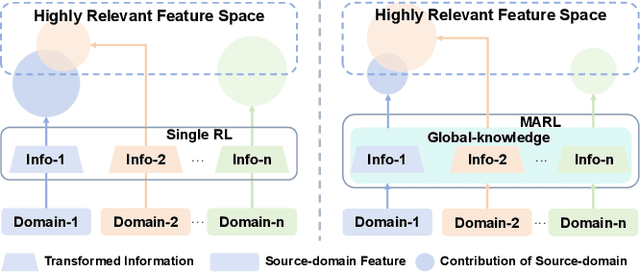
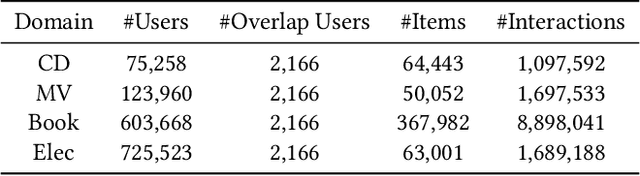
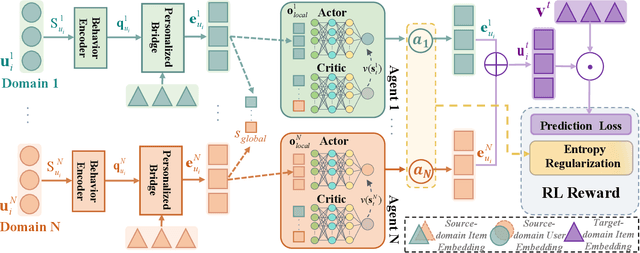
Recommender systems frequently encounter data sparsity issues, particularly when addressing cold-start scenarios involving new users or items. Multi-source cross-domain recommendation (CDR) addresses these challenges by transferring valuable knowledge from multiple source domains to enhance recommendations in a target domain. However, existing reinforcement learning (RL)-based CDR methods typically rely on a single-agent framework, leading to negative transfer issues caused by inconsistent domain contributions and inherent distributional discrepancies among source domains. To overcome these limitations, MARCO, a Multi-Agent Reinforcement Learning-based Cross-Domain recommendation framework, is proposed. It leverages cooperative multi-agent reinforcement learning, where each agent is dedicated to estimating the contribution from an individual source domain, effectively managing credit assignment and mitigating negative transfer. In addition, an entropy-based action diversity penalty is introduced to enhance policy expressiveness and stabilize training by encouraging diverse agents' joint actions. Extensive experiments across four benchmark datasets demonstrate MARCO's superior performance over state-of-the-art methods, highlighting its robustness and strong generalization capabilities. The code is at https://github.com/xiewilliams/MARCO.