 Add to Chrome
 Add to Firefox
 Add to Edge
Efficient Emotional Adaptation for Audio-Driven Talking-Head Generation
Sep 10, 2023
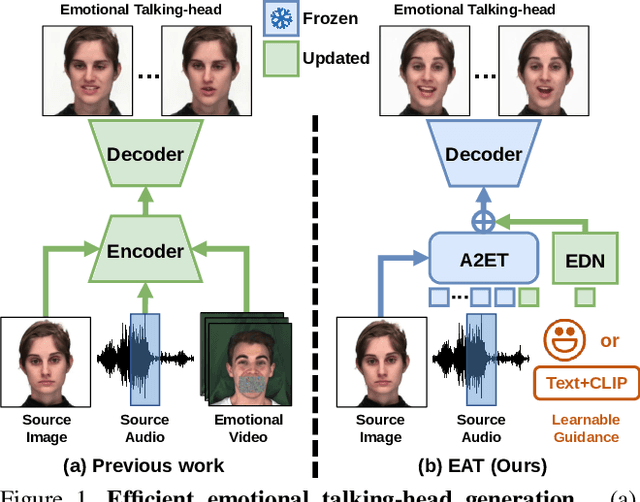
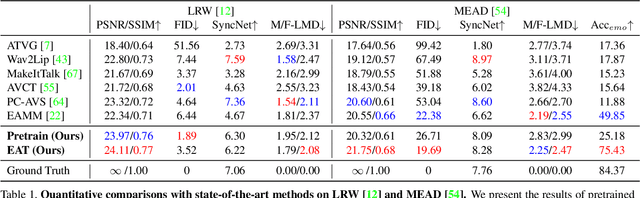
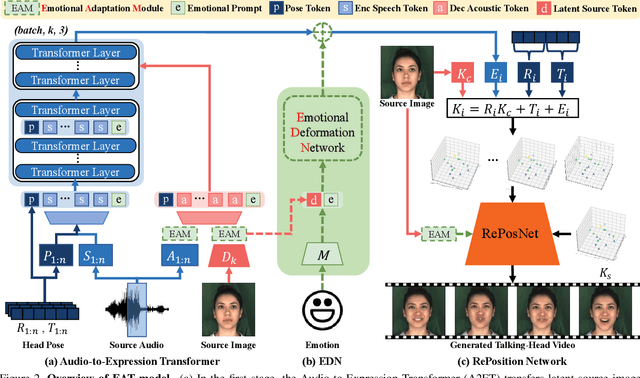
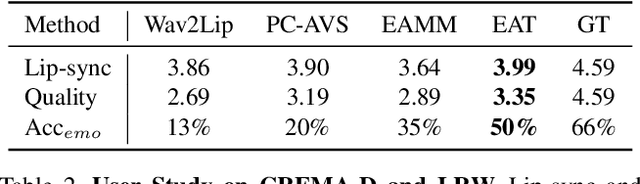
Audio-driven talking-head synthesis is a popular research topic for virtual human-related applications. However, the inflexibility and inefficiency of existing methods, which necessitate expensive end-to-end training to transfer emotions from guidance videos to talking-head predictions, are significant limitations. In this work, we propose the Emotional Adaptation for Audio-driven Talking-head (EAT) method, which transforms emotion-agnostic talking-head models into emotion-controllable ones in a cost-effective and efficient manner through parameter-efficient adaptations. Our approach utilizes a pretrained emotion-agnostic talking-head transformer and introduces three lightweight adaptations (the Deep Emotional Prompts, Emotional Deformation Network, and Emotional Adaptation Module) from different perspectives to enable precise and realistic emotion controls. Our experiments demonstrate that our approach achieves state-of-the-art performance on widely-used benchmarks, including LRW and MEAD. Additionally, our parameter-efficient adaptations exhibit remarkable generalization ability, even in scenarios where emotional training videos are scarce or nonexistent. Project website: https://yuangan.github.io/eat/

Text-driven Editing of 3D Scenes without Retraining
Sep 10, 2023
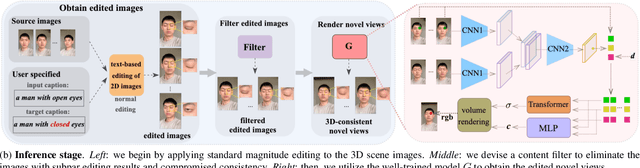
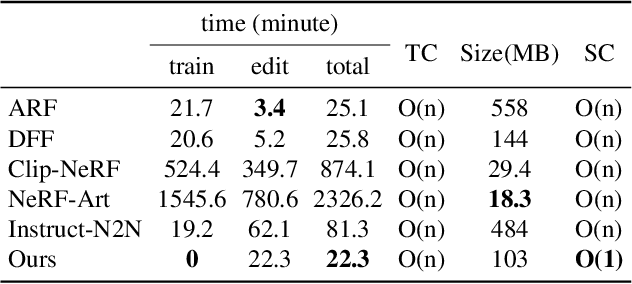
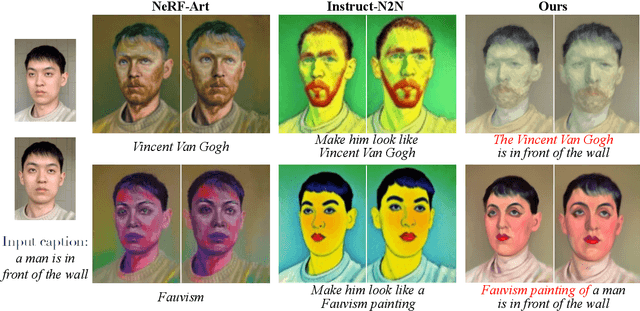
Numerous diffusion models have recently been applied to image synthesis and editing. However, editing 3D scenes is still in its early stages. It poses various challenges, such as the requirement to design specific methods for different editing types, retraining new models for various 3D scenes, and the absence of convenient human interaction during editing. To tackle these issues, we introduce a text-driven editing method, termed DN2N, which allows for the direct acquisition of a NeRF model with universal editing capabilities, eliminating the requirement for retraining. Our method employs off-the-shelf text-based editing models of 2D images to modify the 3D scene images, followed by a filtering process to discard poorly edited images that disrupt 3D consistency. We then consider the remaining inconsistency as a problem of removing noise perturbation, which can be solved by generating training data with similar perturbation characteristics for training. We further propose cross-view regularization terms to help the generalized NeRF model mitigate these perturbations. Our text-driven method allows users to edit a 3D scene with their desired description, which is more friendly, intuitive, and practical than prior works. Empirical results show that our method achieves multiple editing types, including but not limited to appearance editing, weather transition, material changing, and style transfer. Most importantly, our method generalizes well with editing abilities shared among a set of model parameters without requiring a customized editing model for some specific scenes, thus inferring novel views with editing effects directly from user input. The project website is available at http://sk-fun.fun/DN2N
DiverseMotion: Towards Diverse Human Motion Generation via Discrete Diffusion
Sep 04, 2023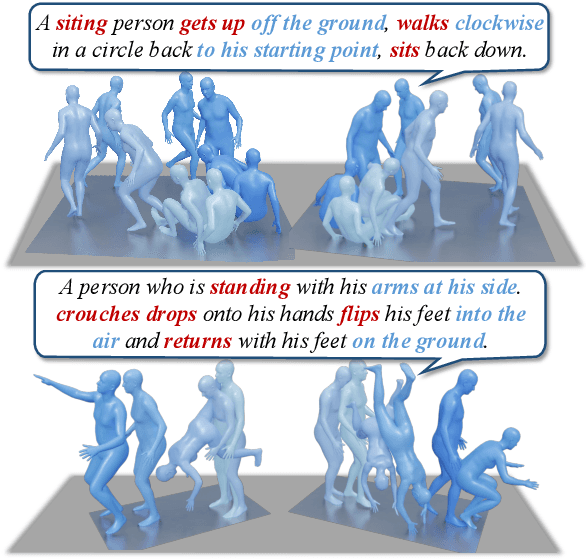
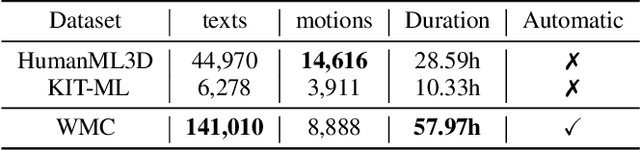
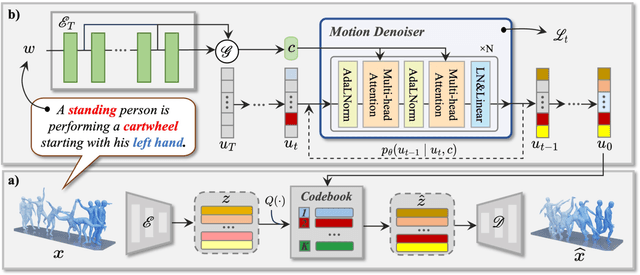
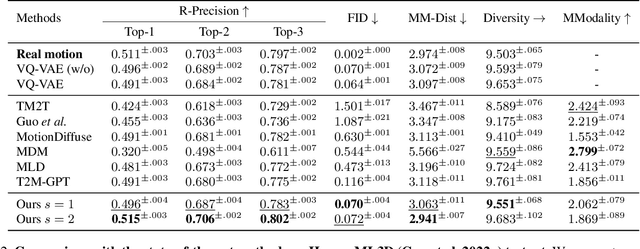
We present DiverseMotion, a new approach for synthesizing high-quality human motions conditioned on textual descriptions while preserving motion diversity.Despite the recent significant process in text-based human motion generation,existing methods often prioritize fitting training motions at the expense of action diversity. Consequently, striking a balance between motion quality and diversity remains an unresolved challenge. This problem is compounded by two key factors: 1) the lack of diversity in motion-caption pairs in existing benchmarks and 2) the unilateral and biased semantic understanding of the text prompt, focusing primarily on the verb component while neglecting the nuanced distinctions indicated by other words.In response to the first issue, we construct a large-scale Wild Motion-Caption dataset (WMC) to extend the restricted action boundary of existing well-annotated datasets, enabling the learning of diverse motions through a more extensive range of actions. To this end, a motion BLIP is trained upon a pretrained vision-language model, then we automatically generate diverse motion captions for the collected motion sequences. As a result, we finally build a dataset comprising 8,888 motions coupled with 141k text.To comprehensively understand the text command, we propose a Hierarchical Semantic Aggregation (HSA) module to capture the fine-grained semantics.Finally,we involve the above two designs into an effective Motion Discrete Diffusion (MDD) framework to strike a balance between motion quality and diversity. Extensive experiments on HumanML3D and KIT-ML show that our DiverseMotion achieves the state-of-the-art motion quality and competitive motion diversity. Dataset, code, and pretrained models will be released to reproduce all of our results.
RoboTAP: Tracking Arbitrary Points for Few-Shot Visual Imitation
Aug 31, 2023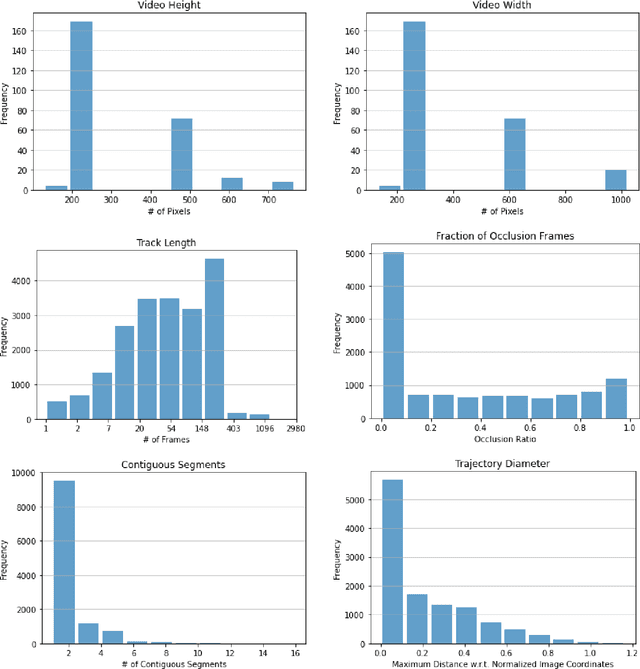


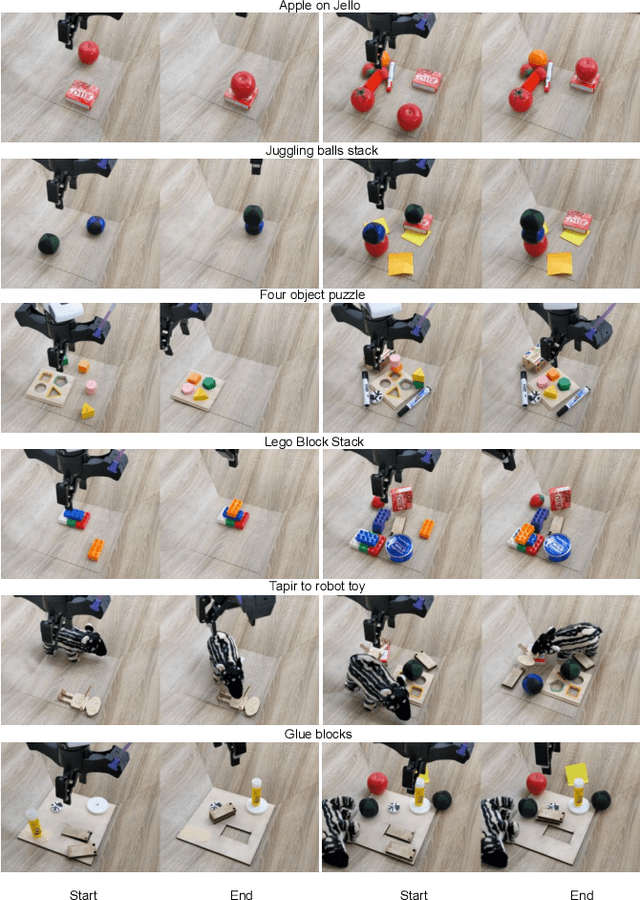
For robots to be useful outside labs and specialized factories we need a way to teach them new useful behaviors quickly. Current approaches lack either the generality to onboard new tasks without task-specific engineering, or else lack the data-efficiency to do so in an amount of time that enables practical use. In this work we explore dense tracking as a representational vehicle to allow faster and more general learning from demonstration. Our approach utilizes Track-Any-Point (TAP) models to isolate the relevant motion in a demonstration, and parameterize a low-level controller to reproduce this motion across changes in the scene configuration. We show this results in robust robot policies that can solve complex object-arrangement tasks such as shape-matching, stacking, and even full path-following tasks such as applying glue and sticking objects together, all from demonstrations that can be collected in minutes.
AIoT-Based Drum Transcription Robot using Convolutional Neural Networks
Aug 29, 2023With the development of information technology, robot technology has made great progress in various fields. These new technologies enable robots to be used in industry, agriculture, education and other aspects. In this paper, we propose a drum robot that can automatically complete music transcription in real-time, which is based on AIoT and fog computing technology. Specifically, this drum robot system consists of a cloud node for data storage, edge nodes for real-time computing, and data-oriented execution application nodes. In order to analyze drumming music and realize drum transcription, we further propose a light-weight convolutional neural network model to classify drums, which can be more effectively deployed in terminal devices for fast edge calculations. The experimental results show that the proposed system can achieve more competitive performance and enjoy a variety of smart applications and services.
Integrating Boxes and Masks: A Multi-Object Framework for Unified Visual Tracking and Segmentation
Aug 28, 2023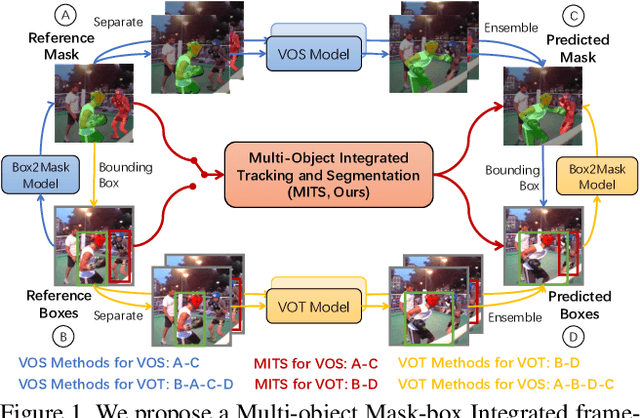
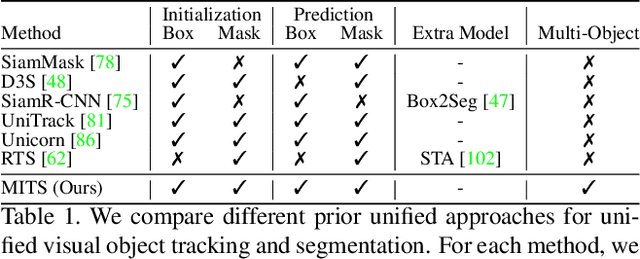
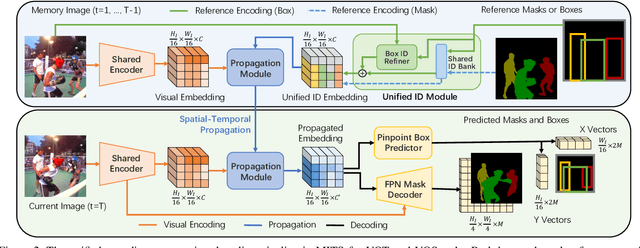
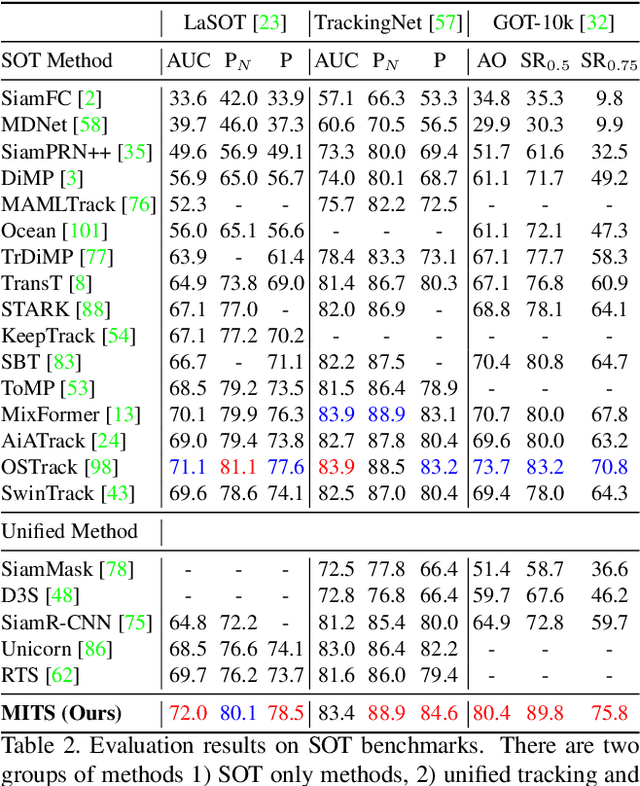
Tracking any given object(s) spatially and temporally is a common purpose in Visual Object Tracking (VOT) and Video Object Segmentation (VOS). Joint tracking and segmentation have been attempted in some studies but they often lack full compatibility of both box and mask in initialization and prediction, and mainly focus on single-object scenarios. To address these limitations, this paper proposes a Multi-object Mask-box Integrated framework for unified Tracking and Segmentation, dubbed MITS. Firstly, the unified identification module is proposed to support both box and mask reference for initialization, where detailed object information is inferred from boxes or directly retained from masks. Additionally, a novel pinpoint box predictor is proposed for accurate multi-object box prediction, facilitating target-oriented representation learning. All target objects are processed simultaneously from encoding to propagation and decoding, as a unified pipeline for VOT and VOS. Experimental results show MITS achieves state-of-the-art performance on both VOT and VOS benchmarks. Notably, MITS surpasses the best prior VOT competitor by around 6% on the GOT-10k test set, and significantly improves the performance of box initialization on VOS benchmarks. The code is available at https://github.com/yoxu515/MITS.
Logic-induced Diagnostic Reasoning for Semi-supervised Semantic Segmentation
Aug 24, 2023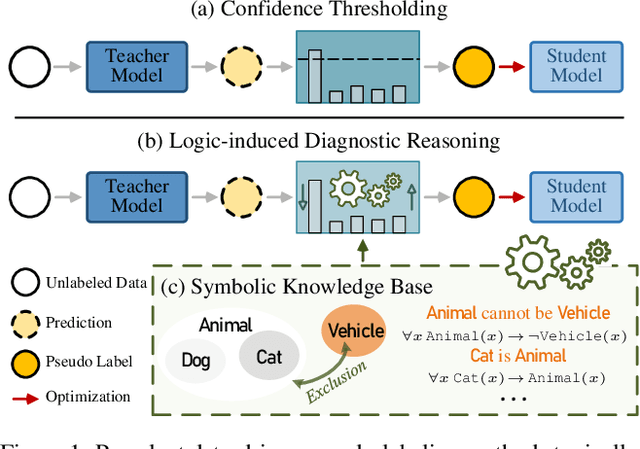
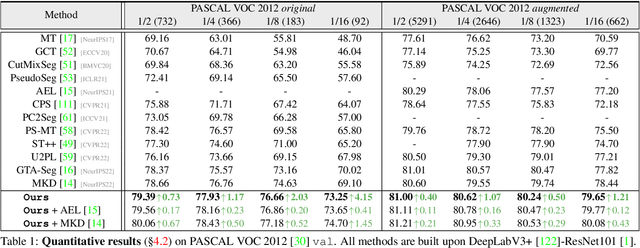

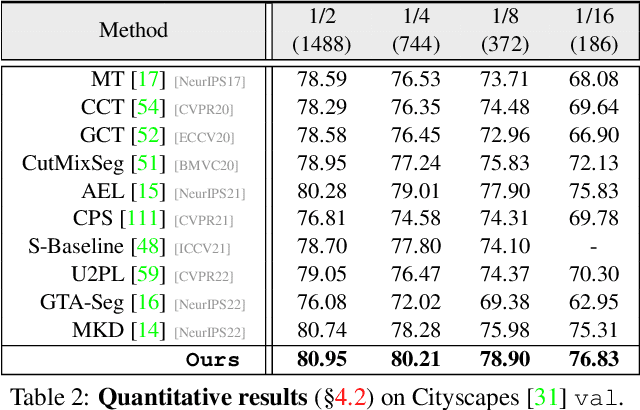
Recent advances in semi-supervised semantic segmentation have been heavily reliant on pseudo labeling to compensate for limited labeled data, disregarding the valuable relational knowledge among semantic concepts. To bridge this gap, we devise LogicDiag, a brand new neural-logic semi-supervised learning framework. Our key insight is that conflicts within pseudo labels, identified through symbolic knowledge, can serve as strong yet commonly ignored learning signals. LogicDiag resolves such conflicts via reasoning with logic-induced diagnoses, enabling the recovery of (potentially) erroneous pseudo labels, ultimately alleviating the notorious error accumulation problem. We showcase the practical application of LogicDiag in the data-hungry segmentation scenario, where we formalize the structured abstraction of semantic concepts as a set of logic rules. Extensive experiments on three standard semi-supervised semantic segmentation benchmarks demonstrate the effectiveness and generality of LogicDiag. Moreover, LogicDiag highlights the promising opportunities arising from the systematic integration of symbolic reasoning into the prevalent statistical, neural learning approaches.
Omnidirectional Information Gathering for Knowledge Transfer-based Audio-Visual Navigation
Aug 20, 2023Audio-visual navigation is an audio-targeted wayfinding task where a robot agent is entailed to travel a never-before-seen 3D environment towards the sounding source. In this article, we present ORAN, an omnidirectional audio-visual navigator based on cross-task navigation skill transfer. In particular, ORAN sharpens its two basic abilities for a such challenging task, namely wayfinding and audio-visual information gathering. First, ORAN is trained with a confidence-aware cross-task policy distillation (CCPD) strategy. CCPD transfers the fundamental, point-to-point wayfinding skill that is well trained on the large-scale PointGoal task to ORAN, so as to help ORAN to better master audio-visual navigation with far fewer training samples. To improve the efficiency of knowledge transfer and address the domain gap, CCPD is made to be adaptive to the decision confidence of the teacher policy. Second, ORAN is equipped with an omnidirectional information gathering (OIG) mechanism, i.e., gleaning visual-acoustic observations from different directions before decision-making. As a result, ORAN yields more robust navigation behaviour. Taking CCPD and OIG together, ORAN significantly outperforms previous competitors. After the model ensemble, we got 1st in Soundspaces Challenge 2022, improving SPL and SR by 53% and 35% relatively.
JOTR: 3D Joint Contrastive Learning with Transformers for Occluded Human Mesh Recovery
Aug 17, 2023In this study, we focus on the problem of 3D human mesh recovery from a single image under obscured conditions. Most state-of-the-art methods aim to improve 2D alignment technologies, such as spatial averaging and 2D joint sampling. However, they tend to neglect the crucial aspect of 3D alignment by improving 3D representations. Furthermore, recent methods struggle to separate the target human from occlusion or background in crowded scenes as they optimize the 3D space of target human with 3D joint coordinates as local supervision. To address these issues, a desirable method would involve a framework for fusing 2D and 3D features and a strategy for optimizing the 3D space globally. Therefore, this paper presents 3D JOint contrastive learning with TRansformers (JOTR) framework for handling occluded 3D human mesh recovery. Our method includes an encoder-decoder transformer architecture to fuse 2D and 3D representations for achieving 2D$\&$3D aligned results in a coarse-to-fine manner and a novel 3D joint contrastive learning approach for adding explicitly global supervision for the 3D feature space. The contrastive learning approach includes two contrastive losses: joint-to-joint contrast for enhancing the similarity of semantically similar voxels (i.e., human joints), and joint-to-non-joint contrast for ensuring discrimination from others (e.g., occlusions and background). Qualitative and quantitative analyses demonstrate that our method outperforms state-of-the-art competitors on both occlusion-specific and standard benchmarks, significantly improving the reconstruction of occluded humans.
Compositional Feature Augmentation for Unbiased Scene Graph Generation
Aug 13, 2023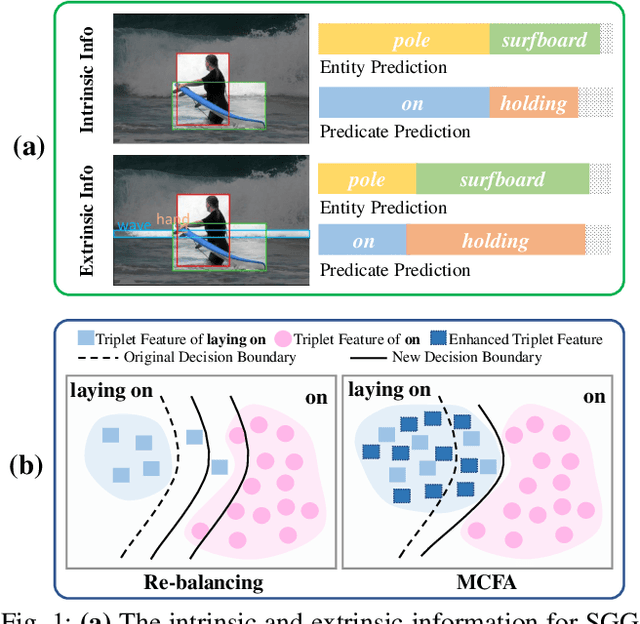
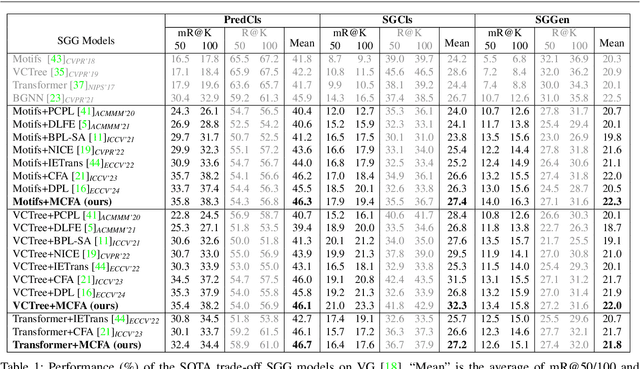
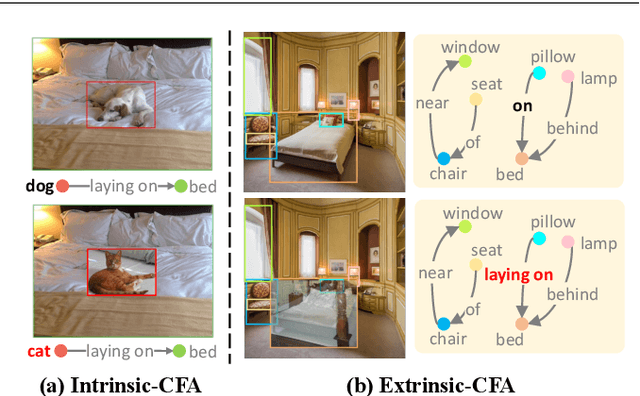
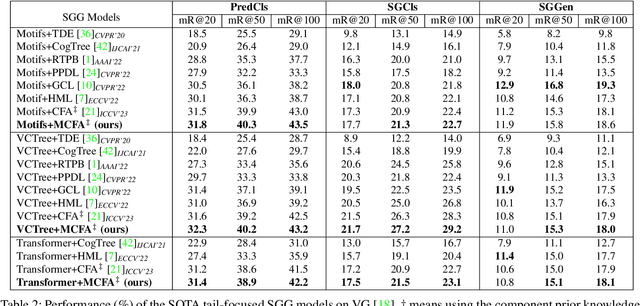
Scene Graph Generation (SGG) aims to detect all the visual relation triplets <sub, pred, obj> in a given image. With the emergence of various advanced techniques for better utilizing both the intrinsic and extrinsic information in each relation triplet, SGG has achieved great progress over the recent years. However, due to the ubiquitous long-tailed predicate distributions, today's SGG models are still easily biased to the head predicates. Currently, the most prevalent debiasing solutions for SGG are re-balancing methods, e.g., changing the distributions of original training samples. In this paper, we argue that all existing re-balancing strategies fail to increase the diversity of the relation triplet features of each predicate, which is critical for robust SGG. To this end, we propose a novel Compositional Feature Augmentation (CFA) strategy, which is the first unbiased SGG work to mitigate the bias issue from the perspective of increasing the diversity of triplet features. Specifically, we first decompose each relation triplet feature into two components: intrinsic feature and extrinsic feature, which correspond to the intrinsic characteristics and extrinsic contexts of a relation triplet, respectively. Then, we design two different feature augmentation modules to enrich the feature diversity of original relation triplets by replacing or mixing up either their intrinsic or extrinsic features from other samples. Due to its model-agnostic nature, CFA can be seamlessly incorporated into various SGG frameworks. Extensive ablations have shown that CFA achieves a new state-of-the-art performance on the trade-off between different metrics.