 Add to Chrome
 Add to Firefox
 Add to Edge
UniHEAR: Unified Heterogeneous-Source Attentive Retrieval for Knowledge-Based Visual Question Answering
Aug 02, 2026
Knowledge-Based Visual Question Answering (KB-VQA) requires retrieving relevant entity knowledge from external sources to answer visually grounded questions. Existing retrieval-augmented systems suffer from two critical limitations. First, relying on a single retrieval modality creates a Single-Source Retrieval Bottleneck, missing ground-truth entities that are only accessible through complementary sources. Second, dual-tower pointwise rerankers suffer from Retrieval-Source-Blind Reranking, as they overlook retrieval origins and candidate-level retrieval priors, leading to redundant modality reliance. To address these challenges, we propose UniHEAR, a unified lightweight framework for heterogeneous-source entity retrieval and reranking. UniHEAR constructs a Coarse Retrieval Descriptor for each candidate entity, and introduces Retrieval-Guided Attentive Modality Gating to condition modality attention weights on this descriptor, further complemented by Entropy-Weighted Source Fusion of coarse retrieval priors. A hybrid training strategy combining contrastive learning with an auxiliary modality-preserving loss unifies entity-level and section-level retrieval within a single model. Extensive experiments on E-VQA and InfoSeek demonstrate that UniHEAR achieves state-of-the-art retrieval and VQA performance, improving Recall@1 by 6.7 and 1.2 points over the strongest baselines while maintaining a lightweight reranking architecture. Code and model are available at https://github.com/iven-luo/UniHEAR.

ContextSniper: AntTrail's Token-Efficient Code Memory for Repository-Level Program Repair
Jul 02, 2026Large language model agents can repair real repository issues, but they often spend large context budgets on whole-file reads, broad searches, and long terminal outputs where useful evidence is mixed with irrelevant code and logs. This paper presents ContextSniper, AntTrail's token-efficient code memory layer for repository-level program repair. As the coding specialization of AntTrail's broader agent memory engine, ContextSniper implements the Sniper feature for precision evidence selection: it retrieves candidate code and runtime evidence, ranks it with hybrid retrieval signals, filters long outputs through an intention-aware context gate, and returns compact evidence packets while preserving recoverable source context outside the prompt. We evaluate ContextSniper on SWE-bench Lite with OpenClaw and Claude Code, using 50 task runs per host-agent condition. ContextSniper reduces total token use by 51.5% and logged cost by 36.4% for OpenClaw, and reduces total token use by 38.9% and estimated cost by 27.3% for Claude Code. Submitted-resolution rates decrease slightly, from 26.0% to 24.0% for OpenClaw and from 32.0% to 30.0% for Claude Code. ContextSniper's pilot testing scripts are open-sourced at https://github.com/Calluking/ContextSniper
QB-LIF: Learnable-Scale Quantized Burst Neurons for Efficient SNNs
Apr 28, 2026Binary spike coding enables sparse and event-driven computation in spiking neural networks (SNNs), yet its 1-bit-per-timestep representation fundamentally limits information throughput. This bottleneck becomes increasingly restrictive in deep architectures under short simulation horizons. We propose the Quantized Burst-LIF (QB-LIF) neuron, which reformulates burst spiking as a saturated uniform quantization of membrane potentials with a learnable scale. Instead of relying on predefined multi-threshold structures, QB-LIF treats the quantization scale as a trainable parameter, allowing each layer to autonomously adapt its spiking resolution to the underlying membrane-potential statistics. To preserve hardware efficiency, we introduce an absorbable scale strategy that folds the learned quantized scale into synaptic weights during inference, maintaining a strict accumulate-only (AC) execution paradigm. To enable stable optimization in the discrete multi-level space, we further design ReLSG-ET, a rectified-linear surrogate gradient with exponential tails that sustains gradient flow across burst intervals. Extensive experiments on static (CIFAR-10/100, ImageNet) and event-driven (CIFAR10-DVS, DVS128-Gesture) benchmarks demonstrate that QB-LIF consistently outperforms binary and fixed-burst SNNs, achieving higher accuracy under ultra-low latency while preserving neuromorphic compatibility.
A Federated and Parameter-Efficient Framework for Large Language Model Training in Medicine
Jan 29, 2026Large language models (LLMs) have demonstrated strong performance on medical benchmarks, including question answering and diagnosis. To enable their use in clinical settings, LLMs are typically further adapted through continued pretraining or post-training using clinical data. However, most medical LLMs are trained on data from a single institution, which faces limitations in generalizability and safety in heterogeneous systems. Federated learning (FL) is a promising solution for enabling collaborative model development across healthcare institutions. Yet applying FL to LLMs in medicine remains fundamentally limited. First, conventional FL requires transmitting the full model during each communication round, which becomes impractical for multi-billion-parameter LLMs given the limited computational resources. Second, many FL algorithms implicitly assume data homogeneity, whereas real-world clinical data are highly heterogeneous across patients, diseases, and institutional practices. We introduce the model-agnostic and parameter-efficient federated learning framework for adapting LLMs to medical applications. Fed-MedLoRA transmits only low-rank adapter parameters, reducing communication and computation overhead, while Fed-MedLoRA+ further incorporates adaptive, data-aware aggregation to improve convergence under cross-site heterogeneity. We apply the framework to clinical information extraction (IE), which transforms patient narratives into structured medical entities and relations. Accuracy was assessed across five patient cohorts through comparisons with BERT models, and LLaMA-3 and DeepSeek-R1, GPT-4o models. Evaluation settings included (1) in-domain training and testing, (2) external validation on independent cohorts, and (3) a low-resource new-site adaptation scenario using real-world clinical notes from the Yale New Haven Health System.
BioPulse-QA: A Dynamic Biomedical Question-Answering Benchmark for Evaluating Factuality, Robustness, and Bias in Large Language Models
Jan 19, 2026Objective: Large language models (LLMs) are increasingly applied in biomedical settings, and existing benchmark datasets have played an important role in supporting model development and evaluation. However, these benchmarks often have limitations. Many rely on static or outdated datasets that fail to capture the dynamic, context-rich, and high-stakes nature of biomedical knowledge. They also carry increasing risk of data leakage due to overlap with model pretraining corpora and often overlook critical dimensions such as robustness to linguistic variation and potential demographic biases. Materials and Methods: To address these gaps, we introduce BioPulse-QA, a benchmark that evaluates LLMs on answering questions from newly published biomedical documents including drug labels, trial protocols, and clinical guidelines. BioPulse-QA includes 2,280 expert-verified question answering (QA) pairs and perturbed variants, covering both extractive and abstractive formats. We evaluate four LLMs - GPT-4o, GPT-o1, Gemini-2.0-Flash, and LLaMA-3.1 8B Instruct - released prior to the publication dates of the benchmark documents. Results: GPT-o1 achieves the highest relaxed F1 score (0.92), followed by Gemini-2.0-Flash (0.90) on drug labels. Clinical trials are the most challenging source, with extractive F1 scores as low as 0.36. Discussion and Conclusion: Performance differences are larger for paraphrasing than for typographical errors, while bias testing shows negligible differences. BioPulse-QA provides a scalable and clinically relevant framework for evaluating biomedical LLMs.
Toward Automated Cognitive Assessment in Parkinson's Disease Using Pretrained Language Models
Nov 11, 2025Understanding how individuals with Parkinson's disease (PD) describe cognitive experiences in their daily lives can offer valuable insights into disease-related cognitive and emotional changes. However, extracting such information from unstructured patient narratives is challenging due to the subtle, overlapping nature of cognitive constructs. This study developed and evaluated natural language processing (NLP) models to automatically identify categories that reflect various cognitive processes from de-identified first-person narratives. Three model families, a Bio_ClinicalBERT-based span categorization model for nested entity recognition, a fine-tuned Meta-Llama-3-8B-Instruct model using QLoRA for instruction following, and GPT-4o mini evaluated under zero- and few-shot settings, were compared on their performance on extracting seven categories. Our findings indicated that model performance varied substantially across categories and model families. The fine-tuned Meta-Llama-3-8B-Instruct achieved the highest overall F1-scores (0.74 micro-average and 0.59 macro-average), particularly excelling in context-dependent categories such as thought and social interaction. Bio_ClinicalBERT exhibited high precision but low recall and performed comparable to Llama for some category types such as location and time but failed on other categories such as thought, emotion and social interaction. Compared to conventional information extraction tasks, this task presents a greater challenge due to the abstract and overlapping nature of narrative accounts of complex cognitive processes. Nonetheless, with continued refinement, these NLP systems hold promise for enabling low-burden, longitudinal monitoring of cognitive function and serving as a valuable complement to formal neuropsychological assessments in PD.
FinTagging: An LLM-ready Benchmark for Extracting and Structuring Financial Information
May 27, 2025We introduce FinTagging, the first full-scope, table-aware XBRL benchmark designed to evaluate the structured information extraction and semantic alignment capabilities of large language models (LLMs) in the context of XBRL-based financial reporting. Unlike prior benchmarks that oversimplify XBRL tagging as flat multi-class classification and focus solely on narrative text, FinTagging decomposes the XBRL tagging problem into two subtasks: FinNI for financial entity extraction and FinCL for taxonomy-driven concept alignment. It requires models to jointly extract facts and align them with the full 10k+ US-GAAP taxonomy across both unstructured text and structured tables, enabling realistic, fine-grained evaluation. We assess a diverse set of LLMs under zero-shot settings, systematically analyzing their performance on both subtasks and overall tagging accuracy. Our results reveal that, while LLMs demonstrate strong generalization in information extraction, they struggle with fine-grained concept alignment, particularly in disambiguating closely related taxonomy entries. These findings highlight the limitations of existing LLMs in fully automating XBRL tagging and underscore the need for improved semantic reasoning and schema-aware modeling to meet the demands of accurate financial disclosure. Code is available at our GitHub repository and data is at our Hugging Face repository.
ISPDiffuser: Learning RAW-to-sRGB Mappings with Texture-Aware Diffusion Models and Histogram-Guided Color Consistency
Mar 25, 2025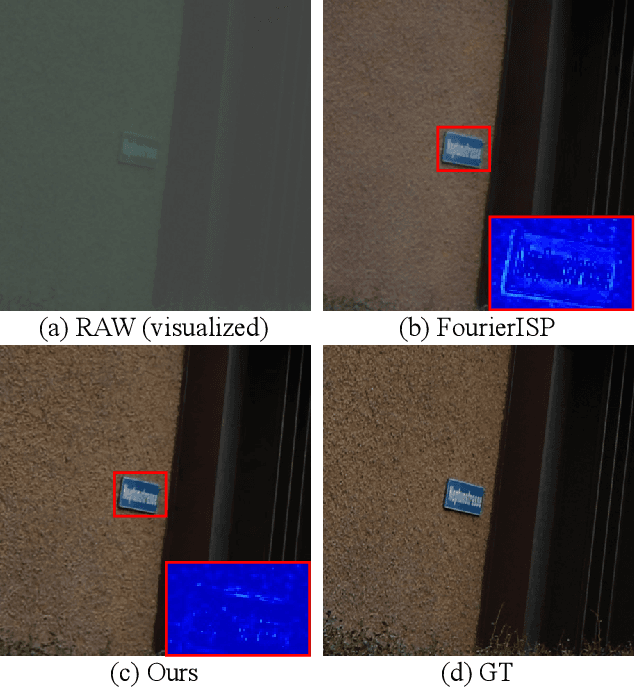
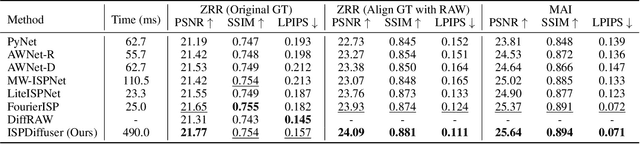
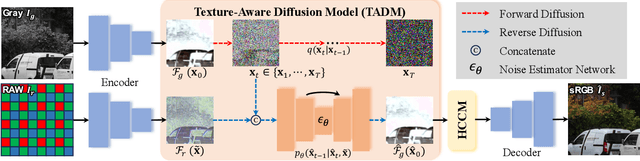
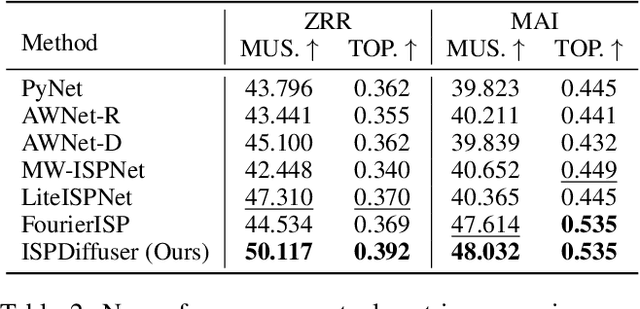
RAW-to-sRGB mapping, or the simulation of the traditional camera image signal processor (ISP), aims to generate DSLR-quality sRGB images from raw data captured by smartphone sensors. Despite achieving comparable results to sophisticated handcrafted camera ISP solutions, existing learning-based methods still struggle with detail disparity and color distortion. In this paper, we present ISPDiffuser, a diffusion-based decoupled framework that separates the RAW-to-sRGB mapping into detail reconstruction in grayscale space and color consistency mapping from grayscale to sRGB. Specifically, we propose a texture-aware diffusion model that leverages the generative ability of diffusion models to focus on local detail recovery, in which a texture enrichment loss is further proposed to prompt the diffusion model to generate more intricate texture details. Subsequently, we introduce a histogram-guided color consistency module that utilizes color histogram as guidance to learn precise color information for grayscale to sRGB color consistency mapping, with a color consistency loss designed to constrain the learned color information. Extensive experimental results show that the proposed ISPDiffuser outperforms state-of-the-art competitors both quantitatively and visually. The code is available at https://github.com/RenYangSCU/ISPDiffuser.
An Extensive Evaluation of PDDL Capabilities in off-the-shelf LLMs
Feb 27, 2025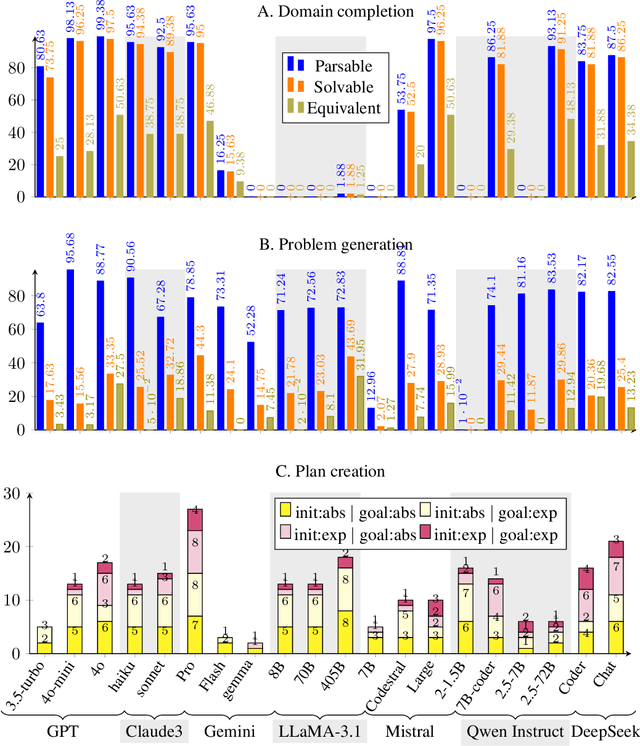
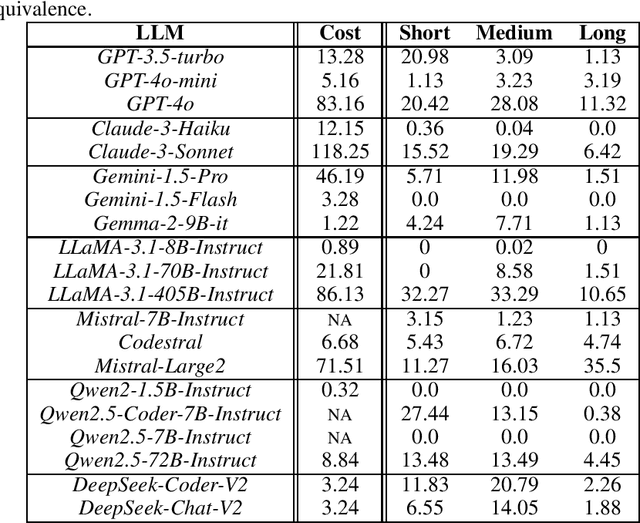
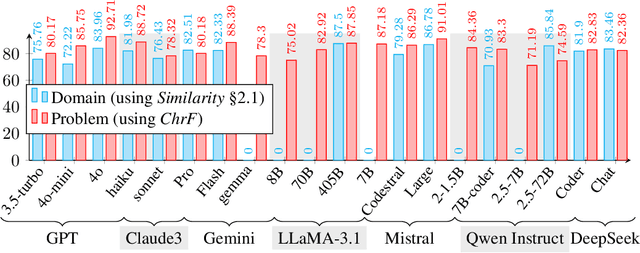
In recent advancements, large language models (LLMs) have exhibited proficiency in code generation and chain-of-thought reasoning, laying the groundwork for tackling automatic formal planning tasks. This study evaluates the potential of LLMs to understand and generate Planning Domain Definition Language (PDDL), an essential representation in artificial intelligence planning. We conduct an extensive analysis across 20 distinct models spanning 7 major LLM families, both commercial and open-source. Our comprehensive evaluation sheds light on the zero-shot LLM capabilities of parsing, generating, and reasoning with PDDL. Our findings indicate that while some models demonstrate notable effectiveness in handling PDDL, others pose limitations in more complex scenarios requiring nuanced planning knowledge. These results highlight the promise and current limitations of LLMs in formal planning tasks, offering insights into their application and guiding future efforts in AI-driven planning paradigms.
GeAR: Graph-enhanced Agent for Retrieval-augmented Generation
Dec 24, 2024Retrieval-augmented generation systems rely on effective document retrieval capabilities. By design, conventional sparse or dense retrievers face challenges in multi-hop retrieval scenarios. In this paper, we present GeAR, which advances RAG performance through two key innovations: (i) graph expansion, which enhances any conventional base retriever, such as BM25, and (ii) an agent framework that incorporates graph expansion. Our evaluation demonstrates GeAR's superior retrieval performance on three multi-hop question answering datasets. Additionally, our system achieves state-of-the-art results with improvements exceeding 10% on the challenging MuSiQue dataset, while requiring fewer tokens and iterations compared to other multi-step retrieval systems.