 Add to Chrome
 Add to Firefox
 Add to Edge
Fair Text to Medical Image Diffusion Model with Subgroup Distribution Aligned Tuning
Jun 21, 2024
The text to medical image (T2MedI) with latent diffusion model has great potential to alleviate the scarcity of medical imaging data and explore the underlying appearance distribution of lesions in a specific patient status description. However, as the text to nature image models, we show that the T2MedI model can also bias to some subgroups to overlook the minority ones in the training set. In this work, we first build a T2MedI model based on the pre-trained Imagen model, which has the fixed contrastive language-image pre-training (CLIP) text encoder, while its decoder has been fine-tuned on medical images from the Radiology Objects in COntext (ROCO) dataset. Its gender bias is analyzed qualitatively and quantitatively. Toward this issue, we propose to fine-tune the T2MedI toward the target application dataset to align their sensitive subgroups distribution probability. Specifically, the alignment loss for fine-tuning is guided by an off-the-shelf sensitivity-subgroup classifier to match the classification probability between the generated images and the expected target dataset. In addition, the image quality is maintained by a CLIP-consistency regularization term following a knowledge distillation scheme. For evaluation, we set the target dataset to be enhanced as the BraST18 dataset, and trained a brain magnetic resonance (MR) slice-based gender classifier from it. With our method, the generated MR image can markedly reduce the inconsistency with the gender proportion in the BraTS18 dataset.

Generating and Evolving Reward Functions for Highway Driving with Large Language Models
Jun 15, 2024Reinforcement Learning (RL) plays a crucial role in advancing autonomous driving technologies by maximizing reward functions to achieve the optimal policy. However, crafting these reward functions has been a complex, manual process in many practices. To reduce this complexity, we introduce a novel framework that integrates Large Language Models (LLMs) with RL to improve reward function design in autonomous driving. This framework utilizes the coding capabilities of LLMs, proven in other areas, to generate and evolve reward functions for highway scenarios. The framework starts with instructing LLMs to create an initial reward function code based on the driving environment and task descriptions. This code is then refined through iterative cycles involving RL training and LLMs' reflection, which benefits from their ability to review and improve the output. We have also developed a specific prompt template to improve LLMs' understanding of complex driving simulations, ensuring the generation of effective and error-free code. Our experiments in a highway driving simulator across three traffic configurations show that our method surpasses expert handcrafted reward functions, achieving a 22% higher average success rate. This not only indicates safer driving but also suggests significant gains in development productivity.
Delta-CoMe: Training-Free Delta-Compression with Mixed-Precision for Large Language Models
Jun 13, 2024
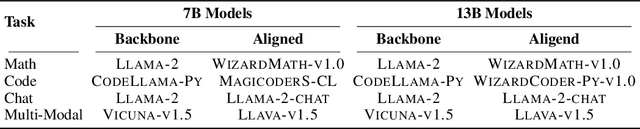


Fine-tuning is a crucial process for adapting large language models (LLMs) to diverse applications. In certain scenarios, such as multi-tenant serving, deploying multiple LLMs becomes necessary to meet complex demands. Recent studies suggest decomposing a fine-tuned LLM into a base model and corresponding delta weights, which are then compressed using low-rank or low-bit approaches to reduce costs. In this work, we observe that existing low-rank and low-bit compression methods can significantly harm the model performance for task-specific fine-tuned LLMs (e.g., WizardMath for math problems). Motivated by the long-tail distribution of singular values in the delta weights, we propose a delta quantization approach using mixed-precision. This method employs higher-bit representation for singular vectors corresponding to larger singular values. We evaluate our approach on various fine-tuned LLMs, including math LLMs, code LLMs, chat LLMs, and even VLMs. Experimental results demonstrate that our approach performs comparably to full fine-tuned LLMs, surpassing both low-rank and low-bit baselines by a considerable margin. Additionally, we show that our method is compatible with various backbone LLMs, such as Llama-2, Llama-3, and Mistral, highlighting its generalizability.
MiniGPT-3D: Efficiently Aligning 3D Point Clouds with Large Language Models using 2D Priors
May 02, 2024

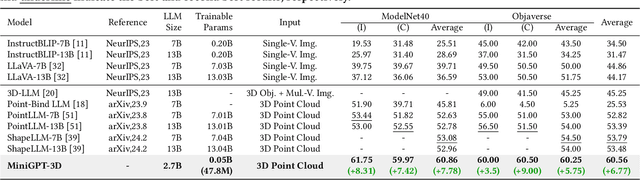
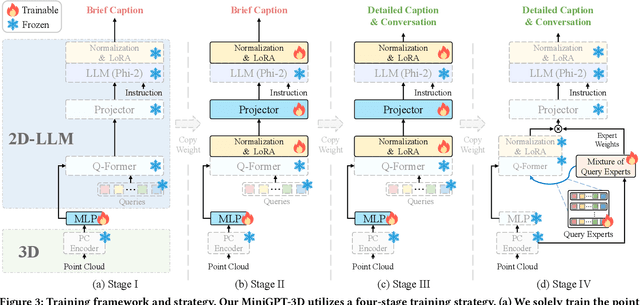
Large 2D vision-language models (2D-LLMs) have gained significant attention by bridging Large Language Models (LLMs) with images using a simple projector. Inspired by their success, large 3D point cloud-language models (3D-LLMs) also integrate point clouds into LLMs. However, directly aligning point clouds with LLM requires expensive training costs, typically in hundreds of GPU-hours on A100, which hinders the development of 3D-LLMs. In this paper, we introduce MiniGPT-3D, an efficient and powerful 3D-LLM that achieves multiple SOTA results while training for only 27 hours on one RTX 3090. Specifically, we propose to align 3D point clouds with LLMs using 2D priors from 2D-LLMs, which can leverage the similarity between 2D and 3D visual information. We introduce a novel four-stage training strategy for modality alignment in a cascaded way, and a mixture of query experts module to adaptively aggregate features with high efficiency. Moreover, we utilize parameter-efficient fine-tuning methods LoRA and Norm fine-tuning, resulting in only 47.8M learnable parameters, which is up to 260x fewer than existing methods. Extensive experiments show that MiniGPT-3D achieves SOTA on 3D object classification and captioning tasks, with significantly cheaper training costs. Notably, MiniGPT-3D gains an 8.12 increase on GPT-4 evaluation score for the challenging object captioning task compared to ShapeLLM-13B, while the latter costs 160 total GPU-hours on 8 A800. We are the first to explore the efficient 3D-LLM, offering new insights to the community. Code and weights are available at https://github.com/TangYuan96/MiniGPT-3D.
Mamba3D: Enhancing Local Features for 3D Point Cloud Analysis via State Space Model
Apr 23, 2024


Existing Transformer-based models for point cloud analysis suffer from quadratic complexity, leading to compromised point cloud resolution and information loss. In contrast, the newly proposed Mamba model, based on state space models (SSM), outperforms Transformer in multiple areas with only linear complexity. However, the straightforward adoption of Mamba does not achieve satisfactory performance on point cloud tasks. In this work, we present Mamba3D, a state space model tailored for point cloud learning to enhance local feature extraction, achieving superior performance, high efficiency, and scalability potential. Specifically, we propose a simple yet effective Local Norm Pooling (LNP) block to extract local geometric features. Additionally, to obtain better global features, we introduce a bidirectional SSM (bi-SSM) with both a token forward SSM and a novel backward SSM that operates on the feature channel. Extensive experimental results show that Mamba3D surpasses Transformer-based counterparts and concurrent works in multiple tasks, with or without pre-training. Notably, Mamba3D achieves multiple SoTA, including an overall accuracy of 92.6% (train from scratch) on the ScanObjectNN and 95.1% (with single-modal pre-training) on the ModelNet40 classification task, with only linear complexity.
UltraEval: A Lightweight Platform for Flexible and Comprehensive Evaluation for LLMs
Apr 11, 2024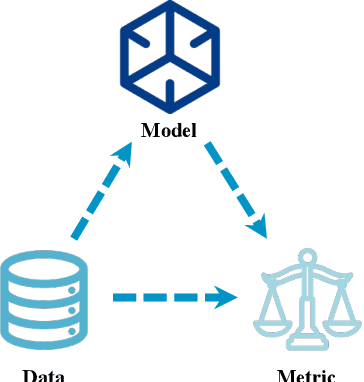
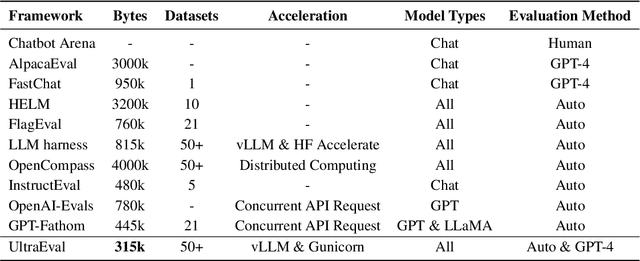

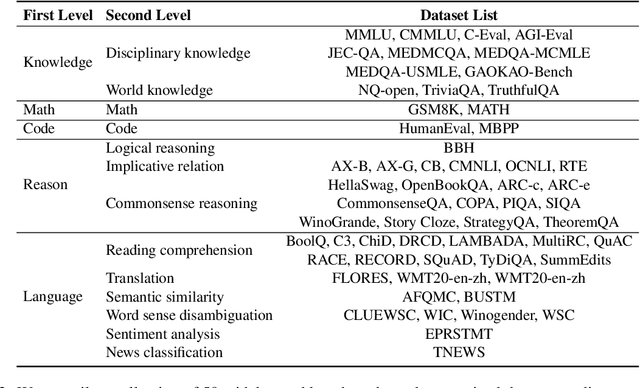
Evaluation is pivotal for honing Large Language Models (LLMs), pinpointing their capabilities and guiding enhancements. The rapid development of LLMs calls for a lightweight and easy-to-use framework for swift evaluation deployment. However, due to the various implementation details to consider, developing a comprehensive evaluation platform is never easy. Existing platforms are often complex and poorly modularized, hindering seamless incorporation into researcher's workflows. This paper introduces UltraEval, a user-friendly evaluation framework characterized by lightweight, comprehensiveness, modularity, and efficiency. We identify and reimplement three core components of model evaluation (models, data, and metrics). The resulting composability allows for the free combination of different models, tasks, prompts, and metrics within a unified evaluation workflow. Additionally, UltraEval supports diverse models owing to a unified HTTP service and provides sufficient inference acceleration. UltraEval is now available for researchers publicly~\footnote{Website is at \url{https://github.com/OpenBMB/UltraEval}}.
MiniCPM: Unveiling the Potential of Small Language Models with Scalable Training Strategies
Apr 09, 2024



The burgeoning interest in developing Large Language Models (LLMs) with up to trillion parameters has been met with concerns regarding resource efficiency and practical expense, particularly given the immense cost of experimentation. This scenario underscores the importance of exploring the potential of Small Language Models (SLMs) as a resource-efficient alternative. In this context, we introduce MiniCPM, specifically the 1.2B and 2.4B non-embedding parameter variants, not only excel in their respective categories but also demonstrate capabilities on par with 7B-13B LLMs. While focusing on SLMs, our approach exhibits scalability in both model and data dimensions for future LLM research. Regarding model scaling, we employ extensive model wind tunnel experiments for stable and optimal scaling. For data scaling, we introduce a Warmup-Stable-Decay (WSD) learning rate scheduler (LRS), conducive to continuous training and domain adaptation. We present an in-depth analysis of the intriguing training dynamics that occurred in the WSD LRS. With WSD LRS, we are now able to efficiently study data-model scaling law without extensive retraining experiments on both axes of model and data, from which we derive the much higher compute optimal data-model ratio than Chinchilla Optimal. Additionally, we introduce MiniCPM family, including MiniCPM-DPO, MiniCPM-MoE and MiniCPM-128K, whose excellent performance further cementing MiniCPM's foundation in diverse SLM applications. MiniCPM models are available publicly at https://github.com/OpenBMB/MiniCPM .
Robust and Scalable Model Editing for Large Language Models
Mar 26, 2024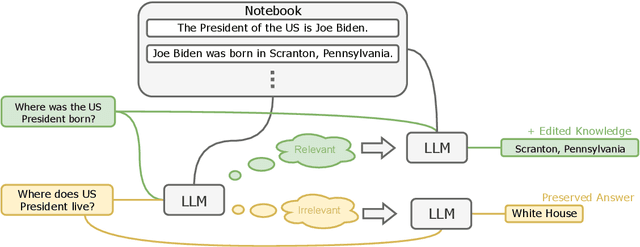

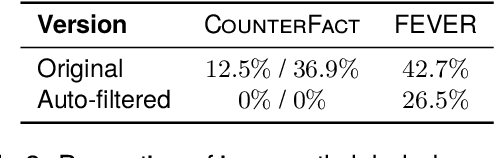
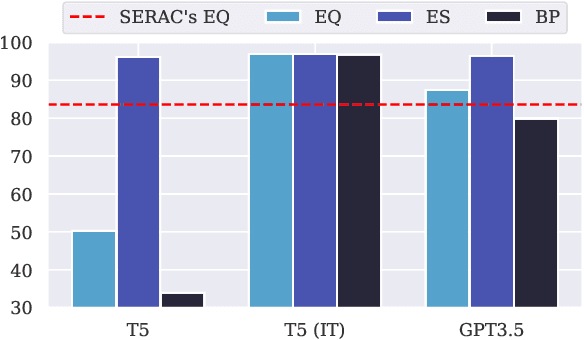
Large language models (LLMs) can make predictions using parametric knowledge--knowledge encoded in the model weights--or contextual knowledge--knowledge presented in the context. In many scenarios, a desirable behavior is that LLMs give precedence to contextual knowledge when it conflicts with the parametric knowledge, and fall back to using their parametric knowledge when the context is irrelevant. This enables updating and correcting the model's knowledge by in-context editing instead of retraining. Previous works have shown that LLMs are inclined to ignore contextual knowledge and fail to reliably fall back to parametric knowledge when presented with irrelevant context. In this work, we discover that, with proper prompting methods, instruction-finetuned LLMs can be highly controllable by contextual knowledge and robust to irrelevant context. Utilizing this feature, we propose EREN (Edit models by REading Notes) to improve the scalability and robustness of LLM editing. To better evaluate the robustness of model editors, we collect a new dataset, that contains irrelevant questions that are more challenging than the ones in existing datasets. Empirical results show that our method outperforms current state-of-the-art methods by a large margin. Unlike existing techniques, it can integrate knowledge from multiple edits, and correctly respond to syntactically similar but semantically unrelated inputs (and vice versa). The source code can be found at https://github.com/thunlp/EREN.
V2X-Real: a Largs-Scale Dataset for Vehicle-to-Everything Cooperative Perception
Mar 24, 2024Recent advancements in Vehicle-to-Everything (V2X) technologies have enabled autonomous vehicles to share sensing information to see through occlusions, greatly boosting the perception capability. However, there are no real-world datasets to facilitate the real V2X cooperative perception research -- existing datasets either only support Vehicle-to-Infrastructure cooperation or Vehicle-to-Vehicle cooperation. In this paper, we propose a dataset that has a mixture of multiple vehicles and smart infrastructure simultaneously to facilitate the V2X cooperative perception development with multi-modality sensing data. Our V2X-Real is collected using two connected automated vehicles and two smart infrastructures, which are all equipped with multi-modal sensors including LiDAR sensors and multi-view cameras. The whole dataset contains 33K LiDAR frames and 171K camera data with over 1.2M annotated bounding boxes of 10 categories in very challenging urban scenarios. According to the collaboration mode and ego perspective, we derive four types of datasets for Vehicle-Centric, Infrastructure-Centric, Vehicle-to-Vehicle, and Infrastructure-to-Infrastructure cooperative perception. Comprehensive multi-class multi-agent benchmarks of SOTA cooperative perception methods are provided. The V2X-Real dataset and benchmark codes will be released.
BurstAttention: An Efficient Distributed Attention Framework for Extremely Long Sequences
Mar 14, 2024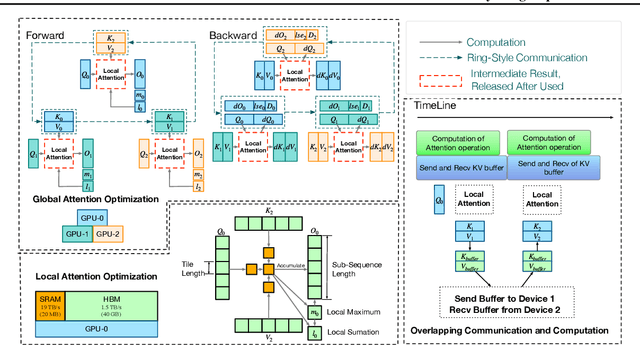
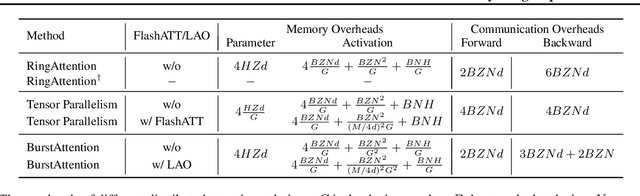
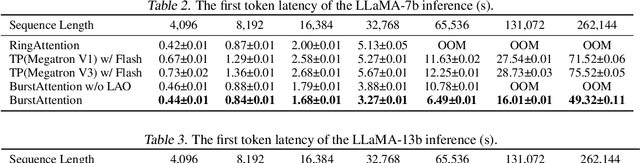
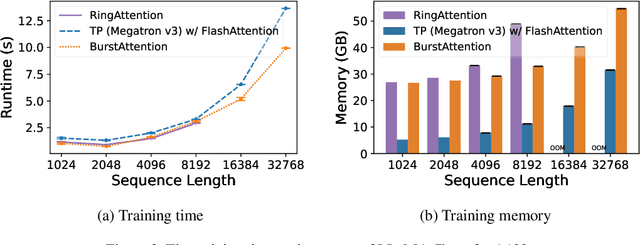
Effective attention modules have played a crucial role in the success of Transformer-based large language models (LLMs), but the quadratic time and memory complexities of these attention modules also pose a challenge when processing long sequences. One potential solution for the long sequence problem is to utilize distributed clusters to parallelize the computation of attention modules across multiple devices (e.g., GPUs). However, adopting a distributed approach inevitably introduces extra memory overheads to store local attention results and incurs additional communication costs to aggregate local results into global ones. In this paper, we propose a distributed attention framework named ``BurstAttention'' to optimize memory access and communication operations at both the global cluster and local device levels. In our experiments, we compare BurstAttention with other competitive distributed attention solutions for long sequence processing. The experimental results under different length settings demonstrate that BurstAttention offers significant advantages for processing long sequences compared with these competitive baselines, reducing 40% communication overheads and achieving 2 X speedup during training 32K sequence length on 8 X A100.