 Add to Chrome
 Add to Firefox
 Add to Edge
GarmentX: Autoregressive Parametric Representations for High-Fidelity 3D Garment Generation
Apr 29, 2025
This work presents GarmentX, a novel framework for generating diverse, high-fidelity, and wearable 3D garments from a single input image. Traditional garment reconstruction methods directly predict 2D pattern edges and their connectivity, an overly unconstrained approach that often leads to severe self-intersections and physically implausible garment structures. In contrast, GarmentX introduces a structured and editable parametric representation compatible with GarmentCode, ensuring that the decoded sewing patterns always form valid, simulation-ready 3D garments while allowing for intuitive modifications of garment shape and style. To achieve this, we employ a masked autoregressive model that sequentially predicts garment parameters, leveraging autoregressive modeling for structured generation while mitigating inconsistencies in direct pattern prediction. Additionally, we introduce GarmentX dataset, a large-scale dataset of 378,682 garment parameter-image pairs, constructed through an automatic data generation pipeline that synthesizes diverse and high-quality garment images conditioned on parametric garment representations. Through integrating our method with GarmentX dataset, we achieve state-of-the-art performance in geometric fidelity and input image alignment, significantly outperforming prior approaches. We will release GarmentX dataset upon publication.

Modular Machine Learning: An Indispensable Path towards New-Generation Large Language Models
Apr 28, 2025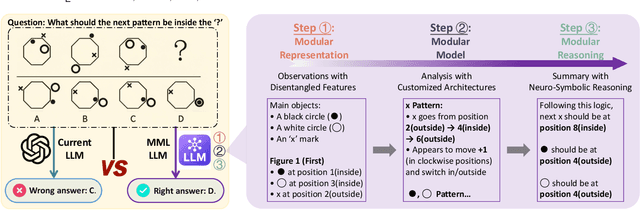
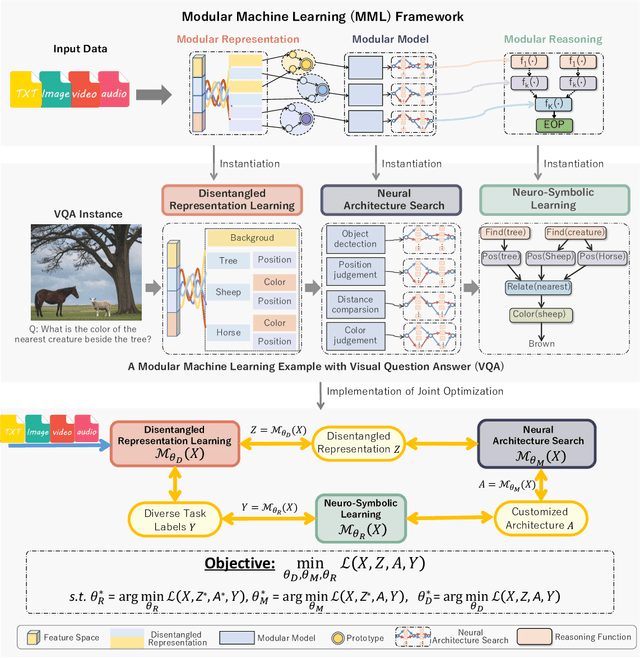
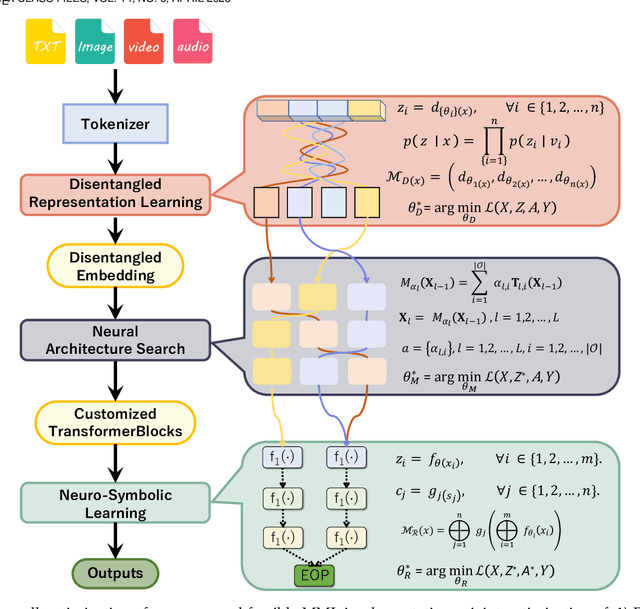
Large language models (LLMs) have dramatically advanced machine learning research including natural language processing, computer vision, data mining, etc., yet they still exhibit critical limitations in reasoning, factual consistency, and interpretability. In this paper, we introduce a novel learning paradigm -- Modular Machine Learning (MML) -- as an essential approach toward new-generation LLMs. MML decomposes the complex structure of LLMs into three interdependent components: modular representation, modular model, and modular reasoning, aiming to enhance LLMs' capability of counterfactual reasoning, mitigating hallucinations, as well as promoting fairness, safety, and transparency. Specifically, the proposed MML paradigm can: i) clarify the internal working mechanism of LLMs through the disentanglement of semantic components; ii) allow for flexible and task-adaptive model design; iii) enable interpretable and logic-driven decision-making process. We present a feasible implementation of MML-based LLMs via leveraging advanced techniques such as disentangled representation learning, neural architecture search and neuro-symbolic learning. We critically identify key challenges, such as the integration of continuous neural and discrete symbolic processes, joint optimization, and computational scalability, present promising future research directions that deserve further exploration. Ultimately, the integration of the MML paradigm with LLMs has the potential to bridge the gap between statistical (deep) learning and formal (logical) reasoning, thereby paving the way for robust, adaptable, and trustworthy AI systems across a wide range of real-world applications.
NoiseController: Towards Consistent Multi-view Video Generation via Noise Decomposition and Collaboration
Apr 25, 2025High-quality video generation is crucial for many fields, including the film industry and autonomous driving. However, generating videos with spatiotemporal consistencies remains challenging. Current methods typically utilize attention mechanisms or modify noise to achieve consistent videos, neglecting global spatiotemporal information that could help ensure spatial and temporal consistency during video generation. In this paper, we propose the NoiseController, consisting of Multi-Level Noise Decomposition, Multi-Frame Noise Collaboration, and Joint Denoising, to enhance spatiotemporal consistencies in video generation. In multi-level noise decomposition, we first decompose initial noises into scene-level foreground/background noises, capturing distinct motion properties to model multi-view foreground/background variations. Furthermore, each scene-level noise is further decomposed into individual-level shared and residual components. The shared noise preserves consistency, while the residual component maintains diversity. In multi-frame noise collaboration, we introduce an inter-view spatiotemporal collaboration matrix and an intra-view impact collaboration matrix , which captures mutual cross-view effects and historical cross-frame impacts to enhance video quality. The joint denoising contains two parallel denoising U-Nets to remove each scene-level noise, mutually enhancing video generation. We evaluate our NoiseController on public datasets focusing on video generation and downstream tasks, demonstrating its state-of-the-art performance.
AI-Based Vulnerability Analysis of NFT Smart Contracts
Apr 24, 2025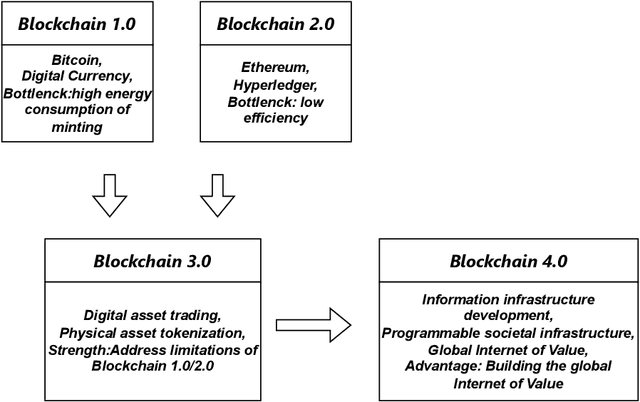
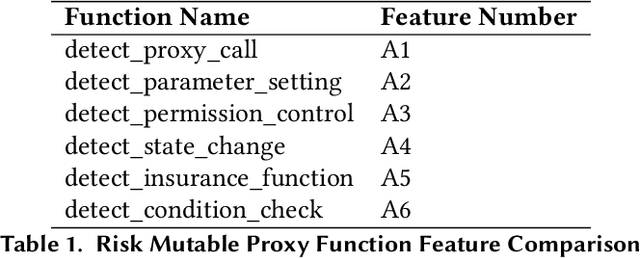

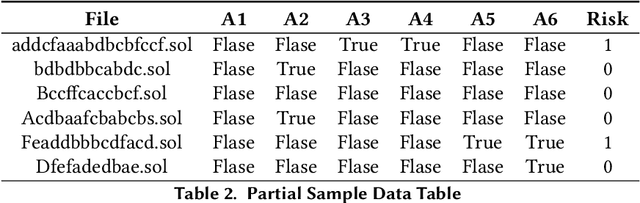
With the rapid growth of the NFT market, the security of smart contracts has become crucial. However, existing AI-based detection models for NFT contract vulnerabilities remain limited due to their complexity, while traditional manual methods are time-consuming and costly. This study proposes an AI-driven approach to detect vulnerabilities in NFT smart contracts. We collected 16,527 public smart contract codes, classifying them into five vulnerability categories: Risky Mutable Proxy, ERC-721 Reentrancy, Unlimited Minting, Missing Requirements, and Public Burn. Python-processed data was structured into training/test sets. Using the CART algorithm with Gini coefficient evaluation, we built initial decision trees for feature extraction. A random forest model was implemented to improve robustness through random data/feature sampling and multitree integration. GridSearch hyperparameter tuning further optimized the model, with 3D visualizations demonstrating parameter impacts on vulnerability detection. Results show the random forest model excels in detecting all five vulnerabilities. For example, it identifies Risky Mutable Proxy by analyzing authorization mechanisms and state modifications, while ERC-721 Reentrancy detection relies on external call locations and lock mechanisms. The ensemble approach effectively reduces single-tree overfitting, with stable performance improvements after parameter tuning. This method provides an efficient technical solution for automated NFT contract detection and lays groundwork for scaling AI applications.
A Comprehensive Survey of Synthetic Tabular Data Generation
Apr 23, 2025Tabular data remains one of the most prevalent and critical data formats across diverse real-world applications. However, its effective use in machine learning (ML) is often constrained by challenges such as data scarcity, privacy concerns, and class imbalance. Synthetic data generation has emerged as a promising solution, leveraging generative models to learn the distribution of real datasets and produce high-fidelity, privacy-preserving samples. Various generative paradigms have been explored, including energy-based models (EBMs), variational autoencoders (VAEs), generative adversarial networks (GANs), large language models (LLMs), and diffusion models. While several surveys have investigated synthetic tabular data generation, most focus on narrow subdomains or specific generative methods, such as GANs, diffusion models, or privacy-preserving techniques. This limited scope often results in fragmented insights, lacking a comprehensive synthesis that bridges diverse approaches. In particular, recent advances driven by LLMs and diffusion-based models remain underexplored. This gap hinders a holistic understanding of the field`s evolution, methodological interplay, and open challenges. To address this, our survey provides a unified and systematic review of synthetic tabular data generation. Our contributions are threefold: (1) we propose a comprehensive taxonomy that organizes existing methods into traditional approaches, diffusion-based methods, and LLM-based models, and provide an in-depth comparative analysis; (2) we detail the complete pipeline for synthetic tabular data generation, including data synthesis, post-processing, and evaluation; (3) we identify major challenges, explore real-world applications, and outline open research questions and future directions to guide future work in this rapidly evolving area.
Embodied-R: Collaborative Framework for Activating Embodied Spatial Reasoning in Foundation Models via Reinforcement Learning
Apr 17, 2025Humans can perceive and reason about spatial relationships from sequential visual observations, such as egocentric video streams. However, how pretrained models acquire such abilities, especially high-level reasoning, remains unclear. This paper introduces Embodied-R, a collaborative framework combining large-scale Vision-Language Models (VLMs) for perception and small-scale Language Models (LMs) for reasoning. Using Reinforcement Learning (RL) with a novel reward system considering think-answer logical consistency, the model achieves slow-thinking capabilities with limited computational resources. After training on only 5k embodied video samples, Embodied-R with a 3B LM matches state-of-the-art multimodal reasoning models (OpenAI-o1, Gemini-2.5-pro) on both in-distribution and out-of-distribution embodied spatial reasoning tasks. Embodied-R also exhibits emergent thinking patterns such as systematic analysis and contextual integration. We further explore research questions including response length, training on VLM, strategies for reward design, and differences in model generalization after SFT (Supervised Fine-Tuning) and RL training.
Modular-Cam: Modular Dynamic Camera-view Video Generation with LLM
Apr 16, 2025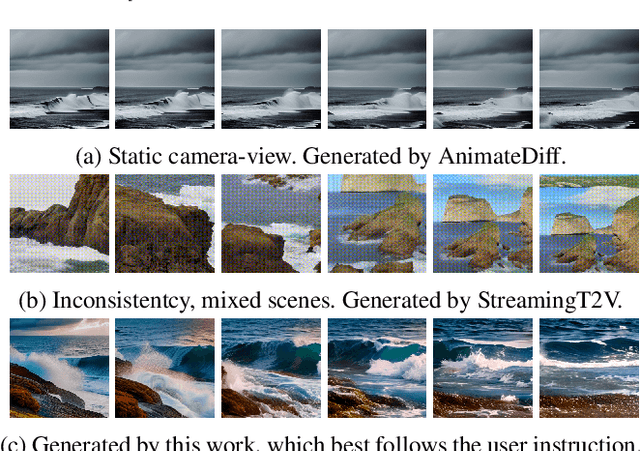
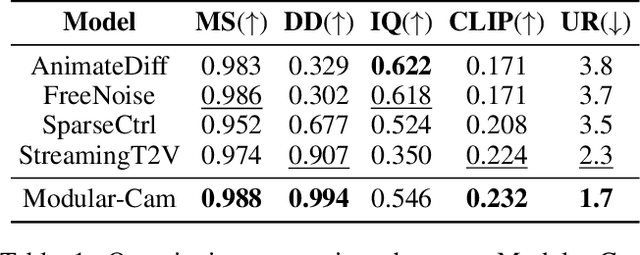
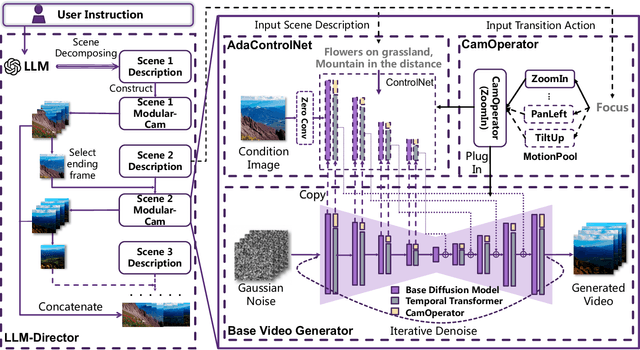

Text-to-Video generation, which utilizes the provided text prompt to generate high-quality videos, has drawn increasing attention and achieved great success due to the development of diffusion models recently. Existing methods mainly rely on a pre-trained text encoder to capture the semantic information and perform cross attention with the encoded text prompt to guide the generation of video. However, when it comes to complex prompts that contain dynamic scenes and multiple camera-view transformations, these methods can not decompose the overall information into separate scenes, as well as fail to smoothly change scenes based on the corresponding camera-views. To solve these problems, we propose a novel method, i.e., Modular-Cam. Specifically, to better understand a given complex prompt, we utilize a large language model to analyze user instructions and decouple them into multiple scenes together with transition actions. To generate a video containing dynamic scenes that match the given camera-views, we incorporate the widely-used temporal transformer into the diffusion model to ensure continuity within a single scene and propose CamOperator, a modular network based module that well controls the camera movements. Moreover, we propose AdaControlNet, which utilizes ControlNet to ensure consistency across scenes and adaptively adjusts the color tone of the generated video. Extensive qualitative and quantitative experiments prove our proposed Modular-Cam's strong capability of generating multi-scene videos together with its ability to achieve fine-grained control of camera movements. Generated results are available at https://modular-cam.github.io.
Complexity-Scalable Near-Optimal Transceiver Design for Massive MIMO-BICM Systems
Apr 12, 2025Future wireless networks are envisioned to employ multiple-input multiple-output (MIMO) transmissions with large array sizes, and therefore, the adoption of complexity-scalable transceiver becomes important. In this paper, we propose a novel complexity-scalable transceiver design for MIMO systems exploiting bit-interleaved coded modulation (termed MIMO-BICM systems). The proposed scheme leverages the channel bidiagonalization decomposition (CBD), based on which an optimization framework for the precoder and post-processor is developed for maximizing the mutual information (MI) with finite-alphabet inputs. Particularly, we unveil that the desired precoder and post-processor behave distinctively with respect to the operating signal-to-noise ratio (SNR), where the equivalent channel condition number (ECCN) serves as an effective indicator for the overall achievable rate performance. Specifically, at low SNRs, diagonal transmission with a large ECCN is advantageous, while at high SNRs, uniform subchannel gains with a small ECCN are preferred. This allows us to further propose a low-complexity generalized parallel CBD design (GP-CBD) based on Givens rotation according to a well-approximated closed-form performance metric on the achievable rates that takes into account the insights from the ECCN. Numerical results validate the superior performance of the proposed scheme in terms of achievable rate and bit error rate (BER), compared to state-of-the-art designs across various modulation and coding schemes (MCSs).
The Point, the Vision and the Text: Does Point Cloud Boost Spatial Reasoning of Large Language Models?
Apr 06, 20253D Large Language Models (LLMs) leveraging spatial information in point clouds for 3D spatial reasoning attract great attention. Despite some promising results, the role of point clouds in 3D spatial reasoning remains under-explored. In this work, we comprehensively evaluate and analyze these models to answer the research question: \textit{Does point cloud truly boost the spatial reasoning capacities of 3D LLMs?} We first evaluate the spatial reasoning capacity of LLMs with different input modalities by replacing the point cloud with the visual and text counterparts. We then propose a novel 3D QA (Question-answering) benchmark, ScanReQA, that comprehensively evaluates models' understanding of binary spatial relationships. Our findings reveal several critical insights: 1) LLMs without point input could even achieve competitive performance even in a zero-shot manner; 2) existing 3D LLMs struggle to comprehend the binary spatial relationships; 3) 3D LLMs exhibit limitations in exploiting the structural coordinates in point clouds for fine-grained spatial reasoning. We think these conclusions can help the next step of 3D LLMs and also offer insights for foundation models in other modalities. We release datasets and reproducible codes in the anonymous project page: https://3d-llm.xyz.
Dual-stream Transformer-GCN Model with Contextualized Representations Learning for Monocular 3D Human Pose Estimation
Apr 02, 2025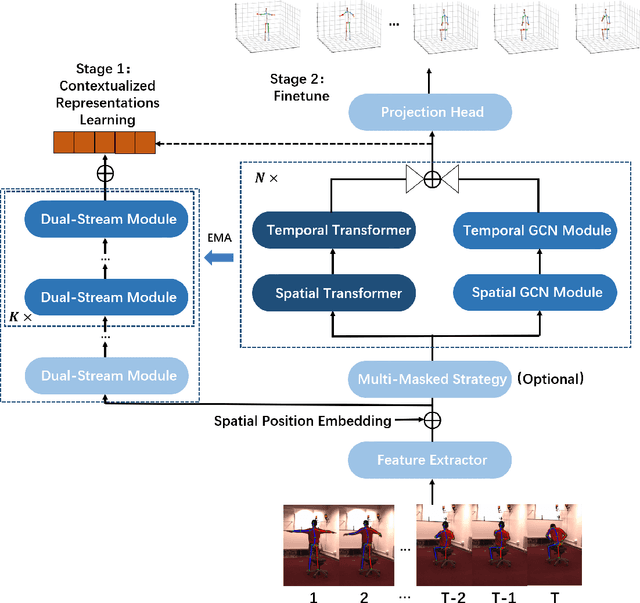
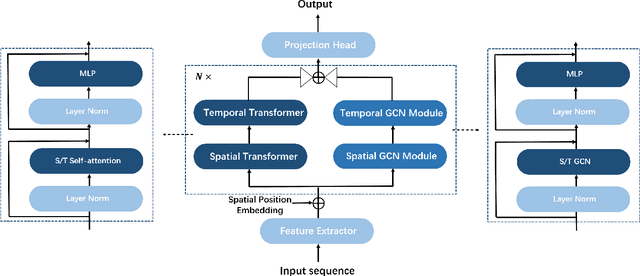
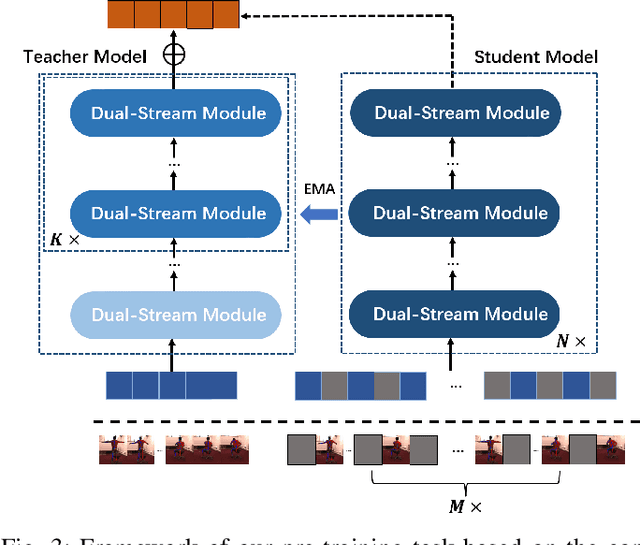
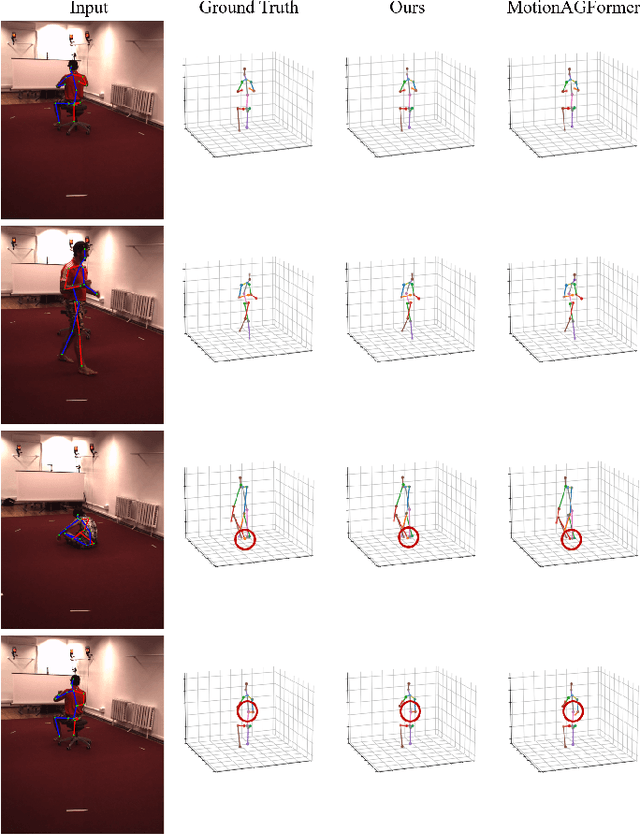
This paper introduces a novel approach to monocular 3D human pose estimation using contextualized representation learning with the Transformer-GCN dual-stream model. Monocular 3D human pose estimation is challenged by depth ambiguity, limited 3D-labeled training data, imbalanced modeling, and restricted model generalization. To address these limitations, our work introduces a groundbreaking motion pre-training method based on contextualized representation learning. Specifically, our method involves masking 2D pose features and utilizing a Transformer-GCN dual-stream model to learn high-dimensional representations through a self-distillation setup. By focusing on contextualized representation learning and spatial-temporal modeling, our approach enhances the model's ability to understand spatial-temporal relationships between postures, resulting in superior generalization. Furthermore, leveraging the Transformer-GCN dual-stream model, our approach effectively balances global and local interactions in video pose estimation. The model adaptively integrates information from both the Transformer and GCN streams, where the GCN stream effectively learns local relationships between adjacent key points and frames, while the Transformer stream captures comprehensive global spatial and temporal features. Our model achieves state-of-the-art performance on two benchmark datasets, with an MPJPE of 38.0mm and P-MPJPE of 31.9mm on Human3.6M, and an MPJPE of 15.9mm on MPI-INF-3DHP. Furthermore, visual experiments on public datasets and in-the-wild videos demonstrate the robustness and generalization capabilities of our approach.