 Add to Chrome
 Add to Firefox
 Add to Edge
Multi-View MRI Approach for Classification of MGMT Methylation in Glioblastoma Patients
Dec 16, 2025
The presence of MGMT promoter methylation significantly affects how well chemotherapy works for patients with Glioblastoma Multiforme (GBM). Currently, confirmation of MGMT promoter methylation relies on invasive brain tumor tissue biopsies. In this study, we explore radiogenomics techniques, a promising approach in precision medicine, to identify genetic markers from medical images. Using MRI scans and deep learning models, we propose a new multi-view approach that considers spatial relationships between MRI views to detect MGMT methylation status. Importantly, our method extracts information from all three views without using a complicated 3D deep learning model, avoiding issues associated with high parameter count, slow convergence, and substantial memory demands. We also introduce a new technique for tumor slice extraction and show its superiority over existing methods based on multiple evaluation metrics. By comparing our approach to state-of-the-art models, we demonstrate the efficacy of our method. Furthermore, we share a reproducible pipeline of published models, encouraging transparency and the development of robust diagnostic tools. Our study highlights the potential of non-invasive methods for identifying MGMT promoter methylation and contributes to advancing precision medicine in GBM treatment.

SafeRBench: A Comprehensive Benchmark for Safety Assessment in Large Reasoning Models
Nov 19, 2025Large Reasoning Models (LRMs) improve answer quality through explicit chain-of-thought, yet this very capability introduces new safety risks: harmful content can be subtly injected, surface gradually, or be justified by misleading rationales within the reasoning trace. Existing safety evaluations, however, primarily focus on output-level judgments and rarely capture these dynamic risks along the reasoning process. In this paper, we present SafeRBench, the first benchmark that assesses LRM safety end-to-end -- from inputs and intermediate reasoning to final outputs. (1) Input Characterization: We pioneer the incorporation of risk categories and levels into input design, explicitly accounting for affected groups and severity, and thereby establish a balanced prompt suite reflecting diverse harm gradients. (2) Fine-Grained Output Analysis: We introduce a micro-thought chunking mechanism to segment long reasoning traces into semantically coherent units, enabling fine-grained evaluation across ten safety dimensions. (3) Human Safety Alignment: We validate LLM-based evaluations against human annotations specifically designed to capture safety judgments. Evaluations on 19 LRMs demonstrate that SafeRBench enables detailed, multidimensional safety assessment, offering insights into risks and protective mechanisms from multiple perspectives.
Revisiting Data Scaling Law for Medical Segmentation
Nov 17, 2025The population loss of trained deep neural networks often exhibits power law scaling with the size of the training dataset, guiding significant performance advancements in deep learning applications. In this study, we focus on the scaling relationship with data size in the context of medical anatomical segmentation, a domain that remains underexplored. We analyze scaling laws for anatomical segmentation across 15 semantic tasks and 4 imaging modalities, demonstrating that larger datasets significantly improve segmentation performance, following similar scaling trends. Motivated by the topological isomorphism in images sharing anatomical structures, we evaluate the impact of deformation-guided augmentation strategies on data scaling laws, specifically random elastic deformation and registration-guided deformation. We also propose a novel, scalable image augmentation approach that generates diffeomorphic mappings from geodesic subspace based on image registration to introduce realistic deformation. Our experimental results demonstrate that both registered and generated deformation-based augmentation considerably enhance data utilization efficiency. The proposed generated deformation method notably achieves superior performance and accelerated convergence, surpassing standard power law scaling trends without requiring additional data. Overall, this work provides insights into the understanding of segmentation scalability and topological variation impact in medical imaging, thereby leading to more efficient model development with reduced annotation and computational costs.
MedQ-Bench: Evaluating and Exploring Medical Image Quality Assessment Abilities in MLLMs
Oct 02, 2025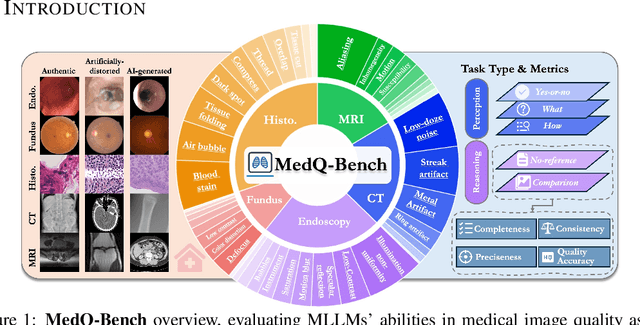
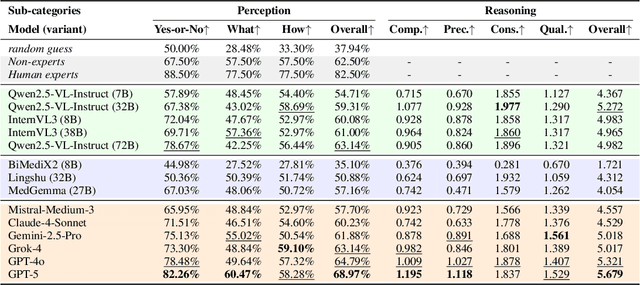
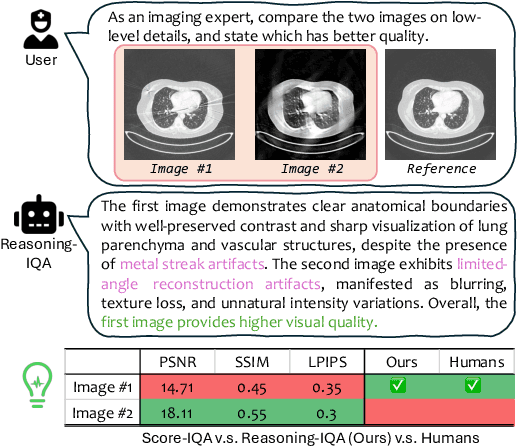

Medical Image Quality Assessment (IQA) serves as the first-mile safety gate for clinical AI, yet existing approaches remain constrained by scalar, score-based metrics and fail to reflect the descriptive, human-like reasoning process central to expert evaluation. To address this gap, we introduce MedQ-Bench, a comprehensive benchmark that establishes a perception-reasoning paradigm for language-based evaluation of medical image quality with Multi-modal Large Language Models (MLLMs). MedQ-Bench defines two complementary tasks: (1) MedQ-Perception, which probes low-level perceptual capability via human-curated questions on fundamental visual attributes; and (2) MedQ-Reasoning, encompassing both no-reference and comparison reasoning tasks, aligning model evaluation with human-like reasoning on image quality. The benchmark spans five imaging modalities and over forty quality attributes, totaling 2,600 perceptual queries and 708 reasoning assessments, covering diverse image sources including authentic clinical acquisitions, images with simulated degradations via physics-based reconstructions, and AI-generated images. To evaluate reasoning ability, we propose a multi-dimensional judging protocol that assesses model outputs along four complementary axes. We further conduct rigorous human-AI alignment validation by comparing LLM-based judgement with radiologists. Our evaluation of 14 state-of-the-art MLLMs demonstrates that models exhibit preliminary but unstable perceptual and reasoning skills, with insufficient accuracy for reliable clinical use. These findings highlight the need for targeted optimization of MLLMs in medical IQA. We hope that MedQ-Bench will catalyze further exploration and unlock the untapped potential of MLLMs for medical image quality evaluation.
Wan-Animate: Unified Character Animation and Replacement with Holistic Replication
Sep 17, 2025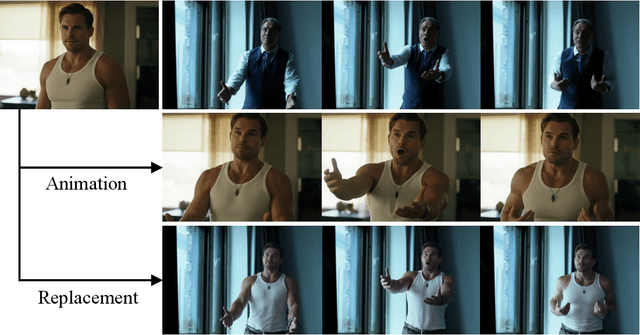
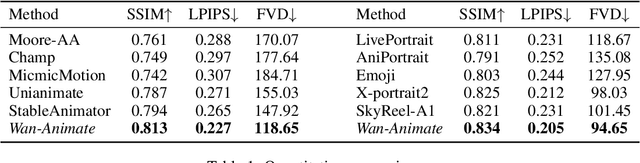
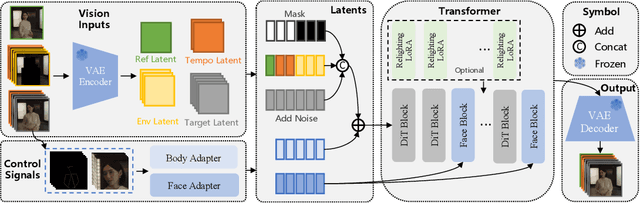
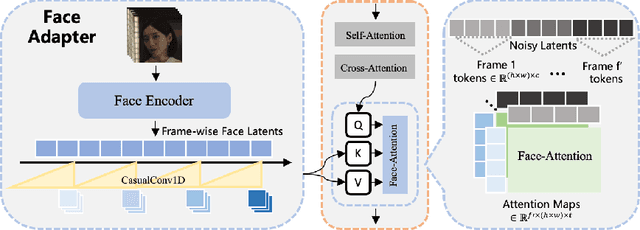
We introduce Wan-Animate, a unified framework for character animation and replacement. Given a character image and a reference video, Wan-Animate can animate the character by precisely replicating the expressions and movements of the character in the video to generate high-fidelity character videos. Alternatively, it can integrate the animated character into the reference video to replace the original character, replicating the scene's lighting and color tone to achieve seamless environmental integration. Wan-Animate is built upon the Wan model. To adapt it for character animation tasks, we employ a modified input paradigm to differentiate between reference conditions and regions for generation. This design unifies multiple tasks into a common symbolic representation. We use spatially-aligned skeleton signals to replicate body motion and implicit facial features extracted from source images to reenact expressions, enabling the generation of character videos with high controllability and expressiveness. Furthermore, to enhance environmental integration during character replacement, we develop an auxiliary Relighting LoRA. This module preserves the character's appearance consistency while applying the appropriate environmental lighting and color tone. Experimental results demonstrate that Wan-Animate achieves state-of-the-art performance. We are committed to open-sourcing the model weights and its source code.
Dark-ISP: Enhancing RAW Image Processing for Low-Light Object Detection
Sep 11, 2025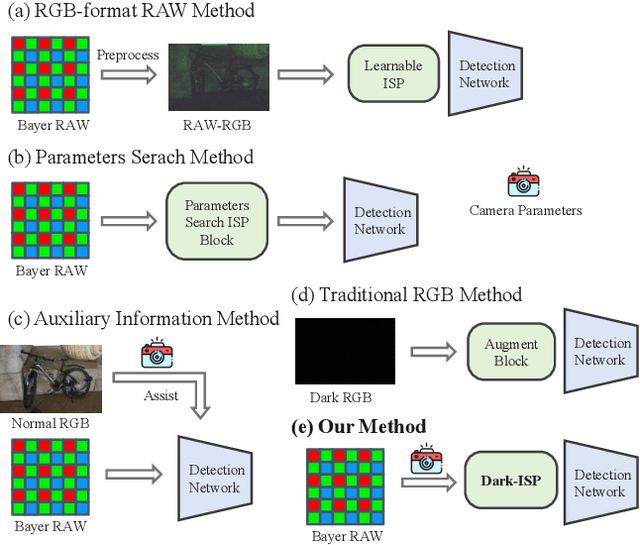
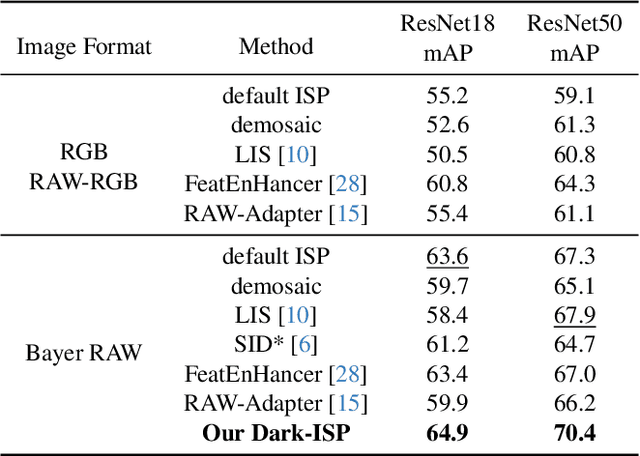
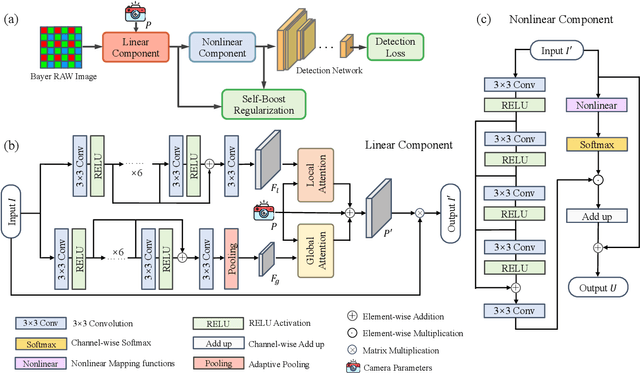
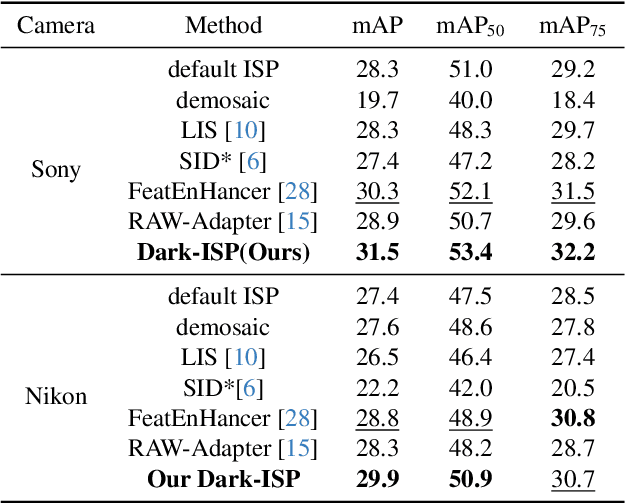
Low-light Object detection is crucial for many real-world applications but remains challenging due to degraded image quality. While recent studies have shown that RAW images offer superior potential over RGB images, existing approaches either use RAW-RGB images with information loss or employ complex frameworks. To address these, we propose a lightweight and self-adaptive Image Signal Processing (ISP) plugin, Dark-ISP, which directly processes Bayer RAW images in dark environments, enabling seamless end-to-end training for object detection. Our key innovations are: (1) We deconstruct conventional ISP pipelines into sequential linear (sensor calibration) and nonlinear (tone mapping) sub-modules, recasting them as differentiable components optimized through task-driven losses. Each module is equipped with content-aware adaptability and physics-informed priors, enabling automatic RAW-to-RGB conversion aligned with detection objectives. (2) By exploiting the ISP pipeline's intrinsic cascade structure, we devise a Self-Boost mechanism that facilitates cooperation between sub-modules. Through extensive experiments on three RAW image datasets, we demonstrate that our method outperforms state-of-the-art RGB- and RAW-based detection approaches, achieving superior results with minimal parameters in challenging low-light environments.
* 11 pages, 6 figures, conference
Middo: Model-Informed Dynamic Data Optimization for Enhanced LLM Fine-Tuning via Closed-Loop Learning
Aug 29, 2025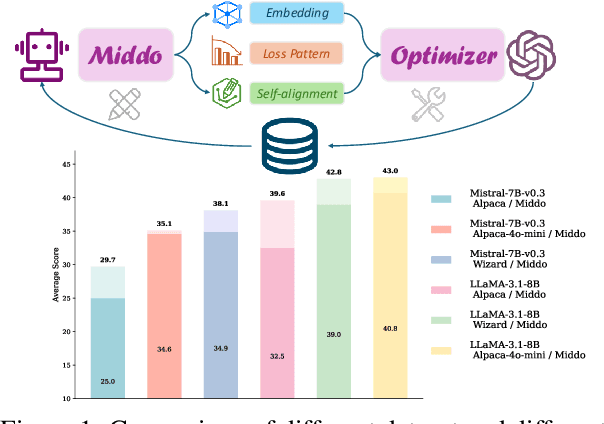
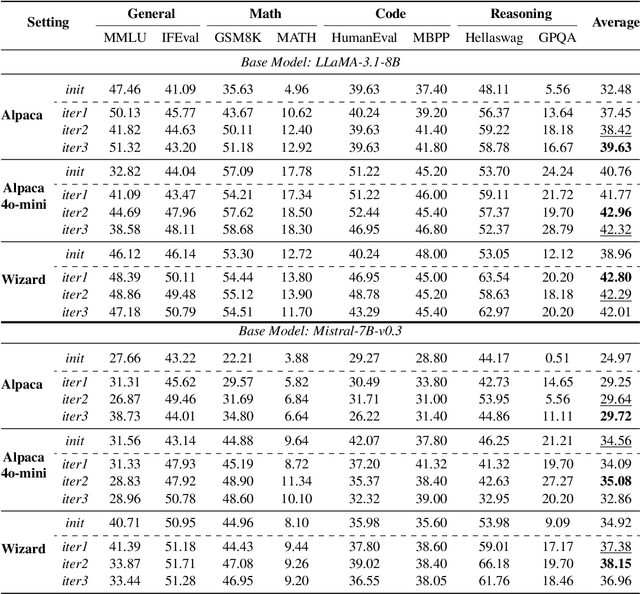
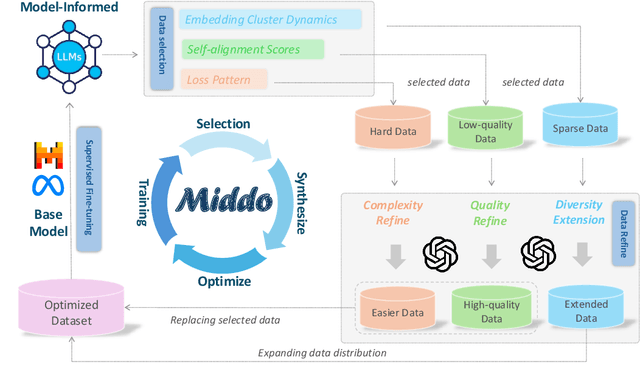
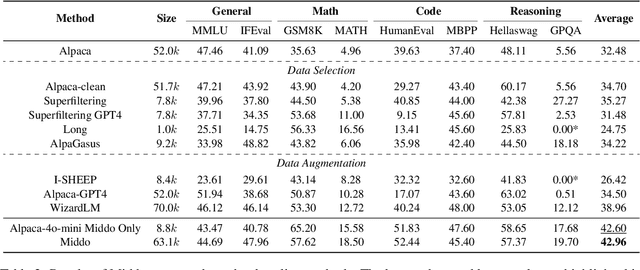
Supervised Fine-Tuning (SFT) Large Language Models (LLM) fundamentally rely on high-quality training data. While data selection and data synthesis are two common strategies to improve data quality, existing approaches often face limitations in static dataset curation that fail to adapt to evolving model capabilities. In this paper, we introduce Middo, a self-evolving Model-informed dynamic data optimization framework that uses model-aware data selection and context-preserving data refinement. Unlike conventional one-off filtering/synthesis methods, our framework establishes a closed-loop optimization system: (1) A self-referential diagnostic module proactively identifies suboptimal samples through tri-axial model signals - loss patterns (complexity), embedding cluster dynamics (diversity), and self-alignment scores (quality); (2) An adaptive optimization engine then transforms suboptimal samples into pedagogically valuable training points while preserving semantic integrity; (3) This optimization process continuously evolves with model capability through dynamic learning principles. Experiments on multiple benchmarks demonstrate that our \method consistently enhances the quality of seed data and boosts LLM's performance with improving accuracy by 7.15% on average while maintaining the original dataset scale. This work establishes a new paradigm for sustainable LLM training through dynamic human-AI co-evolution of data and models. Our datasets, models, and code are coming soon.
Dino U-Net: Exploiting High-Fidelity Dense Features from Foundation Models for Medical Image Segmentation
Aug 28, 2025Foundation models pre-trained on large-scale natural image datasets offer a powerful paradigm for medical image segmentation. However, effectively transferring their learned representations for precise clinical applications remains a challenge. In this work, we propose Dino U-Net, a novel encoder-decoder architecture designed to exploit the high-fidelity dense features of the DINOv3 vision foundation model. Our architecture introduces an encoder built upon a frozen DINOv3 backbone, which employs a specialized adapter to fuse the model's rich semantic features with low-level spatial details. To preserve the quality of these representations during dimensionality reduction, we design a new fidelity-aware projection module (FAPM) that effectively refines and projects the features for the decoder. We conducted extensive experiments on seven diverse public medical image segmentation datasets. Our results show that Dino U-Net achieves state-of-the-art performance, consistently outperforming previous methods across various imaging modalities. Our framework proves to be highly scalable, with segmentation accuracy consistently improving as the backbone model size increases up to the 7-billion-parameter variant. The findings demonstrate that leveraging the superior, dense-pretrained features from a general-purpose foundation model provides a highly effective and parameter-efficient approach to advance the accuracy of medical image segmentation. The code is available at https://github.com/yifangao112/DinoUNet.
CD-TVD: Contrastive Diffusion for 3D Super-Resolution with Scarce High-Resolution Time-Varying Data
Aug 13, 2025Large-scale scientific simulations require significant resources to generate high-resolution time-varying data (TVD). While super-resolution is an efficient post-processing strategy to reduce costs, existing methods rely on a large amount of HR training data, limiting their applicability to diverse simulation scenarios. To address this constraint, we proposed CD-TVD, a novel framework that combines contrastive learning and an improved diffusion-based super-resolution model to achieve accurate 3D super-resolution from limited time-step high-resolution data. During pre-training on historical simulation data, the contrastive encoder and diffusion superresolution modules learn degradation patterns and detailed features of high-resolution and low-resolution samples. In the training phase, the improved diffusion model with a local attention mechanism is fine-tuned using only one newly generated high-resolution timestep, leveraging the degradation knowledge learned by the encoder. This design minimizes the reliance on large-scale high-resolution datasets while maintaining the capability to recover fine-grained details. Experimental results on fluid and atmospheric simulation datasets confirm that CD-TVD delivers accurate and resource-efficient 3D super-resolution, marking a significant advancement in data augmentation for large-scale scientific simulations. The code is available at https://github.com/Xin-Gao-private/CD-TVD.
EcoTransformer: Attention without Multiplication
Jul 27, 2025The Transformer, with its scaled dot-product attention mechanism, has become a foundational architecture in modern AI. However, this mechanism is computationally intensive and incurs substantial energy costs. We propose a new Transformer architecture EcoTransformer, in which the output context vector is constructed as the convolution of the values using a Laplacian kernel, where the distances are measured by the L1 metric between the queries and keys. Compared to dot-product based attention, the new attention score calculation is free of matrix multiplication. It performs on par with, or even surpasses, scaled dot-product attention in NLP, bioinformatics, and vision tasks, while consuming significantly less energy.