 Add to Chrome
 Add to Firefox
 Add to Edge
CausalMix: Data Mixture as Causal Inference for Language Model Training
Jul 01, 2026
In Large Language Model (LLM) training, data mixing plays a pivotal role in determining model performance. Recent methods optimize mixture weights via proxy models, but they rely on the assumption of static data distributions. As a result, when the underlying data pool shifts, these methods require costly retraining from scratch. This limitation restricts their ability to scale seamlessly from small settings to larger data pools and model sizes. In this paper, we propose CausalMix to address this limitation by casting data mixture optimization as a causal inference problem. We formulate the statistical features of the data pool as covariates and the domain mixture as the treatment. After fitting a causal model on 512 runs of Qwen2.5-0.5B to estimate the Conditional Average Treatment Effect (CATE), we extrapolate the optimal mixture for an 800K data pool and apply it to train a 7B model. Furthermore, we successfully generalize the framework to long chain-of-thought data on Qwen3-4B-Base. By leveraging causal modeling to isolate confounding biases, CausalMix dynamically infers state-dependent optimal data mixtures. Extensive experiments show that the mixture guided by CausalMix consistently improves performance across multiple downstream tasks, outperforming RegMix and other baselines. In addition, we use the CATE Interpreter to provide visual analysis of the learned mixing strategy. Overall, CausalMix offers a causal and interpretable framework for optimizing LLM data mixtures.

OpenDataArena: A Fair and Open Arena for Benchmarking Post-Training Dataset Value
Dec 16, 2025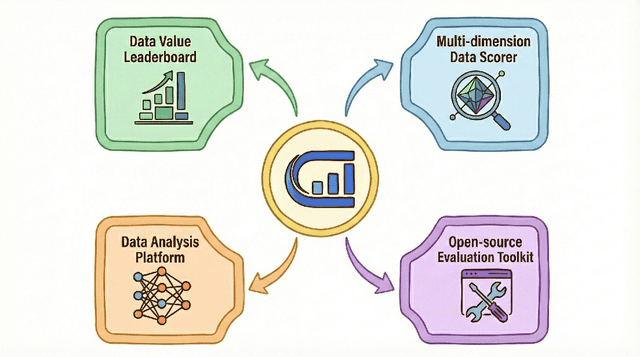
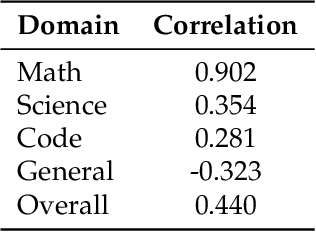
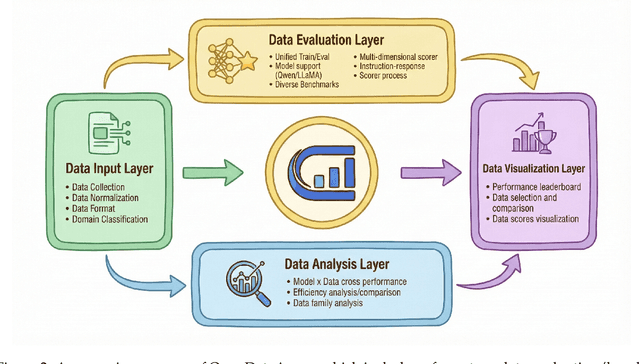
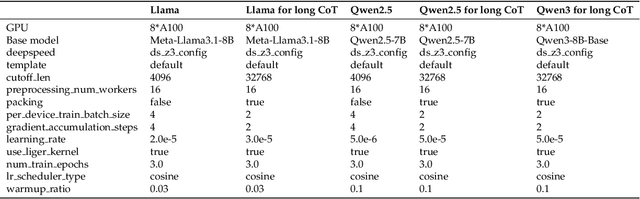
The rapid evolution of Large Language Models (LLMs) is predicated on the quality and diversity of post-training datasets. However, a critical dichotomy persists: while models are rigorously benchmarked, the data fueling them remains a black box--characterized by opaque composition, uncertain provenance, and a lack of systematic evaluation. This opacity hinders reproducibility and obscures the causal link between data characteristics and model behaviors. To bridge this gap, we introduce OpenDataArena (ODA), a holistic and open platform designed to benchmark the intrinsic value of post-training data. ODA establishes a comprehensive ecosystem comprising four key pillars: (i) a unified training-evaluation pipeline that ensures fair, open comparisons across diverse models (e.g., Llama, Qwen) and domains; (ii) a multi-dimensional scoring framework that profiles data quality along tens of distinct axes; (iii) an interactive data lineage explorer to visualize dataset genealogy and dissect component sources; and (iv) a fully open-source toolkit for training, evaluation, and scoring to foster data research. Extensive experiments on ODA--covering over 120 training datasets across multiple domains on 22 benchmarks, validated by more than 600 training runs and 40 million processed data points--reveal non-trivial insights. Our analysis uncovers the inherent trade-offs between data complexity and task performance, identifies redundancy in popular benchmarks through lineage tracing, and maps the genealogical relationships across datasets. We release all results, tools, and configurations to democratize access to high-quality data evaluation. Rather than merely expanding a leaderboard, ODA envisions a shift from trial-and-error data curation to a principled science of Data-Centric AI, paving the way for rigorous studies on data mixing laws and the strategic composition of foundation models.
Middo: Model-Informed Dynamic Data Optimization for Enhanced LLM Fine-Tuning via Closed-Loop Learning
Aug 29, 2025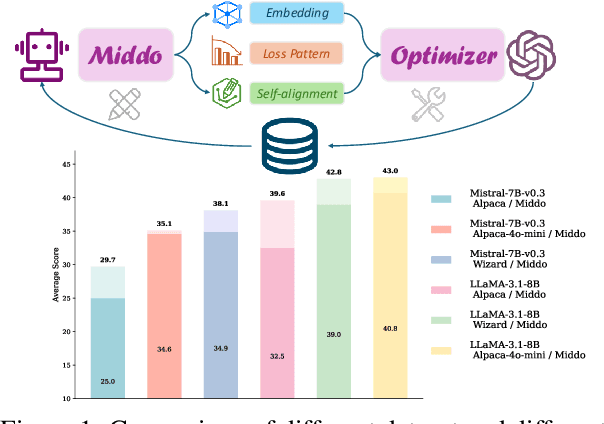
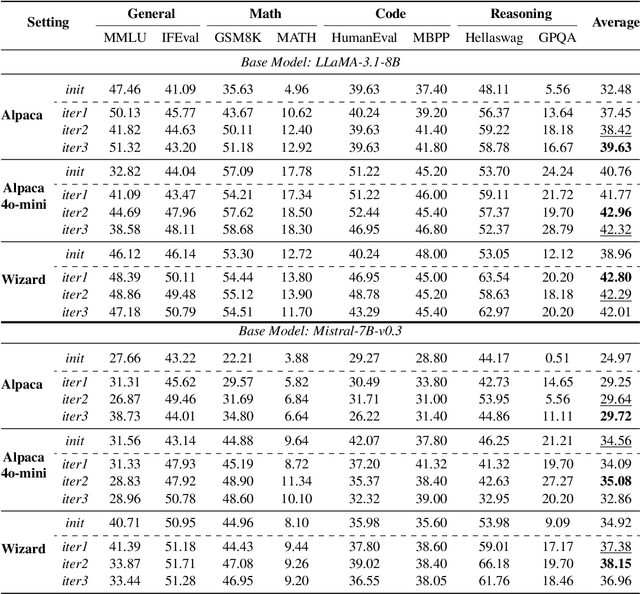
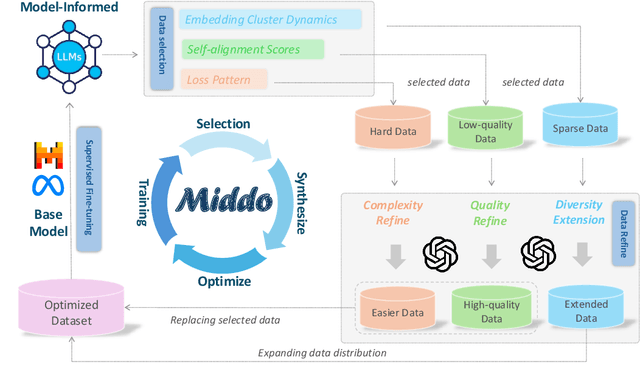
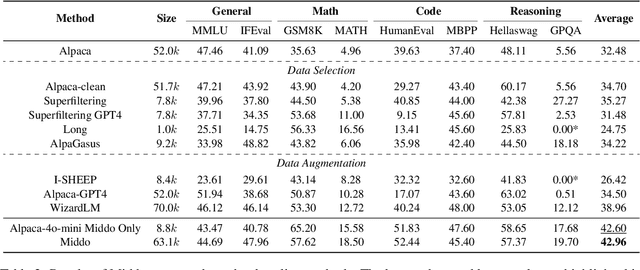
Supervised Fine-Tuning (SFT) Large Language Models (LLM) fundamentally rely on high-quality training data. While data selection and data synthesis are two common strategies to improve data quality, existing approaches often face limitations in static dataset curation that fail to adapt to evolving model capabilities. In this paper, we introduce Middo, a self-evolving Model-informed dynamic data optimization framework that uses model-aware data selection and context-preserving data refinement. Unlike conventional one-off filtering/synthesis methods, our framework establishes a closed-loop optimization system: (1) A self-referential diagnostic module proactively identifies suboptimal samples through tri-axial model signals - loss patterns (complexity), embedding cluster dynamics (diversity), and self-alignment scores (quality); (2) An adaptive optimization engine then transforms suboptimal samples into pedagogically valuable training points while preserving semantic integrity; (3) This optimization process continuously evolves with model capability through dynamic learning principles. Experiments on multiple benchmarks demonstrate that our \method consistently enhances the quality of seed data and boosts LLM's performance with improving accuracy by 7.15% on average while maintaining the original dataset scale. This work establishes a new paradigm for sustainable LLM training through dynamic human-AI co-evolution of data and models. Our datasets, models, and code are coming soon.