 Add to Chrome
 Add to Firefox
 Add to Edge
Adversarial Attack for RGB-Event based Visual Object Tracking
Apr 19, 2025
Visual object tracking is a crucial research topic in the fields of computer vision and multi-modal fusion. Among various approaches, robust visual tracking that combines RGB frames with Event streams has attracted increasing attention from researchers. While striving for high accuracy and efficiency in tracking, it is also important to explore how to effectively conduct adversarial attacks and defenses on RGB-Event stream tracking algorithms, yet research in this area remains relatively scarce. To bridge this gap, in this paper, we propose a cross-modal adversarial attack algorithm for RGB-Event visual tracking. Because of the diverse representations of Event streams, and given that Event voxels and frames are more commonly used, this paper will focus on these two representations for an in-depth study. Specifically, for the RGB-Event voxel, we first optimize the perturbation by adversarial loss to generate RGB frame adversarial examples. For discrete Event voxel representations, we propose a two-step attack strategy, more in detail, we first inject Event voxels into the target region as initialized adversarial examples, then, conduct a gradient-guided optimization by perturbing the spatial location of the Event voxels. For the RGB-Event frame based tracking, we optimize the cross-modal universal perturbation by integrating the gradient information from multimodal data. We evaluate the proposed approach against attacks on three widely used RGB-Event Tracking datasets, i.e., COESOT, FE108, and VisEvent. Extensive experiments show that our method significantly reduces the performance of the tracker across numerous datasets in both unimodal and multimodal scenarios. The source code will be released on https://github.com/Event-AHU/Adversarial_Attack_Defense

CM3AE: A Unified RGB Frame and Event-Voxel/-Frame Pre-training Framework
Apr 17, 2025Event cameras have attracted increasing attention in recent years due to their advantages in high dynamic range, high temporal resolution, low power consumption, and low latency. Some researchers have begun exploring pre-training directly on event data. Nevertheless, these efforts often fail to establish strong connections with RGB frames, limiting their applicability in multi-modal fusion scenarios. To address these issues, we propose a novel CM3AE pre-training framework for the RGB-Event perception. This framework accepts multi-modalities/views of data as input, including RGB images, event images, and event voxels, providing robust support for both event-based and RGB-event fusion based downstream tasks. Specifically, we design a multi-modal fusion reconstruction module that reconstructs the original image from fused multi-modal features, explicitly enhancing the model's ability to aggregate cross-modal complementary information. Additionally, we employ a multi-modal contrastive learning strategy to align cross-modal feature representations in a shared latent space, which effectively enhances the model's capability for multi-modal understanding and capturing global dependencies. We construct a large-scale dataset containing 2,535,759 RGB-Event data pairs for the pre-training. Extensive experiments on five downstream tasks fully demonstrated the effectiveness of CM3AE. Source code and pre-trained models will be released on https://github.com/Event-AHU/CM3AE.
Zero-shot Autonomous Microscopy for Scalable and Intelligent Characterization of 2D Materials
Apr 14, 2025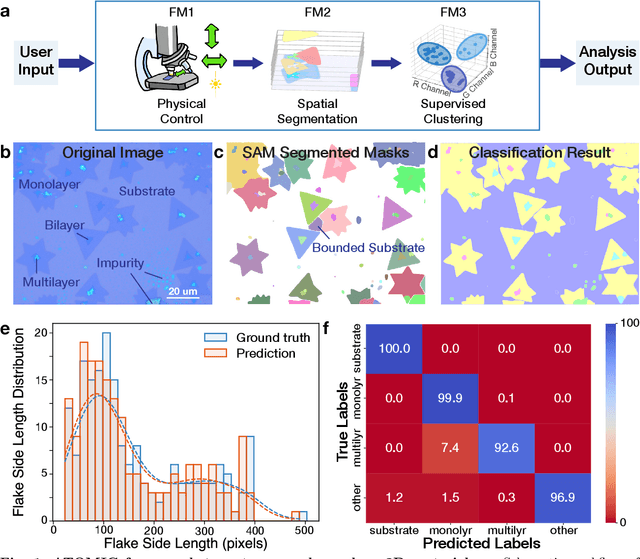
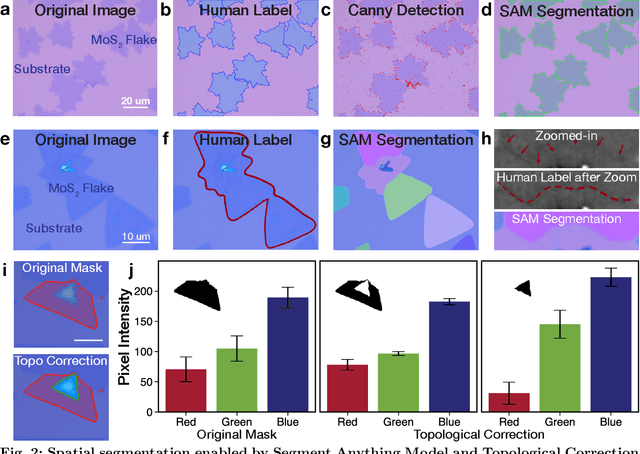
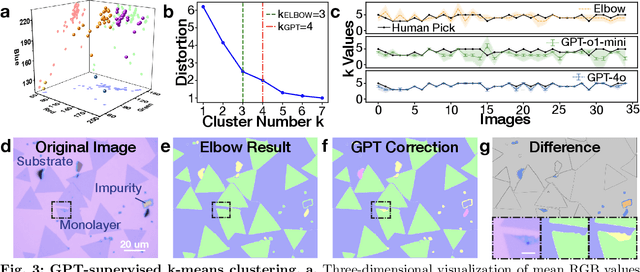
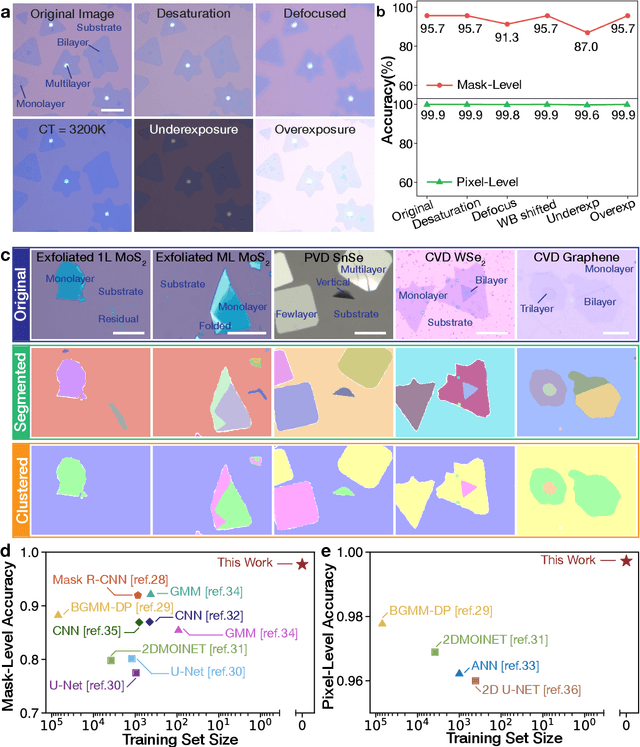
Characterization of atomic-scale materials traditionally requires human experts with months to years of specialized training. Even for trained human operators, accurate and reliable characterization remains challenging when examining newly discovered materials such as two-dimensional (2D) structures. This bottleneck drives demand for fully autonomous experimentation systems capable of comprehending research objectives without requiring large training datasets. In this work, we present ATOMIC (Autonomous Technology for Optical Microscopy & Intelligent Characterization), an end-to-end framework that integrates foundation models to enable fully autonomous, zero-shot characterization of 2D materials. Our system integrates the vision foundation model (i.e., Segment Anything Model), large language models (i.e., ChatGPT), unsupervised clustering, and topological analysis to automate microscope control, sample scanning, image segmentation, and intelligent analysis through prompt engineering, eliminating the need for additional training. When analyzing typical MoS2 samples, our approach achieves 99.7% segmentation accuracy for single layer identification, which is equivalent to that of human experts. In addition, the integrated model is able to detect grain boundary slits that are challenging to identify with human eyes. Furthermore, the system retains robust accuracy despite variable conditions including defocus, color temperature fluctuations, and exposure variations. It is applicable to a broad spectrum of common 2D materials-including graphene, MoS2, WSe2, SnSe-regardless of whether they were fabricated via chemical vapor deposition or mechanical exfoliation. This work represents the implementation of foundation models to achieve autonomous analysis, establishing a scalable and data-efficient characterization paradigm that fundamentally transforms the approach to nanoscale materials research.
RGB-Event based Pedestrian Attribute Recognition: A Benchmark Dataset and An Asymmetric RWKV Fusion Framework
Apr 14, 2025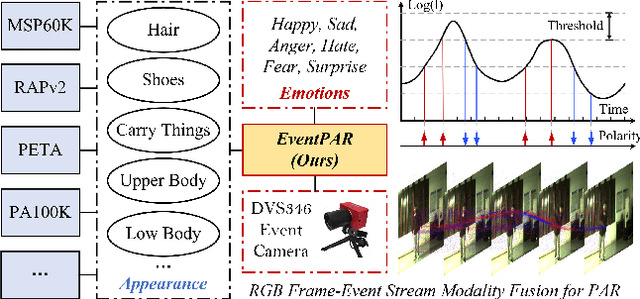
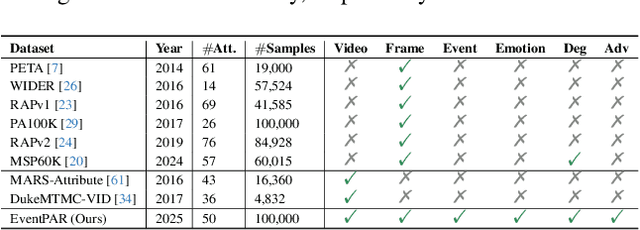
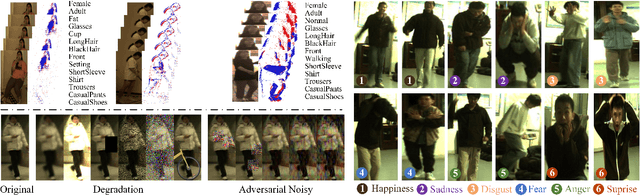
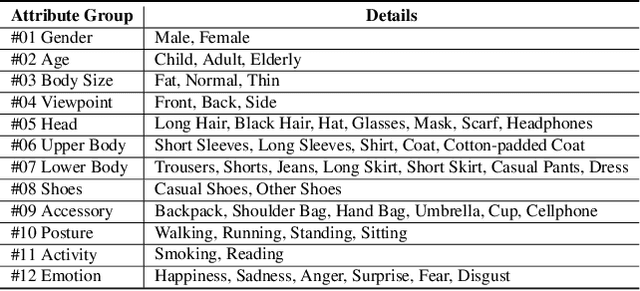
Existing pedestrian attribute recognition methods are generally developed based on RGB frame cameras. However, these approaches are constrained by the limitations of RGB cameras, such as sensitivity to lighting conditions and motion blur, which hinder their performance. Furthermore, current attribute recognition primarily focuses on analyzing pedestrians' external appearance and clothing, lacking an exploration of emotional dimensions. In this paper, we revisit these issues and propose a novel multi-modal RGB-Event attribute recognition task by drawing inspiration from the advantages of event cameras in low-light, high-speed, and low-power consumption. Specifically, we introduce the first large-scale multi-modal pedestrian attribute recognition dataset, termed EventPAR, comprising 100K paired RGB-Event samples that cover 50 attributes related to both appearance and six human emotions, diverse scenes, and various seasons. By retraining and evaluating mainstream PAR models on this dataset, we establish a comprehensive benchmark and provide a solid foundation for future research in terms of data and algorithmic baselines. In addition, we propose a novel RWKV-based multi-modal pedestrian attribute recognition framework, featuring an RWKV visual encoder and an asymmetric RWKV fusion module. Extensive experiments are conducted on our proposed dataset as well as two simulated datasets (MARS-Attribute and DukeMTMC-VID-Attribute), achieving state-of-the-art results. The source code and dataset will be released on https://github.com/Event-AHU/OpenPAR
Bregman Linearized Augmented Lagrangian Method for Nonconvex Constrained Stochastic Zeroth-order Optimization
Apr 13, 2025In this paper, we study nonconvex constrained stochastic zeroth-order optimization problems, for which we have access to exact information of constraints and noisy function values of the objective. We propose a Bregman linearized augmented Lagrangian method that utilizes stochastic zeroth-order gradient estimators combined with a variance reduction technique. We analyze its oracle complexity, in terms of the total number of stochastic function value evaluations required to achieve an \(\epsilon\)-KKT point in \(\ell_p\)-norm metrics with \(p \ge 2\), where \(p\) is a parameter associated with the selected Bregman distance. In particular, starting from a near-feasible initial point and using Rademacher smoothing, the oracle complexity is in order \(O(p d^{2/p} \epsilon^{-3})\) for \(p \in [2, 2 \ln d]\), and \(O(\ln d \cdot \epsilon^{-3})\) for \(p > 2 \ln d\), where \(d\) denotes the problem dimension. Those results show that the complexity of the proposed method can achieve a dimensional dependency lower than \(O(d)\) without requiring additional assumptions, provided that a Bregman distance is chosen properly. This offers a significant improvement in the high-dimensional setting over existing work, and matches the lowest complexity order with respect to the tolerance \(\epsilon\) reported in the literature. Numerical experiments on constrained Lasso and black-box adversarial attack problems highlight the promising performances of the proposed method.
Human Activity Recognition using RGB-Event based Sensors: A Multi-modal Heat Conduction Model and A Benchmark Dataset
Apr 08, 2025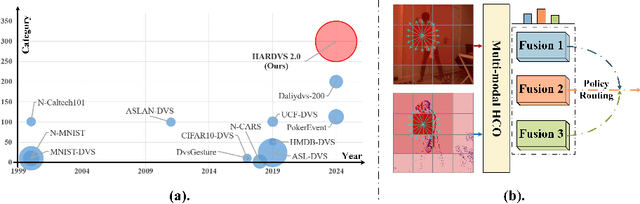
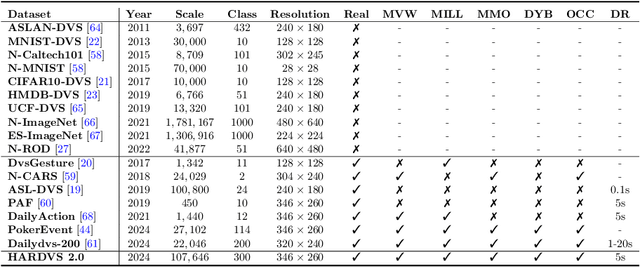
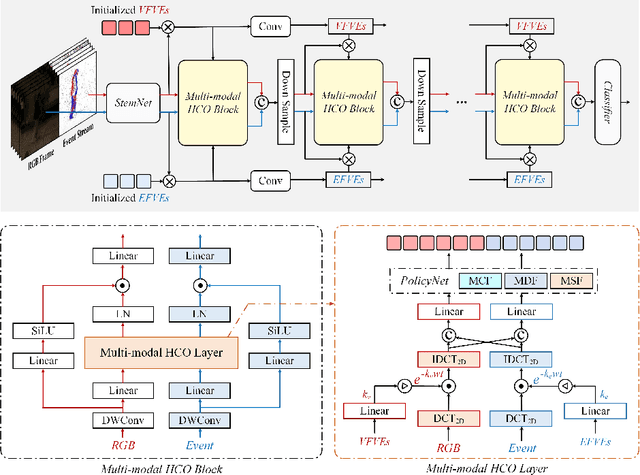
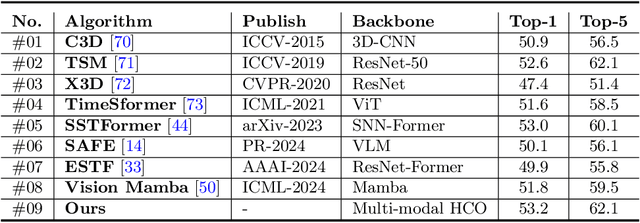
Human Activity Recognition (HAR) primarily relied on traditional RGB cameras to achieve high-performance activity recognition. However, the challenging factors in real-world scenarios, such as insufficient lighting and rapid movements, inevitably degrade the performance of RGB cameras. To address these challenges, biologically inspired event cameras offer a promising solution to overcome the limitations of traditional RGB cameras. In this work, we rethink human activity recognition by combining the RGB and event cameras. The first contribution is the proposed large-scale multi-modal RGB-Event human activity recognition benchmark dataset, termed HARDVS 2.0, which bridges the dataset gaps. It contains 300 categories of everyday real-world actions with a total of 107,646 paired videos covering various challenging scenarios. Inspired by the physics-informed heat conduction model, we propose a novel multi-modal heat conduction operation framework for effective activity recognition, termed MMHCO-HAR. More in detail, given the RGB frames and event streams, we first extract the feature embeddings using a stem network. Then, multi-modal Heat Conduction blocks are designed to fuse the dual features, the key module of which is the multi-modal Heat Conduction Operation layer. We integrate RGB and event embeddings through a multi-modal DCT-IDCT layer while adaptively incorporating the thermal conductivity coefficient via FVEs into this module. After that, we propose an adaptive fusion module based on a policy routing strategy for high-performance classification. Comprehensive experiments demonstrate that our method consistently performs well, validating its effectiveness and robustness. The source code and benchmark dataset will be released on https://github.com/Event-AHU/HARDVS/tree/HARDVSv2
ContrastScore: Towards Higher Quality, Less Biased, More Efficient Evaluation Metrics with Contrastive Evaluation
Apr 02, 2025Evaluating the quality of generated text automatically remains a significant challenge. Conventional reference-based metrics have been shown to exhibit relatively weak correlation with human evaluations. Recent research advocates the use of large language models (LLMs) as source-based metrics for natural language generation (NLG) assessment. While promising, LLM-based metrics, particularly those using smaller models, still fall short in aligning with human judgments. In this work, we introduce ContrastScore, a contrastive evaluation metric designed to enable higher-quality, less biased, and more efficient assessment of generated text. We evaluate ContrastScore on two NLG tasks: machine translation and summarization. Experimental results show that ContrastScore consistently achieves stronger correlation with human judgments than both single-model and ensemble-based baselines. Notably, ContrastScore based on Qwen 3B and 0.5B even outperforms Qwen 7B, despite having only half as many parameters, demonstrating its efficiency. Furthermore, it effectively mitigates common evaluation biases such as length and likelihood preferences, resulting in more robust automatic evaluation.
Variance-Aware Noisy Training: Hardening DNNs against Unstable Analog Computations
Mar 20, 2025
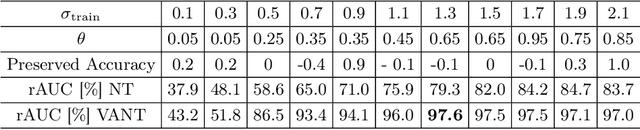
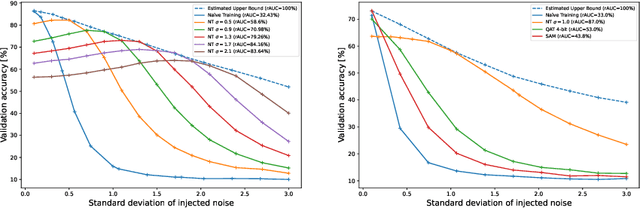
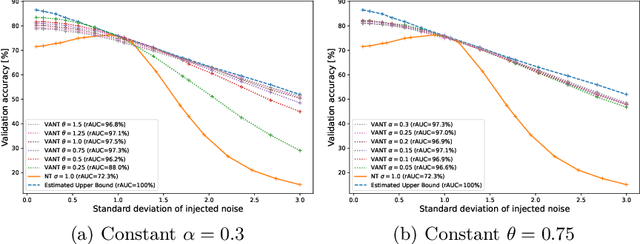
The disparity between the computational demands of deep learning and the capabilities of compute hardware is expanding drastically. Although deep learning achieves remarkable performance in countless tasks, its escalating requirements for computational power and energy consumption surpass the sustainable limits of even specialized neural processing units, including the Apple Neural Engine and NVIDIA TensorCores. This challenge is intensified by the slowdown in CMOS scaling. Analog computing presents a promising alternative, offering substantial improvements in energy efficiency by directly manipulating physical quantities such as current, voltage, charge, or photons. However, it is inherently vulnerable to manufacturing variations, nonlinearities, and noise, leading to degraded prediction accuracy. One of the most effective techniques for enhancing robustness, Noisy Training, introduces noise during the training phase to reinforce the model against disturbances encountered during inference. Although highly effective, its performance degrades in real-world environments where noise characteristics fluctuate due to external factors such as temperature variations and temporal drift. This study underscores the necessity of Noisy Training while revealing its fundamental limitations in the presence of dynamic noise. To address these challenges, we propose Variance-Aware Noisy Training, a novel approach that mitigates performance degradation by incorporating noise schedules which emulate the evolving noise conditions encountered during inference. Our method substantially improves model robustness, without training overhead. We demonstrate a significant increase in robustness, from 72.3\% with conventional Noisy Training to 97.3\% with Variance-Aware Noisy Training on CIFAR-10 and from 38.5\% to 89.9\% on Tiny ImageNet.
Optimal Complexity in Byzantine-Robust Distributed Stochastic Optimization with Data Heterogeneity
Mar 20, 2025In this paper, we establish tight lower bounds for Byzantine-robust distributed first-order stochastic optimization methods in both strongly convex and non-convex stochastic optimization. We reveal that when the distributed nodes have heterogeneous data, the convergence error comprises two components: a non-vanishing Byzantine error and a vanishing optimization error. We establish the lower bounds on the Byzantine error and on the minimum number of queries to a stochastic gradient oracle required to achieve an arbitrarily small optimization error. Nevertheless, we identify significant discrepancies between our established lower bounds and the existing upper bounds. To fill this gap, we leverage the techniques of Nesterov's acceleration and variance reduction to develop novel Byzantine-robust distributed stochastic optimization methods that provably match these lower bounds, up to logarithmic factors, implying that our established lower bounds are tight.
Pseudo-Relevance Feedback Can Improve Zero-Shot LLM-Based Dense Retrieval
Mar 19, 2025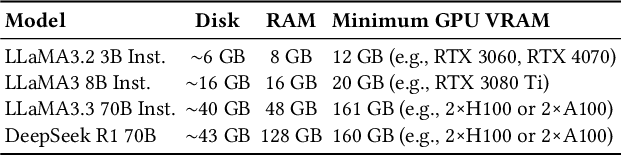
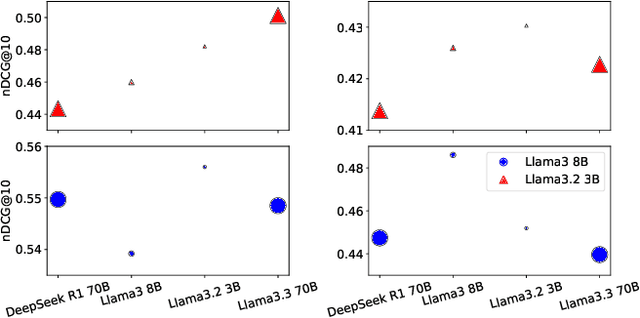
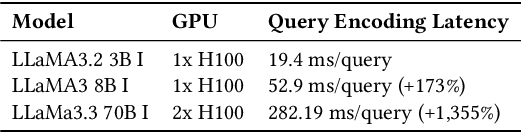
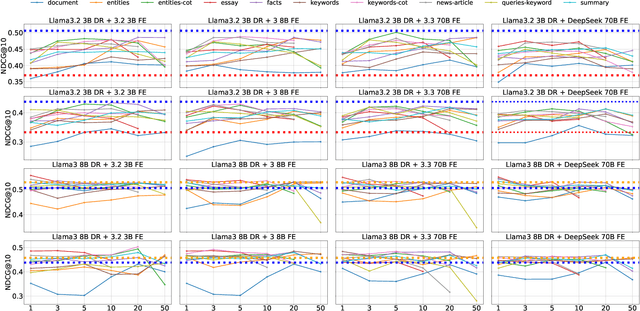
Pseudo-relevance feedback (PRF) refines queries by leveraging initially retrieved documents to improve retrieval effectiveness. In this paper, we investigate how large language models (LLMs) can facilitate PRF for zero-shot LLM-based dense retrieval, extending the recently proposed PromptReps method. Specifically, our approach uses LLMs to extract salient passage features-such as keywords and summaries-from top-ranked documents, which are then integrated into PromptReps to produce enhanced query representations. Experiments on passage retrieval benchmarks demonstrate that incorporating PRF significantly boosts retrieval performance. Notably, smaller rankers with PRF can match the effectiveness of larger rankers without PRF, highlighting PRF's potential to improve LLM-driven search while maintaining an efficient balance between effectiveness and resource usage.