 Add to Chrome
 Add to Firefox
 Add to Edge
ChatGLM-RLHF: Practices of Aligning Large Language Models with Human Feedback
Apr 03, 2024
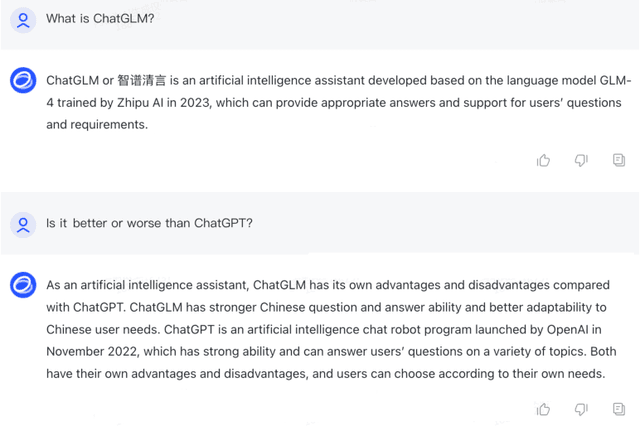
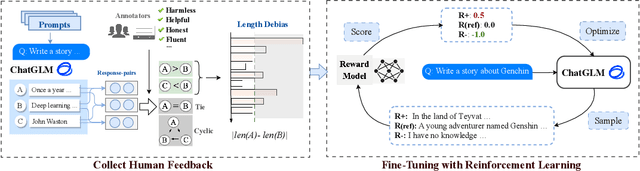

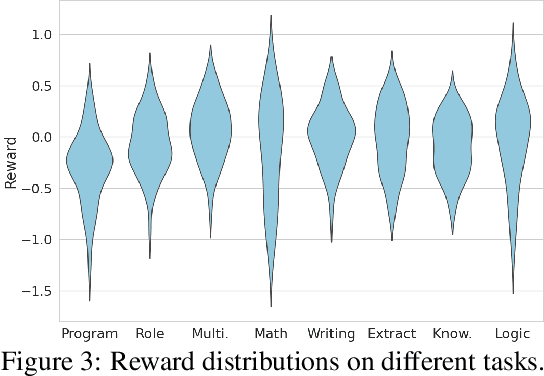
ChatGLM is a free-to-use AI service powered by the ChatGLM family of large language models (LLMs). In this paper, we present the ChatGLM-RLHF pipeline -- a reinforcement learning from human feedback (RLHF) system -- designed to enhance ChatGLM's alignment with human preferences. ChatGLM-RLHF encompasses three major components: the collection of human preference data, the training of the reward model, and the optimization of policies. Throughout the process of integrating ChatGLM-RLHF into production, we encountered and addressed several unprecedented challenges. We introduce the strategies to mitigate reward variance for stabilized large-scale training, implement model parallelism with fused gradient-descent, and design regularization constraints to avoid catastrophic forgetting in LLMs. Experiments show that ChatGLM-RLHF brings significant improvements in alignment tasks compared to the supervised fine-tuned (SFT) version of ChatGLM. For instance, it achieves on average 15\% more wins against ChatGLM-SFT in Chinese alignment tasks. The work presents our practices of aligning LLMs with human preferences, offering insights into the challenges and solutions in RLHF implementations.

ChatGLM-Math: Improving Math Problem-Solving in Large Language Models with a Self-Critique Pipeline
Apr 03, 2024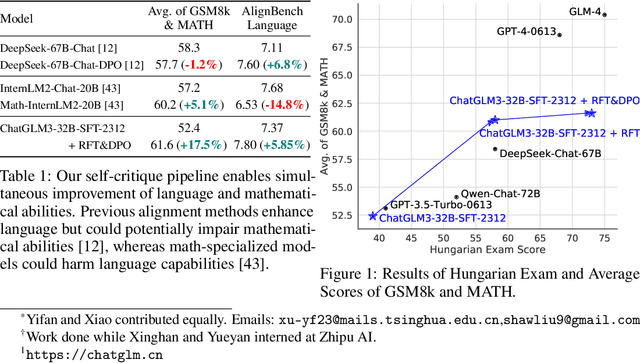
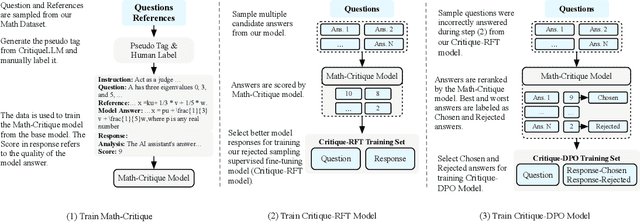
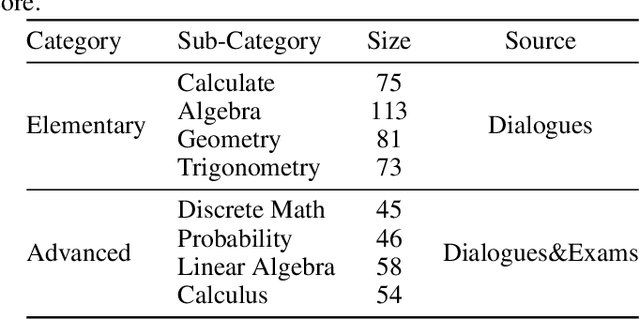
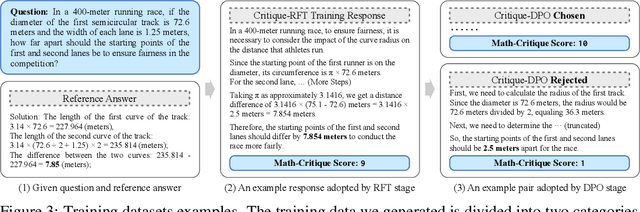
Large language models (LLMs) have shown excellent mastering of human language, but still struggle in real-world applications that require mathematical problem-solving. While many strategies and datasets to enhance LLMs' mathematics are developed, it remains a challenge to simultaneously maintain and improve both language and mathematical capabilities in deployed LLM systems.In this work, we tailor the Self-Critique pipeline, which addresses the challenge in the feedback learning stage of LLM alignment. We first train a general Math-Critique model from the LLM itself to provide feedback signals. Then, we sequentially employ rejective fine-tuning and direct preference optimization over the LLM's own generations for data collection. Based on ChatGLM3-32B, we conduct a series of experiments on both academic and our newly created challenging dataset, MathUserEval. Results show that our pipeline significantly enhances the LLM's mathematical problem-solving while still improving its language ability, outperforming LLMs that could be two times larger. Related techniques have been deployed to ChatGLM\footnote{\url{https://chatglm.cn}}, an online serving LLM. Related evaluation dataset and scripts are released at \url{https://github.com/THUDM/ChatGLM-Math}.
Extensive Self-Contrast Enables Feedback-Free Language Model Alignment
Mar 31, 2024Reinforcement learning from human feedback (RLHF) has been a central technique for recent large language model (LLM) alignment. However, its heavy dependence on costly human or LLM-as-Judge preference feedback could stymie its wider applications. In this work, we introduce Self-Contrast, a feedback-free large language model alignment method via exploiting extensive self-generated negatives. With only supervised fine-tuning (SFT) targets, Self-Contrast leverages the LLM itself to generate massive diverse candidates, and harnesses a pre-trained embedding model to filter multiple negatives according to text similarity. Theoretically, we illustrate that in this setting, merely scaling negative responses can still effectively approximate situations with more balanced positive and negative preference annotations. Our experiments with direct preference optimization (DPO) on three datasets show that, Self-Contrast could consistently outperform SFT and standard DPO training by large margins. And as the number of self-generated negatives increases, the performance of Self-Contrast continues to grow. Code and data are available at https://github.com/THUDM/Self-Contrast.
GPTA: Generative Prompt Tuning Assistant for Synergistic Downstream Neural Network Enhancement with LLMs
Mar 29, 2024This study introduces GPTA, a Large Language Model assistance training framework, that enhances the training of downstream task models via prefix prompt. By minimizing data exposure to LLM, the framework addresses the security and legal challenges of applying LLM in downstream task model training. GPTA utilizes a new synergistic training approach, optimizing the downstream models with parameter gradients and LLMs with the novel ``dialogue gradient''. The framework not only demonstrates significant improvements in model performance across six NLP benchmark datasets, but also reduces overfitting in low-resource scenarios effectively. The detailed analyses further validate that our pioneer framework provides a cost-efficient and adaptive method for downstream task model training with LLM support.
Can multiple-choice questions really be useful in detecting the abilities of LLMs?
Mar 28, 2024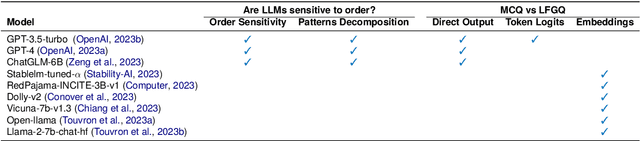
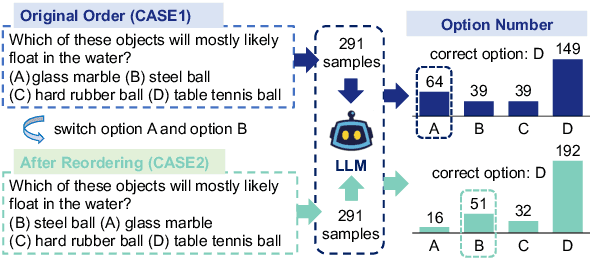
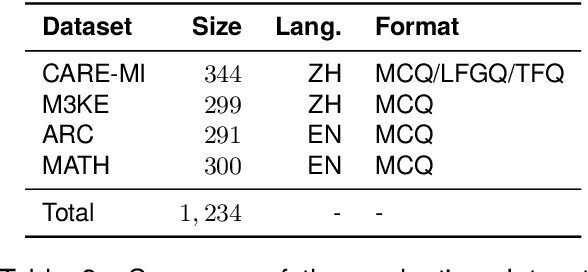
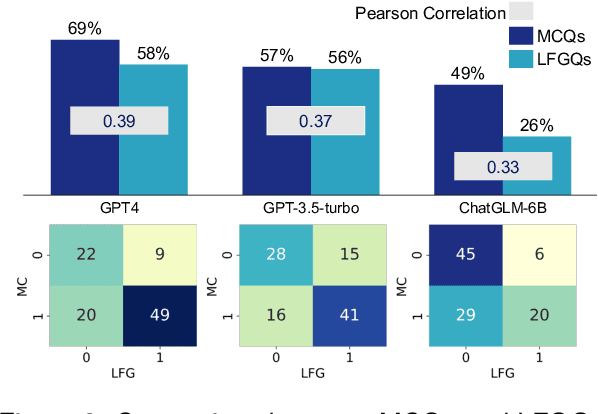
Multiple-choice questions (MCQs) are widely used in the evaluation of large language models (LLMs) due to their simplicity and efficiency. However, there are concerns about whether MCQs can truly measure LLM's capabilities, particularly in knowledge-intensive scenarios where long-form generation (LFG) answers are required. The misalignment between the task and the evaluation method demands a thoughtful analysis of MCQ's efficacy, which we undertake in this paper by evaluating nine LLMs on four question-answering (QA) datasets in two languages: Chinese and English. We identify a significant issue: LLMs exhibit an order sensitivity in bilingual MCQs, favoring answers located at specific positions, i.e., the first position. We further quantify the gap between MCQs and long-form generation questions (LFGQs) by comparing their direct outputs, token logits, and embeddings. Our results reveal a relatively low correlation between answers from MCQs and LFGQs for identical questions. Additionally, we propose two methods to quantify the consistency and confidence of LLMs' output, which can be generalized to other QA evaluation benchmarks. Notably, our analysis challenges the idea that the higher the consistency, the greater the accuracy. We also find MCQs to be less reliable than LFGQs in terms of expected calibration error. Finally, the misalignment between MCQs and LFGQs is not only reflected in the evaluation performance but also in the embedding space. Our code and models can be accessed at https://github.com/Meetyou-AI-Lab/Can-MC-Evaluate-LLMs.
iRoCo: Intuitive Robot Control From Anywhere Using a Smartwatch
Mar 11, 2024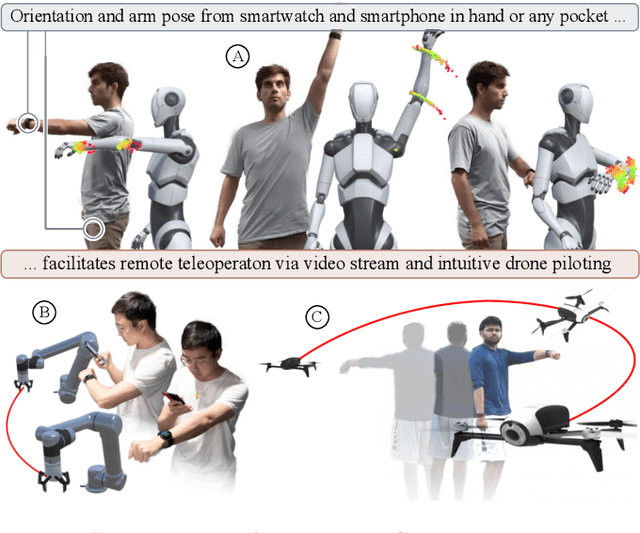
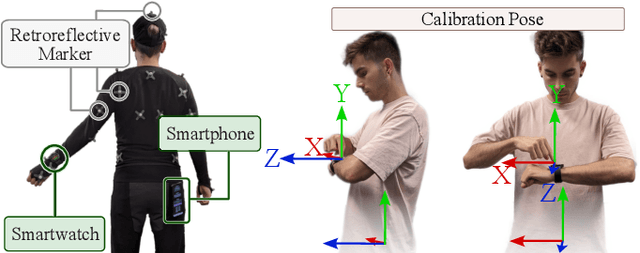
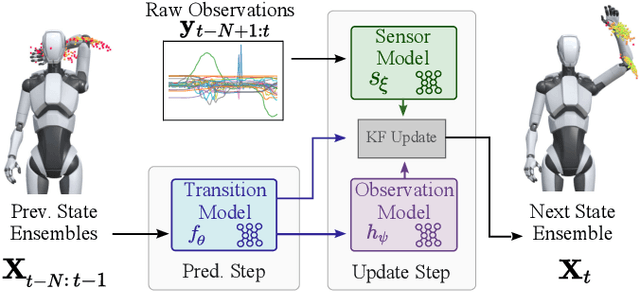
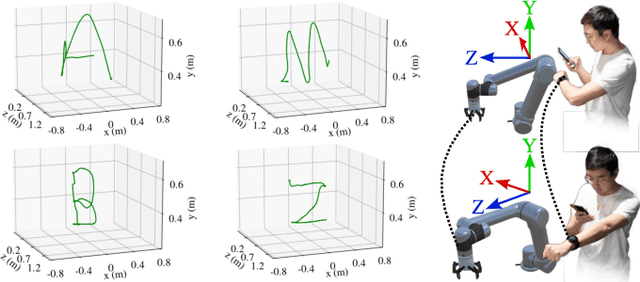
This paper introduces iRoCo (intuitive Robot Control) - a framework for ubiquitous human-robot collaboration using a single smartwatch and smartphone. By integrating probabilistic differentiable filters, iRoCo optimizes a combination of precise robot control and unrestricted user movement from ubiquitous devices. We demonstrate and evaluate the effectiveness of iRoCo in practical teleoperation and drone piloting applications. Comparative analysis shows no significant difference between task performance with iRoCo and gold-standard control systems in teleoperation tasks. Additionally, iRoCo users complete drone piloting tasks 32\% faster than with a traditional remote control and report less frustration in a subjective load index questionnaire. Our findings strongly suggest that iRoCo is a promising new approach for intuitive robot control through smartwatches and smartphones from anywhere, at any time. The code is available at www.github.com/wearable-motion-capture
Autonomous vehicle decision and control through reinforcement learning with traffic flow randomization
Mar 05, 2024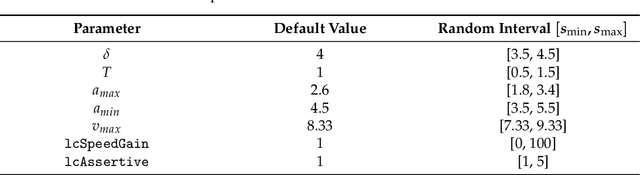
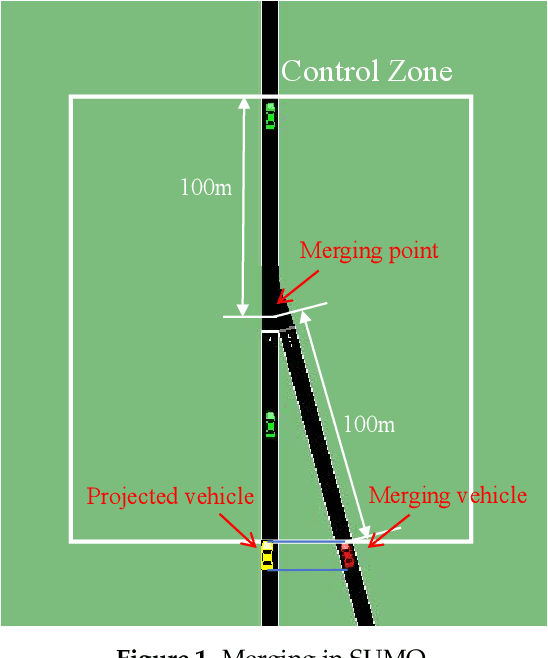
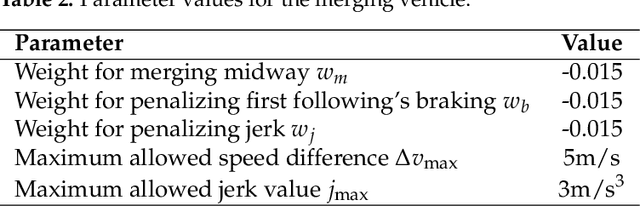
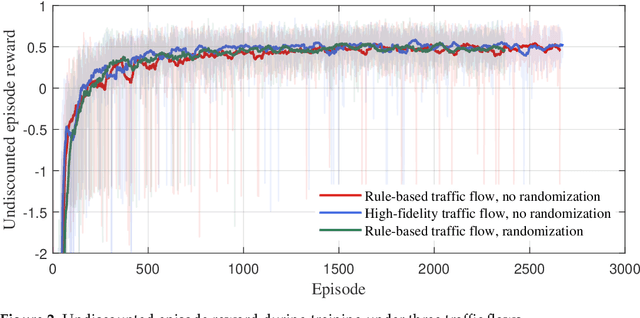
Most of the current studies on autonomous vehicle decision-making and control tasks based on reinforcement learning are conducted in simulated environments. The training and testing of these studies are carried out under rule-based microscopic traffic flow, with little consideration of migrating them to real or near-real environments to test their performance. It may lead to a degradation in performance when the trained model is tested in more realistic traffic scenes. In this study, we propose a method to randomize the driving style and behavior of surrounding vehicles by randomizing certain parameters of the car-following model and the lane-changing model of rule-based microscopic traffic flow in SUMO. We trained policies with deep reinforcement learning algorithms under the domain randomized rule-based microscopic traffic flow in freeway and merging scenes, and then tested them separately in rule-based microscopic traffic flow and high-fidelity microscopic traffic flow. Results indicate that the policy trained under domain randomization traffic flow has significantly better success rate and calculative reward compared to the models trained under other microscopic traffic flows.
Key-Point-Driven Data Synthesis with its Enhancement on Mathematical Reasoning
Mar 04, 2024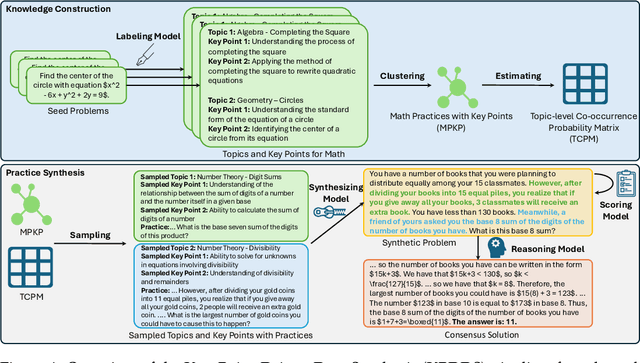
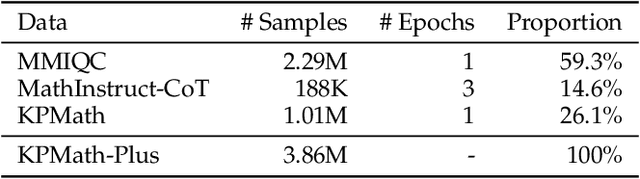
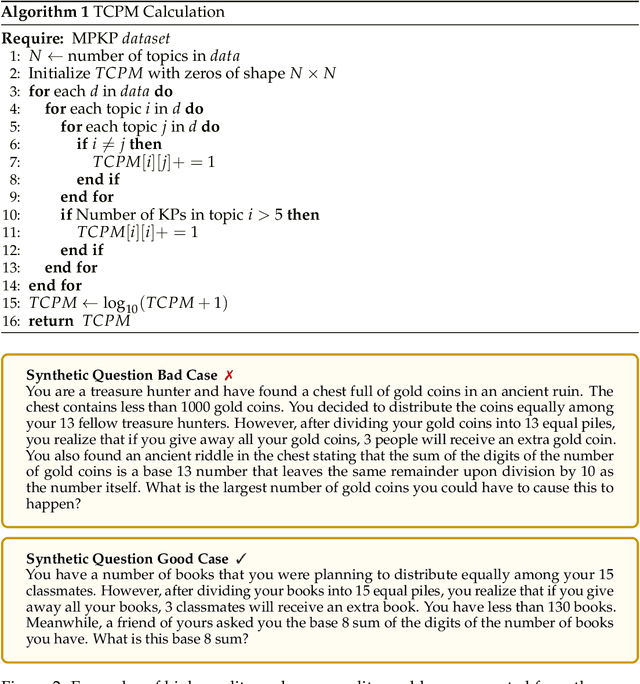
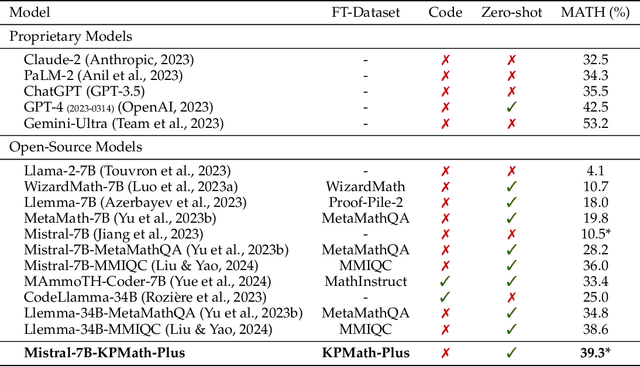
Large language models (LLMs) have shown great potential in complex reasoning tasks, yet their performance is often hampered by the scarcity of high-quality, reasoning-focused training datasets. Addressing this challenge, we propose Key-Point-Driven Data Synthesis (KPDDS), a novel data synthesis framework that synthesizes question-answer pairs by leveraging key points and exemplar pairs from authentic data sources. KPDDS ensures the generation of novel questions with rigorous quality control and substantial scalability. As a result, we present KPMath, the most extensive synthetic dataset tailored for mathematical reasoning to date, comprising over one million question-answer pairs. Utilizing KPMath and augmenting it with additional reasoning-intensive corpora, we create the comprehensive KPMath-Plus dataset. Fine-tuning the Mistral-7B model on KPMath-Plus yields a zero-shot PASS@1 accuracy of 39.3% on the MATH test set, a performance that not only outpaces other finetuned 7B models but also exceeds that of certain 34B models. Our ablation studies further confirm the substantial enhancement in mathematical reasoning across various subtopics, marking a significant stride in LLMs' reasoning capabilities.
Crimson: Empowering Strategic Reasoning in Cybersecurity through Large Language Models
Mar 01, 2024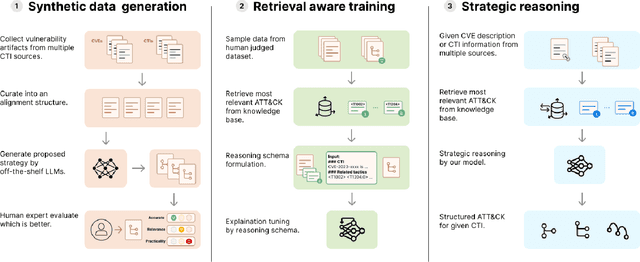
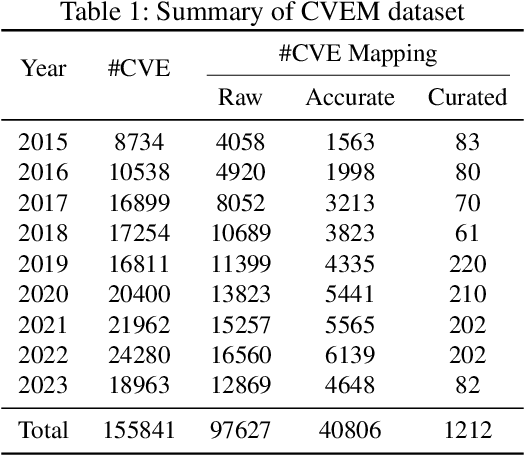

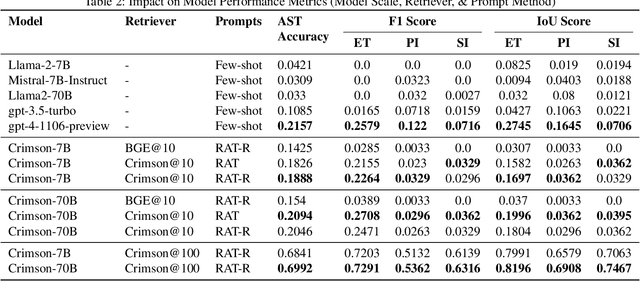
We introduces Crimson, a system that enhances the strategic reasoning capabilities of Large Language Models (LLMs) within the realm of cybersecurity. By correlating CVEs with MITRE ATT&CK techniques, Crimson advances threat anticipation and strategic defense efforts. Our approach includes defining and evaluating cybersecurity strategic tasks, alongside implementing a comprehensive human-in-the-loop data-synthetic workflow to develop the CVE-to-ATT&CK Mapping (CVEM) dataset. We further enhance LLMs' reasoning abilities through a novel Retrieval-Aware Training (RAT) process and its refined iteration, RAT-R. Our findings demonstrate that an LLM fine-tuned with our techniques, possessing 7 billion parameters, approaches the performance level of GPT-4, showing markedly lower rates of hallucination and errors, and surpassing other models in strategic reasoning tasks. Moreover, domain-specific fine-tuning of embedding models significantly improves performance within cybersecurity contexts, underscoring the efficacy of our methodology. By leveraging Crimson to convert raw vulnerability data into structured and actionable insights, we bolster proactive cybersecurity defenses.
Safe Hybrid-Action Reinforcement Learning-Based Decision and Control for Discretionary Lane Change
Mar 01, 2024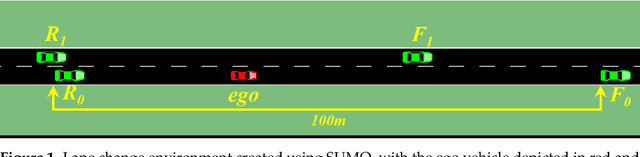
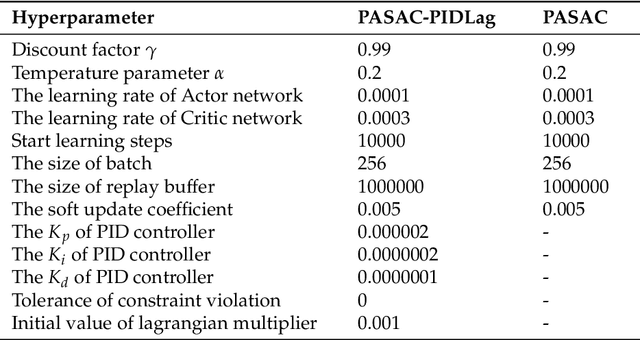
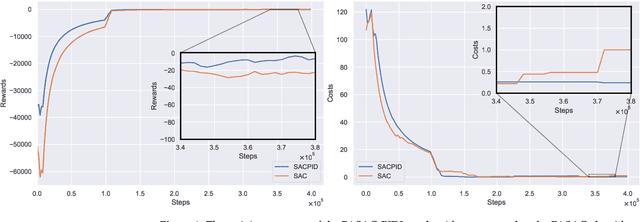
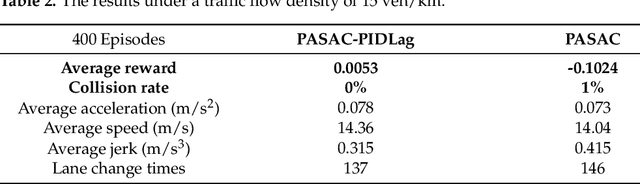
Autonomous lane-change, a key feature of advanced driver-assistance systems, can enhance traffic efficiency and reduce the incidence of accidents. However, safe driving of autonomous vehicles remains challenging in complex environments. How to perform safe and appropriate lane change is a popular topic of research in the field of autonomous driving. Currently, few papers consider the safety of reinforcement learning in autonomous lane-change scenarios. We introduce safe hybrid-action reinforcement learning into discretionary lane change for the first time and propose Parameterized Soft Actor-Critic with PID Lagrangian (PASAC-PIDLag) algorithm. Furthermore, we conduct a comparative analysis of the Parameterized Soft Actor-Critic (PASAC), which is an unsafe version of PASAC-PIDLag. Both algorithms are employed to train the lane-change strategy of autonomous vehicles to output discrete lane-change decision and longitudinal vehicle acceleration. Our simulation results indicate that at a traffic density of 15 vehicles per kilometer (15 veh/km), the PASAC-PIDLag algorithm exhibits superior safety with a collision rate of 0%, outperforming the PASAC algorithm, which has a collision rate of 1%. The outcomes of the generalization assessments reveal that at low traffic density levels, both the PASAC-PIDLag and PASAC algorithms are proficient in attaining a 0% collision rate. Under conditions of high traffic flow density, the PASAC-PIDLag algorithm surpasses PASAC in terms of both safety and optimality.