 Add to Chrome
 Add to Firefox
 Add to Edge
Foundation Models for Music: A Survey
Aug 27, 2024
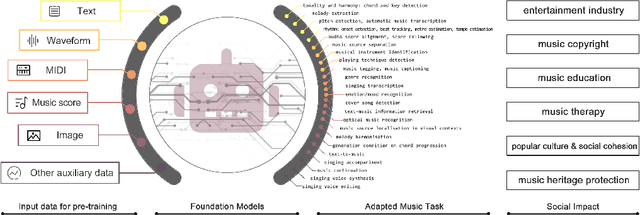
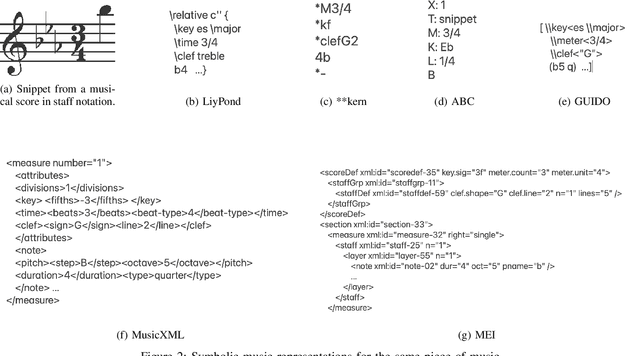
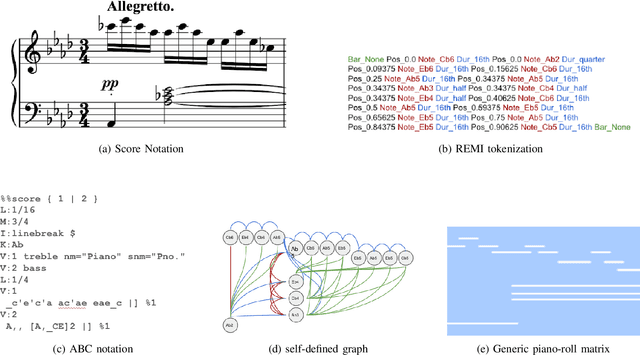
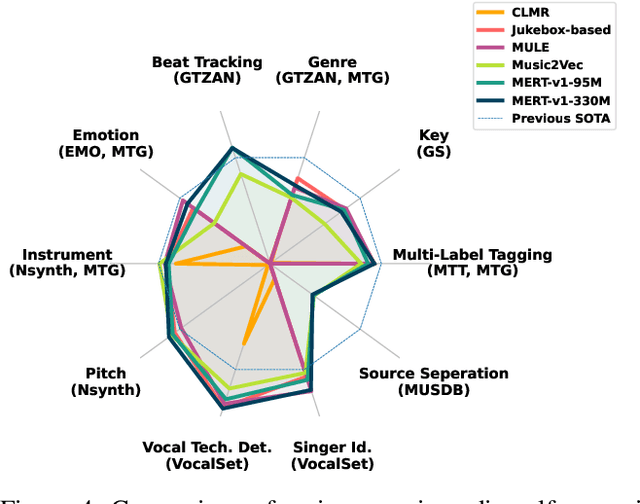
In recent years, foundation models (FMs) such as large language models (LLMs) and latent diffusion models (LDMs) have profoundly impacted diverse sectors, including music. This comprehensive review examines state-of-the-art (SOTA) pre-trained models and foundation models in music, spanning from representation learning, generative learning and multimodal learning. We first contextualise the significance of music in various industries and trace the evolution of AI in music. By delineating the modalities targeted by foundation models, we discover many of the music representations are underexplored in FM development. Then, emphasis is placed on the lack of versatility of previous methods on diverse music applications, along with the potential of FMs in music understanding, generation and medical application. By comprehensively exploring the details of the model pre-training paradigm, architectural choices, tokenisation, finetuning methodologies and controllability, we emphasise the important topics that should have been well explored, like instruction tuning and in-context learning, scaling law and emergent ability, as well as long-sequence modelling etc. A dedicated section presents insights into music agents, accompanied by a thorough analysis of datasets and evaluations essential for pre-training and downstream tasks. Finally, by underscoring the vital importance of ethical considerations, we advocate that following research on FM for music should focus more on such issues as interpretability, transparency, human responsibility, and copyright issues. The paper offers insights into future challenges and trends on FMs for music, aiming to shape the trajectory of human-AI collaboration in the music realm.

LongIns: A Challenging Long-context Instruction-based Exam for LLMs
Jun 26, 2024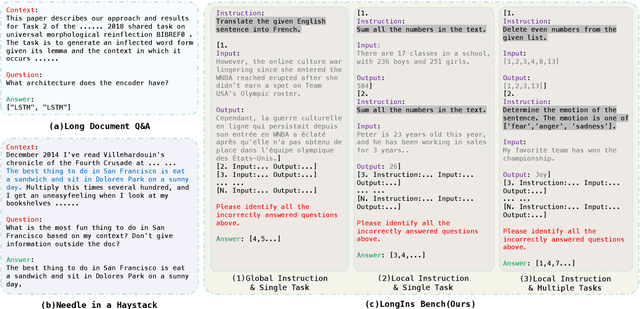
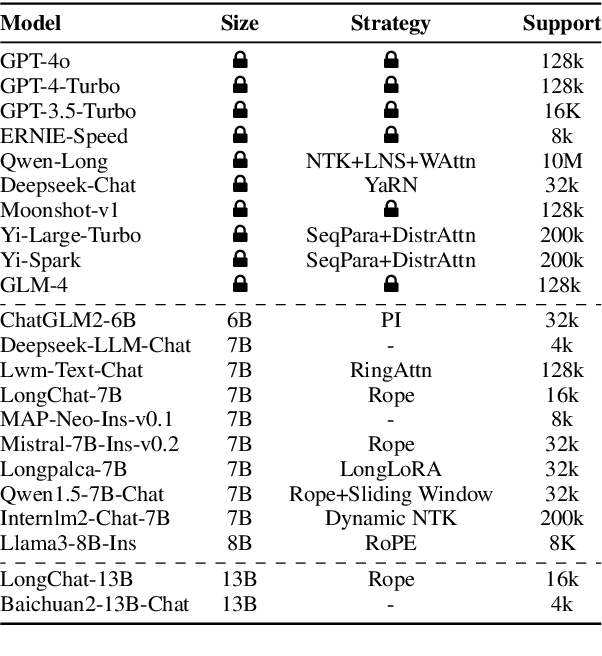
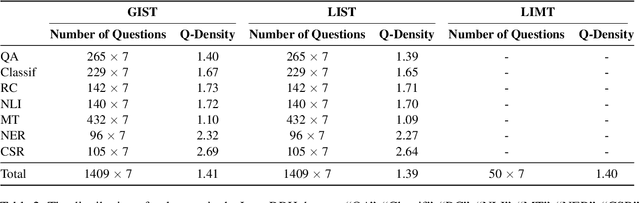
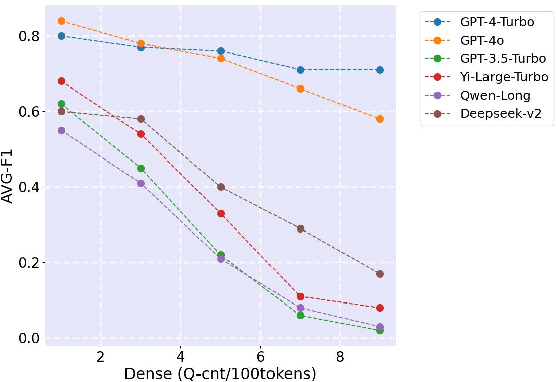
The long-context capabilities of large language models (LLMs) have been a hot topic in recent years. To evaluate the performance of LLMs in different scenarios, various assessment benchmarks have emerged. However, as most of these benchmarks focus on identifying key information to answer questions, which mainly requires the retrieval ability of LLMs, these benchmarks can partially represent the reasoning performance of LLMs from large amounts of information. Meanwhile, although LLMs often claim to have context windows of 32k, 128k, 200k, or even longer, these benchmarks fail to reveal the actual supported length of these LLMs. To address these issues, we propose the LongIns benchmark dataset, a challenging long-context instruction-based exam for LLMs, which is built based on the existing instruction datasets. Specifically, in our LongIns, we introduce three evaluation settings: Global Instruction & Single Task (GIST), Local Instruction & Single Task (LIST), and Local Instruction & Multiple Tasks (LIMT). Based on LongIns, we perform comprehensive evaluations on existing LLMs and have the following important findings: (1). The top-performing GPT-4 with 128k context length performs poorly on the evaluation context window of 16k in our LongIns. (2). For the multi-hop reasoning ability of many existing LLMs, significant efforts are still needed under short context windows (less than 4k).
VideoScore: Building Automatic Metrics to Simulate Fine-grained Human Feedback for Video Generation
Jun 24, 2024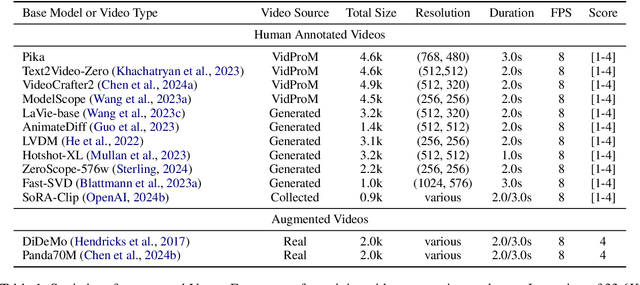

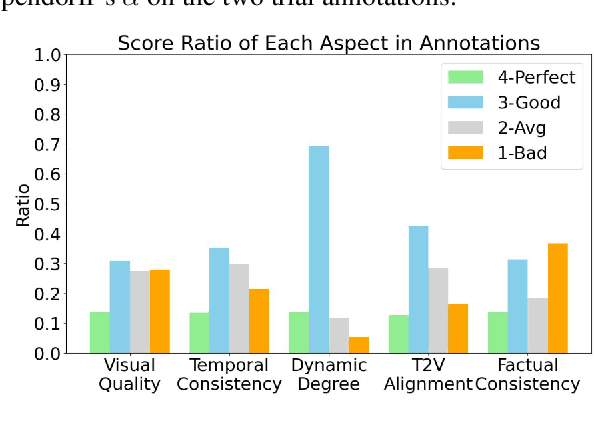
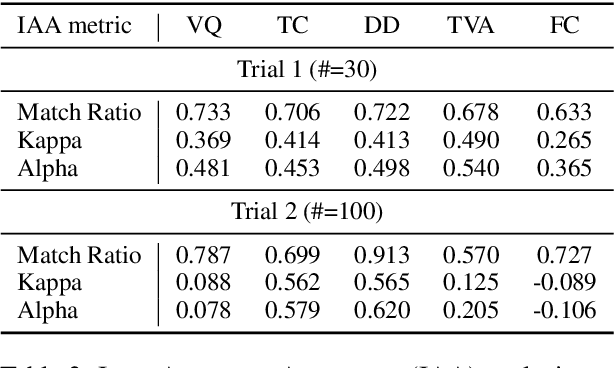
The recent years have witnessed great advances in video generation. However, the development of automatic video metrics is lagging significantly behind. None of the existing metric is able to provide reliable scores over generated videos. The main barrier is the lack of large-scale human-annotated dataset. In this paper, we release VideoFeedback, the first large-scale dataset containing human-provided multi-aspect score over 37.6K synthesized videos from 11 existing video generative models. We train VideoScore (initialized from Mantis) based on VideoFeedback to enable automatic video quality assessment. Experiments show that the Spearman correlation between VideoScore and humans can reach 77.1 on VideoFeedback-test, beating the prior best metrics by about 50 points. Further result on other held-out EvalCrafter, GenAI-Bench, and VBench show that VideoScore has consistently much higher correlation with human judges than other metrics. Due to these results, we believe VideoScore can serve as a great proxy for human raters to (1) rate different video models to track progress (2) simulate fine-grained human feedback in Reinforcement Learning with Human Feedback (RLHF) to improve current video generation models.
LongRAG: Enhancing Retrieval-Augmented Generation with Long-context LLMs
Jun 21, 2024In traditional RAG framework, the basic retrieval units are normally short. The common retrievers like DPR normally work with 100-word Wikipedia paragraphs. Such a design forces the retriever to search over a large corpus to find the `needle' unit. In contrast, the readers only need to extract answers from the short retrieved units. Such an imbalanced `heavy' retriever and `light' reader design can lead to sub-optimal performance. In order to alleviate the imbalance, we propose a new framework LongRAG, consisting of a `long retriever' and a `long reader'. LongRAG processes the entire Wikipedia into 4K-token units, which is 30x longer than before. By increasing the unit size, we significantly reduce the total units from 22M to 700K. This significantly lowers the burden of retriever, which leads to a remarkable retrieval score: answer recall@1=71% on NQ (previously 52%) and answer recall@2=72% (previously 47%) on HotpotQA (full-wiki). Then we feed the top-k retrieved units ($\approx$ 30K tokens) to an existing long-context LLM to perform zero-shot answer extraction. Without requiring any training, LongRAG achieves an EM of 62.7% on NQ, which is the best known result. LongRAG also achieves 64.3% on HotpotQA (full-wiki), which is on par of the SoTA model. Our study offers insights into the future roadmap for combining RAG with long-context LLMs.
PIN: A Knowledge-Intensive Dataset for Paired and Interleaved Multimodal Documents
Jun 20, 2024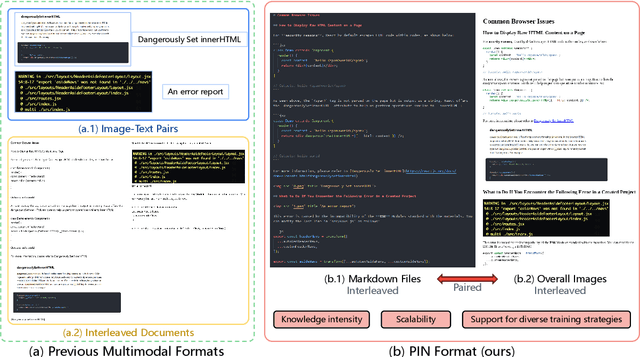
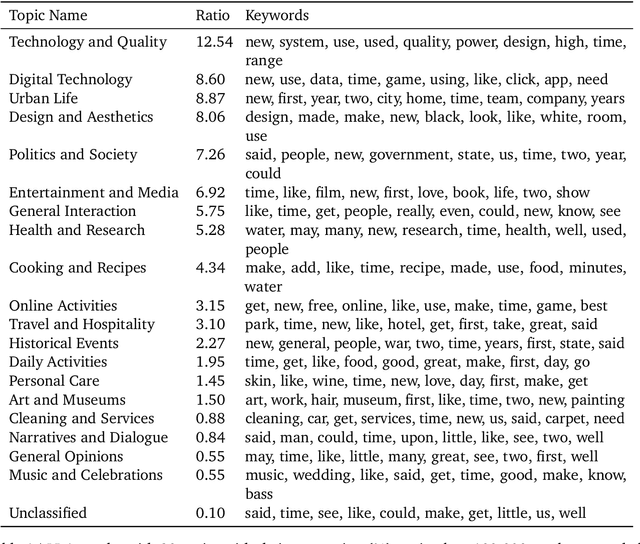
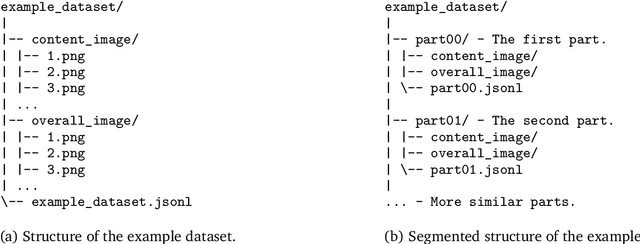
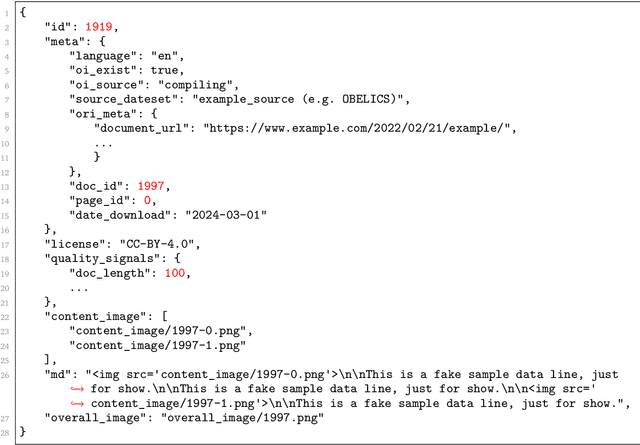
Recent advancements in Large Multimodal Models (LMMs) have leveraged extensive multimodal datasets to enhance capabilities in complex knowledge-driven tasks. However, persistent challenges in perceptual and reasoning errors limit their efficacy, particularly in interpreting intricate visual data and deducing multimodal relationships. Addressing these issues, we introduce a novel dataset format, PIN (Paired and INterleaved multimodal documents), designed to significantly improve both the depth and breadth of multimodal training. The PIN format is built on three foundational principles: knowledge intensity, scalability, and support for diverse training modalities. This innovative format combines markdown files and comprehensive images to enrich training data with a dense knowledge structure and versatile training strategies. We present PIN-14M, an open-source dataset comprising 14 million samples derived from a diverse range of Chinese and English sources, tailored to include complex web and scientific content. This dataset is constructed meticulously to ensure data quality and ethical integrity, aiming to facilitate advanced training strategies and improve model robustness against common multimodal training pitfalls. Our initial results, forming the basis of this technical report, suggest significant potential for the PIN format in refining LMM performance, with plans for future expansions and detailed evaluations of its impact on model capabilities.
Unifying Multimodal Retrieval via Document Screenshot Embedding
Jun 17, 2024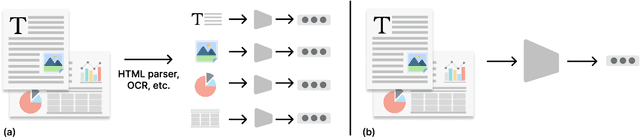
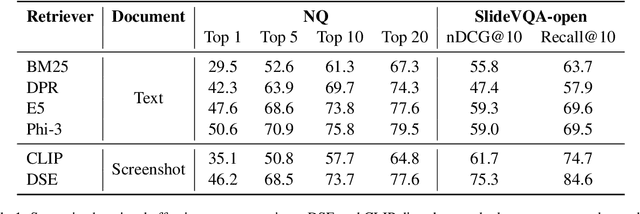
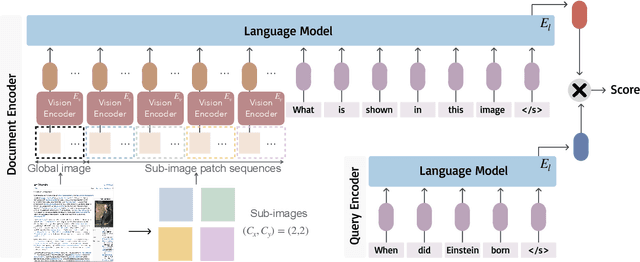
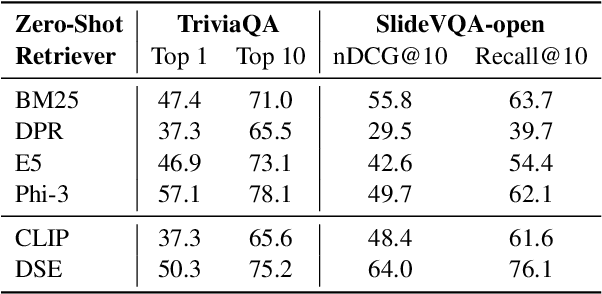
In the real world, documents are organized in different formats and varied modalities. Traditional retrieval pipelines require tailored document parsing techniques and content extraction modules to prepare input for indexing. This process is tedious, prone to errors, and has information loss. To this end, we propose Document Screenshot Embedding} (DSE), a novel retrieval paradigm that regards document screenshots as a unified input format, which does not require any content extraction preprocess and preserves all the information in a document (e.g., text, image and layout). DSE leverages a large vision-language model to directly encode document screenshots into dense representations for retrieval. To evaluate our method, we first craft the dataset of Wiki-SS, a 1.3M Wikipedia web page screenshots as the corpus to answer the questions from the Natural Questions dataset. In such a text-intensive document retrieval setting, DSE shows competitive effectiveness compared to other text retrieval methods relying on parsing. For example, DSE outperforms BM25 by 17 points in top-1 retrieval accuracy. Additionally, in a mixed-modality task of slide retrieval, DSE significantly outperforms OCR text retrieval methods by over 15 points in nDCG@10. These experiments show that DSE is an effective document retrieval paradigm for diverse types of documents. Model checkpoints, code, and Wiki-SS collection will be released.
WildVision: Evaluating Vision-Language Models in the Wild with Human Preferences
Jun 16, 2024Recent breakthroughs in vision-language models (VLMs) emphasize the necessity of benchmarking human preferences in real-world multimodal interactions. To address this gap, we launched WildVision-Arena (WV-Arena), an online platform that collects human preferences to evaluate VLMs. We curated WV-Bench by selecting 500 high-quality samples from 8,000 user submissions in WV-Arena. WV-Bench uses GPT-4 as the judge to compare each VLM with Claude-3-Sonnet, achieving a Spearman correlation of 0.94 with the WV-Arena Elo. This significantly outperforms other benchmarks like MMVet, MMMU, and MMStar. Our comprehensive analysis of 20K real-world interactions reveals important insights into the failure cases of top-performing VLMs. For example, we find that although GPT-4V surpasses many other models like Reka-Flash, Opus, and Yi-VL-Plus in simple visual recognition and reasoning tasks, it still faces challenges with subtle contextual cues, spatial reasoning, visual imagination, and expert domain knowledge. Additionally, current VLMs exhibit issues with hallucinations and safety when intentionally provoked. We are releasing our chat and feedback data to further advance research in the field of VLMs.
TC-Bench: Benchmarking Temporal Compositionality in Text-to-Video and Image-to-Video Generation
Jun 12, 2024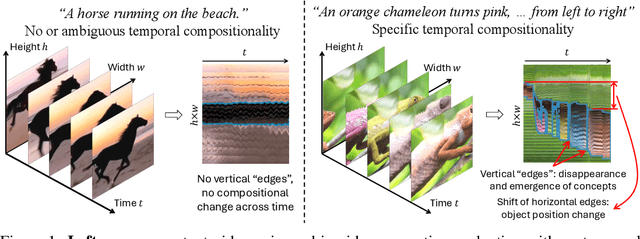
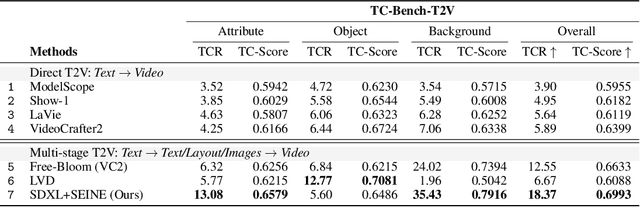
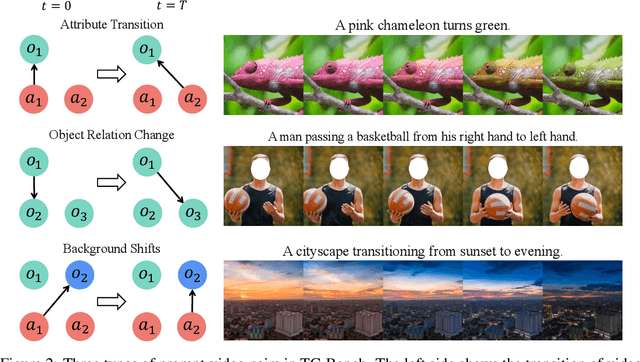

Video generation has many unique challenges beyond those of image generation. The temporal dimension introduces extensive possible variations across frames, over which consistency and continuity may be violated. In this study, we move beyond evaluating simple actions and argue that generated videos should incorporate the emergence of new concepts and their relation transitions like in real-world videos as time progresses. To assess the Temporal Compositionality of video generation models, we propose TC-Bench, a benchmark of meticulously crafted text prompts, corresponding ground truth videos, and robust evaluation metrics. The prompts articulate the initial and final states of scenes, effectively reducing ambiguities for frame development and simplifying the assessment of transition completion. In addition, by collecting aligned real-world videos corresponding to the prompts, we expand TC-Bench's applicability from text-conditional models to image-conditional ones that can perform generative frame interpolation. We also develop new metrics to measure the completeness of component transitions in generated videos, which demonstrate significantly higher correlations with human judgments than existing metrics. Our comprehensive experimental results reveal that most video generators achieve less than 20% of the compositional changes, highlighting enormous space for future improvement. Our analysis indicates that current video generation models struggle to interpret descriptions of compositional changes and synthesize various components across different time steps.
GenAI Arena: An Open Evaluation Platform for Generative Models
Jun 06, 2024Generative AI has made remarkable strides to revolutionize fields such as image and video generation. These advancements are driven by innovative algorithms, architecture, and data. However, the rapid proliferation of generative models has highlighted a critical gap: the absence of trustworthy evaluation metrics. Current automatic assessments such as FID, CLIP, FVD, etc often fail to capture the nuanced quality and user satisfaction associated with generative outputs. This paper proposes an open platform GenAI-Arena to evaluate different image and video generative models, where users can actively participate in evaluating these models. By leveraging collective user feedback and votes, GenAI-Arena aims to provide a more democratic and accurate measure of model performance. It covers three arenas for text-to-image generation, text-to-video generation, and image editing respectively. Currently, we cover a total of 27 open-source generative models. GenAI-Arena has been operating for four months, amassing over 6000 votes from the community. We describe our platform, analyze the data, and explain the statistical methods for ranking the models. To further promote the research in building model-based evaluation metrics, we release a cleaned version of our preference data for the three tasks, namely GenAI-Bench. We prompt the existing multi-modal models like Gemini, GPT-4o to mimic human voting. We compute the correlation between model voting with human voting to understand their judging abilities. Our results show existing multimodal models are still lagging in assessing the generated visual content, even the best model GPT-4o only achieves a Pearson correlation of 0.22 in the quality subscore, and behaves like random guessing in others.
MMLU-Pro: A More Robust and Challenging Multi-Task Language Understanding Benchmark
Jun 04, 2024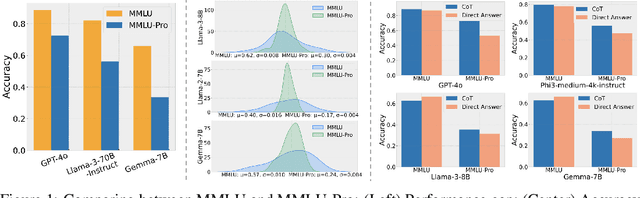

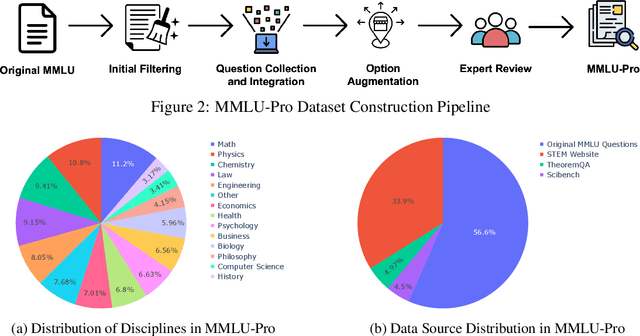
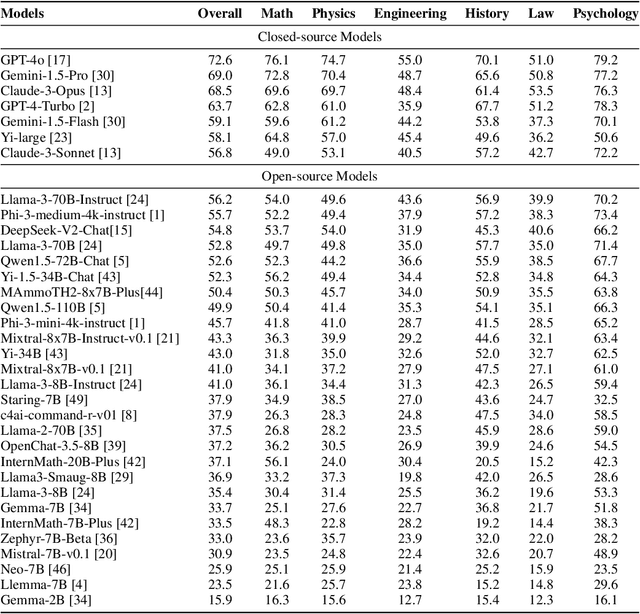
In the age of large-scale language models, benchmarks like the Massive Multitask Language Understanding (MMLU) have been pivotal in pushing the boundaries of what AI can achieve in language comprehension and reasoning across diverse domains. However, as models continue to improve, their performance on these benchmarks has begun to plateau, making it increasingly difficult to discern differences in model capabilities. This paper introduces MMLU-Pro, an enhanced dataset designed to extend the mostly knowledge-driven MMLU benchmark by integrating more challenging, reasoning-focused questions and expanding the choice set from four to ten options. Additionally, MMLU-Pro eliminates the trivial and noisy questions in MMLU. Our experimental results show that MMLU-Pro not only raises the challenge, causing a significant drop in accuracy by 16% to 33% compared to MMLU but also demonstrates greater stability under varying prompts. With 24 different prompt styles tested, the sensitivity of model scores to prompt variations decreased from 4-5% in MMLU to just 2% in MMLU-Pro. Additionally, we found that models utilizing Chain of Thought (CoT) reasoning achieved better performance on MMLU-Pro compared to direct answering, which is in stark contrast to the findings on the original MMLU, indicating that MMLU-Pro includes more complex reasoning questions. Our assessments confirm that MMLU-Pro is a more discriminative benchmark to better track progress in the field.