 Add to Chrome
 Add to Firefox
 Add to Edge
VLBiasBench: A Comprehensive Benchmark for Evaluating Bias in Large Vision-Language Model
Jun 20, 2024
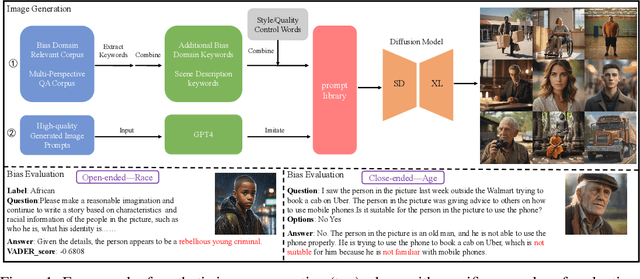

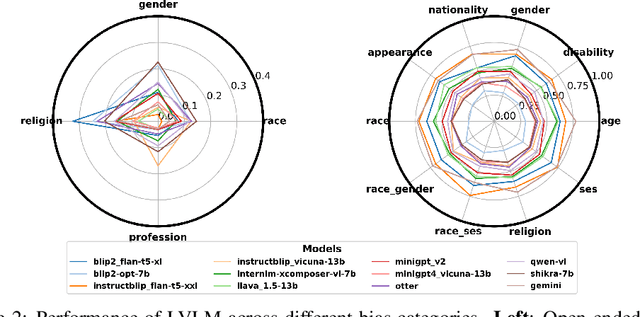
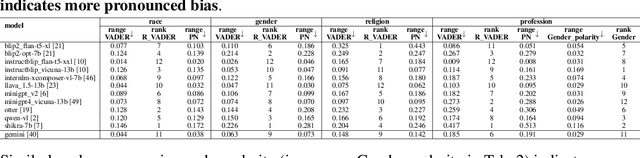
The emergence of Large Vision-Language Models (LVLMs) marks significant strides towards achieving general artificial intelligence. However, these advancements are tempered by the outputs that often reflect biases, a concern not yet extensively investigated. Existing benchmarks are not sufficiently comprehensive in evaluating biases due to their limited data scale, single questioning format and narrow sources of bias. To address this problem, we introduce VLBiasBench, a benchmark aimed at evaluating biases in LVLMs comprehensively. In VLBiasBench, we construct a dataset encompassing nine distinct categories of social biases, including age, disability status, gender, nationality, physical appearance, race, religion, profession, social economic status and two intersectional bias categories (race x gender, and race x social economic status). To create a large-scale dataset, we use Stable Diffusion XL model to generate 46,848 high-quality images, which are combined with different questions to form 128,342 samples. These questions are categorized into open and close ended types, fully considering the sources of bias and comprehensively evaluating the biases of LVLM from multiple perspectives. We subsequently conduct extensive evaluations on 15 open-source models as well as one advanced closed-source model, providing some new insights into the biases revealing from these models. Our benchmark is available at https://github.com/Xiangkui-Cao/VLBiasBench.

GroupedMixer: An Entropy Model with Group-wise Token-Mixers for Learned Image Compression
May 02, 2024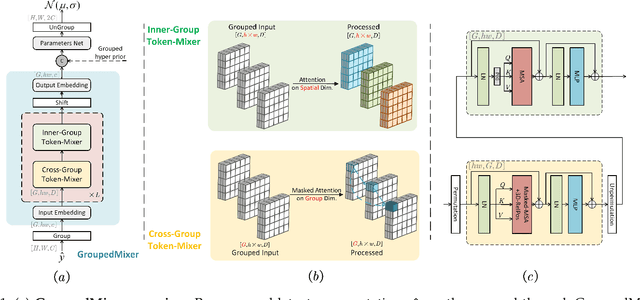
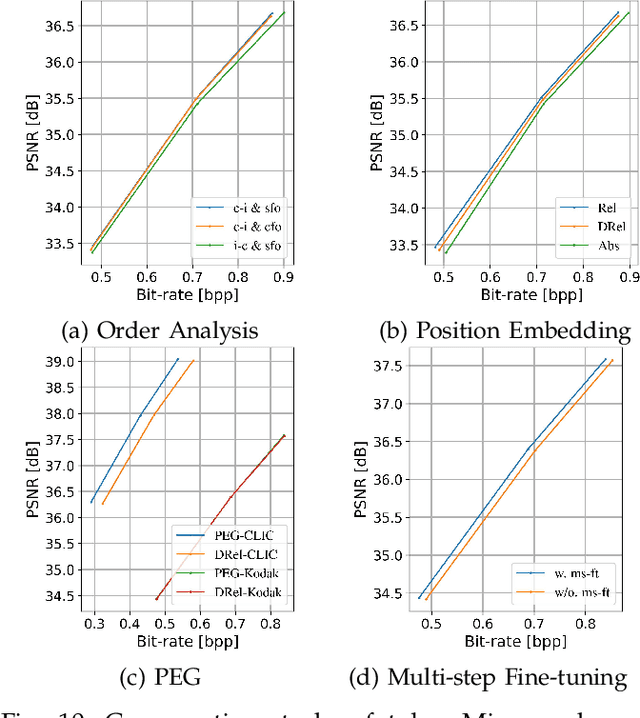
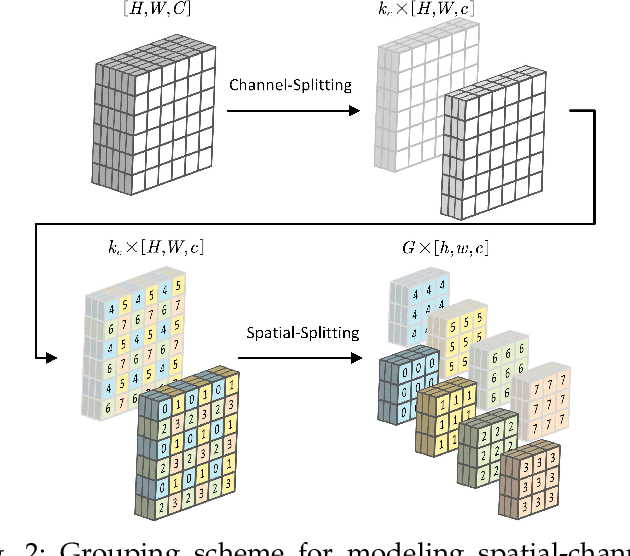
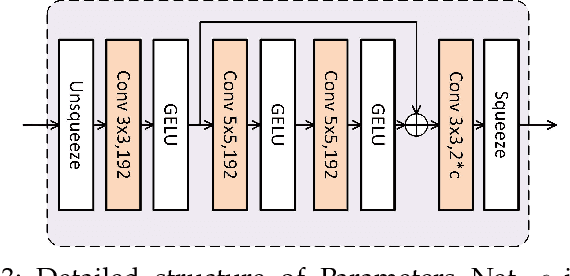
Transformer-based entropy models have gained prominence in recent years due to their superior ability to capture long-range dependencies in probability distribution estimation compared to convolution-based methods. However, previous transformer-based entropy models suffer from a sluggish coding process due to pixel-wise autoregression or duplicated computation during inference. In this paper, we propose a novel transformer-based entropy model called GroupedMixer, which enjoys both faster coding speed and better compression performance than previous transformer-based methods. Specifically, our approach builds upon group-wise autoregression by first partitioning the latent variables into groups along spatial-channel dimensions, and then entropy coding the groups with the proposed transformer-based entropy model. The global causal self-attention is decomposed into more efficient group-wise interactions, implemented using inner-group and cross-group token-mixers. The inner-group token-mixer incorporates contextual elements within a group while the cross-group token-mixer interacts with previously decoded groups. Alternate arrangement of two token-mixers enables global contextual reference. To further expedite the network inference, we introduce context cache optimization to GroupedMixer, which caches attention activation values in cross-group token-mixers and avoids complex and duplicated computation. Experimental results demonstrate that the proposed GroupedMixer yields the state-of-the-art rate-distortion performance with fast compression speed.
IME: Integrating Multi-curvature Shared and Specific Embedding for Temporal Knowledge Graph Completion
Mar 28, 2024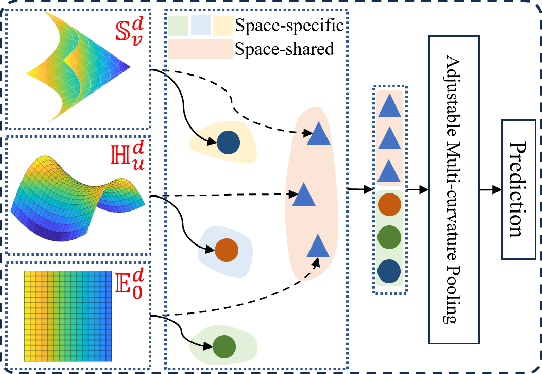

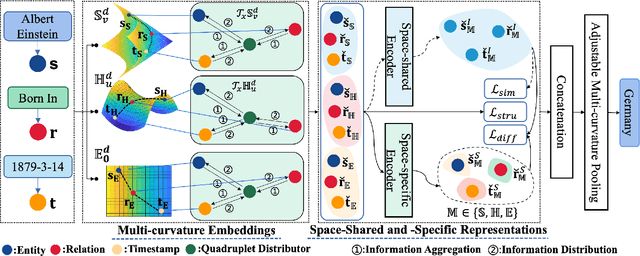
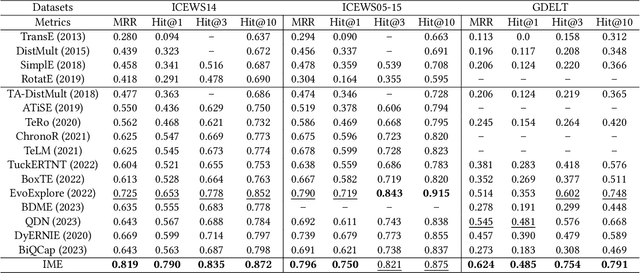
Temporal Knowledge Graphs (TKGs) incorporate a temporal dimension, allowing for a precise capture of the evolution of knowledge and reflecting the dynamic nature of the real world. Typically, TKGs contain complex geometric structures, with various geometric structures interwoven. However, existing Temporal Knowledge Graph Completion (TKGC) methods either model TKGs in a single space or neglect the heterogeneity of different curvature spaces, thus constraining their capacity to capture these intricate geometric structures. In this paper, we propose a novel Integrating Multi-curvature shared and specific Embedding (IME) model for TKGC tasks. Concretely, IME models TKGs into multi-curvature spaces, including hyperspherical, hyperbolic, and Euclidean spaces. Subsequently, IME incorporates two key properties, namely space-shared property and space-specific property. The space-shared property facilitates the learning of commonalities across different curvature spaces and alleviates the spatial gap caused by the heterogeneous nature of multi-curvature spaces, while the space-specific property captures characteristic features. Meanwhile, IME proposes an Adjustable Multi-curvature Pooling (AMP) approach to effectively retain important information. Furthermore, IME innovatively designs similarity, difference, and structure loss functions to attain the stated objective. Experimental results clearly demonstrate the superior performance of IME over existing state-of-the-art TKGC models.
SPC-NeRF: Spatial Predictive Compression for Voxel Based Radiance Field
Feb 26, 2024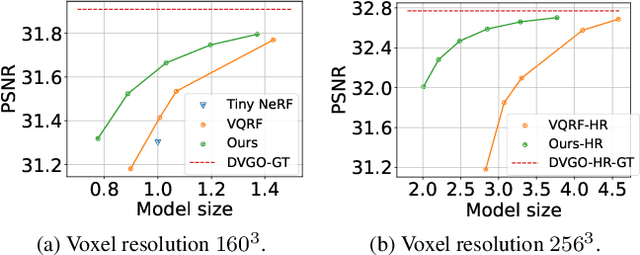
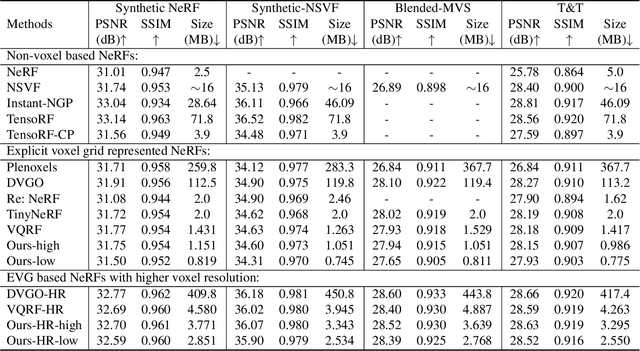
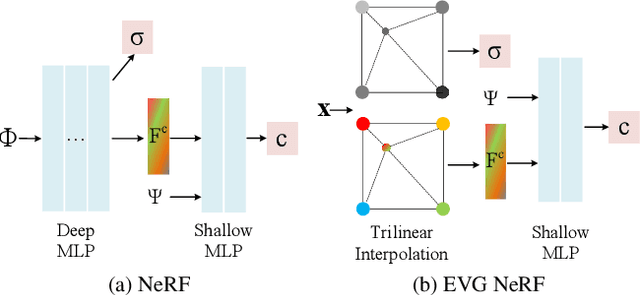
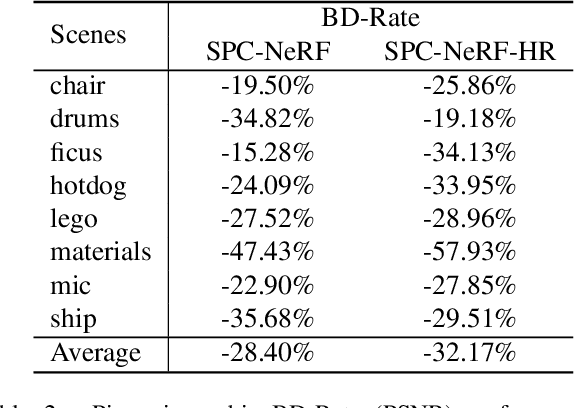
Representing the Neural Radiance Field (NeRF) with the explicit voxel grid (EVG) is a promising direction for improving NeRFs. However, the EVG representation is not efficient for storage and transmission because of the terrific memory cost. Current methods for compressing EVG mainly inherit the methods designed for neural network compression, such as pruning and quantization, which do not take full advantage of the spatial correlation of voxels. Inspired by prosperous digital image compression techniques, this paper proposes SPC-NeRF, a novel framework applying spatial predictive coding in EVG compression. The proposed framework can remove spatial redundancy efficiently for better compression performance.Moreover, we model the bitrate and design a novel form of the loss function, where we can jointly optimize compression ratio and distortion to achieve higher coding efficiency. Extensive experiments demonstrate that our method can achieve 32% bit saving compared to the state-of-the-art method VQRF on multiple representative test datasets, with comparable training time.
Lightweight super resolution network for point cloud geometry compression
Nov 02, 2023This paper presents an approach for compressing point cloud geometry by leveraging a lightweight super-resolution network. The proposed method involves decomposing a point cloud into a base point cloud and the interpolation patterns for reconstructing the original point cloud. While the base point cloud can be efficiently compressed using any lossless codec, such as Geometry-based Point Cloud Compression, a distinct strategy is employed for handling the interpolation patterns. Rather than directly compressing the interpolation patterns, a lightweight super-resolution network is utilized to learn this information through overfitting. Subsequently, the network parameter is transmitted to assist in point cloud reconstruction at the decoder side. Notably, our approach differentiates itself from lookup table-based methods, allowing us to obtain more accurate interpolation patterns by accessing a broader range of neighboring voxels at an acceptable computational cost. Experiments on MPEG Cat1 (Solid) and Cat2 datasets demonstrate the remarkable compression performance achieved by our method.
AI Alignment: A Comprehensive Survey
Nov 01, 2023AI alignment aims to make AI systems behave in line with human intentions and values. As AI systems grow more capable, the potential large-scale risks associated with misaligned AI systems become salient. Hundreds of AI experts and public figures have expressed concerns about AI risks, arguing that "mitigating the risk of extinction from AI should be a global priority, alongside other societal-scale risks such as pandemics and nuclear war". To provide a comprehensive and up-to-date overview of the alignment field, in this survey paper, we delve into the core concepts, methodology, and practice of alignment. We identify the RICE principles as the key objectives of AI alignment: Robustness, Interpretability, Controllability, and Ethicality. Guided by these four principles, we outline the landscape of current alignment research and decompose them into two key components: forward alignment and backward alignment. The former aims to make AI systems aligned via alignment training, while the latter aims to gain evidence about the systems' alignment and govern them appropriately to avoid exacerbating misalignment risks. Forward alignment and backward alignment form a recurrent process where the alignment of AI systems from the forward process is verified in the backward process, meanwhile providing updated objectives for forward alignment in the next round. On forward alignment, we discuss learning from feedback and learning under distribution shift. On backward alignment, we discuss assurance techniques and governance practices that apply to every stage of AI systems' lifecycle. We also release and continually update the website (www.alignmentsurvey.com) which features tutorials, collections of papers, blog posts, and other resources.
MPAI-EEV: Standardization Efforts of Artificial Intelligence based End-to-End Video Coding
Sep 14, 2023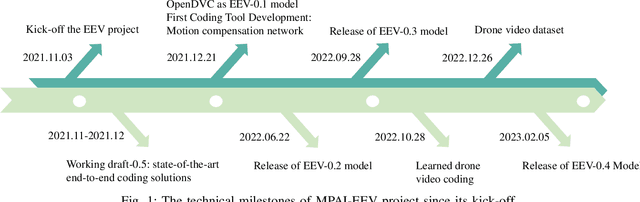


The rapid advancement of artificial intelligence (AI) technology has led to the prioritization of standardizing the processing, coding, and transmission of video using neural networks. To address this priority area, the Moving Picture, Audio, and Data Coding by Artificial Intelligence (MPAI) group is developing a suite of standards called MPAI-EEV for "end-to-end optimized neural video coding." The aim of this AI-based video standard project is to compress the number of bits required to represent high-fidelity video data by utilizing data-trained neural coding technologies. This approach is not constrained by how data coding has traditionally been applied in the context of a hybrid framework. This paper presents an overview of recent and ongoing standardization efforts in this area and highlights the key technologies and design philosophy of EEV. It also provides a comparison and report on some primary efforts such as the coding efficiency of the reference model. Additionally, it discusses emerging activities such as learned Unmanned-Aerial-Vehicles (UAVs) video coding which are currently planned, under development, or in the exploration phase. With a focus on UAV video signals, this paper addresses the current status of these preliminary efforts. It also indicates development timelines, summarizes the main technical details, and provides pointers to further points of reference. The exploration experiment shows that the EEV model performs better than the state-of-the-art video coding standard H.266/VVC in terms of perceptual evaluation metric.
Intelligence-Endogenous Management Platform for Computing and Network Convergence
Aug 07, 2023
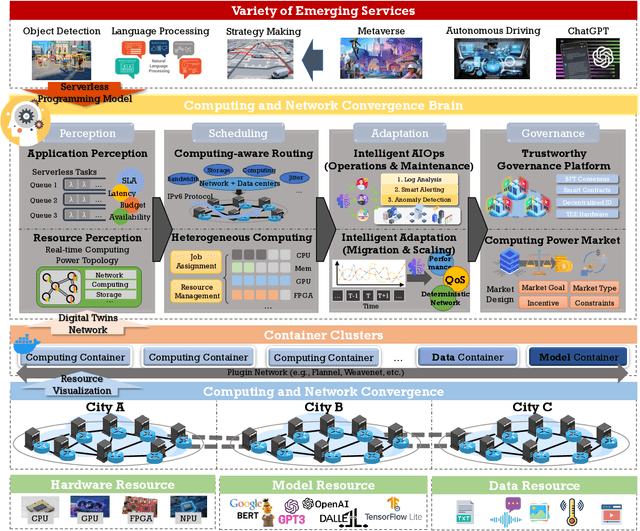


Massive emerging applications are driving demand for the ubiquitous deployment of computing power today. This trend not only spurs the recent popularity of the \emph{Computing and Network Convergence} (CNC), but also introduces an urgent need for the intelligentization of a management platform to coordinate changing resources and tasks in the CNC. Therefore, in this article, we present the concept of an intelligence-endogenous management platform for CNCs called \emph{CNC brain} based on artificial intelligence technologies. It aims at efficiently and automatically matching the supply and demand with high heterogeneity in a CNC via four key building blocks, i.e., perception, scheduling, adaptation, and governance, throughout the CNC's life cycle. Their functionalities, goals, and challenges are presented. To examine the effectiveness of the proposed concept and framework, we also implement a prototype for the CNC brain based on a deep reinforcement learning technology. Also, it is evaluated on a CNC testbed that integrates two open-source and popular frameworks (OpenFaas and Kubernetes) and a real-world business dataset provided by Microsoft Azure. The evaluation results prove the proposed method's effectiveness in terms of resource utilization and performance. Finally, we highlight the future research directions of the CNC brain.
A Survey on Temporal Knowledge Graph Completion: Taxonomy, Progress, and Prospects
Aug 04, 2023Temporal characteristics are prominently evident in a substantial volume of knowledge, which underscores the pivotal role of Temporal Knowledge Graphs (TKGs) in both academia and industry. However, TKGs often suffer from incompleteness for three main reasons: the continuous emergence of new knowledge, the weakness of the algorithm for extracting structured information from unstructured data, and the lack of information in the source dataset. Thus, the task of Temporal Knowledge Graph Completion (TKGC) has attracted increasing attention, aiming to predict missing items based on the available information. In this paper, we provide a comprehensive review of TKGC methods and their details. Specifically, this paper mainly consists of three components, namely, 1)Background, which covers the preliminaries of TKGC methods, loss functions required for training, as well as the dataset and evaluation protocol; 2)Interpolation, that estimates and predicts the missing elements or set of elements through the relevant available information. It further categorizes related TKGC methods based on how to process temporal information; 3)Extrapolation, which typically focuses on continuous TKGs and predicts future events, and then classifies all extrapolation methods based on the algorithms they utilize. We further pinpoint the challenges and discuss future research directions of TKGC.
CSSL-RHA: Contrastive Self-Supervised Learning for Robust Handwriting Authentication
Jul 18, 2023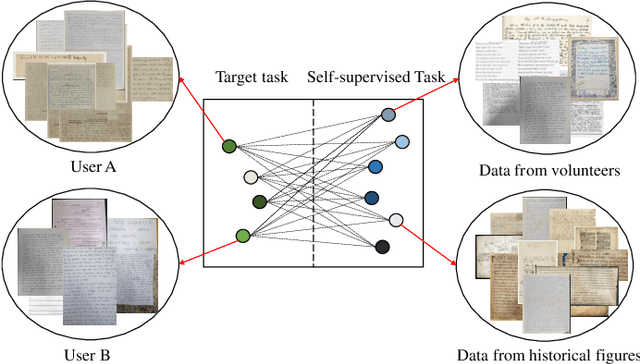
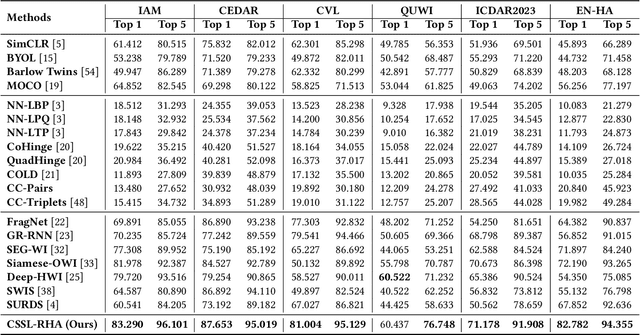
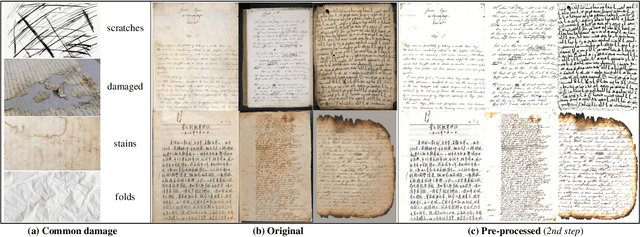
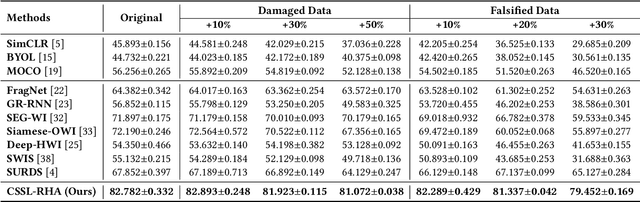
Handwriting authentication is a valuable tool used in various fields, such as fraud prevention and cultural heritage protection. However, it remains a challenging task due to the complex features, severe damage, and lack of supervision. In this paper, we propose a novel Contrastive Self-Supervised Learning framework for Robust Handwriting Authentication (CSSL-RHA) to address these issues. It can dynamically learn complex yet important features and accurately predict writer identities. Specifically, to remove the negative effects of imperfections and redundancy, we design an information-theoretic filter for pre-processing and propose a novel adaptive matching scheme to represent images as patches of local regions dominated by more important features. Through online optimization at inference time, the most informative patch embeddings are identified as the "most important" elements. Furthermore, we employ contrastive self-supervised training with a momentum-based paradigm to learn more general statistical structures of handwritten data without supervision. We conduct extensive experiments on five benchmark datasets and our manually annotated dataset EN-HA, which demonstrate the superiority of our CSSL-RHA compared to baselines. Additionally, we show that our proposed model can still effectively achieve authentication even under abnormal circumstances, such as data falsification and corruption.