 Add to Chrome
 Add to Firefox
 Add to Edge
OpenCSG Chinese Corpus: A Series of High-quality Chinese Datasets for LLM Training
Jan 14, 2025
Large language models (LLMs) have demonstrated remarkable capabilities, but their success heavily relies on the quality of pretraining corpora. For Chinese LLMs, the scarcity of high-quality Chinese datasets presents a significant challenge, often limiting their performance. To address this issue, we propose the OpenCSG Chinese Corpus, a series of high-quality datasets specifically designed for LLM pretraining, post-training, and fine-tuning. This corpus includes Fineweb-edu-chinese, Fineweb-edu-chinese-v2, Cosmopedia-chinese, and Smoltalk-chinese, each with distinct characteristics: Fineweb-edu datasets focus on filtered, high-quality content derived from diverse Chinese web sources; Cosmopedia-chinese provides synthetic, textbook-style data for knowledge-intensive training; and Smoltalk-chinese emphasizes stylistic and diverse chat-format data. The OpenCSG Chinese Corpus is characterized by its high-quality text, diverse coverage across domains, and scalable, reproducible data curation processes. Additionally, we conducted extensive experimental analyses, including evaluations on smaller parameter models, which demonstrated significant performance improvements in tasks such as C-Eval, showcasing the effectiveness of the corpus for training Chinese LLMs.

On the Computational Capability of Graph Neural Networks: A Circuit Complexity Bound Perspective
Jan 11, 2025Graph Neural Networks (GNNs) have become the standard approach for learning and reasoning over relational data, leveraging the message-passing mechanism that iteratively propagates node embeddings through graph structures. While GNNs have achieved significant empirical success, their theoretical limitations remain an active area of research. Existing studies primarily focus on characterizing GNN expressiveness through Weisfeiler-Lehman (WL) graph isomorphism tests. In this paper, we take a fundamentally different approach by exploring the computational limitations of GNNs through the lens of circuit complexity. Specifically, we analyze the circuit complexity of common GNN architectures and prove that under constraints of constant-depth layers, linear or sublinear embedding sizes, and polynomial precision, GNNs cannot solve key problems such as graph connectivity and graph isomorphism unless $\mathsf{TC}^0 = \mathsf{NC}^1$. These results reveal the intrinsic expressivity limitations of GNNs behind their empirical success and introduce a novel framework for analyzing GNN expressiveness that can be extended to a broader range of GNN models and graph decision problems.
Target Detection in ISAC Systems with Active RISs: A Multi-Perspective Observation Approach
Jan 11, 2025


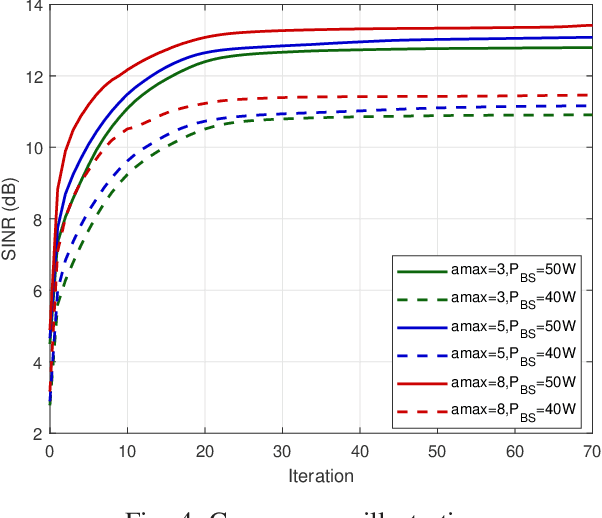
Integrated sensing and communication (ISAC) has emerged as a transformative technology for 6G networks, enabling the seamless integration of communication and sensing functionalities. Reconfigurable intelligent surfaces (RIS), with their capability to adaptively reconfigure the radio environment, have shown significant potential in enhancing communication quality and enabling advanced cooperative sensing. This paper investigates a multi-RIS-assisted ISAC system and introduces a novel multi-perspective observation framework that leverages the diversity of multiple observation paths, each exhibiting distinct spatial, delay, and Doppler characteristics for both target and clutter. The proposed framework integrates symbol-level precoding (SLP) and space-time adaptive processing (STAP) to fully exploit the benefits of multi-perspective observations, enabling superior target-clutter separation and significantly improving detection accuracy. The objective is to jointly design the transmit waveform, reflection coefficients of multiple active RISs, and spatial-temporal receive filters to maximize the radar output signal-to-clutter-plus-noise ratio (SCNR) for target detection, while ensuring the quality-of-service (QoS) requirements of communication users. To address the resulting non-convex optimization problem, an effective iterative algorithm is developed, combining fractional programming (FP), majorization-minimization (MM), and the alternating direction method of multipliers (ADMM). Extensive simulation results validate the effectiveness of the proposed multi-perspective observation strategy, demonstrating its advantages in improving target detection performance in challenging environments.
Optimizing Distributed Deployment of Mixture-of-Experts Model Inference in Serverless Computing
Jan 09, 2025With the advancement of serverless computing, running machine learning (ML) inference services over a serverless platform has been advocated, given its labor-free scalability and cost effectiveness. Mixture-of-Experts (MoE) models have been a dominant type of model architectures to enable large models nowadays, with parallel expert networks. Serving large MoE models on serverless computing is potentially beneficial, but has been underexplored due to substantial challenges in handling the skewed expert popularity and scatter-gather communication bottleneck in MoE model execution, for cost-efficient serverless MoE deployment and performance guarantee. We study optimized MoE model deployment and distributed inference serving on a serverless platform, that effectively predict expert selection, pipeline communication with model execution, and minimize the overall billed cost of serving MoE models. Especially, we propose a Bayesian optimization framework with multi-dimensional epsilon-greedy search to learn expert selections and optimal MoE deployment achieving optimal billed cost, including: 1) a Bayesian decision-making method for predicting expert popularity; 2) flexibly pipelined scatter-gather communication; and 3) an optimal model deployment algorithm for distributed MoE serving. Extensive experiments on AWS Lambda show that our designs reduce the billed cost of all MoE layers by at least 75.67% compared to CPU clusters while maintaining satisfactory inference throughput. As compared to LambdaML in serverless computing, our designs achieves 43.41% lower cost with a throughput decrease of at most 18.76%.
LM-Net: A Light-weight and Multi-scale Network for Medical Image Segmentation
Jan 07, 2025Current medical image segmentation approaches have limitations in deeply exploring multi-scale information and effectively combining local detail textures with global contextual semantic information. This results in over-segmentation, under-segmentation, and blurred segmentation boundaries. To tackle these challenges, we explore multi-scale feature representations from different perspectives, proposing a novel, lightweight, and multi-scale architecture (LM-Net) that integrates advantages of both Convolutional Neural Networks (CNNs) and Vision Transformers (ViTs) to enhance segmentation accuracy. LM-Net employs a lightweight multi-branch module to capture multi-scale features at the same level. Furthermore, we introduce two modules to concurrently capture local detail textures and global semantics with multi-scale features at different levels: the Local Feature Transformer (LFT) and Global Feature Transformer (GFT). The LFT integrates local window self-attention to capture local detail textures, while the GFT leverages global self-attention to capture global contextual semantics. By combining these modules, our model achieves complementarity between local and global representations, alleviating the problem of blurred segmentation boundaries in medical image segmentation. To evaluate the feasibility of LM-Net, extensive experiments have been conducted on three publicly available datasets with different modalities. Our proposed model achieves state-of-the-art results, surpassing previous methods, while only requiring 4.66G FLOPs and 5.4M parameters. These state-of-the-art results on three datasets with different modalities demonstrate the effectiveness and adaptability of our proposed LM-Net for various medical image segmentation tasks.
AgentRefine: Enhancing Agent Generalization through Refinement Tuning
Jan 03, 2025Large Language Model (LLM) based agents have proved their ability to perform complex tasks like humans. However, there is still a large gap between open-sourced LLMs and commercial models like the GPT series. In this paper, we focus on improving the agent generalization capabilities of LLMs via instruction tuning. We first observe that the existing agent training corpus exhibits satisfactory results on held-in evaluation sets but fails to generalize to held-out sets. These agent-tuning works face severe formatting errors and are frequently stuck in the same mistake for a long while. We analyze that the poor generalization ability comes from overfitting to several manual agent environments and a lack of adaptation to new situations. They struggle with the wrong action steps and can not learn from the experience but just memorize existing observation-action relations. Inspired by the insight, we propose a novel AgentRefine framework for agent-tuning. The core idea is to enable the model to learn to correct its mistakes via observation in the trajectory. Specifically, we propose an agent synthesis framework to encompass a diverse array of environments and tasks and prompt a strong LLM to refine its error action according to the environment feedback. AgentRefine significantly outperforms state-of-the-art agent-tuning work in terms of generalization ability on diverse agent tasks. It also has better robustness facing perturbation and can generate diversified thought in inference. Our findings establish the correlation between agent generalization and self-refinement and provide a new paradigm for future research.
M2I2: Learning Efficient Multi-Agent Communication via Masked State Modeling and Intention Inference
Dec 31, 2024Communication is essential in coordinating the behaviors of multiple agents. However, existing methods primarily emphasize content, timing, and partners for information sharing, often neglecting the critical aspect of integrating shared information. This gap can significantly impact agents' ability to understand and respond to complex, uncertain interactions, thus affecting overall communication efficiency. To address this issue, we introduce M2I2, a novel framework designed to enhance the agents' capabilities to assimilate and utilize received information effectively. M2I2 equips agents with advanced capabilities for masked state modeling and joint-action prediction, enriching their perception of environmental uncertainties and facilitating the anticipation of teammates' intentions. This approach ensures that agents are furnished with both comprehensive and relevant information, bolstering more informed and synergistic behaviors. Moreover, we propose a Dimensional Rational Network, innovatively trained via a meta-learning paradigm, to identify the importance of dimensional pieces of information, evaluating their contributions to decision-making and auxiliary tasks. Then, we implement an importance-based heuristic for selective information masking and sharing. This strategy optimizes the efficiency of masked state modeling and the rationale behind information sharing. We evaluate M2I2 across diverse multi-agent tasks, the results demonstrate its superior performance, efficiency, and generalization capabilities, over existing state-of-the-art methods in various complex scenarios.
Toward Scene Graph and Layout Guided Complex 3D Scene Generation
Dec 29, 2024Recent advancements in object-centric text-to-3D generation have shown impressive results. However, generating complex 3D scenes remains an open challenge due to the intricate relations between objects. Moreover, existing methods are largely based on score distillation sampling (SDS), which constrains the ability to manipulate multiobjects with specific interactions. Addressing these critical yet underexplored issues, we present a novel framework of Scene Graph and Layout Guided 3D Scene Generation (GraLa3D). Given a text prompt describing a complex 3D scene, GraLa3D utilizes LLM to model the scene using a scene graph representation with layout bounding box information. GraLa3D uniquely constructs the scene graph with single-object nodes and composite super-nodes. In addition to constraining 3D generation within the desirable layout, a major contribution lies in the modeling of interactions between objects in a super-node, while alleviating appearance leakage across objects within such nodes. Our experiments confirm that GraLa3D overcomes the above limitations and generates complex 3D scenes closely aligned with text prompts.
TradingAgents: Multi-Agents LLM Financial Trading Framework
Dec 28, 2024


Significant progress has been made in automated problem-solving using societies of agents powered by large language models (LLMs). In finance, efforts have largely focused on single-agent systems handling specific tasks or multi-agent frameworks independently gathering data. However, multi-agent systems' potential to replicate real-world trading firms' collaborative dynamics remains underexplored. TradingAgents proposes a novel stock trading framework inspired by trading firms, featuring LLM-powered agents in specialized roles such as fundamental analysts, sentiment analysts, technical analysts, and traders with varied risk profiles. The framework includes Bull and Bear researcher agents assessing market conditions, a risk management team monitoring exposure, and traders synthesizing insights from debates and historical data to make informed decisions. By simulating a dynamic, collaborative trading environment, this framework aims to improve trading performance. Detailed architecture and extensive experiments reveal its superiority over baseline models, with notable improvements in cumulative returns, Sharpe ratio, and maximum drawdown, highlighting the potential of multi-agent LLM frameworks in financial trading.
A Fully Hardware Implemented Accelerator Design in ReRAM Analog Computing without ADCs
Dec 27, 2024Emerging ReRAM-based accelerators process neural networks via analog Computing-in-Memory (CiM) for ultra-high energy efficiency. However, significant overhead in peripheral circuits and complex nonlinear activation modes constrain system energy efficiency improvements. This work explores the hardware implementation of the Sigmoid and SoftMax activation functions of neural networks with stochastically binarized neurons by utilizing sampled noise signals from ReRAM devices to achieve a stochastic effect. We propose a complete ReRAM-based Analog Computing Accelerator (RACA) that accelerates neural network computation by leveraging stochastically binarized neurons in combination with ReRAM crossbars. The novel circuit design removes significant sources of energy/area efficiency degradation, i.e., the Digital-to-Analog and Analog-to-Digital Converters (DACs and ADCs) as well as the components to explicitly calculate the activation functions. Experimental results show that our proposed design outperforms traditional architectures across all overall performance metrics without compromising inference accuracy.