 Add to Chrome
 Add to Firefox
 Add to Edge
APEX: Adaptive Policy Execution for Precise Manipulation
Jun 15, 2026
Modern imitation learning methods, including visuomotor and Vision-Language-Action (VLA) policies, typically output high-level action references that are executed by low-level controllers. However, the absence of higher-order reference signals, together with the policy's lack of awareness of the underlying low-level control dynamics during training, inevitably induces an execution gap. As a result, realized actions deviate systematically from policy-commanded ones, with a critical impact on precision-sensitive manipulation. Prior work either modifies the policy architecture or the low-level controller, both requiring intrusive changes to the pretrained policy or packaged controller. This raises a natural question: when the policy and controller are both treated as inaccessible black boxes, can we bridge the execution gap? We propose Adaptive Policy Execution (APEX), a plug-and-play framework inserted between the policy and the controller that reconstructs a dynamically feasible reference from policy outputs and adapts at test-time according to low-level state feedback, with a provable convergence guarantee. Extensive empirical studies show that APEX reduces controller-induced tracking error by 41.2% on demonstration replay and improves manipulation success by 4.8--25.8 percentage points across four visuomotor and VLA policy classes.

MARS Policy: Multimodality Only When It Matters
May 28, 2026Imitation learning has become a cornerstone for solving complex robotic manipulation tasks. In particular, multimodality, which enables robots to capture diverse yet valid behavioral patterns, has driven the rapid emergence of generative policies as a dominant paradigm in robot learning. However, achieving such multimodality typically relies on stochastic noise initialization and iterative denoising procedures, resulting in substantial training complexity and low inference efficiency. Meanwhile, not all phases of a robotic task inherently require behavioral diversity. Motivated by this insight, we propose the Modality-Adaptive Robot Sampling (MARS) policy, which adaptively invokes tailored stochasticity only when it is truly beneficial, while reverting to an efficient deterministic learning during single-modal phases. In other words, the proper amount of noise is injected only at the proper time. By selectively activating multimodal generation, MARS policy bridges the gap between the multimodal capability of generative policies and the superior training and inference efficiency of deterministic models. Empirical studies across 8 simulated and 4 real-world tasks demonstrate that MARS exhibits robust multimodal expressivity and high efficiency, with a 16.67% success rate improvement and an 83.20% inference latency reduction in real-world tests. Counterintuitively, MARS also outpaces deterministic policies in training efficiency on near-deterministic tasks by more effectively modeling nuanced action diversity.
OccamToken: Efficient VLM Inference with Training-Free and Budget-Adaptive Token Pruning
May 28, 2026Vision-language models (VLMs) rely on long visual token sequences for visual understanding, making the prefill stage expensive in both computation and memory. Most existing pruning methods follow an absolute-ranking paradigm, assigning importance scores to visual tokens and retaining a fixed top-K subset. In this work, we argue that this paradigm is fundamentally brittle: attention sinks distort token importance rankings, while image redundancy and query-dependent visual evidence make fixed token budgets unreliable across inputs. We propose OccamToken, a training-free framework that replaces absolute token ranking with register-anchored relative evidence testing. Instead of asking which tokens are globally important, OccamToken evaluates whether a visual token provides information beyond a register-based reference. Our key insight is that register tokens naturally absorb low-information attention patterns, making them a stable reference for identifying genuinely informative visual evidence. Based on this principle, OccamToken performs both image-adaptive redundancy pruning and query-adaptive relevance pruning through dynamic thresholds derived from register attention. Across LLaVA-NeXT, LLaVA-v1.5, and Qwen3-VL, OccamToken consistently improves the accuracy-efficiency trade-off without additional training. Notably, on LLaVA-NeXT, it reduces 2,880 visual tokens to approximately 40 while preserving over 93% of the original accuracy, enabling stable visual token compression even in the extreme 1.4% retention regime.
CompassAD: Intent-Driven 3D Affordance Grounding in Functionally Competing Objects
Apr 02, 2026When told to "cut the apple," a robot must choose the knife over nearby scissors, despite both objects affording the same cutting function. In real-world scenes, multiple objects may share identical affordances, yet only one is appropriate under the given task context. We call such cases confusing pairs. However, existing 3D affordance methods largely sidestep this challenge by evaluating isolated single objects, often with explicit category names provided in the query. We formalize Multi-Object Affordance Grounding under Intent-Driven Instructions, a new 3D affordance setting that requires predicting a per-point affordance mask on the correct object within a cluttered multi-object point cloud, conditioned on implicit natural language intent. To study this problem, we construct CompassAD, the first benchmark centered on implicit intent in confusable multi-object scenes. It comprises 30 confusing object pairs spanning 16 affordance types, 6,422 scenes, and 88K+ query-answer pairs. Furthermore, we propose CompassNet, a framework that incorporates two dedicated modules tailored to this task. Instance-bounded Cross Injection (ICI) constrains language-geometry alignment within object boundaries to prevent cross-object semantic leakage. Bi-level Contrastive Refinement (BCR) enforces discrimination at both geometric-group and point levels, sharpening distinctions between target and confusable surfaces. Extensive experiments demonstrate state-of-the-art results on both seen and unseen queries, and deployment on a robotic manipulator confirms effective transfer to real-world grasping in confusing multi-object scenes.
Action-to-Action Flow Matching
Feb 07, 2026Diffusion-based policies have recently achieved remarkable success in robotics by formulating action prediction as a conditional denoising process. However, the standard practice of sampling from random Gaussian noise often requires multiple iterative steps to produce clean actions, leading to high inference latency that incurs a major bottleneck for real-time control. In this paper, we challenge the necessity of uninformed noise sampling and propose Action-to-Action flow matching (A2A), a novel policy paradigm that shifts from random sampling to initialization informed by the previous action. Unlike existing methods that treat proprioceptive action feedback as static conditions, A2A leverages historical proprioceptive sequences, embedding them into a high-dimensional latent space as the starting point for action generation. This design bypasses costly iterative denoising while effectively capturing the robot's physical dynamics and temporal continuity. Extensive experiments demonstrate that A2A exhibits high training efficiency, fast inference speed, and improved generalization. Notably, A2A enables high-quality action generation in as few as a single inference step (0.56 ms latency), and exhibits superior robustness to visual perturbations and enhanced generalization to unseen configurations. Lastly, we also extend A2A to video generation, demonstrating its broader versatility in temporal modeling. Project site: https://lorenzo-0-0.github.io/A2A_Flow_Matching.
Optimization-Guided Diffusion for Interactive Scene Generation
Dec 11, 2025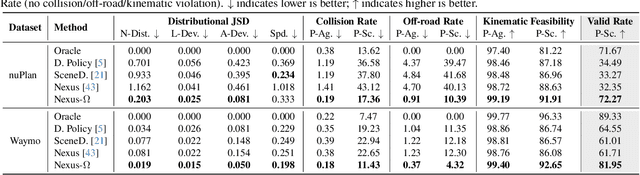
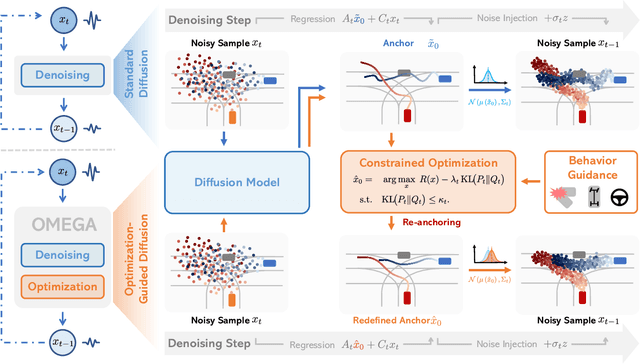
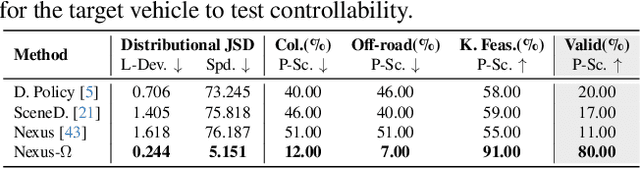
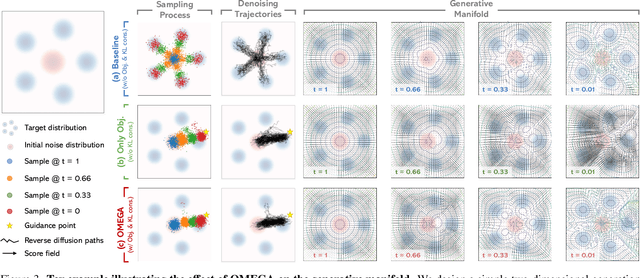
Realistic and diverse multi-agent driving scenes are crucial for evaluating autonomous vehicles, but safety-critical events which are essential for this task are rare and underrepresented in driving datasets. Data-driven scene generation offers a low-cost alternative by synthesizing complex traffic behaviors from existing driving logs. However, existing models often lack controllability or yield samples that violate physical or social constraints, limiting their usability. We present OMEGA, an optimization-guided, training-free framework that enforces structural consistency and interaction awareness during diffusion-based sampling from a scene generation model. OMEGA re-anchors each reverse diffusion step via constrained optimization, steering the generation towards physically plausible and behaviorally coherent trajectories. Building on this framework, we formulate ego-attacker interactions as a game-theoretic optimization in the distribution space, approximating Nash equilibria to generate realistic, safety-critical adversarial scenarios. Experiments on nuPlan and Waymo show that OMEGA improves generation realism, consistency, and controllability, increasing the ratio of physically and behaviorally valid scenes from 32.35% to 72.27% for free exploration capabilities, and from 11% to 80% for controllability-focused generation. Our approach can also generate $5\times$ more near-collision frames with a time-to-collision under three seconds while maintaining the overall scene realism.
IoT-LLM: Enhancing Real-World IoT Task Reasoning with Large Language Models
Oct 03, 2024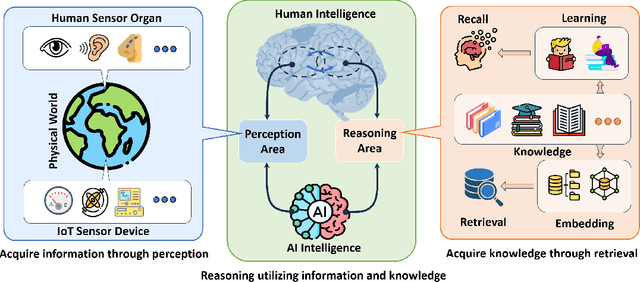
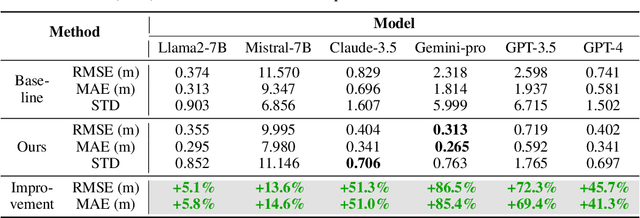
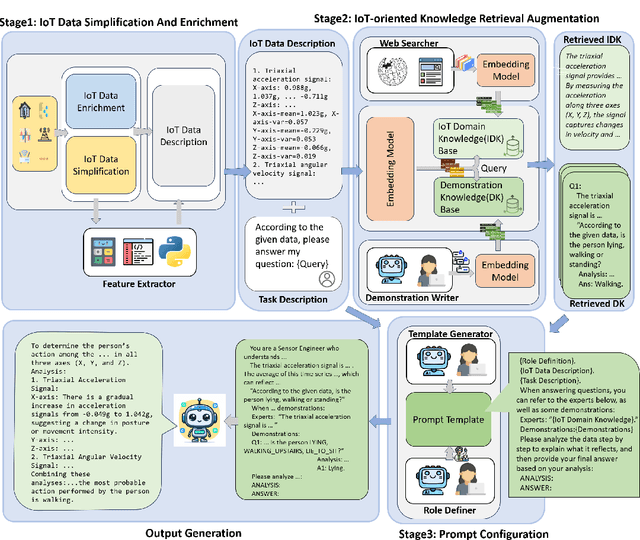
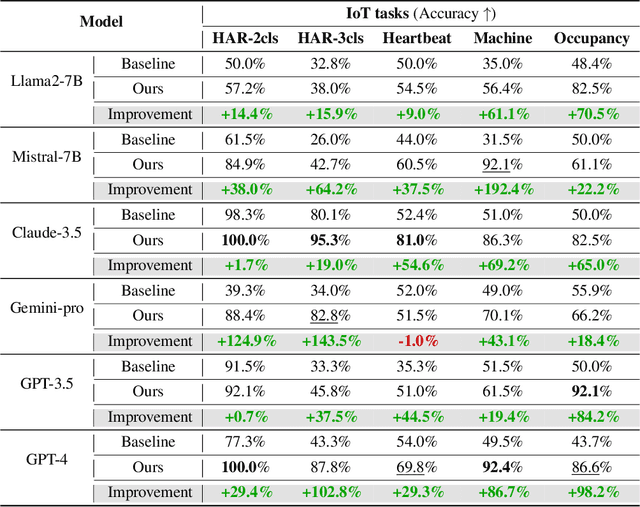
Large Language Models (LLMs) have demonstrated remarkable capabilities across textual and visual domains but often generate outputs that violate physical laws, revealing a gap in their understanding of the physical world. Inspired by human cognition, where perception is fundamental to reasoning, we explore augmenting LLMs with enhanced perception abilities using Internet of Things (IoT) sensor data and pertinent knowledge for IoT task reasoning in the physical world. In this work, we systematically study LLMs capability to address real-world IoT tasks by augmenting their perception and knowledge base, and then propose a unified framework, IoT-LLM, to enhance such capability. In IoT-LLM, we customize three steps for LLMs: preprocessing IoT data into formats amenable to LLMs, activating their commonsense knowledge through chain-of-thought prompting and specialized role definitions, and expanding their understanding via IoT-oriented retrieval-augmented generation based on in-context learning. To evaluate the performance, We design a new benchmark with five real-world IoT tasks with different data types and reasoning difficulties and provide the benchmarking results on six open-source and close-source LLMs. Experimental results demonstrate the limitations of existing LLMs with naive textual inputs that cannot perform these tasks effectively. We show that IoT-LLM significantly enhances the performance of IoT tasks reasoning of LLM, such as GPT-4, achieving an average improvement of 65% across various tasks against previous methods. The results also showcase LLMs ability to comprehend IoT data and the physical law behind data by providing a reasoning process. Limitations of our work are claimed to inspire future research in this new era.
EFUF: Efficient Fine-grained Unlearning Framework for Mitigating Hallucinations in Multimodal Large Language Models
Feb 15, 2024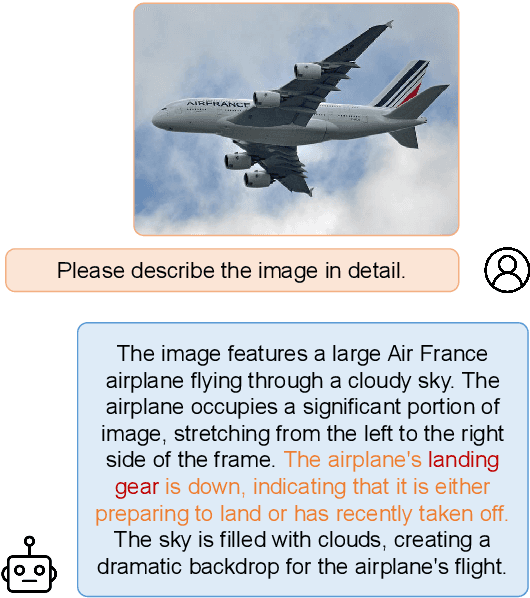
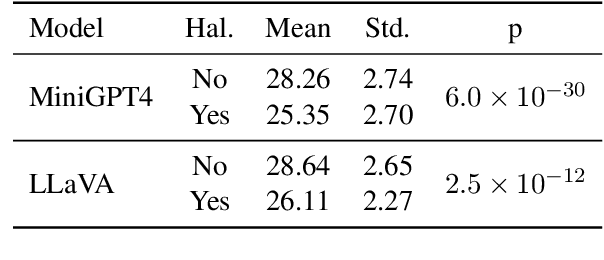
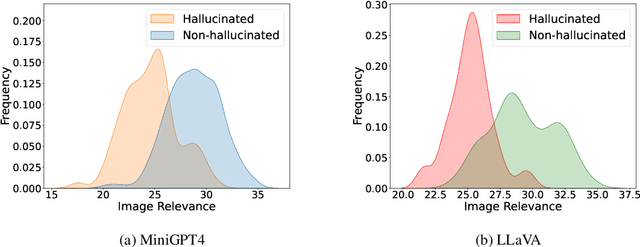
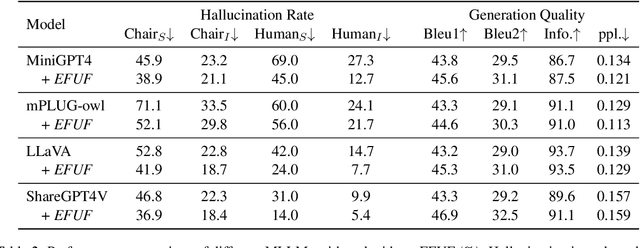
Multimodal large language models (MLLMs) have attracted increasing attention in the past few years, but they may still generate descriptions that include objects not present in the corresponding images, a phenomenon known as object hallucination. To eliminate hallucinations, existing methods manually annotate paired responses with and without hallucinations, and then employ various alignment algorithms to improve the alignment capability between images and text. However, they not only demand considerable computation resources during the finetuning stage but also require expensive human annotation to construct paired data needed by the alignment algorithms. To address these issues, we borrow the idea of unlearning and propose an efficient fine-grained unlearning framework (EFUF), which can eliminate hallucinations without the need for paired data. Extensive experiments show that our method consistently reduces hallucinations while preserving the generation quality with modest computational overhead. Our code and datasets will be publicly available.