 Add to Chrome
 Add to Firefox
 Add to Edge
Non-Overlapping Placement of Macro Cells based on Reinforcement Learning in Chip Design
Jul 26, 2024
Due to the increasing complexity of chip design, existing placement methods still have many shortcomings in dealing with macro cells coverage and optimization efficiency. Aiming at the problems of layout overlap, inferior performance, and low optimization efficiency in existing chip design methods, this paper proposes an end-to-end placement method, SRLPlacer, based on reinforcement learning. First, the placement problem is transformed into a Markov decision process by establishing the coupling relationship graph model between macro cells to learn the strategy for optimizing layouts. Secondly, the whole placement process is optimized after integrating the standard cell layout. By assessing on the public benchmark ISPD2005, the proposed SRLPlacer can effectively solve the overlap problem between macro cells while considering routing congestion and shortening the total wire length to ensure routability.

CSWin-UNet: Transformer UNet with Cross-Shaped Windows for Medical Image Segmentation
Jul 25, 2024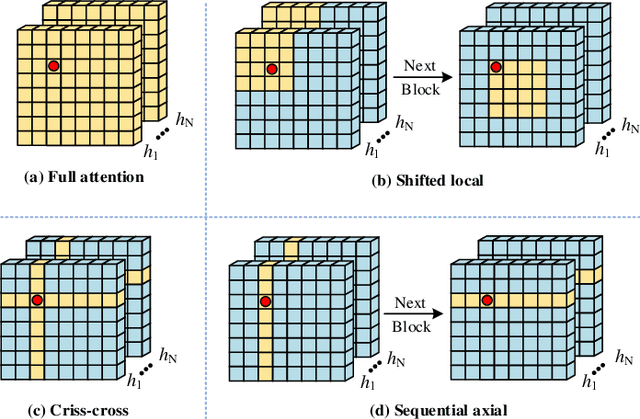
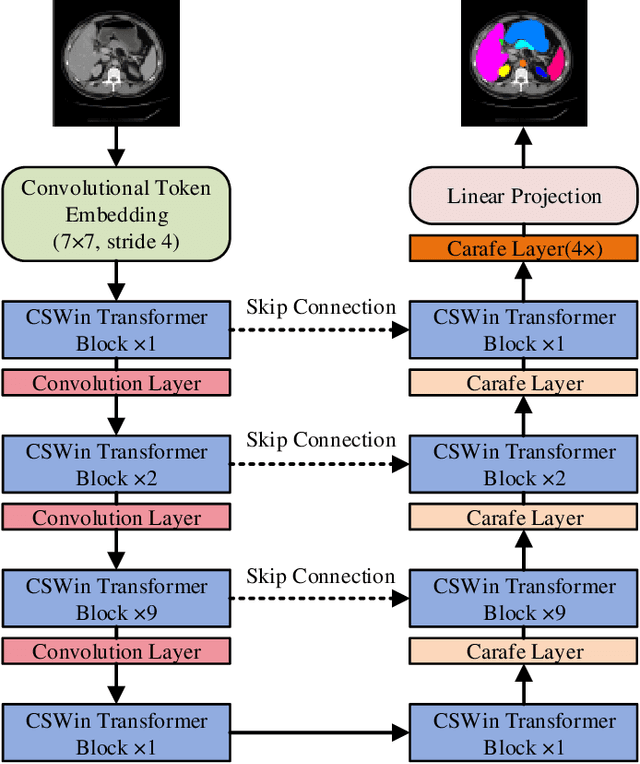
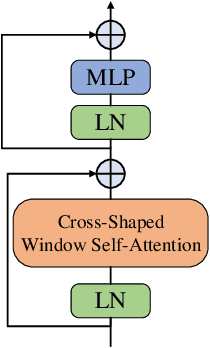
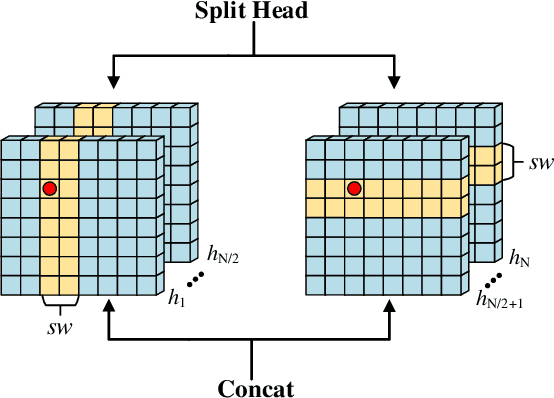
Deep learning, especially convolutional neural networks (CNNs) and Transformer architectures, have become the focus of extensive research in medical image segmentation, achieving impressive results. However, CNNs come with inductive biases that limit their effectiveness in more complex, varied segmentation scenarios. Conversely, while Transformer-based methods excel at capturing global and long-range semantic details, they suffer from high computational demands. In this study, we propose CSWin-UNet, a novel U-shaped segmentation method that incorporates the CSWin self-attention mechanism into the UNet to facilitate horizontal and vertical stripes self-attention. This method significantly enhances both computational efficiency and receptive field interactions. Additionally, our innovative decoder utilizes a content-aware reassembly operator that strategically reassembles features, guided by predicted kernels, for precise image resolution restoration. Our extensive empirical evaluations on diverse datasets, including synapse multi-organ CT, cardiac MRI, and skin lesions, demonstrate that CSWin-UNet maintains low model complexity while delivering high segmentation accuracy.
Rethinking Domain Adaptation and Generalization in the Era of CLIP
Jul 21, 2024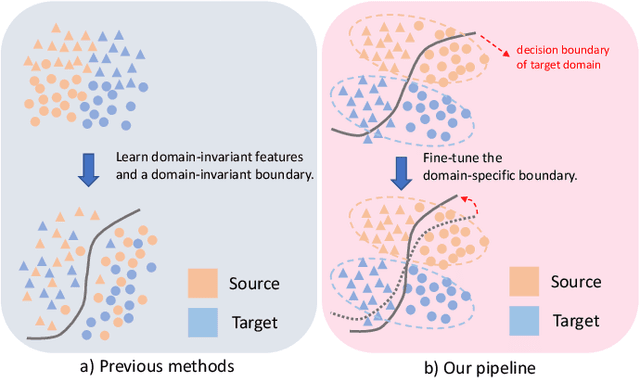

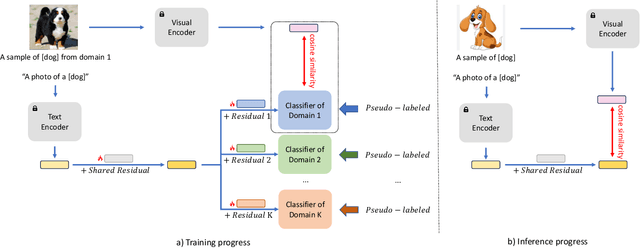

In recent studies on domain adaptation, significant emphasis has been placed on the advancement of learning shared knowledge from a source domain to a target domain. Recently, the large vision-language pre-trained model, i.e., CLIP has shown strong ability on zero-shot recognition, and parameter efficient tuning can further improve its performance on specific tasks. This work demonstrates that a simple domain prior boosts CLIP's zero-shot recognition in a specific domain. Besides, CLIP's adaptation relies less on source domain data due to its diverse pre-training dataset. Furthermore, we create a benchmark for zero-shot adaptation and pseudo-labeling based self-training with CLIP. Last but not least, we propose to improve the task generalization ability of CLIP from multiple unlabeled domains, which is a more practical and unique scenario. We believe our findings motivate a rethinking of domain adaptation benchmarks and the associated role of related algorithms in the era of CLIP.
BRIGHT: A Realistic and Challenging Benchmark for Reasoning-Intensive Retrieval
Jul 16, 2024


Existing retrieval benchmarks primarily consist of information-seeking queries (e.g., aggregated questions from search engines) where keyword or semantic-based retrieval is usually sufficient. However, many complex real-world queries require in-depth reasoning to identify relevant documents that go beyond surface form matching. For example, finding documentation for a coding question requires understanding the logic and syntax of the functions involved. To better benchmark retrieval on such challenging queries, we introduce BRIGHT, the first text retrieval benchmark that requires intensive reasoning to retrieve relevant documents. BRIGHT is constructed from the 1,398 real-world queries collected from diverse domains (such as economics, psychology, robotics, software engineering, earth sciences, etc.), sourced from naturally occurring or carefully curated human data. Extensive evaluation reveals that even state-of-the-art retrieval models perform poorly on BRIGHT. The leading model on the MTEB leaderboard [38 ], which achieves a score of 59.0 nDCG@10,2 produces a score of nDCG@10 of 18.0 on BRIGHT. We further demonstrate that augmenting queries with Chain-of-Thought reasoning generated by large language models (LLMs) improves performance by up to 12.2 points. Moreover, BRIGHT is robust against data leakage during pretraining of the benchmarked models as we validate by showing similar performance even when documents from the benchmark are included in the training data. We believe that BRIGHT paves the way for future research on retrieval systems in more realistic and challenging settings. Our code and data are available at https://brightbenchmark.github.io.
Spider2-V: How Far Are Multimodal Agents From Automating Data Science and Engineering Workflows?
Jul 15, 2024


Data science and engineering workflows often span multiple stages, from warehousing to orchestration, using tools like BigQuery, dbt, and Airbyte. As vision language models (VLMs) advance in multimodal understanding and code generation, VLM-based agents could potentially automate these workflows by generating SQL queries, Python code, and GUI operations. This automation can improve the productivity of experts while democratizing access to large-scale data analysis. In this paper, we introduce Spider2-V, the first multimodal agent benchmark focusing on professional data science and engineering workflows, featuring 494 real-world tasks in authentic computer environments and incorporating 20 enterprise-level professional applications. These tasks, derived from real-world use cases, evaluate the ability of a multimodal agent to perform data-related tasks by writing code and managing the GUI in enterprise data software systems. To balance realistic simulation with evaluation simplicity, we devote significant effort to developing automatic configurations for task setup and carefully crafting evaluation metrics for each task. Furthermore, we supplement multimodal agents with comprehensive documents of these enterprise data software systems. Our empirical evaluation reveals that existing state-of-the-art LLM/VLM-based agents do not reliably automate full data workflows (14.0% success). Even with step-by-step guidance, these agents still underperform in tasks that require fine-grained, knowledge-intensive GUI actions (16.2%) and involve remote cloud-hosted workspaces (10.6%). We hope that Spider2-V paves the way for autonomous multimodal agents to transform the automation of data science and engineering workflow. Our code and data are available at https://spider2-v.github.io.
HHMR: Holistic Hand Mesh Recovery by Enhancing the Multimodal Controllability of Graph Diffusion Models
Jun 03, 2024Recent years have witnessed a trend of the deep integration of the generation and reconstruction paradigms. In this paper, we extend the ability of controllable generative models for a more comprehensive hand mesh recovery task: direct hand mesh generation, inpainting, reconstruction, and fitting in a single framework, which we name as Holistic Hand Mesh Recovery (HHMR). Our key observation is that different kinds of hand mesh recovery tasks can be achieved by a single generative model with strong multimodal controllability, and in such a framework, realizing different tasks only requires giving different signals as conditions. To achieve this goal, we propose an all-in-one diffusion framework based on graph convolution and attention mechanisms for holistic hand mesh recovery. In order to achieve strong control generation capability while ensuring the decoupling of multimodal control signals, we map different modalities to a shared feature space and apply cross-scale random masking in both modality and feature levels. In this way, the correlation between different modalities can be fully exploited during the learning of hand priors. Furthermore, we propose Condition-aligned Gradient Guidance to enhance the alignment of the generated model with the control signals, which significantly improves the accuracy of the hand mesh reconstruction and fitting. Experiments show that our novel framework can realize multiple hand mesh recovery tasks simultaneously and outperform the existing methods in different tasks, which provides more possibilities for subsequent downstream applications including gesture recognition, pose generation, mesh editing, and so on.
Collage: Light-Weight Low-Precision Strategy for LLM Training
May 06, 2024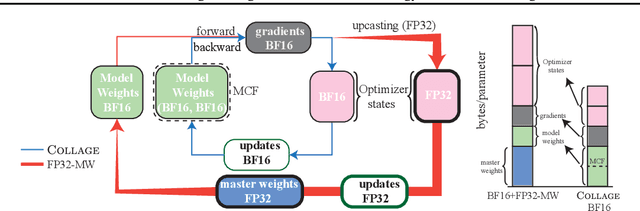
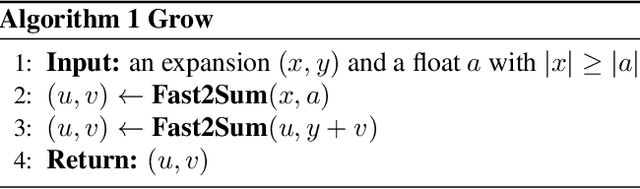
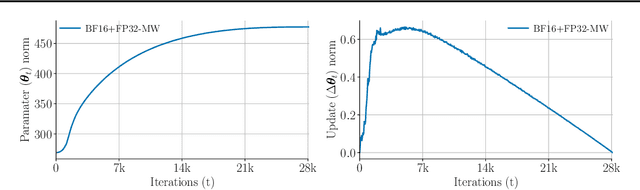
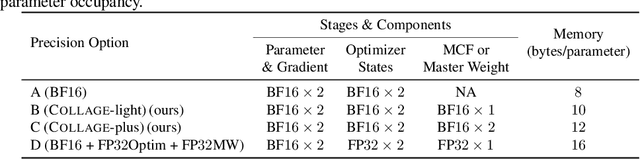
Large models training is plagued by the intense compute cost and limited hardware memory. A practical solution is low-precision representation but is troubled by loss in numerical accuracy and unstable training rendering the model less useful. We argue that low-precision floating points can perform well provided the error is properly compensated at the critical locations in the training process. We propose Collage which utilizes multi-component float representation in low-precision to accurately perform operations with numerical errors accounted. To understand the impact of imprecision to training, we propose a simple and novel metric which tracks the lost information during training as well as differentiates various precision strategies. Our method works with commonly used low-precision such as half-precision ($16$-bit floating points) and can be naturally extended to work with even lower precision such as $8$-bit. Experimental results show that pre-training using Collage removes the requirement of using $32$-bit floating-point copies of the model and attains similar/better training performance compared to $(16, 32)$-bit mixed-precision strategy, with up to $3.7\times$ speedup and $\sim 15\%$ to $23\%$ less memory usage in practice.
OSWorld: Benchmarking Multimodal Agents for Open-Ended Tasks in Real Computer Environments
Apr 11, 2024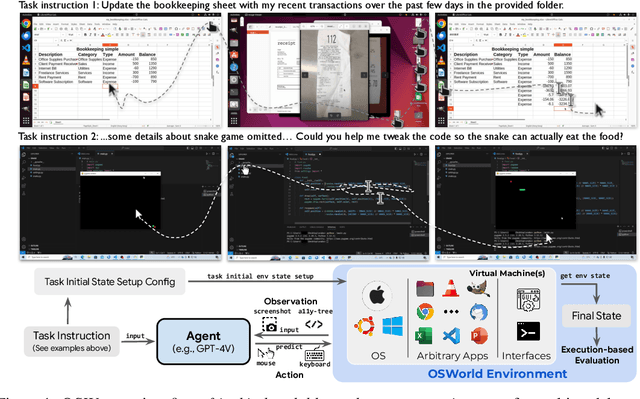

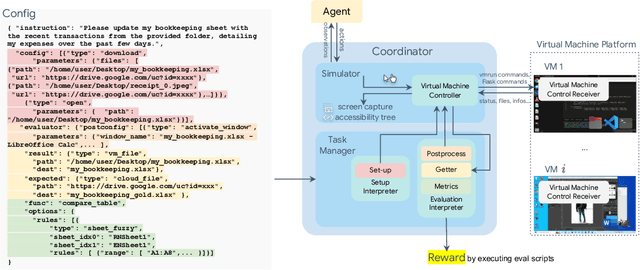
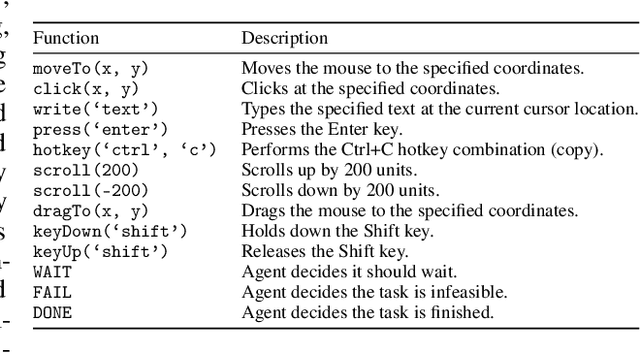
Autonomous agents that accomplish complex computer tasks with minimal human interventions have the potential to transform human-computer interaction, significantly enhancing accessibility and productivity. However, existing benchmarks either lack an interactive environment or are limited to environments specific to certain applications or domains, failing to reflect the diverse and complex nature of real-world computer use, thereby limiting the scope of tasks and agent scalability. To address this issue, we introduce OSWorld, the first-of-its-kind scalable, real computer environment for multimodal agents, supporting task setup, execution-based evaluation, and interactive learning across various operating systems such as Ubuntu, Windows, and macOS. OSWorld can serve as a unified, integrated computer environment for assessing open-ended computer tasks that involve arbitrary applications. Building upon OSWorld, we create a benchmark of 369 computer tasks involving real web and desktop apps in open domains, OS file I/O, and workflows spanning multiple applications. Each task example is derived from real-world computer use cases and includes a detailed initial state setup configuration and a custom execution-based evaluation script for reliable, reproducible evaluation. Extensive evaluation of state-of-the-art LLM/VLM-based agents on OSWorld reveals significant deficiencies in their ability to serve as computer assistants. While humans can accomplish over 72.36% of the tasks, the best model achieves only 12.24% success, primarily struggling with GUI grounding and operational knowledge. Comprehensive analysis using OSWorld provides valuable insights for developing multimodal generalist agents that were not possible with previous benchmarks. Our code, environment, baseline models, and data are publicly available at https://os-world.github.io.
MMVP: A Multimodal MoCap Dataset with Vision and Pressure Sensors
Mar 30, 2024
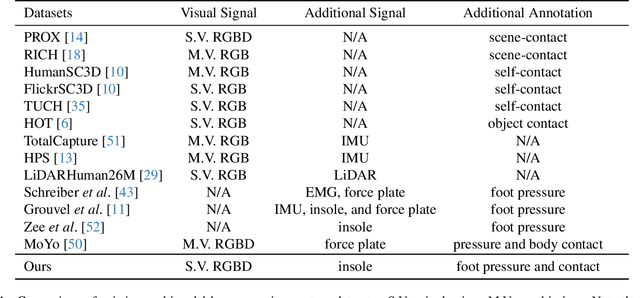
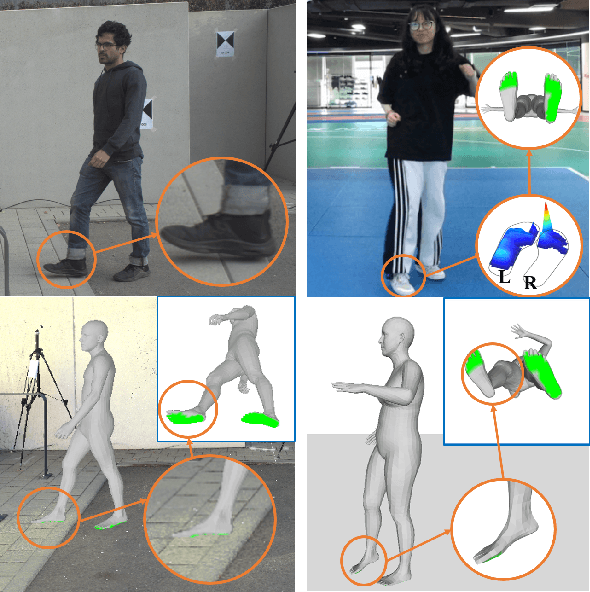
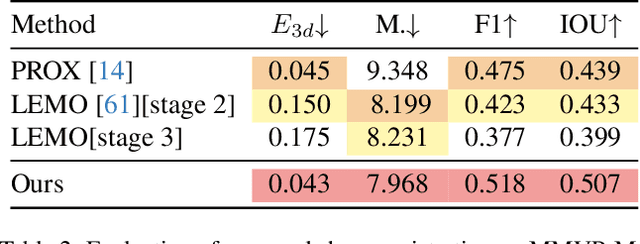
Foot contact is an important cue for human motion capture, understanding, and generation. Existing datasets tend to annotate dense foot contact using visual matching with thresholding or incorporating pressure signals. However, these approaches either suffer from low accuracy or are only designed for small-range and slow motion. There is still a lack of a vision-pressure multimodal dataset with large-range and fast human motion, as well as accurate and dense foot-contact annotation. To fill this gap, we propose a Multimodal MoCap Dataset with Vision and Pressure sensors, named MMVP. MMVP provides accurate and dense plantar pressure signals synchronized with RGBD observations, which is especially useful for both plausible shape estimation, robust pose fitting without foot drifting, and accurate global translation tracking. To validate the dataset, we propose an RGBD-P SMPL fitting method and also a monocular-video-based baseline framework, VP-MoCap, for human motion capture. Experiments demonstrate that our RGBD-P SMPL Fitting results significantly outperform pure visual motion capture. Moreover, VP-MoCap outperforms SOTA methods in foot-contact and global translation estimation accuracy. We believe the configuration of the dataset and the baseline frameworks will stimulate the research in this direction and also provide a good reference for MoCap applications in various domains. Project page: https://metaverse-ai-lab-thu.github.io/MMVP-Dataset/.
Den-SOFT: Dense Space-Oriented Light Field DataseT for 6-DOF Immersive Experience
Mar 15, 2024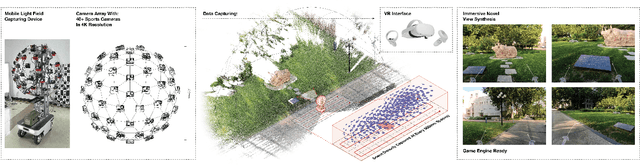
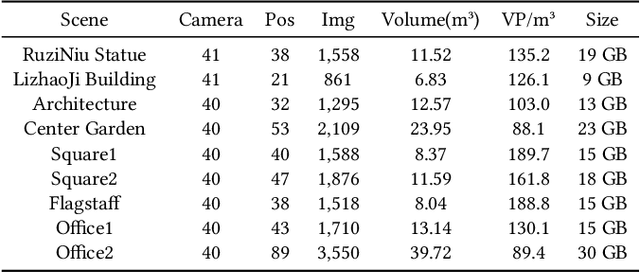
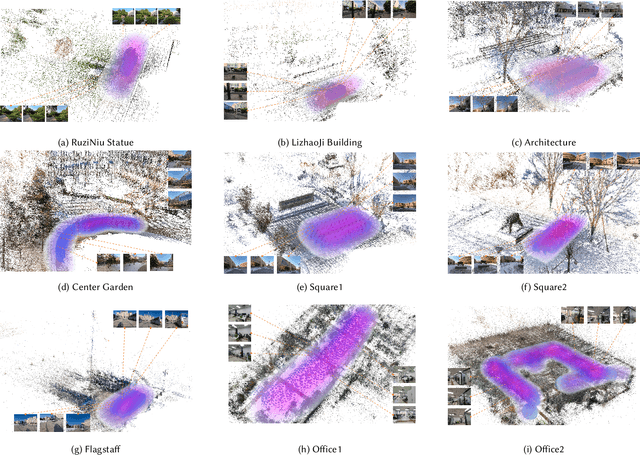
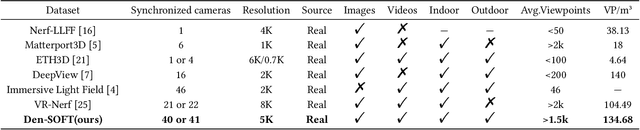
We have built a custom mobile multi-camera large-space dense light field capture system, which provides a series of high-quality and sufficiently dense light field images for various scenarios. Our aim is to contribute to the development of popular 3D scene reconstruction algorithms such as IBRnet, NeRF, and 3D Gaussian splitting. More importantly, the collected dataset, which is much denser than existing datasets, may also inspire space-oriented light field reconstruction, which is potentially different from object-centric 3D reconstruction, for immersive VR/AR experiences. We utilized a total of 40 GoPro 10 cameras, capturing images of 5k resolution. The number of photos captured for each scene is no less than 1000, and the average density (view number within a unit sphere) is 134.68. It is also worth noting that our system is capable of efficiently capturing large outdoor scenes. Addressing the current lack of large-space and dense light field datasets, we made efforts to include elements such as sky, reflections, lights and shadows that are of interest to researchers in the field of 3D reconstruction during the data capture process. Finally, we validated the effectiveness of our provided dataset on three popular algorithms and also integrated the reconstructed 3DGS results into the Unity engine, demonstrating the potential of utilizing our datasets to enhance the realism of virtual reality (VR) and create feasible interactive spaces. The dataset is available at our project website.