 Add to Chrome
 Add to Firefox
 Add to Edge
ADFQ-ViT: Activation-Distribution-Friendly Post-Training Quantization for Vision Transformers
Jul 03, 2024
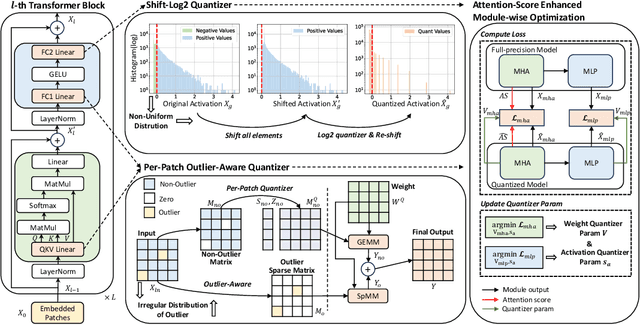
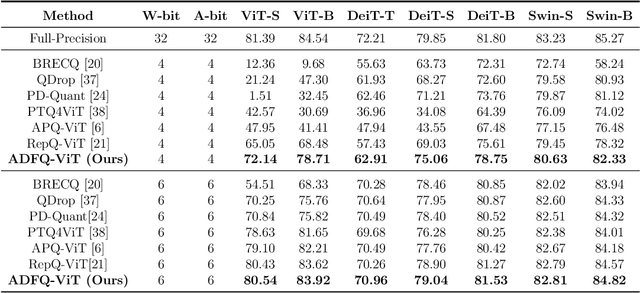
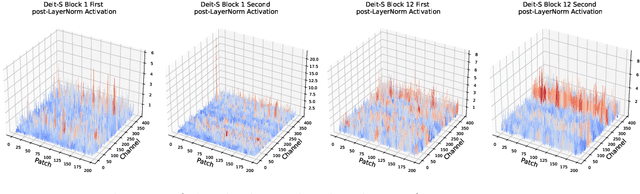
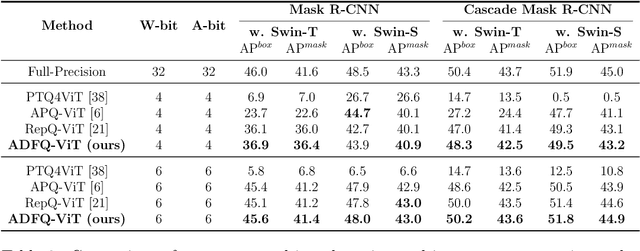
Vision Transformers (ViTs) have exhibited exceptional performance across diverse computer vision tasks, while their substantial parameter size incurs significantly increased memory and computational demands, impeding effective inference on resource-constrained devices. Quantization has emerged as a promising solution to mitigate these challenges, yet existing methods still suffer from significant accuracy loss at low-bit. We attribute this issue to the distinctive distributions of post-LayerNorm and post-GELU activations within ViTs, rendering conventional hardware-friendly quantizers ineffective, particularly in low-bit scenarios. To address this issue, we propose a novel framework called Activation-Distribution-Friendly post-training Quantization for Vision Transformers, ADFQ-ViT. Concretely, we introduce the Per-Patch Outlier-aware Quantizer to tackle irregular outliers in post-LayerNorm activations. This quantizer refines the granularity of the uniform quantizer to a per-patch level while retaining a minimal subset of values exceeding a threshold at full-precision. To handle the non-uniform distributions of post-GELU activations between positive and negative regions, we design the Shift-Log2 Quantizer, which shifts all elements to the positive region and then applies log2 quantization. Moreover, we present the Attention-score enhanced Module-wise Optimization which adjusts the parameters of each quantizer by reconstructing errors to further mitigate quantization error. Extensive experiments demonstrate ADFQ-ViT provides significant improvements over various baselines in image classification, object detection, and instance segmentation tasks at 4-bit. Specifically, when quantizing the ViT-B model to 4-bit, we achieve a 10.23% improvement in Top-1 accuracy on the ImageNet dataset.

PromptIntern: Saving Inference Costs by Internalizing Recurrent Prompt during Large Language Model Fine-tuning
Jul 02, 2024Large language models (LLMs) have played a fundamental role in various natural language processing tasks with powerful prompt techniques. However, in real-world applications, there are often similar prompt components for repeated queries, which causes significant computational burdens during inference. Existing prompt compression and direct fine-tuning methods aim to tackle these challenges, yet they frequently struggle to strike an optimal balance between cost-efficiency and performance effectiveness, especially in complex tasks such as NL2Code. In this paper, we propose a novel method namely PromptIntern to internalize the prompt knowledge into model parameters via progressive fine-tuning. Our method enables LLMs to emulate the human learning process for a new task, where detailed templates and examples in a prompt are gradually internalized and phased out progressively as the model grows accustomed to the task. Extensive experiments demonstrate that our method reduces inference tokens over 90%, speedups inference by 4.2 times, and saves 88.3% monetary cost.
LLMs Assist NLP Researchers: Critique Paper (Meta-)Reviewing
Jun 25, 2024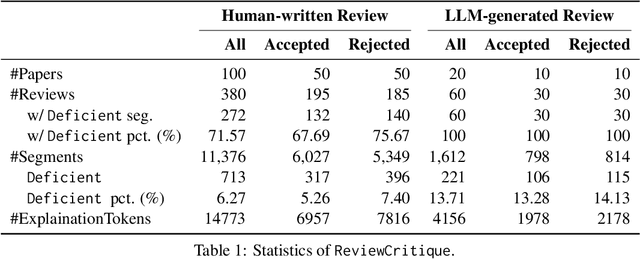
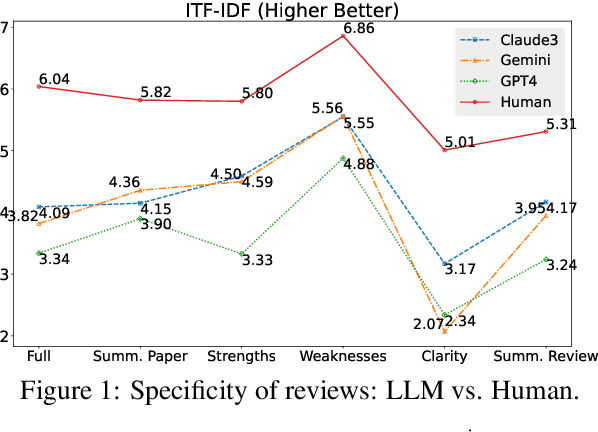
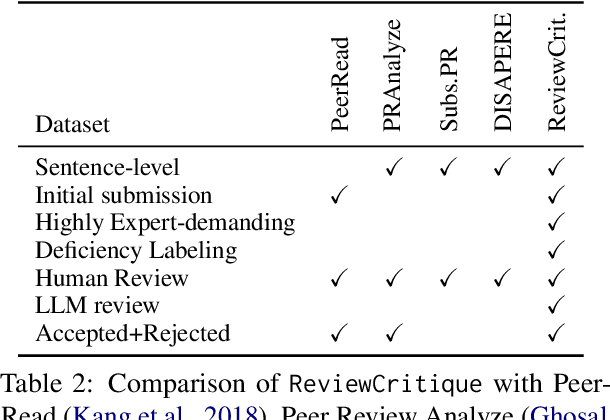
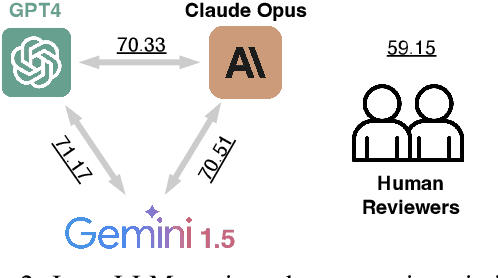
This work is motivated by two key trends. On one hand, large language models (LLMs) have shown remarkable versatility in various generative tasks such as writing, drawing, and question answering, significantly reducing the time required for many routine tasks. On the other hand, researchers, whose work is not only time-consuming but also highly expertise-demanding, face increasing challenges as they have to spend more time reading, writing, and reviewing papers. This raises the question: how can LLMs potentially assist researchers in alleviating their heavy workload? This study focuses on the topic of LLMs assist NLP Researchers, particularly examining the effectiveness of LLM in assisting paper (meta-)reviewing and its recognizability. To address this, we constructed the ReviewCritique dataset, which includes two types of information: (i) NLP papers (initial submissions rather than camera-ready) with both human-written and LLM-generated reviews, and (ii) each review comes with "deficiency" labels and corresponding explanations for individual segments, annotated by experts. Using ReviewCritique, this study explores two threads of research questions: (i) "LLMs as Reviewers", how do reviews generated by LLMs compare with those written by humans in terms of quality and distinguishability? (ii) "LLMs as Metareviewers", how effectively can LLMs identify potential issues, such as Deficient or unprofessional review segments, within individual paper reviews? To our knowledge, this is the first work to provide such a comprehensive analysis.
Spatial-Frequency Dual Progressive Attention Network For Medical Image Segmentation
Jun 12, 2024In medical images, various types of lesions often manifest significant differences in their shape and texture. Accurate medical image segmentation demands deep learning models with robust capabilities in multi-scale and boundary feature learning. However, previous networks still have limitations in addressing the above issues. Firstly, previous networks simultaneously fuse multi-level features or employ deep supervision to enhance multi-scale learning. However, this may lead to feature redundancy and excessive computational overhead, which is not conducive to network training and clinical deployment. Secondly, the majority of medical image segmentation networks exclusively learn features in the spatial domain, disregarding the abundant global information in the frequency domain. This results in a bias towards low-frequency components, neglecting crucial high-frequency information. To address these problems, we introduce SF-UNet, a spatial-frequency dual-domain attention network. It comprises two main components: the Multi-scale Progressive Channel Attention (MPCA) block, which progressively extract multi-scale features across adjacent encoder layers, and the lightweight Frequency-Spatial Attention (FSA) block, with only 0.05M parameters, enabling concurrent learning of texture and boundary features from both spatial and frequency domains. We validate the effectiveness of the proposed SF-UNet on three public datasets. Experimental results show that compared to previous state-of-the-art (SOTA) medical image segmentation networks, SF-UNet achieves the best performance, and achieves up to 9.4\% and 10.78\% improvement in DSC and IOU. Codes will be released at https://github.com/nkicsl/SF-UNet.
Towards Expressive Zero-Shot Speech Synthesis with Hierarchical Prosody Modeling
Jun 11, 2024

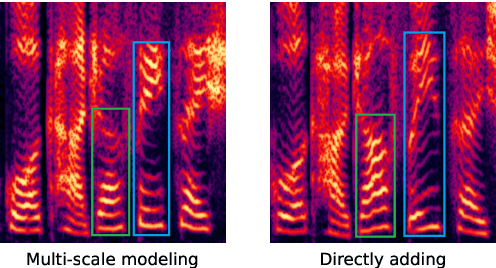

Recent research in zero-shot speech synthesis has made significant progress in speaker similarity. However, current efforts focus on timbre generalization rather than prosody modeling, which results in limited naturalness and expressiveness. To address this, we introduce a novel speech synthesis model trained on large-scale datasets, including both timbre and hierarchical prosody modeling. As timbre is a global attribute closely linked to expressiveness, we adopt a global vector to model speaker timbre while guiding prosody modeling. Besides, given that prosody contains both global consistency and local variations, we introduce a diffusion model as the pitch predictor and employ a prosody adaptor to model prosody hierarchically, further enhancing the prosody quality of the synthesized speech. Experimental results show that our model not only maintains comparable timbre quality to the baseline but also exhibits better naturalness and expressiveness.
Mixture of Rationale: Multi-Modal Reasoning Mixture for Visual Question Answering
Jun 03, 2024Zero-shot visual question answering (VQA) is a challenging task that requires reasoning across modalities. While some existing methods rely on a single rationale within the Chain of Thoughts (CoT) framework, they may fall short of capturing the complexity of the VQA problem. On the other hand, some other methods that use multiple rationales may still suffer from low diversity, poor modality alignment, and inefficient retrieval and fusion. In response to these challenges, we propose \emph{Mixture of Rationales (MoR)}, a novel multi-modal reasoning method that mixes multiple rationales for VQA. MoR uses a single frozen Vision-and-Language Pre-trained Models (VLPM) model to {dynamically generate, retrieve and fuse multi-modal thoughts}. We evaluate MoR on two challenging VQA datasets, i.e. NLVR2 and OKVQA, with two representative backbones OFA and VL-T5. MoR achieves a 12.43\% accuracy improvement on NLVR2, and a 2.45\% accuracy improvement on OKVQA-S( the science and technology category of OKVQA).
Devil's Advocate: Anticipatory Reflection for LLM Agents
May 29, 2024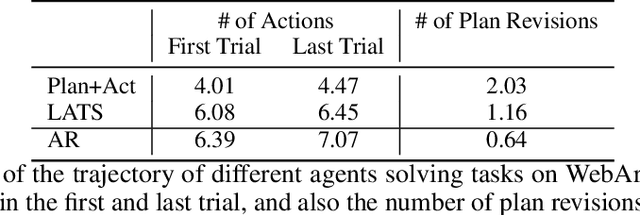
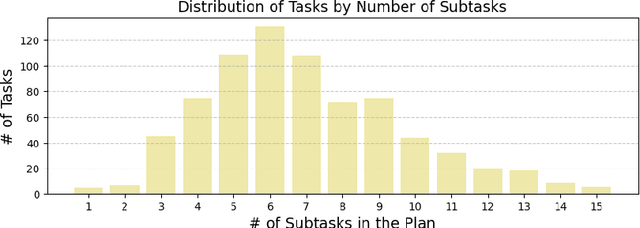
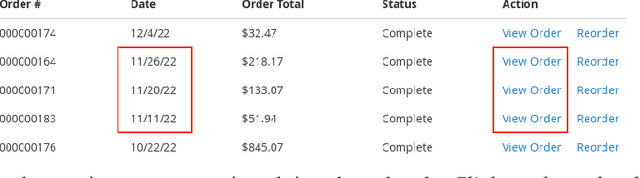
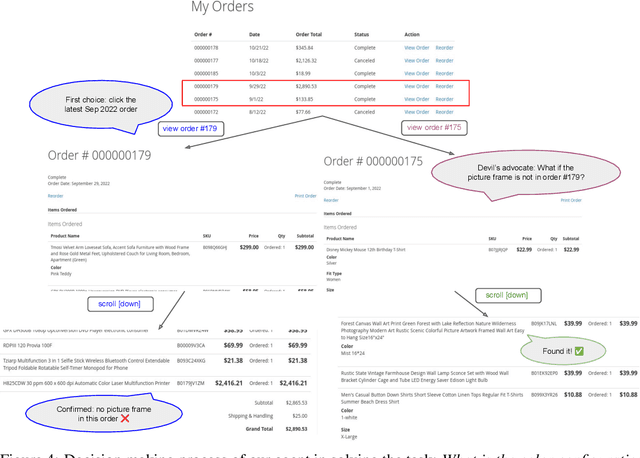
In this work, we introduce a novel approach that equips LLM agents with introspection, enhancing consistency and adaptability in solving complex tasks. Our approach prompts LLM agents to decompose a given task into manageable subtasks (i.e., to make a plan), and to continuously introspect upon the suitability and results of their actions. We implement a three-fold introspective intervention: 1) anticipatory reflection on potential failures and alternative remedy before action execution, 2) post-action alignment with subtask objectives and backtracking with remedy to ensure utmost effort in plan execution, and 3) comprehensive review upon plan completion for future strategy refinement. By deploying and experimenting with this methodology - a zero-shot approach - within WebArena for practical tasks in web environments, our agent demonstrates superior performance over existing zero-shot methods. The experimental results suggest that our introspection-driven approach not only enhances the agent's ability to navigate unanticipated challenges through a robust mechanism of plan execution, but also improves efficiency by reducing the number of trials and plan revisions needed to achieve a task.
FRCNet Frequency and Region Consistency for Semi-supervised Medical Image Segmentation
May 26, 2024Limited labeled data hinder the application of deep learning in medical domain. In clinical practice, there are sufficient unlabeled data that are not effectively used, and semi-supervised learning (SSL) is a promising way for leveraging these unlabeled data. However, existing SSL methods ignore frequency domain and region-level information and it is important for lesion regions located at low frequencies and with significant scale changes. In this paper, we introduce two consistency regularization strategies for semi-supervised medical image segmentation, including frequency domain consistency (FDC) to assist the feature learning in frequency domain and multi-granularity region similarity consistency (MRSC) to perform multi-scale region-level local context information feature learning. With the help of the proposed FDC and MRSC, we can leverage the powerful feature representation capability of them in an effective and efficient way. We perform comprehensive experiments on two datasets, and the results show that our method achieves large performance gains and exceeds other state-of-the-art methods.
Towards Natural Machine Unlearning
May 24, 2024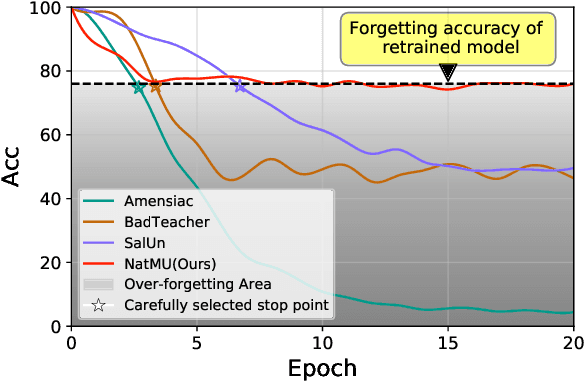
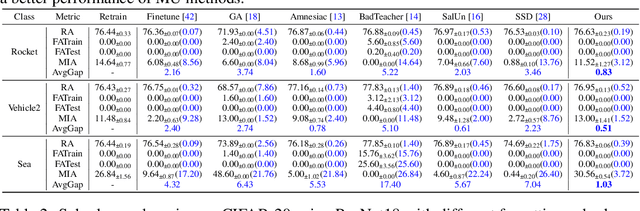
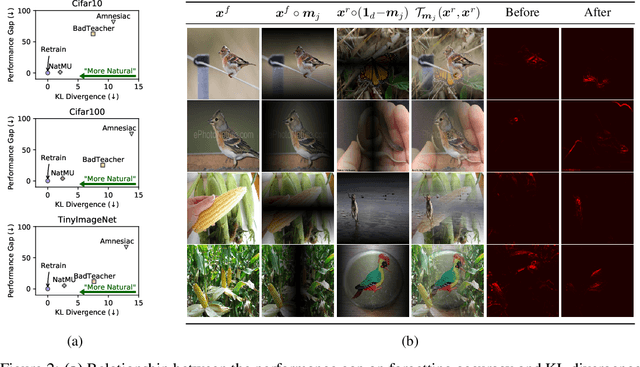
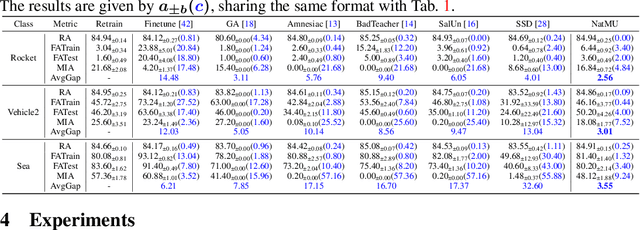
Machine unlearning (MU) aims to eliminate information that has been learned from specific training data, namely forgetting data, from a pre-trained model. Currently, the mainstream of existing MU methods involves modifying the forgetting data with incorrect labels and subsequently fine-tuning the model. While learning such incorrect information can indeed remove knowledge, the process is quite unnatural as the unlearning process undesirably reinforces the incorrect information and leads to over-forgetting. Towards more \textit{natural} machine unlearning, we inject correct information from the remaining data to the forgetting samples when changing their labels. Through pairing these adjusted samples with their labels, the model will tend to use the injected correct information and naturally suppress the information meant to be forgotten. Albeit straightforward, such a first step towards natural machine unlearning can significantly outperform current state-of-the-art approaches. In particular, our method substantially reduces the over-forgetting and leads to strong robustness to hyperparameters, making it a promising candidate for practical machine unlearning.
Convergence Conditions of Online Regularized Statistical Learning in Reproducing Kernel Hilbert Space With Non-Stationary Data
Apr 04, 2024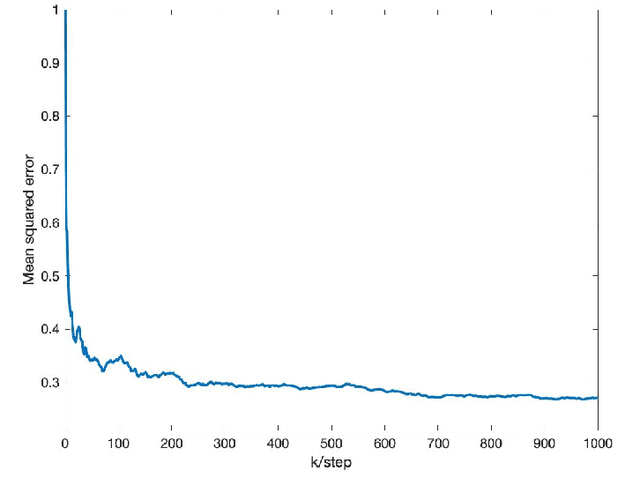
We study the convergence of recursive regularized learning algorithms in the reproducing kernel Hilbert space (RKHS) with dependent and non-stationary online data streams. Firstly, we study the mean square asymptotic stability of a class of random difference equations in RKHS, whose non-homogeneous terms are martingale difference sequences dependent on the homogeneous ones. Secondly, we introduce the concept of random Tikhonov regularization path, and show that if the regularization path is slowly time-varying in some sense, then the output of the algorithm is consistent with the regularization path in mean square. Furthermore, if the data streams also satisfy the RKHS persistence of excitation condition, i.e. there exists a fixed length of time period, such that each eigenvalue of the conditional expectation of the operators induced by the input data accumulated over every time period has a uniformly positive lower bound with respect to time, then the output of the algorithm is consistent with the unknown function in mean square. Finally, for the case with independent and non-identically distributed data streams, the algorithm achieves the mean square consistency provided the marginal probability measures induced by the input data are slowly time-varying and the average measure over each fixed-length time period has a uniformly strictly positive lower bound.