 Add to Chrome
 Add to Firefox
 Add to Edge
MovieCharacter: A Tuning-Free Framework for Controllable Character Video Synthesis
Oct 28, 2024

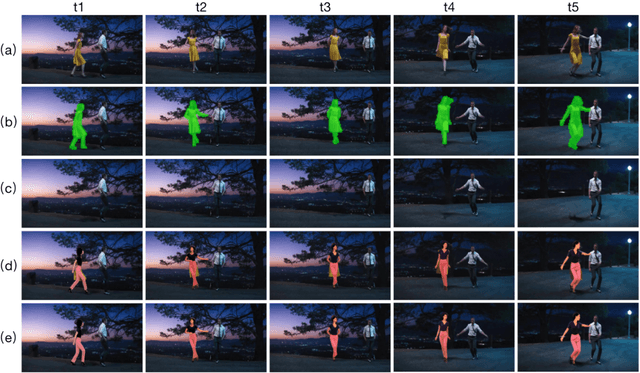


Recent advancements in character video synthesis still depend on extensive fine-tuning or complex 3D modeling processes, which can restrict accessibility and hinder real-time applicability. To address these challenges, we propose a simple yet effective tuning-free framework for character video synthesis, named MovieCharacter, designed to streamline the synthesis process while ensuring high-quality outcomes. Our framework decomposes the synthesis task into distinct, manageable modules: character segmentation and tracking, video object removal, character motion imitation, and video composition. This modular design not only facilitates flexible customization but also ensures that each component operates collaboratively to effectively meet user needs. By leveraging existing open-source models and integrating well-established techniques, MovieCharacter achieves impressive synthesis results without necessitating substantial resources or proprietary datasets. Experimental results demonstrate that our framework enhances the efficiency, accessibility, and adaptability of character video synthesis, paving the way for broader creative and interactive applications.

Weak-to-Strong Preference Optimization: Stealing Reward from Weak Aligned Model
Oct 24, 2024Aligning language models (LMs) with human preferences has become a key area of research, enabling these models to meet diverse user needs better. Inspired by weak-to-strong generalization, where a strong LM fine-tuned on labels generated by a weaker model can consistently outperform its weak supervisor, we extend this idea to model alignment. In this work, we observe that the alignment behavior in weaker models can be effectively transferred to stronger models and even exhibit an amplification effect. Based on this insight, we propose a method called Weak-to-Strong Preference Optimization (WSPO), which achieves strong model alignment by learning the distribution differences before and after the alignment of the weak model. Experiments demonstrate that WSPO delivers outstanding performance, improving the win rate of Qwen2-7B-Instruct on Arena-Hard from 39.70 to 49.60, achieving a remarkable 47.04 length-controlled win rate on AlpacaEval 2, and scoring 7.33 on MT-bench. Our results suggest that using the weak model to elicit a strong model with a high alignment ability is feasible.
A Recommendation Model Utilizing Separation Embedding and Self-Attention for Feature Mining
Oct 19, 2024


With the explosive growth of Internet data, users are facing the problem of information overload, which makes it a challenge to efficiently obtain the required resources. Recommendation systems have emerged in this context. By filtering massive amounts of information, they provide users with content that meets their needs, playing a key role in scenarios such as advertising recommendation and product recommendation. However, traditional click-through rate prediction and TOP-K recommendation mechanisms are gradually unable to meet the recommendations needs in modern life scenarios due to high computational complexity, large memory consumption, long feature selection time, and insufficient feature interaction. This paper proposes a recommendations system model based on a separation embedding cross-network. The model uses an embedding neural network layer to transform sparse feature vectors into dense embedding vectors, and can independently perform feature cross operations on different dimensions, thereby improving the accuracy and depth of feature mining. Experimental results show that the model shows stronger adaptability and higher prediction accuracy in processing complex data sets, effectively solving the problems existing in existing models.
CAPE: A Chinese Dataset for Appraisal-based Emotional Generation using Large Language Models
Oct 18, 2024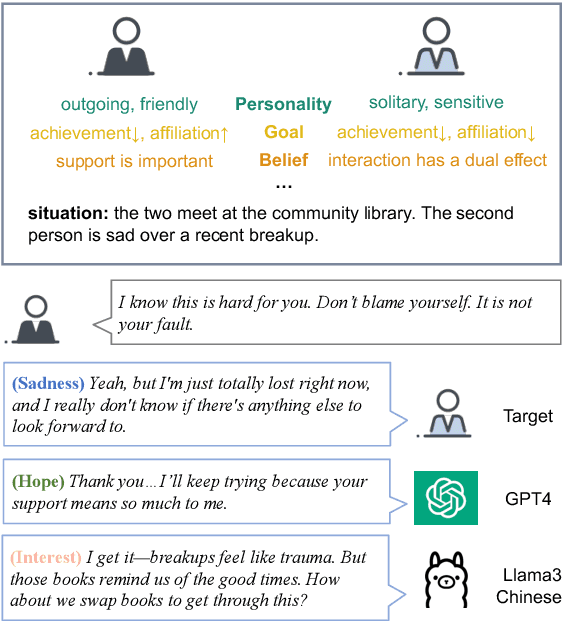
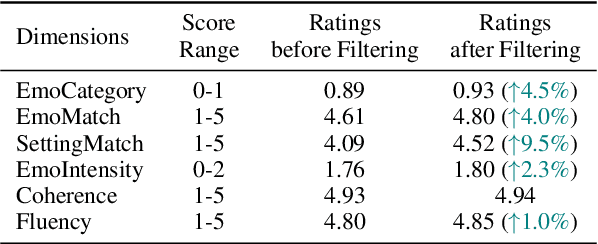
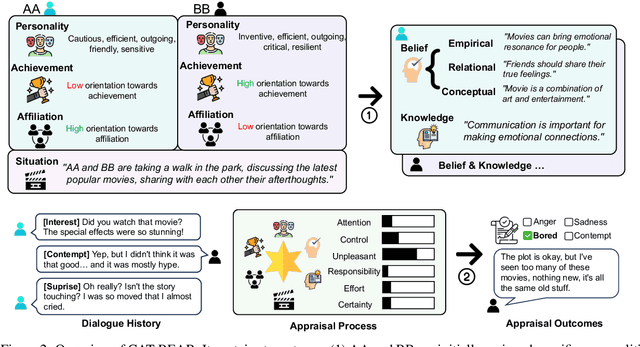
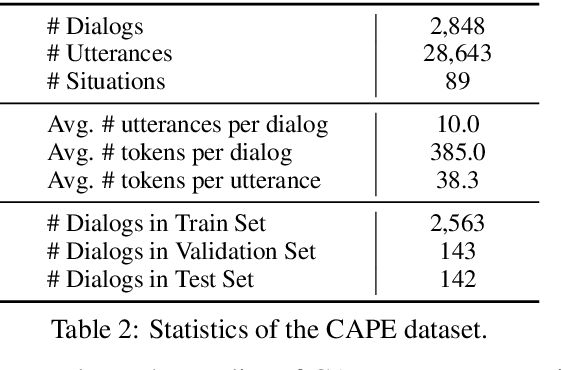
Generating emotionally appropriate responses in conversations with large language models presents a significant challenge due to the complexities of human emotions and cognitive processes, which remain largely underexplored in their critical role in social interactions. In this study, we introduce a two-stage automatic data generation framework to create CAPE, a Chinese dataset named Cognitive Appraisal theory-based Emotional corpus. This corpus facilitates the generation of dialogues with contextually appropriate emotional responses by accounting for diverse personal and situational factors. We propose two tasks utilizing this dataset: emotion prediction and next utterance prediction. Both automated and human evaluations demonstrate that agents trained on our dataset can deliver responses that are more aligned with human emotional expressions. Our study shows the potential for advancing emotional expression in conversational agents, paving the way for more nuanced and meaningful human-computer interactions.
Latent Space Chain-of-Embedding Enables Output-free LLM Self-Evaluation
Oct 17, 2024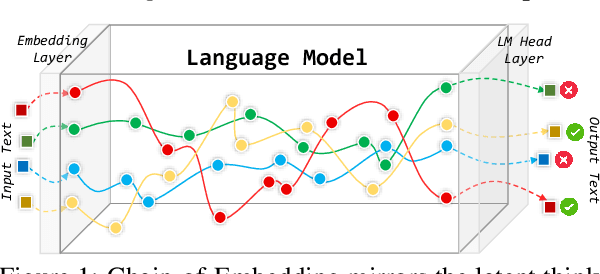
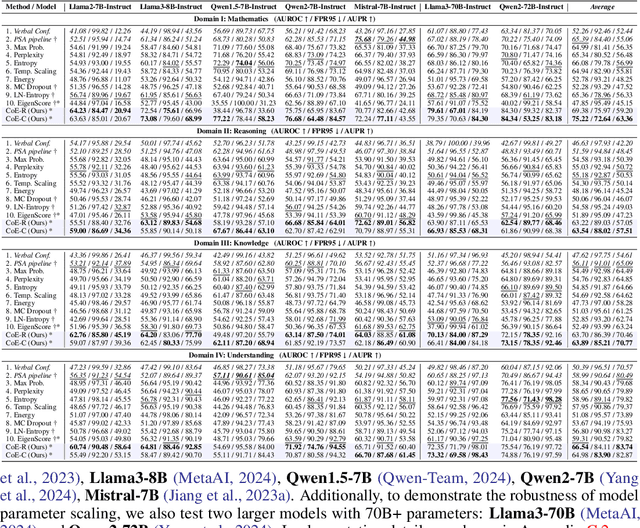
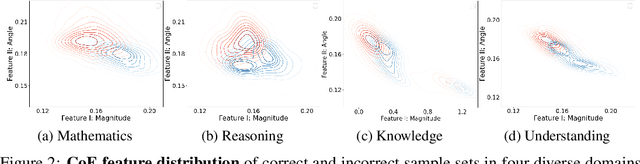

LLM self-evaluation relies on the LLM's own ability to estimate response correctness, which can greatly improve its deployment reliability. In this research track, we propose the Chain-of-Embedding (CoE) in the latent space to enable LLMs to perform output-free self-evaluation. CoE consists of all progressive hidden states produced during the inference time, which can be treated as the latent thinking path of LLMs. We find that when LLMs respond correctly and incorrectly, their CoE features differ, these discrepancies assist us in estimating LLM response correctness. Experiments in four diverse domains and seven LLMs fully demonstrate the effectiveness of our method. Meanwhile, its label-free design intent without any training and millisecond-level computational cost ensure real-time feedback in large-scale scenarios. More importantly, we provide interesting insights into LLM response correctness from the perspective of hidden state changes inside LLMs.
MlingConf: A Comprehensive Study of Multilingual Confidence Estimation on Large Language Models
Oct 16, 2024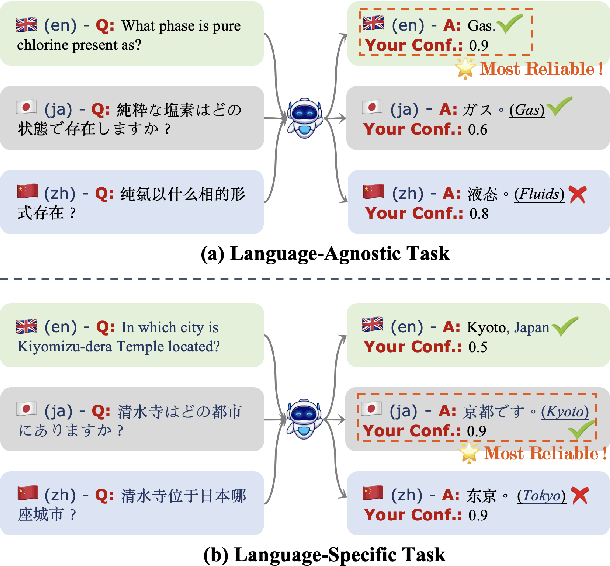
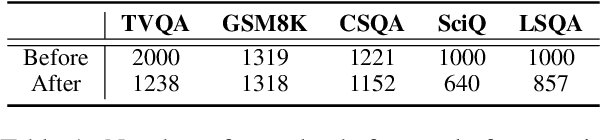

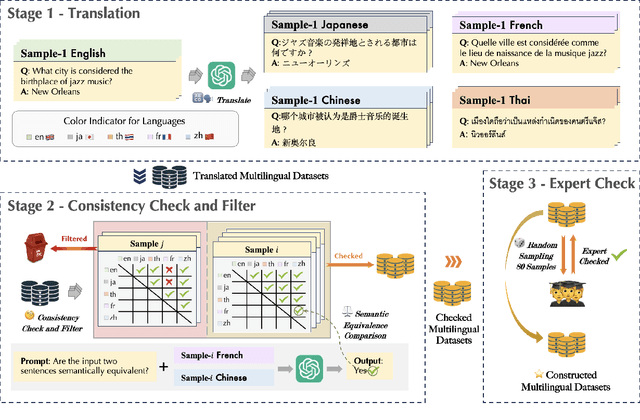
The tendency of Large Language Models (LLMs) to generate hallucinations raises concerns regarding their reliability. Therefore, confidence estimations indicating the extent of trustworthiness of the generations become essential. However, current LLM confidence estimations in languages other than English remain underexplored. This paper addresses this gap by introducing a comprehensive investigation of Multilingual Confidence estimation (MlingConf) on LLMs, focusing on both language-agnostic (LA) and language-specific (LS) tasks to explore the performance and language dominance effects of multilingual confidence estimations on different tasks. The benchmark comprises four meticulously checked and human-evaluate high-quality multilingual datasets for LA tasks and one for the LS task tailored to specific social, cultural, and geographical contexts of a language. Our experiments reveal that on LA tasks English exhibits notable linguistic dominance in confidence estimations than other languages, while on LS tasks, using question-related language to prompt LLMs demonstrates better linguistic dominance in multilingual confidence estimations. The phenomena inspire a simple yet effective native-tone prompting strategy by employing language-specific prompts for LS tasks, effectively improving LLMs' reliability and accuracy on LS tasks.
Balancing Innovation and Privacy: Data Security Strategies in Natural Language Processing Applications
Oct 11, 2024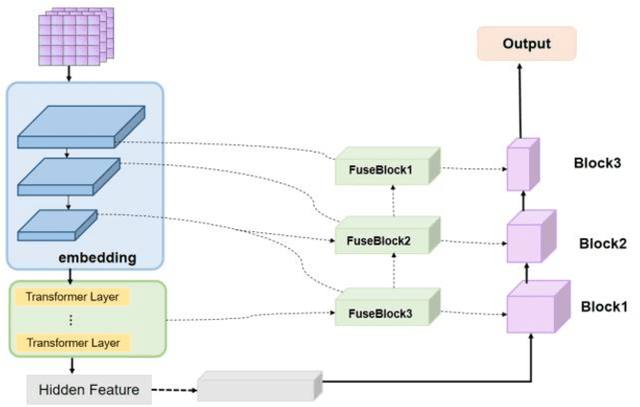
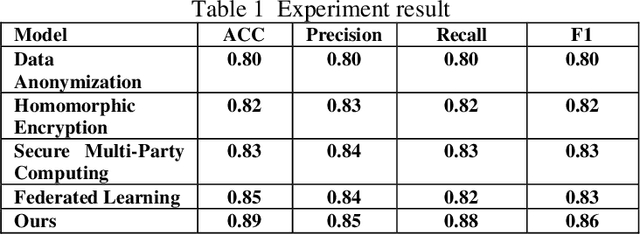
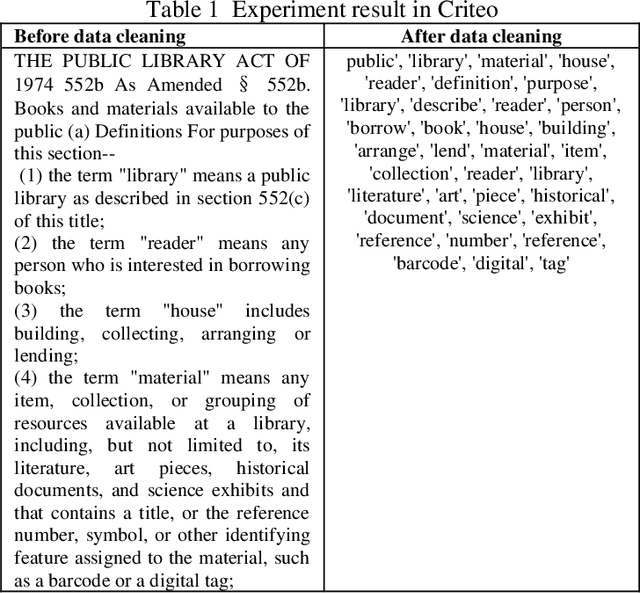
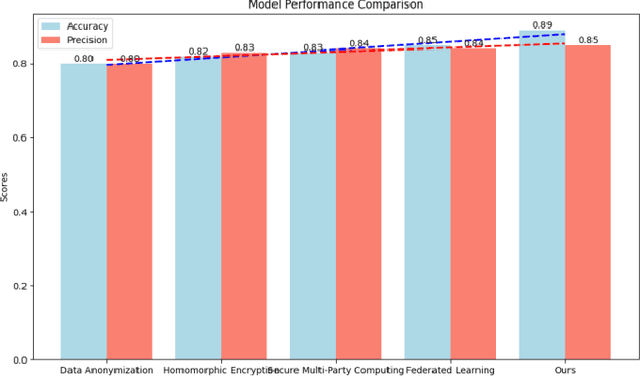
This research addresses privacy protection in Natural Language Processing (NLP) by introducing a novel algorithm based on differential privacy, aimed at safeguarding user data in common applications such as chatbots, sentiment analysis, and machine translation. With the widespread application of NLP technology, the security and privacy protection of user data have become important issues that need to be solved urgently. This paper proposes a new privacy protection algorithm designed to effectively prevent the leakage of user sensitive information. By introducing a differential privacy mechanism, our model ensures the accuracy and reliability of data analysis results while adding random noise. This method not only reduces the risk caused by data leakage but also achieves effective processing of data while protecting user privacy. Compared to traditional privacy methods like data anonymization and homomorphic encryption, our approach offers significant advantages in terms of computational efficiency and scalability while maintaining high accuracy in data analysis. The proposed algorithm's efficacy is demonstrated through performance metrics such as accuracy (0.89), precision (0.85), and recall (0.88), outperforming other methods in balancing privacy and utility. As privacy protection regulations become increasingly stringent, enterprises and developers must take effective measures to deal with privacy risks. Our research provides an important reference for the application of privacy protection technology in the field of NLP, emphasizing the need to achieve a balance between technological innovation and user privacy. In the future, with the continuous advancement of technology, privacy protection will become a core element of data-driven applications and promote the healthy development of the entire industry.
TLDR: Token-Level Detective Reward Model for Large Vision Language Models
Oct 07, 2024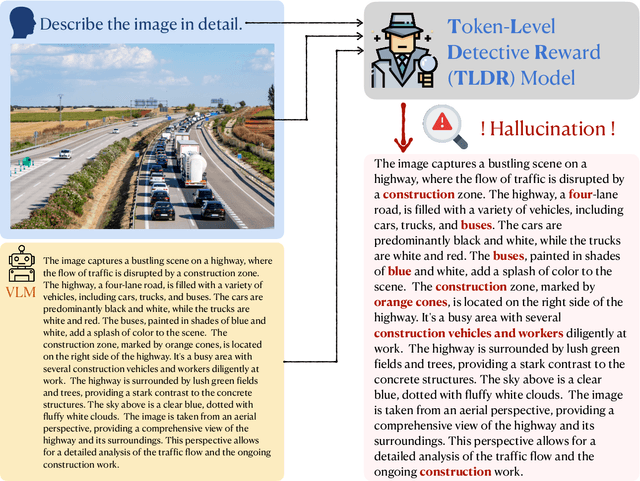

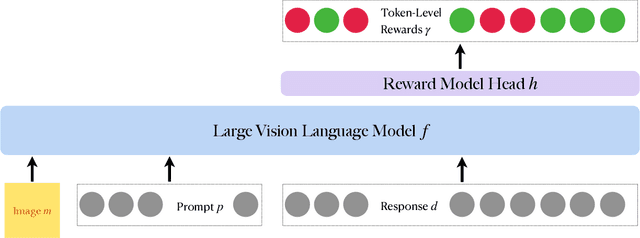

Although reward models have been successful in improving multimodal large language models, the reward models themselves remain brutal and contain minimal information. Notably, existing reward models only mimic human annotations by assigning only one binary feedback to any text, no matter how long the text is. In the realm of multimodal language models, where models are required to process both images and texts, a naive reward model may learn implicit biases toward texts and become less grounded in images. In this paper, we propose a $\textbf{T}$oken-$\textbf{L}$evel $\textbf{D}$etective $\textbf{R}$eward Model ($\textbf{TLDR}$) to provide fine-grained annotations to each text token. We first introduce a perturbation-based method to generate synthetic hard negatives and their token-level labels to train TLDR models. Then we show the rich usefulness of TLDR models both in assisting off-the-shelf models to self-correct their generations, and in serving as a hallucination evaluation tool. Finally, we show that TLDR models can significantly speed up human annotation by 3 times to acquire a broader range of high-quality vision language data.
Large Language Model for Multi-Domain Translation: Benchmarking and Domain CoT Fine-tuning
Oct 03, 2024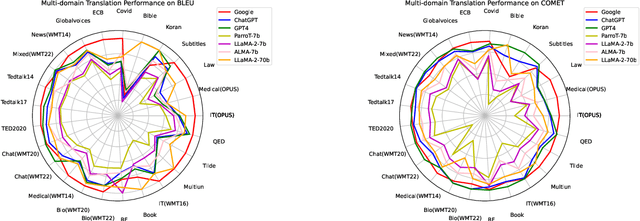


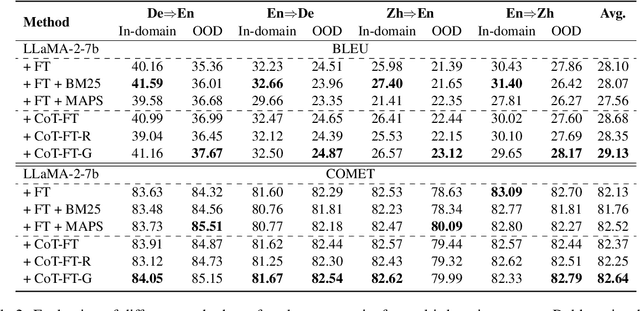
Achieving consistent high-quality machine translation (MT) across diverse domains remains a significant challenge, primarily due to the limited and imbalanced parallel training data available in various domains. While large language models (LLMs) have demonstrated impressive general understanding and generation abilities, their potential in multi-domain MT is under-explored. We establish a comprehensive benchmark for multi-domain translation, featuring 25 German$\Leftrightarrow$English and 22 Chinese$\Leftrightarrow$English test sets respectively covering 15 domains. Our evaluation of prominent LLMs reveals a discernible performance gap against traditional MT systems, highlighting domain overfitting and catastrophic forgetting issues after fine-tuning on domain-limited corpora. To mitigate this, we propose a domain Chain of Thought (CoT) fine-tuning technique that utilizes the intrinsic multi-domain intelligence of LLMs to improve translation performance. This method inspires the LLM to perceive domain information from the source text, which then serves as a helpful hint to guide the translation process. Despite being trained on a small dataset of four domains, our CoT fine-tune approach achieves notable enhancements in translation accuracy and domain robustness than traditional fine-tuning, as evidenced by an average 1.53 BLEU score increase in over 20 German$\rightarrow$English distinct out-of-domain tests.
AlignSum: Data Pyramid Hierarchical Fine-tuning for Aligning with Human Summarization Preference
Oct 01, 2024Text summarization tasks commonly employ Pre-trained Language Models (PLMs) to fit diverse standard datasets. While these PLMs excel in automatic evaluations, they frequently underperform in human evaluations, indicating a deviation between their generated summaries and human summarization preferences. This discrepancy is likely due to the low quality of fine-tuning datasets and the limited availability of high-quality human-annotated data that reflect true human preference. To address this challenge, we introduce a novel human summarization preference alignment framework AlignSum. This framework consists of three parts: Firstly, we construct a Data Pymarid with extractive, abstractive, and human-annotated summary data. Secondly, we conduct the Gaussian Resampling to remove summaries with extreme lengths. Finally, we implement the two-stage hierarchical fine-tuning with Data Pymarid after Gaussian Resampling. We apply AlignSum to PLMs on the human-annotated CNN/DailyMail and BBC XSum datasets. Experiments show that with AlignSum, PLMs like BART-Large surpass 175B GPT-3 in both automatic and human evaluations. This demonstrates that AlignSum significantly enhances the alignment of language models with human summarization preferences.