 Add to Chrome
 Add to Firefox
 Add to Edge
RePrompt: Reasoning-Augmented Reprompting for Text-to-Image Generation via Reinforcement Learning
May 23, 2025
Despite recent progress in text-to-image (T2I) generation, existing models often struggle to faithfully capture user intentions from short and under-specified prompts. While prior work has attempted to enhance prompts using large language models (LLMs), these methods frequently generate stylistic or unrealistic content due to insufficient grounding in visual semantics and real-world composition. Inspired by recent advances in reasoning for language model, we propose RePrompt, a novel reprompting framework that introduces explicit reasoning into the prompt enhancement process via reinforcement learning. Instead of relying on handcrafted rules or stylistic rewrites, our method trains a language model to generate structured, self-reflective prompts by optimizing for image-level outcomes. The tailored reward models assesse the generated images in terms of human preference, semantic alignment, and visual composition, providing indirect supervision to refine prompt generation. Our approach enables end-to-end training without human-annotated data. Experiments on GenEval and T2I-Compbench show that RePrompt significantly boosts spatial layout fidelity and compositional generalization across diverse T2I backbones, establishing new state-of-the-art results.

When LLMs meet open-world graph learning: a new perspective for unlabeled data uncertainty
May 21, 2025Recently, large language models (LLMs) have significantly advanced text-attributed graph (TAG) learning. However, existing methods inadequately handle data uncertainty in open-world scenarios, especially concerning limited labeling and unknown-class nodes. Prior solutions typically rely on isolated semantic or structural approaches for unknown-class rejection, lacking effective annotation pipelines. To address these limitations, we propose Open-world Graph Assistant (OGA), an LLM-based framework that combines adaptive label traceability, which integrates semantics and topology for unknown-class rejection, and a graph label annotator to enable model updates using newly annotated nodes. Comprehensive experiments demonstrate OGA's effectiveness and practicality.
Code2Logic: Game-Code-Driven Data Synthesis for Enhancing VLMs General Reasoning
May 20, 2025Visual-language Chain-of-Thought (CoT) data resources are relatively scarce compared to text-only counterparts, limiting the improvement of reasoning capabilities in Vision Language Models (VLMs). However, high-quality vision-language reasoning data is expensive and labor-intensive to annotate. To address this issue, we leverage a promising resource: game code, which naturally contains logical structures and state transition processes. Therefore, we propose Code2Logic, a novel game-code-driven approach for multimodal reasoning data synthesis. Our approach leverages Large Language Models (LLMs) to adapt game code, enabling automatic acquisition of reasoning processes and results through code execution. Using the Code2Logic approach, we developed the GameQA dataset to train and evaluate VLMs. GameQA is cost-effective and scalable to produce, challenging for state-of-the-art models, and diverse with 30 games and 158 tasks. Surprisingly, despite training solely on game data, VLMs demonstrated out of domain generalization, specifically Qwen2.5-VL-7B improving performance by 2.33\% across 7 diverse vision-language benchmarks. Our code and dataset are available at https://github.com/tongjingqi/Code2Logic.
Two Minds Better Than One: Collaborative Reward Modeling for LLM Alignment
May 19, 2025Reward models (RMs) play a pivotal role in aligning large language models (LLMs) with human values. However, noisy preferences in human feedback can lead to reward misgeneralization - a phenomenon where reward models learn spurious correlations or overfit to noisy preferences, which poses important challenges to the generalization of RMs. This paper systematically analyzes the characteristics of preference pairs and aims to identify how noisy preferences differ from human-aligned preferences in reward modeling. Our analysis reveals that noisy preferences are difficult for RMs to fit, as they cause sharp training fluctuations and irregular gradient updates. These distinctive dynamics suggest the feasibility of identifying and excluding such noisy preferences. Empirical studies demonstrate that policy LLM optimized with a reward model trained on the full preference dataset, which includes substantial noise, performs worse than the one trained on a subset of exclusively high quality preferences. To address this challenge, we propose an online Collaborative Reward Modeling (CRM) framework to achieve robust preference learning through peer review and curriculum learning. In particular, CRM maintains two RMs that collaboratively filter potential noisy preferences by peer-reviewing each other's data selections. Curriculum learning synchronizes the capabilities of two models, mitigating excessive disparities to promote the utility of peer review. Extensive experiments demonstrate that CRM significantly enhances RM generalization, with up to 9.94 points improvement on RewardBench under an extreme 40\% noise. Moreover, CRM can seamlessly extend to implicit-reward alignment methods, offering a robust and versatile alignment strategy.
WorldPM: Scaling Human Preference Modeling
May 15, 2025Motivated by scaling laws in language modeling that demonstrate how test loss scales as a power law with model and dataset sizes, we find that similar laws exist in preference modeling. We propose World Preference Modeling$ (WorldPM) to emphasize this scaling potential, where World Preference embodies a unified representation of human preferences. In this paper, we collect preference data from public forums covering diverse user communities, and conduct extensive training using 15M-scale data across models ranging from 1.5B to 72B parameters. We observe distinct patterns across different evaluation metrics: (1) Adversarial metrics (ability to identify deceptive features) consistently scale up with increased training data and base model size; (2) Objective metrics (objective knowledge with well-defined answers) show emergent behavior in larger language models, highlighting WorldPM's scalability potential; (3) Subjective metrics (subjective preferences from a limited number of humans or AI) do not demonstrate scaling trends. Further experiments validate the effectiveness of WorldPM as a foundation for preference fine-tuning. Through evaluations on 7 benchmarks with 20 subtasks, we find that WorldPM broadly improves the generalization performance across human preference datasets of varying sizes (7K, 100K and 800K samples), with performance gains exceeding 5% on many key subtasks. Integrating WorldPM into our internal RLHF pipeline, we observe significant improvements on both in-house and public evaluation sets, with notable gains of 4% to 8% in our in-house evaluations.
The First MPDD Challenge: Multimodal Personality-aware Depression Detection
May 15, 2025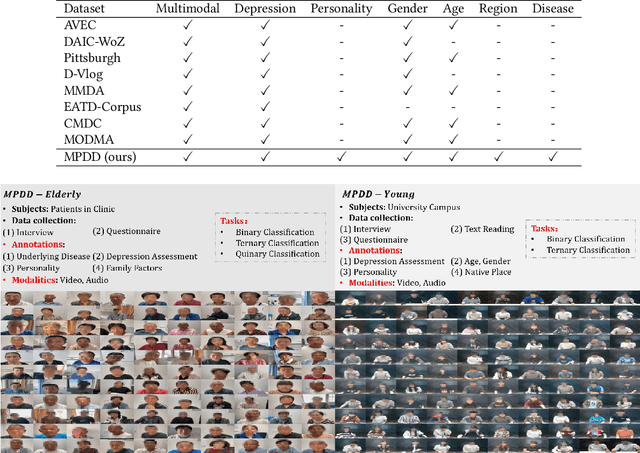
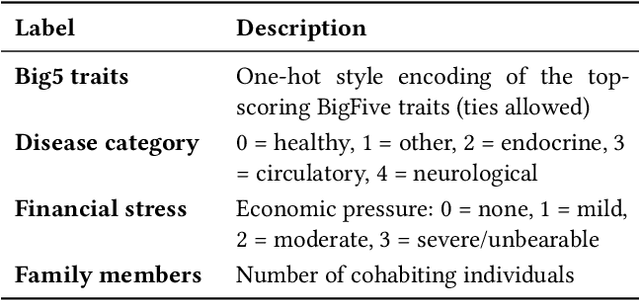
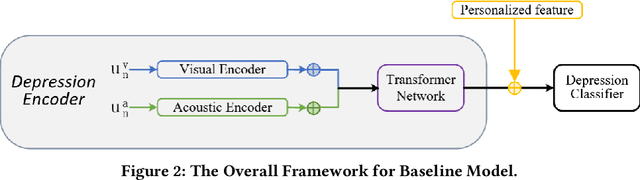
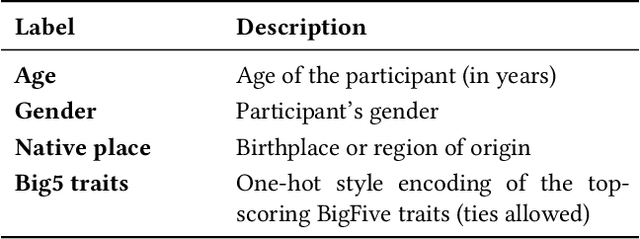
Depression is a widespread mental health issue affecting diverse age groups, with notable prevalence among college students and the elderly. However, existing datasets and detection methods primarily focus on young adults, neglecting the broader age spectrum and individual differences that influence depression manifestation. Current approaches often establish a direct mapping between multimodal data and depression indicators, failing to capture the complexity and diversity of depression across individuals. This challenge includes two tracks based on age-specific subsets: Track 1 uses the MPDD-Elderly dataset for detecting depression in older adults, and Track 2 uses the MPDD-Young dataset for detecting depression in younger participants. The Multimodal Personality-aware Depression Detection (MPDD) Challenge aims to address this gap by incorporating multimodal data alongside individual difference factors. We provide a baseline model that fuses audio and video modalities with individual difference information to detect depression manifestations in diverse populations. This challenge aims to promote the development of more personalized and accurate de pression detection methods, advancing mental health research and fostering inclusive detection systems. More details are available on the official challenge website: https://hacilab.github.io/MPDDChallenge.github.io.
A Multi-Dimensional Constraint Framework for Evaluating and Improving Instruction Following in Large Language Models
May 12, 2025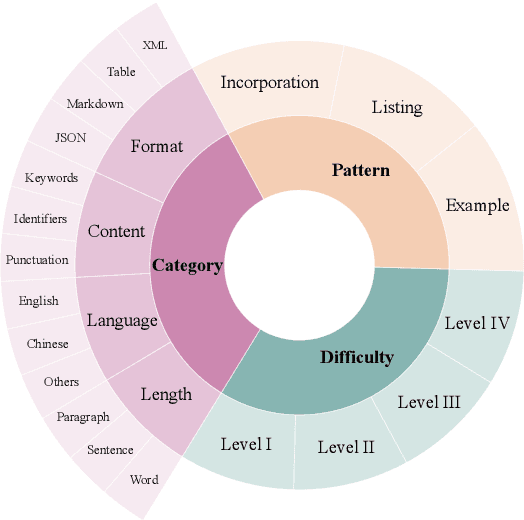

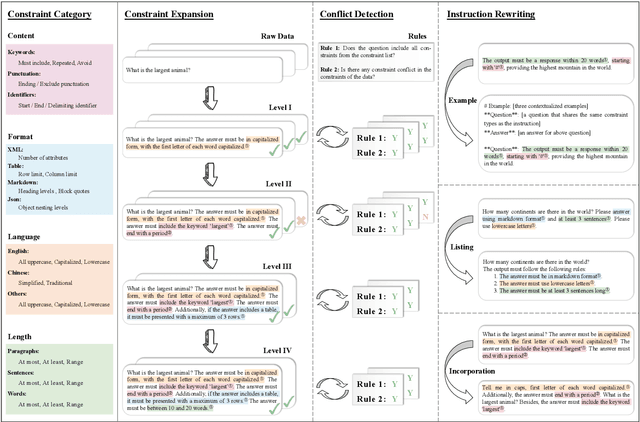
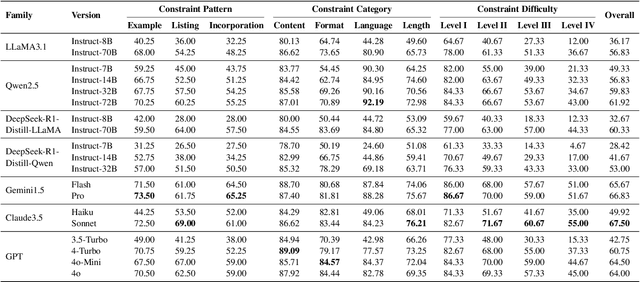
Instruction following evaluates large language models (LLMs) on their ability to generate outputs that adhere to user-defined constraints. However, existing benchmarks often rely on templated constraint prompts, which lack the diversity of real-world usage and limit fine-grained performance assessment. To fill this gap, we propose a multi-dimensional constraint framework encompassing three constraint patterns, four constraint categories, and four difficulty levels. Building on this framework, we develop an automated instruction generation pipeline that performs constraint expansion, conflict detection, and instruction rewriting, yielding 1,200 code-verifiable instruction-following test samples. We evaluate 19 LLMs across seven model families and uncover substantial variation in performance across constraint forms. For instance, average performance drops from 77.67% at Level I to 32.96% at Level IV. Furthermore, we demonstrate the utility of our approach by using it to generate data for reinforcement learning, achieving substantial gains in instruction following without degrading general performance. In-depth analysis indicates that these gains stem primarily from modifications in the model's attention modules parameters, which enhance constraint recognition and adherence. Code and data are available in https://github.com/Junjie-Ye/MulDimIF.
100 Days After DeepSeek-R1: A Survey on Replication Studies and More Directions for Reasoning Language Models
May 01, 2025The recent development of reasoning language models (RLMs) represents a novel evolution in large language models. In particular, the recent release of DeepSeek-R1 has generated widespread social impact and sparked enthusiasm in the research community for exploring the explicit reasoning paradigm of language models. However, the implementation details of the released models have not been fully open-sourced by DeepSeek, including DeepSeek-R1-Zero, DeepSeek-R1, and the distilled small models. As a result, many replication studies have emerged aiming to reproduce the strong performance achieved by DeepSeek-R1, reaching comparable performance through similar training procedures and fully open-source data resources. These works have investigated feasible strategies for supervised fine-tuning (SFT) and reinforcement learning from verifiable rewards (RLVR), focusing on data preparation and method design, yielding various valuable insights. In this report, we provide a summary of recent replication studies to inspire future research. We primarily focus on SFT and RLVR as two main directions, introducing the details for data construction, method design and training procedure of current replication studies. Moreover, we conclude key findings from the implementation details and experimental results reported by these studies, anticipating to inspire future research. We also discuss additional techniques of enhancing RLMs, highlighting the potential of expanding the application scope of these models, and discussing the challenges in development. By this survey, we aim to help researchers and developers of RLMs stay updated with the latest advancements, and seek to inspire new ideas to further enhance RLMs.
Zoomer: Adaptive Image Focus Optimization for Black-box MLLM
Apr 30, 2025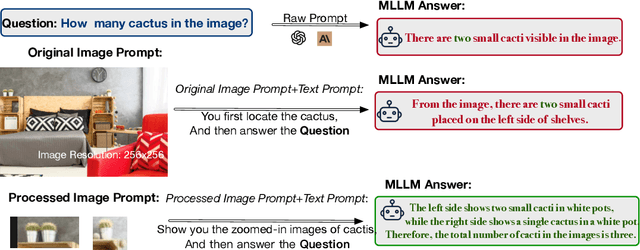
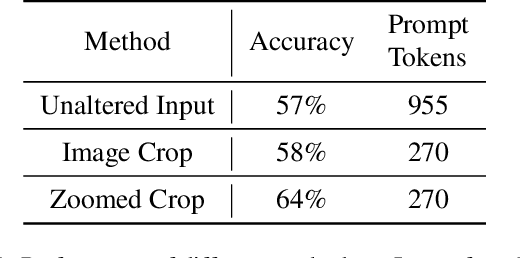
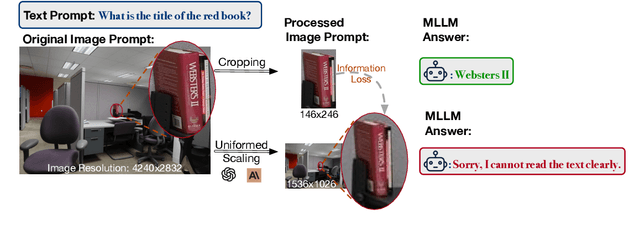
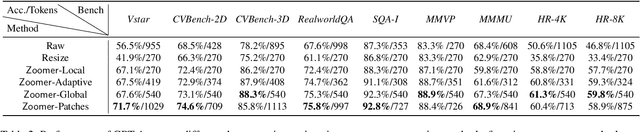
Recent advancements in multimodal large language models (MLLMs) have broadened the scope of vision-language tasks, excelling in applications like image captioning and interactive question-answering. However, these models struggle with accurately processing visual data, particularly in tasks requiring precise object recognition and fine visual details. Stringent token limits often result in the omission of critical information, hampering performance. To address these limitations, we introduce \SysName, a novel visual prompting mechanism designed to enhance MLLM performance while preserving essential visual details within token limits. \SysName features three key innovations: a prompt-aware strategy that dynamically highlights relevant image regions, a spatial-preserving orchestration schema that maintains object integrity, and a budget-aware prompting method that balances global context with crucial visual details. Comprehensive evaluations across multiple datasets demonstrate that \SysName consistently outperforms baseline methods, achieving up to a $26.9\%$ improvement in accuracy while significantly reducing token consumption.
Toward Generalizable Evaluation in the LLM Era: A Survey Beyond Benchmarks
Apr 26, 2025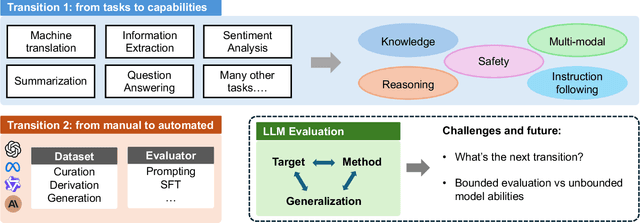
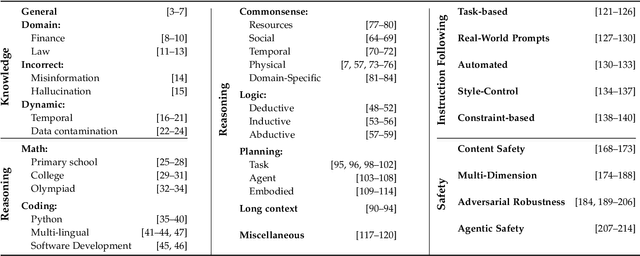
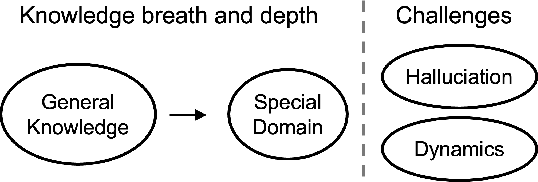
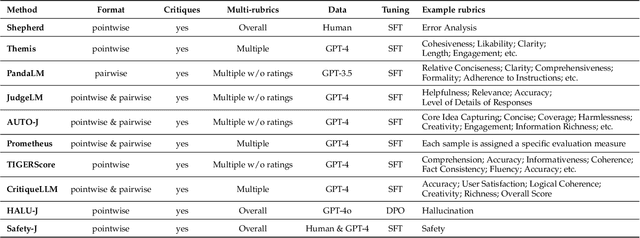
Large Language Models (LLMs) are advancing at an amazing speed and have become indispensable across academia, industry, and daily applications. To keep pace with the status quo, this survey probes the core challenges that the rise of LLMs poses for evaluation. We identify and analyze two pivotal transitions: (i) from task-specific to capability-based evaluation, which reorganizes benchmarks around core competencies such as knowledge, reasoning, instruction following, multi-modal understanding, and safety; and (ii) from manual to automated evaluation, encompassing dynamic dataset curation and "LLM-as-a-judge" scoring. Yet, even with these transitions, a crucial obstacle persists: the evaluation generalization issue. Bounded test sets cannot scale alongside models whose abilities grow seemingly without limit. We will dissect this issue, along with the core challenges of the above two transitions, from the perspectives of methods, datasets, evaluators, and metrics. Due to the fast evolving of this field, we will maintain a living GitHub repository (links are in each section) to crowd-source updates and corrections, and warmly invite contributors and collaborators.